

Alzheimer’s Drugs Market Size and Trends
Global Alzheimer’s drugs market is estimated to be valued at USD 6.24 Bn in 2026 and is expected to reach USD 12.72 Bn by 2033, exhibiting a compound annual growth rate (CAGR) of 10.7% from 2026 to 2033.
Key Takeaways
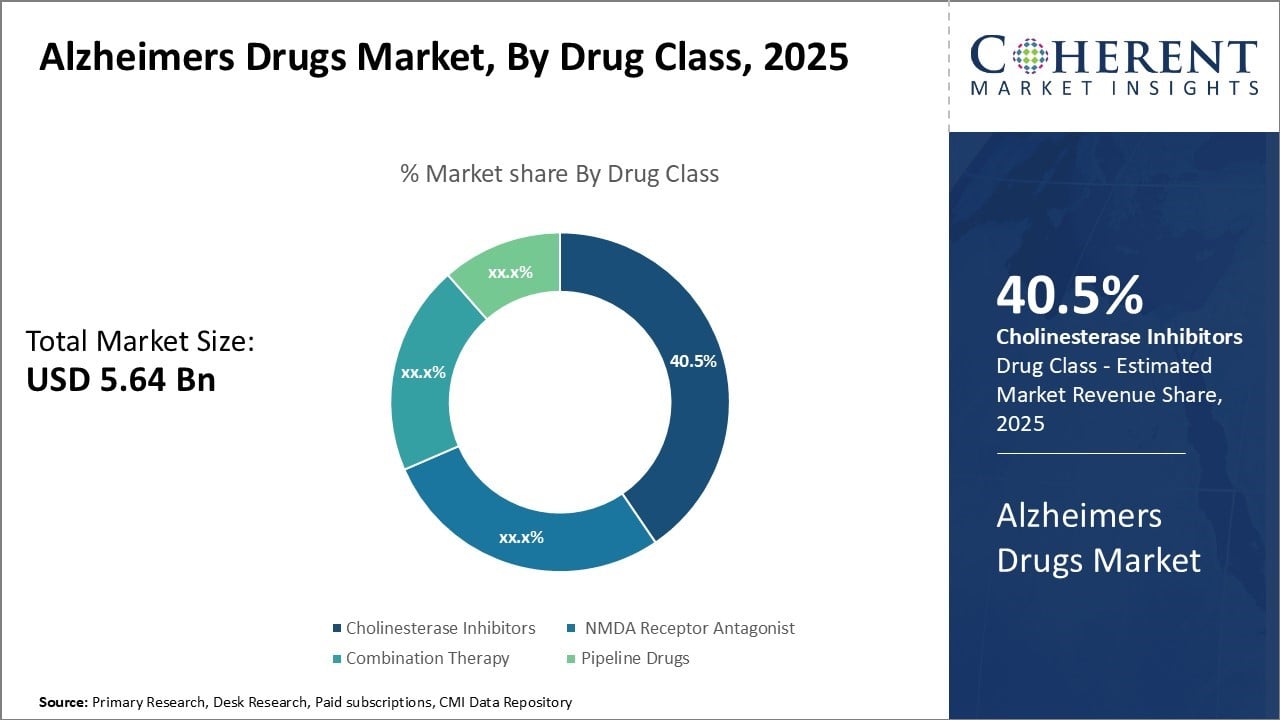
- Based on Drug Class, the Cholinesterase Inhibitors segment is projected to account for a 41.5% market share in 2026, owing to its ability to meet significant unmet needs.
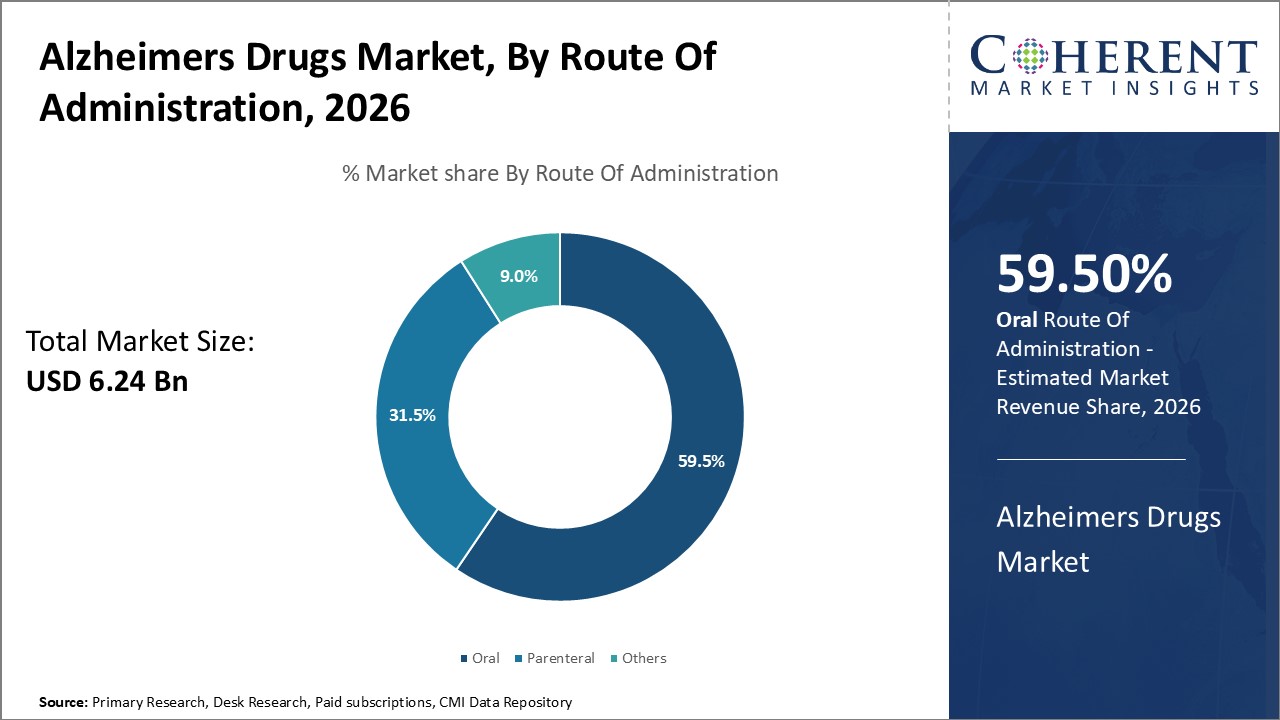
- Based on Route of Administration, the Oral segment is expected to capture a 59.5% market share in 2026, owing to its advantage of maximizing patient adherence to treatments.
- Based on Distribution Channel, the Hospital pharmacies segment is anticipated to lead the market with a 46.5% share in 2026, owing to its role in reinforcing integrated care models for Alzheimer’s patients.
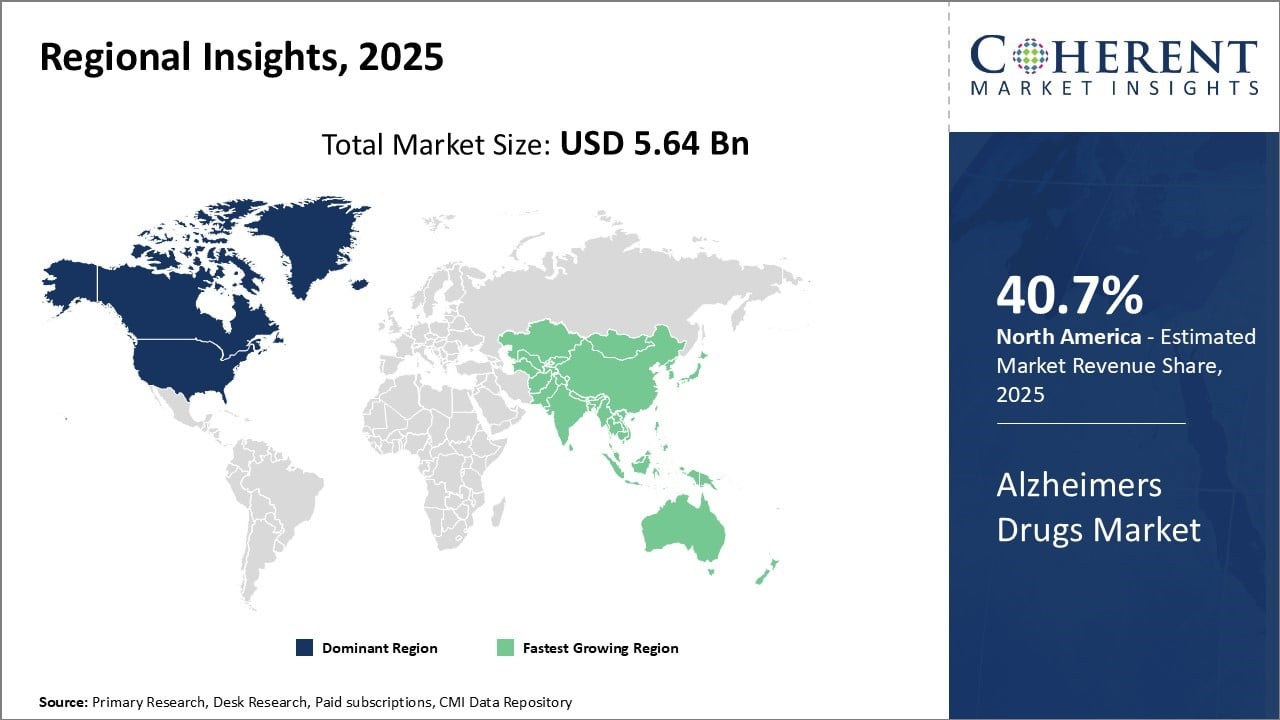
- Based on Region, North America is set to lead the global Alzheimer’s drugs market in 2026 with a 40.7% share. While, Asia Pacific is considered to be the fastest growing region during the forecast period.
Market Overview
Global Alzheimer’s drugs market growth is driven by the increasing incidence and prevalence of Alzheimer’s disease worldwide due to the rising geriatric population. As age remains the most significant risk factor, countries with aging demographics are witnessing heightened healthcare needs, fueling the Alzheimer’s drugs market demand. New product launches by key players can also drive the market growth. The launch of new drugs that target the underlying causes and slow disease progression rather than just control symptoms can drive the market growth.
Current Events and their Impact on the Alzheimer’s Drugs Market
Current Event | Description and its Impact |
FDA Approval of Donanemab in the U.S. (July 2024) |
|
DIAN-TU Gantenerumab Extension Study Results (2025) |
|
Reimbursement Policy
Reimbursement policies for Alzheimer’s drugs remain highly restrictive and vary across regions, reflecting the high costs and limited efficacy of available treatments. In the United States, Medicare—the primary payer for elderly patients has taken a cautious approach. For example, it initially limited coverage for Aduhelm to clinical trial participants due to uncertainties about clinical benefit versus cost. Similarly, coverage for Leqembi was expanded in 2023 but only under a “coverage with evidence development” model, requiring patients to be part of a registry to monitor real-world effectiveness. Japan has approved Leqembi for national health insurance reimbursement, but with strict monitoring and budget controls. A growing trend across countries is the adoption of conditional reimbursement frameworks, such as risk-sharing agreements or registry-linked coverage, where funding is tied to actual treatment outcomes. These measures aim to contain public spending while ensuring that only clinically effective drugs receive broad reimbursement.
- Current Industry Events of 2026
- Market Size Estimation
- Regional Breakdown
- Competitive Landscape
- Customer Intelligence
- Segmental Analysis
- Pricing Analysis
- Key Market Drivers, Challenges & Future Trends
- Customized Insights Section
Segmental Insights
Alzheimer’s Drugs Market Insights, By Drug Class
Cholinesterase Inhibitors Segment Leads the Market Due to Its Ability to Meet Unmet Needs
In terms of drug class, cholinesterase inhibitors segment is estimated to contribute the highest Alzheimer’s drugs market share of 41.5% in 2026, owing to its ability to meet significant unmet needs. Cholinesterase inhibitors work by increasing levels of a chemical messenger in the brain called acetylcholine, which can help slow decline in thinking skills, memory and other functions. These are some of the first treatments approved specifically for Alzheimer's disease and remain a core therapeutic option for many patients. The mechanism of action targeting acetylcholine neurotransmission addresses a key pathological process in Alzheimer's and provides symptomatic benefit. Cholinesterase inhibitors offer oral administration convenience as compared to other treatment approaches in development. The efficacy demonstrated on cognitive and functional outcomes has led to their widespread adoption as the frontline pharmacotherapy for mild-to-moderate Alzheimer’s disease.
In August 2024, A Swedish registry study led by Karolinska Institute, published in Alzheimer’s & Dementia, evaluated 1,095 dementia with Lewy bodies (DLB) patients over a decade. Findings show that cholinesterase inhibitors (ChEIs), such as rivastigmine, donepezil and galantamine, significantly slowed cognitive decline, dropping MMSE (Mini-Mental State Examination) scores by just ‑0.39 points yearly versus ‑2.49 (memantine) and ‑2.50 (no treatment). Additionally, ChEI users faced a 34% lower risk of death in the first-year post-diagnosis (adjusted HR 0.66).
Alzheimer’s Drugs Market Insights, By Route of Administration
Oral Segment Dominates by Maximizing Patient Adherence
In terms of route of administration, oral segment is estimated to contribute the highest market share of 59.5% in 2026, owing to its advantage of maximizing patient adherence to treatments. For most Alzheimer's patients in the mild-to-moderate stages of the disease, oral administration of medicines is preferred as it is non-invasive and can be self-administered at home without need for clinic visits. The convenience of oral dosing encourages compliance with the treatment regimen over an extended period of time that may span years. This is critically important for Alzheimer's where continuous management is required as symptoms progress. Administering medicines orally also avoids introduction of potential infection risks as compared to parenteral routes and additional cost burdens to healthcare systems as compared to injection administration. Positive effects on cognition and function rely upon consistent intake of therapies as prescribed over the long term.
In May 2023, the FDA granted supplemental approval for Rexulti (brexpiprazole) oral tablets, the first drug certified to treat agitation in dementia due to Alzheimer’s disease. Two 12‑week Phase 3 trials demonstrated significant reductions in caregiver‑reported agitation at 2–3 mg doses. Starting at 0.5 mg, doses can escalate to 3 mg based on patient response.
Alzheimer’s Drugs Market Insights, By Distribution Channel
Hospital Pharmacies Segment Drives Due to Reinforcing Care Models
In terms of distribution channel, hospital pharmacies segment is estimated to contribute the highest market share of 46.5% in 2026, owing to its role in reinforcing integrated care models for Alzheimer’s patients. Alzheimer's treatment necessitates a multidisciplinary approach beyond just pharmacotherapy alone. Hospital pharmacies play a central part in coordinating the delivery of comprehensive Alzheimer's care. These work closely with memory clinics, geriatric specialists, nursing staff and social workers to ensure medications are prescribed appropriately and patients transition smoothly between inpatient and outpatient settings as their needs change. Many hospitals also run specialized dementia day programs, providing therapy and respite to delay nursing home placements. The hospital pharmacies act as an anchor, supporting a holistic care model where medication optimization occurs in the context of multifactorial assessment and non-drug interventions.
In December 2024, IDIBAPS–Hospital Clínic Barcelona took part in the HUB Alzheimer Barcelona initiative.
Regional Insights
North America Alzheimer’s Drugs Market Analysis & Trends
North America dominates global Alzheimer's drugs market with an estimated market share of 40.7% in 2026. The region accounts for the largest market share due to presence of major pharmaceutical companies undertaking research and clinical trials for new drugs. The National Institute on Aging (NIA) in Bethesda, Maryland is leading NIH's efforts in clinical, behavioral, and social research in Alzheimer's and related dementias through efforts aimed at finding ways to treat and ultimately prevent the disorder. Furthermore, aging population and rising prevalence of Alzheimer's disease in the region also drives the market growth. Countries like U.S. have also approved use of several disease-modifying drugs under their regulatory pathways, thus, boosting the Alzheimer drugs market revenue.
Asia Pacific Alzheimer’s Drugs Market Analysis & Trends
Asia Pacific region has emerged as the fastest growing market for Alzheimer's drugs. Asia Pacific market is expected to witness highest CAGR, owing to the increasing focus of international drug makers to tap unmet needs. Countries like China and India are proving lucrative with their huge patient pool and growing healthcare expenditure. For instance, Eli Lilly's Kisunla (donanemab) received regulatory approval in China (Dec 2024) and Japan (Sept 2024), offering once‑monthly infusion and flexible dosing a market first. Local companies are also ramping up their R&D activities in collaboration with global innovators. Regional players like TauRx (Singapore) and Agharkar Institute (India) are advancing tau‑targeted molecules and cholinesterase inhibitors through early‑stage trials. This has led to higher availability of both generic and patented drugs across major Asian countries. Lack of stringent regulations compared to Western nations makes Asia Pacific region an attractive destination for clinical trials of new molecules.
Alzheimer’s Drugs Market Outlook Country-Wise
The U.S. Alzheimer’s Drugs Market Trends
The United States stands as the world’s largest Alzheimer’s drugs market and diagnostics, driven by a rapidly aging population, strong public health infrastructure, and a progressive regulatory landscape. As of 2026, more than 6.7 million Americans aged 65 and older are living with Alzheimer’s disease, a number projected to more than double. This growing burden has spurred significant demand for early diagnosis, effective therapeutics, and long-term care solutions.
Key government initiatives such as Medicare coverage expansion and FDA fast-track pathways have been instrumental in accelerating access to novel therapies. The approval of disease-modifying drugs like Leqembi (lecanemab) and Kisunla (donanemab) under the FDA's Accelerated Approval Program represents a turning point in treatment, shifting focus from symptom management to slowing disease progression. These developments not only enhance patient outcomes but also attract sustained investment from both domestic and global pharmaceutical companies.
With a mature healthcare system, widespread clinical trial networks, and strong advocacy from organizations such as the Alzheimer’s Association, the U.S. continues to lead the charge in Alzheimer’s innovation, access, and care delivery.
China Alzheimer’s Drugs Market Trends
China’s Alzheimer’s drugs market is driven by the world’s largest Alzheimer’s patient, with over 10 million diagnosed cases, a number projected to more than double by 2050 due to the country’s rapidly aging demographic.
The country’s rising middle class and increased public awareness are driving strong demand for both early diagnosis and advanced treatment options. Government initiatives such as the "Healthy China 2030" plan aim to expand access to senior healthcare, including cognitive screening and dementia drugs.
International pharmaceutical companies are increasingly focusing on China due to its growing healthcare expenditure, which exceeded USD 1.3 trillion in 2023. China’s regulatory reforms, such as the inclusion of foreign drugs in the National Reimbursement Drug List (NRDL) and the fast-track approval of innovative therapies, have made it an attractive launchpad for new Alzheimer’s treatments. For instance, Eli Lilly’s Kisunla (donanemab) was approved in China in late 2024, marking a significant shift in the country's acceptance of disease-modifying therapies.
Additionally, China plays a pivotal role in global clinical research. The country hosts numerous clinical trial sites for Alzheimer’s therapies, through its vast patient pool, modern hospital infrastructure, and streamlined trial approval process. Leading hospitals and research institutes in Beijing, Shanghai, and Guangzhou are frequently involved in late-stage studies of both local and foreign drug candidates.
As a result, China is emerging not only as a high-demand commercial market but also as a global R&D hub for Alzheimer's drug development, accelerating innovation and access across the Asia-Pacific region.
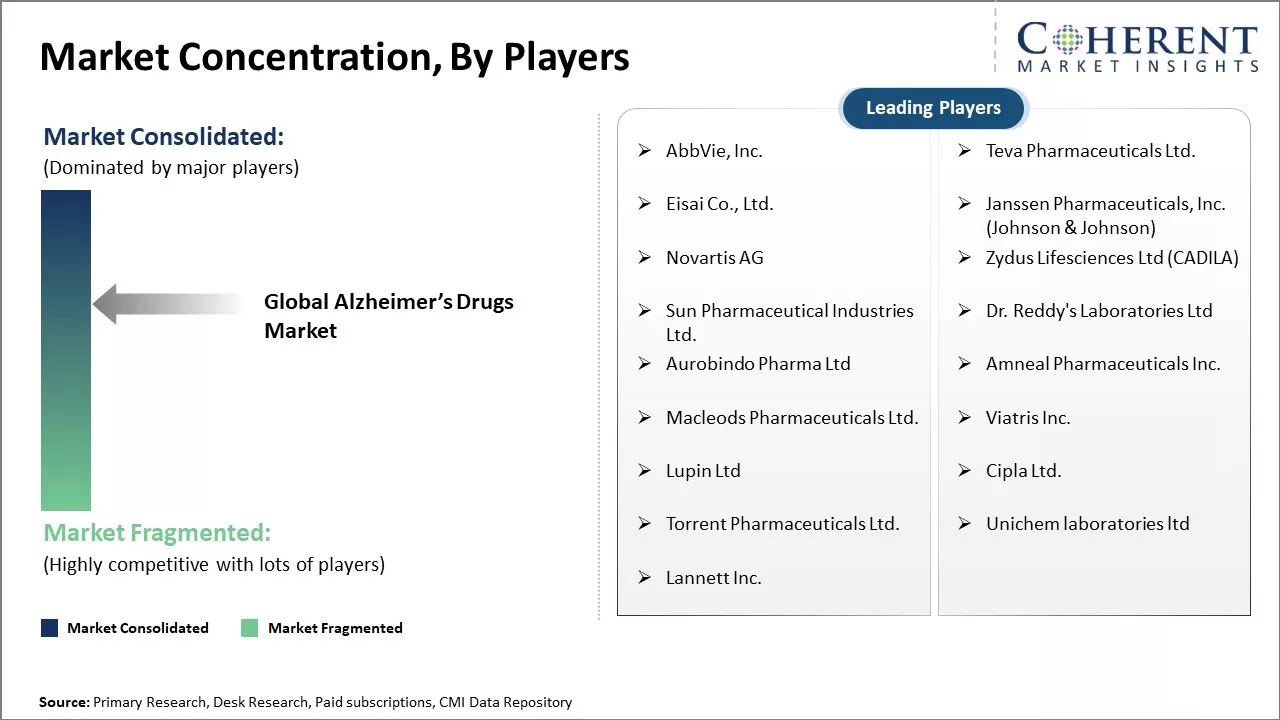
Market Concentration and Competitive Landscape
Alzheimer’s Drugs Industry News
- In January 2025, Eisai Co., Ltd. and Biogen Inc. announced that the U.S. Food and Drug Administration (FDA) approved the Supplemental Biologics License Application (sBLA) for once every four weeks lecanemab-irmb (U.S. brand name: LEQEMBI®) intravenous (IV) maintenance dosing. LEQEMBI is indicated for the treatment of Alzheimer's disease (AD) in patients with mild cognitive impairment (MCI) or mild dementia stage of disease (collectively referred to as early AD) in the U.S. LEQEMBI is approved in the U.S., Japan, China, South Korea, Hong Kong, Israel, UAE, Great Britain, Mexico and Macau.
- In July 2024, the U.S. FDA approved Eli Lilly's new Alzheimer's drug, Kisunla (donanemab), for adults with mild cognitive impairment or early Alzheimer’s disease. Kisunla, a monoclonal antibody infusion administered every four weeks, targets amyloid plaques in the brain to modestly slow cognitive decline.
- In July 2024, the Alzheimer’s Association received the USFDA's approval for Kisunla (donanemab, from Eli Lilly) for treating individuals with early symptomatic Alzheimer's disease. This includes those with mild cognitive impairment and mild dementia stages, provided they have confirmed amyloid plaques.
- In January 2024, Biogen Inc. refocused its resources on Alzheimer’s disease, emphasizing the development of LEQEMBI (lecanemab-irmb) and accelerating new treatments like BIIB080 and BIIB113. The company will discontinue ADUHELM (aducanumab-avwa) and end the ENVISION clinical study, reallocating the resources to its Alzheimer’s drug development.
Market Report Scope
Alzheimer’s Drugs Market Report Coverage
| Report Coverage | Details | ||
|---|---|---|---|
| Base Year: | 2025 | Market Size in 2026: | USD 6.24 Bn |
| Historical Data for: | 2020 To 2024 | Forecast Period: | 2026 To 2033 |
| Forecast Period 2026 to 2033 CAGR: | 10.7% | 2033 Value Projection: | USD 12.72 Bn |
| Geographies covered: |
| ||
| Segments covered: |
| ||
| Companies covered: | AbbVie, Inc., Teva Pharmaceuticals Ltd., Eisai Co., Ltd., Janssen Pharmaceuticals, Inc. (Johnson & Johnson), Novartis AG, Zydus Lifesciences Ltd (CADILA), Sun Pharmaceutical Industries Ltd., Dr.Reddy's Laboratories Ltd, Aurobindo Pharma Ltd, Amneal Pharmaceuticals Inc., Macleods Pharmaceuticals Ltd., Viatris Inc., Lupin Ltd, Cipla Ltd., Torrent Pharmaceuticals Ltd., Unichem laboratories ltd, Lannett Inc. | ||
| Growth Drivers: |
| ||
| Restraints & Challenges: |
| ||
Alzheimer’s Drugs Market Driver
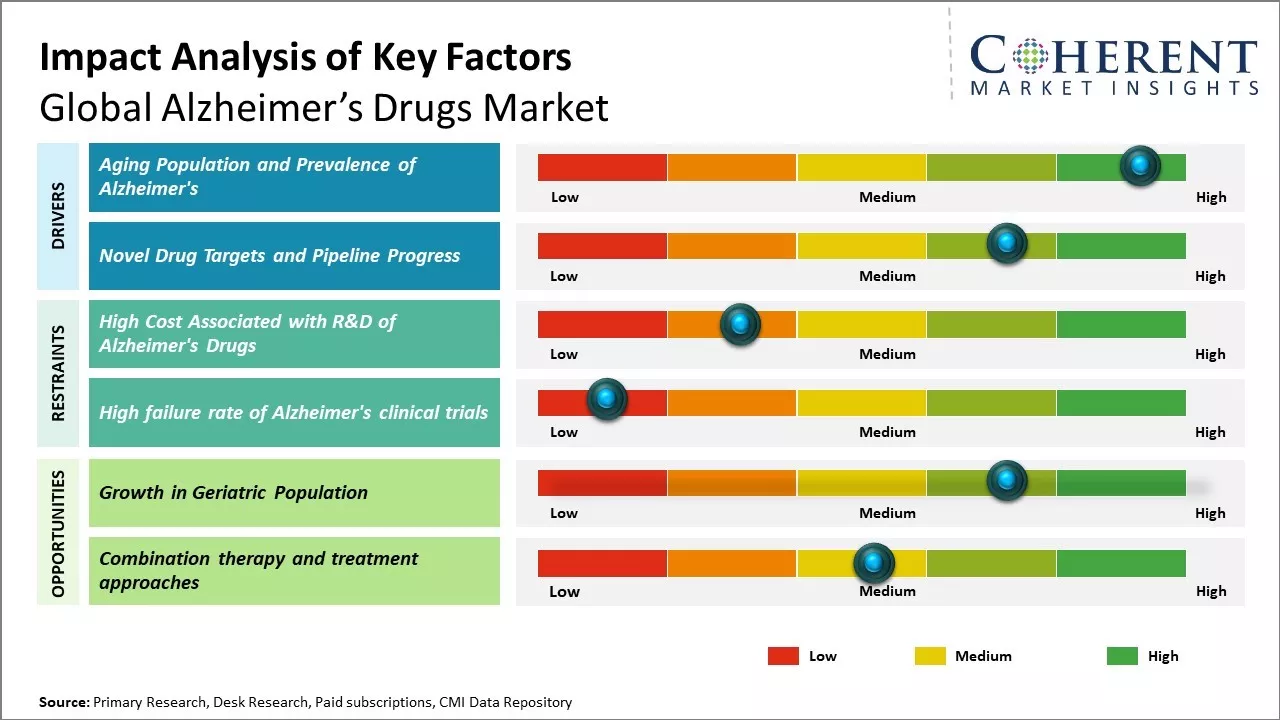
Aging Population and Prevalence of Alzheimer's
Due to rising life expectancy, there has been increase in number of elderly people aged 65 years and over. According to WHO, the proportion of the world's population over 60 years will nearly double from 12% to 22% between 2015 and 2050. Elderly population is particularly susceptible to neurodegenerative conditions such as Alzheimer's and dementia due to natural age-related cognitive decline. Alzheimer's disease is the most common cause of dementia among older adults. As more people survive into their 80s and beyond, even a small increase in diagnosis rates in the very old can cause a dramatic rise in prevalence numbers. In 2023, According to Alzheimer’s Disease International report, around 55 million people have dementia worldwide, the number of people affected is set to rise to 139 million by 2050, with the greatest increases in low- and middle-income countries. Growing elderly populations can increase Alzheimer's cases without effective prevention or cure strategies.
Novel Drug Targets and Pipeline Progress
After multiple past failures in treatment development for Alzheimer's, the currently approved medicines can only manage symptoms temporarily without altering disease progression. There has been promising pipeline activity that explores novel mechanisms and molecular targets beyond the amyloid hypothesis. Several companies are developing disease-modifying drugs targeting tau tangles, neuroinflammation, synaptic dysfunction, and other pathways increasingly implicated in Alzheimer's pathology. Large late-stage trials are ongoing to evaluate anti-amyloid antibodies as well as anti-tau antibodies and small molecules for preventing or slowing cognitive decline. Some potential first-in-class therapies for early Alzheimer's include anti-Tau antibody crenezumab from Genentech and anti-amyloid gamma secretase modulator verubecestat from Merck.
Alzheimer’s Drugs Market Opportunity
Growth in Geriatric Population
The global rise in the elderly population presents a significant opportunity for Alzheimer’s drugs market forecast, driven by increased demand for effective treatments among aging demographics. Alzheimer’s typically affects individuals 65 years and older, and as global life expectancy climbs, so does the number of potential patients. For instance, a recent tool developed by Duke, Harvard, and the University of Otago called DunedinPACNI uses MRI data to predict dementia risk, highlighting the urgency for early intervention before irreversible damage occurs. Moreover, new therapies are emerging: in late 2023, the FDA granted accelerated approval to donanemab (Kisunla) and approved Zunveyl, a prodrug version of galantamine with fewer gastrointestinal side effects, offering patients more tolerable options. These advances underscore a shifting focus toward interventions that delay the onset or progression of Alzheimer’s. As a result, pharmaceutical companies and healthcare providers are well-positioned to serve an expanding cohort of older adults seeking cognitive-preserving treatments, positioning the Alzheimer's drugs market for sustained growth.
Analyst Opinion (Expert Opinion)
- The Alzheimer’s drugs market is at an inflection point, shaped less by the incremental approval of symptomatic treatments and more by a deepening recognition of the biology of neurodegeneration. Despite decades of clinical stagnation, recent regulatory shifts and clinical trial outcomes are redefining the treatment landscape, albeit with challenges that remain underappreciated in public discourse.
- The U.S. FDA’s approval of lecanemab (Leqembi) in 2023 under the Accelerated Approval pathway, followed by its full traditional approval, is emblematic of a shift toward disease-modifying therapies (DMTs) targeting amyloid-beta.
- Moreover, the market’s trajectory is constrained by the biological complexity of Alzheimer’s. Tau-targeting drugs, once considered the logical successors to anti-amyloid therapies, have yet to demonstrate convincing clinical efficacy in Phase III trials. For instance, semorinemab failed to show significant benefit in slowing disease progression in Genentech's LAURIET study. This has raised doubts about the translatability of biomarker changes into meaningful cognitive outcomes.
- In our view, the market remains fragmented between high-investment, low-return DMT candidates and legacy cholinesterase inhibitors and NMDA receptor antagonists, which still dominate prescriptions globally due to affordability and familiarity. Donepezil, rivastigmine, and memantine continue to account for over 60% of all Alzheimer’s prescriptions globally, particularly in Asia and Latin America, where regulatory approvals of newer agents are slow and healthcare systems are cost-sensitive.
- Crucially, innovation is shifting toward combination approaches and precision targeting. Companies such as Acumen Pharmaceuticals and Cassava Sciences are exploring early-stage interventions and novel mechanisms beyond amyloid and tau, such as soluble Aβ oligomers and neuroinflammation. The success or failure of these platforms will determine whether the market continues its high-risk, capital-intensive trajectory or recalibrates toward more sustainable development models.
- In conclusion, while recent regulatory approvals have injected optimism, the Alzheimer’s drugs market is driven by regulatory accommodation and biotech speculation. Without clinically meaningful outcomes, payer support, and patient-centric models, the long-term viability of this market, especially for high-cost biologics remains uncertain. As the industry shifts from biomarker-driven optimism to functional efficacy, true innovation will depend on broader biological targets, better trial designs, and a willingness to move beyond the decades-old paradigms that have thus far yielded underwhelming therapeutic results.
Speak to the analyst
Want personalized insights?
Take the findings above to one of our principal consultants, or have the report rebuilt around the segments, geographies and competitors you actually track.
Market Segmentation
- Drug Class Insights (Revenue, USD Bn, 2021 - 2033)
- Cholinesterase Inhibitors
- Donepezil
- Rivastigmine
- Galantamine
- NMDA Receptor Antagonist
- Memantine
- Combination Therapy
- Donepezil and Memantine
- Pipeline Drugs
- Aducanumab
- Lecanemab
- Donanemab
- Cholinesterase Inhibitors
- Route of Administration Insights (Revenue, USD Bn, 2021 - 2033)
- Oral
- Parenteral
- Others
- Distribution Channel Insights (Revenue, USD Bn, 2021 - 2033)
- Hospital Pharmacies
- Retail Pharmacies
- Online Pharmacies
- Regional Insights (Revenue, USD Bn, 2021 - 2033)
- North America
- U.S.
- Canada
- Latin America
- Brazil
- Argentina
- Mexico
- Rest of Latin America
- Europe
- Germany
- U.K.
- Spain
- France
- Italy
- Russia
- Rest of Europe
- Asia Pacific
- China
- India
- Japan
- Australia
- South Korea
- ASEAN
- Rest of Asia Pacific
- Middle East
- GCC Countries
- Israel
- Rest of Middle East
- Africa
- South Africa
- North Africa
- Central Africa
- North America
- Key Players Insights
- AbbVie, Inc.
- Teva Pharmaceuticals Ltd.
- Eisai Co., Ltd.
- Janssen Pharmaceuticals, Inc. (Johnson & Johnson)
- Novartis AG
- Zydus Lifesciences Ltd (CADILA)
- Sun Pharmaceutical Industries Ltd.
- Dr. Reddy's Laboratories Ltd.
- Aurobindo Pharma Ltd.
- Amneal Pharmaceuticals Inc.
- Macleods Pharmaceuticals Ltd.
- Viatris Inc.
- Lupin Ltd.
- Cipla Ltd.
- Torrent Pharmaceuticals Ltd.
- Unichem laboratories ltd
- Lannett Inc.
Sources
Primary Research Interviews from the following stakeholders
Stakeholders
- Interviews with neurologists, geriatricians, clinical pharmacologists, hospital procurement heads, caregivers, and health insurance administrators across key regional markets.
Databases
- U.S. Food and Drug Administration (FDA) – Drug Approval Reports
- ClinicalTrials.gov – Alzheimer’s Trials Tracker
- European Medicines Agency (EMA) Drug Database
- National Institutes of Health (NIH) – Alzheimer’s and Related Dementias Data Archive
- World Health Organization (WHO) – Global Health Observatory
- Central Drugs Standard Control Organization (CDSCO), India
- China National Medical Products Administration (NMPA)
- Health Canada – Drug Product Database
- Japan Pharmaceuticals and Medical Devices Agency (PMDA)
Magazines
- Nature Medicine – Neurological Section
- Pharmaceutical Executive
- Drug Discovery & Development
- PharmaTimes
- Neurology Today
- GEN – Genetic Engineering & Biotechnology News
- BioPharma Dive
- Medical News Today – Alzheimer’s Focus Section
Journals
- Alzheimer’s & Dementia (The Journal of the Alzheimer’s Association)
- Journal of Neurochemistry
- Journal of Alzheimer’s Disease
- The Lancet Neurology
- Frontiers in Aging Neuroscience
- CNS Drugs
- Neurotherapeutics
- Journal of Clinical Pharmacology
Newspapers
- The New York Times – Health Section
- The Washington Post – Science & Medicine
- The Times of India – Health & Wellness
- The Hindu – Science & Medicine
- Financial Times – Global Pharma and Biotech Coverage
- Nikkei Asia – Pharmaceuticals and Aging Demographics
- South China Morning Post – Healthcare and Pharma
Associations
- Alzheimer’s Association (USA)
- Alzheimer’s Disease International (ADI)
- Indian Academy of Neurology
- European Federation of Neurological Societies
- International Society to Advance Alzheimer’s Research and Treatment (ISTAART)
- World Federation of Neurology (WFN)
- American Academy of Neurology (AAN)
- Japan Society for Dementia Research
Public Domain Sources
- National Institute on Aging (U.S.)
- Department of Biotechnology (India) – Brain Research Initiatives
- Ministry of Health and Family Welfare (India)
- European Commission – Horizon Europe Alzheimer’s Projects
- US Centers for Medicare & Medicaid Services – Drug Spending Dashboard
- Reserve Bank of India – Healthcare Sector Reports
- NITI Aayog – Aging and Healthcare Infrastructure Reports
- World Bank – Global Health Expenditure Database
- Statistics Canada – Aging Population and Neurodegenerative Disorders
Proprietary Elements
- CMI Data Analytics Tool, and Proprietary CMI Existing Repository of information for last 8 years
*Definition: Global Alzheimer's drugs market consists of pharmaceutical drug therapies that are used for treating patients suffering from Alzheimer's disease. These drugs aim to temporarily slow down the progression of dementia symptoms by targeting neurotransmitters in the brain like acetylcholine and glutamate. Some of the drugs include cholinesterase inhibitors, NMDA receptor antagonists, and others. The market has seen significant growth in recent years due to the increasing prevalence of Alzheimer's disease worldwide.
Get access to 250+ pages report
Every segment, forecast, competitor profile and data table behind the analysis above — available for instant download.
- ESOMAR Member
- ISO 9001:2015 Certified
- D-U-N-S Registered
- GDPR & CCPA Compliant
Missing comfort of reading report in your local language? Find your preferred language:
Transform your Strategy with Exclusive Trending Reports
Frequently Asked Questions
The Alzheimer’s Drugs Market is estimated to be valued at USD 6.24 Bn in 2026, and is expected to reach USD 12.72 Bn by 2033.
The CAGR of the Alzheimer’s Drugs Market is projected to be 10.7% from 2026 to 2033.
Aging population and prevalence of Alzheimer's and novel drug targets and pipeline progress are the major factors driving the growth of global Alzheimer’s drugs market.
High cost associated with R&D of Alzheimer's drugs and high failure rate of Alzheimer's clinical trials are the major factors hampering the growth of global Alzheimer’s drugs market.
In terms of drug class, cholinesterase inhibitors segment is estimated to dominate the market in 2026.
AbbVie, Inc., Teva Pharmaceuticals Ltd., Eisai Co., Ltd., Janssen Pharmaceuticals, Inc. (Johnson & Johnson), Novartis AG, Zydus Lifesciences Ltd (CADILA), Sun Pharmaceutical Industries Ltd., Dr. Reddy's Laboratories Ltd, Aurobindo Pharma Ltd, Amneal Pharmaceuticals Inc., Macleods Pharmaceuticals Ltd., Viatris Inc., Lupin Ltd, Cipla Ltd., Torrent Pharmaceuticals Ltd., Unichem laboratories ltd, Lannett Inc. are the major players.
North America is expected to lead the global Alzheimer’s drugs market.