

Global Bifurcation Lesions Market Size and Forecast – 2026 To 2033
The global bifurcation lesions market is expected to grow from USD 3.01 Bn in 2026 to USD 4.87 Bn by 2033, registering a compound annual growth rate (CAGR) of 7.1% from 2026 to 2033. The market for global bifurcation lesions is poised for significant expansion, fueled by the increasing volume of percutaneous coronary interventions (PCI) procedures.
According to the European Society of Cardiology (ESC) Atlas, 2,143.3 PCI procedures were performed per million people across ESC member countries in 2024, highlighting the substantial global-scale procedural demand for coronary interventions and the resulting addressable base for bifurcation-lesion treatment.
Key Takeaways of the Global Bifurcation Lesions Market
- One-stent bifurcation is projected to hold 61.8% of the global bifurcation lesions market share in 2026, making it dominant type segment across Europe due to the established clinical standardization of provisional single-stent treatment. For instance, the European Bifurcation Club’s 18th consensus document recommends a stepwise provisional strategy for the majority of true left-main and non-left-main coronary bifurcation lesions, reinforcing the clinical preference for limiting stent use.
- Coronary vascular is projected to hold 92.4% of the global bifurcation lesions market share in 2026, making it dominant application segment across North America due to the established regulatory framework specifically addressing coronary bifurcation interventions. For instance, the U.S. FDA’s stent guidance includes dedicated engineering-test recommendations for devices intended for coronary bifurcation lesions, including simulation of clinically relevant bifurcation angles and side-branch treatment conditions.
- Provisional stenting is projected to hold 62.4% of the global bifurcation lesions market share in 2026, making it dominant treatment technique segment across Europe due to its formal incorporation into standardized bifurcation-PCI recommendations. For instance, the European Bifurcation Club’s 16th consensus explicitly recommends stepwise provisional stenting as the preferred strategy for coronary bifurcation lesions and provides dedicated procedural guidance for its implementation.
- North America market maintains dominance with an expected share of 37.8% in 2026, bolstered by its mature coronary intervention infrastructure and increasing incorporation of complex PCI into formal reimbursement frameworks. For instance, in 2025, the U.S. Centers for Medicare & Medicaid Services (CMS) introduced a dedicated proposed CPT code for complex PCI involving bifurcation lesions requiring angioplasty or stenting in both the main artery and side branch, recognizing the additional procedural resources required.
- Asia Pacific is expected to exhibit the fastest growth in the global bifurcation lesions market, registering an estimated CAGR of 9.2% during 2026–2033, driven by expanding PCI adoption and greater standardization of bifurcation intervention. For instance, a 2024 JACC: Asia review highlighted the increasing adoption of intravascular imaging-guided PCI across Asia, particularly for complex lesions such as coronary bifurcations, supporting wider use of imaging-assisted treatment strategies in the region.
Segmental Insights
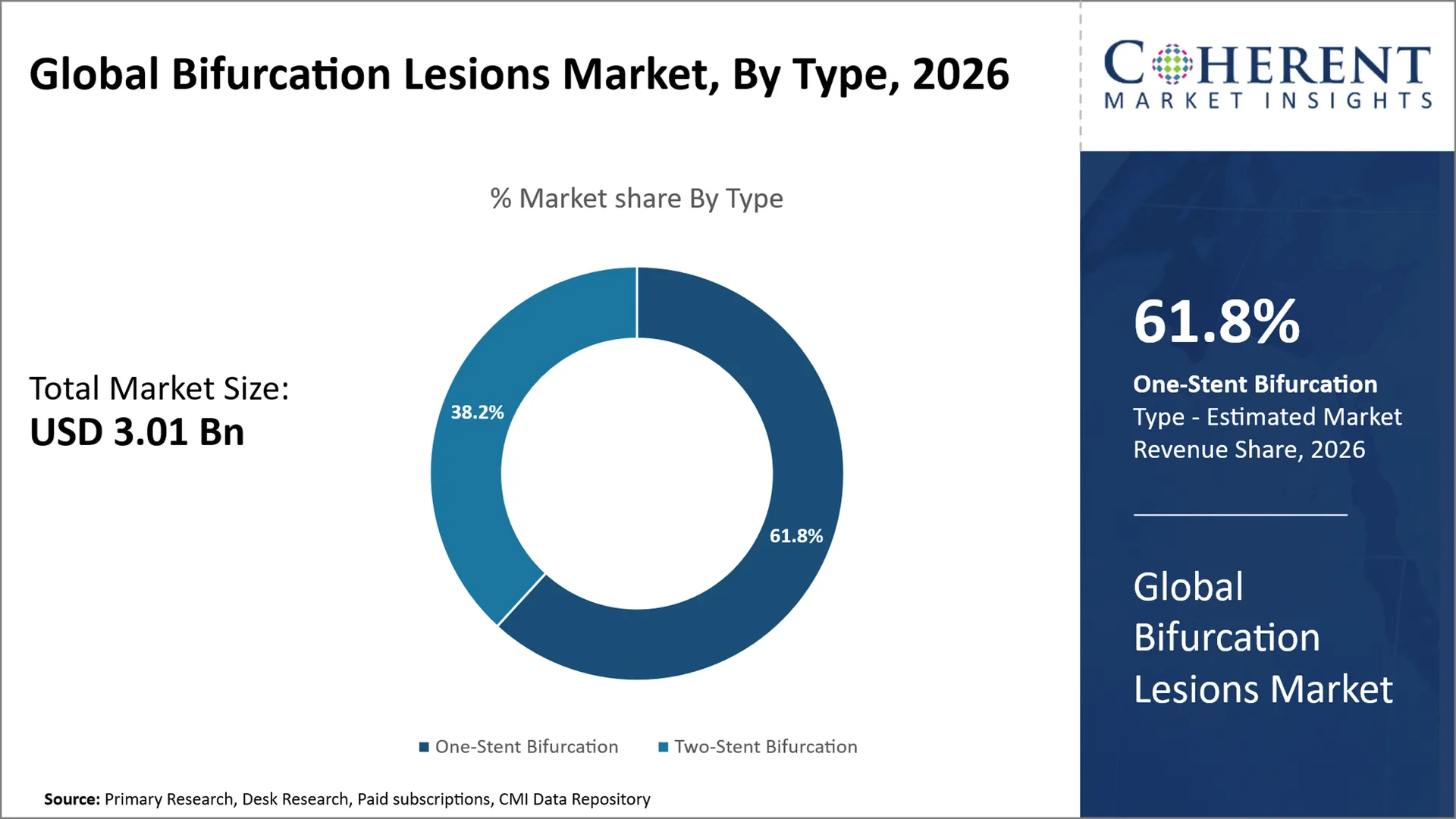
Why Do One-Stent Bifurcation Dominate the Global Bifurcation Lesions Market?
One-stent bifurcation is projected to hold the market share of 61.8% in 2026, due to its simple maneuver and efficacy. The technique can reduce the number of devices and procedural difficulty while remaining adaptable enough to selectively treat the side branch if necessary. For instance, in March 2026, Multivessel TALENT trial conducted by European Society of Cardiology, reported that the rate of one-stent strategy for bifurcational lesions treated with drug-eluting stents was 68.9%, mainly involving sequential stenting of distal to the bifurcation main branch with side branch wiring and proximal optimum position.
- Current Industry Events of 2026
- Market Size Estimation
- Regional Breakdown
- Competitive Landscape
- Customer Intelligence
- Segmental Analysis
- Pricing Analysis
- Key Market Drivers, Challenges & Future Trends
- Customized Insights Section
Why Does Coronary Vascular Represent the Largest Application Segment in the Bifurcation Lesions Market?
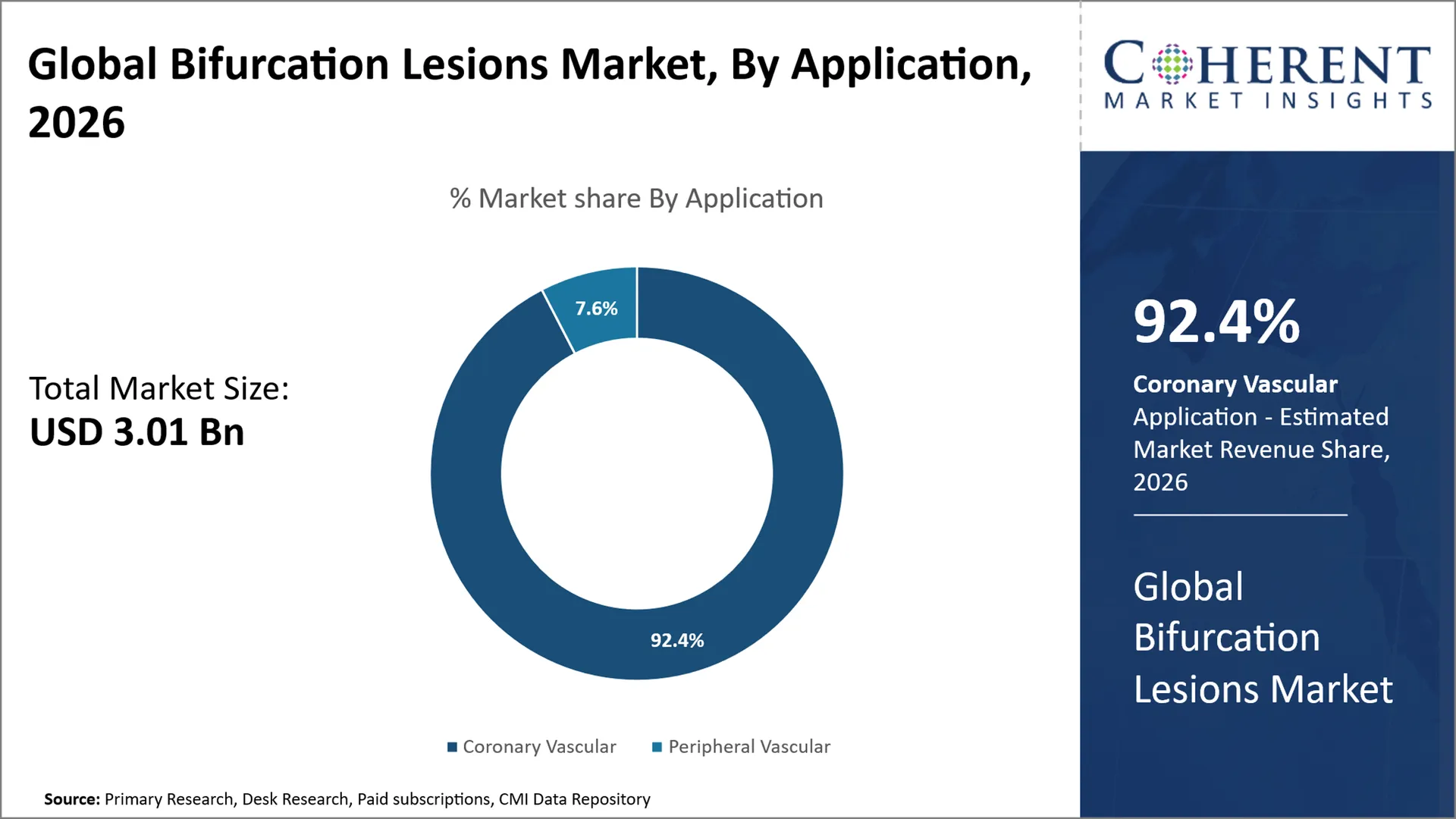
Coronary vascular is projected to hold a market share of 92.4% in 2026, owing to the large clinical burden of coronary artery disease, and the complex nature of coronary artery anatomy. Growing utilization of intravascular imaging (IVUS), anatomy guided PCI is further augmenting the therapy adoption in this segment. For instance, in May 2026, a clinical consensus report was co-published by the European Association of Percutaneous Cardiovascular Interventions (EAPCI) and the European Bifurcation Club on intracoronary imaging for left main PCI highlighting the need for imaging guided management of complex anatomy. (Source: Oxford University Press)
Provisional Stenting Segment Dominates the Global Bifurcation Lesions Market
The provisional stenting segment is projected to hold a market share of 62.4% in 2026, because it features minimum device-count and large application range. Provisional stenting permits stenting of the main vessel with stenting of side branch, if necessary, which limits the overall difficulty of the procedure. For instance, in March 2023, U.S. Food and Drug Administration (FDA) approved the Resolute Onyx stent system and the Onyx Frontier stent system for non-left main bifurcation lesion PCI with provisional stenting technique based on the clinical data of 205 patients.
Current Events and their Impact
Current Events | Description and its Impact |
China Updated National PCI Guidelines (July 2025) |
|
American College of Cardiology/ American Heart Association Updated Acute Coronary Syndrome Guideline (February 2025) |
|
European Bifurcation Club Updated Consensus on Coronary Bifurcation PCI (August 2024) |
|
Bifurcation Lesions Market Dynamics
Market Drivers
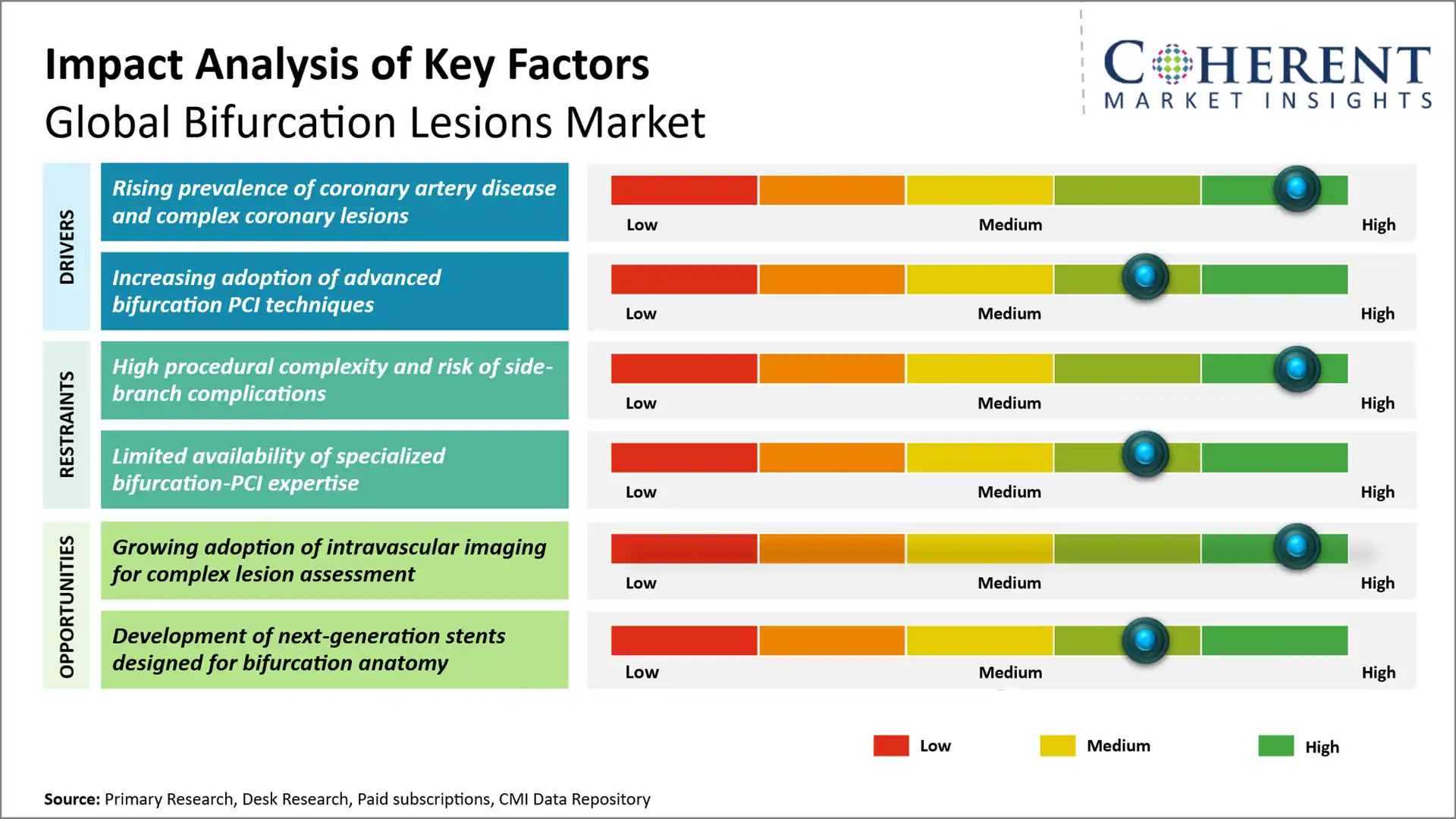
- Rising prevalence of coronary artery disease and complex coronary lesions: The increasing burden of coronary artery disease, together with a growing volume of anatomically complex lesions, is expanding the need for specialized PCI procedures. Complex bifurcation anatomy often requires advanced lesion assessment, dedicated stenting strategies, and greater procedural support. For instance, in March 2026, the European Society of Cardiology highlighted that advances in stent platforms, intracoronary imaging, plaque-modification devices, and other technologies are enabling PCI to address increasingly complex coronary anatomy, supporting continued demand for specialized bifurcation-lesion treatment solutions.
- Increasing adoption of advanced bifurcation PCI techniques: The increasing use of technique-specific approaches such as DK-crush, T-stenting/TAP, and culotte is expanding treatment options for complex bifurcation anatomy. Greater operator focuses on lesion complexity and procedural optimization is supporting the selective use of advanced two-stent strategies where provisional PCI may be insufficient. For instance, in March 2026, the DKCRUSH VIII randomized trial demonstrated that IVUS-guided PCI significantly reduced target-vessel failure compared with angiography-guided PCI in patients undergoing the two-stent DK-crush technique for complex coronary bifurcation lesions, supporting wider adoption of advanced, imaging-guided bifurcation PCI.
- Increasing adoption of advanced bifurcation PCI techniques: Growing use of specialized plaque-modification and lesion-preparation techniques is enabling intervention in heavily calcified and anatomically challenging bifurcation lesions. This is expanding the feasibility of complex PCI while supporting more precise stent delivery and deployment. For instance, the Society for Cardiovascular Angiography & Interventions (SCAI) expert consensus identifies specific plaque-modification approaches for calcified bifurcation lesions, including rotational atherectomy, scoring balloons, and intravascular lithotripsy.
Emerging Trends
- Growing adoption of drug-coated balloons: Drug-coated balloons are emerging as a stent-sparing option for bifurcation PCI, particularly for side-branch treatment after main-vessel stenting. This approach can reduce additional metal layers while delivering antiproliferative therapy.
- Increasing use of imaging- and physiology-guided strategies: Bifurcation PCI is increasingly shifting toward selective use of intravascular imaging and physiological assessment to guide side-branch intervention, lesion preparation, and procedural optimization rather than relying solely on angiographic assessment.
- Development of less metal-intensive treatment approaches: Newer bifurcation strategies are increasingly focused on preserving vessel geometry and minimizing unnecessary stent implantation, including hybrid approaches combining drug-eluting stents with drug-coated balloons and other stent-sparing techniques.
Regional Insights
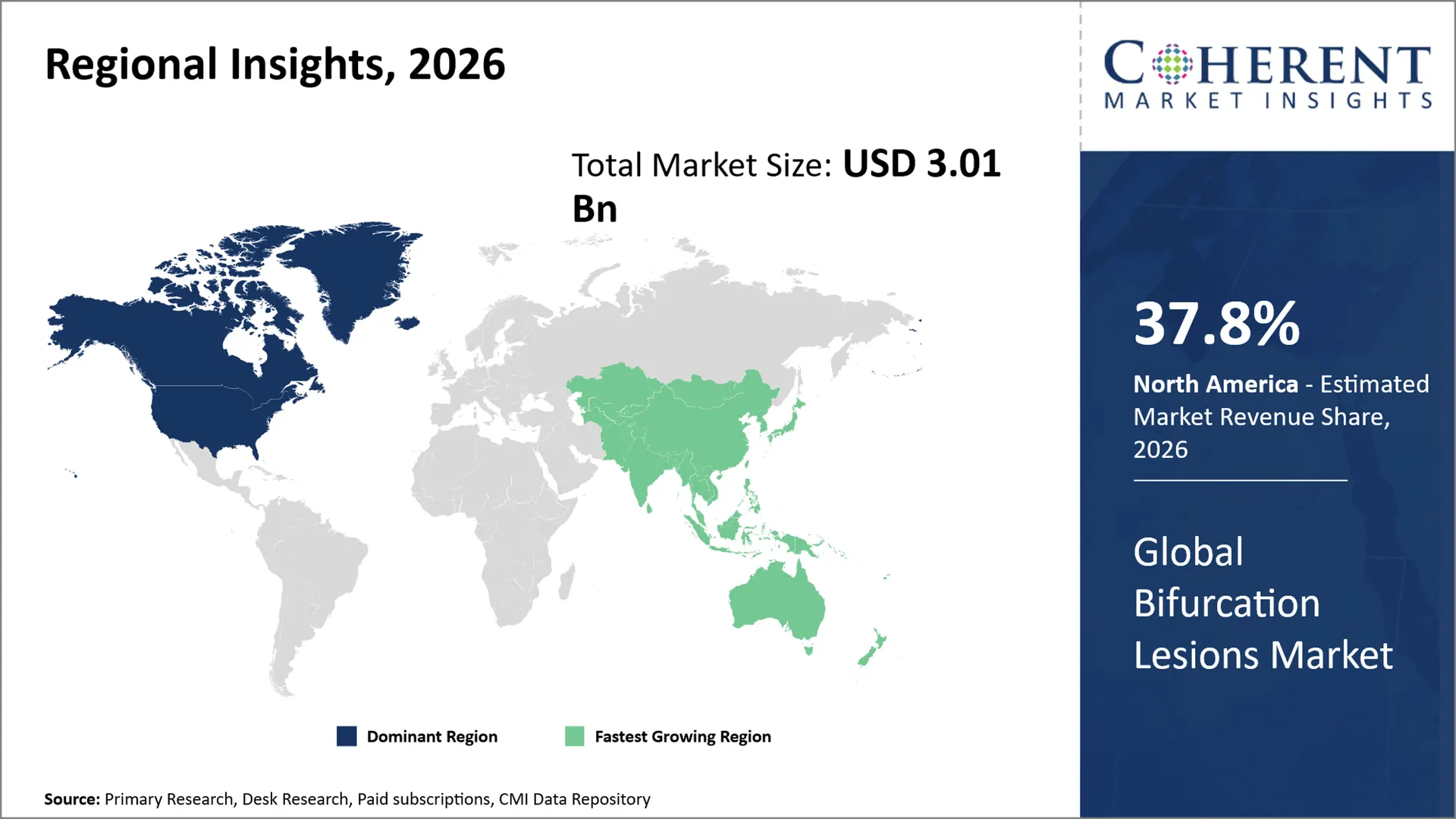
Why is North America a Strong Market for Bifurcation Lesions?
North America leads the global bifurcation lesions market, accounting for an estimated 37.8% share in 2026, boosted by strong healthcare infrastructure, robust PCI capabilities, and enormous healthcare spending. In addition, government spending towards cardiovascular sector and generous reimbursement policy for advanced PCI procedures help promote the market penetration for latest PCI solutions.
For instance, the 2026 percutaneous coronary interventions coding by U.S. Centers for Medicare & Medicaid Services (CMS) specifically includes bifurcation lesions necessitating angioplasty and/or stenting in the main vessel and side branch, improving payment accuracy for complex PCI interventions. Furthermore, clinical research activities, advanced cardiac care centers, and adoption of latest stent and imaging technology further add to the market growth in the region.
Why Does Asia Pacific Bifurcation Lesions Market Exhibit High Growth?
Asia Pacific is expected to exhibit the fastest growth in the global bifurcation lesions market, registering an estimated CAGR of 9.2% during 2026–2033. The region is projected to account for approximately 23.4% of the global market in 2026, driven by increasing burden of cardiovascular diseases, expanding healthcare facilities, and access to sophisticated PCI procedures. Investments by government of the countries such as China, and India are driving the region's adoption of better healthcare policies and accessibility as well as the growing network of hospitals promoting the demand of bifurcation lesions treatment, and increasing penetration of health insurance.
For instance, the Union Budget 2026-27 allocated USD 999 million (INR 9,500 crores) for the PM-JAY Scheme and USD 501 million (INR 4,770 crores) to boost Pradhan Mantri Ayushman Bharat Health Infrastructure Mission (PM-ABHIM) in an effort to extend the coverage of healthcare and strengthen hospital infrastructure. (Source: Press Information Bureau) Furthermore, large base population and increased accessibility of cardiac specialized procedures are enhancing the region’s demand.
Global Bifurcation Lesions Market Outlook for Key Countries
Why is the U.S. Leading Innovation and Adoption in the Bifurcation Lesions Market?
The U.S. drives market innovation and uptake through its ability to implement complex-PCI and use intravascular imaging technology rapidly in coronary interventional procedures. A skilled workforce of IVUS-and OCT-guided interventionists provides accurate visualization and optimization for the complex bifurcations anatomy. Furthermore, an existing network that can translate clinical evidence into a more advanced PCI technique and technology helps to lead the market segment.
Is Japan a Favorable Market for Bifurcation Lesions Market?
The Japanese market is favorable for bifurcation lesions, owing to a developed PCI infrastructure and successful use of latest coronary intervention technology. IVUS/OCT reimbursement is available, thus fostering extensive utilization of IVUS/OCT imaging guided complex coronary intervention technique. The comprehensive PCI network and the demonstrated clinical experience further make this country favorable for implementation of bifurcation-specific technologies.
Is China Emerging as a Key Growth Hub for the Bifurcation Lesions Market?
The robust growth in PCI capacity, high number of patients with coronary artery disease, and adoption of advanced interventional procedures contribute to China being one of the major contributors to the growth of the bifurcation lesions Market. The growing cardiac-care centers and clinical competency development in the country are improving reach of the complex coronary intervention. Furthermore, growing usage of intravascular imaging and progressive changes in PCI procedures fuels demand for bifurcations lesions treatment.
Why Does Germany Top the European Bifurcation Lesions Market?
Germany leads the European bifurcation lesions market because of its high number of PCI procedures, numerous catheterization-laboratory installations, and sizable pool of interventional cardiologists. Germans also exhibit elevated use of the latest devices in coronary intervention (e.g., intra-coronary imaging), especially in managing complex bifurcation anatomy. This has taken place within a well-developed care infrastructure for cardiac disease, which supports further device use in Germany.
Is Bifurcation Lesions Market Developing in India?
India represents an emerging bifurcation lesions market supported by the increasing clinical experience of managing complex coronary bifurcations and the ongoing concentration of these complex procedures in high volume cardiac centers. The country is also increasingly developing an evidence based regarding bifurcation specific treatment strategies through multi-center clinical trials and is supported by the availability of price controlled coronary stents and improved availability to cardiac interventional therapies.
Bifurcation PCI Techniques and Their Clinical Application
Treatment Technique | Typical Clinical Application | Key Procedural Characteristic |
Provisional Stenting | Most coronary bifurcation lesions with limited side-branch involvement | Main-vessel stenting followed by selective side-branch treatment |
Double-Kissing Crush (DK Crush) | Complex bifurcations with significant side-branch disease, particularly left-main lesions | Two-stent technique incorporating repeated kissing-balloon inflation |
T-Stenting / TAP | Bifurcations requiring side-branch stenting after provisional treatment | Side-branch stent positioned with minimal protrusion into the main vessel |
Culotte Stenting | Bifurcations with relatively similar vessel diameters and significant branch involvement | Sequential stenting of both branches with overlapping proximal segments |
Others | Selected complex anatomies requiring alternative or bailout approaches | Technique selected according to bifurcation angle, vessel size, and lesion morphology |
How is the growing adoption of intravascular imaging for complex lesion assessment creating new growth opportunities in the bifurcation lesions market?
The global bifurcation lesions market is anticipated to be driven by the escalating use of IVUS and OCT in order to provide better visualization of vessel morphology, plaque distribution, and stent expansion in the intricate bifurcation lesions. Further, these devices assist in improving the accuracy of device sizing, and optimization of devices leading to better procedure outcome and fewer complications. For instance, in August 2026, the European Society of Cardiology published the results of ISOLEDS trial where optical coherence tomography (OCT) guided PCI was non inferior compared to intravascular ultrasound (IVUS) guided PCI in 664 patients of true distal left-main bifurcation lesions.
Market Players, Key Development, and Competitive Intelligence
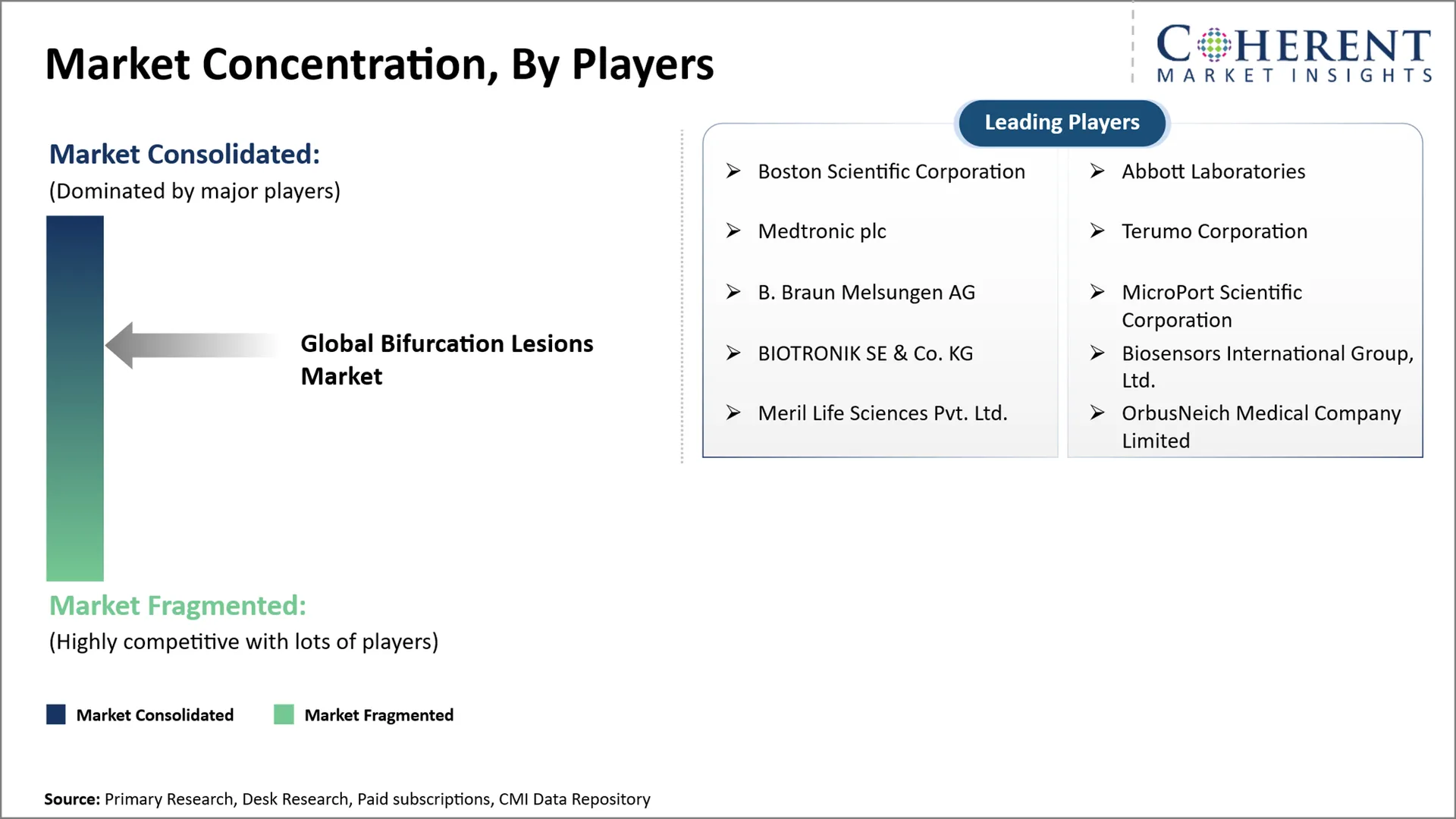
Key Developments
- In April 2026, Advanced Bifurcation Systems Inc. acquired Svelte Medical Systems, Inc., including its drug-eluting coronary stents, intellectual property, and U.S. and international regulatory approvals. The acquisition strengthens ABS’s bifurcation-focused technology platform and expands its presence in the global interventional cardiology market.
- In January 2025, Advanced Bifurcation Systems Inc. closed a USD 20.8 million SAFE financing round to support the development and regulatory advancement of its coronary bifurcation stent-delivery technology. The financing strengthens the company’s ability to advance its device toward commercialization for treating coronary bifurcation lesions.
- In April 2023, Terumo Corporation received MDR certification for its Ultimaster Nagomi coronary stent system and initiated a large post-market study covering complex PCI, including complex bifurcation lesions. The 3,000-patient study across 60 European centers is expected to generate clinical evidence relevant to bifurcation and other complex coronary interventions.
Competitive Landscape
The global bifurcation lesions market is moderately competitive, with market dynamics shaped by advances in bifurcation-specific stent technologies, procedural innovation, intravascular imaging, and development of solutions for increasingly complex coronary anatomy. Market participants are increasingly focusing on improving stent deliverability and vessel conformability while strengthening clinical evidence and procedural support.
Key focus areas include
- Development of next-generation stent technologies designed for complex bifurcation anatomy
- Advancement of intravascular imaging and imaging-guided bifurcation PCI
- Innovation in drug-coated balloons and other stent-sparing treatment approaches
- Expansion of clinical evidence supporting optimized provisional and two-stent strategies
- Development of technologies for complex and heavily calcified bifurcation lesions
- Improvement of device deliverability, side-branch access, and stent positioning during bifurcation procedures
- Expansion of physician training and procedural support for advanced bifurcation PCI techniques
Market Report Scope
Global Bifurcation Lesions Market Report Coverage | |||
Report Coverage | Details | ||
Base Year | 2025 | Market Size in 2026: | USD 3.01 Bn |
Historical Data For: | 2020 To 2024 | Forecast Period: | 2026 To 2033 |
Forecast Period 2026 To 2033 CAGR: | 7.1% | 2033 Value Projection: | USD 4.87 Bn |
Geographies covered: |
| ||
Segments covered: |
| ||
Companies covered: | Boston Scientific Corporation, Abbott Laboratories, Medtronic plc, Terumo Corporation, B. Braun Melsungen AG, MicroPort Scientific Corporation, BIOTRONIK SE & Co. KG, Biosensors International Group, Ltd., Meril Life Sciences Pvt. Ltd., OrbusNeich Medical Company Limited | ||
Growth Drivers: |
| ||
Restraints & Challenges: |
| ||
Analyst Opinion (Expert Opinion)
- In the coming years, global bifurcation lesions market will be shaped by a shift toward more precise, anatomy-driven and minimally metal-intensive PCI. Increasing integration of intravascular imaging, advanced lesion-preparation technologies, drug-coated balloons, and dedicated bifurcation devices is expected to improve procedural precision while reducing complications. The market is likely to move toward personalized treatment selection based on lesion complexity and side-branch involvement.
- The maximum opportunities are foreseen within one-stent bifurcation for coronary vascular in U.S., where the combination of high coronary PCI volumes, established interventional-cardiology infrastructure, and continued demand for optimized treatment of complex coronary anatomy creates a large addressable market. Players should particularly focus on imaging-compatible stents, advanced delivery systems, and stent-sparing technologies for coronary bifurcation procedures.
- In order to gain a competitive advantage, market players should differentiate through integrated bifurcation-PCI solutions rather than standalone devices, combining stents, balloons, guidewires, and imaging-compatible technologies. Greater investment in next-generation device designs, procedural optimization, physician training, and clinical evidence generation can strengthen adoption and create differentiation in an increasingly technique-driven market.
Speak to the analyst
Want personalized insights?
Take the findings above to one of our principal consultants, or have the report rebuilt around the segments, geographies and competitors you actually track.
Market Segmentation
- Type Insights (Revenue, USD Bn, 2021 - 2033)
- One-Stent Bifurcation
- Two-Stent Bifurcation
- Application Insights (Revenue, USD Bn, 2021 - 2033)
- Coronary Vascular
- Peripheral Vascular
- Treatment Technique Insights (Revenue, USD Bn, 2021 - 2033)
- Provisional Stenting
- Double-Kissing Crush (DK Crush)
- T-Stenting / TAP
- Culotte Stenting
- Others
- End User Insights (Revenue, USD Bn, 2021 - 2033)
- Hospitals and Cardiac Care Centers
- Specialty Clinics
- Ambulatory Surgical Centers
- Diagnostic Centers
- Others
- Regional Insights (Revenue, USD Bn, 2021 - 2033)
- North America
- U.S.
- Canada
- Latin America
- Brazil
- Argentina
- Mexico
- Rest of Latin America
- Europe
- Germany
- U.K.
- Spain
- France
- Italy
- Russia
- Rest of Europe
- Asia Pacific
- China
- India
- Japan
- Australia
- South Korea
- ASEAN
- Rest of Asia Pacific
- Middle East
- GCC Countries
- Israel
- Rest of Middle East
- Africa
- South Africa
- North Africa
- Central Africa
- North America
Sources
Primary Research Interviews
- Interventional cardiologists specializing in coronary bifurcation PCI
- Cardiac catheterization laboratory directors and complex-PCI specialists
- Cardiologists experienced in IVUS- and OCT-guided bifurcation interventions
- Clinical investigators conducting bifurcation PCI and coronary stenting trials
- Medical-device executives and product-development specialists involved in coronary stents, balloons, guidewires, and imaging technologies
Stakeholders
- Coronary stent, balloon, guidewire, and catheter manufacturers
- Intravascular imaging and cardiac imaging technology providers
- Hospitals and cardiac care centers performing complex PCI
- Specialty cardiology and interventional-cardiology centers
- Clinical research organizations conducting coronary intervention studies
- Distributors and suppliers of interventional cardiology devices
- End-use Sectors
- Hospitals & Cardiac Care Centers
- Specialty Clinics
- Ambulatory Surgical Centers
- Diagnostic Centers
- Regulatory & Health Bodies
- U.S. Food and Drug Administration (FDA) – Center for Devices and Radiological Health
- European Medicines Agency (EMA)
- Medicines and Healthcare products Regulatory Agency (MHRA), UK
- Pharmaceuticals and Medical Devices Agency (PMDA), Japan
- National Medical Products Administration (NMPA), China
- Central Drugs Standard Control Organisation (CDSCO), India
Databases
- ClinicalTrials.gov
- European Union Clinical Trials Information System (CTIS)
- World Health Organization International Clinical Trials Registry Platform (WHO ICTRP)
- National Cardiovascular Data Registry (NCDR) CathPCI Registry
Journals
- EuroIntervention
- JACC: Cardiovascular Interventions
- Circulation: Cardiovascular Interventions
- Catheterization and Cardiovascular Interventions
- Journal of the Society for Cardiovascular Angiography & Interventions (JSCAI)
Associations
- European Bifurcation Club (EBC)
- Society for Cardiovascular Angiography & Interventions (SCAI)
- European Association of Percutaneous Cardiovascular Interventions (EAPCI)
- European Society of Cardiology (ESC)
- American College of Cardiology (ACC)
- American Heart Association (AHA)
Public Domain Sources
- U.S. Food and Drug Administration – coronary stent regulatory guidance and device information
- National Center for Biotechnology Information (NCBI) – bifurcation PCI literature and clinical publications
- National Institutes of Health (NIH) – cardiovascular research and clinical-trial information
- ClinicalTrials.gov – coronary bifurcation PCI clinical-trial records
- European Bifurcation Club – consensus documents on coronary bifurcation interventions
- Society for Cardiovascular Angiography & Interventions – clinical and procedural resources on bifurcation PCI
Proprietary Elements
- CMI Data Analytics Tool
- Proprietary CMI Existing Repository of information for last 10 years.
Get access to 250+ pages report
Every segment, forecast, competitor profile and data table behind the analysis above — available for instant download.
- ESOMAR Member
- ISO 9001:2015 Certified
- D-U-N-S Registered
- GDPR & CCPA Compliant
Missing comfort of reading report in your local language? Find your preferred language:
Frequently Asked Questions
The global bifurcation lesions market is estimated to be valued at USD 3.01 Bn in 2026 and is expected to reach USD 4.87 Bn by 2033.
One-stent bifurcation dominates due to its simpler procedural approach, lower device utilization, and suitability for the majority of bifurcation lesions.
Bifurcation lesions are coronary artery blockages located at or near the point where a main coronary vessel divides into a main branch and a side branch.
The CAGR of global bifurcation lesions market is projected to be 7.1% from 2026 to 2033.
Rising prevalence of coronary artery disease and complex coronary lesions, and increasing adoption of advanced bifurcation PCI techniques are the major factors driving the growth of the global bifurcation lesions market.
High procedural complexity and risk of side-branch complications, and limited availability of specialized bifurcation-PCI expertise are the major factors hampering the growth of the global bifurcation lesions market.
In terms of end user, hospitals and cardiac care centers are estimated to dominate the market revenue share in 2026.