

Coronary Artery Disease Therapeutics Market Size and Share Analysis - 2026 To 2033
The Coronary Artery Disease Therapeutics Market size is anticipated to grow at a CAGR of 5.7% with USD 15.1 Bn in 2026 and is expected to reach USD 22.3 Bn in 2033. The growth is owing to the rising prevalence of coronary artery diseases and cardiovascular disorders globally. Increasing incidence of atherosclerosis, hypertension, diabetes, dyslipidemia is rising the patient population requiring the therapeutic care. WHO estimated 17.9 million people die from cardiovascular disorders globally.
Key Takeaways
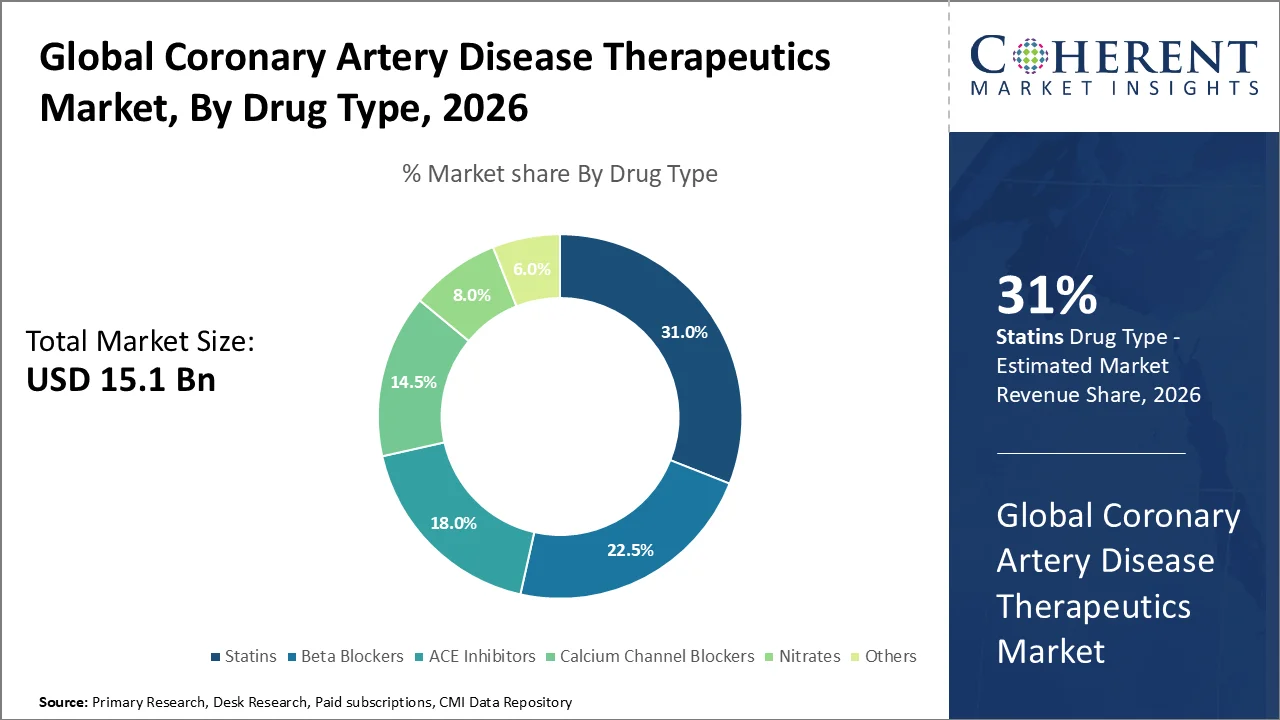
- Statins segment is expected to account for the largest share of 31% in 2026. The segment’s growth is owing as it is the most important drug in preventing the occurrence of cardiovascular diseases. It lowers the LDL cholesterol and also exhibits anti-inflammatory and plaque-stabilizing effects.
- The Hospital pharmacies segment is expected to hold 47.5% market share by 2026. Hospital Pharmacies dominate the share as cardiovascular disorder therapeutics require highly specialized and acute interventions.
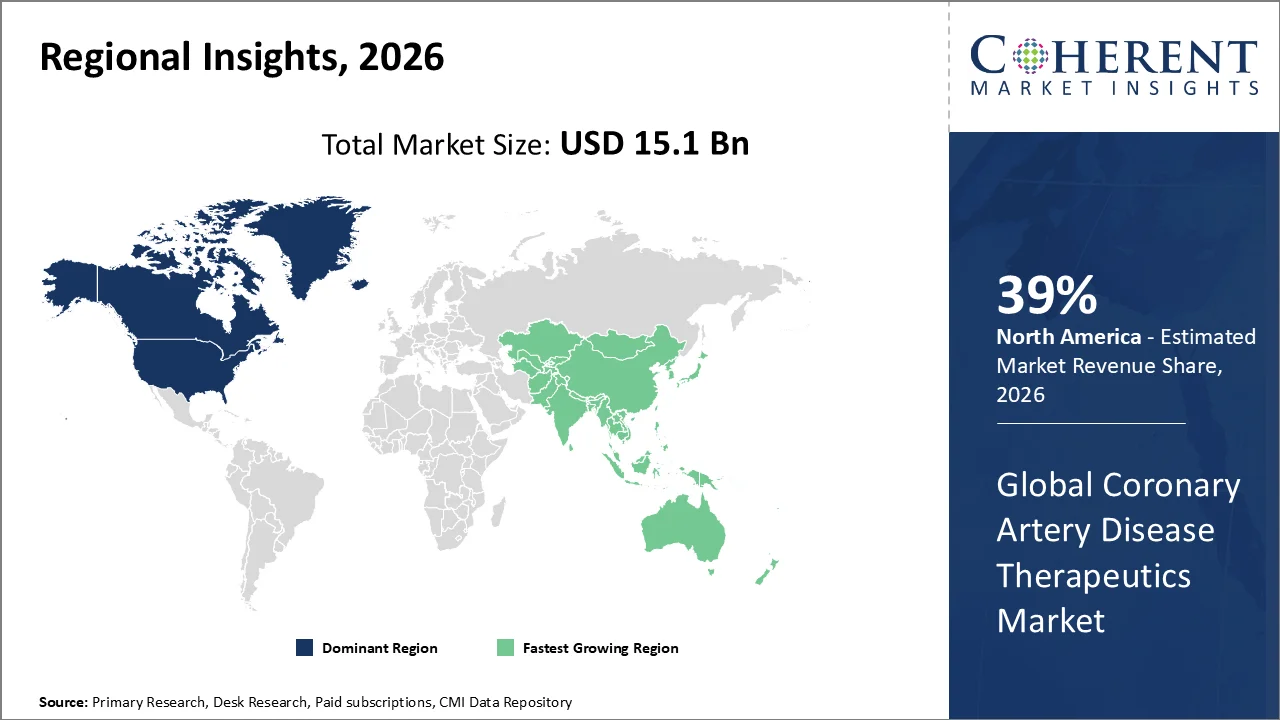
- North America is expected to acquire the dominant share of 39% in 2026. The region’s growth is increasing due to their people’s lifestyle. Rates of obesity and hypertension is much more than there as compared to other regions. As per NIH, North America has the highest healthcare spending on coronary artery disease treatment worldwide. The annual economic burden of CAD in the region exceeds USD 200 billion, driven by high treatment, hospitalization, and long-term care costs.
Segmental Insights
Why is Statins Segment Acquiring the Highest Share in the Market?
The Statins segment is anticipated to account for the largest share of around 31% in 2026, driven by its established role in managing coronary artery disease and related cardiovascular conditions. . According to Mayo Clinic, statins are medications that reduce cholesterol levels by inhibiting a key substance required by the body to produce cholesterol. Statins work by inhibiting an enzyme in the liver responsible for cholesterol production, thereby reducing the amount of LDL cholesterol circulating in the bloodstream. They also help stabilize arterial plaques and improve blood vessel function, contributing to better cardiovascular health. Strong clinical evidence, widespread physician preference, inclusion in treatment guidelines, and growing awareness of preventive cardiovascular care continue to support the segment’s leading market position.
- Current Industry Events of 2026
- Market Size Estimation
- Regional Breakdown
- Competitive Landscape
- Customer Intelligence
- Segmental Analysis
- Pricing Analysis
- Key Market Drivers, Challenges & Future Trends
- Customized Insights Section
Hospital Pharmacies the Largest Market Share
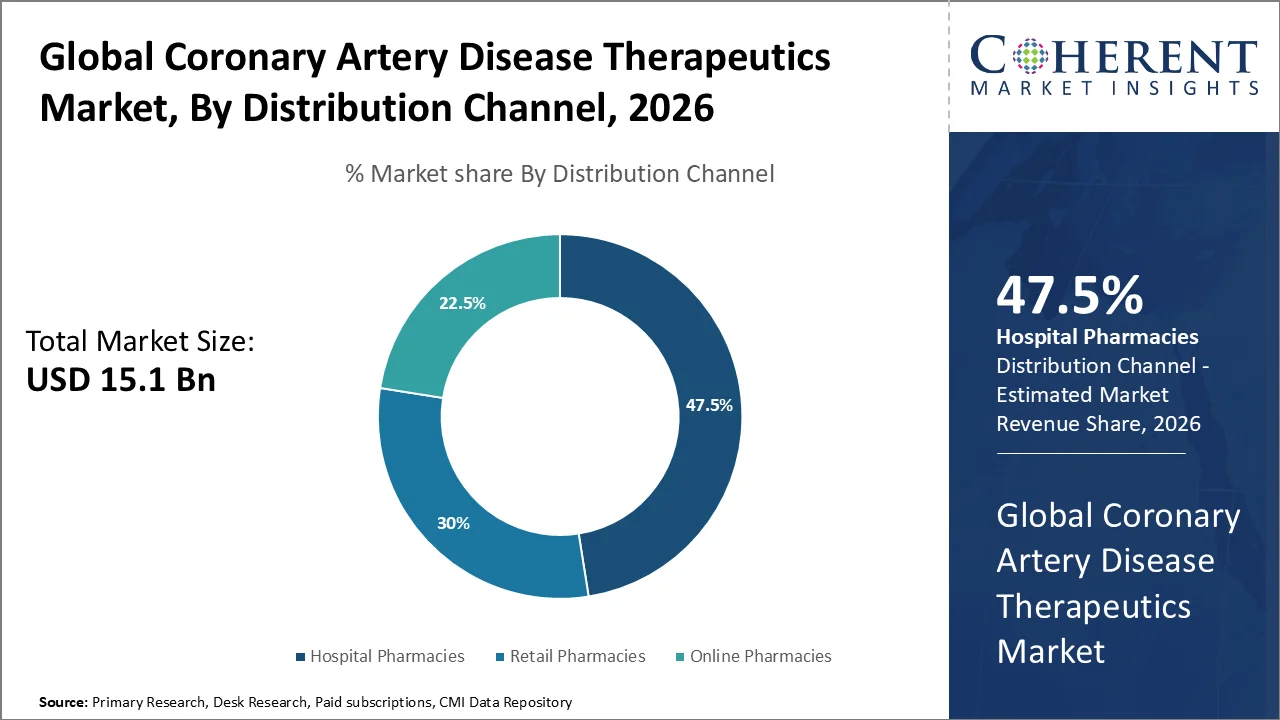
The Hospital Pharmacies segment is projected to capture approximately 47.5% of the market in 2026, supported by its central role in dispensing medications for patients undergoing cardiac procedures and inpatient treatment. These facilities ensure immediate access to specialized cardiovascular drugs, expert clinical supervision, and coordinated care. The increasing number of hospital admissions related to coronary artery disease, along with the availability of advanced treatment options, continues to strengthen the segment’s market leadership. For instance, coronary artery disease (CAD) is a leading cause of hospitalization worldwide, and in the United States alone it results in over 1.5 million hospital admissions and emergency department visits annually, including cases such as acute myocardial infarction.
In 2025, Novartis expanded the hospital availability of Leqvio (inclisiran) following its FDA label expansion, enabling hospitals and health systems to offer the twice-yearly LDL cholesterol-lowering therapy to a broader population of cardiovascular patients.
Market Drivers
Rising prevalence of coronary artery disease (CAD) worldwide is Transforming the Coronary Artery Disease Therapeutics Market
The rising prevalence of coronary artery disease (CAD) globally is transforming the Coronary Artery Disease Therapeutics Market by rising aging population, sedentary lifestyles, obesity, diabetes and hypertension related problems globally. By 2030, about one in every six people globally is expected to be aged 60 years or older.
The opportunity in the Coronary Artery Disease Therapeutics Market is closely tied to the growing global burden of cardiovascular diseases and the expanding adoption of preventive cardiac care. According to the World Health Organization (WHO), cardiovascular diseases remain the leading cause of death worldwide, accounting for nearly 18 million deaths annually, with coronary artery disease representing a significant share of cases. At the same time, ongoing advancements in lipid-lowering therapies, anti-inflammatory drugs, and precision medicine approaches are creating new treatment opportunities, while supportive regulatory approvals and reimbursement policies continue to improve patient access to innovative cardiovascular therapies.
Gene-Editing and RNA-Based Cholesterol-Lowering Therapies: A Major Breakthrough in the Coronary Artery Disease Therapeutics Market
Gene-editing and RNA-based therapies are revolutionizing the treatment of coronary artery disease by addressing the underlying causes of elevated cholesterol levels. Unlike conventional statins that require daily administration, these advanced therapies can provide long-lasting LDL cholesterol reduction with infrequent dosing. Innovations such as inclisiran, a small interfering RNA (siRNA) therapy, and emerging gene-editing candidates targeting the PCSK9 gene have demonstrated significant potential in lowering cardiovascular risk. These breakthroughs are expected to improve patient adherence, enhance treatment outcomes, and create new growth opportunities within the coronary artery disease therapeutics market.
Verve Therapeutics reported positive clinical data for VERVE-102, an investigational in vivo gene-editing therapy targeting the PCSK9 gene. The therapy demonstrated substantial LDL cholesterol reductions with the potential for a one-time treatment approach, representing a major advancement in cardiovascular medicine. This achieved great prominence in May 2026.
Current Events and Their Impact on the Coronary Artery Disease Therapeutics Market
Current Event | Description and its Impact |
Emergence of LDL-C–Lowering Gene Editing and siRNA Therapies |
|
FDA Expansion of Labeling for SGLT2 Inhibitors and GLP-1 Receptor Agonists in Cardiovascular Risk Reduction |
|
Coronary Artery Disease Therapeutics Market Trends
- The adoption of digital health technologies is transforming coronary artery disease management by enabling better patient monitoring and more effective treatment follow-up. More than 1.4 billion people globally use digital health technologies.
- In 2025, the implementation of AI-based diagnostic solutions across major U.S. healthcare systems contributed to a roughly 12% decline in readmissions related to coronary complications.
- Medical device manufacturers are increasingly focusing on bioresorbable and environmentally friendly stent materials to enhance patient safety and support sustainability goals.
- Government-backed telehealth initiatives are accelerating the use of remote cardiology services, improving access to specialist care in rural and underserved communities.
- Digital patient-support platforms are gaining traction for improving medication compliance, facilitating continuous care, and enhancing long-term cardiovascular health outcomes.
Regional Insights
North America Market Leadership Driven by highest expanding on coronary artery diseases treatment worldwide
Representing nearly 39% of the global market in 2026, North America maintains its market leadership through ongoing technological advancements and a supportive regulatory environment. North America holds a leading position in the coronary artery disease therapeutics market due to its well-established healthcare ecosystem, broad access to advanced cardiovascular treatments, and favorable insurance coverage. The region benefits from significant investments in research and development, enabling the introduction of novel therapies and improved treatment approaches. A large patient population affected by cardiovascular disorders, combined with extensive clinical research activities, continues to drive demand.
North America's market leadership is reinforced by the rapid introduction of advanced cardiovascular therapies. In 2025, Leqvio (inclisiran) received an expanded FDA approval for broader LDL cholesterol management, increasing access to long-acting cholesterol-lowering treatment for high-risk cardiovascular patients.
Asia Pacific Coronary Artery Disease Therapeutics Market Trends
The Asia-Pacific region is expected to witness the highest growth in the coronary artery disease therapeutics market, with a forecast CAGR of over 23%. Increasing rates of obesity, diabetes, hypertension, and other cardiovascular risk factors are contributing to a larger patient population requiring treatment. According to the National Library of Medicine, obesity prevalence in India is projected to increase significantly, reaching an estimated 17.4% in women and 12.1% in men by 2050. Furthermore, strategic investments by pharmaceutical manufacturers and public health programs focused on disease prevention and early detection are creating favorable conditions for continued market growth throughout the region.
The Asia-Pacific market is experiencing strong growth due to increasing access to innovative cardiovascular therapies. In 2025, Novartis expanded the availability of Leqvio (inclisiran) across several Asia-Pacific countries, strengthening access to long-acting LDL cholesterol management.
Germany Coronary Artery Disease Therapeutics Market Analysis and Trends
Germany's coronary artery disease therapeutics market is supported by a substantial cardiovascular patient population, increasing life expectancy, and comprehensive healthcare coverage. The country has a strong foundation in cardiovascular care, enabling broad access to established and emerging treatment options. Growing utilization of advanced lipid-lowering therapies, personalized treatment approaches, and preventive care strategies is shaping the market landscape. The adoption of digital technologies for patient monitoring and disease management is also expanding. Despite pricing and regulatory challenges, ongoing research initiatives and favorable reimbursement frameworks continue to support market development.
United States Coronary Artery Disease Therapeutics Market Trends
The United States continues to lead the coronary artery disease therapeutics market due to its strong healthcare system, extensive cardiovascular research activities, and widespread use of advanced treatment options. The adoption of modern medical technologies, digital care platforms, and standardized treatment practices has improved disease management and patient care. Continuous product development by major industry participants, along with partnerships between healthcare providers and pharmaceutical companies, further strengthens the country's position in the global market.
Who are the Major Companies in Coronary Artery Disease Therapeutics Market
Some of the major key players in Coronary Artery Disease Therapeutics Market are AstraZeneca, Gilead, Pfizer, Bayer, Novartis, Merck & Co., GlaxoSmithKline Plc, Mylan N.V.
Key News
- In March 2026, GAIA and Daiichi Sankyo Europe Enter Exclusive Partnership to Launch Next-Generation Digital Therapeutic for Cardiovascular Care in Europe. Under this agreement they decided to expand cardiovascular care beyond medicines which will transform cardiovascular diseases therapeutics segment.
- In Dec 2025, Atoms therapeutics has initiated a multi-regional Phase 2 clinical trial evaluating ABP-745 for the treatment of coronary artery disease (CAD), a major manifestation of atherosclerotic cardiovascular diseases (ACVD).
Market Report Scope
Coronary Artery Disease Therapeutics Market Report Coverage
| Report Coverage | Details | ||
|---|---|---|---|
| Base Year: | 2025 | Market Size in 2026: | USD 15.1 Bn |
| Historical Data for: | 2020 To 2024 | Forecast Period: | 2026 To 2033 |
| Forecast Period 2026 to 2033 CAGR: | 5.7% | 2033 Value Projection: | USD 22.3 Bn |
| Geographies covered: |
| ||
| Segments covered: |
| ||
| Companies covered: | AstraZeneca, Gilead, Novartis, Pfizer, Bayer, Merck & Co., GlaxoSmithKline plc, Mylan N.V. | ||
| Growth Drivers: |
| ||
| Restraints & Challenges: |
| ||
Analyst Opinion
- The Coronary Artery Disease (CAD) Therapeutics Market is expected to witness sustained long-term growth as cardiovascular diseases remain the leading cause of mortality worldwide, accounting for approximately 19.8 million deaths annually, or nearly 32% of all global deaths, ensuring a continuously expanding treatment population.
- In my assessment, the market's strongest growth catalyst is not innovation alone but the persistent rise in risk factors such as obesity, diabetes, hypertension, and sedentary lifestyles, which continue to increase CAD incidence across both developed and emerging economies.
- The growing volume of coronary interventions is creating recurring demand for adjunctive therapies. For example, over 438,000 percutaneous coronary intervention (PCI) procedures are performed annually in India, each requiring long-term antiplatelet and lipid-lowering treatment, strengthening pharmaceutical revenue streams.
- The increasing adoption of advanced lipid-lowering therapies, including PCSK9 inhibitors and novel cholesterol-management agents, reflects a broader movement toward preventive cardiovascular care, which is expected to expand the therapeutic market beyond acute disease treatment.
- Government initiatives promoting early cardiovascular screening, telecardiology services, and improved healthcare access are accelerating diagnosis rates, thereby increasing the number of patients entering long-term treatment pathways.
Speak to the analyst
Want personalized insights?
Take the findings above to one of our principal consultants, or have the report rebuilt around the segments, geographies and competitors you actually track.
Market Segmentation
- By Drug Type (Revenue, USD Bn, 2021-2033)
- Beta Blockers
- Statins
- ACE Inhibitors
- Nitrates
- Calcium Channel Blockers
- Others
- By Distribution Channel (Revenue, USD Bn, 2021-2033)
- Hospital Pharmacies
- Retail Pharmacies
- Online Pharmacies
- By Region (Revenue, USD Bn, 2021-2033)
- North America
- U.S.
- Canada
- Latin America
- Brazil
- Mexico
- Argentina
- Rest of Latin America
- Europe
- Germany
- U.K.
- France
- Italy
- Spain
- Russia
- Rest of Europe
- Asia Pacific
- China
- India
- Japan
- Australia
- South Korea
- ASEAN
- Rest of Asia Pacific
- Middle East
- GCC
- Israel
- Rest of Middle East
- Africa
- South Africa
- Central Africa
- North Africa
- North America
Sources
Primary Research Interviews
- Cardiologists, interventional cardiologists, cardiac surgeons, hospital pharmacists, and healthcare providers involved in coronary artery disease (CAD) diagnosis, treatment, and drug administration.
- Clinical researchers, pharmacologists, biomedical scientists, regulatory affairs experts, and R&D directors specializing in cardiovascular therapeutics, lipid-lowering agents, antiplatelet therapies, and precision cardiology.
Databases
- PubMed
- ClinicalTrials.gov
- U.S. Food and Drug Administration (FDA) Database
- European Medicines Agency (EMA) Database
- World Health Organization (WHO) Global Health Observatory
- Centers for Disease Control and Prevention (CDC) Databases
- National Center for Biotechnology Information (NCBI)
- IQVIA Prescription and Healthcare Data Resources
- Organisation for Economic Co-operation and Development (OECD) Health Statistics
- World Bank Health and Population Databases
Magazines
- Cardiology Today – Coverage of coronary artery disease treatment advances, clinical best practices, and cardiovascular drug innovations.
- Heart Failure Review – Insights into CAD management, therapeutic developments, and patient care strategies.
- Pharmaceutical Executive – Updates on cardiovascular drug pipelines, market trends, and pharma industry strategies.
Journals
- Journal of the American College of Cardiology – Research on CAD treatment efficacy, clinical trials, and cardiovascular drug development.
- European Heart Journal – Studies on coronary artery disease management, interventional cardiology, and pharmacological innovations.
- Circulation – Research covering cardiovascular therapeutics, lipid management, and preventive cardiology advancements.
Newspapers
- Financial Times – Coverage of pharmaceutical investments, cardiovascular drug market growth, and healthcare industry developments.
- Reuters – Reporting on drug approvals, clinical trial outcomes, and cardiovascular treatment advancements.
- Bloomberg – Insights into pharma companies, biotech innovations, and global cardiovascular market expansion strategies.
Associations
- American Heart Association (AHA) – Guidelines, research updates, and cardiovascular disease management standards.
- European Society of Cardiology (ESC) – Clinical guidelines and research on coronary artery disease and heart health.
- World Heart Federation (WHF) – Global initiatives, cardiovascular health policies, and CAD awareness programs.
Public Domain Sources
- World Health Organization (WHO)
- Centers for Disease Control and Prevention (CDC)
- National Institutes of Health (NIH)
- U.S. Food and Drug Administration (FDA)
- European Medicines Agency (EMA)
- National Health Service (NHS)
- Organisation for Economic Co-operation and Development (OECD)
- World Bank
- United Nations Health Statistics Database
- Government Health Ministry Publications and Annual Reports
Proprietary Elements
- CMI Data Analytics Tool
- Proprietary CMI Existing Repository of Information for Last 8 Years
Get access to 250+ pages report
Every segment, forecast, competitor profile and data table behind the analysis above — available for instant download.
- ESOMAR Member
- ISO 9001:2015 Certified
- D-U-N-S Registered
- GDPR & CCPA Compliant
Missing comfort of reading report in your local language? Find your preferred language:
Transform your Strategy with Exclusive Trending Reports
Frequently Asked Questions
The Coronary Artery Disease Therapeutics Market is expected to reach USD 22.3 Bn in 2033.
Major players operating in the Coronary Artery Disease Therapeutics Market include AstraZeneca, Gilead, Novartis, Pfizer, Bayer, Merck & Co., GlaxoSmithKline Plc, Mylan N.V.
The growth of the Coronary Artery Disease Therapeutics Market is hindered by the high cost of advanced cardiovascular therapies, which limits patient access in many regions. Stringent regulatory approval processes and lengthy clinical trials can delay the introduction of new treatments.
The growth of the Coronary Artery Disease Therapeutics Market is primarily driven by the rising prevalence of coronary artery disease, increasing rates of obesity, diabetes, and hypertension, and a growing aging population. Continuous advancements in cardiovascular therapies, including lipid-lowering and preventive treatments, are improving patient outcomes.
The Coronary Artery Disease Therapeutics Market is anticipated to grow at a CAGR of 5.7% between 2026 and 2033.
Among regions, North America is expected to account for a largest market share in the Coronary Artery Disease Therapeutics Market over the forecast period.