

DNA Sequencing Market Size & Trends
DNA Sequencing Market is estimated to be valued at USD 9,496.6 Mn in 2026 and is expected to reach USD 20,863.1 Mn in 2033, exhibiting a compound annual growth rate (CAGR) of 11.9% from 2026 to 2033.
Key Takeaways
- Based on Product Type, the Consumables segment is expected to dominate the global DNA sequencing market, capturing 46.5% share in 2026, due to their recurring usage in every sequencing run.
- Based on Technology, the Next-Generation Sequencing segment leads the market with the largest share in 2026, due to its speed, accuracy, scalability, and cost-effectiveness.
- Based on Application, the Oncology segment is expected to hold a significant share of the market in 2026, driven by growing need for precision diagnostics and personalized cancer treatment.
- Based on End User, the Pharmaceutical & Biotechnology Companies segment is projected to capture the highest share of the global DNA sequencing market in 2026,
- Based on Region, North America is expected to lead the market, holding a share of 37.8% in 2026. While, Europe is anticipated to be the fastest growing region during the forecast period.
Market Overview
The DNA sequencing market is experiencing strong growth driven by rising demand across clinical diagnostics, personalized medicine, and biotechnology research. Increasing prevalence of genetic disorders, cancer, and infectious diseases has led to growing reliance on sequencing technologies for early and accurate detection. The DNA sequencing market demand is further fueled by the adoption of next-generation sequencing (NGS), which offers high-throughput analysis at lower costs and faster turnaround times compared to traditional methods. Pharmaceutical and biotech companies are investing heavily in genomic research to develop targeted therapies, while government initiatives worldwide are supporting genome mapping programs and precision healthcare.
Current Events and Their Impact on the DNA Sequencing Market
Current Event | Description and its Impact |
Federal Research Funding Crisis and Policy Shifts |
|
US-China Trade War and Geopolitical Tensions |
|
Role of Artificial Intelligence (AI) in the DNA Sequencing Market
Artificial Intelligence (AI) is rapidly transforming the DNA sequencing market by enhancing data interpretation, accelerating analysis, and improving diagnostic accuracy. Traditional sequencing generates massive volumes of genomic data, but AI-driven algorithms can process this information far more efficiently, identifying mutations, classifying genetic variants, and predicting disease risks with higher precision. AI tools are also being integrated into next-generation sequencing (NGS) workflows to optimize base calling, reduce sequencing errors, and automate variant annotation. This has significantly shortened turnaround times in clinical and research settings. Furthermore, AI-powered platforms are enabling real-time genomic insights for personalized medicine, especially in oncology, rare diseases, and pharmacogenomics. According to recent DNA Sequencing Market Forecasts, the integration of AI and machine learning technologies is expected to be a key growth catalyst, making sequencing faster, more scalable, and more accessible across both developed and emerging markets.
In June 2025, DeepMind introduced AlphaGenome, an AI model designed to predict how single DNA variants impact gene regulation across the vast non‑coding 98% of the genome. AlphaGenome processes up to one million base‑pairs at single‑letter resolution and outputs thousands of molecular properties, including transcription start and end sites, RNA splicing, chromatin accessibility, and protein binding, using deep learning architectures built from convolutional and transformer layers.
- Current Industry Events of 2026
- Market Size Estimation
- Regional Breakdown
- Competitive Landscape
- Customer Intelligence
- Segmental Analysis
- Pricing Analysis
- Key Market Drivers, Challenges & Future Trends
- Customized Insights Section
Segmental Insights
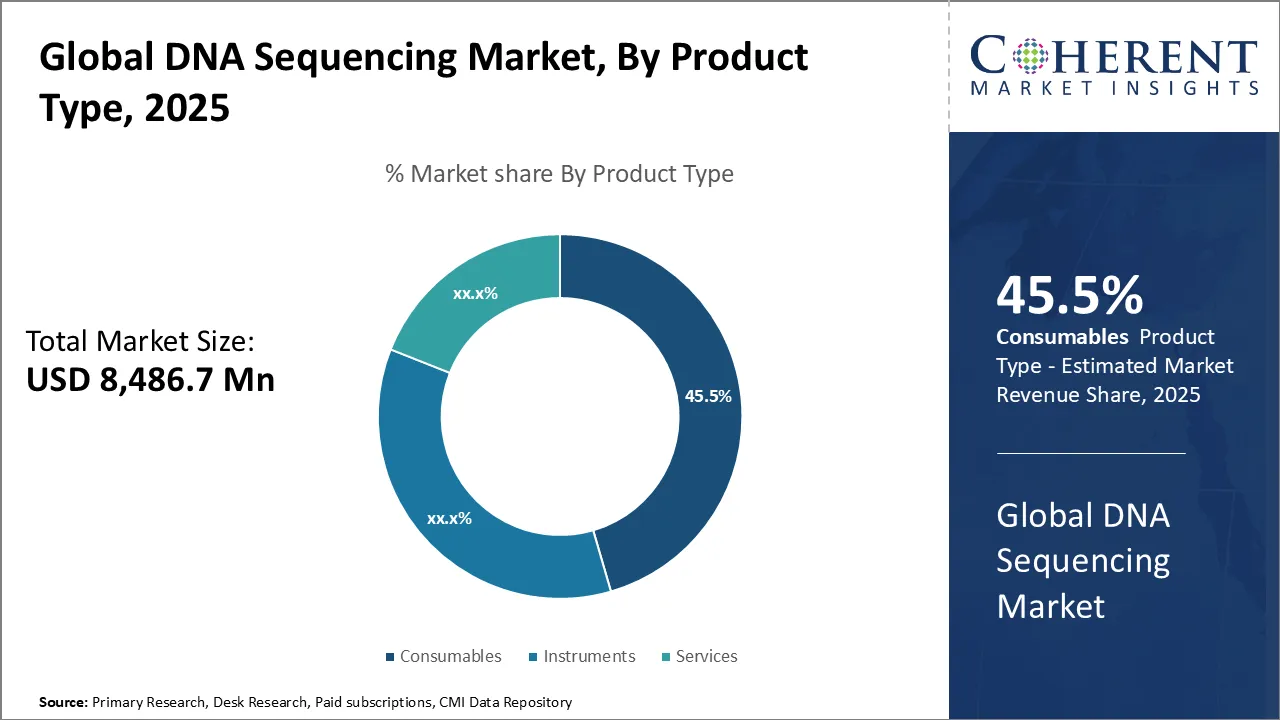
DNA Sequencing Market Insights, By Product Type: Consumables Dominates the overall market on account of Repetitive Usage in Every Sequencing Leads the Segment
In terms of Product Type, the consumables segment is expected to dominate the DNA sequencing market with an estimated share of 46.5% in 2026, due to their recurring usage in every sequencing run. Unlike instruments, which are one-time capital investments, consumables such as sample prep kits, reagents, flow cells, and library preparation tools are required continuously for each analysis. As the number of sequencing applications grows in clinical diagnostics, oncology, forensics, and agriculture, so does the need for high-quality, reliable consumables. Additionally, the increasing adoption of next-generation sequencing (NGS) technologies which require specialized consumables for efficient and accurate sequencing has further driven DNA sequencing market demand.
For instance, in February 2025, QIAGEN introduced a new library preparation kit engineered to support multi‑omic studies and drive advancements in precision medicine. The kit simplifies sample processing for diverse biomarkers, including DNA, RNA and proteins, enhancing throughput and compatibility across platforms. By enabling streamlined workflows and stronger data integration across genomic, transcriptomic and proteomic analyses, the solution promises greater insight into disease biology and personalized therapeutic strategies.
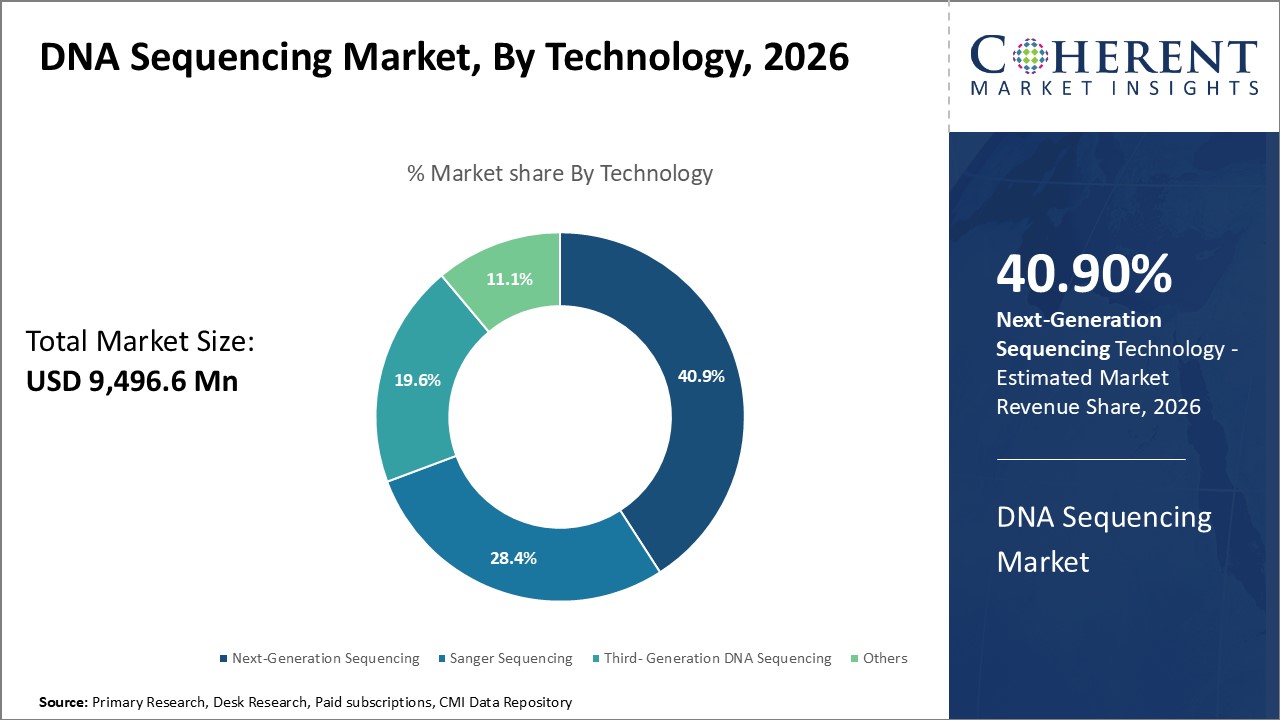
DNA Sequencing Market Insights, By Technology: Next-Generation Sequencing Acquires the largest share
In terms of Technology, the Next-Generation Sequencing segment is expected to account for the most significant share of the global DNA sequencing market in 2026, due to its speed, accuracy, scalability, and cost-effectiveness. Unlike traditional Sanger sequencing, NGS allows the simultaneous sequencing of millions of DNA fragments, enabling rapid analysis of entire genomes or targeted regions. This makes it ideal for applications such as cancer genomics, rare disease diagnosis, pharmacogenomics, and infectious disease surveillance.
For instance, in February 2026, Roche launched its proprietary Sequencing by Expansion (SBX) technology, introducing a new class of next‑generation sequencing that promises ultra‑rapid, flexible and scalable DNA/RNA analysis. SBX uses synthetic expanded molecules called Xpandomers, combined with a high‑throughput CMOS sensor to sequence target molecules in hours, rather than days, with high signal‑to‑noise and single‑molecule accuracy, further propelling the DNA sequencing market share.
DNA Sequencing Market Insights, By Application: Oncology Holds the Dominant share on account of the Growing Need for Precision Diagnostics
In terms of Application, the Oncology segment is projected to hold the highest share in the global DNA sequencing market in 2026, due to the growing need for precision diagnostics and personalized cancer treatment. DNA sequencing enables oncologists to identify specific genetic mutations, alterations, and biomarkers that are responsible for different types of cancer. This helps in tailoring therapies to target the molecular profile of an individual’s tumor, improving treatment effectiveness and patient outcomes.
With the rise of liquid biopsies and companion diagnostics, DNA sequencing allows for non-invasive monitoring of cancer progression and drug resistance. Additionally, pharmaceutical companies are leveraging sequencing to accelerate cancer drug discovery and clinical trials. The high global incidence of cancer, along with the push for more effective and early-stage diagnostics, continues to boost DNA sequencing market growth in oncology.
In February 2025, IIT Madras launched the Bharat Cancer Genome Atlas (BCGA), India’s first-ever cancer genome database focused on breast cancer, in a major leap for precision oncology. This initiative features data from 960 whole-exome sequences derived from 480 breast cancer patients collected across India under a programme.
DNA Sequencing Market Insights, By End User: Pharmaceutical & Biotechnology Acquires the Dominant share on account of the Increasing Reliance on Genomic Data to Ring Discoveries is leading the Segment
In terms of End User, the Pharmaceutical & Biotechnology Companies segment is expected to contribute the highest share of the global DNA sequencing market in 2026, due to their increasing reliance on genomic data to accelerate drug discovery, development, and precision medicine initiatives. These companies use DNA sequencing to identify genetic mutations, biomarkers, and disease pathways, enabling the design of more targeted and effective therapies. This is particularly critical in areas like oncology, rare genetic disorders, and infectious diseases.
Next-generation sequencing (NGS) allows pharma and biotech firms to conduct high-throughput screening of genes, improving the speed and accuracy of identifying viable drug candidates. Additionally, sequencing technologies help in patient stratification for clinical trials, ensuring better outcomes and reduced failure rates. With the rising importance of personalized medicine and biologics, DNA sequencing has become an essential tool in R&D pipelines.
In April 2025, EpiCypher®, an epigenomics innovation solutions, unveiled two cutting-edge DNA methylation sequencing assays CUTANA® meCUT&RUN and Multiomic CUT&RUN, designed to advance drug discovery through high-resolution, cost-effective analysis. Together, these tools offer scalable, sensitive, and streamlined workflows that lower barriers to comprehensive epigenomic profiling in cancer biology, neuroscience, immunology, aging, and beyond.
Regional Insights
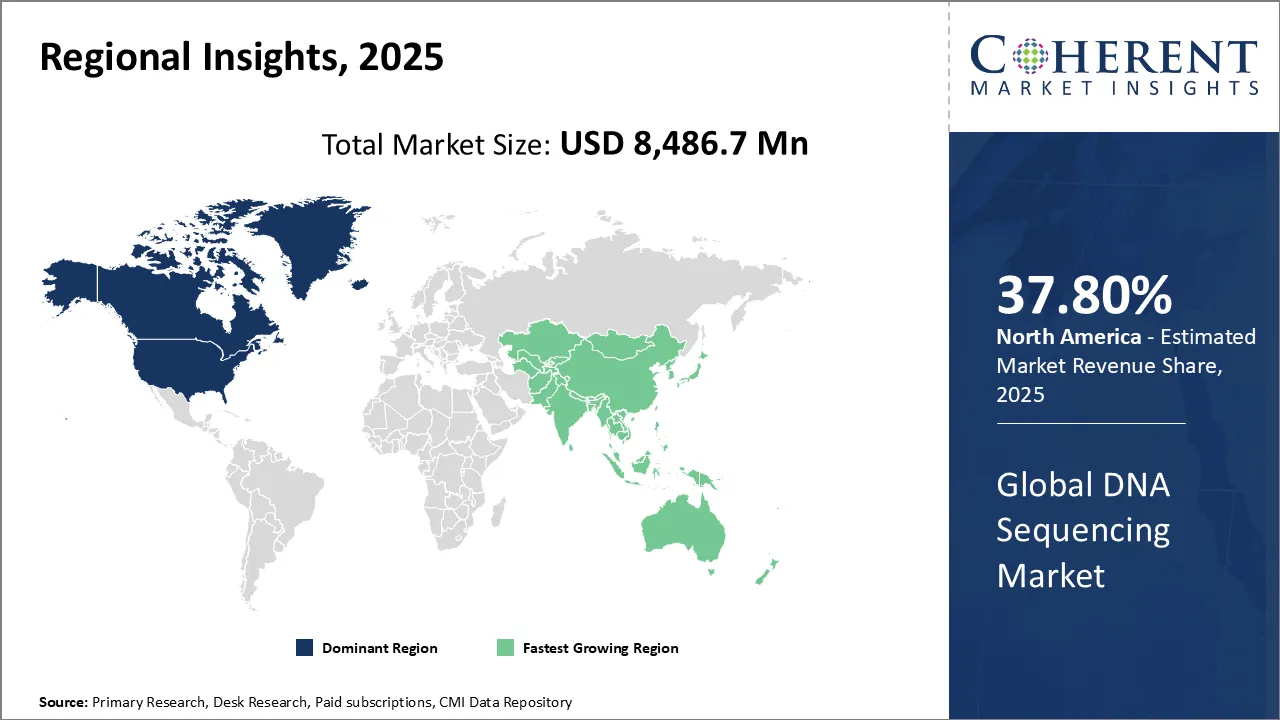
North America DNA Sequencing Market Analysis & Trends
North America is expected to dominate the market with 37.80% in 2026 driven by a combination of technological leadership, strong R&D infrastructure, and the strategic initiatives of key players. Major companies in the region, such as Illumina, Thermo Fisher Scientific, and Pacific Biosciences, are consistently launching advanced sequencing platforms and expanding their product portfolios to meet the rising demand from healthcare, pharmaceutical, and academic sectors.
For instance, in November 2026, Pacific Biosciences (PacBio) launched its Vega™ system, a benchtop version of its high‑throughput Revio long‑read sequencer. Priced at USD 169,000, Vega brings the company’s renowned HiFi accuracy (99.9%) into a compact form, enabling labs to perform long‑read sequencing without high capital investment.
The region also benefits from supportive government initiatives such as the NIH's All of Us Research Program and significant funding into genomic research, which accelerate the adoption of sequencing technologies. Additionally, North America has a high concentration of biotechnology and pharmaceutical firms that increasingly rely on DNA sequencing for precision medicine, drug discovery, and clinical trials.
For instance, in May 2026, The National Institutes of Health’s All of Us Research Program has announced expansion of individual DNA result offerings, broadening beyond ancestry and trait reports to include health-related findings like hereditary disease risk and pharmacogenomic profiles.
Europe DNA Sequencing Market Analysis & Trends
The Europe region is expected to be the fastest growing region over the forecast period, primarily driven by the increasing adoption of organic growth strategies by key industry players. In particular, companies operating in the region are focusing on product launches to expand and diversify their product portfolios. This strategic focus on innovation and market responsiveness is enabling firms to better address evolving consumer needs, strengthen brand presence, and capture a greater share of the market. Additionally, favorable regulatory frameworks, growing consumer awareness, and a robust industrial base further contribute to the market's expansion across Europe.
For instance, in March 2026, Spain’s National Cancer Research Centre (CNIO‑ISCIII) collaborated with the European Genome of Europe (GoE) project to help build the continent’s largest genetic database. This initiative will sequence 100,000 whole genomes from 27 countries, including 12,000 samples sourced via Spain’s IMPaCT Cohort. With a €45 million budget, approximately €3 million contributed by Spain under EU co‑funding CNIO will extract and quantify DNA from blood samples and share sequencing duties with the Spanish National Genomic Analysis Centre (CNAG).
DNA Sequencing Market Outlook Country-Wise
The U.S. DNA Sequencing Market Trends
The U.S. is the leading market for DNA sequencing, driven by major players like Illumina and Thermo Fisher Scientific, strong R&D funding from NIH, and large-scale programs like All of Us. DNA sequencing market demand is fueled by applications in precision medicine, cancer diagnostics, newborn screening, and population genomics. Robust clinical infrastructure, regulatory support, and widespread adoption in hospitals and labs make the U.S. a global leader in sequencing innovation and implementation.
For instance, in April 2026, Ultima Genomics unveiled its “Count on Us” initiative, pledging 3 trillion DNA sequencing reads, equivalent to about 9,000 human genomes at 30× coverage—to researchers at academic, public, government and non‑profit institutions across the United States and Canada. Ultima will award between 10 billion to 100 billion reads per project, prioritizing labs facing funding uncertainties.
The U.K. DNA Sequencing Market Trends
The UK is a major player in the DNA sequencing market, driven by initiatives like Genomics England and the NHS Genomic Medicine Service, which integrate genome sequencing into routine clinical care. Programs such as the 100,000 Genomes Project have enabled large-scale sequencing for rare diseases and cancers. Demand is fueled by the push for predictive and personalized medicine, a strong public healthcare system, and close collaboration between academia, pharma, and healthcare providers.
In March 2026, UK scientists have developed a rapid DNA sequencing system aimed at combating antibiotic‑resistant “superbugs” by diagnosing bacterial infections far more quickly and accurately. Developed jointly by the Medicines & Healthcare products Regulatory Agency (MHRA) and Barts Health NHS Trust in London, the method delivers results within 48 hours, compared with the week or more required by conventional culture tests.
Market Report Scope
DNA Sequencing Market Report Coverage
| Report Coverage | Details | ||
|---|---|---|---|
| Base Year: | 2025 | Market Size in 2026: | USD 9,496.6 Mn |
| Historical Data for: | 2020 To 2024 | Forecast Period: | 2026 To 2033 |
| Forecast Period 2026 to 2033 CAGR: | 11.9% | 2033 Value Projection: | USD 20,863.1 Mn |
| Geographies covered: |
| ||
| Segments covered: |
| ||
| Companies covered: | Thermo Fisher Scientific, Inc., Illumina, Inc., PerkinElmer Genomics, QIAGEN, Agilent Technologies, Inc., F. Hoffmann-La Roche Ltd, Macrogen, Inc., Abbott, PacBio, Zymo Research Corporation, Oxford Nanopore Technologies plc, Tecan Trading AG, Hamilton Company, ZS Genetics, Inc. LI-COR, Inc. | ||
| Growth Drivers: |
| ||
| Restraints & Challenges: |
| ||
Global DNA Sequencing Market Driver
- Increasing research and development activity
DNA sequencing is a critical tool in the research and development (R&D) of new drugs, enabling pharmaceutical companies to identify genetic mutations, understand disease mechanisms, and develop targeted therapies with greater precision. This has made sequencing technologies an essential component of modern drug discovery pipelines.
As a result, there is a notable increase in R&D investments by key players aiming to expand their therapeutic portfolios, particularly in oncology, rare genetic disorders, and infectious diseases. Companies are leveraging advancements in next-generation sequencing (NGS) to accelerate biomarker discovery, enhance clinical trial design, and improve drug efficacy and safety profiling.
According to DNA sequencing market research, this trend of R&D-driven innovation is expected to significantly contribute to market growth over the forecast period. The integration of sequencing data into pharmaceutical workflows is transforming drug development timelines and increasing the demand for high-throughput, cost-effective sequencing solutions globally.
For instance, in May 2025, a new algorithm developed by EMBL‑EBI in collaboration with Genomics England and clinical partners offers faster, more reliable identification of cancer‑linked structural DNA changes using long‑read sequencing data. Traditional tools often generate false positives in complex cancer genomes, complicating diagnosis and treatment.
- Increasing prevalence of cancer
The DNA sequencing technology is used for the diagnosis of cancer and thus increasing prevalence of cancer is expected to drive the market growth over the forecast period. For instance, according to the American Cancer Society 2025 estimates, the total number of new cancer cases in the United States is projected to reach 2,041,910, comprising 1,053,250 males and 988,660 females. The total number of cancer-related deaths is expected to be 618,120, with 323,900 male deaths and 294,220 female deaths. Among this, Oral cavity and pharynx cancers (59,660 new cases and 12,770 deaths), digestive system (362,200 new cases and 174,520 deaths), pancreatic cancer (67,440 cases and 51,980 deaths), and many more.
DNA Sequencing Market Opportunity
- Precision & Personalized Medicine
One of the most promising future opportunities in the DNA sequencing market lies in the expansion of precision and personalized medicine. As healthcare shifts away from generalized treatment models, DNA sequencing is playing a critical role in enabling therapies tailored to an individual’s unique genetic profile. By uncovering specific mutations, genetic predispositions, and biomarkers, DNA sequencing allows clinicians to diagnose diseases more accurately, predict treatment response, and avoid adverse drug reactions. This is particularly impactful in areas such as oncology, where sequencing is used to identify tumor-specific mutations and guide the selection of targeted therapies. The integration of genomic data into clinical workflows, supported by falling sequencing costs and advances in bioinformatics is making personalized care more accessible and scalable. Furthermore, government-backed initiatives such as Genomics England and the All of Us Research Program in the U.S. are accelerating the mainstream adoption of genomics in population health. According to the DNA sequencing market forecast, this increasing reliance on genomics for individualized healthcare is expected to be a major growth driver over the coming years, reshaping diagnostic practices and therapeutic development across the globe.
For instance, in April 2025, India’s GenomeIndia Project completed whole‑genome sequencing of 10,000 individuals from 83 population groups, mapping over 135 million genetic variants, including 7 million previously undocumented to create the nation’s first reference genome. Researchers from more than 20 institutes, including CSIR‑CCMB and AIIMS, analysed data in Nature Genetics to illustrate how the results can improve disease diagnosis, predict drug response, and support the development of personalized medicines tailored to Indian genetic diversity.
Analyst Opinion (Expert Opinion)
The DNA sequencing market value is undergoing a profound transformation driven not by incremental adoption but by a decisive shift in how genomics is integrated into mainstream clinical and industrial workflows.
One of the most significant structural shifts is the growing prominence of long-read sequencing technologies. Historically, short-read platforms dominated the field due to cost efficiency; however, the inability to resolve complex genomic regions, such as structural variants and repetitive sequences, has severely limited their diagnostic potential. Oxford Nanopore and Pacific Biosciences are now gaining clinical credibility, evidenced by the recent adoption of PacBio’s Revio system by population-scale genomics projects in the U.S., Japan, and the UAE, which require accurate resolution of large-scale structural variants for polygenic disease correlation.
Moreover, we are witnessing a reallocation of sequencing investments from research institutions to hospital systems and national health bodies. For example, the UK's Genomics England initiative has expanded its remit from rare diseases to cancer genomics, reflecting a broader movement towards embedding sequencing as a core component of patient care. Similarly, in South Korea, the Ministry of Health has authorized whole genome sequencing (WGS) as a reimbursable test for certain oncology indications, a critical regulatory precedent that could catalyze reimbursement policy shifts across the OECD.
Equally noteworthy is the rising geopolitical dimension of the DNA sequencing landscape. China’s push for domestic self-reliance in biotechnology, exemplified by the rapid global scaling of MGI Tech, is fragmenting the supplier landscape and intensifying competition. MGI’s DNBSEQ platform, with cost-per-gigabase advantages and open licensing strategies, is making inroads in markets previously dominated by Illumina. This techno-sovereignty movement is likely to restructure procurement policies in Southeast Asia, Africa, and Latin America over the next five years.
Speak to the analyst
Want personalized insights?
Take the findings above to one of our principal consultants, or have the report rebuilt around the segments, geographies and competitors you actually track.
Global DNA Sequencing Market: Key Developments
- In July 2025, Gujarat has become the first Indian state to launch a Tribal Genome Sequencing Project, designed to improve healthcare outcomes for tribal communities. Led by the Gujarat Biotechnology Research Centre (GBRC), the project aims to build a reference database to identify genetic markers linked to inherited disorders like sickle cell anaemia, thalassemia, hereditary cancers, and natural immunity.
- In May 2025, MGI Tech Co., Ltd. launched its Microbial Isolates Whole‑Genome Sequencing Package. Tailored for long‑read microbial genomics research, the new package enables integrated extraction, library prep, sequencing and bioinformatics, including typing and annotation, in a streamlined three‑step workflow. It uses CycloneSEQ‑WT02’s dual flow‑cell mode for flexible throughput from base‑pair to megabase reads and supports automation via MGISP‑100RS/CyclonePrep‑4.
- In October 2024, Illumina launched its new MiSeq i100 Series, a compact, fast, and user‑friendly benchtop sequencing solution designed to democratize next‑generation sequencing (NGS) for a broader range of laboratories. The two models: MiSeq i100 and i100 Plus bring room‑temperature shipping and storage, eliminating reagent thaw delays and delivering same‑day sample‑to‑analysis. Built with XLEAP‑SBS chemistry and integrated DRAGEN genomics workflows, the systems offer up to 100M single‑end reads per run, run times as fast as four hours, and 85% less packaging waste compared to legacy systems.
- In January 2023, Illumina Inc., a pharmaceutical company, and Nashville Biosciences LLC, a wholly owned subsidiary of Vanderbilt University Medical Center (VUMC), announced an agreement with Amgen, a biopharmaceutical company, for whole-genome sequence of DNA samples approximately 35,000 samples. This agreement helped in accelerating therapeutic development through genomics and establish a preeminent clinico-genomic data set.
Market Segmentation
- Global DNA Sequencing Market, By Product Type (Revenue, USD Mn, 2021 - 2033)
- Consumables
- Instruments
- Services
- Global DNA Sequencing Market, By Technology (Revenue, USD Mn, 2021 - 2033)
- Sanger Sequencing
- Next-Generation Sequencing
- Third- Generation DNA Sequencing
- Others
- Global DNA Sequencing Market, By Application (Revenue, USD Mn, 2021 - 2033)
- Oncology
- Reproductive Health
- Clinical Investigation
- Agrigenomics & Forensics
- Metagenomics, Epidemiology & Drug Development
- Others
- Global DNA Sequencing Market, By End User (Revenue, USD Mn, 2021 - 2033)
- Hospitals & Clinics
- Pharmaceutical & Biotechnology Companies
- Clinical Research
- Others
- Global DNA Sequencing Market, By Region (Revenue, USD Mn, 2021 - 2033)
- North America
- U.S.
- Canada
- Latin America
- Brazil
- Argentina
- Mexico
- Rest of Latin America
- Europe
- Germany
- U.K.
- Spain
- France
- Italy
- Russia
- Rest of Europe
- Asia Pacific
- China
- India
- Japan
- Australia
- South Korea
- ASEAN
- Rest of Asia Pacific
- Middle East
- GCC Countries
- Israel
- Rest of Middle East
- Africa
- South Africa
- North Africa
- Central Africa
- North America
- Global DNA Sequencing Market Companies
- Thermo Fisher Scientific, Inc.
- Illumina, Inc.
- PerkinElmer Genomics
- QIAGEN
- Agilent Technologies, Inc.
- Hoffmann-La Roche Ltd.
- Macrogen, Inc.
- Abbott
- PacBio
- Zymo Research Corporation
- Oxford Nanopore Technologies plc
- Tecan Trading AG
- Hamilton Company
- ZS Genetics, Inc.
- LI-COR, Inc.
Sources
Primary Research Interviews from the following stakeholders
Stakeholders
- Interviews with molecular biologists, clinical genomics professionals, bioinformaticians, lab technologists, genetic counselors, academic researchers, procurement managers in diagnostic labs, and R&D heads across major pharmaceutical and biotech companies.
Specific Stakeholders
- Heads of genomic research at institutions
- Precision medicine program leads at hospitals
- Procurement and operations leads at sequencing labs
- Data scientists at bioinformatics companies and platform developers
- Professors and PhD researchers in genomics departments at top universities
- Regulatory officers and compliance leads in diagnostic chains across Europe, North America, and Asia-Pacific
Databases
- National Center for Biotechnology Information (NCBI) – GenBank, dbSNP, and Sequence Read Archive (SRA)
- Human Genome Variation Database (HGVD)
- European Bioinformatics Institute (EBI) – ENA and EMBL-EBI portals
- Global Initiative on Sharing Avian Influenza Data (GISAID)
- U.S. Food and Drug Administration (FDA) – Genomic Testing Guidance
- GenomeTrakr (U.S. FDA’s pathogen traceability program)
- Ministry of Health and Family Welfare (India) – Genomics Research Programs
- National Health Service (NHS), UK – Genomic Medicine Services
- Chinese National GeneBank (CNGB)
Magazines
- Nature Genetics
- GenomeWeb
- The Scientist – Genomics Section
- Genetic Engineering & Biotechnology News (GEN)
- Bio-IT World
- Clinical OMICs
- Biotechniques
- Front Line Genomics Magazine
Journals
- Nature Reviews Genetics
- Genome Biology
- Nucleic Acids Research
- BMC Genomics
- The Lancet Genomic Medicine
- Journal of Molecular Diagnostics
- Trends in Genetics
- Human Mutation
- Briefings in Bioinformatics
Newspapers
- The New York Times – Health & Science
- The Washington Post – Medical Breakthroughs
- The Times of India – Health & Biotechnology
- The Guardian – Genomics & Technology
- Financial Times – BioSciences Reports
- Hindustan Times – HealthTech
- South China Morning Post – Biomedical Research Updates
Associations
- Human Genome Organisation (HUGO)
- Global Alliance for Genomics and Health (GA4GH)
- International Society for Computational Biology (ISCB)
- American Society of Human Genetics (ASHG)
- European Society of Human Genetics (ESHG)
- National Human Genome Research Institute (NHGRI)
- Council of Scientific and Industrial Research (CSIR), India – Genomic Research Divisions
Public Domain Sources
- U.S. National Institutes of Health (NIH) – Genomic Research Funding & Reports
- Department of Biotechnology (India) – Genomics Initiatives and Grants
- Ministry of Science and ICT (South Korea) – Biomedical and Genomics Strategy
- European Commission – Horizon Europe Genomics Program
- National Science Foundation (NSF) – Biotechnology Programs
- Japan Agency for Medical Research and Development (AMED)
- Australia’s Genomics Health Futures Mission
- UNESCO Bioethics and Genomic Data Guidelines
Proprietary Elements
- CMI Data Analytics Tool, and Proprietary CMI Existing Repository of information for last 8 years
Get access to 250+ pages report
Every segment, forecast, competitor profile and data table behind the analysis above — available for instant download.
- ESOMAR Member
- ISO 9001:2015 Certified
- D-U-N-S Registered
- GDPR & CCPA Compliant
Missing comfort of reading report in your local language? Find your preferred language:
Transform your Strategy with Exclusive Trending Reports
Frequently Asked Questions
The DNA Sequencing Market is estimated to be valued at USD 9,496.6 Mn in 2026, and is expected to reach USD 20,863.1 Mn by 2033.
The CAGR of the DNA Sequencing Market is projected to be 11.9% from 2026 to 2033.
Increasing adoption of inorganic strategies such as partnerships by key players in the market, increasing prevalence of cancer, and increasing research and development activities are expected to drive the market.
Consumables is the leading product type segment in the market.
The major factors that can hamper the market include high cost of DNA sequencing, lack of specific expertise, disadvantages such as data generation on a large scale, decreased raw accuracy in homology.
Major players operating in the market include Thermo Fisher Scientific, Inc., Illumina, Inc., PerkinElmer Genomics, QIAGEN, Agilent Technologies, Inc., F. Hoffmann-La Roche Ltd, Macrogen, Inc., Abbott, PacBio, Zymo Research Corporation, Oxford Nanopore Technologies plc, Tecan Trading AG, Hamilton Company, ZS Genetics, Inc., and LI-COR, Inc.
DNA sequencing identifies the exact order of nucleotides in DNA, enabling disease diagnosis, gene mapping, and personalized medicine.