
Cardiovascular and Soft Tissue Repair Patches Market Size and Share Analysis- 2026 To 2033
The global cardiovascular and soft tissue repair patches market is estimated to be valued at USD 5.55 Bn in 2026 and is projected to reach USD 9.62 Bn by 2033, while exhibiting a compound annual growth rate (CAGR) of 8.18% from 2026 to 2033. The sector’s sustained expansion is fueled by the increasing demand for cardiovascular reconstruction procedures, involving use of surgical reinforcement materials. On the other hand, continuous improvements in biocompatible and bioresorbable implant technologies are imposing a progressive business environment.
Justifying the increasing clinical need for these products, a 2025 study from the National Library of Medicine (NLM) estimated that congenital heart disease (CHD) affects approximately 1.35 Bn newborns worldwide every year, with a significant portion requiring surgical or catheter-based intervention during infancy.
Key Takeaways of the Global Cardiovascular and Soft Tissue Repair Patches Market
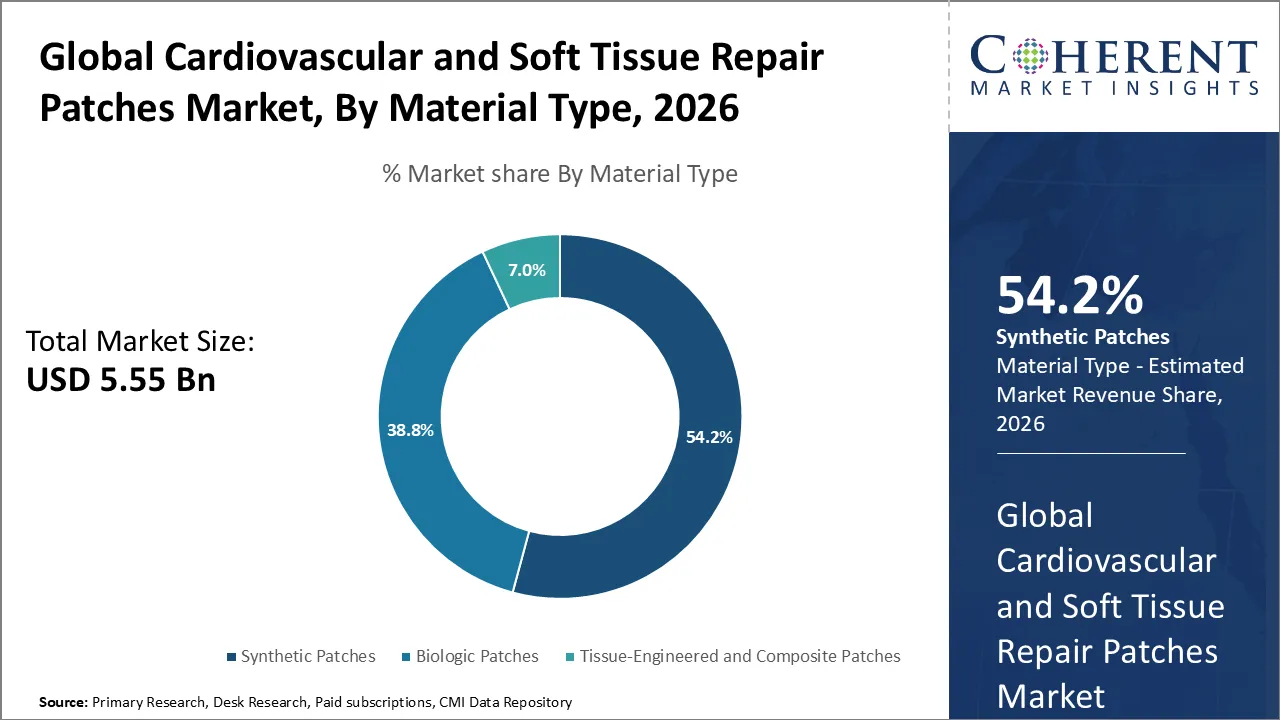
- By material type, synthetic patches are estimated to lead the global cardiovascular and soft tissue repair patches market with an indicative 54.2% share in 2026. The dominance is backed by their superior mechanical strength, established surgical applications, and availability across multiple configurations. According to a 2025 study published in JAMA Surgery and indexed by the U.S. National Library of Medicine, 89.2% of 10,838 mesh-based ventral hernia repairs in a Michigan clinical registry utilized synthetic mesh, while biologic and biosynthetic alternatives accounted for 10.8%.
- By application, soft tissue repair is predicted to account for approximately 39.95% of the market in 2026, in support from the substantial demand for hernia repair, abdominal wall reconstruction, and surgical tissue reinforcement. Testifying to the same, in a March 2024 article, the American Society of Anesthesiologists identified hernia and abdominal wall repair as one of the most common types of surgery performed across the globe, with an annual worldwide procedural volume of over 20 million.
- By end user, hospitals are expected to maintain their leadership in the market till 2026, with an indicative 45.6% share, which is anchored to the concentration of complex cardiac, vascular, and reconstructive procedures in hospital operating rooms. In this regard, an August 2025 American Hospital Association analysis, using data from 713 acute-care hospitals, reported that hospitalized surgical patients accounted for 36% of total hospital patient-days during 2023-2024. The analysis further projected a 19% increase in quaternary-care patient-days and a 16% increase in tertiary-care patient-days by 2035.
- North America is estimated to dominate the global market with an estimated 40.0% revenue share in 2026, owing to its massive patient pool, advanced surgical infrastructure, established reimbursement pathways, and the presence of major medical device manufacturers. Displaying the scale of demand, till 2024, annually more than 1 million hernia repairs were being performed in the U.S. alone.
- Asia Pacific is expected to be the fastest-growing regional territory in the global market. APAC’s augmentation is primarily driven by expanding surgical access, growing healthcare investment, and domestic medical device manufacturing capabilities in underserved countries. As evidence, in 2024, Indonesia's national healthcare service utilization grew to 686 million visits, from 378 million in 2020. Besides, the Health Systems Strengthening (HSS) Project is deploying 419 cardiac catheterization laboratories across the country to expand access to cardiovascular care, according to the 2026 World Bank findings.
Segmental Insights
Why Do Synthetic Patches Dominate the Cardiovascular and Soft Tissue Repair Patches Market?
On the basis of material type, synthetic patches are expected to maintain the largest share of 54.2% in the global cardiovascular and soft tissue repair patches market till the end of 2026. This leadership is attributed to the clinically proven use and efficiency of expanded polytetrafluoroethylene (ePTFE), polyester, polypropylene, and selected bioresorbable polymers in surgical reconstruction.
These materials offer predictable handling, controlled thickness, and mechanical reinforcement that are suitable for different anatomical requirements. Thus, commercial innovation is highly focused on extending the application of synthetic materials beyond conventional permanent implants. For instance, in April 2025, BD received U.S. FDA 510(k) clearance and commercially launched its Phasix ST Umbilical Hernia Patch. The device incorporates poly-4-hydroxybutyrate and a hydrogel barrier and is designed for absorbable reinforcement during umbilical hernia repair.
- Current Industry Events of 2026
- Market Size Estimation
- Regional Breakdown
- Competitive Landscape
- Customer Intelligence
- Segmental Analysis
- Pricing Analysis
- Key Market Drivers, Challenges & Future Trends
- Customized Insights Section
Why Is Soft Tissue Repair the Largest Application Segment?
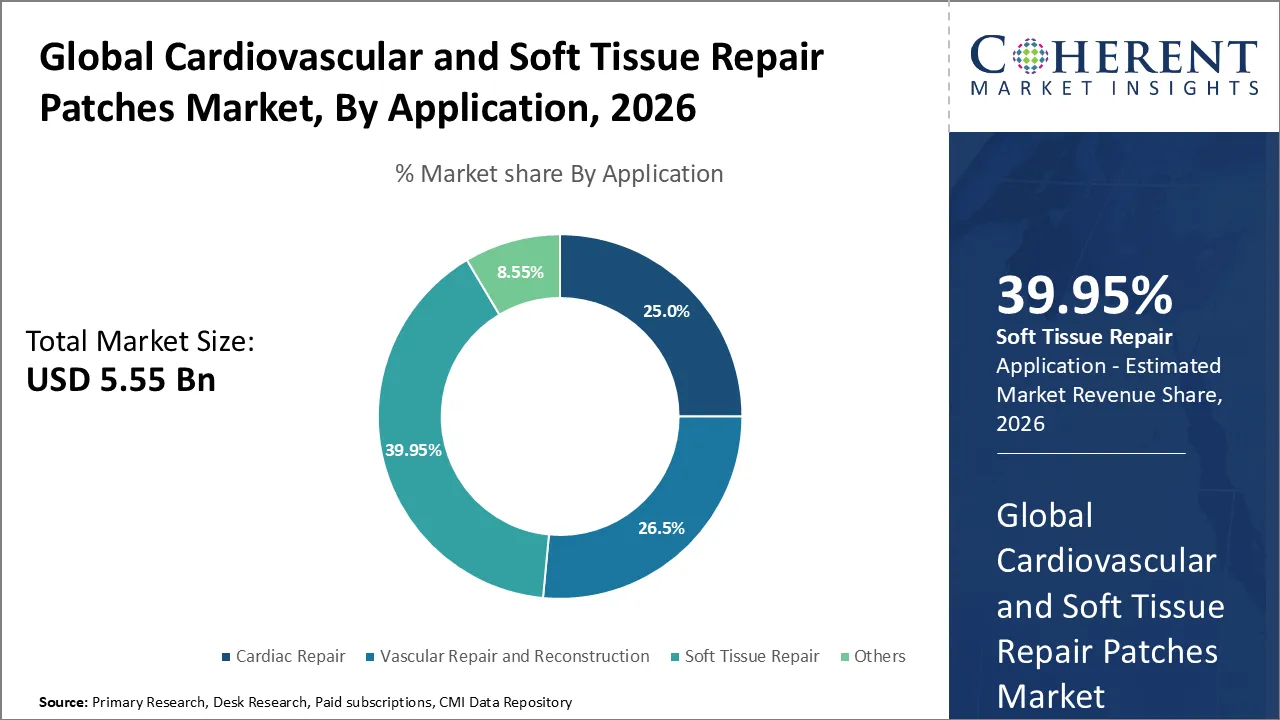
The soft tissue repair segment is estimated to hold the largest application share of approximately 39.95% in 2026. It is consolidated by the broad use of reinforcement patches in abdominal wall defects, incisional and inguinal hernia repair, and selected reconstructive procedures. Furthermore, demand from this use case is largely influenced by the heightening frequency of these operations and the availability of patches designed for different surgical approaches and defect sizes.
Surgeons are now increasingly considering defect location, contamination risk, tissue quality, and reinforcement requirements when selecting surgical materials. This is encouraging manufacturers to introduce differentiated products for minimally invasive procedures, complex abdominal reconstruction, and patients requiring alternatives to permanent synthetic mesh.
Why Are Hospitals the Leading End Users of Cardiovascular and Soft Tissue Repair Patches?
Hospitals are expected to represent the largest end-user segment, with an estimated share of 45.6% in 2026. Their position is largely empowered by the growing need for specialized operating rooms, cardiovascular surgical teams, anesthesia support, on-premise imaging, and postoperative monitoring during complex procedures. Subsequently, the significant volume of operations requiring tissue reinforcement provides a commercial foundation for hospital procurement. Its value-based procurement works also establishes these service providers as an important distribution channel for this sector.
In response, product manufacturers are putting efforts to meet hospital requirements for procedure-specific configurations and simplified implantation. For instance, in March 2025, TELA Bio introduced larger OviTex PRS sizes in the U.S. to facilitate complex plastic and reconstructive procedures in healthcare facilities, where multiple smaller matrices might otherwise be required.
Current Events and Their Impact on the Cardiovascular and Soft Tissue Repair Patches Market
Current Event | Description and its Impact |
U.S. FDA Quality Management System Regulation — February 2026 | Description: The FDA's updated Quality Management System Regulation incorporated ISO 13485:2016 into medical device manufacturing requirements to harmonize its CGMP regulatory framework with that used by other regulatory authorities. Impact: The change increases the importance of documented quality management, risk controls, supplier oversight, and manufacturing consistency for surgical implant manufacturers. |
European Union EUDAMED Implementation — May 2026 | Description: The European Commission mandated the use of the first four EUDAMED modules, the Actor, the UDI/Devices, the NBS & Certificates and the Market Surveillance. Impact: Greater traceability and registration requirements induced by this amendment can influence market-entry preparation, regulatory administration, and post-market monitoring for cardiovascular and tissue repair implant suppliers. |
Cardiovascular and Soft Tissue Repair Patches Market Dynamics
Market Drivers
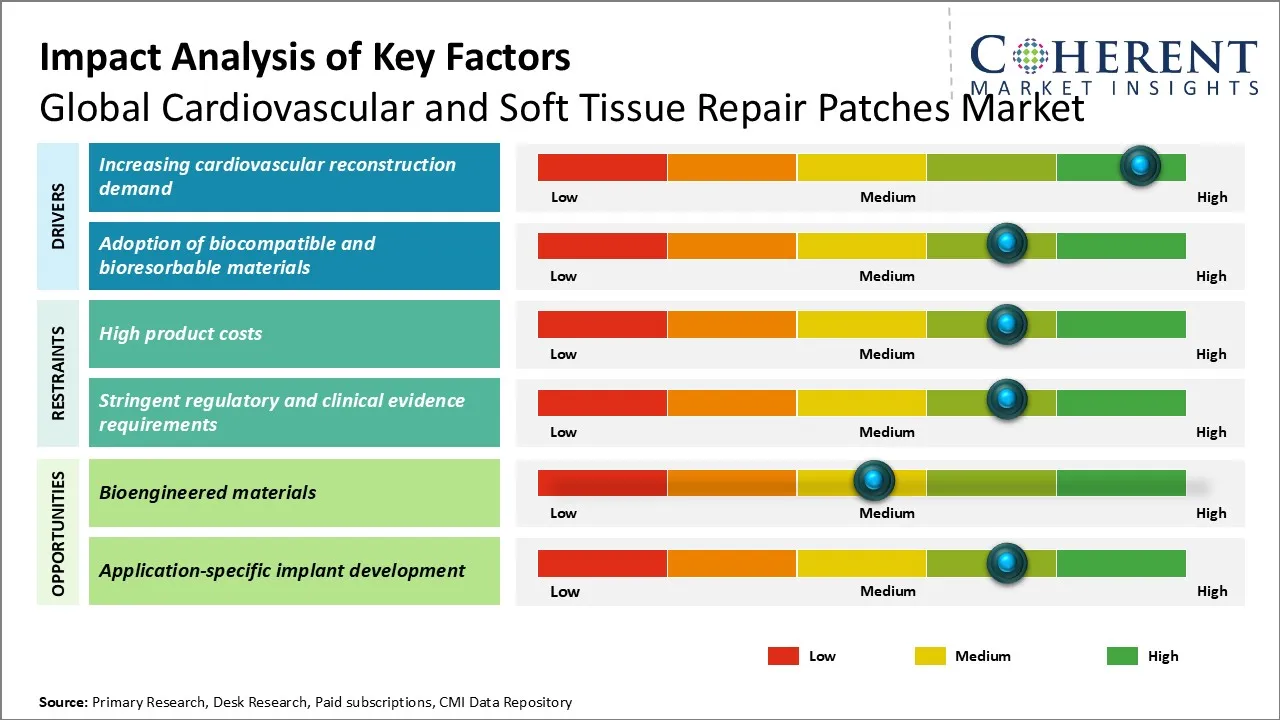
- Increasing Demand for Complex Cardiovascular Reconstruction Procedures: Repair patches support anatomical reconstruction, where direct suturing alone may not provide the required configuration or reinforcement. Thus, cardiac surgeons heavily use these implants in congenital defect correction, vascular reconstruction, and selected cardiac tissue repair procedures. It signals that the expanding procedural volume and patient pool of specialized cardiovascular repair support sustained demand for products and materials enlisted with the vascular patches category of this sector.
- According to the European Society of Cardiology (ESC) Atlas of Cardiology, Europe alone recorded a rate of 257.6 coronary artery bypass graft (CABG) surgeries per million people in 2024. In the same year, an NLM study unveiled that more than 6 billion individuals worldwide still lack access to access to safe, timely and affordable cardiac surgical care, signaling untapped opportunities for this sector.
- Expanding Adoption of Biocompatible and Bioresorbable Repair Materials: Biological matrices, absorbable polymers, and hybrid constructs allow surgeons to evaluate material selection according to surgical site, tissue condition, and long-term treatment objectives. Inspired by such capabilities, many ongoing clinical research cohorts are engaging themselves into exploring the performance of biological cardiovascular implants. This shift toward biomaterials designed for tissue integration is therefore marking new revenue generation pathways for manufacturers offering alternatives to conventional permanent reinforcement.
- A multicenter trial, evaluating a new hybrid warp-knit fabric incorporating biodegradable and nonbiodegradable components for 41 cardiovascular repair sites in 34 patients of median age 1 year 11 months. The results came out with 100% surgical success rate, with no deaths or reinterventions attributable to material failure.
Cardiovascular and Soft Tissue Repair Patches Market Trends
- Increasing Development of Tissue-Engineered Cardiovascular Patches: Researchers and medical technology companies are exploring tissue-engineered platforms capable of supporting biological repair rather than providing only mechanical reinforcement. Illustrating such an important longer-term technological direction, in May 2026, researchers at the University Medical Center Göttingen (UMG) and the University Hospital of Schleswig-Holstein (UKSH) introduced a potential stem cell-derived heart patch for patients with severe heart failure. Positive results were attained by the BioVAT-HF-DZHK20 program, investigating the laboratory-grown heart muscle tissue, in support from Repairon GmbH.
- Increasing Focus on Clinical Outcomes and Value-Based Procurement: Hospital purchasing decisions are becoming more dependent on evidence concerning recurrence, tissue integration, adverse events, and resource utilization. For instance, in February 2026, NHS Supply Chain shared plans to scale a new ovine collagen second-generation surgical mesh initiative nationally following its implementation at University Hospitals of Morecambe Bay. This was intended to reduce annual pathway costs by 50%, while generating approximately £1.57 million in productivity and efficiency savings.
- Expansion of Regenerative and Composite Material Platforms: Material development is progressing toward hybrid constructions, incorporating biological matrices and polymers, to balance initial strength with tissue integration and, where relevant, controlled resorption. Exemplifying the same, in August 2025, CONMED Corporation launched an arthroscopic delivery system, BioBrace RC, incorporating a composite implant manufactured using type I bovine collagen and bioresorbable poly-L-lactic acid (PLLA) microfilaments. This new addition to the pipeline is designed to facilitate soft tissue reinforcement during rotator cuff reconstruction and is already used in more than 14,000 patients across over 50 anatomical sites since 2021.
Regional Insights
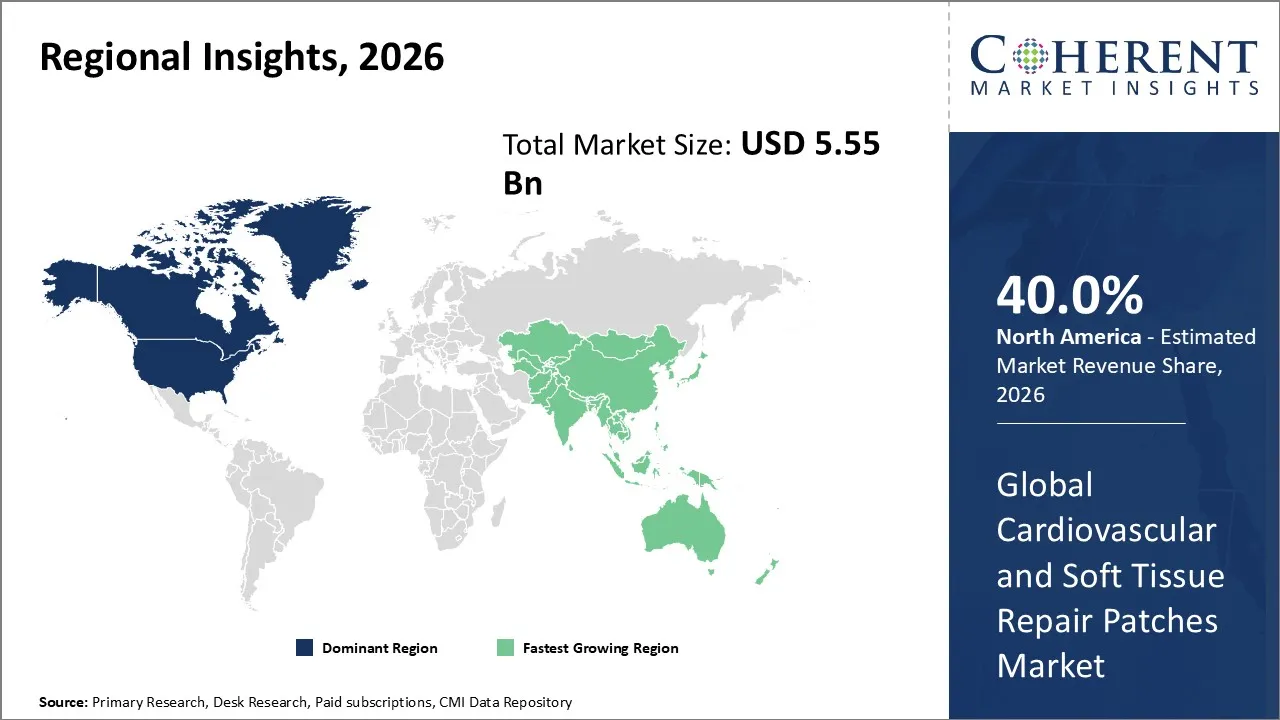
North America to Lead the Global Cardiovascular and Soft Tissue Repair Patches Market, with 40% share, in 2026
North America benefits largely from its established cardiac and vascular surgical centers, enabling broader access to specialty surgical services, sophisticated medical device distribution networks, and significant research investment. The presence of major implant manufacturers also supports adoption of advanced repair materials and the availability of clinical evidence across this landscape.
These commercial-scale initiatives can be exemplified by BD successfully completing the enrollment in its PREVENT clinical trial in August 2026, evaluating Phasix Mesh for the prevention of incisional hernias, as part of its advanced tissue regeneration strategy and expansion efforts. The study further demonstrates continued investment in clinical evidence generation for tissue reinforcement products.
Why Is Asia Pacific Expected to Be the Fastest-Growing Regional Market?
Asia Pacific is expected to exhibit the highest regional growth during the forecast period on account of the increasing surgical capacity, hospital development, expanding healthcare insurance coverage, and investment in medical technology manufacturing. For instance, during the fiscal year 2025, the East Asia and Pacific region had an active healthcare portfolio of USD 42.2 billion, with the International Finance Corporation (IFC) committing over USD 385.1 million in long-term healthcare financing to support medical technology manufacturing and distribution within the region.
Moreover, China, India, and Japan remain important marketplaces for their large surgical demand and domestic medical device innovation. Besides, the expanding healthcare access in underserved communities is fostering new manufacturing opportunities, while promoting advances in clinical research and specialized regenerative medicine development.
Global Cardiovascular and Soft Tissue Repair Patches Market Outlook for Key Countries
Advanced Surgical Capabilities Are Supporting the U.S. Cardiovascular and Soft Tissue Repair Patches Market
The U.S. remains a significant contributor to the regional market due to its extensive network of cardiac surgery hospitals, reconstructive surgery providers, and medical technology developers. Besides, the growing importance of the country as a sustained demand base in this sector can be demonstrated by the considerable burden of cardiovascular disease requiring medical and surgical management.
According to a November 2026 clinical outcomes report from Cleveland Clinic, its Heart, Vascular & Thoracic Institute performed 1,968 coronary artery bypass grafting (CABG) procedures in 2025, comprising 969 isolated CABG procedures and 999 combined procedures.
R&D activity also reflects continued progress of tissue reinforcement technologies in the U.S., where TELA Bio reported 12% year-over-year growth in OviTex unit sales during the second quarter of 2026. Furthermore, ongoing development in surgical implants connects the marketplace to the wider global hernia mesh devices industry.
Germany's Advanced Clinical Research Is Strengthening Cardiovascular Patch Innovation
Germany plays a pivotal role in the European market through its established cardiac surgical infrastructure, medical device manufacturing capabilities, and cardiovascular research ecosystem. According to the German Heart Surgery Report 2024, a total of 103,617 procedures were classified as heart surgery operations in the classical sense during 2024. These surgical volumes demonstrate the scale of specialist cardiac services in the country, including procedures where reconstructive implants may be relevant.
German innovation ecosystem also includes regenerative cardiovascular technologies. For instance, in April 2025, Repairon GmbH and Bioventure Management GmbH entered into a strategic investment partnership supporting the development and potential commercialization of engineered heart muscle patches. This collaboration illustrates the country's role in early-stage cardiovascular biomaterial innovation.
Expanding Cardiovascular Disease Management Is Creating Opportunities in China
China offers substantial growth opportunities for the cardiovascular and soft tissue repair patches market, as hospitals expand their specialized services and domestic medical device manufacturers strengthen their technical capabilities. This promotes extensive commercialization of processed biological materials, supporting future developments in this sector. For instance, in June 2026, Bairen Medical received Chinese regulatory approval for a bovine pericardium-based biological patch intended for digestive surgery tissue reinforcement.
The growing disease burden further indicates the amplifying surge in comprehensive cardiovascular healthcare, including selected reconstructive surgical interventions. In this regard, a 2025 journal of Biomedical and Environmental Sciences (BES) estimated that approximately 330 million people in China were living with cardiovascular diseases, with stroke and coronary heart disease affecting 13 million and 11.39 million, respectively.
Japan's Regenerative Medicine Expertise Is Advancing Cardiovascular Repair Technologies
Japan maintains an established cardiovascular surgery ecosystem, in support from its sophisticated healthcare infrastructure, specialist medical institutions, and advanced biomaterials research. As evidence, in 2024 alone, a total of 64,047 cardiovascular operations took place in the country, including 156 ventricular assist device (VAD) implantations and 111 heart transplants, representing almost 1.0% increase from the previous year.
The country has also achieved progress in regenerative cardiac repair. In March 2026, Cuorips received conditional and time-limited marketing approval for an induced pluripotent stem cell-derived cardiomyocyte sheet, RiHeart, in Japan for selected patients with severe heart failure. The development creates a potential pathway for regenerative technologies that may influence future cardiovascular repair approaches.
India’s Expanding Surgical Access Is Supporting Demand for Repair Patches
India's cardiovascular and soft tissue repair patches market is developing through massive investments in specialty hospitals, surgical training, healthcare financing, and domestic medical device manufacturing. This can be testified by the substantial hospital-level surgical activity, where The U.N. Mehta Institute of Cardiology and Research Centre reported 8,504 cardiac surgeries in 2025, including adult and pediatric procedures.
International collaborations are further improving access to specialized repair technologies. In October 2025, Healthium Medtech partnered with Tisgenx for cardiovascular surgical applications. The agreement is relevant to the availability of biological repair materials in India. This also concludes that continued manufacturing development may strengthen domestic access to surgical implants and create opportunities for local suppliers seeking wider expansion within the soft tissue repair industry.
How Are Advances in Bioengineered Materials Creating Opportunities in the Cardiovascular and Soft Tissue Repair Patches Market?
Manufacturers are examining decellularized extracellular matrices, absorbable polymers, and hybrid reinforcement structures to address clinical limitations of conventional materials. Thus, advances in biomaterials and tissue engineering are creating opportunities for repair products, specifically those combining mechanical support with biological functionality.
One potential development area in this aspect involves the development of patch platforms to support natural tissue remodeling and reduce the need for permanent synthetic reinforcement. These solutions may be particularly relevant in complex hernia repair, pediatric cardiovascular reconstruction, and surgical settings, as tissue quality influences implant selection.
For instance, in June 2024, Teijin Limited, in collaboration with Fukui Tateami and Osaka Medical and Pharmaceutical University, announced the commercial launch of a cardiovascular surgical patch, SYNFOLIUM, in Japan for treating congenital heart disease. The patch incorporates bioabsorbable and nonabsorbable knitted yarns coated with cross-linked gelatin, allowing the patient's tissues to grow into the implant while its absorbable components gradually degrade.
In addition, improvements in manufacturing and processing technologies could enable better control over implant thickness, porosity, flexibility, and degradation characteristics. These attributes may collectively help pioneers and suppliers expand application-specific product portfolios and differentiate their offerings.
Market Players, Key Development, and Competitive Intelligence
Key Developments
- In October 2026, TELA Bio received U.S. FDA 510(k) clearance for its Liora Monofilament Scaffold, a fully resorbable synthetic surgical mesh designed for soft tissue reinforcement. The product expanded the company's portfolio of tissue reconstruction materials and represented its first fully in-house-developed implant.
- In September 2026, Davol, a subsidiary of BD, received U.S. FDA 510(k) clearance for Phasix ST Parastomal Hernia Mesh. The regulatory clearance expanded the Phasix ST product range with a device intended for soft tissue reinforcement in parastomal hernia repair.
- In July 2026, EQT agreed to acquire Corza Medical's biosurgery business to support geographic expansion, product innovation, and development of a broader biosurgery platform. The acquisition comprised the transfer of TachoSil, a biological hemostatic and tissue-sealing patch used in cardiovascular, thoracic, and other surgical procedures.
Competitive Landscape
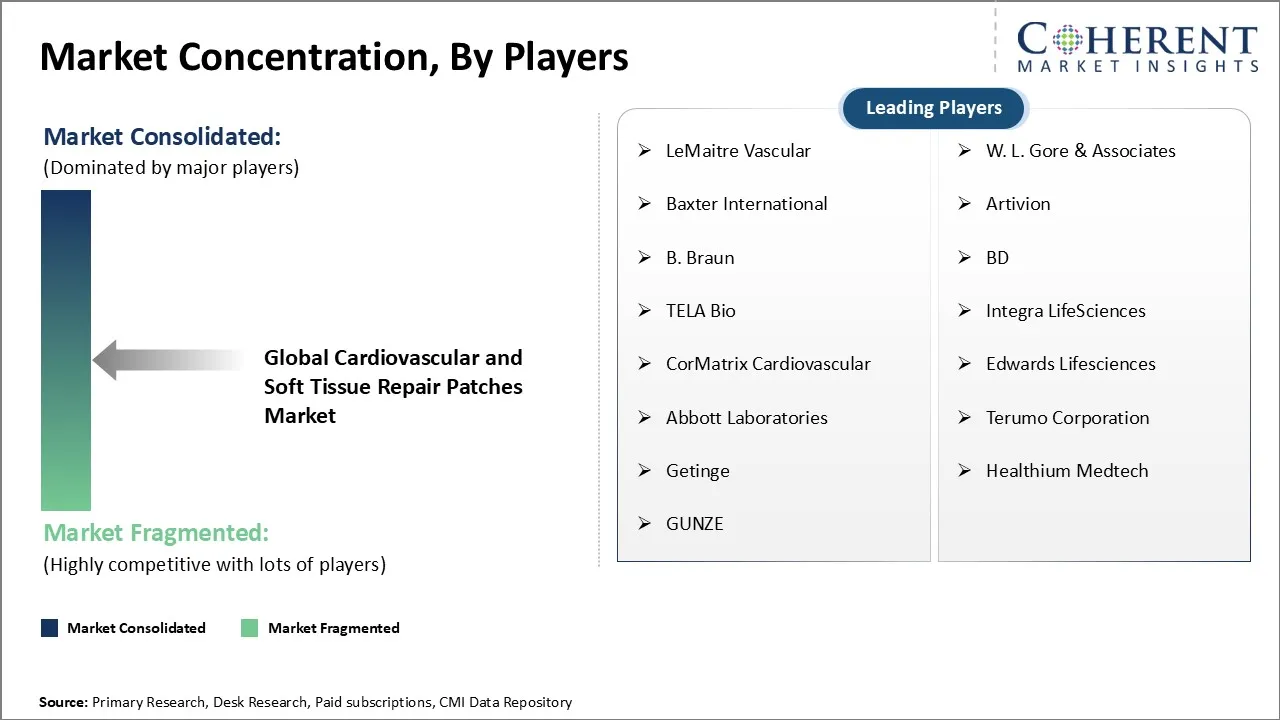
The commercial landscape of the global cardiovascular and soft tissue repair patches market is characterized by a combination of established multinational medical device manufacturers, specialized vascular implant suppliers, and companies developing biological & bioengineered repair materials. Such an environment is expected to emphasize on material compatibility, handling performance, evidence supporting clinical outcomes, pricing, and availability across major healthcare markets.
Thus, larger manufacturers strategize on improving material performance, expanding procedure-specific applications, and introducing new product configurations. For instance, in April 2024, TELA Bio launched OviTex IHR Reinforced Tissue Matrix in the U.S. for laparoscopic and robotic-assisted inguinal hernia repair. The product introduced multiple anatomical configurations to target the nation’s base of over an annual 665 thousand inguinal hernia procedures.
Whereas, specialized manufacturers focus on differentiated biological matrices, vascular repair devices, and surgical reinforcement platforms. As evidence, in January 2025, LeMaitre Vascular received EU Medical Device Regulation (MDR) CE marks for its Burlington-manufactured CardioCel and VascuCel biological patches, enabling their distribution in the European Union.
Top Manufacturers and Notable Products/Solutions in the Cardiovascular and Soft Tissue Repair Patches Market
Key Players | Representative Products / Platforms | Strategic Relevance |
LeMaitre Vascular, Inc. | XenoSure Biologic Patch; CardioCel; VascuCel | Biological patch portfolio for selected cardiovascular and vascular reconstruction procedures. |
W. L. Gore & Associates, Inc. | GORE-TEX Cardiovascular Patch | Established ePTFE technology used in cardiovascular reconstruction. |
Baxter International Inc. | Peri-Guard Pericardium Patch | Biological pericardial repair material with applications in surgical reconstruction. |
Artivion, Inc. | PhotoFix Decellularized Bovine Pericardium | Differentiation through biological processing and clinical evaluation. |
B. Braun SE | Vascular-Patch | Synthetic vascular patch technology for vessel reconstruction. |
BD (Becton, Dickinson and Company) | Phasix ST Umbilical Hernia Patch; Phasix Mesh | Bioresorbable reinforcement portfolio for soft tissue repair applications. |
TELA Bio, Inc. | OviTex Reinforced Tissue Matrix; OviTex PRS; OviTex LTR | Tissue-based and composite reinforcement platforms targeting surgical reconstruction. |
Integra LifeSciences | DuraGen Dural Regeneration Matrix | Neurosurgical soft tissue reconstruction and dural repair portfolio. |
CorMatrix Cardiovascular, Inc. | CorMatrix ECM products | Extracellular matrix-based cardiovascular reconstruction technologies. |
Market Report Scope
Cardiovascular and Soft Tissue Repair Patches Market Report Coverage
Report Coverage | Details | ||
Base Year: | 2025 | Market Size in 2026: | USD 5.55 Bn |
Historical Data for: | 2020 to 2024 | Forecast Period: | 2026 to 2033 |
CAGR: | 8.18% | 2033 Value Projection: | USD 9.62 Bn |
Geographies covered: |
| ||
Segments covered: |
| ||
Companies covered: | LeMaitre Vascular, W. L. Gore & Associates, Baxter International, Artivion, B. Braun, BD, TELA Bio, Integra LifeSciences, CorMatrix Cardiovascular, Edwards Lifesciences, Abbott Laboratories, Terumo Corporation, Getinge, Healthium Medtech, GUNZE, and other prominent players. | ||
Growth Drivers: |
| ||
Restraints & Challenges: |
| ||
Analyst Opinion (Expert Opinion)
- The global cardiovascular and soft tissue repair patches market is expected to become increasingly competitive as manufacturers differentiate their portfolios through improved material characteristics, application-specific configurations, and clinical performance. Thus, products offering suitable reinforcement properties and favorable long-term outcomes may achieve stronger adoption across major surgical specialties.
- Strategic partnerships, international distribution agreements, and regional manufacturing initiatives are likely to influence market expansion. Specifically, companies capable of combining differentiated technologies with regulatory expertise and established hospital relationships may be better positioned to engage in such relations seamlessly.
- Advancements in bioresorbable polymers, biological matrices, and tissue engineering could shape the long-term competitive environment. However, the commercialization of emerging regenerative platforms will depend on successful clinical validation, manufacturing scalability, regulatory acceptance, and reimbursement considerations.
Speak to the analyst
Want personalized insights?
Take the findings above to one of our principal consultants, or have the report rebuilt around the segments, geographies and competitors you actually track.
Market Segmentation
- By Material Type (Revenue, USD Bn, 2021-2033)
- Synthetic Patches
- Expanded Polytetrafluoroethylene (ePTFE)
- Polyester
- Polypropylene and Other Synthetic Materials
- Biologic Patches
- Bovine Pericardium
- Porcine-Derived Tissue Matrices
- Human-Derived Tissue Matrices
- Tissue-Engineered and Composite Patches
- Synthetic Patches
- By Application (Revenue, USD Mn, 2021-2033)
- Cardiac Repair
- Atrial and Ventricular Septal Defect Repair
- Valve Reconstruction and Other Cardiac Repair
- Vascular Repair and Reconstruction
- Carotid and Peripheral Vascular Repair
- Other Vascular Reconstruction Procedures
- Soft Tissue Repair
- Hernia Repair
- Abdominal Wall Reconstruction
- Other Soft Tissue Reinforcement
- Others
- Cardiac Repair
- By End Use (Revenue, USD Mn, 2021-2033)
- Hospitals
- Ambulatory Surgical Centers
- Specialty Cardiovascular Clinics and Surgical Centers
- By Region (Revenue, USD Mn, 2021-2033)
- North America
- U.S.
- Canada
- Latin America
- Brazil
- Mexico
- Argentina
- Rest of Latin America
- Europe
- Germany
- U.K.
- France
- Italy
- Spain
- Russia
- Rest of Europe
- Asia Pacific
- China
- India
- Japan
- Australia
- South Korea
- ASEAN
- Rest of Asia Pacific
- Middle East
- GCC
- Israel
- Rest of Middle East
- Africa
- South Africa
- Central Africa
- North Africa
- North America
- Key Players
- LeMaitre Vascular
- W. L. Gore & Associates
- Baxter International
- Artivion
- B. Braun
- BD
- TELA Bio
- Integra LifeSciences
- CorMatrix Cardiovascular
- Edwards Lifesciences
- Abbott Laboratories
- Terumo Corporation
- Getinge
- Healthium Medtech
- GUNZE
Sources
Primary Research Interviews
- Cardiovascular and vascular surgical patch manufacturers
- Synthetic, biologic, and bioresorbable patch manufacturers
- Cardiac surgeons, vascular surgeons, and cardiovascular reconstruction specialists
- General surgeons, hernia repair specialists, and plastic surgeons
- Biomaterials researchers and tissue engineering specialists
- Medical device R&D and product development executives
- Hospital procurement managers and surgical supply chain professionals
- Regulatory affairs specialists and medical device distributors
Stakeholders
- Cardiovascular and soft tissue repair patch manufacturers
- ePTFE, polyester, polypropylene, and bioresorbable polymer suppliers
- Bovine and porcine pericardial tissue processing companies
- Biological tissue matrix and extracellular matrix (ECM) developers
- Tissue-engineered and composite implant manufacturers
- Hospitals, ambulatory surgical centers, and specialty cardiovascular clinics
- Medical device contract manufacturers and sterilization service providers
- Surgical implant distributors and healthcare procurement organizations
Regulatory and Government Bodies
- U.S. Food and Drug Administration (FDA)
- European Commission – Medical Devices Regulation (EU MDR)
- U.K. Medicines and Healthcare products Regulatory Agency (MHRA)
- Pharmaceuticals and Medical Devices Agency (PMDA), Japan
- National Medical Products Administration (NMPA), China
- Central Drugs Standard Control Organisation (CDSCO), India
- U.S. Centers for Disease Control and Prevention (CDC)
- World Health Organization (WHO)
- National Health Service (NHS), U.K.
- World Bank Group
Databases
- U.S. FDA 510(k) Premarket Notification Database
- U.S. FDA Medical Device Registration and Listing Database
- European Database on Medical Devices (EUDAMED)
- ClinicalTrials.gov
- PubMed and PubMed Central – National Library of Medicine
- WHO Global Health Observatory
- German Heart Surgery Registry and Annual Reports
- Japanese Association for Thoracic Surgery Annual Survey
- American Hospital Association (AHA) Healthcare Data
- European Society of Cardiology (ESC) Atlas of Cardiology
- World Bank Open Data and Healthcare Development Reports
Magazines and Industry Publications
- Medical Device and Diagnostic Industry (MD+DI)
- MedTech Dive
- Medical Design & Outsourcing
- Cardiovascular Business
- Cardiovascular News
- Healthcare Purchasing News
- Medical Product Outsourcing
- Pharmaceutical Technology
Journals
- The Journal of Thoracic and Cardiovascular Surgery
- European Journal of Cardio-Thoracic Surgery
- Annals of Thoracic Surgery
- Journal of Vascular Surgery
- JAMA Surgery
- Annals of Vascular Surgery
- Journal of Biomedical Materials Research
- Biomedical and Environmental Sciences
- Journal of Cardiovascular Development and Disease
- Scientific Reports
Associations
- American Heart Association (AHA)
- European Society of Cardiology (ESC)
- Society of Thoracic Surgeons (STS)
- American Association for Thoracic Surgery (AATS)
- Society for Vascular Surgery (SVS)
- European Society for Vascular Surgery (ESVS)
- American Hernia Society (AHS)
- European Hernia Society (EHS)
- American College of Surgeons (ACS)
- Japanese Association for Thoracic Surgery (JATS)
- German Society for Thoracic and Cardiovascular Surgery (DGTHG)
- Advanced Medical Technology Association (AdvaMed)
Public Domain Sources
- Medical device manufacturers' annual reports and investor presentations
- Corporate press releases covering product launches, regulatory approvals, acquisitions, investments, and strategic collaborations
- Official product information from LeMaitre Vascular, W. L. Gore & Associates, Baxter, Artivion, B. Braun, BD, TELA Bio, Integra LifeSciences, and other manufacturers
- FDA 510(k) clearances, EU MDR certification announcements, and national medical device regulatory publications
- Published clinical studies on synthetic patches, biological matrices, bioresorbable materials, and tissue-engineered implants
- National cardiac surgery registries, hospital surgical volume reports, and healthcare utilization statistics
- Government healthcare infrastructure development programs and medical device manufacturing initiatives
- Publicly available clinical trial registrations and surgical implant performance studies
- Corporate announcements involving regenerative cardiac patches, advanced surgical scaffolds, and soft tissue reinforcement technologies
- Published market research benchmarks and industry assessments covering cardiovascular patches, surgical mesh, and soft tissue repair devices
Proprietary Elements
- CMI Data Analytics Tool
- Proprietary CMI Existing Repository of Information for the Last 10 Years
Get access to 250+ pages report
Every segment, forecast, competitor profile and data table behind the analysis above — available for instant download.
- ESOMAR Member
- ISO 9001:2015 Certified
- D-U-N-S Registered
- GDPR & CCPA Compliant
Frequently Asked Questions
The global cardiovascular and soft tissue repair patches market is modeled to register an 8.18% CAGR from 2026 to 2033.
Increasing demand for cardiovascular reconstruction, expanding soft tissue repair applications, and advances in biocompatible and bioresorbable surgical materials are the major growth drivers.
High costs of advanced implant materials, stringent regulatory requirements, and the need for long-term clinical evidence are the major challenges.
Synthetic patches are expected to maintain the largest material segment share in 2026 under the indicative market model.
Prominent companies include LeMaitre Vascular, W. L. Gore & Associates, Baxter, Artivion, B. Braun, BD, TELA Bio, Integra LifeSciences, and other specialized manufacturers.
North America is expected to lead the global cardiovascular and soft tissue repair patches market in 2026, while Asia Pacific is projected to offer the fastest regional growth.
The modeled global market value is approximately USD 9.62 billion by 2033, based on extrapolation of the selected 2026 market benchmark and CAGR.