

Vascular Patches Market Analysis & Forecast
Vascular Patches Market is estimated to be valued at USD 479.5 Mn in 2026 and is expected to reach USD 827.2 Mn in 2033, exhibiting a compound annual growth rate (CAGR) of 8.1% from 2026 to 2033.
Key Takeaways
- By type, synthetic vascular patches are expected to dominate the global vascular patches market with a 64.8% share in 2026, driven by their durability and wide clinical applications.
- By region, North America is forecasted to lead the market with a 33.50% share in 2026, supported by advanced healthcare infrastructure and high adoption of innovative vascular repair technologies.
Market Overview
The Vascular Patches Market is driven by the rising prevalence of cardiovascular diseases and the increasing number of vascular surgeries worldwide. Advancements in natural biomaterials, such as bioengineered and synthetic patches offering enhanced biocompatibility, further support market growth. For instance, companies like Baxter and LeMaitre Vascular have introduced innovative patch designs that reduce post-operative complications. Additionally, aging populations and growing healthcare investments globally are fueling the demand for vascular repair solutions.
Current Events and Its Impact on the Vascular Patches Market
Event | Description and Impact |
Regulatory Policy Shifts in Key Markets |
|
Geopolitical Trade Tensions |
|
Technological Advancements in Patch Design |
|
Pipeline Analysis
The vascular-patch arena blends already-sold items with hopeful newcomers still in lab testing. For example, Hancock Ja-fee Labs VasoRing and Vivex Biomedicals VasCure are early-stage projects meant to speed vessel repair and cut down on scarring. At the same time, several patches have cleared regulators and are on hospital shelves.
CryoLifes PerClot, approved as a hemostatic spray, is also used as a sealing layer in some grafts. Surgeons routinely reach for Edwards Pericardial Patch, LeMaitre Vasculars ProCol and Xenosure, or Admeduss CardioCel thanks to their strength and compatibility with human tissue.
Terumo Aortics Vascutek patch gives doctors a durable synthetic choice, while CryoLifes ArteGraft and Neovascs PeriPatch lean on animal tissue.
Together, these products support a wide range of procedures, from carotid endarterectomy through AV access to fixes for peripheral arteries.
The pipeline thus walks a tight line, balancing fresh bioengineering ideas and the proven reliability of existing synthetic and biologic options. With ongoing research and smart partnerships, the field looks set to widen its toolbox and lift patient results in vascular surgery.
- Current Industry Events of 2026
- Market Size Estimation
- Regional Breakdown
- Competitive Landscape
- Customer Intelligence
- Segmental Analysis
- Pricing Analysis
- Key Market Drivers, Challenges & Future Trends
- Customized Insights Section
Patent Landscape
Patent activity in the vascular patch arena keeps climbing, showing that firms are pushing fresh ideas in biomaterials, design, and surgical use. Inventors are zeroing in on anti-calcification coatings, stronger composite blends, and fully bioresorbable layers that promise better healing and tissue fit. Heavyweights such as LeMaitre Vascular, Becton Dickinson, Terumo Aortic, Baxter International, and W. L. Gore together file most of the worlds patents.
By locking up new claims, these players shore up market share and keep their R&D pipelines flowing. Recent grants include: - US11878945B1, which protects a two-layer patch built for extra strength and seamless tissue handover. - EP4056763A1, covering a bovine-pericardium sheet treated with enzymes to curb calcification and swelling.
New filings also spotlight nanofiber mats, 3D printing, and self-repair materials that push patches toward the next generation. Such tools promise faster healing, less immune response, and the flexibility surgeons crave in varied procedures. Taken together, the dense patent landscape points to innovation as the growth engine for the vascular patch sector going forward.
Reimbursement Scenario
Around the world, how much hospitals get paid for vascular patches can change a lot, mainly because each region has its own payment rules and coding practices. Important billing codes to know are ICD-10 entries-say, I70.0 for artery hardening-CPT numbers like 35121 for carotid bypass-HCPCS code C1768 for the patch itself plus the DRG groups tied to big heart procedures. In the United States, Medicare chips in roughly 80% of the approved bill once the deductible is met, while most private plans cover another 70% to 90%. Back in 2020, Medicare outlayed about $2.5 billion covering 65% of the patch costs, and private carriers added roughly $4.2 billion, already settling around 80%.
Across the European Union, national health services usually shoulder close to 85% of the charge, and supplemental policies make up the last 15% to 30%. Public budgets in the EU picked up about 1.8 billion and private plans around 800 million for patches and alike. Japan follows the same broad model: the National Health Insurance covers roughly 70% while patients settle the remaining 30%. Many people carry private policies that replace 70% to 90% of the out-of-pocket share, leading to 120 billion yen in NHI spending and about 50 billion yen from the private pool. Taken together, these patch payment patterns heavily influence how quickly new devices reach operating rooms and patients everywhere.
Prescribers’ Preference
Vascular patches are vital when doctors treat peripheral artery disease (PAD), repair abdominal aortic aneurysms (AAA), or open narrowed carotid arteries in carotid artery stenosis (CAS). Being clear about what prescribers prefer allows device makers to update products and education so tools fit real-world procedures. In early-stage PAD physicians first recommend exercise and drugs, typically an antiplatelet such as aspirin or clopidogrel along with a statin. Once the disease worsens, during many endovascular jobs they reach for bovine pericardium patches like Vascu-Guard or the classic PTFE brand Gore-Tex.
When PAD is advanced, surgeons perform a bypass using the patient’s own vein or a synthetic graft and often seat a patch of bovine pericardium, PTFE, or even a human umbilical vein graft such as the Dardik Biograft. Abdominal aortic aneurysms follow a different plan: small lesions get watchful waiting with tight blood-pressure control and statins.
Large or fast-growing AAAs, however, call for endovascular stent-graft repair, while the open route uses Dacron fabric strengthened by a vascular patch. Carotid artery stenosis management starts similarly for low-risk visitors, relying on antiplatelets and statins alone. When a patient shows symptoms, a carotid endarterectomy is done and the gap sealed with patches of bovine pericardium, PTFE, or Hemashield Dacron. For high-risk cases, doctors may pick carotid artery stenting followed by dual antiplatelet therapy instead. Throughout all these choices, surgeons always prioritize patch materials that guarantee strength, durability, and low rates of restenosis.
Segmental Insights
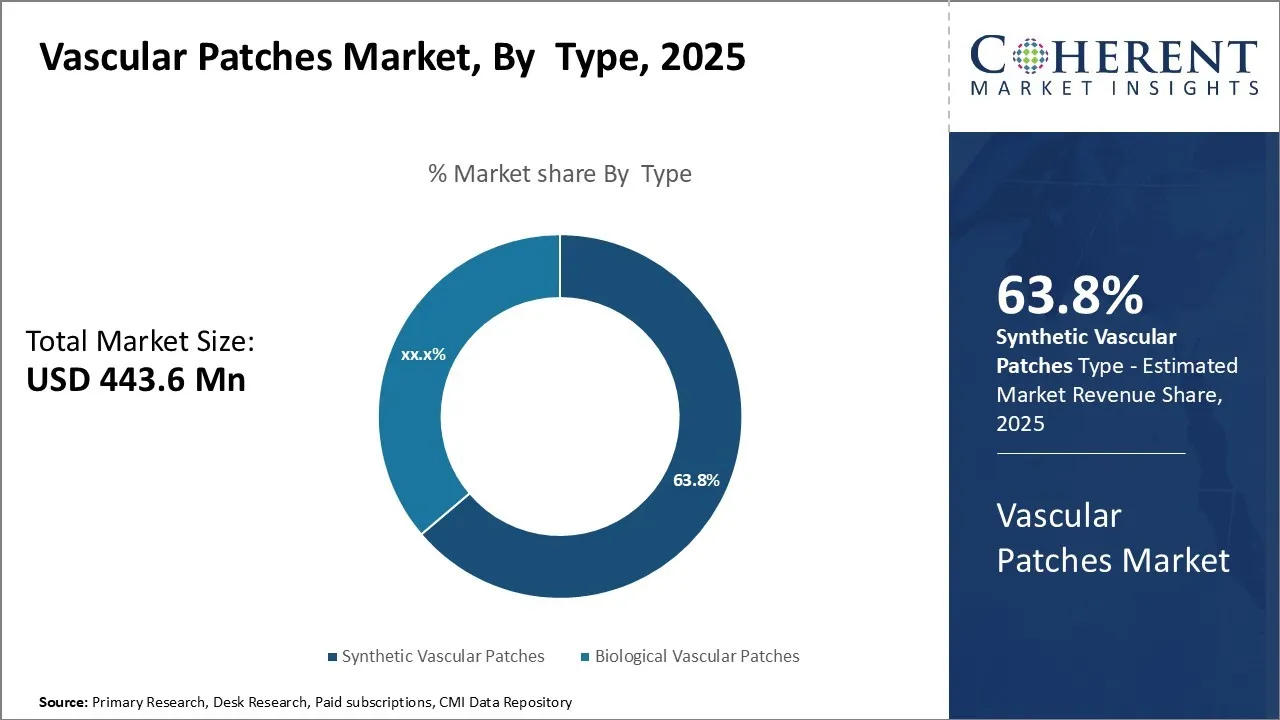
Vascular Patches Market Insights, By Type
Synthetic vascular patches are expected to lead the market share of 64.8% in 2026, largely due to a wave of new product launches that promise better durability and ease of use during surgical procedures. These patches, often made of materials like ePTFE or Dacron, are increasingly preferred in vascular surgeries where consistency and lower infection risk matter. Major players like LeMaitre and Getinge are consistently expanding their synthetic product lines to meet surgeon demand for reliable, off-the-shelf solutions.
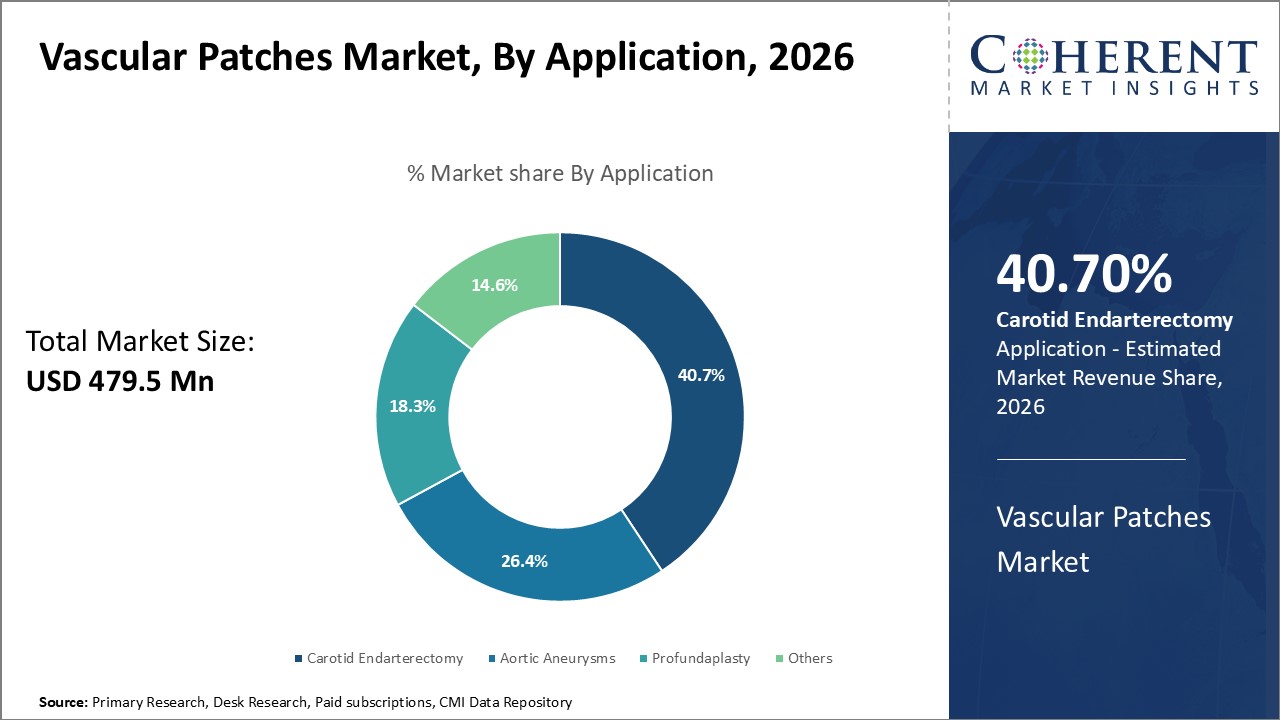
Vascular Patches Market Insights, By Application
Carotid endarterectomy is projected to dominate the application segment by 2026, driven by a steady rise in cardiovascular conditions such as carotid artery disease. This minimally invasive procedure benefits greatly from vascular patches that ensure vessel integrity after plaque removal. With heart disease remaining the world’s leading cause of death, especially in aging populations, more patients are undergoing endarterectomies—cementing this category's top place in vascular patch demand.
Vascular Patches Market Insights, By End User
Hospitals and clinics are poised to capture the bulk of vascular patch usage by 2026, as they remain the first stop for urgent and complex cardiovascular interventions. Their access to surgical teams, imaging tools, and post-op care creates an ideal setting for procedures requiring vascular repair. Moreover, with increased investment in hospital infrastructure worldwide, these facilities are better equipped than ever to handle high volumes of patch-related surgeries.
Regional Insights
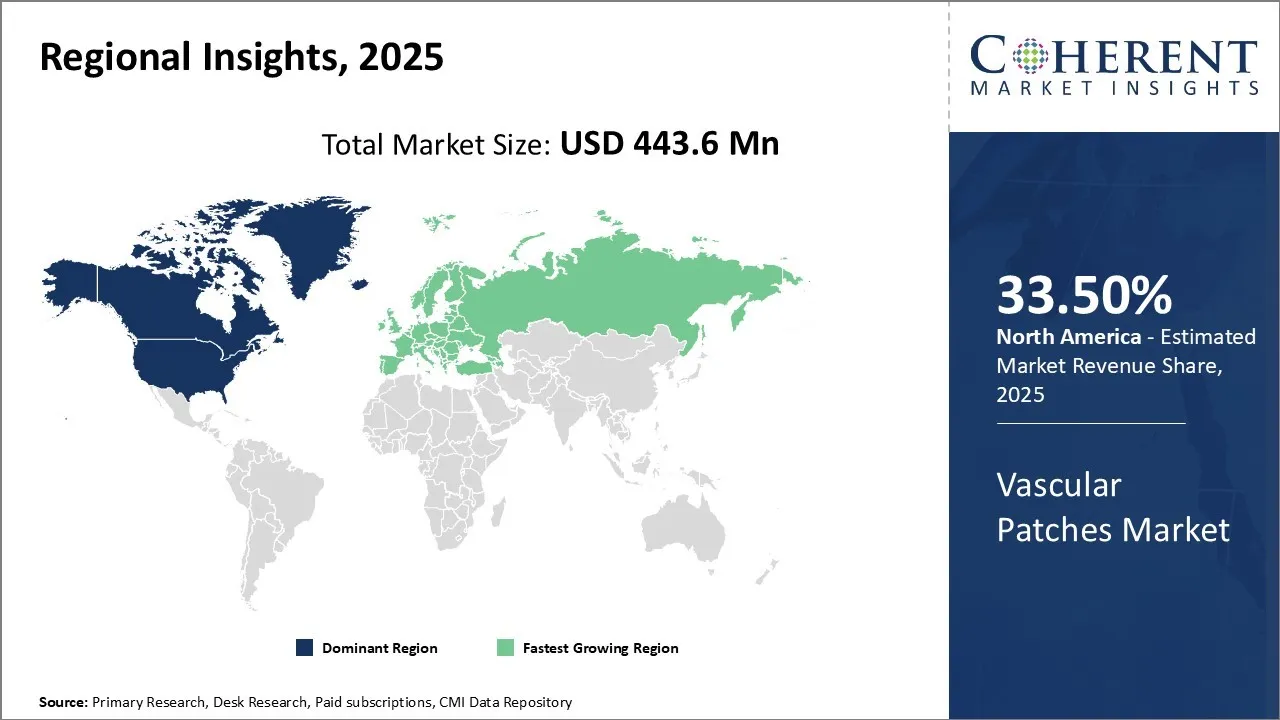
North America Vascular Patches Market Analysis and Trends
North America is expected to lead the global vascular patches market with a projected 33.50% share in 2026, driven by a high burden of cardiovascular diseases and strong healthcare infrastructure. The region’s dominance is bolstered by a rising number of vascular surgeries and advanced clinical practices, particularly in the U.S., where awareness campaigns and screening programs are widespread.
According to the American Heart Association, cardiovascular disease remained the leading cause of death in the U.S. in 2020, accounting for over 928,000 deaths. The economic impact is equally significant, with total CVD costs reaching USD407.3 million between 2018 and 2019, underscoring the need for effective vascular repair solutions such as patches.
Market Report Scope
Vascular Patches Market Report Coverage
| Report Coverage | Details | ||
|---|---|---|---|
| Base Year: | 2025 | Market Size in 2026: | USD 479.5 Mn |
| Historical Data for: | 2020 To 2024 | Forecast Period: | 2026 To 2033 |
| Forecast Period 2026 to 2033 CAGR: | 8.1% | 2033 Value Projection: | USD 827.2 Mn |
| Geographies covered: |
| ||
| Segments covered: |
| ||
| Companies covered: | B. Braun Melsungen AG, C. R. Bard, Inc., LeMaitre Vascular, Inc., Getinge AB, W. L. Gore & Associates, Inc., Edwards Lifesciences Corporation, Baxter International Inc., CryoLife, Inc., Medtronic, and Admedus | ||
| Growth Drivers: |
| ||
| Restraints & Challenges: |
| ||
Global Vascular Patches Market Drivers
- Increasing cardiovascular Diseases
The increasing prevalence of cardiovascular diseases globally is expected to propel market growth over the forecast period. For instance, according to the data published by the World Health Organization on May 15, 2023, every year, about 805,000 people in the U.S. have a heart attack.
- Increasing older population
Increasing the older population globally and increasing the chances of a chronic disease like cardiovascular disease is expected to propel market growth over the forecast period. For instance, according to the data published by the World Health Organization in October 2022, in 2050, 80% of older people will be living in low- and middle-income countries. Moreover, in 2020, the number of people aged 60 years and older outnumbered children younger than 5 years.
Global Vascular Patches Market- Cross Sectional Analysis
Key players are launching novel products in the market, which is expected to propel market growth over the forecast period. For instance, on June 30, 2021, Axio Biosolutions, a wound care company, announced U.S. Food and Drug Administration (FDA) clearance of its hemostatic product, Axiostat Patch, which helps control moderate to severe bleeding in vascular procedures, surgical debridement sites, puncture sites, and more.
Analyst Viewpoint
- As a market research analyst at a top-tier consulting firm, I track the vascular-patch sector and see steady forward motion, mainly because heart-related problems are rising worldwide and more people are simply getting older.
- Growing demand for less intrusive surgery and softer reconstructive work pushes hospitals to seek patches that work better inside the body and cause fewer post-op issues.
- Doctors in advanced economies are learning how effective these patches can be in carotid endarterectomy or in fixing peripheral arteries, so uptake is speeding up at their clinics. Even so, progress is slowed by the steep price tag of next-generation patches and by the advanced manufacturing know-how that not every plant can afford or duplicate.
- Regulatory red tape and a shortage of trained surgeons in many emerging markets add extra drag to expansion plans. Yet the arrival of new materials-bioengineered fabrics and even fully biodegradable options-gives makers fresh room to stand out and broaden their reach.
- North America still leads the market thanks to its well-established hospitals, quick pickup of new surgical tools, and the presence of top industry brands. The Asia-Pacific region is expected to grow the fastest, fueled by higher health spending, wider access to surgery, and more patients living with vascular issues. Although the sector faces regulatory and day-to-day hurdles, the long-range outlook is bright, driven by room for fresh technology and new places to sell it.
Global Vascular Patches Market: Key Trends
- Increasing Research and Development Activities by the Market Players
Increasing research and development activities by market players is expected to aid in market growth over the forecast period. For instance, in September 22, 2021, Terumo Aortic, a medical device company, announced the launch of the co-global surgical graft study known as PANTHER. The study is a prospective and retrospective, multicenter, multi-arm, postmarket study of the company’s range of knitted and woven surgical grafts and cardiovascular patches.
Global Vascular Patches Market: Key Developments
- In March 2025, LeMaitre Vascular announced the launch of its next-generation bovine pericardial patch featuring enhanced anti-calcification technology. This product is designed to improve long-term durability and reduce post-operative complications in vascular surgeries.
- In February 2025, Becton, Dickinson and Company (BD) received U.S. FDA clearance for its innovative synthetic vascular patch engineered for superior hemostasis and ease of suturing, targeting complex vascular reconstruction procedures.
- In January 2025, Terumo Aortic expanded its vascular graft and patch portfolio with the introduction of new size variants of its ePTFE patches in the European market, aimed at improving surgical flexibility for vascular surgeons.
- In December 2024, Baxter International entered into a strategic partnership with a regenerative medicine startup to co-develop bioengineered vascular patches leveraging tissue engineering and cell-based therapies.
- In October 2024, Getinge AB announced the integration of AI-driven surgical planning tools with its vascular patch offerings. This initiative is focused on enhancing precision in vascular interventions and improving patient outcomes.
Market Segmentation
- Global Vascular Patches Market, By Type (Revenue, USD Mn, 2021 - 2033)
- Biologic Vascular Patches
- Synthetic Vascular Patches
- Global Vascular Patches Market, By Application (Revenue, USD Mn, 2021 - 2033)
- Carotid Endarterectomy
- Aortic Aneurysms
- Profundaplasty
- Others
- Global Vascular Patches Market, By End User (Revenue, USD Mn, 2021 - 2033)
- Hospitals and Clinics
- Ambulatory Surgical Centers
- Others
- Global Vascular Patches Market, By Region (Revenue, USD Mn, 2021 - 2033)
- North America
- By Type
- Biologic Vascular Patches
- Synthetic Vascular Patches
- By Application
- Carotid Endarterectomy
- Aortic Aneurysms
- Profundaplasty
- Others
- By End User
- Hospitals and Clinics
- Ambulatory Surgical Centers
- Others
- By Country
- U.S.
- Canada
- By Type
- Latin America
- By Type
- Biologic Vascular Patches
- Synthetic Vascular Patches
- By Application
- Carotid Endarterectomy
- Aortic Aneurysms
- Profundaplasty
- Others
- By End User
- Hospitals and Clinics
- Ambulatory Surgical Centers
- Others
- By Country
- Brazil
- Mexico
- Argentina
- Rest of Latin America
- By Type
- Europe
- By Type
- Biologic Vascular Patches
- Synthetic Vascular Patches
- By Application
- Carotid Endarterectomy
- Aortic Aneurysms
- Profundaplasty
- Others
- By End User
- Hospitals and Clinics
- Ambulatory Surgical Centers
- Others
- By Country
- Germany
- U.K.
- France
- Italy
- Spain
- Russia
- Rest of Europe
- By Type
- Asia Pacific
- By Type
- Biologic Vascular Patches
- Synthetic Vascular Patches
- By Application
- Carotid Endarterectomy
- Aortic Aneurysms
- Profundaplasty
- Others
- By End User
- Hospitals and Clinics
- Ambulatory Surgical Centers
- Others
- By Country
- China
- India
- Japan
- Australia
- South Korea
- ASEAN
- Rest of Asia Pacific
- By Type
- Middle East
- By Type
- Biologic Vascular Patches
- Synthetic Vascular Patches
- By Application
- Carotid Endarterectomy
- Aortic Aneurysms
- Profundaplasty
- Others
- By End User
- Hospitals and Clinics
- Ambulatory Surgical Centers
- Others
- By Country
- GCC
- Israel
- Rest of Middle East
- By Type
- Africa
- By Type
- Biologic Vascular Patches
- Synthetic Vascular Patches
- By Application
- Carotid Endarterectomy
- Aortic Aneurysms
- Profundaplasty
- Others
- By End User
- Hospitals and Clinics
- Ambulatory Surgical Centers
- Others
- By Country/Region
- South Africa
- Central Africa
- North Africa
- By Type
- North America
- Company Profiles
- B. Braun Melsungen AG
- C. R. Bard, Inc.
- LeMaitre Vascular, Inc.
- Getinge AB (Maquet)
- W. L. Gore & Associates, Inc.
- Edwards Lifesciences Corporation
- Baxter International Inc.
- CryoLife, Inc.
- Medtronic
- Admedus
Sources
Primary Research Interviews
- Key Opinion Leaders (KOLs)
- Industry Experts
- Market Participants
- Stakeholders
- Others
Databases
- Factiva
- Bloomberg
- Company Annual Reports
- Others
Magazines
- Cardiovascular Business
- Medical Device and Diagnostic Industry
- Vascular Disease Management
- Vascular Specialist
- Others
Journals
- Journal of Vascular Surgery
- European Journal of Vascular and Endovascular Surgery
- Journal of Endovascular Therapy
- Others
Newspapers
- The Wall Street Journal
- The New York Times
- Financial Times
- The Washington Post
- Others
Associations
- Society for Vascular Surgery (SVS)
- European Society for Vascular Surgery (ESVS)
- Vascular and Endovascular Surgery Society (VESS)
- Canadian Society for Vascular Surgery (CSVS)
- Others
Public Domain Sources
- World Health Organization (WHO)
- Centers for Disease Control and Prevention (CDC)
- National Institutes of Health (NIH)
- U.S. Food and Drug Administration (FDA)
- Others
Proprietary Elements
- CMI Data Analytics Tool
- Proprietary CMI Existing Repository of Information for Last 8 Years
*Definition: Vascular patch is made of polyester-urethane and has been shown to have long-term mechanical stability as well as great biocompatibility.
Get access to 250+ pages report
Every segment, forecast, competitor profile and data table behind the analysis above — available for instant download.
- ESOMAR Member
- ISO 9001:2015 Certified
- D-U-N-S Registered
- GDPR & CCPA Compliant
Missing comfort of reading report in your local language? Find your preferred language:
Transform your Strategy with Exclusive Trending Reports
Frequently Asked Questions
The Vascular Patches Market size is estimated to be valued at USD 479.5 Mn in 2026, and is expected to reach USD 827.2 Mn by 2033.
The CAGR of the Vascular Patches Industry is projected to be 8.1% from 2026 to 2033.
Increasing product lauches and increasing prevalence of chronic diseases is expected to drive the market growth.
Synthetic Vascular Patches is the leading product type segment in the market.
Increasing product recalls are expected to hinder the market over the forecast period.
Major players operating in the market are B. Braun Melsungen AG, C. R. Bard, Inc., LeMaitre Vascular, Inc., Getinge, W. L. Gore & Associates, Inc., Edwards Lifesciences Corporation, Baxter International Inc., CryoLife, Inc., Medtronic, and Admedus.