

Global Chromatography Consumables Market Size and Forecast – 2026 To 2033
The global chromatography consumables market is expected to grow from USD 7.62 Bn in 2026 to USD 11.92 Bn by 2033, registering a compound annual growth rate (CAGR) of 6.6% from 2026 to 2033. The global market for chromatography consumables is projected to witness significant growth during the forecast period attributed to the increasing emergence of biologics & biosimilars development and manufacturing that necessitate chromatography consumables as an integral part of protein purification, process monitoring & quality control.
The U.S. Food and Drug Administration (FDA)'s FY2025 Report on the State of Pharmaceutical Quality highlighted that the annual Biologics License Application (BLA) approvals have increased from 18 in FY2016 to 38 in FY2025, more than doubling the demand for specialized chromatography consumables, and indicating a growing biological product pipeline.
Key Takeaways of the Global Chromatography Consumables Market
- Chromatography columns are projected to hold 24.8% of the global chromatography consumables market share in 2026, making it dominant product segment. Europe is predicted to dominate the segment due to the presence of established analytical testing infrastructure and the increase in demand for specific separation columns. The Centre for Process Innovation in UK, announced an open procurement competition for supplying chromatography columns in 2024 worth up to USD 1.96 million (GBP 1.5 million).
- Liquid chromatography (HPLC and UHPLC) is projected to hold 61.3% of the global chromatography consumables market share in 2026, making it chromatography technique segment. North America has a broader laboratory & analytical research facilities & escalating utilization of multidimensional liquid chromatography technique for analysis of complex chemicals. In July 2026, the U.S. National Institute of Standards and Technology (NIST) announced about its purchase planning for 2D liquid chromatography system.
- Pharmaceutical quality control and drug development is projected to hold 34.6% of the global chromatography consumables market share in 2026, making it dominant application segment. Asia-Pacific is focusing on enhancing its pharmaceutical testing ecosystem with dedicated analytical and quality control laboratories. The Department of Pharmaceuticals in India has reported funding support for common research development and testing facilities under the API-CF scheme including laboratory projects in the states of Uttarakhand, Himachal Pradesh, Andhra Pradesh.
- North America market maintains dominance with an expected share of 38.9% in 2026. The high growth is attributed to increased presence of pharmaceutical manufacturing units, better analytics & test facilities, and higher pharmaceutical R&D activity. According to the FY2025 Report on the State of Pharmaceutical Quality, 57% of the 5,953 worldwide listed drug manufacturing sites were located in the United States, US.
- Asia Pacific is expected to exhibit the fastest growth in the global chromatography consumables market, registering an estimated CAGR of 9.2% during 2026–2033, due to rise in pharmaceutical manufacturing and biologics production coupled with investments in domestic drug development capacity. India’s Department of Pharmaceuticals has introduced the Production Linked Incentive (PLI) Scheme for Pharmaceuticals. As of June 2026, the PLI Scheme for Pharmaceuticals had attracted cumulative investments of USD 5,000 million (INR 46,744 crore) and approved more than 350 manufacturing units.
Segmental Insights
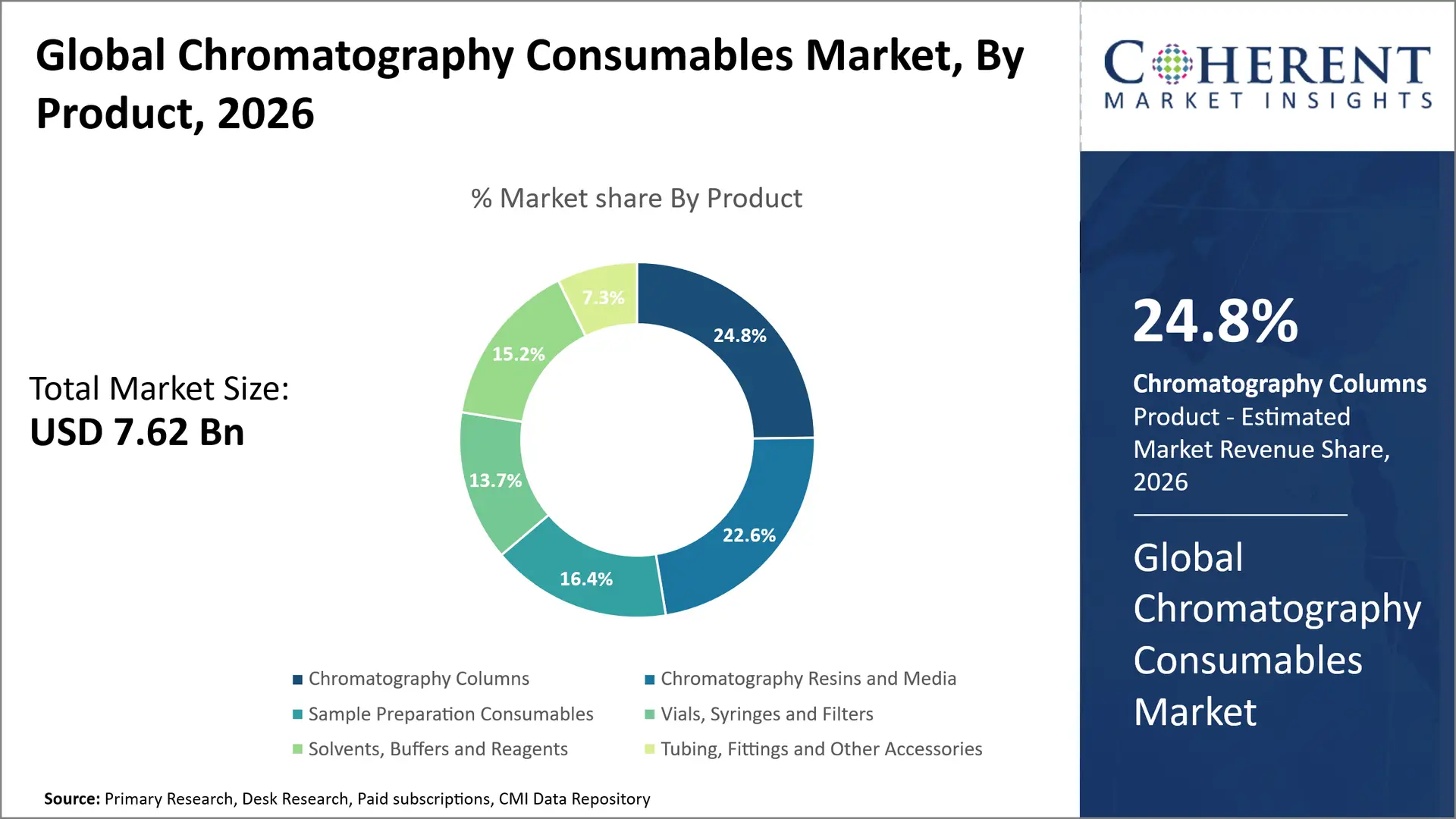
Why Do Chromatography Columns Dominate the Global Chromatography Consumables Market?
Chromatography columns are projected to hold the market share of 24.8% in 2026, due to their importance in separating, purifying and analyzing compounds for pharmaceutical, biopharmaceutical and environmental applications. Growth in application specific high-performance liquid chromatography (HPLC) columns is driven by the need for a high-resolution separation with a variety of stationary phases. For instance, in February 2026. the Central Drugs Standard Control Organisation (CDSCO) invited tender for analytical HPLC C18 and Cyano columns with matching guard columns and cartridges in the regional drugs testing laboratory Regional Drugs Testing Laboratory (RDTL) in Chandigarh.
- Current Industry Events of 2026
- Market Size Estimation
- Regional Breakdown
- Competitive Landscape
- Customer Intelligence
- Segmental Analysis
- Pricing Analysis
- Key Market Drivers, Challenges & Future Trends
- Customized Insights Section
Why Do Liquid Chromatography (HPLC and UHPLC) Represent the Largest Chromatography Technique Segment in the Chromatography Consumables Market?
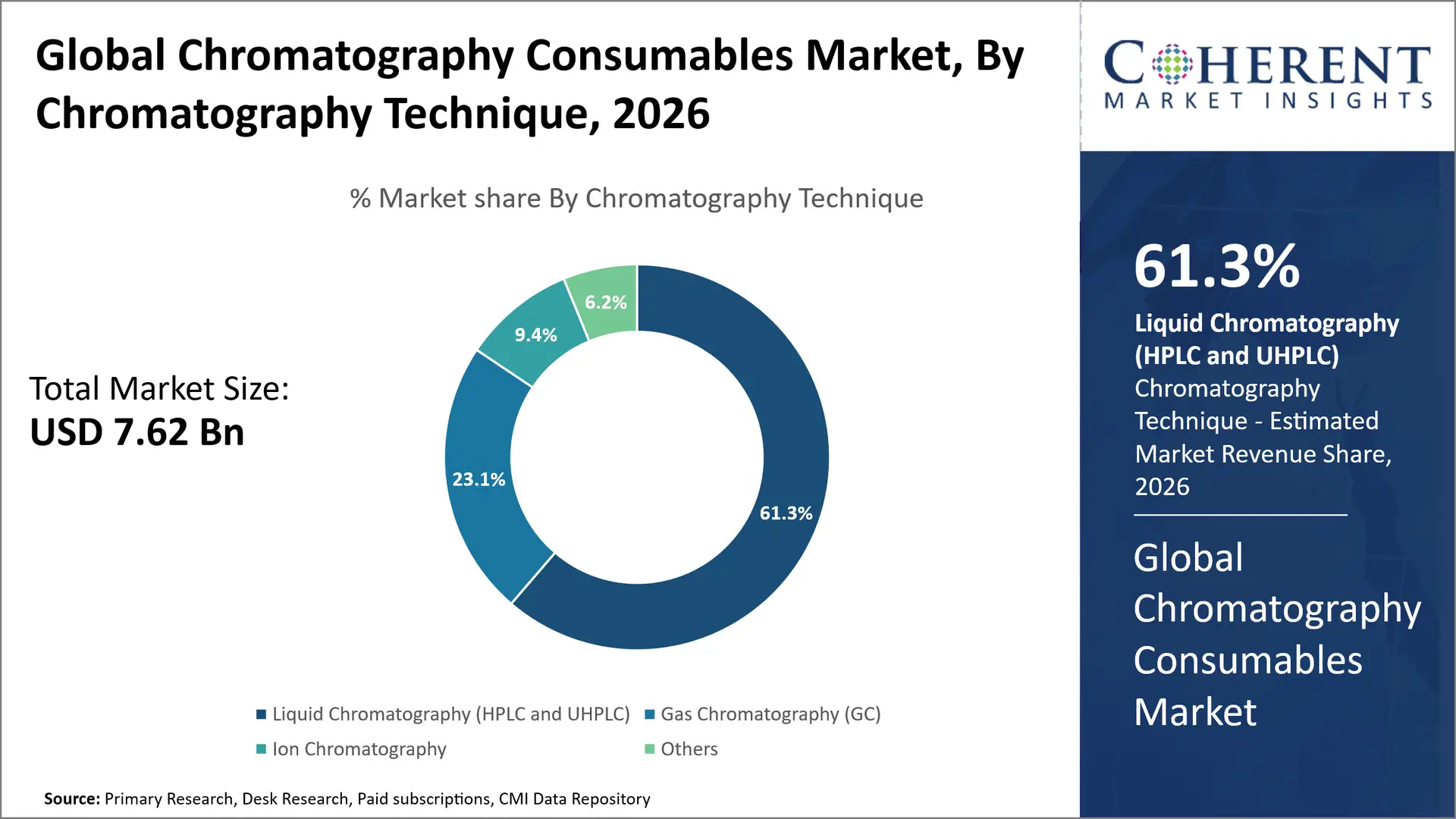
Liquid chromatography (HPLC and UHPLC) is projected to hold a market share of 61.3% in 2026, owing to its high separation efficiency and sensitivity, and usefulness in pharmaceutical, biopharmaceutical, food and environmental testing. It is well suited for analysis of complex mixtures such as molecules and biomolecules requiring high resolution creating continual demand for columns, solvents and consumables used in sample preparation. For instance, in January 2026, Japan's National Institute for Environmental Studies announced a government procurement notice for an HPLC-tandem mass spectrometry system able to analyze large numbers of samples in a high-throughput manner, highlighting liquid chromatography still has a use in environmental analytical testing. (Source: Japan External Trade Organization (JETRO))
Pharmaceutical Quality Control and Drug Development Segment Dominates the Global Chromatography Consumables Market
The pharmaceutical quality control and drug development segment is projected to hold a market share of 34.6% in 2026, as chromatography has to be performed in order to assess the purity, impurity profile, to evaluate stability and to perform batch-release testing of drugs. Growing regulatory pressure and modern complex drug formulation drive the demand for column, reagent, resin, and consumables used for sample-preparation. For instance, in October 2025, European Directorate for the Quality of Medicines and Health Care (EDQM) of the Council of Europe has issued a market notice for HPLC and GC columns, chromatography consumables and accessories to meet laboratory requirements.
Current Events and their Impact
Current Events | Description and its Impact |
Spanish Government Seeks Chromatography Consumables for National Toxicology and Forensic Laboratories (September 2026) |
|
University of Kentucky Seeks Supply of Chromatography Products and Laboratory Consumables (March 2026) |
|
Chromatography Consumables Market Dynamics
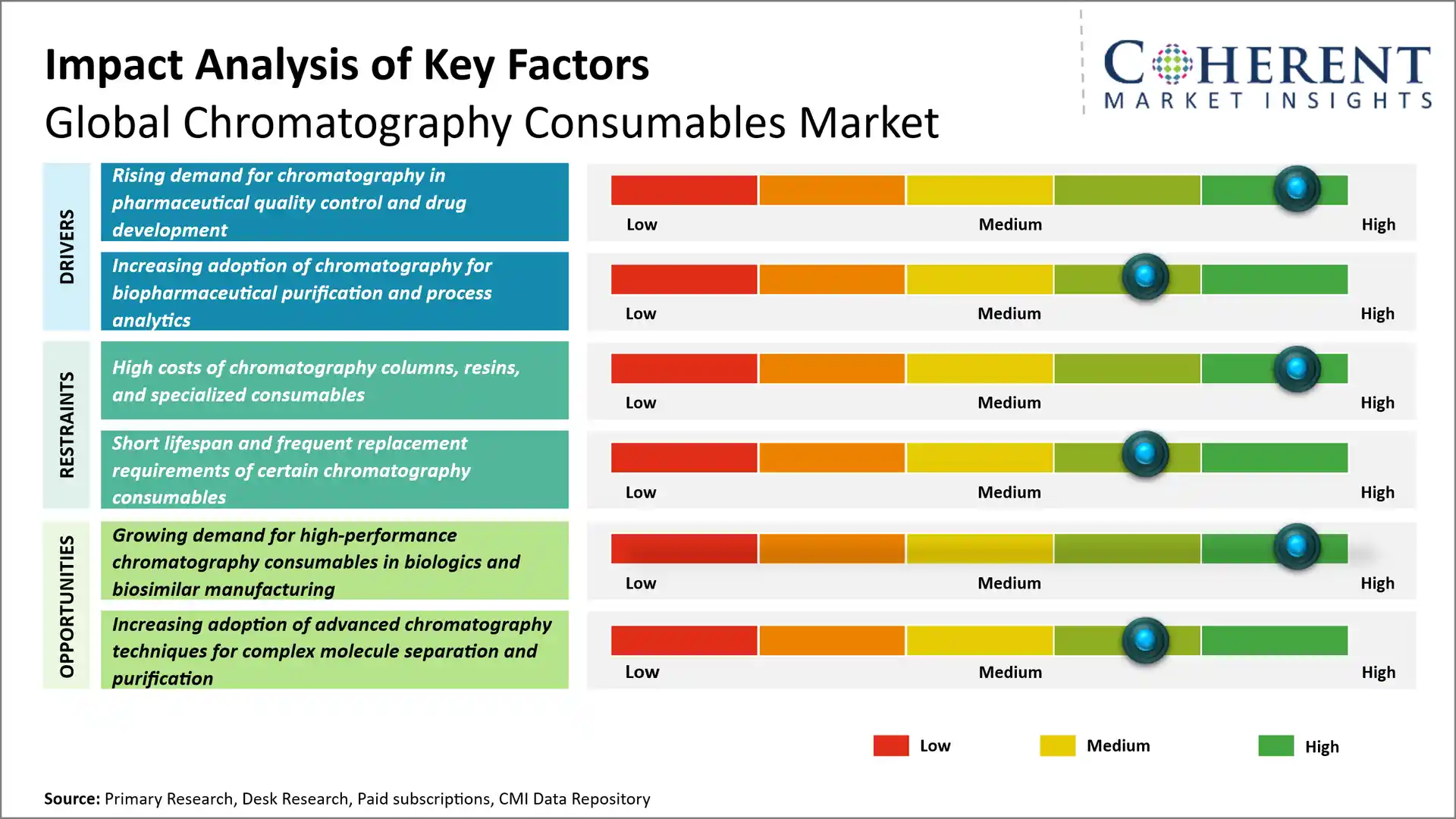
Market Drivers
- Rising demand for chromatography in pharmaceutical quality control and drug development: Increasing pharmaceutical R&D activity and increasing pharmaceutical drug quality criteria in developing products across companies, hospitals and research laboratories is augmenting the demand for chromatography consumables utilized in drug analysis, impurity profiling and quality control analysis. In September 2026, Romania Socola Psychiatry Institute has published a framework procurement notice for reagents and consumables for its HPLC-LC/MS/MS system for drug analysis.
- Increasing adoption of chromatography for biopharmaceutical purification and process analytics: The rising adoption of chromatography in purification of biopharmaceuticals and process analytics is mainly due to the demand of separating and purifying complex biologics such as recombinant proteins. Texas Institute for Fundamental Research published a procurement specification on affinity chromatography media for GST tagged recombinant proteins single step purification in September 2026.
- Increasing regulatory focus on food safety and contaminant monitoring: Demand for chromatography-based methods to test food products for pesticide residues, veterinary drug residues and other contaminants is rising due to high food safety standards. The Food Safety and Inspection Service of the U.S. Department of Agriculture, announced multiple years of supply of solid-phase extraction columns and QuEChERS kits to test for residues in its meat, poultry and egg-product laboratories.
Emerging Trends
- Advancements in bioaffinity chromatography resins: Protein A along with other bioaffinity resins is helping in better selective purification of monoclonal antibodies and other complex biologics.
- Impact: Increased binding capacity, selectivity and purification throughput improving the productivity and consistency of the product.
- Market Relevance: It is driving a need for more defined chromatography resins and process consumables used in biopharmaceutical manufacturing.
- Shift toward high-throughput and automated chromatography: Pharmaceutical laboratories have moved towards adopting the automated HPLC and UHPLC workflow to speed up sample analysis, impurity profiling and routine testing
- Impact: Automated solutions enhance high throughput, reproducibility, laboratory productivity and allow the reduction of manual handling.
- Market Relevance: Increasing the requirement for performances columns, sample-preparation items, vials, filters, and other consumables which are compatible.
Regional Insights
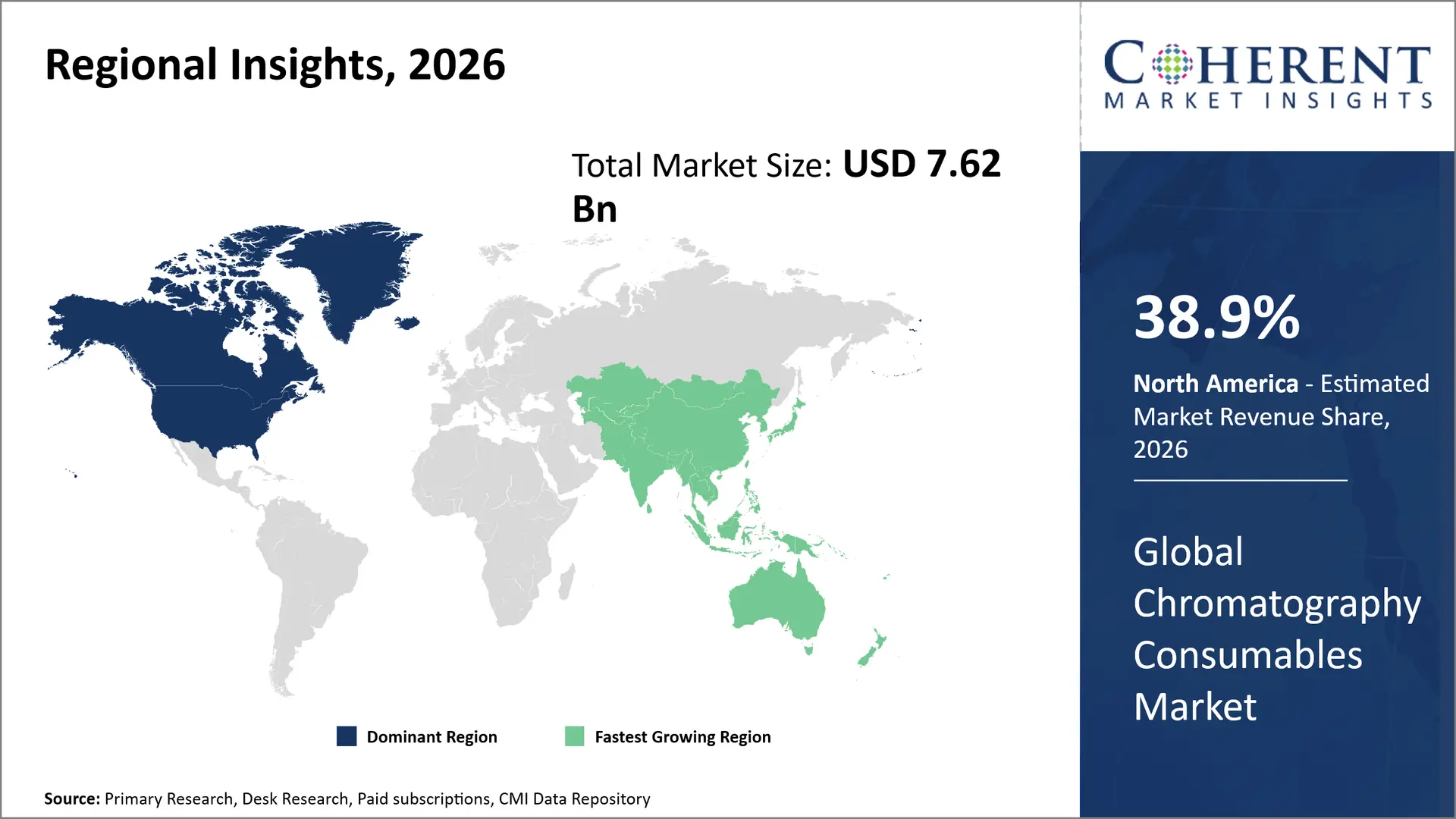
Why is North America a Strong Market for Chromatography Consumables?
North America leads the global chromatography consumables market, accounting for an estimated 38.9% share in 2026, due to the presence of the well-established pharmaceutical & biotechnology industry, advanced research infrastructure, and high rate of investment in drug development. Stringent government regulation in the region such as high-quality standards of the FDA would boost the use of highly accurate and reliable chromatography product.
For instance, in March 2024, the U.S. FDA published its final Q2(R2) guidance for validation of analytical procedures, setting out guidance of demonstration of the suitability and reliability of analytical methods in pharmaceutical quality control. Furthermore, increasing collaboration between research institutions and research organizations with industry in the field of chromatography instrument research and consumables also benefits the market.
Why Does Asia Pacific Chromatography Consumables Market Exhibit High Growth?
Asia Pacific is expected to exhibit the fastest growth in the global chromatography consumables market, registering an estimated CAGR of 9.2% during 2026–2033. The region is projected to account for 26.4% of the global market in 2026, due to the increasing number of pharma & biopharma manufacturing companies, higher number of research activities, rising consumer awareness about food safety & environmental testing, and increasing adoption of bio-based products.
Government initiatives to promote the adoption of biotechnology and favorable trade policies are also driving the growth of the Asia-Pacific chromatography columns, resins, and sample-preparation consumables market. For instance, the Ministry of SMEs and Startups and the Ministry of Health and Welfare of South Korea have launched a K-Pharma Bio Frontier Companies program in March 2026 to support 200 pharmaceutical and biotech firms in R&D, clinical development and commercialization by 2030.
Global Chromatography Consumables Market Outlook for Key Countries
Why is the U.S. Leading Innovation and Adoption in the Chromatography Consumables Market?
The U.S. drives innovation and adoption driven by its density of pharma & biotech R&D, focus on biologics, monoclonal antibodies, and advanced therapeutics that need application-specific separation and purification workflows. The country also boasts a large CRO / CDMO ecosystem that creates demand for high-performance HPLC/UHPLC columns, affinity resins, and sample-prep consumables. Solid integration of chromatography with LC-MS workflows underpins adoption of advanced consumables for drug characterization, impurity profiling and process development.
Is Japan a Favorable Market for Chromatography Consumables Market?
Japan is an attractive market for chromatography consumables driven by the need for quality control and drug development as well as biologics production. HPLC/UHPLC columns, affinity chromatography resins, and sample-prep consumables have applicability to biologics analysis, protein purification and impurity profiling. The best opportunities lie in high-performance consumables used for accurately analyzing complex drug formulations and biologics molecules.
Is China Emerging as a Key Growth Hub for the Chromatography Consumables Market?
China is set to develop as an important growth center for chromatography consumables, with the growth of local drug, biosimilar and recombinant protein manufacturing. Growing sales of HPLC and UHPLC columns, protein A affinity chromatography resins and filtration consumables used in drug quality testing, and in the large-scale purification of biologics. Growth of local chromatography media and specialty consumables manufacturing is creating opportunities to supply domestic pharmaceutical and biopharmaceutical companies.
Why Does Germany Top the European Chromatography Consumables Market?
Germany dominates the European market for chromatography consumables as it has the largest manufacturing base for pharmaceuticals and biopharmaceuticals (including biologics and advanced medicines). Consumption is driven by high demand for HPLC and UHPLC columns, chromatography resins and sample-preparation consumables used in drug characterization, purification and testing. It also benefits from a long-standing chemical and analytical laboratory infrastructure that bolsters application-led consumption.
Is Chromatography Consumables Market Developing in UK?
UK chromatography consumables market is growing, driven by the surging demand from pharmaceutical research, biologics development and contract manufacturing. Leading product areas include HPLC and UHPLC columns, protein purification resins and sample-preparation consumables, notably for analytical testing and impurity profiling and biopharmaceutical process development. There are also early signs of demand for more specialist chromatography consumables for the challenge of complex biologics characterization and high-resolution separation techniques.
Chromatography Consumables Demand Across Key Pharmaceutical and Biopharmaceutical Applications
Application | Key consumables used | Primary purpose |
Pharmaceutical quality control | HPLC columns, vials, filters, solvents | Assay testing, impurity profiling, and batch release |
Drug discovery and development | Analytical columns, sample-preparation kits, reagents | Compound screening and characterization |
Monoclonal antibody purification | Protein A resins, affinity media, buffers | Antibody capture and purification |
Recombinant protein production | Ion-exchange and size-exclusion resins | Protein separation and polishing |
Biopharmaceutical process analytics | HPLC columns, analytical standards, solvents | Monitoring product purity and process consistency |
Stability testing | HPLC columns, vials, solvents | Degradation profiling and stability assessment |
How is the growing demand for high-performance chromatography consumables in biologics and biosimilar manufacturing creating new growth opportunities in the chromatography consumables market?
The global chromatography consumables market is expected to witness a significant opportunity for growth in the increasing demand for high-performance chromatography consumables for biopharmaceuticals and biosimilars manufacturing. Chromatography resins, columns and purification media are used for the capture and separation of proteins and downstream processing of complex biologics. For instance, in September 2024, UK Research and Innovation (UKRI) entered into a three-year framework agreement (with a further one-year extension period), for the supply of laboratory and molecular biology consumables, including a dedicated procurement category to chromatography resins and protein purification products. This is driven by institutional demand for other consumables that are used in support of protein research and purification processes.
Market Players, Key Development, and Competitive Intelligence
Key Developments
- In October 2026, Dr. Maisch HPLC GmbH entered into an agreement to acquire its U.S. chromatography business Esteve CDMO U.S., Inc (formerly Regis Technologies, Inc.) including Whelk-O chiral HPLC and SFC range. The deal includes reversed-phase columns, chromatography specialty reagents, chiral screening services. This move will grow the company's portfolio of chromatography consumables, as well as open its first dedicated U.S. production and commercial infrastructure.
- In October 2025, Merck KGaA announced a definitive agreement to acquire chromatography business of JSR Life Sciences which includes portfolio of Amsphere Protein A resins. The acquisition is intended to strengthen downstream purification for the manufacturing of monoclonal antibodies (mAbs) and the chromatography consumables portfolio, as well as extend Merck's chromatography resins offering.
Competitive Landscape
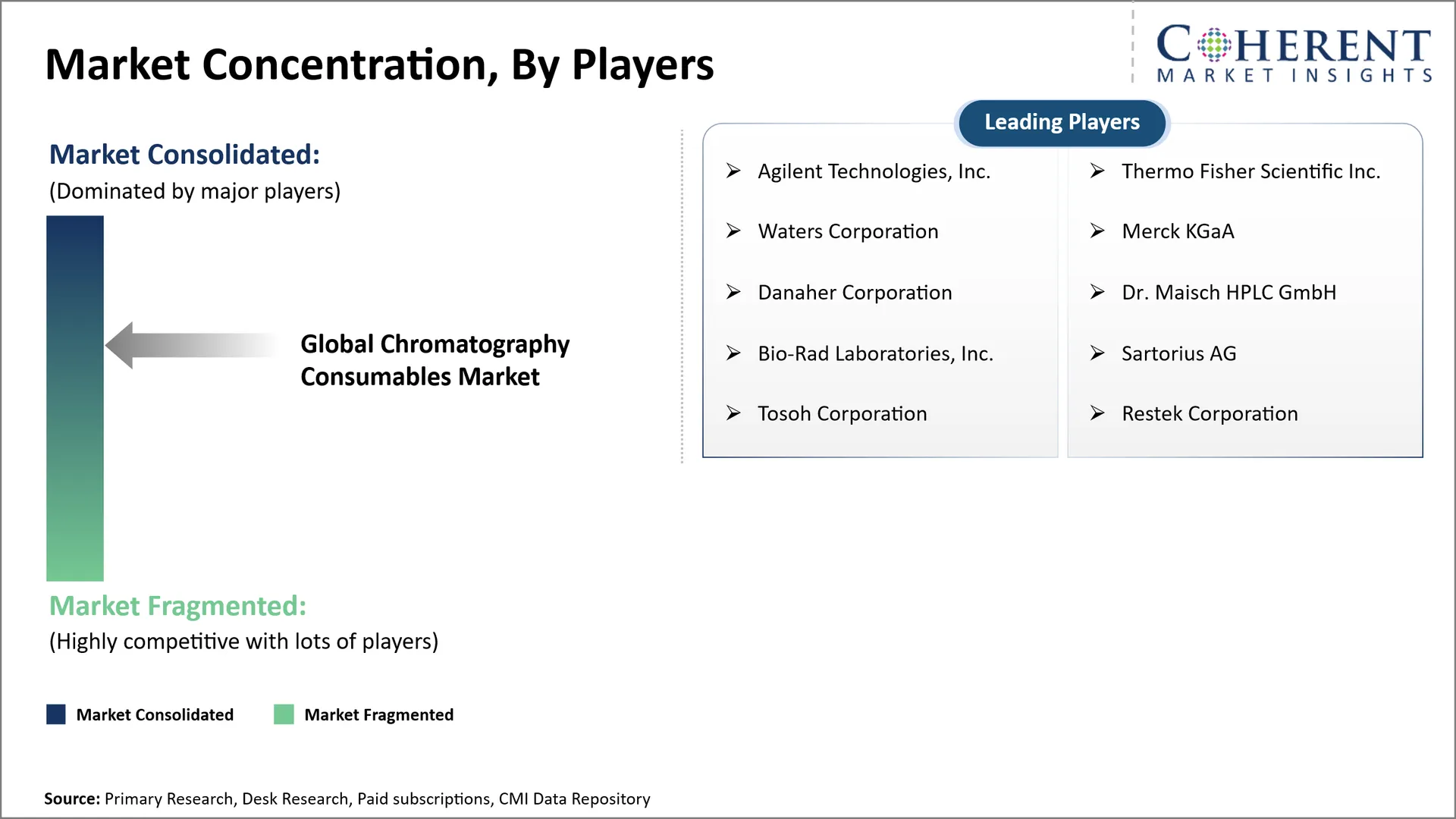
The competitive landscape of the chromatography consumables market is moderately concentrated, with competition from existing analytical instrument and life science suppliers, proprietary manufacturers of chromatography media and dedicated suppliers of pharmaceutical purification. Competition among providers is primarily about performance of their products, innovation with stationary phases and resin selectivity, consistency and compatibility with chromatography systems, and about growing portfolios of biopharmaceutical purification offer, reliable supply and meeting demanding pharma quality requirements.
Key focus areas include
- Developed high-performance HPLC and UHPLC columns
- Broaden chromatography resin portfolios
- Innovation in the development of media
- Development of consumables for the preparation of samples prior to analysis
- Enhancements to the manufacturing capacity and supply chain
- Strategic alliances with pharmaceutical companies, biotech producers, CROs and CDMOs on application-specific needs
Market Report Scope
Global Chromatography Consumables Market Report Coverage | |||
Report Coverage | Details | ||
Base Year | 2025 | Market Size in 2026: | USD 7.62 Bn |
Historical Data For: | 2020 To 2024 | Forecast Period: | 2026 To 2033 |
Forecast Period 2026 To 2033 CAGR: | 6.6% | 2033 Value Projection: | USD 11.92 Bn |
Geographies covered: |
| ||
Segments covered: |
| ||
Companies covered: | Agilent Technologies, Inc., Thermo Fisher Scientific Inc., Waters Corporation, Merck KGaA, Danaher Corporation, Dr. Maisch HPLC GmbH, Bio-Rad Laboratories, Inc., Sartorius AG, Tosoh Corporation, Restek Corporation | ||
Growth Drivers: |
| ||
Restraints & Challenges: |
| ||
Analyst Opinion (Expert Opinion)
- In the future, biologics manufacturing, high-end drug development and more purified yield requirements will play a greater role in creating driving forces for the chromatography consumables market. The focus of demand will move towards the requirements for more specialized chromatography media, more effective high-resolution columns, application-specific consumables tailored to complex molecules, single-use solutions, continuous bioprocessing and automated analytical workflows. Manufacturers of consumables with capabilities in biologics purification will be at an advantage.
- The most promising opportunity is predicted to be for affinity chromatography resins for monoclonal antibody and recombinant protein purification in China. Growth of local biopharmaceutical production and heightened biologic development drives the need for high-capacity protein A resins, polishing media and process chromatography consumables. In the US, the HPLC/UHPLC columns for pharmaceutical QC market presents another similar opportunity, given complex drug formulations and rigorous analytical specifications.
- In order to gain a competitive advantage market players should focus on application-driven product development instead of competing on consumable standard offerings and pricing. Developing high-capacity resins, more robust stationary phases, better selectivity, as well as consumables for automated purification systems can help create differentiation. Industry players should build stronger technical relationships with pharmaceutical manufacturers and contract development manufacturing organizations (CDMO) to better align with different purifications. Improving regional distribution and local technical-support capacity also need to be considered in customer retention.
Speak to the analyst
Want personalized insights?
Take the findings above to one of our principal consultants, or have the report rebuilt around the segments, geographies and competitors you actually track.
Market Segmentation
- Product Insights (Revenue, USD Bn, 2021 - 2033)
- Chromatography Columns
- Chromatography Resins and Media
- Sample Preparation Consumables
- Vials, Syringes and Filters
- Solvents, Buffers and Reagents
- Tubing, Fittings and Other Accessories
- Chromatography Technique Insights (Revenue, USD Bn, 2021 - 2033)
- Liquid Chromatography (HPLC and UHPLC)
- Gas Chromatography (GC)
- Ion Chromatography
- Others
- Application Insights (Revenue, USD Bn, 2021 - 2033)
- Pharmaceutical Quality Control and Drug Development
- Biopharmaceutical Purification and Process Analytics
- Food and Beverage Testing
- Environmental Testing
- Clinical Diagnostics, Forensics and Chemical Analysis
- Others
- End User Insights (Revenue, USD Bn, 2021 - 2033)
- Pharmaceutical and Biotechnology Companies
- Contract Research and Manufacturing Organizations (CROs and CDMOs)
- Academic and Research Institutions
- Clinical and Diagnostic Laboratories
- Food, Environmental and Industrial Testing Laboratories
- Others
- Regional Insights (Revenue, USD Bn, 2021 - 2033)
- North America
- U.S.
- Canada
- Latin America
- Brazil
- Argentina
- Mexico
- Rest of Latin America
- Europe
- Germany
- U.K.
- Spain
- France
- Italy
- Russia
- Rest of Europe
- Asia Pacific
- China
- India
- Japan
- Australia
- South Korea
- ASEAN
- Rest of Asia Pacific
- Middle East
- GCC Countries
- Israel
- Rest of Middle East
- Africa
- South Africa
- North Africa
- Central Africa
- North America
- Key Players Insights
- Agilent Technologies, Inc.
- Thermo Fisher Scientific Inc.
- Waters Corporation
- Merck KGaA
- Danaher Corporation
- Dr. Maisch HPLC GmbH
- Bio-Rad Laboratories, Inc.
- Sartorius AG
- Tosoh Corporation
- Restek Corporation
Sources
Primary Research Interviews
- Chromatography Consumables Product and Portfolio Managers
- Pharmaceutical Quality Control and Analytical Testing Experts
- Biopharmaceutical Downstream Processing and Purification Specialists
- Chromatography Research Scientists and Application Development Experts
Stakeholders
- Pharmaceutical and Biopharmaceutical Manufacturers
- Contract Research and Manufacturing Organizations (CROs and CDMOs)
- Government Analytical and Testing Laboratories
- Academic and Pharmaceutical Research Institutions
- End-use Sectors
- Pharmaceutical Quality Control and Drug Development
- Biopharmaceutical Purification and Process Analytics
- Food Safety and Agricultural Testing
- Forensic and Toxicological Analysis
- Regulatory & Health Bodies
- U.S. Food and Drug Administration (FDA)
- U.S. Department of Agriculture (USDA)
- European Directorate for the Quality of Medicines & HealthCare (EDQM)
- Ministry of SMEs and Startups, South Korea
Databases
- UK Find a Tender Service
- UK Contracts Finder
- SAM.gov
- CanadaBuys
Public Domain Sources
- U.S. FDA – Q2(R2) Validation of Analytical Procedures
- UK Research and Innovation (UKRI) – Molecular Biology and Laboratory Chemicals Framework
- University of Kentucky – Chromatography Products and Consumables RFP
- USDA Food Safety and Inspection Service (FSIS) – Chromatography and Sample Preparation Consumables Procurement
Proprietary Elements
- CMI Data Analytics Tool
- Proprietary CMI Existing Repository of information for last 10 years.
Get access to 250+ pages report
Every segment, forecast, competitor profile and data table behind the analysis above — available for instant download.
- ESOMAR Member
- ISO 9001:2015 Certified
- D-U-N-S Registered
- GDPR & CCPA Compliant
Frequently Asked Questions
The global chromatography consumables market is estimated to be valued at USD 7.62 Bn in 2026 and is expected to reach USD 11.92 Bn by 2033.
Chromatography columns dominate because they are used in the separation, purification, and analytical testing of compounds in pharmaceutical, biopharmaceutical, and research settings.
Chromatography consumables include products such as columns, resins, filters, vials, solvents and reagents. These items are used to separate, analyze and purify compounds.
The CAGR of global chromatography consumables market is projected to be 6.6% from 2026 to 2033.
Rising demand for chromatography in pharmaceutical quality control and drug development, and increasing adoption of chromatography for biopharmaceutical purification and process analytics are the major factors driving the growth of the global chromatography consumables market.
High costs of chromatography columns, resins, and specialized consumables, and short lifespan and frequent replacement requirements of certain chromatography consumables are the major factors hampering the growth of the global chromatography consumables market.
In terms of application, pharmaceutical quality control and drug development is estimated to dominate the market revenue share in 2026.