

Global Clinical Intelligence Dashboard Market Size and Forecast – 2026 To 2033
The global clinical intelligence dashboard market is expected to grow from USD 2.35 Bn in 2026 to USD 6.85 Bn by 2033, registering a compound annual growth rate (CAGR) of 16.5% from 2026 to 2033. The global clinical intelligence dashboard market is forecast to expand significantly driven by the increasing adoption of electronic health records (EHRs) and the need for data-driven clinical decision-making.
The U.S. Office of the National Coordinator for Health Information Technology (ONC) reported that, as of 2024, more than 99% of non-federal acute care hospitals had adopted certified EHRs, creating a wealth of digital data on which clinical dashboards can aggregate patient data and generate valuable information.
Key Takeaways of the Global Clinical Intelligence Dashboard Market
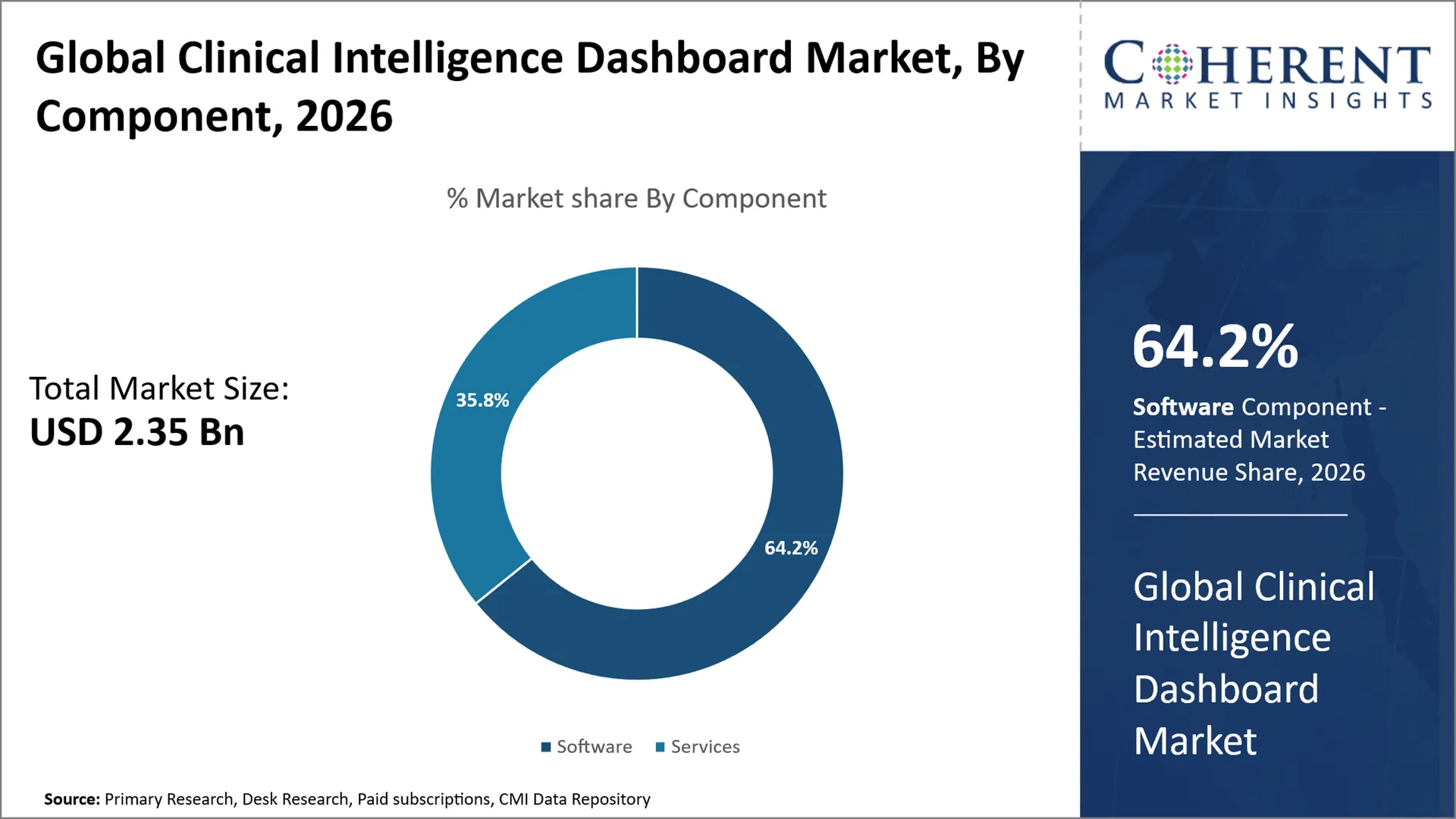
- Software is expected to be the largest component segment in the global clinical intelligence dashboard market with a share of 64.2% in 2026 across Europe due to regulatory initiatives promoting interoperable electronic health records. For instance, the European Union’s European Health Data Space Regulation (EU) 2025/327 offers a framework for the exchange and reuse of electronic health data, fueling demand for software that brings together clinical information to support analysis and decision-making.
- Clinical decision support dashboards are projected to hold 27.6% of the global clinical intelligence dashboard market share in 2026, making it dominant dashboard type segment, across North America due to regulatory emphasis on transparent, data-driven clinical decisions. For instance, the U.S. Office of the National Coordinator for Health Information Technology (ONC) established transparency requirements for predictive decision-support interventions as part of its HTI-1 Final Rule, facilitating more trustworthy clinical decision-support workflows.
- Cloud-based is expected to account for 59.3% of the global clinical intelligence dashboard market share by 2026, and to become the leading deployment mode segment, across Asia-Pacific owing to investments in connected healthcare infrastructure. For instance, Japan’s Ministry of Health, Labour and Welfare is advancing its Medical DX initiative to promote healthcare information sharing and digital infrastructure, supporting the adoption of connected clinical data platforms.
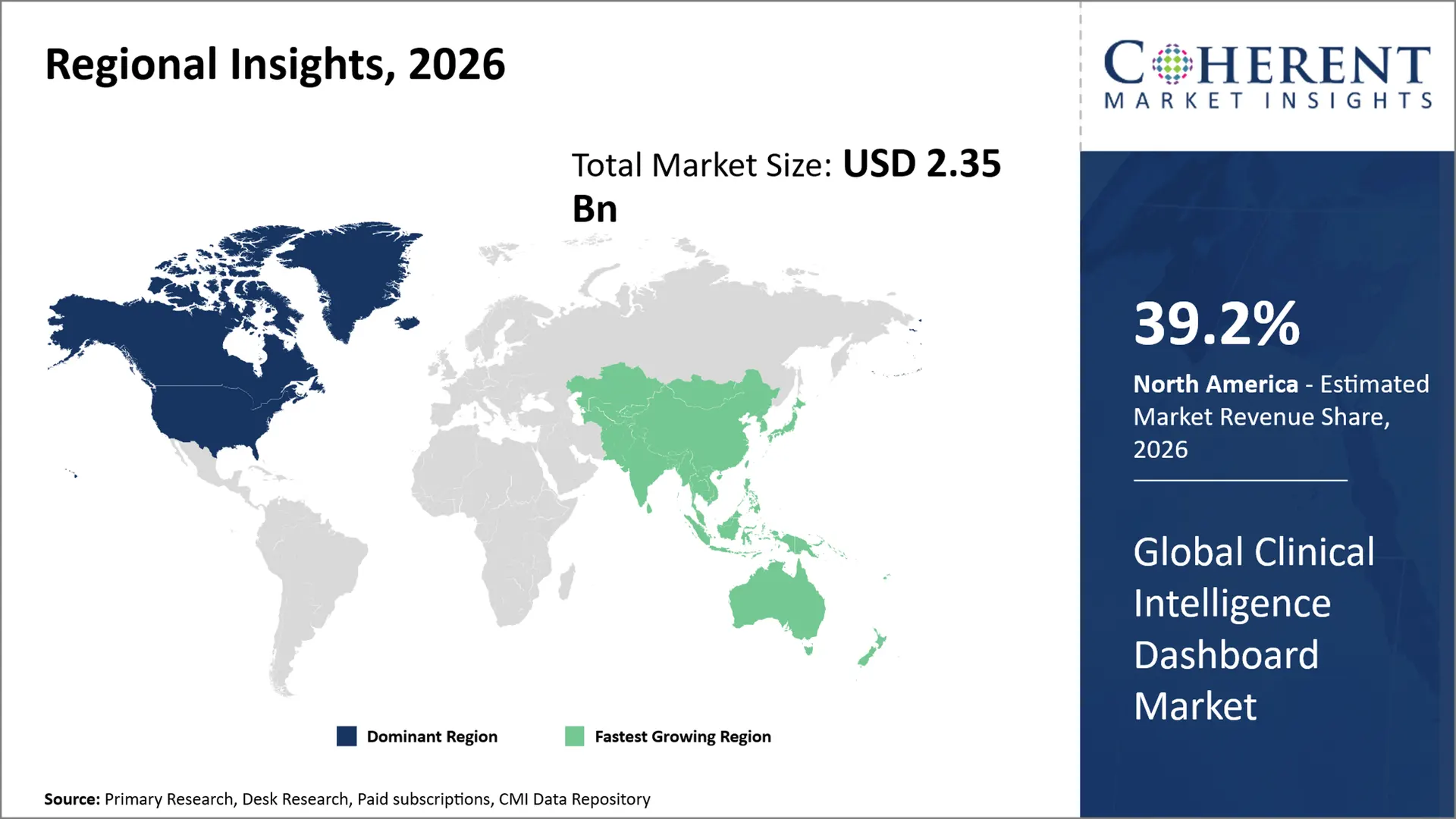
- North America market is expected to hold the largest market share of 39.2% in 2026 owing to the presence of well-established healthcare IT infrastructure and regulatory pushes for interoperability. For instance, the U.S. The Centers for Medicare & Medicaid Services (CMS) promotes standards-based health-data exchange through its Interoperability Framework, which allows providers, payers and digital health platforms to more effectively access and use clinical information.
- The Asia Pacific region is projected to witness the highest CAGR of 16.8% in the global clinical intelligence dashboard market during 2026-2033 due to the growing digital health infrastructure and rising demand for integrated clinical data. For instance, India’s National Health Authority is advancing the Ayushman Bharat Digital Mission (ABDM) to develop interoperable digital health infrastructure and facilitate the exchange of health records, supporting the adoption of data-driven clinical platforms.
Segmental Insights
Why Do Software Dominate the Global Clinical Intelligence Dashboard Market?
Software is projected to hold the market share of 64.2% in 2026, because of the role it plays in clinical data integration, real-time analytics and clinical decision support. The use of these platforms helps health practitioners to monitor patient risks, clinical outcomes and also find opportunities for optimizing care while services can mostly be used to provide support for implementation and maintenance. For instance, in July 2025, the U.S. Centers for Medicare & Medicaid Services (CMS) launched the Health Technology Ecosystem. This program facilitates the interchange of health data and digital products that help enable patients and providers to find, receive and use information. It also helps meet the need for software that combines clinical information and delivers in-the-moment insights.
- Current Industry Events of 2026
- Market Size Estimation
- Regional Breakdown
- Competitive Landscape
- Customer Intelligence
- Segmental Analysis
- Pricing Analysis
- Key Market Drivers, Challenges & Future Trends
- Customized Insights Section
Why Does Clinical Decision Support Dashboards Represent the Largest Dashboard Type Segment in the Clinical Intelligence Dashboard Market?
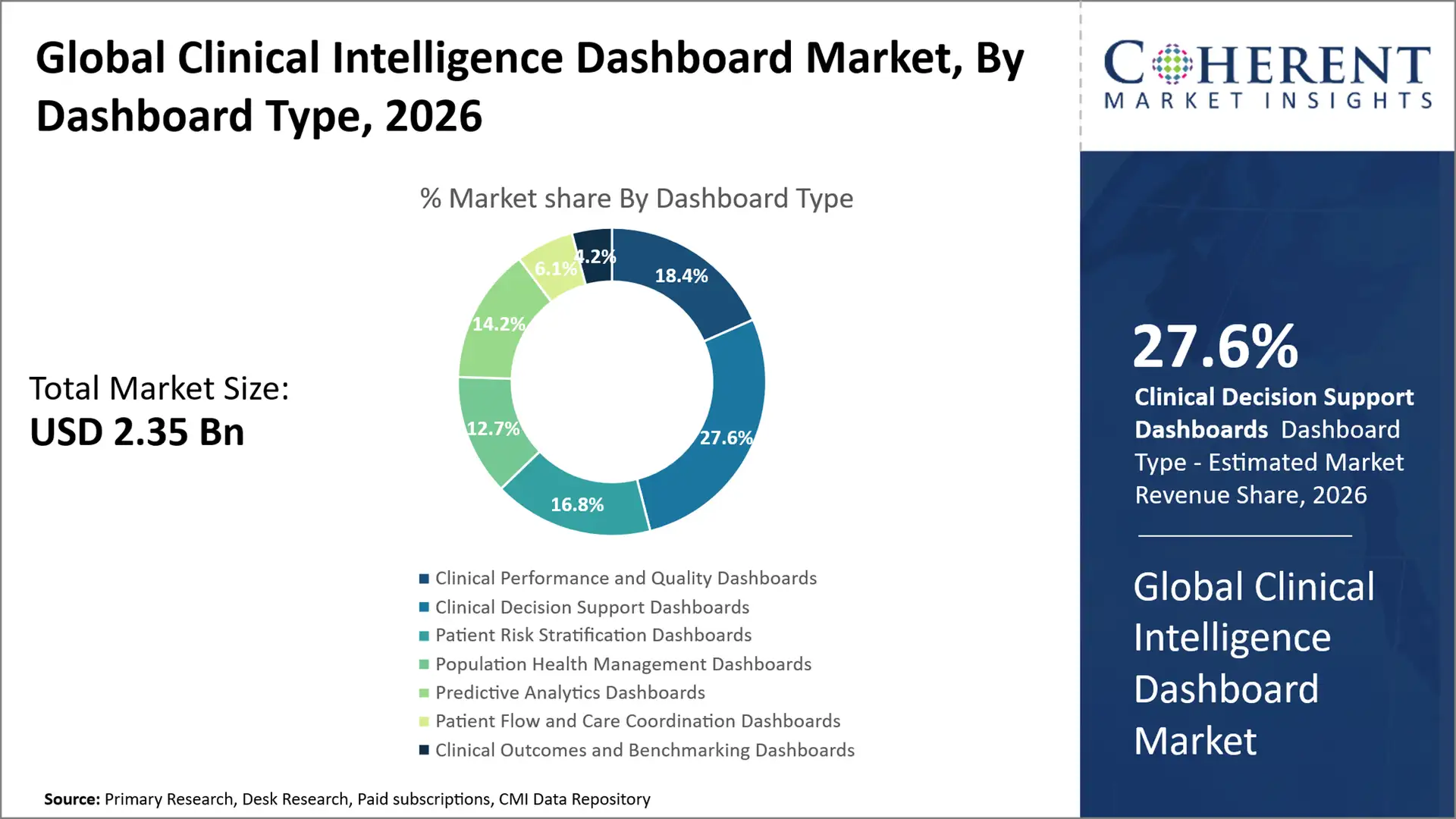
Clinical decision support dashboards are projected to hold a market share of 27.6% in 2026, as they assist clinicians in understanding patient information, assessing treatment options and potential risks, and making safe, evidence-based decisions in a timely manner. When embedded in clinical workflow, information from a patient can be translated into specific action and improve the safety and consistency of care. For instance, the U.S. Office of the National Coordinator for Health Information Technology identifies patient data summaries, diagnostic support, clinical guidelines, and alerts as key clinical decision support tools that help improve care quality and safety.
Cloud-Based Segment Dominates the Global Clinical Intelligence Dashboard Market
The cloud-based segment is projected to hold a market share of 59.3% in 2026, owing to the availability of scalable computing resources, low infrastructure investments and multi-site clinical data access. Furthermore, the remote accessibility and auto-updates are driving the faster implementation and collaboration of clinical teams. For instance, the U.S. Office of the National Coordinator for Health Information Technology reported that most hospitals exchange data between EHRs and third-party technologies for clinical use cases, supporting the connected data environment needed by dashboard platforms.
Current Events and their Impact
Current Events | Description and its Impact |
U.S. CMS Advances Interoperability Framework (July 2026) |
|
India Launches Unified Health Interface (June 2026) |
|
European Health Data Space Regulation Enters into Force (March 2025) |
|
Clinical Intelligence Dashboard Market Dynamics
Market Drivers
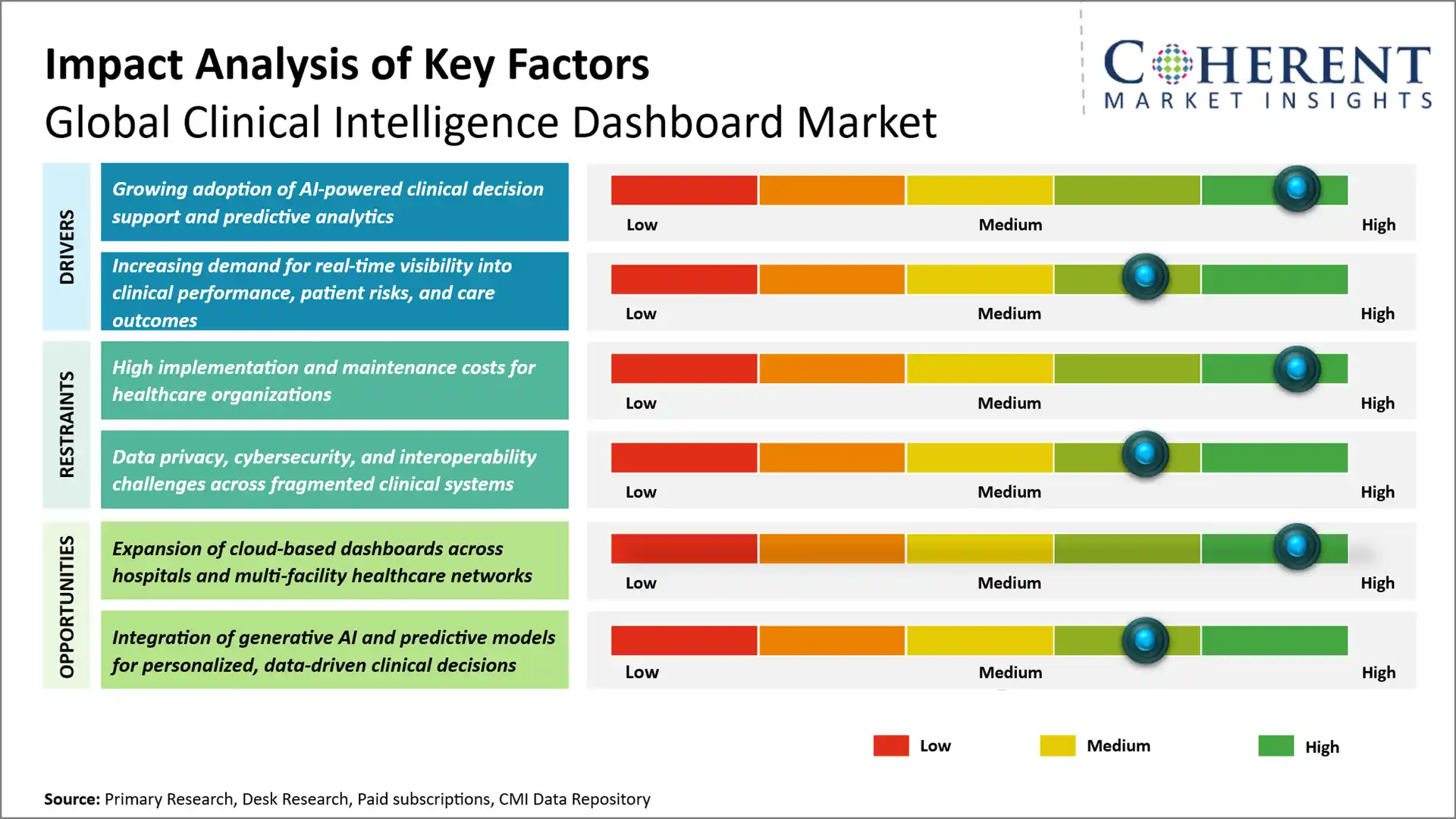
- Growing adoption of AI-powered clinical decision support and predictive analytics: The growing adoption of AI-powered clinical decision support and predictive analytics is driving demand for clinical intelligence dashboards by enabling healthcare professionals to identify patient risks, improve diagnostic decisions, and support timely interventions. For instance, India’s Ministry of Health and Family Welfare reported that the AI-based Prediction of Adverse TB Outcomes solution was associated with a 27% decline in adverse outcomes following deployment, highlighting the potential of predictive analytics to improve clinical management.
- Increasing demand for real-time visibility into clinical performance, patient risks, and care outcomes: Growing need for real-time visibility into clinical performance, patient risks, and care outcomes is driving healthcare providers to adopt dashboards that consolidate clinical indicators and support timely interventions. For instance, India’s Ministry of Health and Family Welfare developed the IPHS web-based dashboard to assess public healthcare facilities against Indian Public Health Standards and provide real-time updates to identify performance gaps and enable data-driven decisions.
- Growing adoption of interoperable healthcare data systems: The growing adoption of interoperable healthcare data systems is driving demand for clinical intelligence dashboards by enabling seamless exchange of patient information across hospitals, laboratories, and healthcare providers. Interoperability helps dashboards consolidate fragmented clinical data, improving care coordination and supporting more informed decisions. For instance, India’s Ayushman Bharat Digital Mission (ABDM) reported in May 2026 that more than 12 million (100 crore) health records had been linked to Ayushman Bharat Health Accounts (ABHA), demonstrating the expanding scale of interoperable digital health infrastructure and the growing need for platforms that consolidate clinical data.
Emerging Trends
- Integration of generative AI and predictive analytics: Clinical intelligence dashboards are increasingly incorporating generative AI and predictive analytics to identify patient risks, forecast clinical outcomes, and support evidence-based decisions. These capabilities can help healthcare professionals move beyond retrospective reporting toward proactive, data-driven care management.
- Adoption of cloud-based and interoperable dashboards: Healthcare providers are transitioning to cloud-based dashboards that integrate data from electronic health records, laboratory systems, imaging platforms, and hospital information systems. Growing emphasis on interoperability and secure data exchange is supporting unified clinical visibility across departments and healthcare networks.
- Real-Time patient monitoring and personalized risk stratification: Emerging dashboards are integrating real-time patient data, clinical alerts, and risk-scoring tools to identify deteriorating patients and support timely intervention. This trend is driving adoption of clinical intelligence platforms across critical care, chronic disease management, and population health monitoring.
Regional Insights
Why is North America a Strong Market for Clinical Intelligence Dashboard?
North America leads the global clinical intelligence dashboard market, accounting for an estimated 39.2% share in 2026, attributed to the presence of a well-established health IT ecosystem, strong healthcare infrastructure, and the large investments made by market players in digital health solutions in the region. Additionally, rising adoption of electronic health records and interoperable data systems improve the use of clinical data across healthcare providers.
For instance, U.S. Centers for Medicare & Medicaid Services (CMS) finalized the 2024 Interoperability and Prior Authorization Final Rule, requiring certain health care payers to implement APIs that enhance the electronic health data exchange. These efforts toward interoperability are supportive of the data-sharing infrastructure needed by clinical intelligence dashboards, and the increased adoption of AI-powered analytics opens up more opportunities for market adoption.
Why Does Asia Pacific Clinical Intelligence Dashboard Market Exhibit High Growth?
Asia Pacific is expected to exhibit the fastest growth in the global clinical intelligence dashboard market, registering an estimated CAGR of 16.8% during 2026–2033. The region is expected to account for 22.6% of the global market share by 2026 owing to the growth of healthcare infrastructure, rise in digital health investments, and increasing demand for data- driven clinical care. In addition, the market growth in the region is expected to be fueled by the government support for smart hospitals and digital health ecosystems, along with the growing adoption of cloud computing and artificial intelligence (AI) technology.
For instance, in July 2023, South Korea Ministry of Health and Welfare has launched the Smart Hospital Leading Model Development and Support Project. The project promotes smart operating rooms, digital inpatient environments, and tech-enabled patient communication driving the unification of clinical data and intelligent care solutions. Moreover, the high patient population base and the rising demand for personalized medicine is expected to help strengthen the APAC's market for clinical analytics and decision-support market.
Global Clinical Intelligence Dashboard Market Outlook for Key Countries
Why is the U.S. Leading Innovation and Adoption in the Clinical Intelligence Dashboard Market?
The U.S. is expected to dominate the clinical intelligence dashboard market owing to its well-established health IT environment, high EHR adoption and infrastructure of clinical information exchange among the networks. In addition, rapid advancement in the field of artificial intelligence clinical decision support and predictive analytics can help to monitor clinical performance and risk across different populations in real-time. On the other hand, big integrated health systems and healthcare IT solutions providers are also expected to promote the innovation and adoption of dashboards.
Is China a Favorable Market for Clinical Intelligence Dashboard Market?
China is a strong emerging market for clinical intelligence dashboard driven by the rapid digital transformation of hospitals, scaling of EHR systems and integration of AI in the clinical workflow. The large hospital network in the country offers room for dashboards focused on clinical decision support, patient risk management, resource utilization, and quality monitoring. The evolution of smart hospital and healthcare data infrastructure further support market adoption.
Is Japan Emerging as a Key Growth Hub for the Clinical Intelligence Dashboard Market?
Japan is anticipated to emerge as a promising growth hub for clinical intelligence dashboard market due to the digitalization of healthcare, medical data standardization, and the implementation of clinical technologies guided by artificial intelligence. The Medical DX project led by the government of Japan seems to facilitate the digitalization of entire healthcare system, thus creating potential for dashboards on clinical data and clinical management.
Why Does Germany Top the Europe Clinical Intelligence Dashboard Market?
Germany leads the Europe clinical intelligence dashboard market driven by its advanced hospital infrastructure, mature healthcare IT ecosystem and its rising focus on interoperable digital healthcare. The rise of Electronic patient records (EPR) and digitalization of hospitals opens up a market for dashboards allowing clinical decisions, healthcare delivery monitoring, and care coordination.
Is Clinical Intelligence Dashboard Market Developing in UK?
UK clinical intelligence dashboard market is growing gradually aided by NHS digital transformation, patient record modernization and increasing impact of data-based clinical decisions. The integration of clinical data across care settings provides a strategic value for creating dashboards involving patient care, performance and efficiency, risk detection and optimization of resources.
Global Clinical Intelligence Dashboard Market: Digital Health Infrastructure and Interoperability Readiness, By Region
Region | Key digital health infrastructure indicators | Implications for clinical intelligence dashboard adoption |
North America | EHR adoption, interoperability standards, clinical data exchange, predictive analytics integration | Supports demand for dashboards that consolidate patient data, monitor clinical performance, and enable advanced analytics. |
Europe | EHR accessibility, cross-border health-data exchange, interoperability standards, digital health governance | Supports multi-source clinical data integration and dashboards that facilitate coordinated care across healthcare systems. |
Asia Pacific | National digital health strategies, electronic health record availability, telehealth infrastructure, health information exchange | Indicates growing opportunities for dashboard adoption as healthcare providers expand digital infrastructure and integrate clinical data. |
Latin America | National digital health strategies, electronic health record implementation, health-data governance, interoperability initiatives | Highlights opportunities to connect fragmented clinical information systems and improve clinical reporting and performance monitoring. |
Middle East & Africa | Digital health policies, health information systems, data governance, interoperability standards, digital infrastructure development | Indicates emerging opportunities for clinical intelligence dashboards as healthcare systems strengthen digital capabilities and data integration. |
How is the expansion of cloud-based dashboards across hospitals and multi-facility healthcare networks creating new growth opportunities in the clinical intelligence dashboard market?
The increasing use of cloud-based clinical intelligence dashboards is presenting a major opportunity for healthcare systems and multi-facility health networks seeking scalable options for centralized clinical data aggregation, real-time analytics and collaborative care. Cloud systems potentially reduce infrastructure needs and are expected to improve visibility into clinical performance and patient outcomes across geographically dispersed facilities. For instance, European Health Data Space (EHDS) Regulation (EU) 2025/327 is a new EU Regulation by the European Commission that provides common rules for the secure exchange of electronic health data and the interoperability among member states of the European Union. It has the potential to enable scalable clinical analytics platforms for multi- facility healthcare networks.
Market Players, Key Development, and Competitive Landscape
Key Developments
- On October 15, 2026, the Society for Clinical Research Sites (SCRS) launched the Eagle Insights Dashboard, a data intelligence platform designed to strengthen relationships between clinical research sites, sponsors, and contract research organizations (CROs). The platform provides insights into site experiences and performance to identify engagement gaps and improve clinical trial collaboration.
- In August 2026, Moolchand Hospital launched AI SAGE (Smart Analytics and Guidance Engine), an AI-powered conversational analytics platform designed to unify clinical, operational, quality, and patient safety data across 14 modules. The platform enables healthcare professionals and hospital administrators to obtain actionable insights through natural-language queries, reducing reliance on manual reporting and multiple dashboards.
- In August 2026, n1. care launched a clinical intelligence platform that consolidates years of medical records into a unified patient view. The platform organizes clinical information, tracks biomarker trends, and generates structured reports to support physicians in reviewing patient histories and making informed clinical decisions.
Competitive Landscape
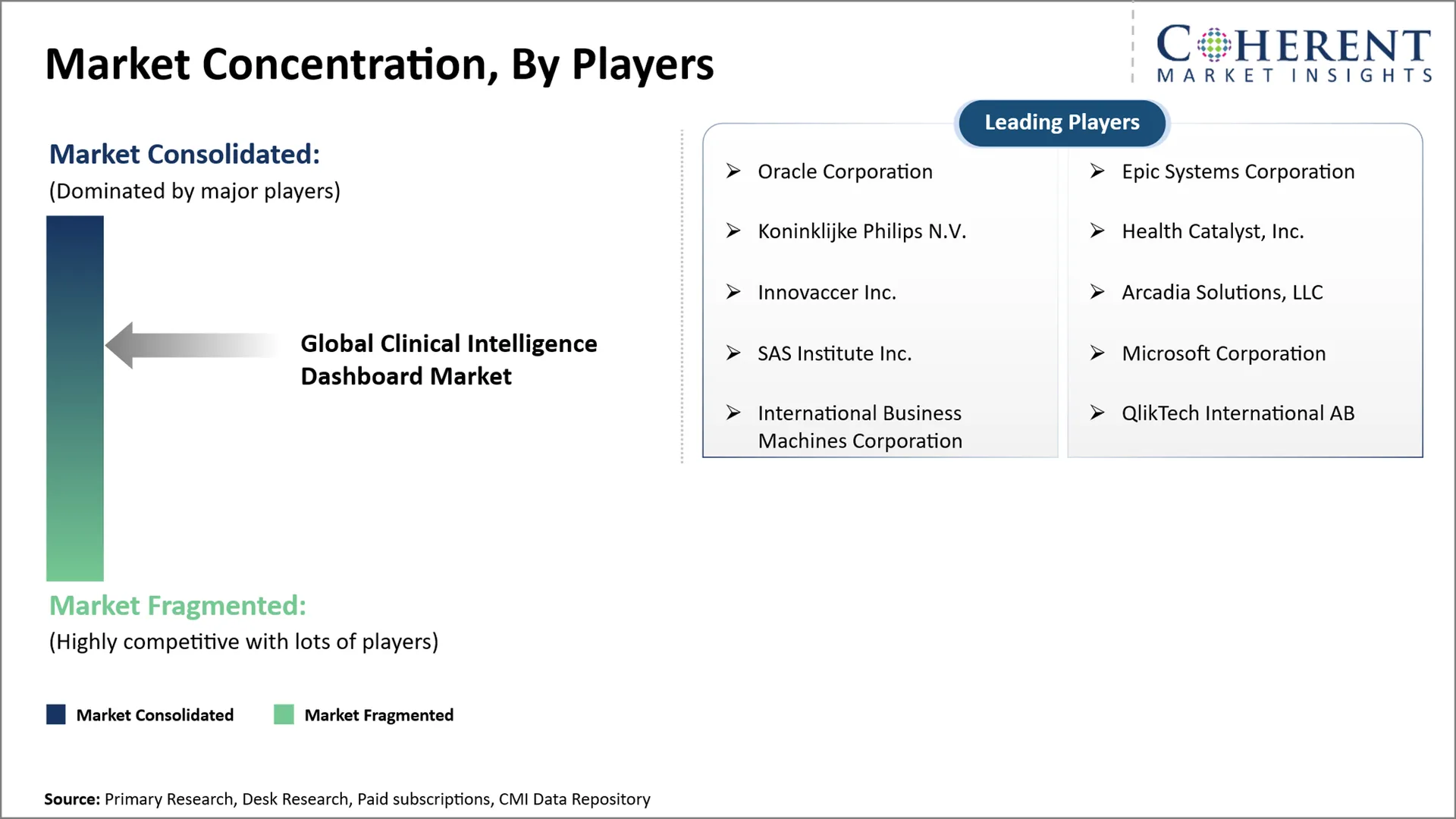
The global clinical intelligence dashboard market is moderately competitive, with competition centered on clinical decision support, predictive analytics, patient risk stratification, and integration of diverse healthcare data. Market participants focus on consolidating clinical, operational, and patient-level information to improve clinical decision-making, care coordination, and healthcare outcomes. Key focus areas include:
- AI-powered clinical decision support and evidence-based recommendations
- Integration of electronic health records (EHRs) and diverse clinical data sources
- Predictive analytics for patient risk assessment and clinical outcome forecasting
- Patient stratification and personalized care management
- Interoperability and centralized clinical data management
- Clinical performance monitoring, quality measurement, and outcome benchmarking
- Cloud-based deployment, scalability, and secure data access
Market Report Scope
Clinical Intelligence Dashboard Market Report Coverage | |||
Report Coverage | Details | ||
Base Year | 2025 | Market Size in 2026: | USD 2.35 Bn |
Historical Data For: | 2020 To 2024 | Forecast Period: | 2026 To 2033 |
Forecast Period 2026 To 2033 CAGR: | 16.5% | 2033 Value Projection: | USD 6.85 Bn |
Geographies covered: |
| ||
Segments covered: |
| ||
Companies covered: | Oracle Corporation, Epic Systems Corporation, Koninklijke Philips N.V., Health Catalyst, Inc., Innovaccer Inc., Arcadia Solutions, LLC, SAS Institute Inc., Microsoft Corporation, International Business Machines Corporation, QlikTech International AB | ||
Growth Drivers: |
| ||
Restraints & Challenges: |
| ||
Analyst Opinion (Expert Opinion)
- In the coming years, global clinical intelligence dashboard market will be shaped by the transition from retrospective clinical reporting toward AI-enabled, predictive, and real-time clinical intelligence. Healthcare providers will increasingly prioritize platforms that combine patient records, clinical outcomes, operational performance, and risk indicators within a unified interface. Over time, dashboards are expected to evolve into decision-support environments that help clinicians identify high-risk patients, optimize care pathways, and improve resource utilization.
- The biggest opportunities will probably be in AI-enabled predictive analytics and clinical decision support applications, mainly in hospitals and multi-facility healthcare networks in the U.S., India and China. These markets provide opportunities to address complex clinical workflows, fragmented data systems and growing demand for scalable healthcare analytics. Cloud-based dashboards with strong interoperability capabilities are likely to be particularly attractive to providers seeking centralized visibility across multiple facilities.
- The market players focusing on interoperable platforms to integrate data from different EHRs and hospital information systems, and embed explainable AI and actionable predictive insights in existing clinical workflows will capture the competitive advantage. They also need to focus on data security, regulatory compliance, customizable dashboards, and intuitive user interfaces that can reduce clinician burden. Healthcare customers will only be won and retained if the solution offers flexible deployment models, measurable improvements in clinical and operational outcomes, and integration with existing healthcare IT infrastructure.
Speak to the analyst
Want personalized insights?
Take the findings above to one of our principal consultants, or have the report rebuilt around the segments, geographies and competitors you actually track.
Market Segmentation
- Component Insights (Revenue, USD Bn, 2021 - 2033)
- Software
- Services
- Dashboard Type Insights (Revenue, USD Bn, 2021 - 2033)
- Clinical Performance and Quality Dashboards
- Clinical Decision Support Dashboards
- Patient Risk Stratification Dashboards
- Population Health Management Dashboards
- Predictive Analytics Dashboards
- Patient Flow and Care Coordination Dashboards
- Clinical Outcomes and Benchmarking Dashboards
- Deployment Mode Insights (Revenue, USD Bn, 2021 - 2033)
- Cloud-Based
- On-Premises
- Hybrid
- Application Insights (Revenue, USD Bn, 2021 - 2033)
- Clinical Decision Support
- Patient Monitoring and Risk Assessment
- Quality Improvement and Performance Measurement
- Population Health Management
- Clinical Workflow Optimization
- Resource Utilization and Patient Flow Management
- Regulatory Compliance and Reporting
- Others
- End User Insights (Revenue, USD Bn, 2021 - 2033)
- Hospitals and Health Systems
- Specialty Clinics and Ambulatory Care Centers
- Diagnostic and Imaging Centers
- Pharmaceutical and Biotechnology Companies
- Clinical Research Organizations (CROs)
- Government and Public Health Organizations
- Others
- Regional Insights (Revenue, USD Bn, 2021 - 2033)
- North America
- U.S.
- Canada
- Latin America
- Brazil
- Argentina
- Mexico
- Rest of Latin America
- Europe
- Germany
- U.K.
- Spain
- France
- Italy
- Russia
- Rest of Europe
- Asia Pacific
- China
- India
- Japan
- Australia
- South Korea
- ASEAN
- Rest of Asia Pacific
- Middle East
- GCC Countries
- Israel
- Rest of Middle East
- Africa
- South Africa
- North Africa
- Central Africa
- North America
- Key Players Insights
- Oracle Corporation
- Epic Systems Corporation
- Koninklijke Philips N.V.
- Health Catalyst, Inc.
- Innovaccer Inc.
- Arcadia Solutions, LLC
- SAS Institute Inc.
- Microsoft Corporation
- International Business Machines Corporation
- QlikTech International AB
Sources
Primary Research Interviews
- Clinical Intelligence Dashboard Product Leaders overseeing dashboard development, clinical analytics, AI-enabled decision support, patient data integration, and product strategy.
- Chief Medical Information Officers (CMIOs) and Clinical Informatics Leaders responsible for clinical workflow optimization, health IT adoption, clinical decision support, and digital transformation.
- Healthcare Data Scientists and AI/ML Specialists developing predictive analytics, patient risk stratification, clinical outcome forecasting, and machine-learning models.
- Clinical Informaticians and Healthcare Analytics Professionals managing electronic health records (EHRs), clinical data integration, interoperability, data quality, and analytics implementation.
- Hospital Administrators and Healthcare IT Managers evaluating clinical intelligence solutions for care coordination, operational efficiency, resource utilization, and quality improvement.
Stakeholders
- Healthcare Technology and Software Providers developing clinical intelligence platforms, healthcare analytics software, AI-driven decision support, and clinical workflow solutions.
- Hospitals and Healthcare Providers implementing clinical analytics, patient risk assessment, clinical performance monitoring, and AI-assisted care management.
- Health Insurance Companies and Payers using clinical intelligence for utilization management, population health analytics, care-gap identification, and healthcare cost optimization.
- Diagnostic Laboratories and Imaging Centers generating laboratory, pathology, and imaging data for clinical analytics and patient management.
- Contract Research Organizations (CROs) and Clinical Research Organizations using clinical data analytics for trial recruitment, patient stratification, safety monitoring, and research analysis.
- Academic and Research Institutions developing clinical informatics methods, predictive models, and AI-based healthcare analytics.
- End-use Sectors
- Hospitals and Clinics
- Healthcare Payers and Insurance Providers
- Diagnostic Laboratories and Imaging Centers
- Pharmaceutical and Biotechnology Companies
- Contract Research Organizations (CROs)
- Academic and Research Institutions
- Public Health Agencies and Integrated Healthcare Networks
- Regulatory & Health Bodies
- U.S. Food and Drug Administration (FDA), U.S. — Clinical decision-support software, AI-enabled medical software, digital health technologies, and regulatory guidance.
- Assistant Secretary for Technology Policy/Office of the National Coordinator for Health Information Technology (ASTP/ONC), U.S. — EHR adoption, health IT certification, interoperability, health information exchange, and clinical data standards.
- Centers for Medicare & Medicaid Services (CMS), U.S. — Healthcare quality measurement, value-based care, claims data, interoperability, and clinical performance reporting.
- National Institutes of Health (NIH), U.S. — Biomedical informatics, clinical research data, real-world evidence, and data-driven healthcare research.
- National Institute of Standards and Technology (NIST), U.S. — AI risk management, trustworthy AI, cybersecurity, and technical standards relevant to clinical analytics.
- European Medicines Agency (EMA), Europe — Clinical evidence, medicines regulation, real-world data, and AI-enabled regulatory assessment.
- European Commission, European Union — Digital health policy, health data governance, interoperability, and European Health Data Space initiatives.
- World Health Organization (WHO), International — Digital health strategy, health information systems, evidence-informed healthcare, and responsible use of AI in health.
Databases
- ClinicalTrials.gov — Clinical trial registrations, study protocols, recruitment information, and results for clinical research and evidence analysis.
- National Center for Biotechnology Information (NCBI) — Biomedical literature, molecular databases, clinical research resources, and biological datasets relevant to clinical analytics.
- NIH National Library of Medicine (NLM) — Biomedical literature, clinical terminology resources, health information standards, and research databases.
- FDA Databases — Regulatory information on medical devices, AI-enabled medical software, medical products, and digital health technologies.
- CMS Data and Public Use Files — Healthcare utilization, provider, quality, payment, and claims-related datasets useful for healthcare analytics.
- WHO Global Health Observatory — International health statistics, health-system indicators, and population-level data for clinical and public health analysis.
Associations
- American Medical Informatics Association (AMIA) — Clinical informatics, healthcare AI, clinical decision support, and health data interoperability.
- Healthcare Information and Management Systems Society (HIMSS) — Healthcare IT, digital health transformation, clinical analytics, and health information systems.
- Health Level Seven International (HL7) — Healthcare data interoperability standards, including Fast Healthcare Interoperability Resources (FHIR), for exchanging clinical information across systems.
- Digital Medicine Society (DiMe) — Digital health evidence, clinical technology evaluation, and responsible implementation of digital solutions.
- American Health Information Management Association (AHIMA) — Health information management, data quality, information governance, and clinical documentation.
- European Federation for Medical Informatics (EFMI) — Medical informatics, digital health systems, health data management, and clinical information technology in Europe.
Public Domain Sources
- ASTP/ONC — Official statistics on EHR adoption, health IT certification, interoperability, and hospital technology use.
- National Institutes of Health (NIH) — Biomedical research data, clinical research initiatives, real-world data, and clinical informatics resources.
- Centers for Medicare & Medicaid Services (CMS) — Public datasets on healthcare utilization, quality measures, provider information, payments, and healthcare expenditures.
- National Institute of Standards and Technology (NIST) — AI risk management frameworks, trustworthy AI resources, and cybersecurity standards.
- European Medicines Agency (EMA) — Public information on clinical evidence, real-world data, medicines regulation, and data-driven healthcare assessment.
- European Commission — Official information on digital health policies, health data governance, interoperability, and European health data initiatives.
- World Health Organization (WHO) — Global digital health resources, health-system indicators, and international health information datasets.
Proprietary Elements
- CMI Data Analytics Tool, Proprietary CMI Existing Repository of information for last 10 years.
Get access to 250+ pages report
Every segment, forecast, competitor profile and data table behind the analysis above — available for instant download.
- ESOMAR Member
- ISO 9001:2015 Certified
- D-U-N-S Registered
- GDPR & CCPA Compliant
Frequently Asked Questions
The global clinical intelligence dashboard market is estimated to be valued at USD 2.35 Bn in 2026 and is expected to reach USD 6.85 Bn by 2033.
Software platforms dominate due to their ability to integrate clinical data, deliver predictive analytics, and support data-driven clinical decision-making.
A clinical intelligence dashboard is a digital platform that consolidates and analyzes clinical data to provide real-time insights into patient outcomes, clinical performance, risk assessment, and healthcare decision-making.
The CAGR of global clinical intelligence dashboard market is projected to be 16.5% from 2026 to 2033.
Growing adoption of AI-powered clinical decision support and predictive analytics, and increasing demand for real-time visibility into clinical performance, patient risks, and care outcomes are the major factors driving the growth of the global clinical intelligence dashboard market.
High implementation and maintenance costs for healthcare organizations, and data privacy, cybersecurity, and interoperability challenges across fragmented clinical systems are the major factors hampering the growth of the global clinical intelligence dashboard market.
In terms of deployment model, cloud-based is estimated to dominate the market revenue share in 2026.