

Global Clinical Intelligence Platform Market Size and Forecast – 2026 To 2033
The global clinical intelligence platform market is expected to grow from USD 6.85 Bn in 2026 to USD 18.42 Bn by 2033, registering a compound annual growth rate (CAGR) of 15.2% from 2026 to 2033. The global clinical intelligence platform market is expected to grow rapidly owing to increasing adoption of electronic health records (EHRs) and increasing digitization of healthcare data.
According to the U.S. Office of the National Coordinator for Health Information Technology (ONC), over 99% of U.S. non-federal acute care hospitals had adopted certified EHRs by 2024, creating a strong digital foundation for clinical data analytics and AI-driven decision support.
Key Takeaways of the Global Clinical Intelligence Platform Market
- Software platforms are projected to hold 58.6% of the global clinical intelligence platform market share in 2026, making it dominant component segment, across North America due to the region’s established healthcare IT infrastructure and growing emphasis on data-driven clinical workflows. For instance, the U.S. The Centers for Medicare & Medicaid Services (CMS) has been promoting interoperability through its Interoperability and Prior Authorization Final Rule (CMS-0057-F), which mandates certain payers to develop and maintain application programming interfaces (APIs) to share health information.
- Clinical decision support platforms are anticipated to account for 26.8% of the global clinical intelligence platform market share by 2026, thus being the leading platform type segment, with Asia Pacific reaping benefits from continuous endeavors to improve the quality and coordination of clinical care. For instance, India’s Ministry of Health and Family Welfare, through the National Health Authority, reported that the Ayushman Bharat Digital Mission had linked more than 100 crore health records with Ayushman Bharat Health Accounts (ABHA) by May 2026, strengthening the digital infrastructure for longitudinal patient records and connected healthcare services.
- Cloud-based is expected to hold the largest share of the global clinical intelligence platform market in 2026 with 57.6%. Asia Pacific is likely to lead owing to the increasing adoption of scalable digital health solutions and the mature healthcare IT infrastructure. For instance, Singapore’s Ministry of Health launched HEALIX, a cloud-based analytics platform for the public healthcare sector, to consolidate healthcare data and enable data-driven insights and artificial intelligence applications.
- The North America market is anticipated to maintain its dominance with a share of 40.8% in 2026 owing to the presence of advanced healthcare IT infrastructure, well-established clinical data management systems, and increasing integration of analytics in clinical workflows. For instance, the U.S. Centers for Medicare & Medicaid Services (CMS) has introduced the Transforming Episode Accountability Model (TEAM), which uses quality and cost measures across selected surgical episodes to promote coordinated, data-informed care.
- Asia Pacific is expected to account for the fastest growing market for global clinical intelligence platform market, with a CAGR of 16.8% during the forecast period of 2026 to 2033 driven by the growing digital health infrastructure, increasing adoption of healthcare AI and government initiatives for development of interoperable health information systems. For instance, Singapore’s Ministry of Health is advancing the Health Information Act, which establishes requirements for healthcare providers to contribute key patient information to the National Electronic Health Record (NEHR), supporting secure information exchange across healthcare settings.
Segmental Insights
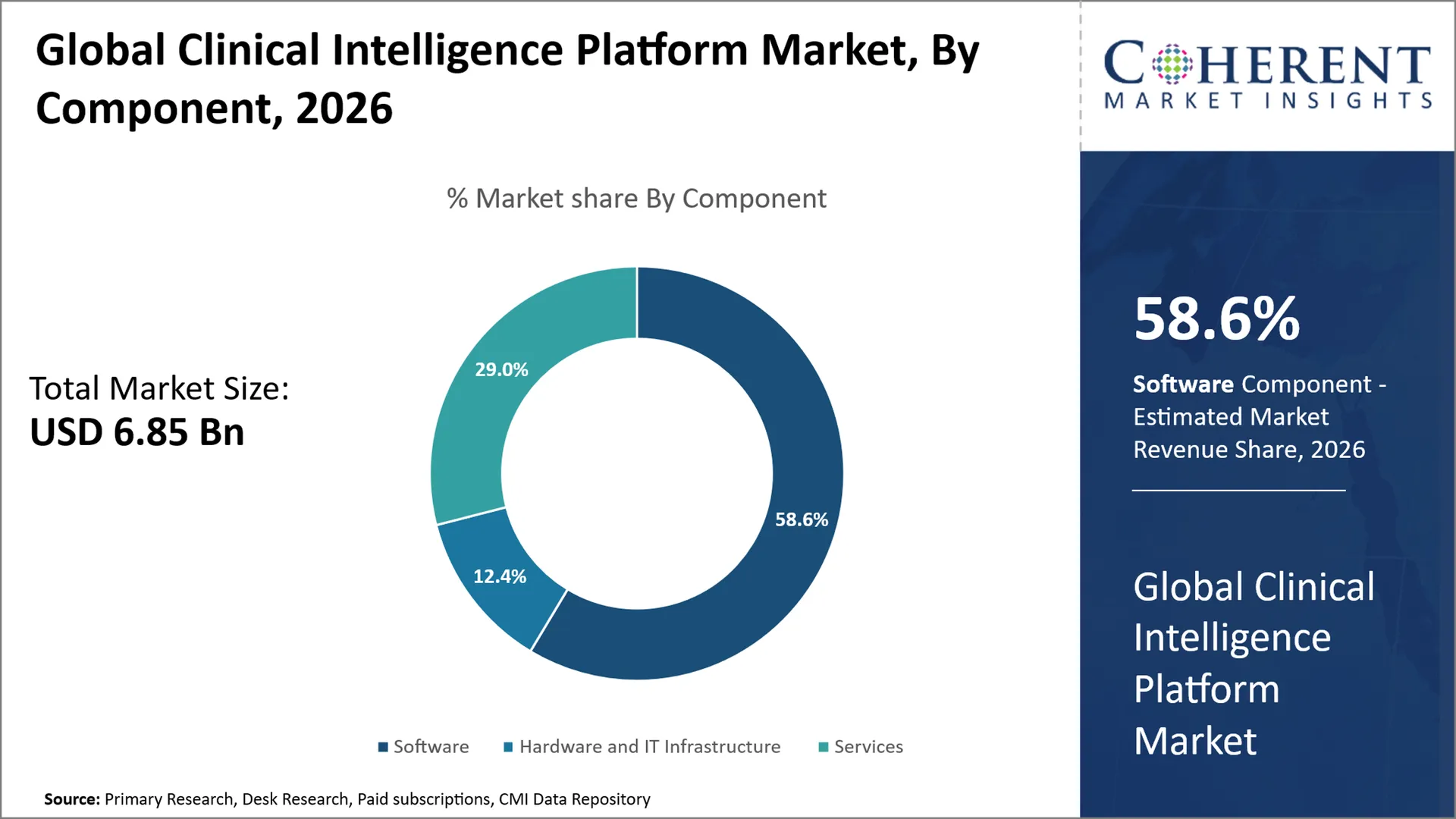
Why Do Software Dominate the Global Clinical Intelligence Platform Market?
Software is projected to hold the market share of 58.6% in 2026, owing to the integration of clinical data, advanced analytics and supporting evidence-based decision-making. Artificial intelligence enabled software improves patient risk stratification, treatment planning, and workflow optimization. Moreover, its ability to be customized as per the clinical needs, scalability and cloud infrastructure is helping clinicians adapt to changing clinical needs and improve their delivery of care. For instance, in July 2025, the U.S. Centers for Medicare & Medicaid Services (CMS) launched the Health Technology Ecosystem. This program facilitates the interchange of health data and digital products that help enable patients and providers to find, receive and use information. It also helps meet the need for software that combines clinical information and delivers in-the-moment insights.
- Current Industry Events of 2026
- Market Size Estimation
- Regional Breakdown
- Competitive Landscape
- Customer Intelligence
- Segmental Analysis
- Pricing Analysis
- Key Market Drivers, Challenges & Future Trends
- Customized Insights Section
Why Does Clinical Decision Support Platforms Represent the Largest Platform Type Segment in the Clinical Intelligence Platform Market?
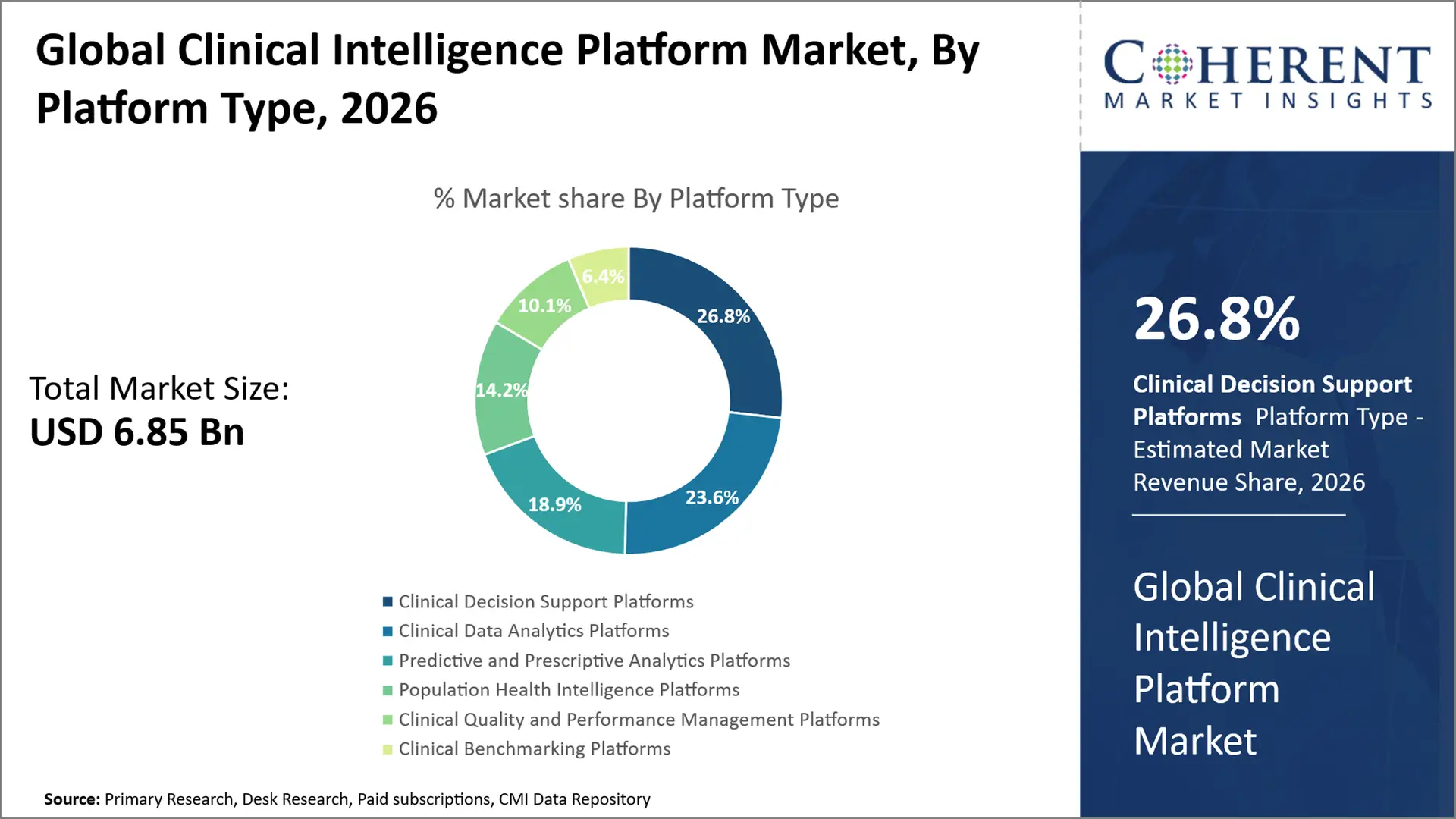
Clinical decision support platforms are projected to hold a market share of 26.8% in 2026, because they deliver evidence-based guidance, enable clinicians to recognize possible medication hazards and offer a diagnostic and treatment role at the point of care. Coupled with electronic health records (EHRs), CDS platforms allow contextual analysis of patient data, improved efficiency in clinical workflow and are highly likely to lower preventable errors. For instance, India’s National NCD Portal incorporates clinical decision support software that provides guideline-based recommendations for diabetes and hypertension screening, treatment, and follow-up. (Source: Ministry of Health and Family Welfare)
Cloud-Based Segment Dominates the Global Clinical Intelligence Platform Market
The cloud-based segment is projected to hold a market share of 57.6% in 2026, as they are scalable, minimize up-front cost for infrastructure and are easily accessible remotely. These platforms are likely to enable healthcare providers to scale clinical intelligence across multiple facilities, deploy analytics quickly and enhance AI functions without the need for significant infrastructure. For instance, in September 2025, the UK government announced AIR-SP, a cloud-based NHS platform designed to enable AI screening tools to be tested across multiple NHS trusts, helping reduce deployment time and costs.
Current Events and their Impact
Current Events | Description and its Impact |
WHO Europe Promotes Coordinated Governance of AI in Healthcare (July 2026) |
|
Portugal Joins HealthAI Global Regulatory Network (July 2026) |
|
WHO and South Korea Advance Global Governance of AI in Healthcare (October 2025) |
|
Clinical Intelligence Platform Market Dynamics
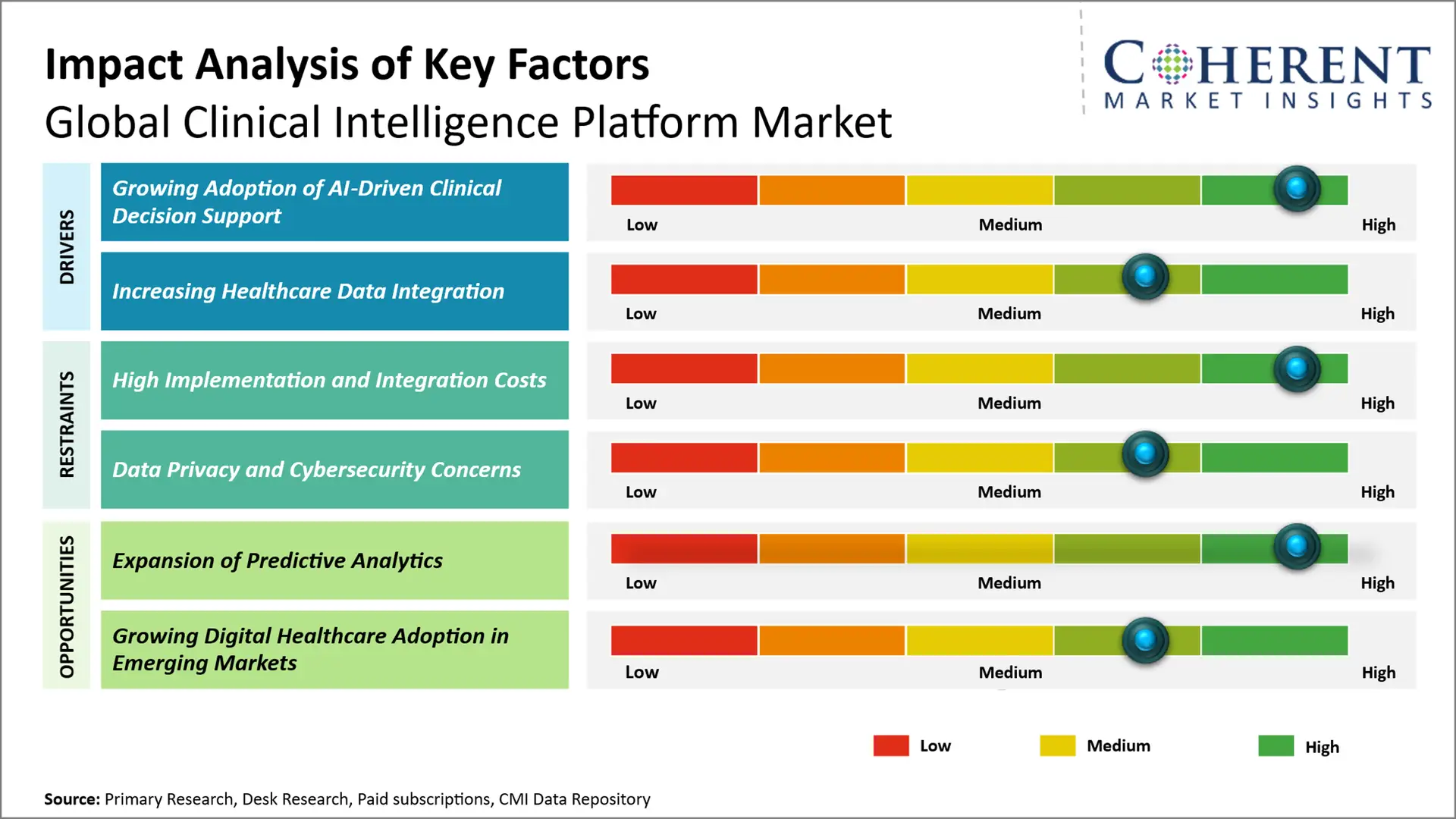
Market Drivers
- Growing Adoption of AI-Driven Clinical Decision Support: The growing adoption of AI-driven clinical decision support systems is accelerating demand for clinical intelligence platforms by enabling faster clinical assessments, differential diagnosis recommendations, and more consistent patient management. For instance, in December 2025, India’s Ministry of Health and Family Welfare reported the integration of an AI-based clinical decision support system into the national e-Sanjeevani telemedicine platform, helping clinicians capture patient complaints systematically and generate AI-supported diagnostic recommendations. Such implementations are expected to encourage wider adoption of AI-enabled clinical intelligence solutions across healthcare settings.
- Increasing Healthcare Data Integration: The growing integration of electronic health records, laboratory systems, diagnostic imaging, and clinical information platforms is driving demand for unified clinical intelligence solutions. Interoperable data enables healthcare providers to consolidate patient information, improve care coordination, and generate more comprehensive clinical insights. For instance, South Korea’s Ministry of Health and Welfare established standardized healthcare data exchange requirements using Korean Core Data for Interoperability (KR CDI) and HL7 FHIR-based exchange standards to improve information sharing among medical institutions. This initiative supports interoperable clinical data systems and creates opportunities for clinical intelligence platforms to integrate diverse patient information and deliver actionable insights.
- Rising Demand for Predictive and Prescriptive Analytics: The increasing need to identify high-risk patients, anticipate disease progression, and optimize treatment decisions is driving the adoption of predictive and prescriptive analytics in clinical intelligence platforms. These capabilities enable healthcare providers to use clinical data to support early interventions, personalized care planning, and improved resource allocation. For instance, the U.S. Agency for Healthcare Research and Quality (AHRQ) supports the Patient Safety Learning Laboratories initiative, which applies data-driven approaches to identify patient safety risks and develop interventions to improve clinical outcomes.
Emerging Trends
- Integration of generative AI and clinical copilots: Healthcare organizations are increasingly adopting generative AI-powered clinical copilots to summarize patient records, generate clinical documentation, and support evidence-based decision-making. These tools are improving clinician productivity and enabling more efficient interpretation of complex clinical information.
- Real-Time predictive and prescriptive analytics: Clinical intelligence platforms are increasingly incorporating machine learning to predict disease progression, identify high-risk patients, and support personalized treatment planning. Integration with electronic health records and real-time clinical data enables earlier interventions and more proactive patient management.
- Interoperability and federated clinical data analytics: Growing emphasis on secure health information exchange is encouraging the development of platforms that integrate data from electronic health records, laboratory systems, imaging platforms, and remote monitoring devices. Federated analytics is also emerging as an approach to derive insights across distributed datasets while reducing the need to centralize sensitive patient information.
Regional Insights
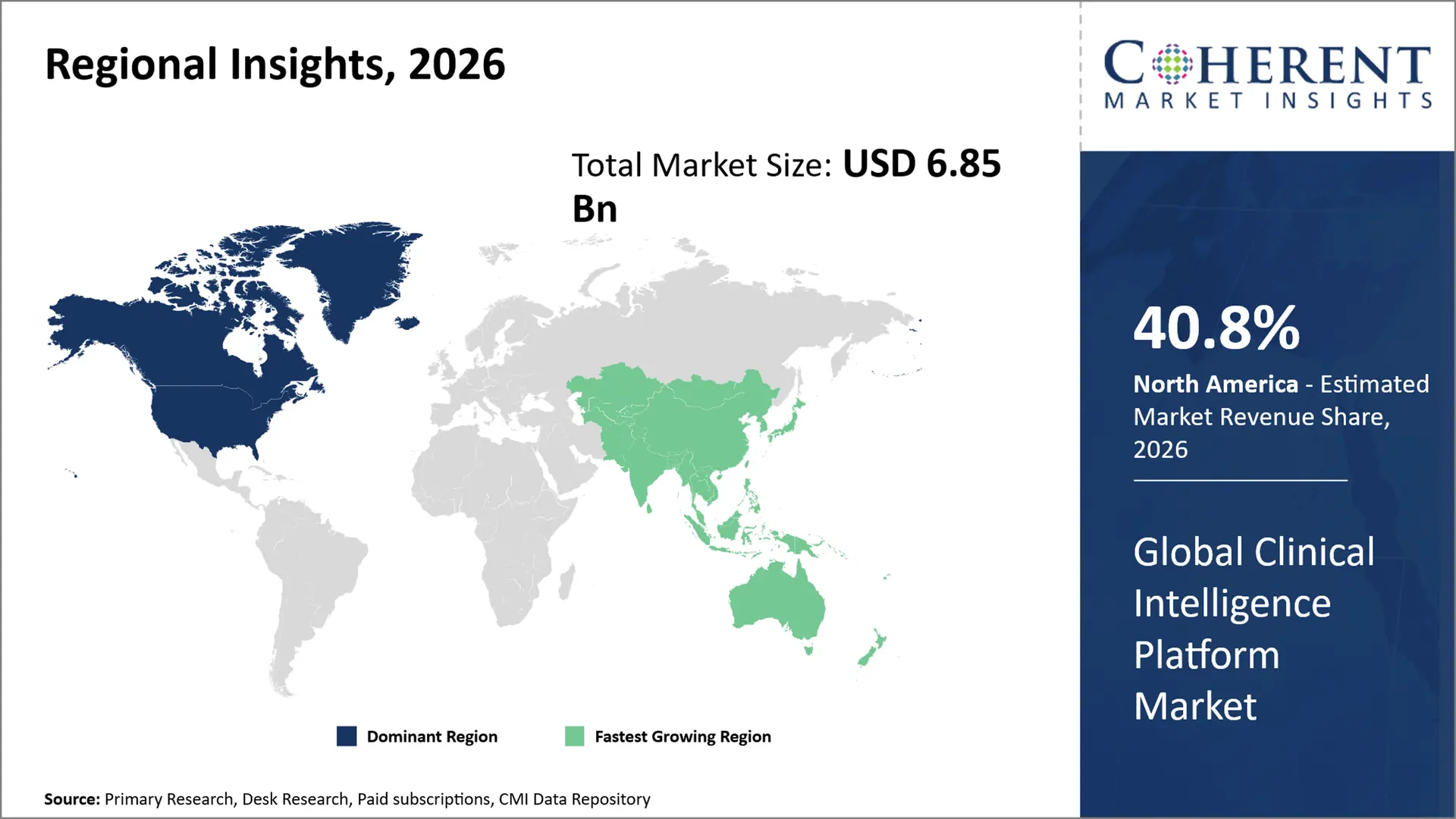
Why is North America a Strong Market for Clinical Intelligence Platform?
North America is expected to lead the global clinical intelligence platform market with an estimated share of 40.8% in 2026, because of the robust healthcare infrastructure of the region, the established health IT ecosystem and the significant investment by stakeholders in digital health solutions. Additionally, rising adoption of electronic health records and interoperable data systems improve the use of clinical data across healthcare providers.
For instance, the U.S. Centers for Medicare & Medicaid Services (CMS) has issued the 2024 Interoperability and Prior Authorization Rule, requiring new application programming interfaces to improve the sharing of healthcare data across healthcare providers, payers and the patient. This is designed to promote a more integrated sharing of clinical data across the care continuum. Furthermore, rising usage of AI-enabled clinical decision support, predictive analytics, and patient risk assessment could propel the market.
Why Does Asia Pacific Clinical Intelligence Platform Market Exhibit High Growth?
Asia Pacific is expected to exhibit the fastest growth in the global Clinical Intelligence platform market, registering an estimated CAGR of 16.8% during 2026–2033. The region is projected to account for 23.1% of the global market in 2026, driven by the expansion of healthcare infrastructure, growth in digital health investments, and the rising need for data- driven clinical care. Furthermore, government's encouragement of smart hospitals and digital health ecosystems, alongside increased adoption of cloud computing and AI technology, is further expected to propel the growth of the market in region.
For instance, in July 2023, South Korea Ministry of Health and Welfare launched the Smart Hospital Leading Model Development and Support Project. The project promotes smart operating rooms, digital inpatient environments, and tech-enabled patient communication driving the unification of clinical data and intelligent care solutions. Moreover, the high patient population base and the rising demand for personalized medicine is expected to help strengthen the APAC's market for clinical analytics and decision-support market.
Global Clinical Intelligence Platform Market Outlook for Key Countries
Why is the U.S. Leading Innovation and Adoption in the Clinical Intelligence Platform Market?
The U.S. dominates the clinical intelligence platform market due to high penetration of health information technology services across its healthcare industry and the large-scale integration of clinical intelligence services in the electronic health record system. The surging demand for clinical decision support, predictive analytics, patient risk stratification through artificial intelligence is a crucial factor driving the adoption and innovation of clinical intelligence platforms.
Is China a Favorable Market for Clinical Intelligence Platform Market?
China is a strong emerging market for clinical intelligence platform, as government is actively encouraging the implementation of AI-enabled diagnosis, clinical decision support system and digital medical infrastructure, such as AI-enabled pathology, radiology, and surgery. Growth of domain-specific AI models and healthcare data sharing will likely provide opportunities for platforms focused on prescriptive analytics, patient risk stratification, and clinical workflow management. Yet regulations, data privacy regulation, and healthcare sharing issues may create hurdles in implementation.
Is Japan Emerging as a Key Growth Hub for the Clinical Intelligence Platform Market?
Japan is anticipated to emerge as a promising growth hub for Clinical Intelligence Platform Market owing to growing digitization of healthcare sector coupled with rising availability of clinical workflows empowered with AI. The aging population can boost demand for solutions that contribute to clinical decision making, patient risk management and care coordination.
Why Does Germany Top the European Clinical Intelligence Platform Market?
Germany is leading the European clinical intelligence platform market owing to the availability of modern hospital infrastructure and deep focus on healthcare digitization. The adoption of electronic patient records (EPRs) and interoperable health data networks is estimated to promote the access to clinical data across care domains. Furthermore, these features are anticipated to drive the need for platforms that enable use of clinical decision-making by artificial intelligence (AI), patient risk profiling, and treatment.
Is Clinical Intelligence Platform Market Developing in UK?
The market for clinical intelligence platform in the UK is growing driven by digital transformation programs being executed by the NHS and the rising adoption of clinical tools powered by AI. The market is estimated to grow with the growing requirement of unifying patient records, supporting clinical decision making, and greater care collaboration, which would eventually turn out to be a lucrative opportunity for clinical intelligence platform providers.
Global Digital Health Infrastructure and Data Interoperability Readiness, By Region
Region | Dataset indicators to include | Relevance to clinical intelligence platforms |
North America | EHR integration, health data exchange, digital health infrastructure | Supports clinical data aggregation and advanced analytics |
Europe | EHR accessibility, cross-border data exchange, interoperability standards | Supports multi-source clinical data integration |
Asia Pacific | Digital health strategies, EHR availability, telehealth infrastructure | Indicates expanding opportunities for platform adoption |
Latin America | National digital health strategies, EHR implementation, health data governance | Indicates the maturity of digital clinical infrastructure |
Middle East & Africa | Digital health policies, health information systems, interoperability initiatives | Highlights infrastructure development and future adoption potential |
How is the expansion of predictive analytics creating new growth opportunities in the clinical intelligence platform market?
The emergence of predictive analytics indicates a potential future for clinical intelligence platforms to broaden their capabilities by enabling the earlier detection of at risk-patients, disease progression prediction, and personalized disease treatment. In addition, the inclusion of electronic health records (EHRs), genomics and real-world clinical data could enhance patient stratification to help prevent unnecessary complications of care. For instance, by 2024, 71% of U.S. hospitals used predictive AI across electronic health records, up from 66% in 2023, according to the U.S. Assistant Secretary for Technology Policy and the Office of the National Coordinator for Health Information Technology. The rise in adoption reflects how predictive models are being used in clinical risk stratification and care planning, which in turn fuel the market for sophisticated clinical intelligence platforms.
Market Players, Key Development, and Competitive Landscape
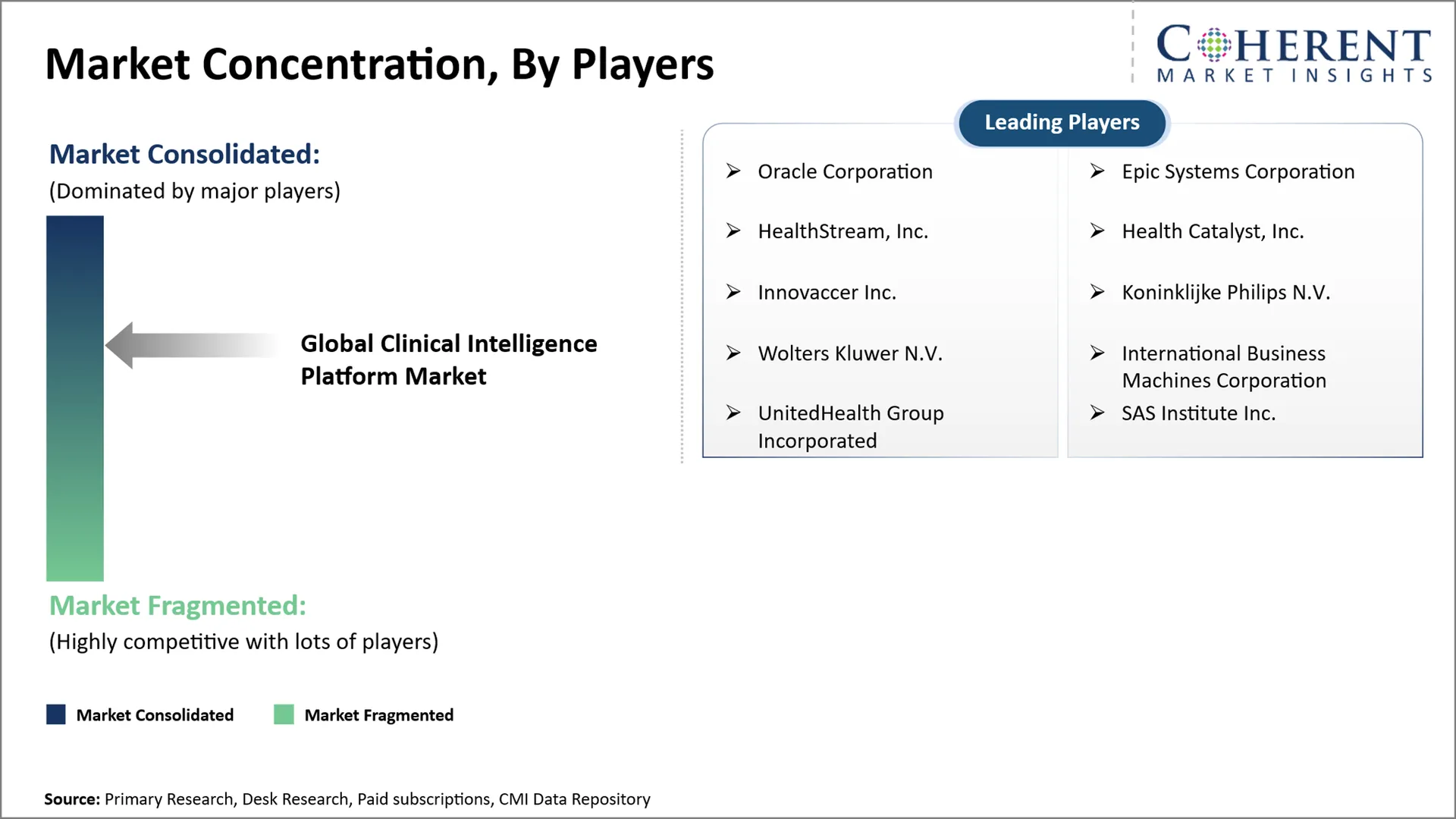
Key Developments
- In August 2026, n1. care launched its Clinical Intelligence Platform to consolidate fragmented medical records, laboratory results, imaging studies, genetic data, and clinical documents into a unified longitudinal patient view. The platform uses AI to extract clinical information, identify meaningful patterns, track biomarker trends, and generate physician-editable reports. Healthcare professionals retain control over reviewing, editing, and approving reports, supporting more informed clinical decision-making.
- In July 2026, Dassault Systèmes signed a definitive agreement to acquire ArisGlobal for approximately USD 1.8 billion, aiming to create a unified AI intelligence platform for the life sciences industry. The combined platform is expected to connect clinical development, patient safety, regulatory data, and real-world evidence to accelerate innovation and improve patient outcomes.
- In May 2026, ZenMD launched its AI-powered clinical intelligence platform in India, offering solutions for real-time clinical documentation, automated outpatient department (OPD) notes, evidence-based clinical decision support, and AI-powered medical imaging analysis. The platform supports more than 80 medical specialties and is designed to help hospitals and doctors streamline clinical workflows, improve diagnostic support, and reduce administrative workloads.
Competitive Landscape
The global clinical intelligence platform market is moderately competitive, with competition centered on clinical decision support, predictive analytics, patient risk stratification, and the integration of diverse healthcare data. Market participants focus on combining clinical, operational, and patient-level information to improve decision-making, care coordination, and clinical outcomes. Key focus areas include:
- AI-driven clinical decision support
- Integration of clinical data sources
- Predictive analytics and risk assessment
- Patient stratification and personalized care
- Interoperability and healthcare data management
- Clinical performance and quality analytics
- Cloud-based deployment and scalability
Market Report Scope
Clinical Intelligence Platform Market Report Coverage | |||
Report Coverage | Details | ||
Base Year | 2025 | Market Size in 2026: | USD 6.85 Bn |
Historical Data For: | 2020 To 2024 | Forecast Period: | 2026 To 2033 |
Forecast Period 2026 To 2033 CAGR: | 15.2% | 2033 Value Projection: | USD 18.42 Bn |
Geographies covered: |
| ||
Segments covered: |
| ||
Companies covered: | Oracle Corporation, Epic Systems Corporation, HealthStream, Inc., Health Catalyst, Inc., Innovaccer Inc., Koninklijke Philips N.V., Wolters Kluwer N.V., International Business Machines Corporation, UnitedHealth Group Incorporated, SAS Institute Inc. | ||
Growth Drivers: |
| ||
Restraints & Challenges: |
| ||
Analyst Opinion (Expert Opinion)
- IIn the coming years, global clinical intelligence platform market will be shaped by the transition from retrospective clinical reporting toward predictive, personalized, and increasingly automated clinical decision-making. Platforms will have to go beyond simple data aggregation and dashboards and integrate AI-powered insights, patient risk prediction, clinical workflow automation and treatment outcome monitoring into a single environment. The strongest long-term opportunities will emerge for solutions that translate complex clinical data into actionable recommendations while maintaining accuracy, transparency, data security, and clinician oversight.
- The maximum opportunities are foreseen within clinical decision support and predictive analytics for patient risk stratification and treatment optimization in the U.S. The U.S. has a well-developed digital healthcare ecosystem and large pool of healthcare providers eager to improve care quality, reduce avoidable readmissions and improve utilization of resources. A second opportunity lies in cloud-based clinical intelligence for population health management in India, where expanding digital health infrastructure and the need to serve large, diverse patient populations create scope for scalable, cost-effective analytics solutions.
- Market players should focus on AI integrated into workflow, rather than standalone analytics applications, in order to keep pace with the competition and ensure that recommendations are integrated seamlessly into clinicians’ daily activities. These platforms should be interoperable, integrating structured and unstructured clinical data, provide configurable analytics across medical specialties, and demonstrate measurable improvements in clinical efficiency and patient outcomes. Vendors should also invest in explainable AI, continuous model validation, privacy-preserving data management and flexible deployment options. Partnerships with hospitals, healthcare networks, diagnostic providers and clinical research organizations can help to accelerate adoption, improve real world validation and build differentiated solutions that are difficult to copy.
Speak to the analyst
Want personalized insights?
Take the findings above to one of our principal consultants, or have the report rebuilt around the segments, geographies and competitors you actually track.
Market Segmentation
- Component Insights (Revenue, USD Bn, 2021 - 2033)
- Software
- Hardware and IT Infrastructure
- Services
- Platform Type Insights (Revenue, USD Bn, 2021 - 2033)
- Clinical Decision Support Platforms
- Clinical Data Analytics Platforms
- Predictive and Prescriptive Analytics Platforms
- Population Health Intelligence Platforms
- Clinical Quality and Performance Management Platforms
- Clinical Benchmarking Platforms
- Deployment Mode Insights (Revenue, USD Bn, 2021 - 2033)
- Cloud-Based
- On-Premises
- Application Insights (Revenue, USD Bn, 2021 - 2033)
- Clinical Decision Support and Treatment Planning
- Patient Risk Assessment
- Clinical Quality Improvement
- Population Health Management
- Others
- End User Insights (Revenue, USD Bn, 2021 - 2033)
- Hospitals and Health Systems
- Ambulatory Care Centers
- Healthcare Payers
- Pharmaceutical and Biotechnology Companies
- Academic and Research Institutions
- Others
- Regional Insights (Revenue, USD Bn, 2021 - 2033)
- North America
- U.S.
- Canada
- Latin America
- Brazil
- Argentina
- Mexico
- Rest of Latin America
- Europe
- Germany
- U.K.
- Spain
- France
- Italy
- Russia
- Rest of Europe
- Asia Pacific
- China
- India
- Japan
- Australia
- South Korea
- ASEAN
- Rest of Asia Pacific
- Middle East
- GCC Countries
- Israel
- Rest of Middle East
- Africa
- South Africa
- North Africa
- Central Africa
- North America
- Key Players Insights
- Oracle Corporation
- Epic Systems Corporation
- HealthStream, Inc.
- Health Catalyst, Inc.
- Innovaccer Inc.
- Koninklijke Philips N.V.
- Wolters Kluwer N.V.
- International Business Machines Corporation
- UnitedHealth Group Incorporated
- SAS Institute Inc.
Sources
Primary Research Interviews
- Clinical Intelligence Platform and Product Leaders overseeing platform development, clinical analytics, AI-enabled decision support, patient data integration, and product strategy.
- Chief Medical Information Officers (CMIOs) and Clinical Informatics Leaders responsible for clinical workflow optimization, healthcare technology adoption, clinical decision support, and digital transformation.
- Healthcare Data Scientists and AI/ML Specialists developing predictive analytics, patient risk stratification, clinical outcome forecasting, and machine-learning models.
- Clinical Informaticians and Healthcare Analytics Professionals managing electronic health records (EHRs), clinical data integration, interoperability, data quality, and analytics implementation.
- Hospital Administrators and Healthcare IT Managers evaluating clinical intelligence solutions for care coordination, operational efficiency, resource utilization, and quality improvement.
Stakeholders
- Healthcare Technology and Software Providers developing clinical intelligence platforms, healthcare analytics software, AI-driven decision support, and clinical workflow solutions.
- Hospitals and Healthcare Providers implementing clinical analytics, patient risk assessment, clinical performance monitoring, and AI-assisted care management.
- Health Insurance Companies and Payers using clinical intelligence for utilization management, population health analytics, care gap identification, and healthcare cost optimization.
- Diagnostic Laboratories and Imaging Centers generating laboratory, pathology, and imaging data for clinical analytics and patient management.
- Contract Research Organizations (CROs) and Clinical Research Organizations using clinical data analytics for trial recruitment, patient stratification, safety monitoring, and research analysis.
- Academic and Research Institutions developing clinical informatics methods, predictive models, and AI-based healthcare analytics.
- End-use Sectors
- Hospitals and Clinics
- Healthcare Payers and Insurance Providers
- Diagnostic Laboratories and Imaging Centers
- Pharmaceutical and Biotechnology Companies
- Contract Research Organizations (CROs)
- Academic and Research Institutions
- Public Health Agencies and Integrated Healthcare Networks
- Regulatory & Health Bodies
- U.S. Food and Drug Administration (FDA), U.S. — Clinical decision support software, AI-enabled medical software, clinical evidence, and medical device oversight.
- Assistant Secretary for Technology Policy/Office of the National Coordinator for Health Information Technology (ASTP/ONC), U.S. — Health IT certification, EHR interoperability, health information exchange, and clinical data standards.
- Centers for Medicare & Medicaid Services (CMS), U.S. — Healthcare quality measurement, value-based care, claims data, and clinical performance reporting.
- National Institutes of Health (NIH), U.S. — Biomedical informatics, clinical research data, real-world evidence, and data-driven healthcare research.
- National Institute of Standards and Technology (NIST), U.S. — AI risk management, trustworthy AI, cybersecurity, and technical standards relevant to clinical analytics.
- European Medicines Agency (EMA), Europe — Clinical data, medicines regulation, real-world evidence, and data-driven regulatory assessment.
- European Commission, European Union — Digital health policy, health data governance, interoperability, and European health information initiatives.
- World Health Organization (WHO), International — Digital health strategy, health information systems, evidence-informed healthcare, and responsible use of AI in health.
Databases
- ClinicalTrials.gov — Clinical trial registrations, study protocols, recruitment information, and results for clinical research and evidence analysis.
- National Center for Biotechnology Information (NCBI) — Biomedical literature, molecular and clinical research resources, and biological datasets relevant to clinical analytics.
- NIH National Library of Medicine (NLM) — Biomedical literature, clinical terminology resources, health information standards, and research databases.
- FDA Databases — Regulatory information on medical devices, clinical decision support-related software, medical products, and digital health technologies.
- CMS Data and Public Use Files — Healthcare utilization, provider, quality, payment, and claims-related datasets useful for healthcare analytics.
- WHO Global Health Observatory — International health statistics, health system indicators, and population-level data for clinical and public health analysis.
Associations
- American Medical Informatics Association (AMIA) — Clinical informatics, healthcare AI, clinical decision support, and health data interoperability.
- Healthcare Information and Management Systems Society (HIMSS) — Healthcare IT, digital health transformation, clinical analytics, and health information systems.
- Health Level Seven International (HL7) — Healthcare data interoperability standards, including FHIR, for exchanging clinical information across systems.
- Digital Medicine Society (DiMe) — Digital health evidence, clinical technology evaluation, and responsible implementation of digital solutions.
- American Health Information Management Association (AHIMA) — Health information management, data quality, information governance, and clinical documentation.
- European Federation for Medical Informatics (EFMI) — Medical informatics, digital health systems, health data management, and clinical information technology in Europe.
Public Domain Sources
- U.S. Food and Drug Administration (FDA) — Guidance and regulatory information on clinical decision support, AI-enabled medical software, and digital health technologies.
- ASTP/ONC — Official statistics on EHR adoption, health IT certification, interoperability, and hospital technology use.
- National Institutes of Health (NIH) — Biomedical research data, clinical research initiatives, and resources for real-world data and clinical informatics.
- Centers for Medicare & Medicaid Services (CMS) — Public datasets on healthcare utilization, quality measures, provider information, and healthcare expenditures.
- National Institute of Standards and Technology (NIST) — AI risk management frameworks, trustworthy AI resources, and cybersecurity standards.
- European Medicines Agency (EMA) — Public information on clinical evidence, real-world data, medicines regulation, and data-driven healthcare assessment.
- European Commission — Official information on digital health policies, health data governance, interoperability, and European health data initiatives.
- World Health Organization (WHO) — Global digital health resources, health system indicators, and international health information datasets.
Proprietary Elements
- CMI Data Analytics Tool, Proprietary CMI Existing Repository of information for last 10 years.
Get access to 250+ pages report
Every segment, forecast, competitor profile and data table behind the analysis above — available for instant download.
- ESOMAR Member
- ISO 9001:2015 Certified
- D-U-N-S Registered
- GDPR & CCPA Compliant
Frequently Asked Questions
The global clinical intelligence platform market is estimated to be valued at USD 6.85 Bn in 2026 and is expected to reach USD 18.42 Bn by 2033.
Software platforms dominate due to their ability to integrate clinical data, deliver predictive analytics, and support data-driven clinical decision-making.
A clinical intelligence platform is a digital solution that integrates and analyzes healthcare data to generate actionable insights for clinical decision-making, patient care optimization, and outcome improvement.
The CAGR of global clinical intelligence platform market is projected to be 15.2% from 2026 to 2033.
Growing adoption of AI-driven clinical decision support, and increasing healthcare data integration are the major factors driving the growth of the global clinical intelligence platform market.
High implementation and integration costs, and data privacy and cybersecurity concerns are the major factors hampering the growth of the global clinical intelligence platform market.
In terms of deployment model, cloud-based is estimated to dominate the market revenue share in 2026.