

Global Clinical Trial Recruitment Market Size and Forecast – 2026 To 2033
The global clinical trial recruitment market is expected to grow from USD 5.20 Bn in 2026 to USD 9.63 Bn by 2033, registering a compound annual growth rate (CAGR) of 9.2% from 2026 to 2033. The market for global clinical trial recruitment is poised for significant expansion, fueled by the increasing clinical trial activity worldwide, which is creating greater demand for participant identification, eligibility screening, and enrollment services.
The World Health Organization’s International Clinical Trials Registry Platform reported that the number of trials recorded for 2024 in the Western Pacific region increased from 27,172 in June 2025 to 32,498 in June 2026, representing a comparative increase of 19.6% due to retrospective registrations. This highlights the scale of clinical research activity and the need for effective participant identification and enrollment services.
Key Takeaways of the Global Clinical Trial Recruitment Market
- Patient recruitment and registry services are projected to hold 66.4% of the global clinical trial recruitment market share in 2026, making it dominant service type segment, across North America because of its established clinical research infrastructure and organized patient referral systems. For instance, the U.S. National Institutes of Health (NIH) Clinical Center’s Office of Patient Recruitment coordinates referrals between prospective volunteers and research teams and provides a dedicated channel for connecting patients with clinical studies. This infrastructure supports participant identification and enrollment across NIH research programs.
- Digital recruitment is projected to hold 35.8% of the global clinical trial recruitment market share in 2026, making it dominant recruitment method segment, across Europe through improved public access to trial information. For instance, the European Medicines Agency launched the Clinical Trials Information System (CTIS) Trial Map in March 2025, enabling patients to search for recruiting trials by medical condition and location, helping improve trial visibility and participant access.
- Phase III is projected to hold 51.4% of the global clinical trial recruitment market share in 2026, making it dominant trial phase segment, across Asia Pacific as clinical research expands across diverse populations and healthcare systems. For instance, India’s New Drugs and Clinical Trials Rules, 2019, administered by the Central Drugs Standard Control Organisation (CDSCO), establish the regulatory framework for clinical trial applications, permissions, and oversight. This provides a defined regulatory pathway for sponsors conducting clinical studies in India and creates a need for recruitment services that can support compliant participant enrollment.
- North America market maintains dominance with an expected share of 49.0% in 2026, bolstered by established clinical research infrastructure and organized patient referral networks. For instance, the U.S. National Cancer Institute’s National Clinical Trials Network (NCTN) coordinates publicly funded cancer clinical trials through a nationwide network of research groups and participating institutions, supporting access to trial sites and patient enrollment across the country.
- Asia Pacific is expected to exhibit the fastest growth in the global clinical trial recruitment market, registering an estimated CAGR of 10.2% during 2026–2033, driven by expanding clinical research infrastructure and government initiatives to streamline trial participation. For instance, Australia’s proposed National One Stop Shop for health and medical research aims to consolidate research approvals and trial information, enabling patients to find relevant studies and helping researchers and sponsors navigate trial processes more efficiently.
Segmental Insights
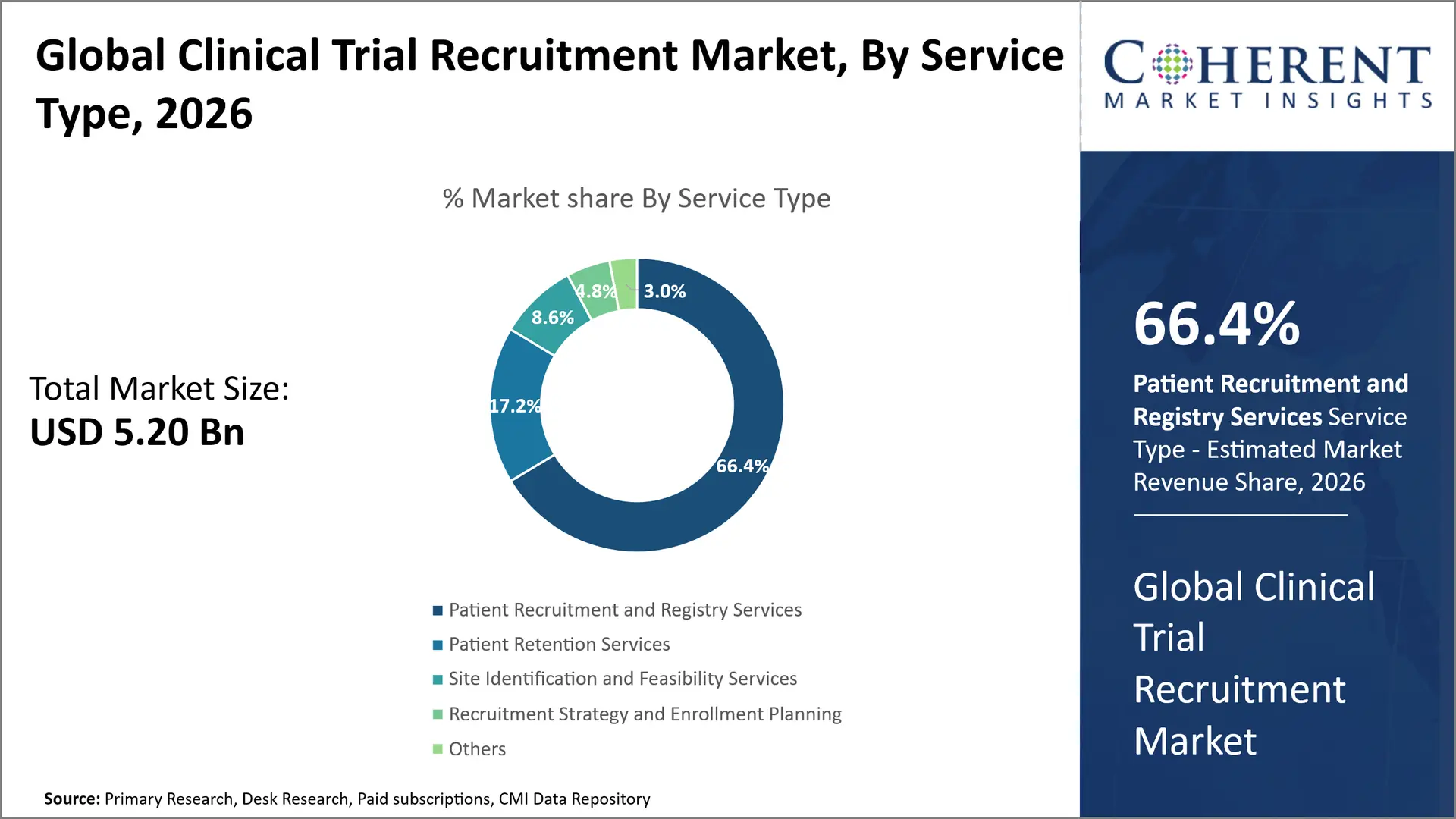
Why Do Patient Recruitment and Registry Services Dominate the Global Clinical Trial Recruitment Market?
Patient recruitment and registry services are projected to hold the market share of 66.4% in 2026, owing to their capacity to help sponsors in finding suitable participants, successful screening, and reaching the enrollment target for complex trials. For rare diseases, patient registries and data-driven recruitment techniques can be especially advantageous for identifying eligible participants who are geographically dispersed. For instance, U.S. National Center for Advancing Translational Sciences (NCATS) has launched the Rare Diseases Registry Program (RaDaR), a program to help patient organizations build and sustain disease-specific registries. The registry offers tools for recruitment of participants, quality control of data and sharing of information, illustrating role of structured patient registries in connecting individuals with rare diseases to relevant clinical research opportunities.
- Current Industry Events of 2026
- Market Size Estimation
- Regional Breakdown
- Competitive Landscape
- Customer Intelligence
- Segmental Analysis
- Pricing Analysis
- Key Market Drivers, Challenges & Future Trends
- Customized Insights Section
Why Does Digital Recruitment Represent the Largest Recruitment Method Segment in the Clinical Trial Recruitment Market?
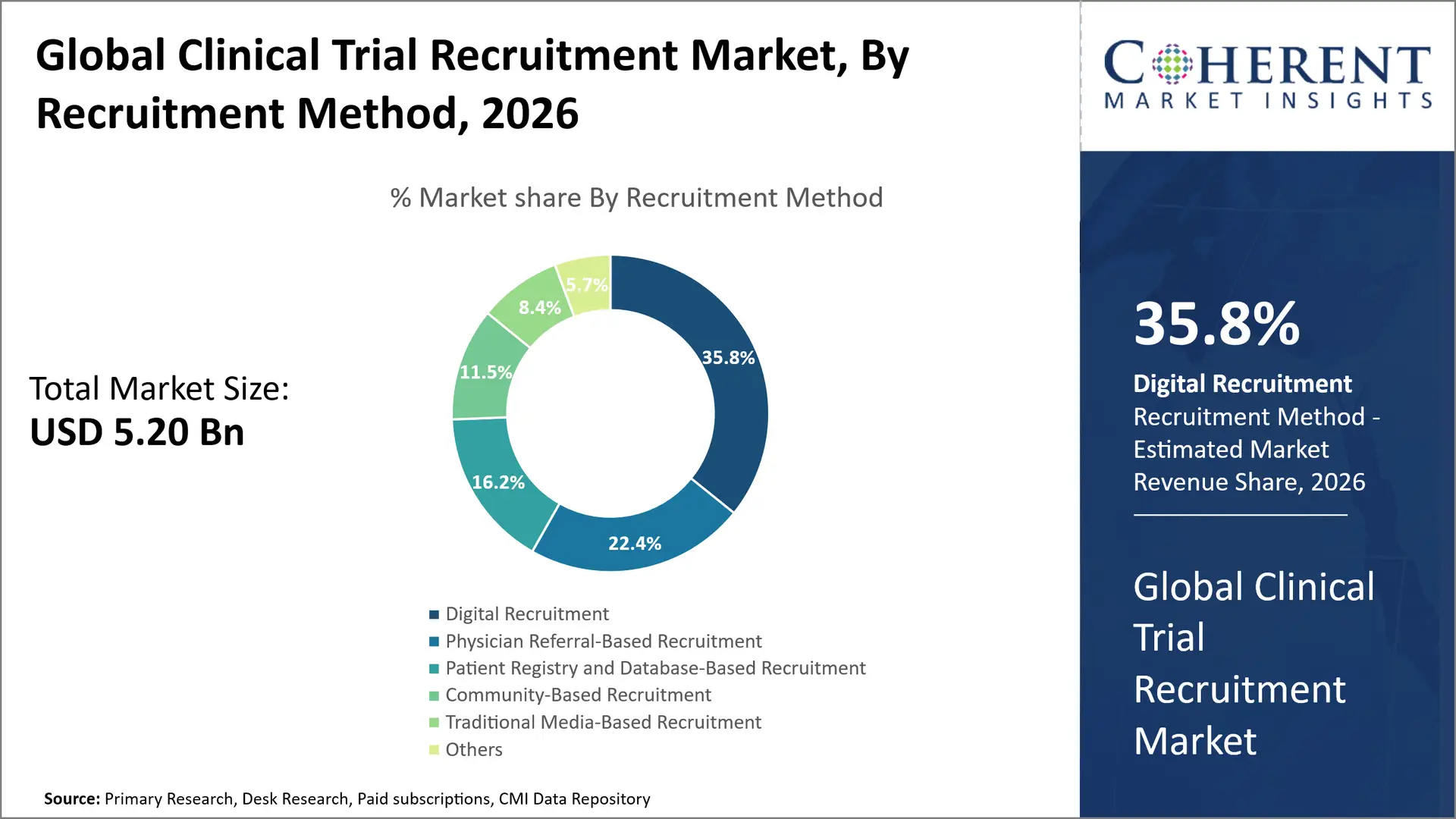
Digital recruitment is projected to hold a market share of 35.8% in 2026, as it has the advantage of entering potential participants online, through targeted advertising, and connecting them through mobile-based applications. For trial sponsors, the digital medium can be used more effectively for tracking responses and targeting specific patient populations more efficiently than many traditional methods for recruitment. They can also spread awareness of trials to underserved geographical areas. For instance, the Indian Council of Medical Research (ICMR) has developed the free website Clinical Trials Registry-India (CTRI), an online site for clinical trials registration. Users can search for trial information by health condition, phase, recruitment status, and geographic location. This online tool provides a valuable source of trial information and is a resource for potential trial volunteers.
Phase III Segment Dominates the Global Clinical Trial Recruitment Market
The Phase III segment is projected to hold a market share of 51.4% in 2026, attributed to their larger patient populations, tracking of different efficacy and safety parameters and evaluation of the safety profile of the treatment before regulatory agencies submit the results of the trial. Larger patient numbers also drive the demand for multicenter recruiting, prescreening and retention. For instance, according to the U.S. National Institutes of Health (NIH), Phase III clinical trials generally include 1,000 to 3,000 people. It is intended to demonstrate the effectiveness of the treatment and to identify any adverse effects. This shows the need for large capacity for recruitment and strategies for centralized enrollment.
Current Events and their Impact
Current Events | Description and its Impact |
U.S. FDA Introduces Expedited IND Pilot to Accelerate Early-Stage Trials (September 2026) |
|
HHS Launches National Clinical Trial Reform Initiative (June 2026) |
|
U.S. FDA Issues Final Guidance to Broaden Clinical Trial Participation (December 2025) |
|
Clinical Trial Recruitment Market Dynamics
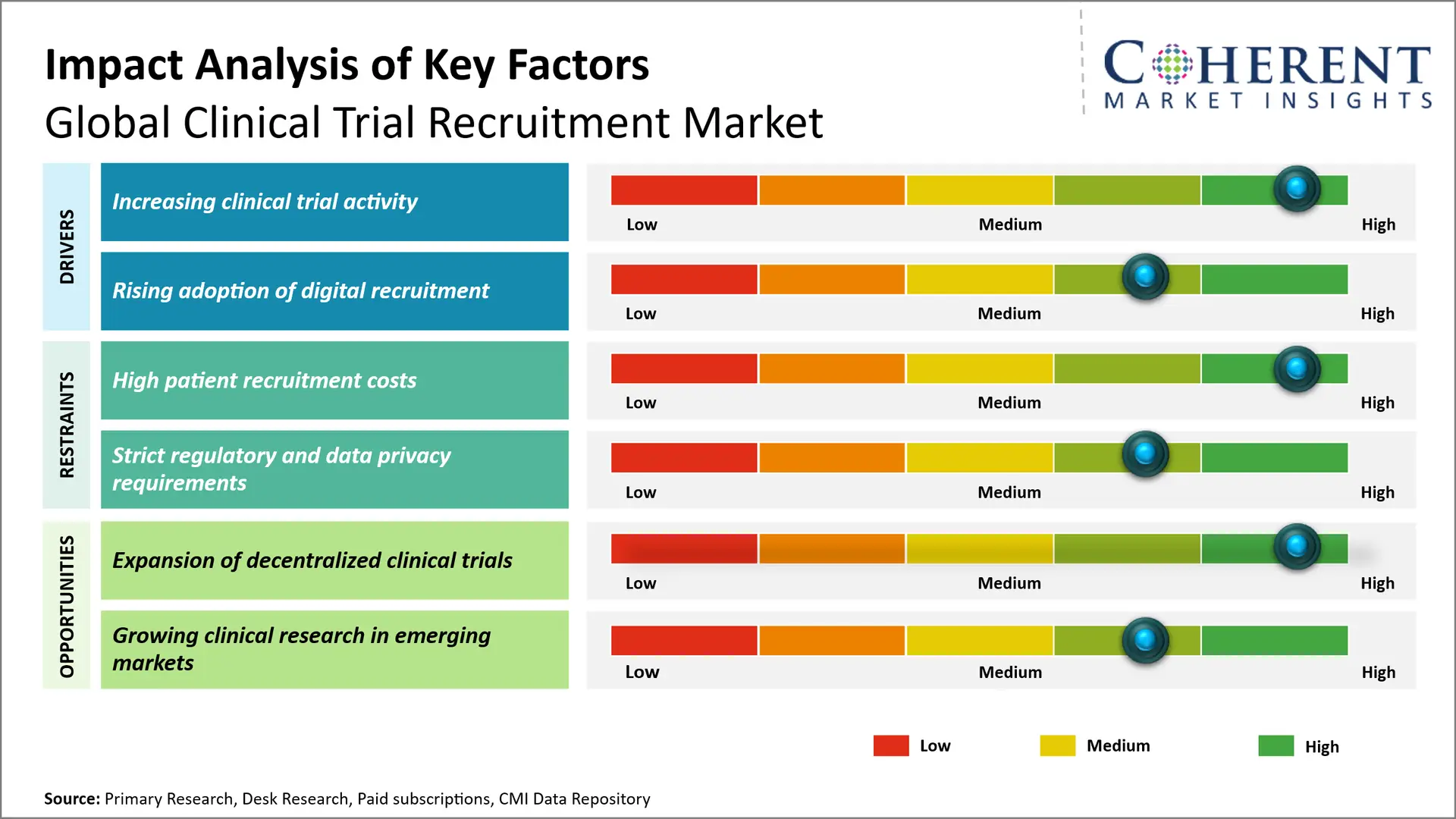
Market Drivers
- Increasing clinical trial activity: Increasing clinical trial activity is driving demand for recruitment services as pharmaceutical and biotechnology companies expand clinical development across therapeutic areas and geographies. For instance, ClinicalTrials.gov recorded approximately 30,635 new trial starts in 2024, up from 29,468 in 2023, indicating a growing volume of studies requiring participant identification and enrollment support. This trend creates opportunities for recruitment providers to improve enrollment timelines and access specialized patient populations.
- Rising adoption of digital recruitment: Rising adoption of digital recruitment is strengthening the global clinical trial recruitment market by enabling sponsors to reach potential participants through targeted online campaigns, electronic prescreening, and digital referral channels. These tools can improve outreach efficiency and help recruitment teams track participant interest and conversion throughout enrollment. For instance, NHS England's DigiTrials Recruitment Service uses NHS patient data to identify individuals who meet study eligibility criteria and contact them through letters, emails, and SMS, demonstrating how data-enabled digital outreach can support more targeted recruitment.
- Growing complexity of clinical trials: The growing complexity of clinical trials, particularly in oncology and precision medicine, is increasing demand for specialized recruitment services that can identify patients meeting highly specific clinical and biomarker-based eligibility criteria. These requirements often necessitate advanced prescreening, access to molecular diagnostic data, and collaboration with specialist research centers to improve enrollment efficiency. For instance, the U.S. National Cancer Institute’s ComboMATCH clinical trial program evaluates targeted therapies based on the genetic characteristics of patients’ tumors, highlighting the need for precise patient matching and specialized screening in oncology trials.
Emerging Trends
- AI-driven patient identification and eligibility screening: Clinical trial recruitment providers are increasingly adopting artificial intelligence and machine learning to match patient records with trial eligibility criteria. These technologies can accelerate prescreening, reduce screening failures, and help identify participants for studies involving complex or rare conditions.
- Integration of real-world data for targeted recruitment: Recruitment providers are leveraging electronic health records (EHRs), patient registries, and real-world data to identify potentially eligible participants more efficiently. This approach supports targeted outreach, improves recruitment feasibility assessments, and helps sponsors reach patient populations that may be difficult to access through conventional recruitment channels.
- Patient-centric and hybrid recruitment models: Recruitment strategies are evolving toward hybrid approaches that combine traditional clinical sites with digital outreach, telehealth, and remote participant engagement. Greater emphasis on convenience, personalized communication, and flexible participation is helping providers address enrollment barriers and strengthen participant retention.
Regional Insights
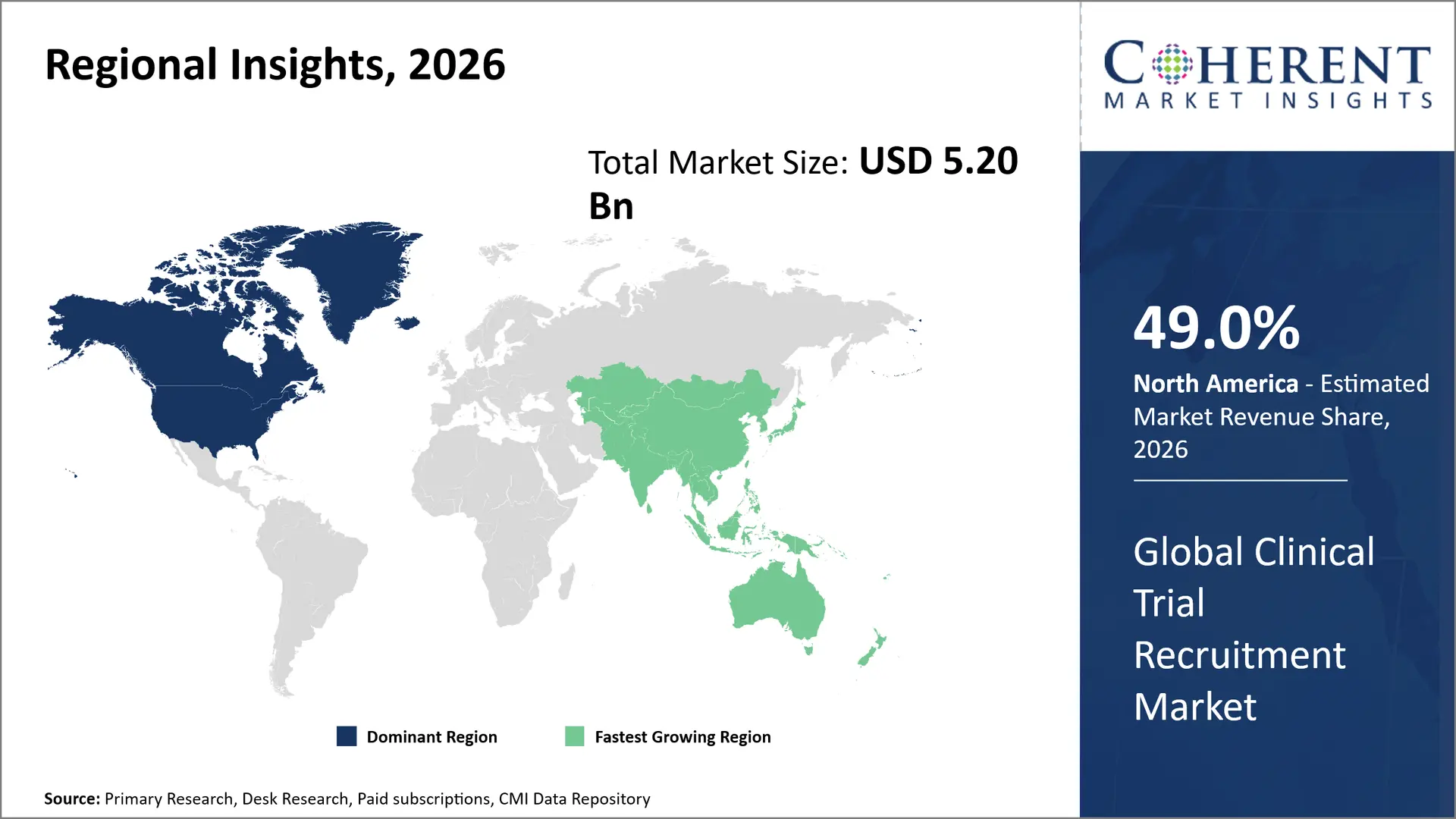
Why is North America a Strong Market for Clinical Trial Recruitment?
North America leads the global clinical trial recruitment market, accounting for an estimated 49.0% share in 2026, owing to a well-established healthcare system, a broad clinical research network, and a thriving pharmaceutical research and development ecosystem. The availability of regulatory policies and systems to promote the modernization of clinical research seems to accelerate trial recruitment and optimize research productivity.
For instance, the Food and Drug Omnibus Reform Act (FDORA) 2022 imposed requirements for diversity action plans for targeted clinical trials to ensure the participation of representative subpopulations in the disease. The policy supports the initiative of patient-focused targeted recruitment and diversity strategy in clinical trials. (Source: U.S. Food and Drug Administration) Furthermore, the adoption of digital health solutions, mature research-site networks, and the ever-growing requirement for targeted patient identification and enrollment services seem to boost the conduct of complex clinical trials in the region.
Why Does Asia Pacific Clinical Trial Recruitment Market Exhibit High Growth?
Asia Pacific is expected to exhibit the fastest growth in the global clinical trial recruitment market, registering an estimated CAGR of 10.2% during 2026–2033. The region is projected to account for 20.0% of the global market in 2026, owing to increasing investments in the fields of clinical research along with the accessibility of cost-effective healthcare infrastructure. The region's large patient pool that is identified and genetically heterogeneous is expected to cater to recruitment across a number of clinical indications, bolstered by regulatory harmonization to International Council for Harmonisation (ICH) norms, which would expedite the clinical trial process.
Countries such as India, China and Japan have established themselves as key regions for clinical trials at a rapid rate, with favorable regulatory and legal climate as well as policies regarding the foreign direct investment and facilitated approval processes. For instance, in 2025, the National Medical Products Administration (NMPA) in China launched a 30-day accelerated review channel for a subset of eligible innovative drug clinical trial applications. Shortening the duration of the review process is expected to accelerate the start of clinical trials and to make China an even more attractive location for clinical research. Furthermore, the increasing penetration of digital solutions for clinical trial recruitment along with participation from both domestic and foreign sponsors is expected to drive the regional market.
Global Clinical Trial Recruitment Market Outlook for Key Countries
Why is the U.S. Leading Innovation and Adoption in the Clinical Trial Recruitment Market?
The U.S. leads in innovation and adoption in the clinical trial recruitment market owing to its clinical research infrastructure and the regulatory driven environment for technology-enabled trials. The FDA's guidance on Decentralized Clinical Trials (September 2024) provides advice on remote trial visits, telehealth and local healthcare participation, that are expected to support recruitment outside the traditional trial sites. It is also likely that these guidelines may open the door for digital recruitment providers to targets geographically diverse patients and simplify recruitment.
Is China a Favorable Market for Clinical Trial Recruitment Market?
China is an attractive market for clinical trial recruitment, particularly as a result of regulatory initiatives to facilitate the development of new drugs and clinical trials. In October 2025, the National Medical Products Administration of China has announced a program to facilitate the acceptance of applications for clinical trials of eligible innovative drugs, that result in additional requirement for patient identification, screening and enrollment.
Is Japan Emerging as a Key Growth Hub for the Clinical Trial Recruitment Market?
Japan is being hailed as one of the rising growth centers for the clinical trial recruitment market due to the effort toward streamlining clinical trials and focusing more on qualified patient recruitment. The demand for advanced treatment is another major factor that is anticipated to promote the growth of the market demand in the outlook period driven by the rise in the demand for a treatment for advanced disease, especially for rare conditions and cancer, and the ability to select the right patient for the exact treatment.
Why Does Germany Top the European Clinical Trial Recruitment Market?
Germany leads the European market for clinical trial recruitment because of the country's strong base of pharma R&D and high volume of industry-sponsored clinical research. In 2025, the Paul-Ehrlich-Institut in Germany, received 392 new clinical trial applications for authorization and was the reporting member state for 167 applications (largest workload of any European country). This activity provides the potential for patient identification, screening, and enrollment services in multinational clinical trials.
Is Clinical Trial Recruitment Market Developing in UK?
The clinical trial recruitment market in the UK is growing with the help of government-funded programs and initiatives intended to improve the access to trial participants and speed the process of participants' recruitment for trials. In March 2026, NHS England rolled out its Digi Trials Recruitment Service to full-service delivery to build on NHS existing data to help identify potential study participants and send invitations to studies.
Competitive Benchmarking of Key Companies and Platforms in the Global Clinical Trial Recruitment Market
Company | Key Products / Platforms | Key Competitive Advantage |
Laboratory Corporation of America Holdings | Global Trial Connect; Clinical Trial Enablement Services | Leverages diagnostic data, patient eligibility analysis, site identification, and targeted recruitment campaigns to support enrollment planning and patient access. |
ICON plc | Patient Recruitment Services; Referral Management Console; Site Engagement Liaisons | Combines digital outreach, site-level recruitment support, patient insights, and retention services to improve enrollment performance and participant diversity. |
Parexel International Corporation | Patient recruitment and retention services; global site and patient solutions | Draws on global clinical operations, electronic medical record data, and tailored recruitment strategies to reach hard-to-find patient populations. |
Thermo Fisher Scientific Inc. | PPD clinical research services; patient and site services; accelerated enrollment solutions | Integrates recruitment and site support with global CRO operations, therapeutic expertise, and digital and decentralized trial capabilities. |
Worldwide Clinical Trials, LLC | Patient recruitment and retention services; clinical trial site and operational support | Uses therapeutic expertise and clinical operations capabilities to develop study-specific enrollment strategies and support patient engagement. |
BBK Worldwide | TrialCentralNet; Patient Engagement Platform; Site Success Services | Differentiates through integrated recruitment campaigns, participant travel and payments, site prescreening, and decentralized trial support. |
Clariness GmbH | ClinLife; Clariness Hub; ClinSight | Combines a global patient recruitment platform with enrollment feasibility, patient and site insights, multilingual campaigns, and recruitment performance data. |
SubjectWell, Inc. | Patient recruitment and engagement services; digital recruitment platform capabilities | Focuses on patient acquisition, digital outreach, and referral generation. Note: Clariness announced a merger with SubjectWell, so confirm the appropriate company/entity treatment for your report's current competitive landscape. |
Elligo Health Research, Inc. | Elligo Site Network; IntElligo; ResearchConnect; Recruitment Services | Connects research with routine healthcare through physician networks, targeted outreach, patient prescreening, and site-level enrollment support. |
WCG Clinical, Inc. | Participant Recruitment & Retention Solutions; Total Enrollment | Combines recruitment and retention support with clinical research expertise, site-focused services, and research workflow capabilities. |
How are high patient recruitment costs restraining growth in the clinical trial recruitment market?
Significant expenses of patient recruitment can restrain the growth of the global clinical trial recruitment market by increasing costs of patient engagement, screening, recruitment staffing, and patient recruitment. Additionally, delays in recruitment and multiple screening attempts can also increase the cost of the trials especially for the complex cases of patient recruitment. For instance, a U.S. Department of Health and Human Services analysis estimated patient recruitment costs at approximately US$37,050 for Phase I, USD 161,140 for Phase II, and USD 308,672 for Phase III clinical trials in its modeled cost breakdown, illustrating the increasing financial burden of patient recruitment and the need for cost-effective recruitment methods.
How is the expansion of decentralized clinical trials creating new growth opportunities in the clinical trial recruitment market?
Decentralized clinical trials are creating growth prospects for global clinical trial recruitment market by enabling remote patient identification and registration outside traditional clinical research sites. The use of de-centralized research procedures has the ability to improve access to geographically dispersed populations, reduce travel barriers and boost participant diversity and retention. For instance, in September 2024, the U.S. Food and Drug Administration (FDA) issued a guidance on conducting clinical trials with decentralized elements including remote visits, local healthcare providers and digital health technologies. This regulatory endorsement encourages sponsors and clinical research organizations (CROs) to adapt more decentralized strategies for patient recruitment.
Market Players, Key Development, and Competitive Intelligence
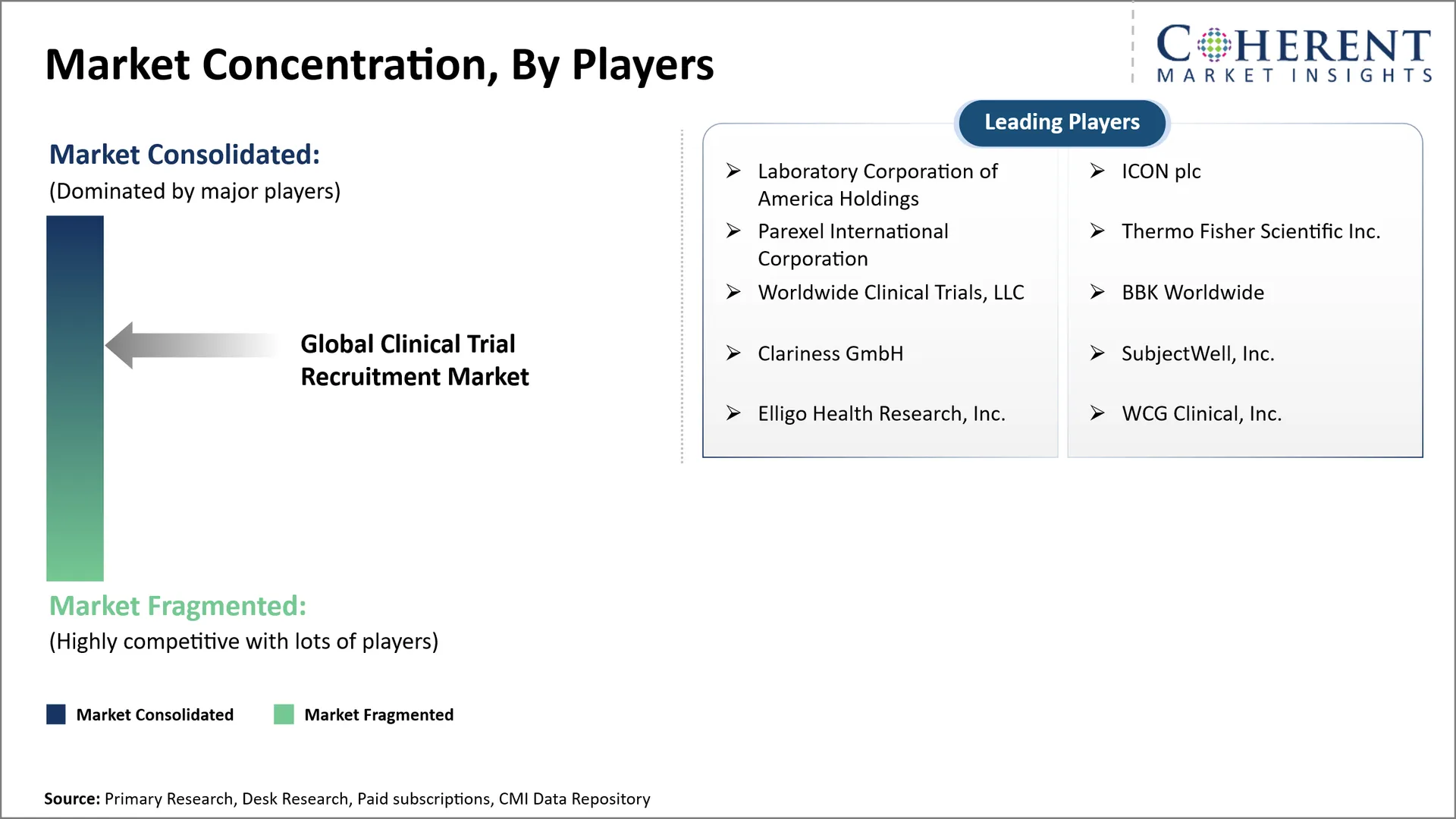
Key Developments
- In January 2026, Jumo Health launched PRISM, a readiness-based clinical trial recruitment, enrollment, and retention system designed to assess patient readiness and improve trial completion. The system supports patient identification, pre-screening, site handoffs, and retention monitoring, addressing barriers that can lead to enrollment delays and participant dropout.
- In September 2025, Indegene partnered with Datavant to integrate Datavant’s data enrichment capabilities into Indegene’s NEXT Patient Recruitment platform. The collaboration aims to identify eligible participants, reduce screening failures, and accelerate enrollment, particularly for rare and complex disease trials.
- In February 2025, Inovalon launched Clinical Research Patient Finder, an AI-powered solution that integrates with electronic health records (EHRs) to identify potential clinical trial participants in real time. The solution automates patient pre-screening based on study-specific eligibility criteria, helping research sites reduce recruitment bottlenecks, improve enrollment efficiency, and expand access to clinical trials.
Competitive Landscape
The global clinical trial recruitment market is moderately competitive, with competition centered on patient identification, digital recruitment platforms, enrollment optimization, and participant retention. Market participants are strengthening capabilities that connect patient outreach, eligibility screening, recruitment analytics, and site-level enrollment workflows. Key focus areas include:
- AI-powered patient matching and automated screening based on clinical trial eligibility criteria
- Digital recruitment through social media, online advertising, and patient engagement platforms
- Integration of electronic health records, patient registries, and real-world data for participant identification
- Data-driven recruitment strategies to accelerate enrollment and reduce screening failures
- Patient-centric engagement and retention solutions to minimize participant dropout
- Recruitment of diverse and underrepresented populations to improve clinical trial inclusivity
- Integration of recruitment platforms with clinical trial management systems and research site workflows
Market Report Scope
Global Clinical Trial Recruitment Market Report Coverage | |||
Report Coverage | Details | ||
Base Year | 2025 | Market Size in 2026: | USD 5.20 Bn |
Historical Data For: | 2020 To 2024 | Forecast Period: | 2026 To 2033 |
Forecast Period 2026 To 2033 CAGR: | 9.2% | 2033 Value Projection: | USD 9.63 Bn |
Geographies covered: |
| ||
Segments covered: |
| ||
Companies covered: | Laboratory Corporation of America Holdings, ICON plc, Parexel International Corporation, Thermo Fisher Scientific Inc., Worldwide Clinical Trials, LLC, BBK Worldwide, Clariness GmbH, SubjectWell, Inc., Elligo Health Research, Inc., WCG Clinical, Inc. | ||
Growth Drivers: |
| ||
Restraints & Challenges: |
| ||
Analyst Opinion (Expert Opinion)
- In the coming years, global clinical trial recruitment market is expected to evolve toward technology-enabled, patient-centric recruitment models that combine artificial intelligence, real-world data, and personalized engagement. Recruitment providers will increasingly focus on improving participant matching, reducing screening failures, accelerating enrollment, and strengthening retention throughout the trial lifecycle. Solutions that support decentralized and hybrid trials while reaching diverse patient populations are likely to gain strategic importance.
- The maximum opportunities are foreseen within AI-powered digital recruitment for oncology and rare disease trials in the U.S. and China, where complex eligibility criteria and the need to identify specialized patient populations create demand for advanced recruitment capabilities. India also presents opportunities for digital recruitment services supporting Phase II and Phase III trials, particularly in chronic diseases, oncology, and infectious diseases
- In order to gain a competitive advantage market players should prioritize AI-driven eligibility screening, partnerships with hospitals and research sites, multilingual patient engagement, transparent data governance, and outcome-based service models to differentiate their offerings and improve recruitment efficiency.
Speak to the analyst
Want personalized insights?
Take the findings above to one of our principal consultants, or have the report rebuilt around the segments, geographies and competitors you actually track.
Market Segmentation
- Service Type Insights (Revenue, USD Bn, 2021 - 2033)
- Patient Recruitment and Registry Services
- Patient Retention Services
- Site Identification and Feasibility Services
- Recruitment Strategy and Enrollment Planning
- Others
- Recruitment Method Insights (Revenue, USD Bn, 2021 - 2033)
- Digital Recruitment
- Physician Referral-Based Recruitment
- Patient Registry and Database-Based Recruitment
- Community-Based Recruitment
- Traditional Media-Based Recruitment
- Others
- Trial Phase Insights (Revenue, USD Bn, 2021 - 2033)
- Phase I
- Phase II
- Phase III
- Phase IV
- Therapeutic Area Insights (Revenue, USD Bn, 2021 - 2033)
- Oncology
- Cardiovascular Diseases
- Neurological and Central Nervous System Disorders
- Infectious Diseases
- Respiratory Diseases
- Metabolic and Endocrine Disorders
- Rare Diseases
- Others
- End User Insights (Revenue, USD Bn, 2021 - 2033)
- Pharmaceutical Companies
- Biotechnology Companies
- Contract Research Organizations (CROs)
- Academic and Research Institutes
- Others
- Regional Insights (Revenue, USD Bn, 2021 - 2033)
- North America
- U.S.
- Canada
- Latin America
- Brazil
- Argentina
- Mexico
- Rest of Latin America
- Europe
- Germany
- U.K.
- Spain
- France
- Italy
- Russia
- Rest of Europe
- Asia Pacific
- China
- India
- Japan
- Australia
- South Korea
- ASEAN
- Rest of Asia Pacific
- Middle East
- GCC Countries
- Israel
- Rest of Middle East
- Africa
- South Africa
- North Africa
- Central Africa
- North America
Sources
Primary Research Interviews
- Clinical Trial Recruitment Service Providers and Product Leaders overseeing patient recruitment platforms, participant identification, eligibility screening, enrollment optimization, and retention solutions.
- Clinical Research Operations Leaders and CRO Executives responsible for recruitment strategy, site feasibility, enrollment performance, and trial execution.
- Clinical Investigators and Research Site Coordinators involved in patient identification, eligibility assessment, informed consent, and participant enrollment.
- Patient Recruitment and Engagement Specialists managing digital outreach, community engagement, patient registries, and participant retention programs.
- Clinical Data and Healthcare IT Specialists working on electronic health record (EHR) integration, patient matching, recruitment analytics, and data privacy.
Stakeholders
- Pharmaceutical and Biotechnology Companies adopting recruitment services to accelerate clinical trial enrollment and improve participant diversity.
- Contract Research Organizations (CROs) providing recruitment strategy, patient identification, site support, and enrollment management.
- Hospitals and Clinical Research Sites identifying eligible patients and coordinating screening, consent, and enrollment.
- Patient Recruitment Technology Providers developing AI-enabled screening, digital outreach, patient matching, and recruitment management platforms.
- Site Management Organizations (SMOs) coordinating research sites, investigator networks, participant recruitment, and trial operations.
- Patient Advocacy Organizations and Disease-Specific Foundations supporting patient awareness, community engagement, and access to relevant clinical studies.
- End-use Sectors
- Pharmaceutical Companies
- Biotechnology Companies
- Contract Research Organizations (CROs)
- Academic and Research Institutes
- Hospitals and Clinical Research Sites
- Medical Device Companies
- Other End Users
- Regulatory & Health Bodies
- U.S. Food and Drug Administration (FDA), U.S. — clinical trial participation, recruitment practices, informed consent, participant diversity, and human-subject protection.
- National Institutes of Health (NIH), U.S. — patient recruitment resources, clinical research participation, recruitment planning, and participant protection.
- European Medicines Agency (EMA), Europe — clinical trial oversight, Clinical Trials Information System (CTIS), trial transparency, and clinical research information.
- European Commission, European Union — implementation of the EU Clinical Trials Regulation, clinical trial authorization, transparency, and research governance.
- World Health Organization (WHO) — international clinical trial standards, trial registration, ethical research, and participant protection.
Databases
- ClinicalTrials.gov — clinical trial registrations, study locations, eligibility criteria, recruitment status, study phases, and trial results.
- World Health Organization International Clinical Trials Registry Platform (WHO ICTRP) — access to clinical trial registry records and international trial registration information.
- Clinical Trials Information System (CTIS) — EU clinical trial applications, authorized studies, public trial information, and recruitment-related study details.
- ClinicalTrials.gov API — structured trial records for analyzing study locations, conditions, phases, recruitment status, and eligibility information.
Associations
- Association of Clinical Research Professionals (ACRP) — clinical research operations, patient recruitment, participant engagement, and research workforce practices.
- Society of Clinical Research Associates (SOCRA) — clinical research education, site coordination, recruitment practices, and participant protection.
- Drug Information Association (DIA) — clinical trial innovation, patient engagement, clinical development, and collaboration across the life sciences industry.
- Association of Clinical Trials Organizations (ACTO) — clinical trial site networks, research operations, and collaboration across clinical research organizations.
- International Association of Clinical Research Nurses (IACRN) — clinical research nursing, participant safety, study coordination, and patient-centered research practices.
Public Domain Sources
- U.S. Food and Drug Administration (FDA) — guidance on clinical trial recruitment, participant eligibility, enrollment practices, diversity, and informed consent.
- National Institutes of Health (NIH) — public resources on recruitment planning, participant screening, informed consent, recruitment materials, and privacy safeguards.
- ClinicalTrials.gov — publicly accessible study records covering trial phases, recruitment status, eligibility criteria, study locations, and results.
- World Health Organization (WHO) — international clinical trial information, registry resources, and clinical research standards.
- European Medicines Agency (EMA) — public clinical trial information, CTIS resources, regulatory guidance, and clinical research transparency.
Proprietary Elements
- CMI Data Analytics Tool
- Proprietary CMI Existing Repository of information for last 10 years.
Get access to 250+ pages report
Every segment, forecast, competitor profile and data table behind the analysis above — available for instant download.
- ESOMAR Member
- ISO 9001:2015 Certified
- D-U-N-S Registered
- GDPR & CCPA Compliant
Frequently Asked Questions
The global clinical trial recruitment market is estimated to be valued at USD 5.20 Bn in 2026 and is expected to reach USD 9.63 Bn by 2033.
Patient recruitment and registry services dominate due to their central role in identifying eligible participants and meeting enrollment targets.
Clinical trial recruitment is the process of identifying, screening, and enrolling eligible participants in clinical studies to evaluate new treatments and therapies.
The CAGR of global clinical trial recruitment market is projected to be 9.2% from 2026 to 2033.
Increasing clinical trial activity, and rising adoption of digital recruitment are the major factors driving the growth of the global clinical trial recruitment market.
High patient recruitment costs, and strict regulatory and data privacy requirements are the major factors hampering the growth of the global clinical trial recruitment market.
In terms of recruitment method, digital recruitment is estimated to dominate the market revenue share in 2026.