

Global Commercial Heat Pump Market Size and Forecast – 2026 To 2033
The global commercial heat pump market is expected to grow from USD 103.00 Bn in 2026 to USD 201.00 Bn by 2033, registering a compound annual growth rate (CAGR) of 14.0% from 2026 to 2033. The global commercial heat pump market is driven by rising electricity prices and demand for lower operating costs. On September 30, 2025, Trane completed a groundbreaking electrification and decarbonization retrofit in New York City’s largest office building. Trane installed a cutting-edge Storage Source Heat Pump heat recovery system, creating a highly efficient, flexible and resilient energy solution that sets a blueprint for modernizing large-scale commercial properties.
Key Takeaways of the Global Commercial Heat Pump Market
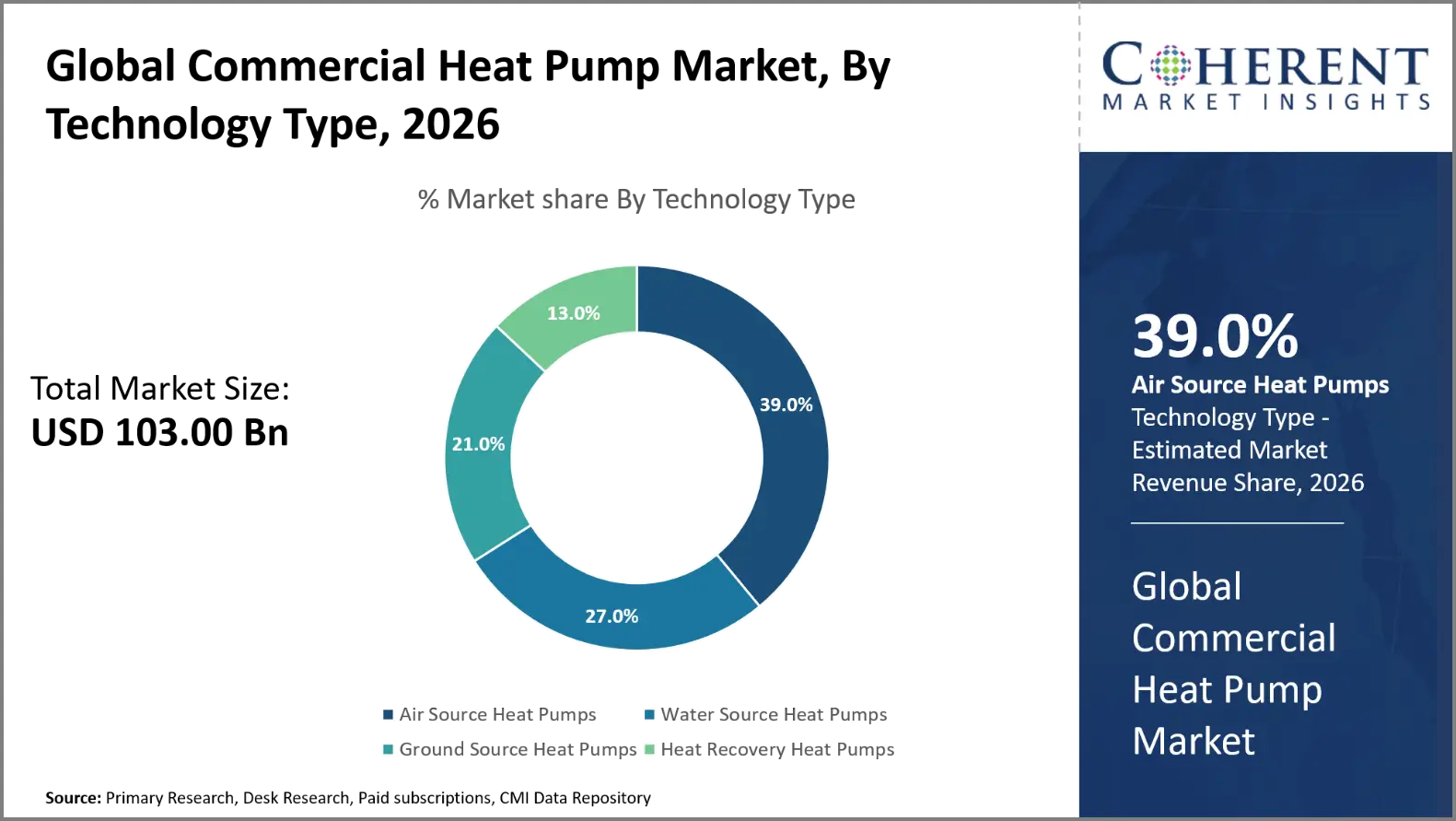
- The Air Source Heat Pumps segment is expected to account for 39.0% of the global commercial heat pump market share in 2026. Government incentives supporting building electrification and energy efficiency is driving the growth of the segment. In July 2025, The New South Wales Government in Australia launched a heat pump feasibility grant program for eligible businesses.
- The R-32 segment is estimated to capture 41.0% of the market share in 2026. Expansion of commercial infrastructure and building renovation projects is majorly driving the growth of the segment. In August 2026, Landsec reported that more than 40 air-source heat pumps had been installed across six central London workplaces in the U.K. The program covered more than 1.3 million square feet of workspace.
- The Below 20 kW segment is estimated to capture 51.0% of the market share in 2026. Integration of heat pumps with solar power and thermal storage is majorly driving the growth of the segment. In November 2025, Epic Group announced a high-temperature electric heat pump installation at its apparel manufacturing hub in Bhubaneswar, India. The facility combines onsite and offsite solar power with battery storage.
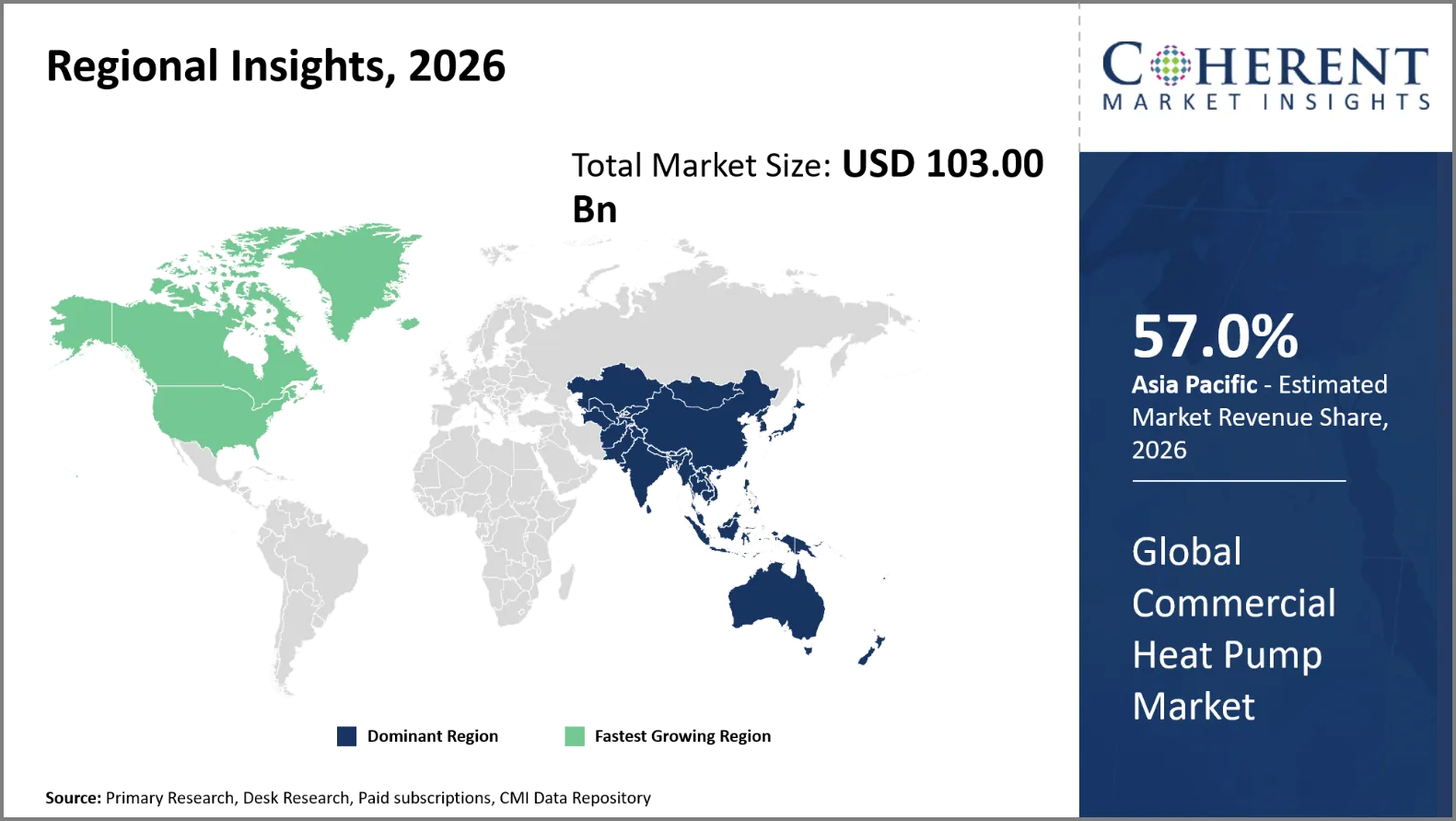
- Asia Pacific is expected to dominate the commercial heat pump market in 2026 with a market share of 57.0%. Development of cold-climate heat pump technologies in Asia Pacific is driving the growth of the regional market. In March 2025, Sonyo Compressor (Dalian) introduced a new scroll compressor series for air-source heat pumps serving northern China’s severe winters. The compressors are engineered to support heating operation at ambient temperatures as low as −40°C.
- North America is expected to account for 19.0% share in 2026 and is projected to record the fastest growth over the forecast period. Growing demand for centralized commercial heat pump systems in North America is driving the growth of the regional market. On November 4, 2025, Everllence and Vicinity Energy announced a major heat pump project at Kendall Station in Cambridge, Massachusetts, U.S. The system is designed to deliver 35 megawatts of thermal output and approximately 50 metric tons of steam hourly.
Segmental Insights
Why Does Air Source Heat Pumps Dominate the Global Commercial Heat Pump Market?
The air source heat pumps segment is expected to account for 39.0% of the global commercial heat pump market share in 2026. Air source heat pumps are the most used technology since they can efficiently heat and cool a wide variety of commercial buildings. They need less infrastructure to be installed than ground source systems. These systems are being used more and more by hotels, businesses, retail stores and educational buildings to adjust the temperature year-round. Reversible action provides heating and cooling in one integrated system. Better inverter technology means accurate temperature control and less electricity consumption. Installation and upkeep are also quite easy for commercial property owners. Government energy efficiency programs and building decarbonization targets are also moving adoption along.
On August 14, 2025, Carrier launched its AquaSnap 30RQM modular air-source reversible heat pump on. It is designed for commercial buildings that need heating and cooling, such as offices, schools, healthcare institutions and retail shops. It can produce hot water as hot as 140°F and it may be used outside when the temperature is below 0°F.
- Current Industry Events of 2026
- Market Size Estimation
- Regional Breakdown
- Competitive Landscape
- Customer Intelligence
- Segmental Analysis
- Pricing Analysis
- Key Market Drivers, Challenges & Future Trends
- Customized Insights Section
Why is R-32 the Most Crucial Refrigerant Type?
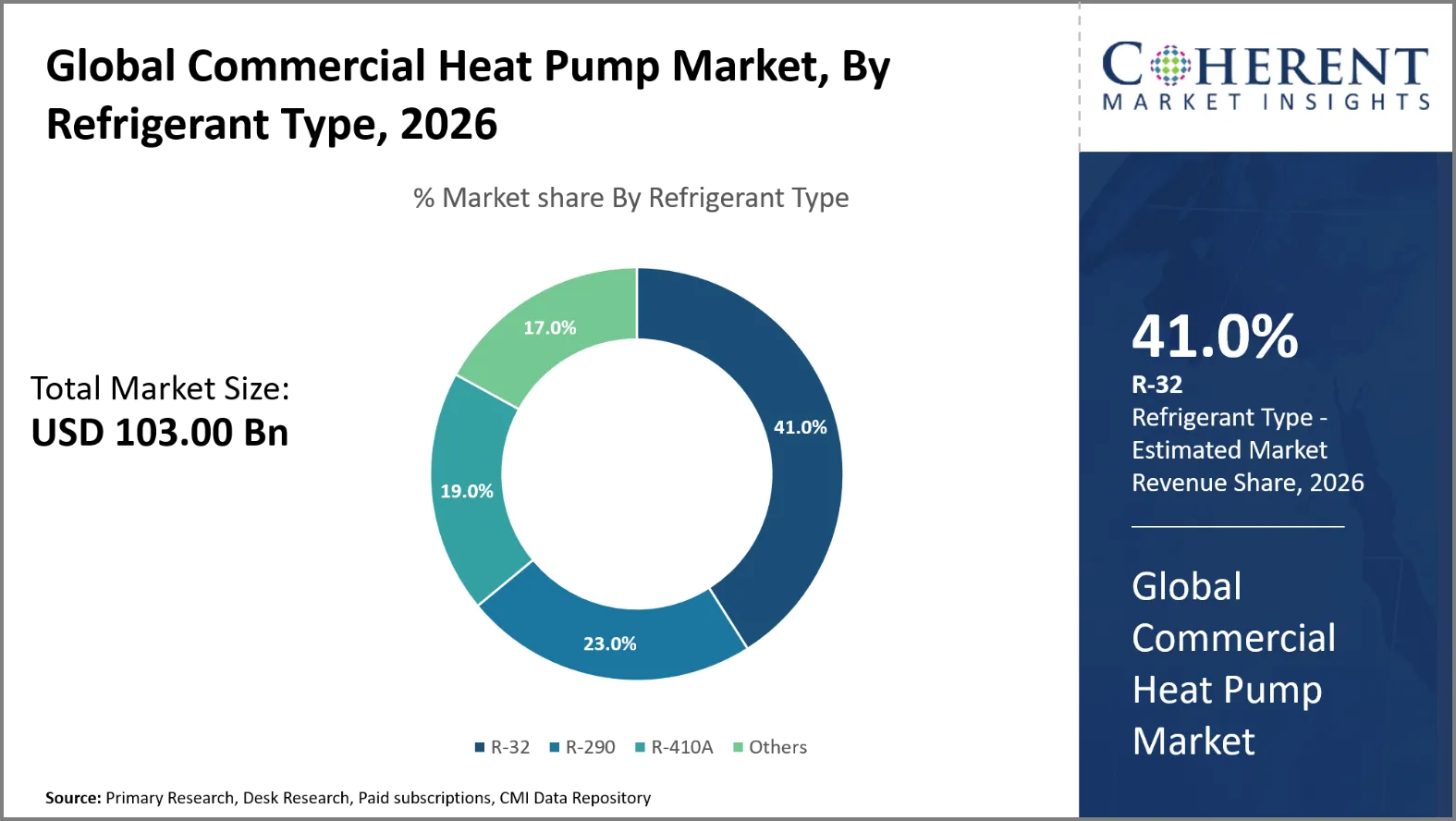
The R-32 segment is expected to account for 41.0% of the global commercial heat pump market share in 2026. The R-32 is important since it has a lower global warming potential than the standard R-410A refrigerant. Its thermodynamic properties make it effective in heating and cooling performance. Increasingly, commercial equipment manufacturers are adopting R-32 in compact heat pump systems. Its considerably lower refrigerant charge requirements can improve the efficiency of the machine. Regulatory constraints on refrigerants with high global warming potential are driving its use. R-32 also helps the move to environmentally sound commercial heating and cooling. But it is mildly combustible and requires proper design and installation techniques with equipment.
On May 21, 2026, Daikin debuted its VRV EMERION commercial heat pump and heat recovery systems. The range uses R-32 refrigerant and covers capacities from 6 to 40 tons. Daikin reported efficiencies reaching 24.6 Integrated Energy Efficiency Ratio and a coefficient of performance of 3.80.
Below 20 kW Dominates the Global Commercial Heat Pump Market
The below 20 kW segment is expected to account for 51.0% of the global commercial heat pump market share in 2026. Below 20 kW heat pumps dominate because small commercial buildings require moderate heating and cooling capacities. This capacity range is often suitable for offices, restaurants, retail establishments, clinics and small hotels. These technologies provide for efficient temperature management without the need for huge equipment. Their tiny design allows them to be installed in buildings with limited mechanical space. It is recommended for small businesses because of the low equipment cost and ease of installation. Individual room temperature control is also possible with systems below 20 kW. Their usefulness in renovation initiatives enhances demand throughout existing commercial building infrastructure.
On March 19, 2026, Mitsubishi Heavy Industries Thermal Systems, Ltd. announced additions to the Hydrolution EZY series portfolio of air-to-water (ATW) heat pumps for the European market. To fulfill the varied requirements of the region, new models of 10kW and 14kW capacity have been introduced in addition to the existing 6kW and 7.1kW versions.
Current Events and their Impact
Current Events | Description and its Impact |
European Union - Fluorinated Greenhouse Gas Regulation (EU) 2024/573 |
|
European Union - Energy Performance of Buildings Directive (EU) 2024/1275 |
|
Commercial Heat Pump Market Dynamics
Market Drivers
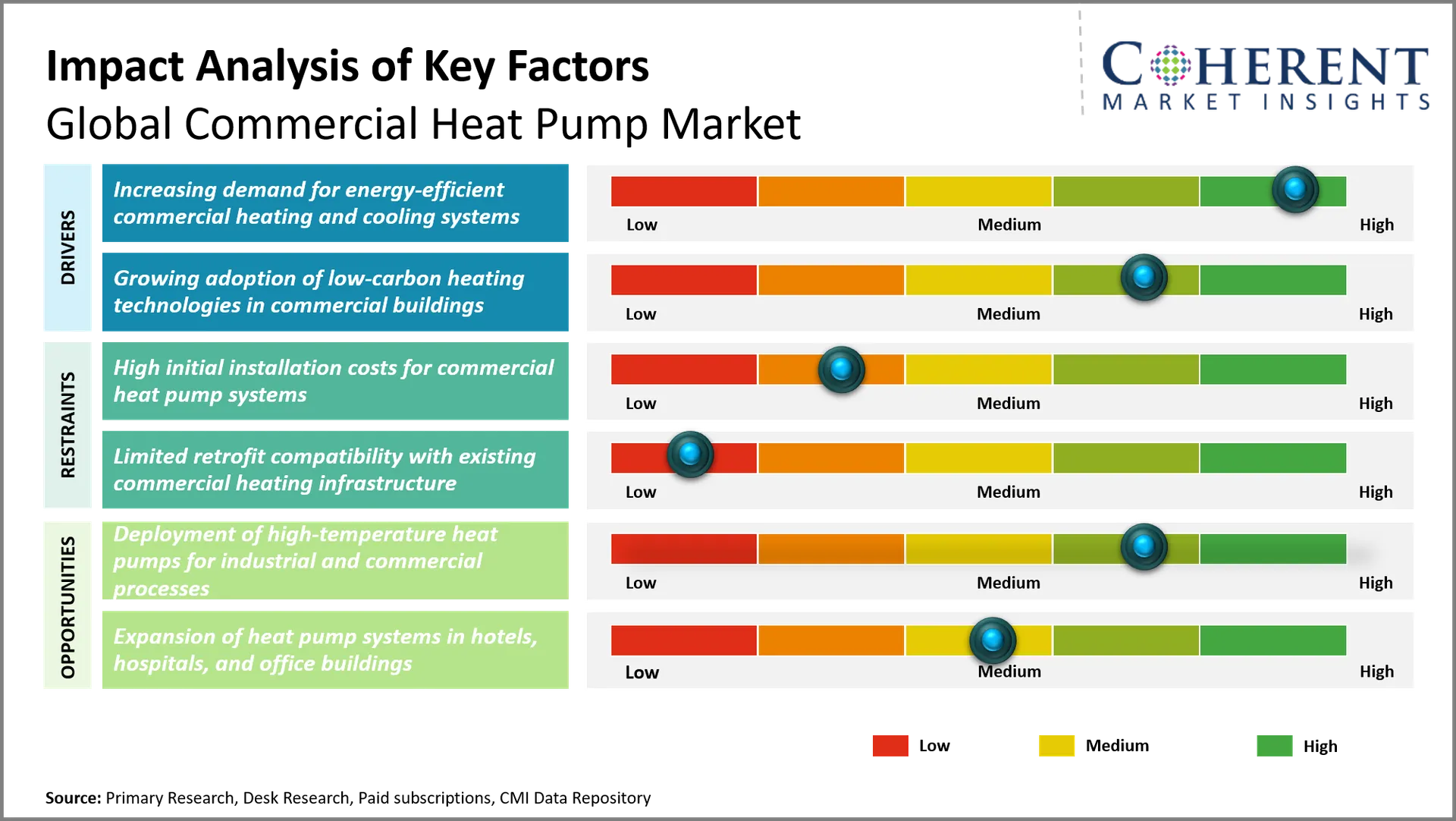
- Increasing demand for energy-efficient commercial heating and cooling systems: Increasing demand for energy-efficient commercial heating and cooling systems supports commercial heat pump use in offices, hotels, hospitals, and retail facilities. Businesses are increasingly focusing on reducing electricity use and optimizing operational costs. Heat pumps can heat and cool buildings but they can make buildings more energy efficient. Smart temperature controls and advanced inverter compressors make for efficiency in changing occupancy. As energy costs rise, commercial property owners are replacing traditional heating equipment. Building modernization programs significantly boost the demand for efficient thermal management solutions. These changes enable the installation of commercial heat pumps in new builds and restoration projects.
- On September 11, 2025, Carrier announced successful laboratory validation of its 10-14-ton rooftop heat pump under the U.S. Department of Energy’s Commercial Building HVAC Technology Challenge. The system maintained 100% heating capacity at 5°F and exceeded 70% capacity at -10°F.
- Growing adoption of low-carbon heating technologies in commercial buildings: The uptake of low-carbon heating technologies is growing, driving the installation of commercial heat pumps in developed and developing countries. Owners of commercial property are ditching fossil-fuel boilers for electric heat. Heat pumps decarbonize buildings by drawing heat from the environment, rather than creating heat by burning fuel. Investment in low emission heating infrastructure is driven by government policies on electrification and business sustainability commitments. Integrating renewable electricity will boost their environmental credentials. Hotels, workplaces, healthcare facilities and educational institutions are increasingly looking at heat pumps as part of building upgrading. These advancements decrease the dependence on conventional fossil-fuel heating systems and boost the business demand for sustainable heating technology.
- On July 30, 2025, Rinnai installed low carbon heat pumps in a Welsh science park. A bespoke R-290 air source heat pump system was provided by the company for heating and hot water. The installation consisted of several high temperature heat pumps, buffer tanks and integration into a building management system.
Emerging Trends
- Integration of Smart Controls and Artificial Intelligence: Smart controls, predictive maintenance and artificial intelligence are rapidly being integrated into commercial heat pumps. These technologies can assist in optimizing heating schedules, adjusting temperatures based on occupancy, and enhancing energy management across different business buildings.
- Impact: Smart controls reduce unnecessary electricity use, enhance equipment reliability and allow for preventive maintenance. Operators get more visibility into energy use and can tune performance to changing operating needs.
- Relevance to the market: This trend is driving the need for linked commercial heat pumps. For manufacturers, automation and energy monitoring and integration with building management systems are ways to differentiate products.
- Transition Toward Low-Global-Warming-Potential Refrigerants: Commercial heat pump manufacturers are increasingly using low global warming potential refrigerants, such as R-32, R-290 and carbon dioxide. New refrigerant innovation is happening in commercial heating and cooling because of regulatory constraints and environmental concerns.
- Impact: Changes in refrigerant lead to changes in equipment design, safety regulations, servicing methods and manufacturing costs. Manufacturers need to balance the refrigerant’s environmental performance, energy efficiency and installation compatibility and safety factors.
- Relevance to the market: This trend opens up potential for compliance equipment makers and skilled installation suppliers. Commercial purchasers are placing greater emphasis on refrigerant regulations, long-term running costs and environmental efficiency when choosing heat pumps.
Regional Insights
Why is Asia Pacific a Strong Market for Commercial Heat Pump?
Asia Pacific is expected to account for a market share of 57.0% in 2026. The production of heat pumps, industrial electrification and commercial demand for hot water and space conditioning greatly benefit the Asia Pacific region. China’s 2025 Heat Pump Industry High-Quality Development Action Plan seeks uses in buildings, industry, agriculture and transport. Japan is providing innovative commercial water heating and industrial heat pump technologies. South Korea boosts regional know-how for high efficiency compressors and heating systems. Commercial installations include hotels, hospitals, food processing facilities, and manufacturing companies. Industrial facilities also offer potential for heat pumps supplying process heat below 200°C.
Why Does North America Commercial Heat Pump Market Exhibit High Growth?
North America is expected to register the fastest growth with a CAGR of 13.6% over the forecast period. It is projected to account for 19.0% of the global commercial heat pump market in 2026 and benefits from commercial building electrification, equipment replacement, and demand for integrated heating and cooling. In September 2025, Trane completed an electrical upgrade at 55 Water Street in New York City. The project consists of a 3.8 million square foot office complex and includes heat recovery with thermal energy storage. California has chances for commercial enterprises to incorporate geothermal heat pumps. Delta Electronics operates a 175,000-square-foot manufacturing facility in Fremont, California, with geothermal heating and cooling. Its installation integrates photovoltaic generation and battery storage.
Global Commercial Heat Pump Market Outlook for Key Countries
Why is China Emerging as a Major Hub in the Commercial Heat Pump Market?
China’s commercial heat pump market benefits from domestic manufacturing scale, clean heating programs, and industrial demand for low-temperature process heat. In March 2025, six government departments issued the Heat Pump Industry High-Quality Development Action Plan. The plan includes research in equipment, manufacture, building applications, industrial applications and installation support. The International Energy Agency sees huge potential for pulp and paper, chemical production and light industries. These industries use considerable heat below 200°C. China’s integrated component supply chains also support competitive equipment production. Hotels, commercial complexes, and factories offer distinct deployment opportunities.
Is U.S. the Next Growth Engine for the Commercial Heat Pump Market?
The U.S. market for commercial heat pumps is being driven by large-building retrofits, heating electrification and adherence to local building emissions standards. In September 2025, Trane completed the construction of a heat-recovery and thermal storage system at 55 Water Street in New York. The 53-story building contains 3.8 million square feet and demonstrates electrification opportunities in aging commercial properties. New York’s Local Law 97 adds pressure for large buildings to reduce emissions. The U.S. Department of Energy also supports research into high-temperature heat pumps for commercial space heating and hot water.
Germany Commercial Heat Pump Market Analysis and Trends
Germany’s commercial heat pump market benefits from office-building modernization and the replacement of inefficient electric heating systems. In 2025, Panasonic installed eight 30-kilowatt heat pumps at Porsche Finance GmbH’s 6,000-square-metre office building in Stuttgart. The cascade system replaced night-storage heating and uses inverter technology and natural refrigerants. Panasonic estimated potential annual savings of around USD 100,000. Germany also recorded strong heat pump sales growth during the first half of 2025. The International Energy Agency reported that heat pumps outsold gas boilers nationally that year.
Japan Commercial Heat Pump Market Analysis and Trends
Japan’s commercial heat pump market benefits from advanced compressor engineering, established reversible air-conditioning systems, and specialized hot-water technologies. The country has developed carbon dioxide-based Eco Cute systems for efficient water heating. Commercial applications include hotels, hospitals, accommodation facilities, and buildings with substantial hot-water requirements. Japan also shows industrial heat pump uptake. By 2024, there was almost 650 megawatts of installed industrial heat pump capacity, according to the International Energy Agency. This capacity serves approximately 1% of light industrial heat demand. Continued development of high-efficiency equipment strengthens Japan’s technology leadership and commercial application potential.
France Commercial Heat Pump Market Analysis and Trends
France’s commercial heat pump market benefits from building energy reduction requirements and modernization of existing tertiary properties. The French Energy Management Agency monitors commercial building consumption through its OPERAT platform. The Tertiary Decree mandates covered buildings of more over 1,000 square meters to report on energy use and set reduction targets. Meylan, Grenoble, commercial complex: practical adoption. Daikin delivered variable refrigerant volume heat pumps for the Arteparc office development, which has six buildings and over 25,000 square meters. The idea will help to reduce carbon activities in buildings and to respect French environmental regulations.
Global Commercial Heat Pump Market - Adoption Across Commercial Building Applications
Commercial Building Application | Adoption Indicator | Quantitative Data | Recent Example / Company | Primary Heat Pump Application |
Hotels | Hotel projects represented 6% of submitted California rooftop heat pump pilot units | 10 of 161 units | Carrier, Radisson Hotel Manchester, 2025 | Space heating and domestic hot water |
Offices | Offices represented approximately 20% of submitted California rooftop heat pump pilot units | 33 of 161 units | Rheem, 80 Pacific Highway, Sydney, June 2025 | Space conditioning and hot-water heating |
Hospitals | New healthcare projects require reliable high-capacity hot-water systems | Four 40 kW heat pumps | Rinnai Australia, Eurobodalla Hospital, 2026 | Hot water for wards, operating theatres, and kitchens |
Retail Stores | Retail represented approximately 11% of submitted California rooftop heat pump pilot units | 17 of 161 units | CalNEXT commercial rooftop heat pump pilot, 2025 | Packaged rooftop heating and cooling |
Educational Facilities | Schools represented approximately 12% of submitted California rooftop heat pump pilot units | 20 of 161 units | CalNEXT commercial rooftop heat pump pilot, 2025 | Classroom and campus heating and cooling |
How is Deployment of High-Temperature Heat Pumps for Industrial and Commercial Processes Creating New Growth Opportunities in the Commercial Heat Pump Market?
High temperature heat pumps offer expansion prospects by replacing fossil fuel boilers in commercial laundries, food processing, chemical manufacture and large hospitality facilities. These systems can provide heat at temperatures beyond 100C, enabling processes that previously relied on conventional steam boilers. In Germany, industrial producers are developing heat pumps that are capable of producing temperatures of up to 200°C for demanding production applications. Food and beverage companies can employ refrigeration systems to capture waste heat and use it to pasteurize, clean and make hot water. Hotels and hospitals can save boiler fuel use while providing consistent hot water supplies. This technique increases the commercial heat pump application beyond traditional room heating and cooling.
On February 21, 2025, GEA delivered and installed a new high-temperature heat pump to the Belgian sugar producer Tiense Suiker, a company of the German Südzucker Group. The new GEA technology enables industrial waste heat to be brought to temperatures of 135 to 160 °C and utilized. Using natural refrigerants and powerful compressors, fossil fuels can be replaced in industry and district heating.
Market Players, Key Development, and Competitive Intelligence
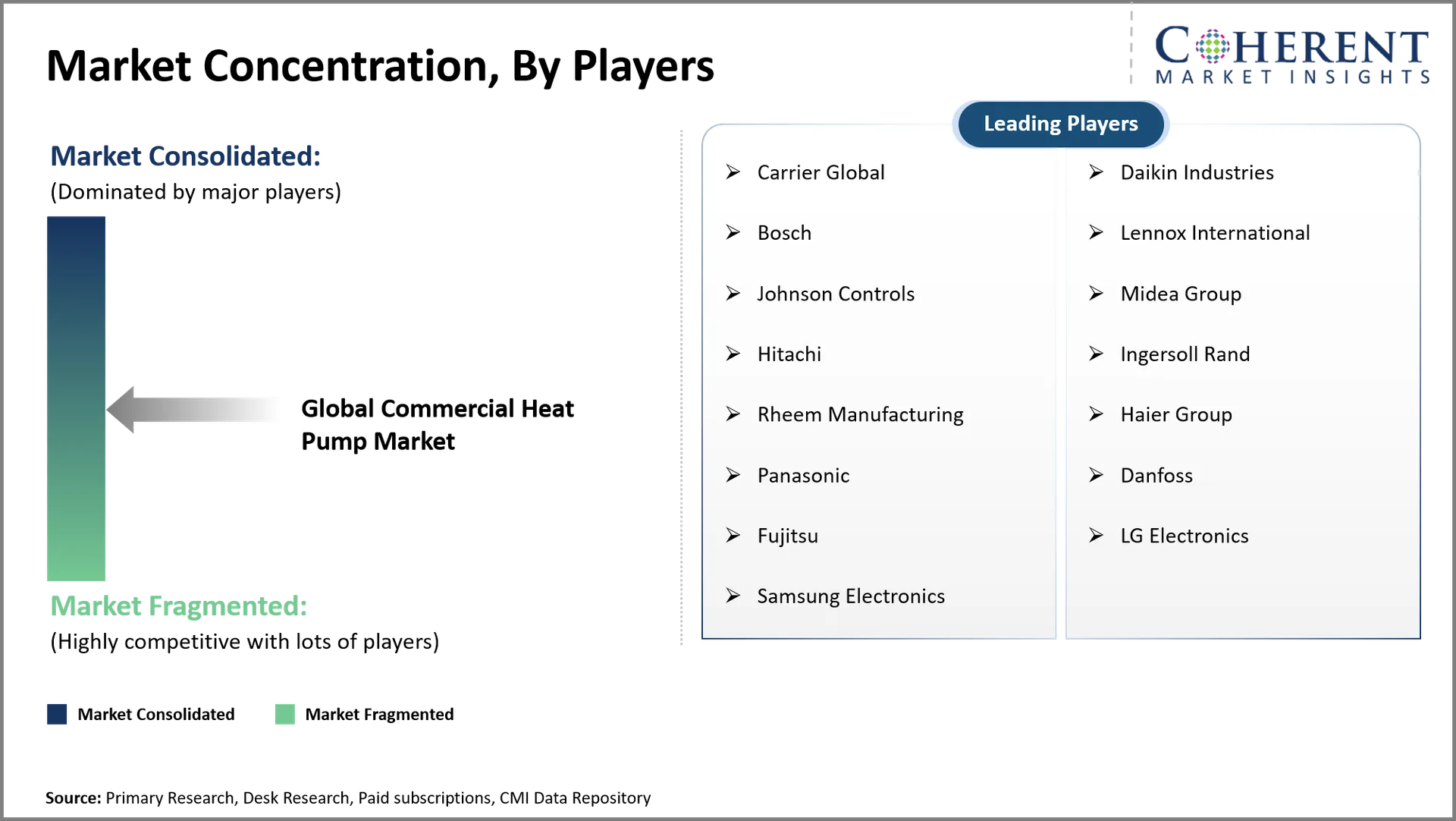
Key Developments
- On July 2, 2026, Daikin Comfort Technologies North America, Inc. announced the launch of Daikin NEXIO Max package heat pump, an inverter-driven rooftop solution engineered to support building electrification, deliver energy efficiency performance and provide comfort in light commercial applications. Utilizing low‑GWP R‑32 refrigerant and Daikin variable-speed technology, NEXIO Max delivers high-performance heating and cooling across a broad range of operating conditions.
- On May 10, 2026, Haier announced it is expanding its portfolio of professional climate solutions with the launch of its new R290 commercial air-to-water (ATW) monobloc heat pump. Designed to deliver reliable, high-performance heating while supporting the transition towards lower-carbon building services, the new solution combines efficiency, flexibility and intelligent energy management in a single system.
- On February 2, 2026, Carrier expanded its WeatherMaster line of light commercial packaged rooftop units with a new hybrid heat option for improved performance in colder climates. The 48QE dual fuel units are available from 3-25 nominal tons. The new design utilizes the electric heat pump as the primary heating source in milder conditions and switches to a natural gas furnace for auxiliary heating when temperatures drop significantly.
Competitive Landscape
The global commercial heat pump market is competitive with established heating, ventilation and air conditioning manufacturers, with efficiency, refrigerant innovation and application-specific engineering being competitive factors. Daikin Industries offers commercial air-to-water, water-to-water and variable refrigerant volume systems for offices, hotels and warehouses. Carrier enhances its position with cold-climate rooftop heat pumps that reach maximum heating capability at 5°F during laboratory validation in 2025. Mitsubishi Electric is all about inverter-driven systems and comfort in commercial buildings. Trane Technologies targets large commercial buildings through electrification, heat recovery, and thermal energy storage. Johnson Controls combines commercial heating equipment with digital building management solutions. Competitive advantage increasingly depends on reliable cold-weather performance, lower-emission refrigerants, integrated controls, and dependable installation support.
Top Manufacturers and Notable Products in the Commercial Heat Pump Market
Manufacturer | Notable Product | Key features |
Daikin Industries | EWYT-CZ | Inverter scroll compressors, heating operation down to −25°C, domestic hot water control, cascade capability |
Carrier Global Corporation | AquaSnap 30RQM | Variable-speed compressors and fans, modular expansion, remote monitoring, low-temperature operation |
Trane Technologies | XStream RTWF HT | High-temperature hot water, screw compressor, Symbio 800 controller, shell-and-tube heat exchangers |
Mitsubishi Electric Corporation | Ecodan QAHV CO2 Commercial Heat Pump | Natural refrigerant, high-temperature hot water production, modular hot-water supply |
Johnson Controls International | YORK CYK-400 | Hot water up to 82°C, chilled-water production, variable-speed drive option, low-global-warming-potential refrigerants |
Market Report Scope
Global Commercial Heat Pump Market Report Coverage | |||
Report Coverage | Details | ||
Base Year | 2025 | Market Size in 2026: | USD 103.00 Bn |
Historical Data For: | 2020 To 2024 | Forecast Period: | 2026 To 2033 |
Forecast Period 2026 To 2033 CAGR: | 14.00% | 2033 Value Projection: | USD 201.00 Bn |
Geographies covered: |
| ||
Segments covered: |
| ||
Companies covered: | Carrier Global, Daikin Industries, Bosch, Lennox International, Johnson Controls, Midea Group, Hitachi, Ingersoll Rand, Rheem Manufacturing, Haier Group, Panasonic, Danfoss, Fujitsu, LG Electronics, Samsung Electronics | ||
Growth Drivers: |
| ||
Restraints & Challenges: |
| ||
Analyst Opinion (Expert Opinion)
- The future of the commercial heat pump industry will increasingly depend on electrification, building renovation, and industrial heat recovery. Air-source systems should retain strong demand because they accommodate varied commercial buildings without extensive ground infrastructure. High-temperature heat pumps will expand opportunities in food processing, commercial laundries, hospitals, and industrial facilities requiring substantial hot water. Manufacturers should prioritize systems delivering stable output during extreme weather and variable operating loads. Refrigerant selection, maintenance accessibility, and integration with existing boilers will influence purchasing decisions.
- The best prospects are present in Germany, France, Japan and the U.S. where the upgrading of commercial buildings represents unique replacement potential. Further potential is available in China through indigenous production and electrification of industrial processes. Air-to-water heat pumps are ideal for hotels, hospitals and business buildings where centralized heating and hot water is required. Reversible air-source systems continue to be desirable for retail establishments and smaller commercial facilities. High-temperature models pose varied opportunities for laundries and food makers and facilities recovering waste heat. The suppliers must adapt the capacity, the choice of refrigerant and the operating temperatures to each application.
- Market participants should develop competitive advantages using application engineering, reliable service networks and quantifiable lifecycle savings. Manufacturers should be developing compatible refrigerant platforms, without sacrificing safety, efficiency and installation ease. Getting into the commercial renovation business can be done by working with mechanical contractors and energy service businesses. Digital monitoring should allow operators to detect performance deficits and to plan preventative maintenance. And suppliers should offer retrofit studies, heat recovery integration and finance solutions for consumers with large upfront expenditures. Demonstrable cost savings in operations and reliable technical assistance will enhance long-term customer relationships.
Speak to the analyst
Want personalized insights?
Take the findings above to one of our principal consultants, or have the report rebuilt around the segments, geographies and competitors you actually track.
Market Segmentation
- Technology Type Insights (Revenue, USD Billion, 2021 - 2033)
- Air Source Heat Pumps
- Water Source Heat Pumps
- Ground Source Heat Pumps
- Heat Recovery Heat Pumps
- Refrigerant Type Insights (Revenue, USD Billion, 2021 - 2033)
- R-32
- R-290
- R-410A
- Others
- Capacity Insights (Revenue, USD Billion, 2021 - 2033)
- Below 20 kW
- 20-50 kW
- 50-100 kW
- Above 100 kW
- Application Insights (Revenue, USD Billion, 2021 - 2033)
- Space Heating
- Space Cooling
- Water Heating
- Combined Heating and Cooling
- End User Insights (Revenue, USD Billion, 2021 - 2033)
- Office Buildings
- Hotels and Hospitality
- Hospitals and Healthcare Facilities
- Educational Institutions
- Retail and Shopping Centers
- Industrial and Commercial Facilities
- Regional Insights (Revenue, USD Billion, 2021 - 2033)
- North America
- U.S.
- Canada
- Latin America
- Brazil
- Argentina
- Mexico
- Rest of Latin America
- Europe
- Germany
- U.K.
- Spain
- France
- Italy
- Russia
- Rest of Europe
- Asia Pacific
- China
- India
- Japan
- Australia
- South Korea
- ASEAN
- Rest of Asia Pacific
- Middle East
- GCC Countries
- Israel
- Rest of Middle East
- Africa
- South Africa
- North Africa
- Central Africa
- North America
Sources
Primary Research Interviews
- Commercial Heat Pump Manufacturers & OEMs
- HVAC System Distributors & Suppliers
- Energy Efficiency Consultants & Contractors
- Commercial Building Developers & Facility Managers
Magazines
- ASHRAE Journal (American Society of Heating, Refrigerating and Air-Conditioning Engineers)
- HVAC&R Research Magazine
- Heating, Plumbing & Air Conditioning (HPAC) Magazine
- Renewable Energy World Magazine
Journals
- Applied Thermal Engineering Journal
- Energy and Buildings Journal
- International Journal of Refrigeration
Associations
- European Heat Pump Association (EHPA)
- Air-Conditioning, Heating, and Refrigeration Institute (AHRI)
- American Society of Heating, Refrigerating and Air-Conditioning Engineers (ASHRAE)
- Heat Pump Association (HPA) - UK
Public Domain Sources
- International Energy Agency (IEA) - Heat Pump Reports & Publications
- U.S. Department of Energy (DOE) - Office of Energy Efficiency & Renewable Energy
- European Commission - Energy & Climate Policy Documents
- United Nations Environment Program (UNEP) - Energy Efficiency Reports
Proprietary Elements
- CMI Data Analytics Tool
- Proprietary CMI Existing Repository of Information for Last 10 Years
Get access to 250+ pages report
Every segment, forecast, competitor profile and data table behind the analysis above — available for instant download.
- ESOMAR Member
- ISO 9001:2015 Certified
- D-U-N-S Registered
- GDPR & CCPA Compliant
Frequently Asked Questions
The global commercial heat pump market is expected to stand at USD 103.00 Bn in 2026 and is expected to reach USD 201.00 Bn by 2033.
The CAGR of the global commercial heat pump market is projected to be 14.0% from 2026 to 2033.
Increasing demand for energy-efficient commercial heating and cooling systems and Growing adoption of low-carbon heating technologies in commercial buildings are the major factors driving the growth of the global commercial heat pump market.
High initial installation costs for commercial heat pump systems and Limited retrofit compatibility with existing commercial heating infrastructure are the major factors hampering the growth of the global commercial heat pump market.
In terms of technology type, air source heat pumps segment is estimated to dominate the market revenue share in 2026.
A commercial heat pump transfers thermal energy to provide heating, cooling, and hot water in commercial buildings.
Water-source heat pumps use thermal energy from suitable water bodies, groundwater systems, or building water loops.