

Global Companion Animal Healthcare Market Size and Forecast – 2026 To 2033
The global companion animal healthcare market is expected to grow from USD 28.35 Bn in 2026 to USD 55.92 Bn by 2033, registering a compound annual growth rate (CAGR) of 10.2% from 2026 to 2033. The market for global companion animal healthcare is poised for significant expansion, fueled by the rising companion animal ownership and increasing demand for veterinary healthcare and preventive care.
According to the Global Animal Health Association’s 2022 report, cited by Earthday.org, there were more than 1 billion pets worldwide, with the U.S., Brazil, the European Union, and China alone account for half a billion pets globally, creating a substantial base for veterinary pharmaceuticals, vaccines, diagnostics, and other companion animal healthcare products.
Key Takeaways of the Global Companion Animal Healthcare Market
- Pharmaceuticals are projected to hold 44.6% of the global companion animal healthcare market share in 2026, making it dominant product segment across North America due to its established veterinary pharmaceutical regulatory infrastructure and continued focus on addressing unmet animal-health needs. For instance, in June 2026, the U.S. FDA’s Center for Veterinary Medicine released its MUMS Blueprint for Success 2026–2028, outlining measures to reduce regulatory and financial barriers to the development of medicines for uncommon diseases affecting major species, including dogs and cats.
- Dogs are projected to hold 44.8% of the global companion animal healthcare market share in 2026, making it dominant animal type segment across Europe supported by established veterinary-medicine oversight and structured pharmacovigilance for canine healthcare. For instance, in March 2026, the UK's Veterinary Medicines Directorate (VMD) updated its veterinary pharmacovigilance framework through safety-related regulatory monitoring, reflecting continued regulatory oversight of medicines used in dogs and other companion animals.
- Infectious diseases are projected to hold 18.4% of the global companion animal healthcare market share in 2026, making it dominant indication segment across Europe supported by coordinated disease-prevention and veterinary-medicine regulations. In June 2026, the UK Government published an explanatory memorandum concerning amendments to EU rules governing the use of veterinary medicinal products for the prevention and control of listed animal diseases, reinforcing regulatory emphasis on disease prevention and control.
- North America market maintains dominance with an expected share of 39.2% in 2026, bolstered by a large companion-animal population and established veterinary care infrastructure. For instance, according to the Canadian Animal Health Institute’s 2024 Pet Population Survey, Canada had approximately 7.2 million dogs and 8.2 million cats, with dogs visiting veterinarians an average of twice annually and cats once annually; routine check-ups and vaccinations were the primary reasons for visits.
- Asia Pacific is expected to exhibit the fastest growth in the global companion animal healthcare market, registering an estimated CAGR of 11.9% during 2026–2033, driven by expanding veterinary services, disease surveillance, and strengthening animal healthcare infrastructure. For instance, in July 2026, India’s Ministry of Fisheries, Animal Husbandry and Dairying outlined measures to strengthen veterinary and animal healthcare services and improve the management of stray dogs, including expansion of veterinary infrastructure and services across the country.
Segmental Insights
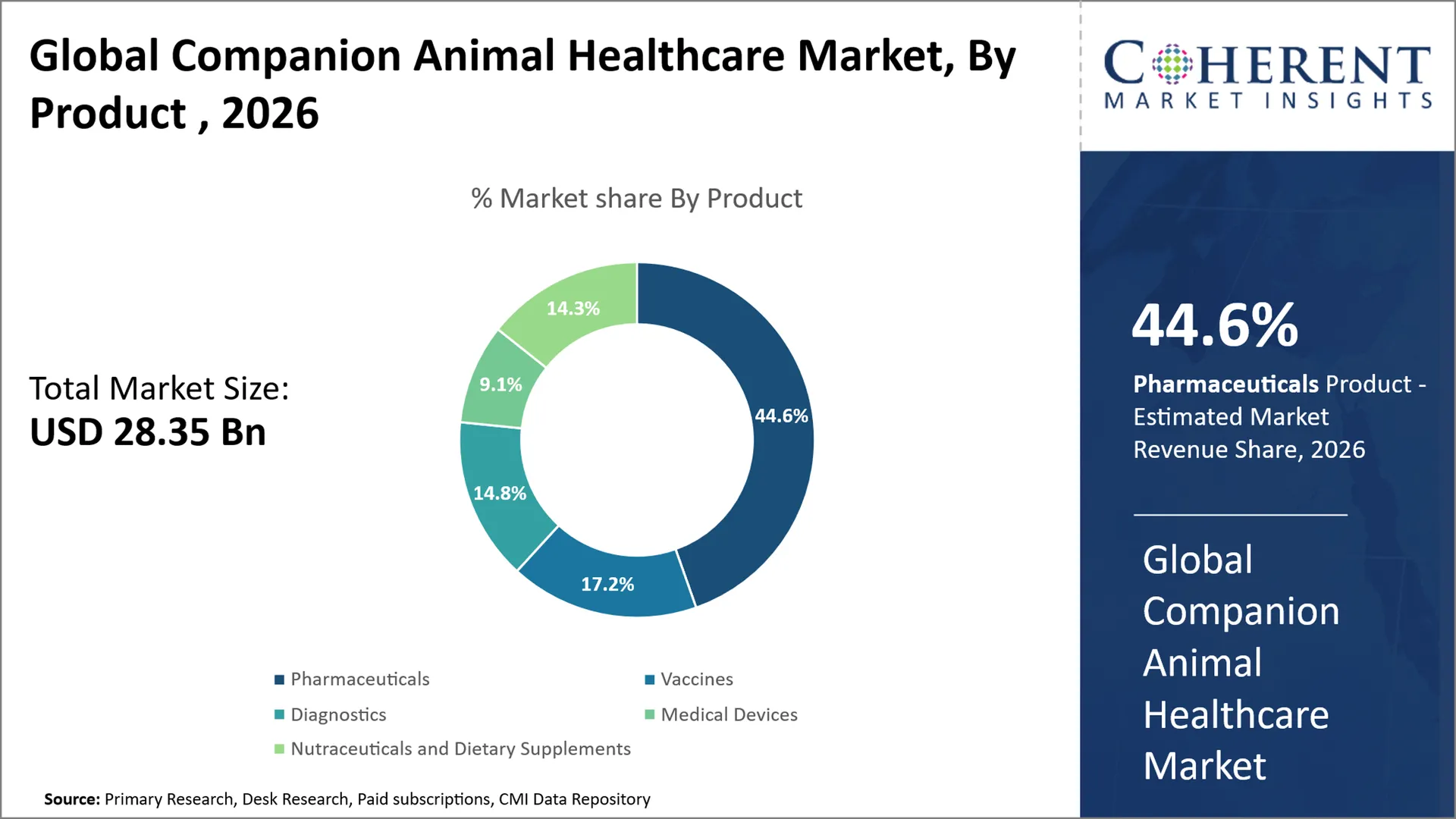
Why Do Pharmaceuticals Dominate the Global Companion Animal Healthcare Market?
Pharmaceuticals are projected to hold the market share of 44.6% in 2026, driven by the demand to treat acute and chronic, infectious and parasitic diseases in dogs and cats. Rising focus on treatment safety, safety and efficacy and prudent use of medicines has further bolstered the importance of veterinary pharmaceutical products in canine and feline companion-animal care. For instance, in 2025, European Medicines Agency (EMA) recommended 30 veterinary medicines for marketing authorization - the highest number of recommendations ever in a year for a second consecutive year, highlighting continued regulatory activity and development across the veterinary medicines sector.
- Current Industry Events of 2026
- Market Size Estimation
- Regional Breakdown
- Competitive Landscape
- Customer Intelligence
- Segmental Analysis
- Pricing Analysis
- Key Market Drivers, Challenges & Future Trends
- Customized Insights Section
Why Does Dogs Represent the Largest Animal Type Segment in the Companion Animal Healthcare Market?
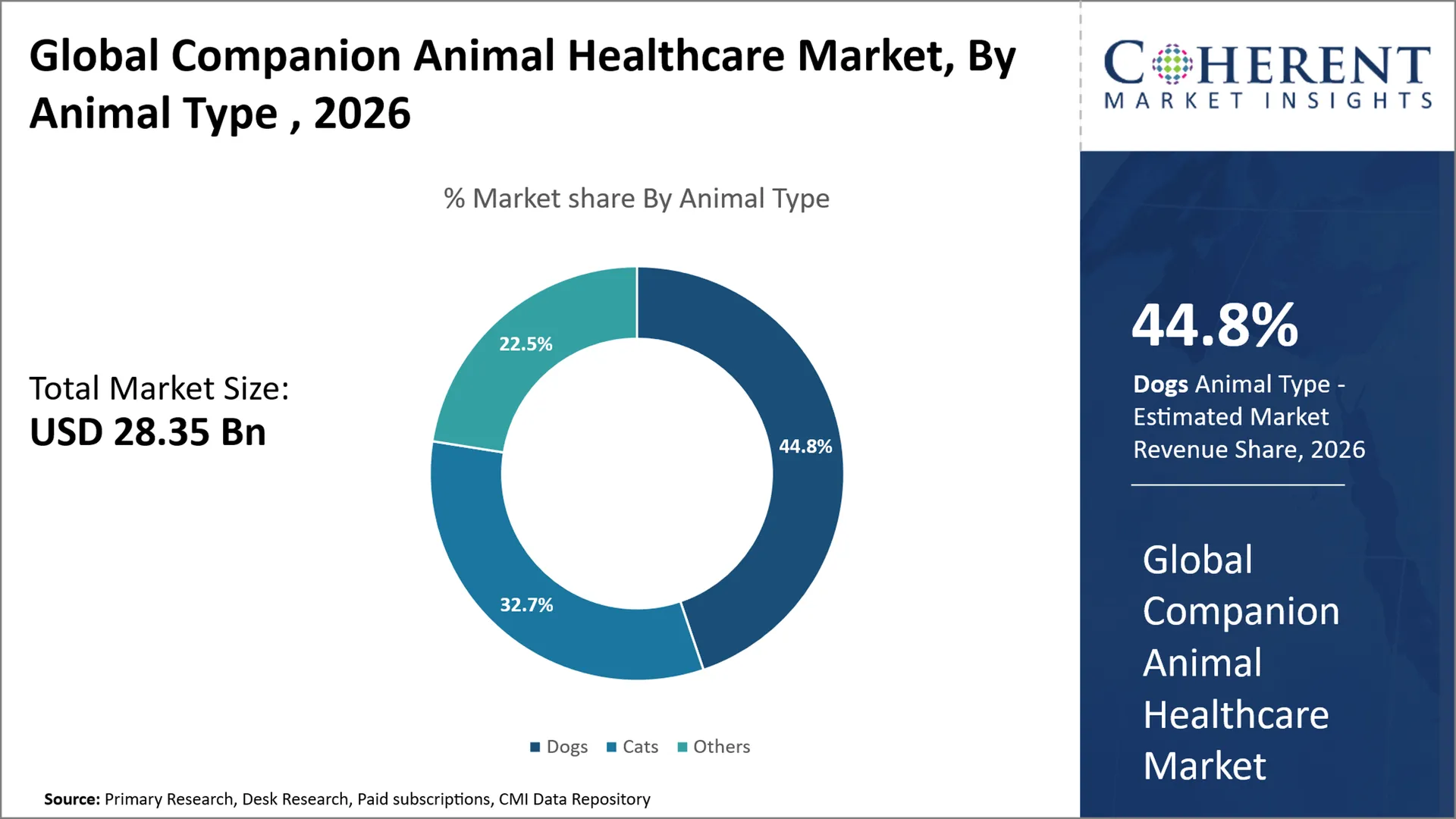
Dogs are projected to hold a market share of 44.8% in 2026, based on their widespread ownership and comprehensive healthcare requirements. Canine patients are prone to infectious, parasitic, orthopedic and chronic illnesses, and clients are spending more on specialist and preventative care, providing the canine healthcare market with a steady demand. This segment is also reinforced by the rising number of breed-specific diagnostics and veterinary treatments. For instance, in 2024, the UK Government reported that there were around 10.6 million pet dogs in the UK, with 51% of the adult population owning a pet.
Infectious Diseases Segment Dominates the Global Companion Animal Healthcare Market
The infectious diseases segment is projected to hold a market share of 18.4% in 2026, due to adoption of vaccination, disease monitoring, early diagnosis, and management. The incidence of various zoonotic infections owing to canine-mediated rabies in particular has motivated several national governments to ramp up efforts in coordinated animal-health and public-health. For instance, in July 2026, the Government of India strengthened the implementation of the national action plan for dog-mediated rabies elimination, to achieve zero dog-mediated rabies deaths by 2030 through integrated mass dog vaccination, animal birth control, disease surveillance and a One Health approach involving coordinated veterinary and public health measures. (Source: Press Information Bureau)
Current Events and their Impact
Current Events | Description and its Impact |
U.S. Food and Drug Administration (FDA) Authorizes Drugs to Prevent and Treat New World Screwworm in Dogs and Cats (September 2026) |
|
European Medicines Agency (EMA) Recommends First Self-Amplifying RNA Veterinary Vaccine for Cats (April 2026) |
|
European Medicines Agency (EMA) Revises Guidance for Veterinary Ectoparasiticides (January 2026) |
|
Companion Animal Healthcare Market Dynamics
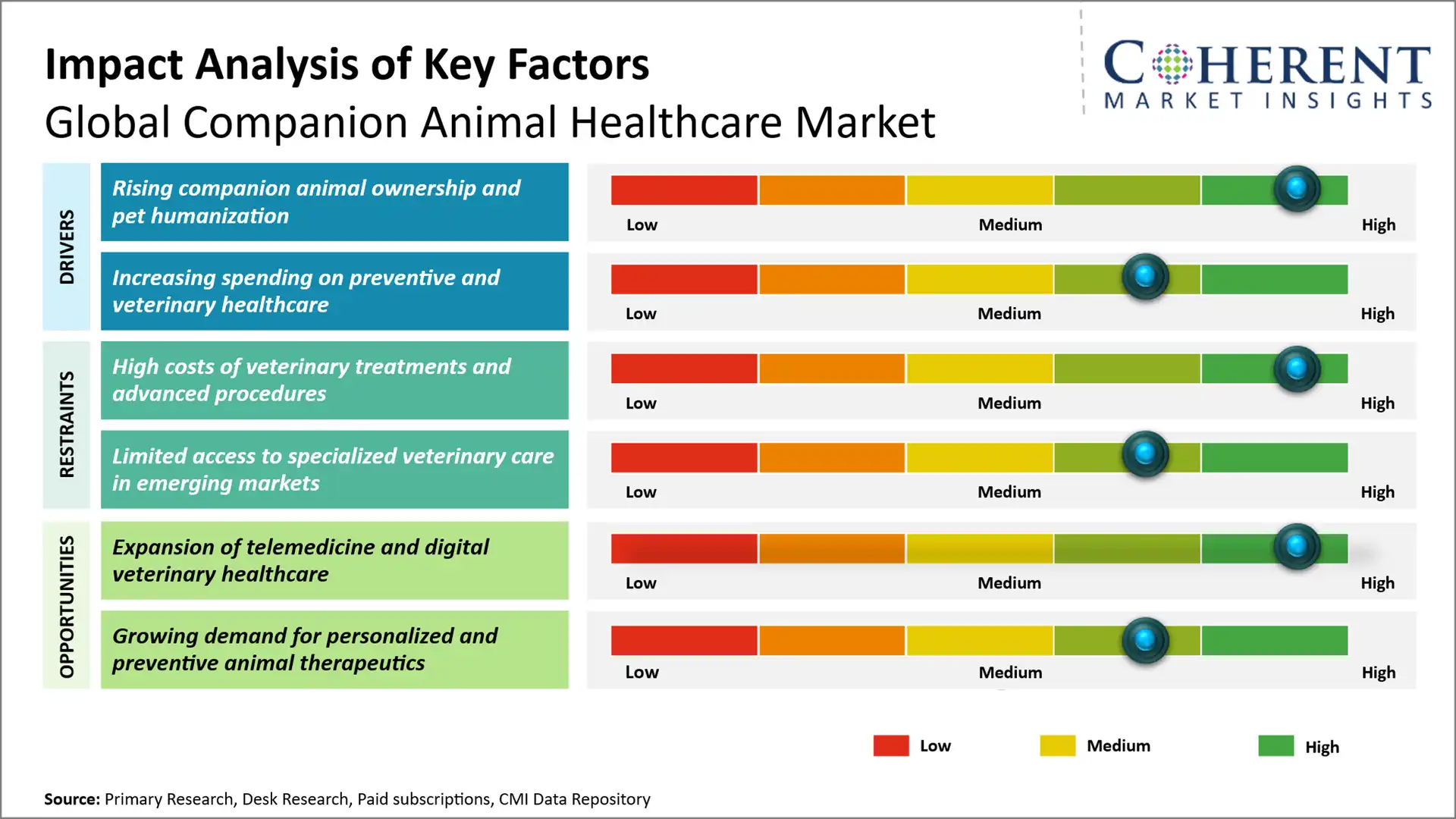
Market Drivers
- Rising companion animal ownership and pet humanization: Rising pet ownership and stronger human–animal bonds are encouraging owners to spend more on preventive healthcare, veterinary services, and animal wellness products. The growing perception of pets as important members of the household is also supporting demand for higher-quality and specialized healthcare solutions. For instance, in September 2025, Animal Medicines Australia reported that 73% of Australian households owned a pet, representing 31.6 million pets, while 86% of pet owners said their pets positively impacted their lives.
- Increasing spending on preventive and veterinary healthcare: Growing awareness of pet wellness is encouraging owners to allocate more spending toward routine veterinary care, preventive treatments, diagnostics, and overall pet well-being. This shift is supporting continued demand for companion animal healthcare products and services. For instance, according to the American Pet Products Association (APPA), U.S. spending on veterinary care and product sales reached USD 41.0 billion in 2025, with spending projected to increase to USD 42.4 billion in 2026.
- Advancements in veterinary diagnostics and early disease detection: Advances in veterinary diagnostics are enabling faster, more accurate detection of diseases and supporting earlier treatment decisions for companion animals. The adoption of AI-powered, point-of-care, and digital diagnostic technologies is strengthening the shift toward proactive and preventive veterinary care. For instance, in January 2026, IDEXX Laboratories launched the ImageVue DR50 Plus Digital Imaging System, which combines high-definition, AI-powered imaging with reduced radiation exposure to help veterinary teams make faster diagnostic decisions.
Emerging Trends
- Growth of digital and connected veterinary care: Telehealth, connected pet-monitoring devices, and digital health platforms are increasingly being integrated into veterinary care. These technologies enable remote monitoring, faster communication, and improved continuity of care.
- Shift toward preventive and personalized healthcare: Pet owners are increasingly prioritizing routine screening, vaccination, parasite control, and wellness programs alongside treatment. Personalized therapeutics and data-driven care are also gaining importance for managing chronic conditions.
- Adoption of advanced veterinary diagnostics and therapeutics: AI-assisted diagnostics, point-of-care testing, advanced imaging, and targeted therapies are expanding the capabilities of companion animal healthcare. Growing demand for earlier and more precise disease detection is supporting adoption of these technologies.
Regional Insights
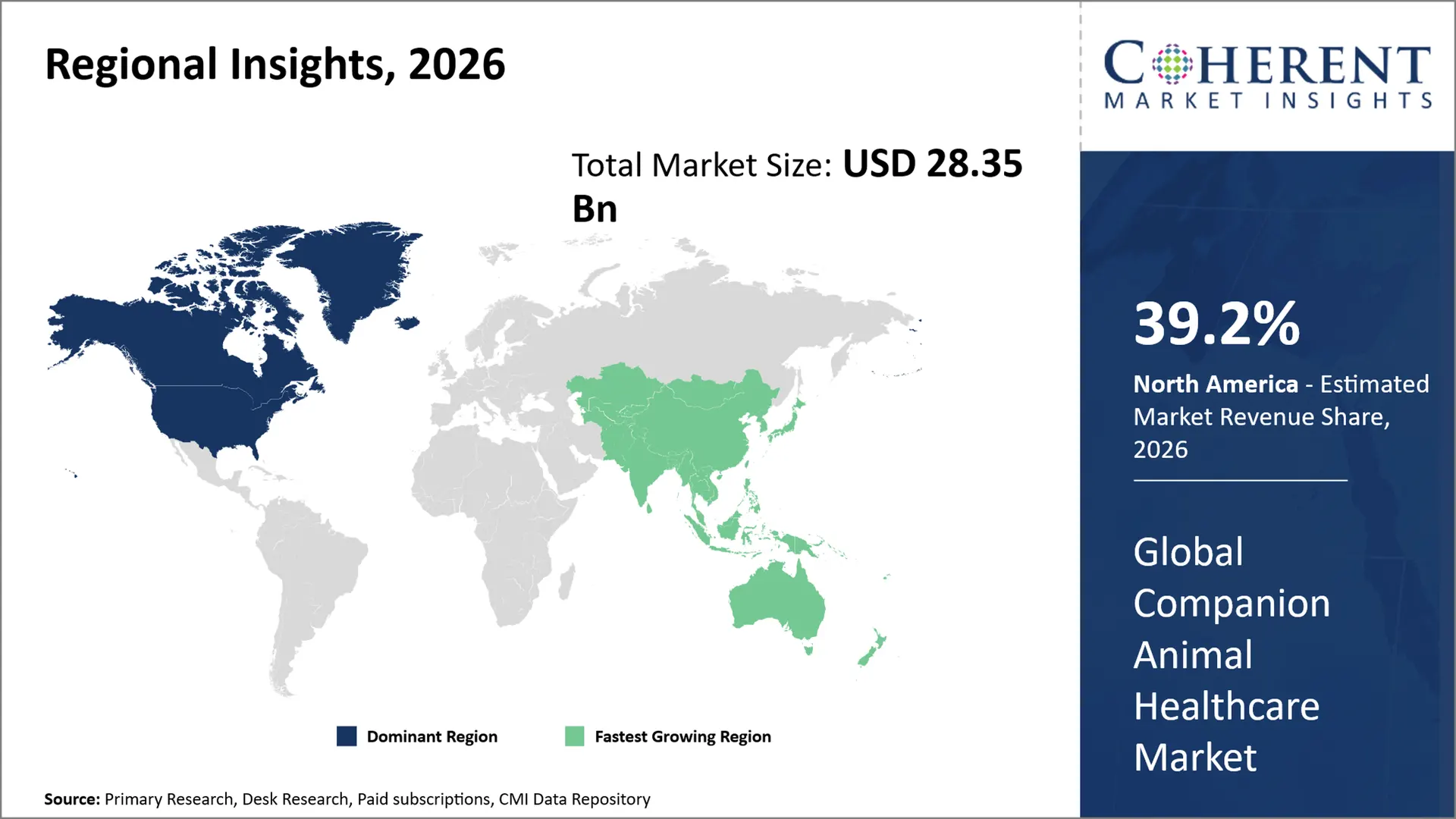
Why is North America a Strong Market for Companion Animal Healthcare?
North America leads the global companion animal healthcare market, accounting for an estimated 39.2% share in 2026, owing to high pet adoption, well established veterinary care infrastructure and exposure to modern diagnostic and therapeutic services. In addition, strict government regulations related to the animal welfare, veterinary medicine safety and disease prevention.
For instance, Health Canada's Veterinary Drugs Directorate reviews the safety, effectiveness and quality of veterinary drugs used in companion animals and issues a license before they can be marketed in Canada, while also monitoring their safety after approval. Furthermore, rising awareness on pet healthcare and well-established distribution channels facilitate the regular demand for companion animal drugs, vaccines, diagnostics, and devices.
Why Does Asia Pacific Companion Animal Healthcare Market Exhibit High Growth?
Asia Pacific is expected to exhibit the fastest growth in the global companion animal healthcare market, registering an estimated CAGR of 11.9% during 2026–2033. The region is projected to account for approximately 20.5% of the global market in 2026, due to the increase in pet ownership, rapid urbanization, rising disposable income, and awareness about pet health & welfare. Government initiatives to develop better animal health facilities as well as an increasing number of pet owners are anticipated to fuel the market development.
For instance, in March 2025, the Government of India sanctioned, the Livestock Health and Disease Control Programme (LHDCP) with an outlay of USD 405 million (INR 3,880 crore) for 2024-25 and 2025-26. It included strengthening of veterinary hospitals and dispensaries, establishing of mobile veterinary units, disease surveillance and veterinary medicines. (Source: Press Information Bureau) Furthermore, advancing veterinary infrastructure such as hospitals, clinics and diagnostic labs enhances access to companion animal healthcare throughout the region.
Global Companion Animal Healthcare Market Outlook for Key Countries
Why is the U.S. Leading Innovation and Adoption in the Companion Animal Healthcare Market?
The U.S. is at the forefront of innovation and adoption of new companion animal therapies, using FDA-supported regulatory pathways that promote the development of new therapies for companion animals and enable the pursuit of the next generation of veterinary health innovations. Additionally, U.S. FDA’s Center for Veterinary Medicine is advancing development of the next generation of veterinary therapies through regulatory science.
Is China a Favorable Market for Companion Animal Healthcare Market?
China is the most attractive market for companion animal healthcare, especially for dogs and cats, as urban pet ownership is thriving and veterinary services are maturing. In addition, there is closer regulation of veterinary diagnostic and treatment centers, prescriptive medicines and professional veterinary practice creating a more structured environment for companion-animal healthcare delivery.
Is the U.K. Emerging as a Key Growth Hub for the Companion Animal Healthcare Market?
The U.K. is rapidly becoming a potential growth hub for the companion animal healthcare market owing to its robust veterinary care infrastructure and high focus on animal well-being. Growing popularity of advanced diagnostics and preventive care along with availability of specialized veterinary services is further boosting the market. Moreover, the presence of a mature regulatory framework for animal welfare and veterinary medicines further augments the market growth.
Why Does Germany Top the European Companion Animal Healthcare Market?
Germany holds the largest European market for companion animal healthcare supported by a well-developed veterinary healthcare infrastructure and high availability of veterinary care. Rising pet care awareness and focus on preventive care increase demand for products such as diagnostics, medicines and vaccines, animal nutrition and specialist care, and the adoption of advanced veterinary solutions.
Is Companion Animal Healthcare Market Developing in Brazil?
Brazil is emerging as a significant market for companion animal healthcare, with growing provision of veterinary care and an increased understanding of companion animal welfare and health. Formalization of veterinary care and standards is supporting the available healthcare services. Moreover, developments in regulation and in the veterinary infrastructure are supporting the market.
Pet Ownership and Veterinary Healthcare Expenditure By Major Region, 2026
Region | Pet Ownership Trend | Veterinary Healthcare Spending Trend | Key Market Implication |
North America | High | High | Mature market with strong preventive and specialized care adoption |
Europe | High | High | Increasing focus on preventive healthcare and advanced veterinary treatments |
Asia Pacific | Rapidly increasing | Increasing | Expanding veterinary infrastructure and rising pet healthcare awareness |
Latin America | Increasing | Moderate | Growing demand for accessible veterinary medicines and preventive products |
Middle East & Africa | Emerging | Emerging | Increasing urban pet ownership and development of organized veterinary services |
How is the expansion of telemedicine and digital veterinary healthcare creating new growth opportunities in the companion animal healthcare market?
The growth of telemedicine and digital veterinary care is increasing access to veterinary specialists as well as allow remote treatments, on-going monitoring, and access to follow-up care more easily. Connected devices, apps and veterinary data platforms are providing more access to real-time health monitoring and personalized treatments for dogs and cats. For instance, in May 2026, ALR Technologies SG Ltd. launched Glu Curve Pet CGM in Canada that offers continuous glucose monitoring solution for pet cats and dogs. It transmits glucose information wirelessly to a mobile app and a web-based portal that the veterinarian can use to monitor their patient and change treatment plans from afar or while in the clinic.
Market Players, Key Development, and Competitive Landscape
Key Developments
- In July 2026, Enovis Corporation launched CT-RevitL, a next-generation photobiomodulation (PBM) laser therapy system for veterinary care in the U.S. The system is designed to support pain management, tissue healing, inflammation reduction, and post-operative recovery in animals. CT-RevitL incorporates COMPASS technology for calibrated treatment dosing and is initially available to U.S. veterinary practices, with international availability planned in subsequent phases.
- In June 2026, Alivira Animal Health Limited signed an agreement to acquire 100% of Italy-based BioForLife Italia S.r.l., strengthening its presence in the European companion animal healthcare sector. BioForLife has a portfolio spanning nutritional supplements, veterinary medicines, and rapid diagnostic tests, with access to more than 80% of veterinary clinics in Italy.
- In June 2026, CompanAIn launched its Veterinary Portal, a web-based platform that provides veterinarians with a consolidated view of companion-animal health information, including medical records, diagnostics, medications, behavioral changes, and wellness trends. The portal is designed to connect pet owners and veterinary teams through a shared longitudinal health view and support continuity of care.
- In January 2026, Boehringer Ingelheim India entered into a partnership with Alivira Animal Health Limited to distribute and promote its companion animal products across India. The partnership is intended to expand sales capabilities across urban and rural markets amid rising pet ownership and growing awareness of preventive animal healthcare.
Competitive Landscape
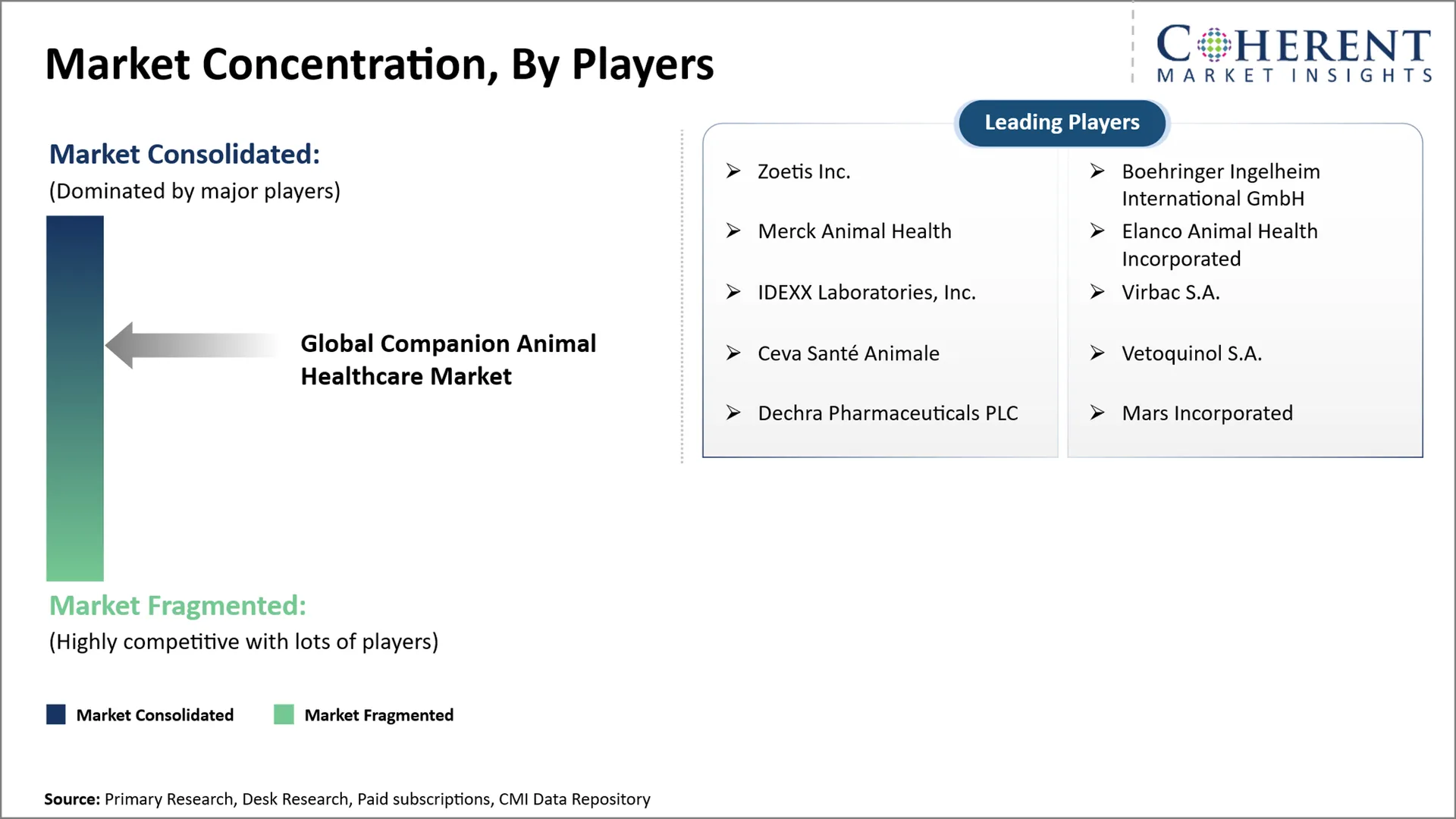
The global companion animal healthcare market is moderately competitive, with market dynamics shaped by advancements in veterinary pharmaceuticals, vaccines, diagnostics, medical devices, and preventive healthcare solutions. Market participants are increasingly focusing on expanding product portfolios, improving diagnostic accuracy, developing targeted therapies, strengthening preventive care, and integrating digital technologies to address growing demand for companion animal healthcare. Key focus areas include:
- Development of novel pharmaceuticals, vaccines, and targeted veterinary therapies
- Advancement of rapid diagnostics, digital imaging, and point-of-care testing
- Expansion of preventive healthcare solutions, including parasite control and wellness products
- Integration of digital technologies, telehealth, and connected pet health platforms
- Development of advanced medical devices for surgical, rehabilitation, and chronic disease management
- Expansion of companion animal healthcare portfolios through strategic partnerships and acquisitions
Market Report Scope
Companion Animal Healthcare Market Report Coverage | |||
Report Coverage | Details | ||
Base Year | 2025 | Market Size in 2026: | USD 28.35 Bn |
Historical Data For: | 2020 To 2024 | Forecast Period: | 2026 To 2033 |
Forecast Period 2026 To 2033 CAGR: | 10.2% | 2033 Value Projection: | USD 55.92 Bn |
Geographies covered: |
| ||
Segments covered: |
| ||
Companies covered: | Zoetis Inc., Boehringer Ingelheim International GmbH, Merck Animal Health, Elanco Animal Health Incorporated, IDEXX Laboratories, Inc., Virbac S.A., Ceva Santé Animale, Vetoquinol S.A., Dechra Pharmaceuticals PLC, Mars Incorporated | ||
Growth Drivers: |
| ||
Restraints & Challenges: |
| ||
Analyst Opinion (Expert Opinion)
- In the coming years, global companion animal healthcare market will be increasingly shaped by preventive, personalized, and technology-enabled care. Healthcare spending is expected to shift beyond basic treatment toward early diagnosis, chronic disease management, targeted therapeutics, connected monitoring, and premium wellness solutions as pet owners increasingly seek comprehensive, lifelong care for companion animals.
- The maximum opportunities are foreseen within pharmaceuticals for chronic disease management in India. Rising companion-animal ownership, increasing awareness of veterinary care, and improving access to organized veterinary services create room for therapies addressing long-term conditions such as arthritis, diabetes, cardiovascular disorders, and cancer. India also provides an attractive expansion opportunity for players that can combine localized pricing with broader veterinary distribution.
- In order to gain a competitive advantage, market players should prioritize integrated companion-animal healthcare portfolios rather than relying on individual products. Combining therapeutics with diagnostics, preventive solutions, digital monitoring, and veterinary support can strengthen customer engagement and recurring demand. Companies should also expand through strategic distribution partnerships, particularly in emerging markets, while investing in products designed around the specific needs of dogs and cats.
Speak to the analyst
Want personalized insights?
Take the findings above to one of our principal consultants, or have the report rebuilt around the segments, geographies and competitors you actually track.
Market Segmentation
- Product Insights (Revenue, USD Bn, 2021 - 2033)
- Pharmaceuticals
- Vaccines
- Diagnostics
- Medical Devices
- Nutraceuticals and Dietary Supplements
- Animal Type Insights (Revenue, USD Bn, 2021 - 2033)
- Dogs
- Cats
- Others
- Indication Insights (Revenue, USD Bn, 2021 - 2033)
- Infectious Diseases
- Parasitic Diseases
- Dermatological Diseases
- Musculoskeletal Diseases
- Cardiovascular Diseases
- Gastrointestinal Diseases
- Cancer
- Others
- Distribution Channel Insights (Revenue, USD Bn, 2021 - 2033)
- Veterinary Hospitals and Clinics
- Retail Pharmacies
- Online Pharmacies
- Others
- Regional Insights (Revenue, USD Bn, 2021 - 2033)
- North America
- U.S.
- Canada
- Latin America
- Brazil
- Argentina
- Mexico
- Rest of Latin America
- Europe
- Germany
- U.K.
- Spain
- France
- Italy
- Russia
- Rest of Europe
- Asia Pacific
- China
- India
- Japan
- Australia
- South Korea
- ASEAN
- Rest of Asia Pacific
- Middle East
- GCC Countries
- Israel
- Rest of Middle East
- Africa
- South Africa
- North Africa
- Central Africa
- North America
- Key Players Insights
- Zoetis Inc.
- Boehringer Ingelheim International GmbH
- Merck Animal Health
- Elanco Animal Health Incorporated
- IDEXX Laboratories, Inc.
- Virbac S.A.
- Ceva Santé Animale
- Vetoquinol S.A.
- Dechra Pharmaceuticals PLC
- Mars Incorporated
Sources
Primary Research Interviews
- Companion animal veterinarians and veterinary practice owners involved in diagnosis, treatment, and preventive care
- Veterinary hospital and clinic managers responsible for companion animal healthcare services and purchasing decisions
- Veterinary pharmaceutical and animal-health professionals involved in product development, commercialization, and market access
- Veterinary diagnostic laboratory specialists involved in companion animal testing and disease diagnosis
- Animal health R&D professionals involved in pharmaceuticals, vaccines, diagnostics, and medical devices
- Veterinary procurement and distribution professionals responsible for animal healthcare product sourcing and distribution
Stakeholders
- Veterinary hospitals and clinics
- Companion animal veterinarians and veterinary professionals
- Pharmaceutical and animal health companies
- Veterinary diagnostic laboratories
- Pet pharmacies and online veterinary pharmacies
- Pet owners and animal caregivers
- Veterinary universities and research institutes
- Animal healthcare distributors and wholesalers
- End-use Sectors
- Veterinary Hospitals & Clinics
- Veterinary Diagnostic Laboratories
- Animal Shelters & Rescue Centers
- Research & Academic Institutions
- Pet Pharmacies & Retailers
- Home-based Pet Care
- Veterinary Telehealth & Digital Care Platforms
- Regulatory & Health Bodies
- U.S. Food and Drug Administration (FDA), Center for Veterinary Medicine (CVM), U.S. – animal drugs, veterinary biologics, medical devices, and regulatory approvals
- U.S. Department of Agriculture (USDA), Animal and Plant Health Inspection Service (APHIS) – veterinary biologics and animal disease programs
- European Medicines Agency (EMA) – veterinary medicines and veterinary medicinal product regulation
- World Organisation for Animal Health (WOAH) – international animal health standards, disease surveillance, veterinary products, and diagnostics
- Veterinary International Conference on Harmonization (VICH) – harmonization of technical requirements for veterinary medicinal products
Databases
- World Animal Health Information System (WAHIS) – global animal disease surveillance and country-level animal health data
- VetCompass – anonymized veterinary clinical records and companion animal disease data
- FDA Animal Drugs@FDA – approved veterinary drugs and regulatory information
- FDA Veterinary Laboratory Investigation and Response Network (Vet-LIRN) – veterinary laboratory and animal disease investigation data
- USDA APHIS animal health databases – animal disease surveillance and veterinary health data
- European Commission Animal Disease Information System (ADIS) – European animal disease surveillance data
Associations
- American Veterinary Medical Association (AVMA)
- World Small Animal Veterinary Association (WSAVA)
- World Veterinary Association (WVA)
- American Animal Hospital Association (AAHA)
- British Veterinary Association (BVA)
- Federation of Veterinarians of Europe (FVE)
- European Pet Food Industry Federation (FEDIAF)
- International Veterinary Students' Association (IVSA)
Public Domain Sources
- FDA Center for Veterinary Medicine (CVM) – veterinary drug approvals, animal medical devices, safety information, regulatory guidance, and veterinary innovation programs
- WOAH – global animal disease surveillance, veterinary product standards, diagnostic guidelines, and animal health data
- USDA APHIS – animal disease surveillance, veterinary biologics, and animal health programs
- European Medicines Agency (EMA) – veterinary medicine approvals, safety information, and regulatory resources
- European Commission – animal health legislation, disease surveillance, and veterinary medicine resources
Proprietary Elements
- CMI Data Analytics Tool, Proprietary CMI Existing Repository of information for last 10 years.
Get access to 250+ pages report
Every segment, forecast, competitor profile and data table behind the analysis above — available for instant download.
- ESOMAR Member
- ISO 9001:2015 Certified
- D-U-N-S Registered
- GDPR & CCPA Compliant
Missing comfort of reading report in your local language? Find your preferred language:
Frequently Asked Questions
The global companion animal healthcare market is estimated to be valued at USD 28.35 Bn in 2026 and is expected to reach USD 55.92 Bn by 2033.
Pharmaceuticals dominate due to their broad use in treating and managing acute, chronic, infectious, and parasitic conditions in companion animals.
Companion animal healthcare refers to the products, treatments, diagnostics, and preventive solutions used to maintain and improve the health and well-being of domesticated animals kept primarily for companionship, including dogs, cats, birds, and other pets. It encompasses pharmaceuticals, vaccines, diagnostics, medical devices, nutraceuticals, preventive care, and veterinary treatment solutions.
The CAGR of global companion animal healthcare market is projected to be 10.2% from 2026 to 2033.
Rising companion animal ownership and pet humanization, and increasing spending on preventive and veterinary healthcare are the major factors driving the growth of the global companion animal healthcare market.
High costs of veterinary treatments and advanced procedures, and limited access to specialized veterinary care in emerging markets are the major factors hampering the growth of the global companion animal healthcare market.
In terms of animal type, dogs are estimated to dominate the market revenue share in 2026.