

Global Decentralized Trial Technology Market Size and Forecast – 2026-2033
The global decentralized trial technology market is expected to grow from USD 4.85 Bn in 2026 to USD 11.90 Bn by 2033, registering a compound annual growth rate (CAGR) of 13.7% from 2026 to 2033. The global decentralized trial technology market is expected to show robust growth owing to rise in number of patient-centric clinical trial models and increased geographical reach of the trial.
In June 2026, a study published in JAMA Network involving 7,469 participants in 765 decentralized clinical trials showed an increase in the percentage of trial participants living 120+ miles from an academic medical center from 18.9% in Q1 2024 to 29.6% in Q1 2025. This highlights the potential of decentralized trial technologies to address geographical barriers, increase participant access, and expand clinical trial recruitment driving increased demand for digital trial platforms.
Key Takeaways of the Global Decentralized Trial Technology Market
- Software is projected to hold 42.8% of the global decentralized trial technology market share in 2026, making it dominant component segment, across North America owing to the well-developed clinical research infrastructure, established health information technology ecosystem, and high adoption of digital patient management solutions. For instance, the Office of the National Coordinator for Health Information Technology states that as of 2024, over 99 percent of non-federal acute-care hospitals had implemented certified electronic health record technology, highlighting the region’s strong infrastructure for software-led clinical research.
- Interventional trials are projected to hold 62.7% of the global decentralized trial technology market share in 2026, making it dominant study design segment, across Europe due to its huge network of multinational clinical research and well-developed trial infrastructure. For instance, during its transitional period of three years, the European Commission received around 10,608 applications for clinical trials through the Clinical Trials Information System (CTIS) and over 5,130 trials were actively underway under the Clinical Trials Regulation till January 2025.
- Cloud-based is projected to hold 58.3% of the global decentralized trial technology market share in 2026, making it dominant deployment mode segment, across Asia Pacific owing to rising digital health infrastructure and investments in the interoperable healthcare architecture. For instance, India’s Ministry of Health and Family Welfare reported that the Ayushman Bharat Digital Mission has linked over 1 billion (100 crore) health records with the Ayushman Bharat Health Account as of May 2026, supported by the integration of over 450 public and private health tech solutions.
- North America market maintains dominance with an expected share of 41.7% in 2026, owing to the region's large-scale clinical research infrastructure, a large number of pharmaceutical research and development activities, digital clinical research, and other clinical research-related capabilities. For instance, U.S. National Institutes of Health announced that 8.2 million participants were enrolled at U.S. sites through NIH-supported clinical research in the federal fiscal year 2025.
- Asia Pacific is projected to register the fastest growth in the global decentralized trial technology market with an estimated CAGR of 16.8% during 2026-2033, owing to the growing clinical research and participation in multinational trial registries. For instance, in June 2026, the World Health Organization reported that the Western Pacific region’s entries increased to 32,498 in 2024 from 27,172 registrations in the previous year. Furthermore, registrations across Southeast Asia have consistently climbed, primarily driven by significant progressions in India.
Segmental Insights
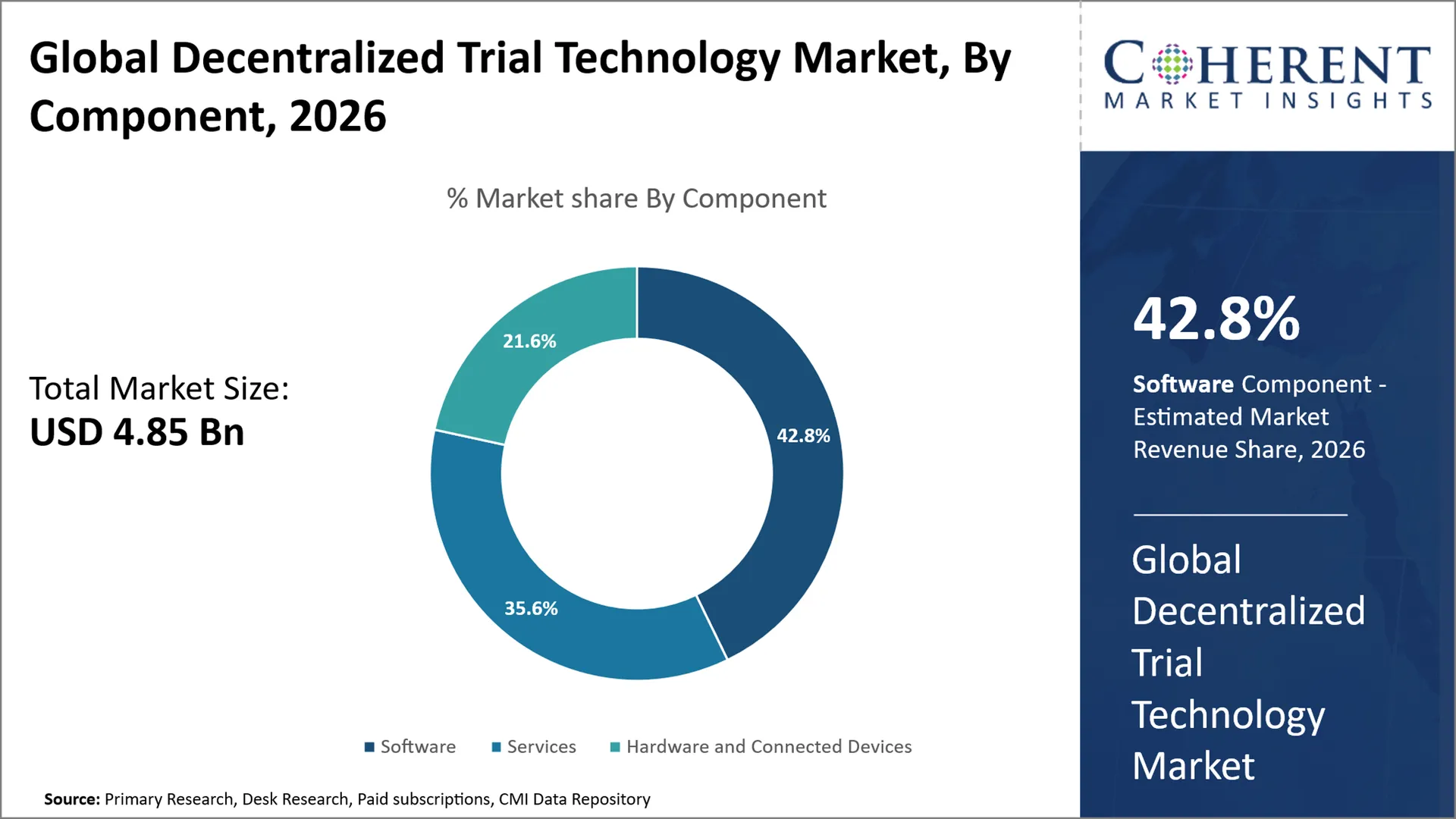
Why Do Software Dominate the Global Decentralized Trial Technology Market?
Software is projected to hold the market share of 42.8% in 2026, driven by the adoption of digital capabilities to online clinical data management, bringing trial subjects and investigators closer for more convenient central management of clinical data, remote patient engagement, and conducting a decentralized trial through the integration of all trial processes. This is further supported by cloud enabled platforms, analytics, and electronic data collection which may provide increased visibility of trial data and reporting. For instance, in October 2026, Health Canada published a guidance on decentralized clinical trials. The guidance describes the expectations around computerized systems, digital health technologies, data management and interoperability in order to enable reliable remote conduct of trials.
- Current Industry Events of 2026
- Market Size Estimation
- Regional Breakdown
- Competitive Landscape
- Customer Intelligence
- Segmental Analysis
- Pricing Analysis
- Key Market Drivers, Challenges & Future Trends
- Customized Insights Section
Why Does Interventional Trials Represent the Study Design Type Segment in the Decentralized Trial Technology Market?
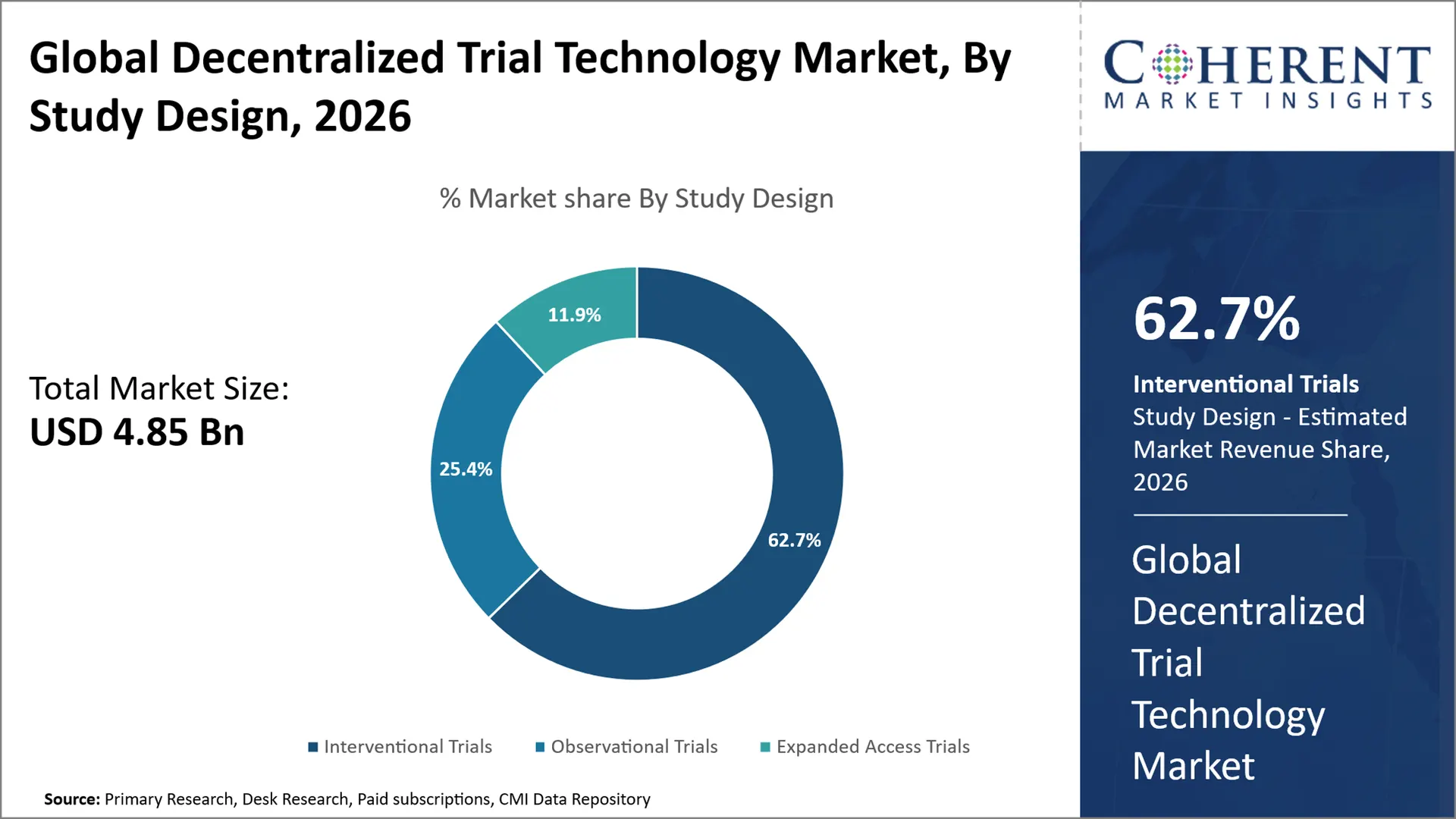
Interventional trials are projected to hold a market share of 62.7% in 2026, because of their need to monitor patients in real-time, oversee remotely administered treatment and gather comprehensive clinical data during trials. In addition, decentralized technologies will possibly allow sponsors to oversee participant follows and treatment administrations outside traditional trial sites, expanding their reach and access to trials. For instance, in January 2025, the European Medicines Agency (EMA) has released the Good Clinical Practice guideline ICH E6(R3) that explicitly includes provisions for innovative designs for interventional trials and technology-enabled approaches such as decentralized clinical trials.
Cloud-Based Segment Dominates the Global Decentralized Trial Technology Market
The cloud-based segment is projected to hold a market share of 58.3% in 2026, owing to the extensive scalability, rapid remote access and data management as well as data sharing platforms that can support dispersed groups of trial stakeholders across the globe. These may include real time data synchronization and limited IT infrastructure. For instance, in September 2025, UK Department of Health and Social Care introduced a cloud-based computer system that allow mass-testing of AI tools across National Health Service screening services. This has helped to speed up the rollout of multi-site trials and digital research activities.
Current Events and their Impact
Current Events | Description and its Impact |
Health Canada Publishes Guidance on Clinical Trials with Decentralized Elements (October 2026) |
|
UK Health Research Authority Updates Position on Decentralized Trial Methods (April 2026) |
|
Decentralized Trial Technology Market Dynamics
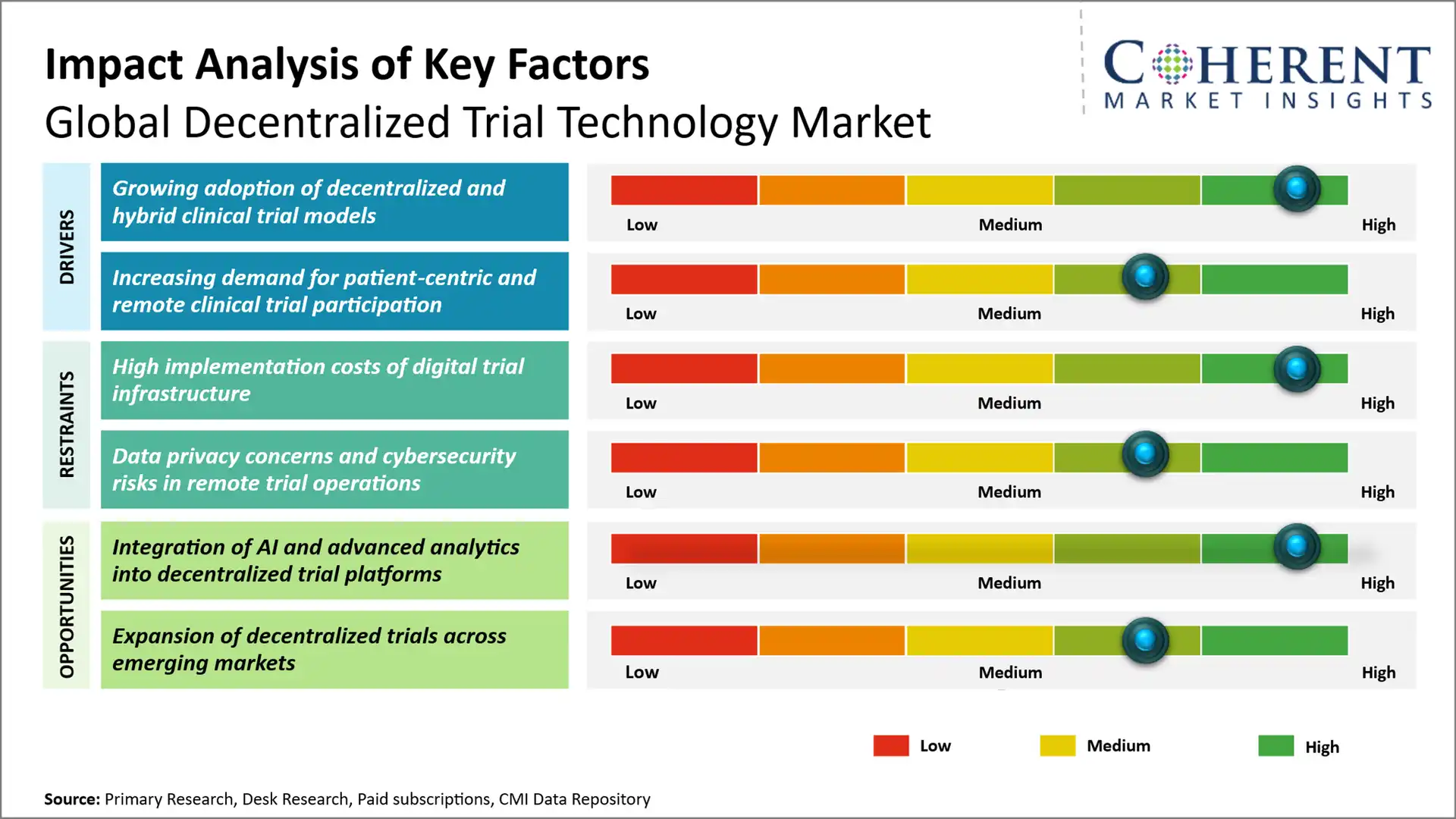
Market Drivers
- Growing adoption of decentralized and hybrid clinical trial models: Hybrid and decentralize clinical trials are gaining momentum as sponsors are trying to reach out to more patients with better access to clinical trial sites, better patient recruitment, and flexible trial design. For instance, as per the Indian Journal of Medical Research (February 2026) survey 71% of clinical research professionals surveyed stated that hybrid decentralized trials are being conducted in their phase of research. This is creating a demand for digital platforms with services like e-Recruiting, e-Consent, e-Source, Telemedicine, remote monitoring, among others.
- Increasing demand for patient-centric and remote clinical trial participation: With the growing demand for flexible trial participation, sponsors are seeking to reduce travel burden and conduct remote clinical assessments. For instance, according to July 2022 study published in JAMA Network 60% to 85% of cancer patients and survivors were more likely to participate in clinical trials if remote technologies reduced or eliminated travel and time commitments. This trend is fueling demand for telemedicine, e-consent, wearables and remote monitoring solutions.
- Rising need to improve clinical trial recruitment efficiency: Prolonged patient recruitment timelines are forcing sponsors to consider adopting digital screening, remote enrollment, and decentralized recruitment solutions to reach people in different regions. For instance, as per UK Government's clinical research performance data, merely 62% of studies managed to attract the first participant within a month of start of recruitment by September 2025 thereby, further evidencing recruitment challenges. This scenario is likely to fuel demand for digital recruitment and decentralized trial platforms to streamline participant identification, enrollment, and conduct of trials.
Emerging Trends
- Integration of artificial intelligence and predictive analytics– Decentralized trial platform use AI to identify the right patients, optimize enrollment, predict monitor patients, and automate clinical data analysis.
- Impact: Improve match of participants, early detect potential safety signals, enable faster clinical decisions. In addition, reduce manual work and save time in the day-to-day of trials.
- Market Relevance: Growing adoption for smart trial management encouraging software vendors to leverage artificial intelligence and machine learning with the decentralized platform are likely to accelerate the deployment of software and pave the way for advanced analytics solutions.
- Increasing adoption of wearable devices and continuous remote monitoring: The proliferation of connected wearables, biosensors and remote patient monitoring devices is enabling access to clinical parameters around the clock, outside of trial sites.
- Impact: Continuous monitoring improves access to point-of-care data of a patient's health and reduces the need for constant in-person visits. It also provides a means for earlier detection of detrimental changes and more consistent longitudinal data acquisition.
- Market Relevance: A heightened reliance on remote clinical trials is likely to create the need for connected devices and interoperable monitoring platforms. This might enable better hardware utilization and an integration of monitoring devices with decentralized trial software.
Regional Insights
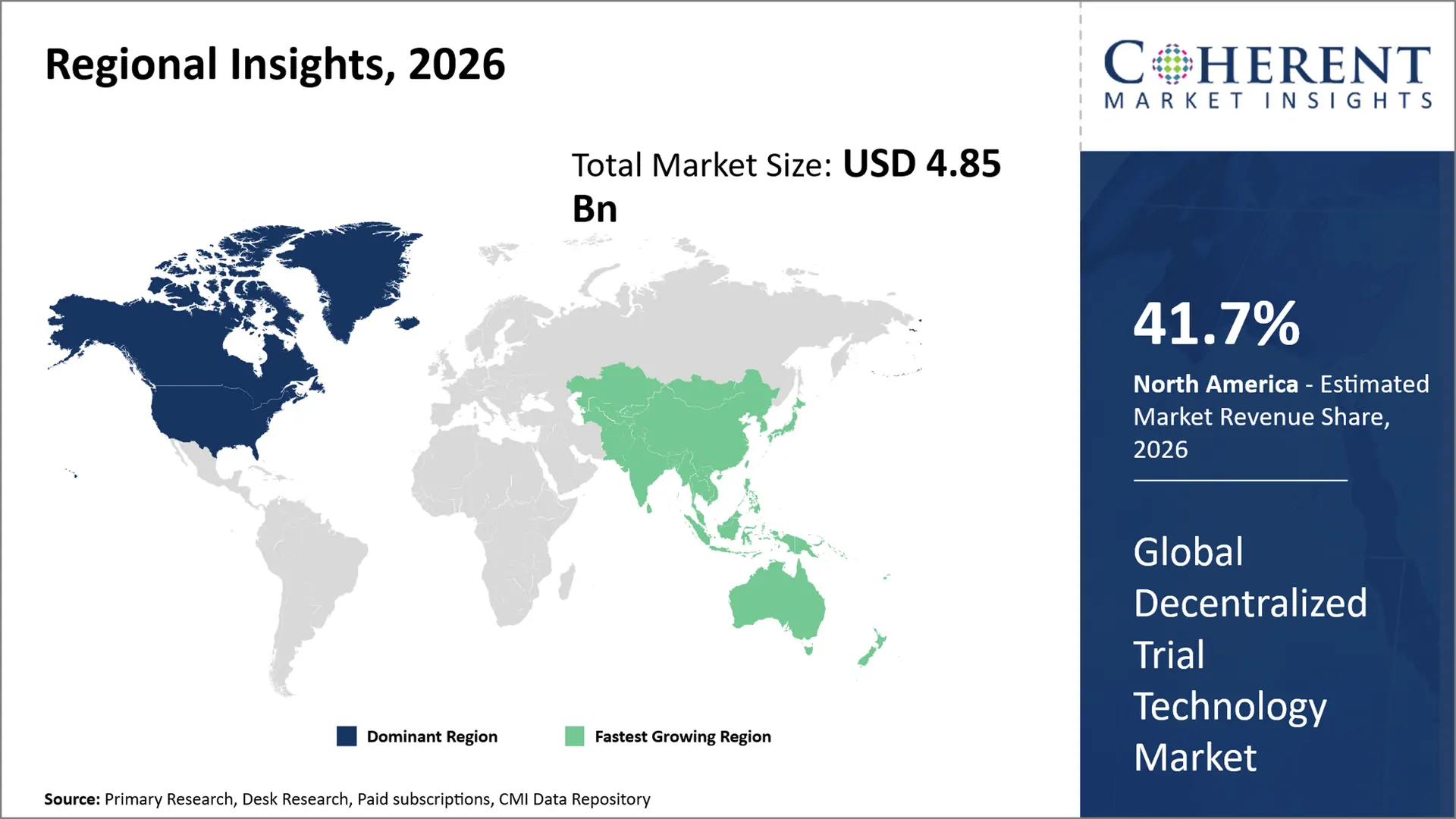
Why is North America a Strong Market for Decentralized Trial Technology?
North America leads the global decentralized trial technology market, accounting for an estimated 41.7% share in 2026, attributed to the region’s strong healthcare infrastructure, high adoption of digital technology, and clear regulatory guidelines that promote clinical innovation. The clinical research environment in the region is good, with huge patient recruitment networks and connected CROs, and massive investment in advanced decentralized trial platforms.
For instance, in December 2024, ARPA-H, a division of the U.S. Department of Health and Human Services, announced its Advancing Clinical Trial Readiness (ACTR) funding opportunity to develop decentralized trial infrastructure, data collection automation, participant identification and digital data management technologies. Moreover, the Food and Drug Administration (FDA) has revised the general guidance framework for decentralized trials and offer heightened clarity about how it intends to handle remote trial activities, allowing the use of digital consent, telemedicine, and remote patient monitoring.
Why Does Asia Pacific Decentralized Trial Technology Market Exhibit High Growth?
Asia Pacific is expected to exhibit the fastest growth in the global decentralized trial technology market, registering an estimated CAGR of 16.8% during 2026–2033. The region is projected to account for 24.6% of the global market in 2026, owing to the increase in the clinical research activities, the rising investment in digital health infrastructure, and large patient populations. Countries like China, Japan, and India are emerging as the prominent centers for clinical research due to increased government support for clinical trial activities, evolving regulatory frameworks, and plans to update their health infrastructure.
For instance, the Indian Clinical Trial and Education Network (INTENT) was initiated by the ICMR to provide the much-needed impetus to the clinical research ecosystem in India, supporting multicentre research, investigator collaboration and clinical trial capacity building. It includes 75 sites for Phase II/III clinical trials and 4 institutions for Phase I trials. (Source: Department of Health Research) Furthermore, the region is experiencing increased adoption of remote patient monitoring, digital data collection, and decentralized trial platforms owing to emerging markets, strengthening internet connectivity, cost-effective clinical research services, and high mobile device penetration levels.
Global Decentralized Trial Technology Market Outlook for Key Countries
Why is the U.S. Leading Innovation and Adoption in the Decentralized Trial Technology Market?
The U.S. decentralized trial technology market is expected to grow as it is leading the way in innovation and adoption, driven by its mature clinical research infrastructure and a favorable regulatory environment that facilitates the shift to digital trial methodologies. The Food and Drug Administration's supportive guidance document enables telehealth visits, at-home clinical tests, use of local healthcare providers and remote data collection. The Digital Health Technologies program further supports use of connected devices and wearable sensors to obtain clinical data directly from the patient.
Is China a Favorable Market for Decentralized Trial Technology Market?
China is a bright emerging market for decentralized trial technology, enabling clinical research in the local ecosystem, and the growing interest in digital health solutions. NMPA's new regulatory environment encourages more patient-friendly trial practices such as remote monitoring. Additionally, there is a considerable market potential in response to increasing interest in eConsent, remote patient monitoring and digital trial management services.
Is Japan Emerging as a Key Growth Hub for the Decentralized Trial Technology Market?
Japan is positioned as a strong potential growth market for decentralized trial technology, with the combination of a strong healthcare system, big pharma pipeline, and an aging population. The adoption of telemedicine, remote patient monitoring and ePROs is beginning to drive a new era of patient centric clinical research. The move to remote, decentralized and mobile trials has created opportunities for medical device and pharmaceutical companies looking to improve recruitment and enable remote, patient led studies, especially for patients with chronic conditions and for the elderly.
Why Does Germany Top the European Decentralized Trial Technology Market?
Germany leads the European decentralized trial technology market due to the country's widespread pharmaceutical research community, advanced clinical trial infrastructure and the emerging use of digital health tools. Germany's nationwide platform Health Data Use Act (GDNG) facilitates access to health data for medical research, and digitization in the form of electronic patient records and further investment in secure digital infrastructure enables remote data collection and management of clinical trials. This presents a fertile environment for the use of eConsent, remote patient monitoring and cloud-based clinical trial platforms.
Is Decentralized Trial Technology Market Developing in UK?
The UK is poised to become a major market for decentralized trial technology, owing to the arrival of new trial regulations, which will support the adoption of patient-centric clinical research. The HRA and MHRA approve remote visits, trial activities at home, and digital health technologies based on medical rationale. Furthermore, new regulations released in April 2026 will improve the infrastructure for digital trial management, remote monitoring, and decentralized research.
Decentralized Clinical Trial Technology Adoption Across Key Trial Activities
Clinical trial activity | Key technologies deployed | Primary application |
Patient recruitment | Digital Patient Matching, AI-based Recruitment | Participant identification and enrolment |
Patient consent | Digital Identity Verification, eConsent Platforms | Remote informed consent |
Patient monitoring | Wearables, Remote Patient Monitoring, Connected Devices | Continuous health data collection |
Clinical consultations | Virtual Visits, Telemedicine, | Remote investigator-patient interactions |
Clinical data collection | ePRO, eCOA, Electronic Data Capture | Digital outcome reporting and data management |
Trial coordination | Cloud-based trial management, AI Analytics | Workflow coordination and real-time oversight |
How is the integration of AI and advanced analytics into decentralized trial platforms creating new growth opportunities in the decentralized trial technology market?
The application of artificial intelligence (AI) and advanced analytics can provide an opportunity for a significant market growth in the global decentralized trial technology market by enabling automated patient recruitment, predictive monitoring, safety, and clinical data management in real-time. For instance, in April 2026, the U.S. Food and Drug Administration announced two proof-of-concept real-time clinical trials focused on directly transmitting endpoints and data signals to the agency, through increased use of AI and data science.
Market Players, Key Development, and Competitive Intelligence
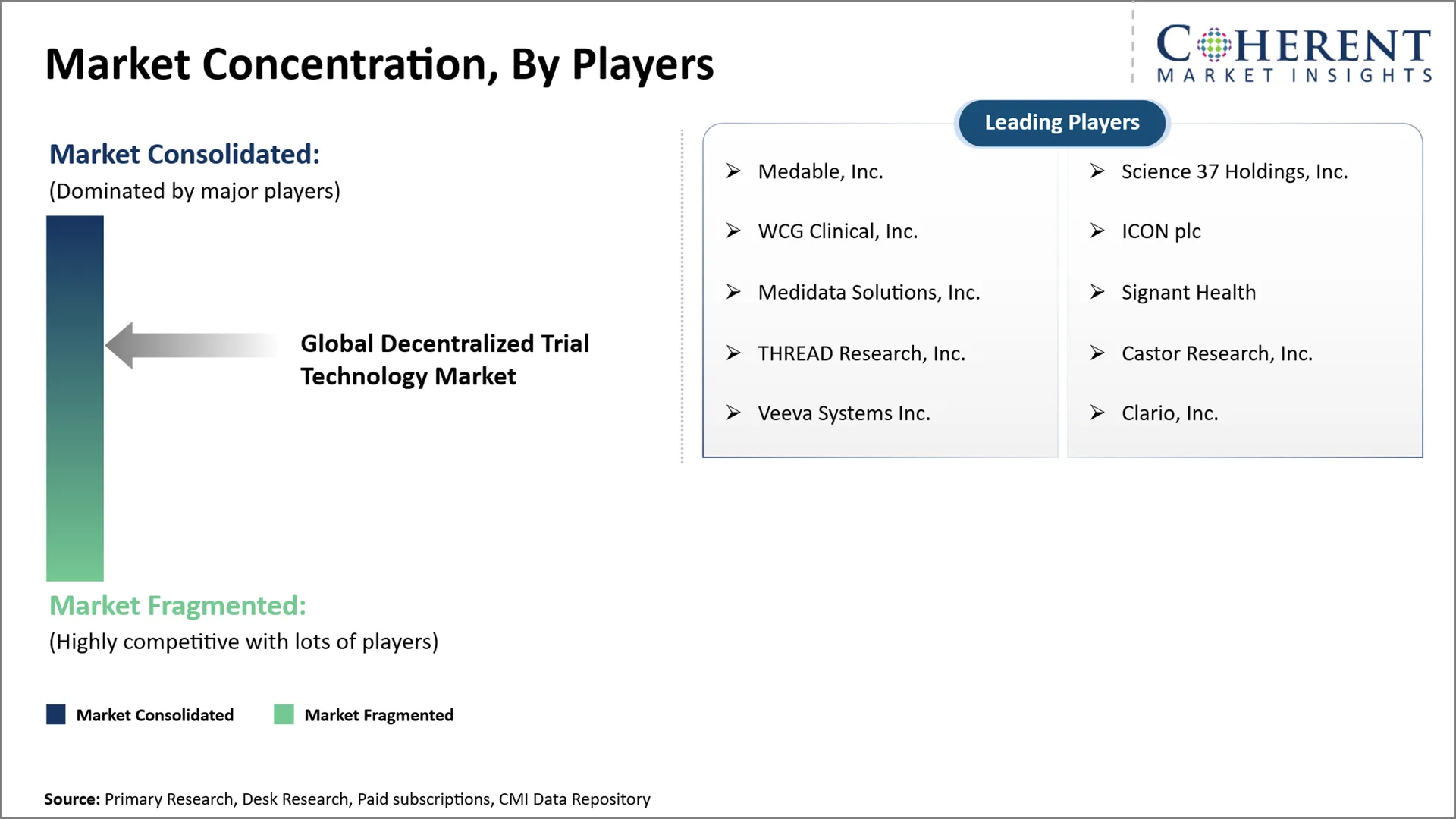
Key Developments
- On November 5, 2026, SUSMED reported that its blockchain‐based clinical trial system enabled the successful marketing authorization of a pharmaceutical product in Japan. SUSMED shows how blockchain technology can address issues of integrity, traceability and transparency for clinical data.
- On November 4, 2026, Sciteline released Ontario Studies Connect, a new digital portal for managing clinical trials. It's a free, publicly accessible portal that gathers around 15,000 clinical trials from across the province into one search engine. Ontario Studies Connect also has features that allow you to explore study opportunities, AI-generated descriptions and recruitment benefits for research institutions. The portal aims to improve access to trials, facilitate participant recruitment, and encourage the use of digital tools in decentralized research.
Competitive Landscape
The global decentralized trial technology market is moderately fragmented with few players offering digital trial technology, long-standing developers of clinical research technology, and providers of all-in-one clinical trial solutions. Competition among the players would depend on their ability to offer an integrated, end-to-end platform supporting remote patient monitoring, eConsent, telemedicine, and digital data collection and management. Players are focused on enhancing the scalability, security, regulatory compliance, and patient engagement potential of their platforms, to cater to the needs of decentralized and hybrid clinical trials.
Key focus areas include
- Integrated software systems for decentralized trial management and remote data collection.
- Increased telemedicine, eConsent, ePRO and remote patient monitoring capabilities.
- Enhanced interoperability, data protection and regulatory compliance between digital trials systems.
- AI and advanced analytics usage for patient recruitment, clinical trial monitoring, and data quality management.
- Improvement of platform scalability and engaging more patients in clinical trials based on a geographical distribution.
Market Report Scope
Global Decentralized Trial Technology Market Report Coverage | |||
Report Coverage | Details | ||
Base Year | 2025 | Market Size in 2026: | USD 4.85 Bn |
Historical Data For: | 2020 To 2024 | Forecast Period: | 2026 To 2033 |
Forecast Period 2026 To 2033 CAGR: | 13.7% | 2033 Value Projection: | USD 11.90 Bn |
Geographies covered: |
| ||
Segments covered: |
| ||
Companies covered: | Medable, Inc., Science 37 Holdings, Inc., WCG Clinical, Inc., ICON plc, Medidata Solutions, Inc., Signant Health, THREAD Research, Inc., Castor Research, Inc., Veeva Systems Inc., Clario, Inc. | ||
Growth Drivers: |
| ||
Restraints & Challenges: |
| ||
Analyst Opinion (Expert Opinion)
- In the coming years, the global decentralized trial technology market is projected to emerge from a digital enhancement to the core of the clinical operations. Overall acceptance of hybrid and fully decentralized trial formats will be driven by sponsors' focus on patient access, rapid patient enrollment and operational flexibility. The adoption of AI, remote monitoring and digital data capture and analysis will improve trial monitoring and enable more data-driven decision making.
- The greatest potential is expected to be found in oncology and rare disease clinical trials, where decentralized technologies have the potential to reach geographically dispersed patients and improve access to specialized research centers. The U.S. is a great opportunity driven by its mature clinical research industry and established pharmaceutical R&D ecosystem. India and China also have significant long-term potential with their increasing footprint in clinical research and emerging digital health capabilities.
- The market players should focus on deploying integrated end-to-end platforms that combine multiple technology modalities including eConsent, ePRO, telemedicine, remote patient monitoring, and eData Capture into a single environment. Investment in AI-enabled patient recruitment, predictive monitoring, cybersecurity, and interoperability can further enable differentiation of these platforms. Providers may capitalize on their geographical reach, and offer scalable options for decentralized trials, by collaborating with pharmaceutical partners, working with CROs and hospitals and being part of local research networks.
Speak to the analyst
Want personalized insights?
Take the findings above to one of our principal consultants, or have the report rebuilt around the segments, geographies and competitors you actually track.
Market Segmentation
- Component Insights (Revenue, USD Bn, 2021 - 2033)
- Software
- Services
- Hardware and Connected Devices
- Study Design Insights (Revenue, USD Bn, 2021 - 2033)
- Interventional Trials
- Observational Trials
- Expanded Access Trials
- Deployment Mode Phase Insights (Revenue, USD Bn, 2021 - 2033)
- Cloud-Based
- On-Premises
- Hybrid
- Clinical Trial Phase Insights (Revenue, USD Bn, 2021 - 2033)
- Phase I
- Phase II
- Phase III
- Phase IV
- Therapeutic Area Insights (Revenue, USD Bn, 2021 - 2033)
- Oncology
- Cardiovascular Diseases
- Neurological Disorders
- Others
- End User Insights (Revenue, USD Bn, 2021 - 2033)
- Pharmaceutical and Biotechnology Companies
- Contract Research Organizations (CROs)
- Medical Device Companies
- Academic and Research Institutes
- Others
- Regional Insights (Revenue, USD Bn, 2021 - 2033)
- North America
- U.S.
- Canada
- Latin America
- Brazil
- Argentina
- Mexico
- Rest of Latin America
- Europe
- Germany
- U.K.
- Spain
- France
- Italy
- Russia
- Rest of Europe
- Asia Pacific
- China
- India
- Japan
- Australia
- South Korea
- ASEAN
- Rest of Asia Pacific
- Middle East
- GCC Countries
- Israel
- Rest of Middle East
- Africa
- South Africa
- North Africa
- Central Africa
- North America
- Key Players Insights
- Medable, Inc.
- Science 37 Holdings, Inc.
- WCG Clinical, Inc.
- ICON plc
- Medidata Solutions, Inc.
- Signant Health
- THREAD Research, Inc.
- Castor Research, Inc.
- Veeva Systems Inc.
- Clario, Inc.
Sources
Primary Research Interviews
- Decentralized Clinical Trial Program Directors and Clinical Operations Managers
- Clinical Research Investigators and Principal Investigators
- Digital Clinical Trial Technology and Platform Specialists
- Remote Patient Monitoring and Telemedicine Experts
Stakeholders
- Decentralized Clinical Trial Software and Platform Providers
- Contract Research Organizations (CROs)
- Connected Medical Device and Wearable Technology Manufacturers
- Telemedicine and Digital Health Solution Providers
- End-use Sectors
- Pharmaceutical and Biotechnology Companies
- Contract Research Organizations (CROs)
- Academic and Research Institutions
- Medical Device Companies
- Regulatory & Health Bodies
- U.S. Food and Drug Administration (FDA)
- European Medicines Agency (EMA)
- Central Drugs Standard Control Organization (CDSCO)
- Health Canada
- Pharmaceuticals and Medical Devices Agency (PMDA), Japan
Databases
- ClinicalTrials.gov
- WHO International Clinical Trials Registry Platform (ICTRP)
- Clinical Trials Registry–India (CTRI)
- Clinical Trials Information System (CTIS)
- Australian New Zealand Clinical Trials Registry (ANZCTR)
Associations
- Association of Clinical Research Professionals (ACRP)
- Drug Information Association (DIA)
- Society for Clinical Research Sites (SCRS)
- Clinical Trials Transformation Initiative (CTTI)
Public Domain Sources
- U.S. Food and Drug Administration (FDA)
- National Institutes of Health (NIH)
- World Health Organization (WHO)
- European Medicines Agency (EMA)
Proprietary Elements
- CMI Data Analytics Tool
- Proprietary CMI Existing Repository of information for last 10 years.
Get access to 250+ pages report
Every segment, forecast, competitor profile and data table behind the analysis above — available for instant download.
- ESOMAR Member
- ISO 9001:2015 Certified
- D-U-N-S Registered
- GDPR & CCPA Compliant
Frequently Asked Questions
The global decentralized trial technology market is estimated to be valued at USD 4.85 Bn in 2026 and is expected to reach USD 11.90 Bn by 2033.
Software dominates because of the increasing role of remote trial management, digital data collection, patient engagement, and integration with clinical workflows.
Decentralized trial technology refers to online applications and connected devices that enable clinical trials to be conducted remotely or via hybrid approaches and reduce the requirement for onsite trial locations.
The CAGR of global decentralized trial technology market is projected to be 13.7% from 2026 to 2033.
Growing adoption of decentralized and hybrid clinical trial models, and increasing demand for patient-centric and remote clinical trial participation are the major factors driving the growth of the global decentralized trial technology market.
High implementation costs of digital trial infrastructure, and data privacy concerns and cybersecurity risks in remote trial operations are the major factors hampering the growth of the global Decentralized Trial Technology market.
In terms of study design, interventional trials are estimated to dominate the market revenue share in 2026.