

Global Digital Oncology Market Size and Forecast – 2026 To 2033
The global digital oncology market is expected to grow from USD 4,860.0 Mn in 2026 to USD 15,117.8 Mn by 2033, registering a compound annual growth rate (CAGR) of 17.6% from 2026 to 2033. The market for global digital oncology is poised for significant expansion, fueled by the increasing deployment of AI-based cancer diagnosis and screening technologies.
In June 2026, the UK Government committed USD 26.45 million (£20 million) to roll out AI-powered chest X-ray technology across every NHS trust in England by 2029. The technology had supported faster lung-cancer diagnosis or all-clear outcomes for more than 4 million patients. This highlights the growing integration of AI-enabled diagnostic technologies into mainstream cancer-care pathways, strengthening demand for digital oncology platforms that support faster screening, diagnosis, and clinical decision-making.
Key Takeaways of the Global Digital Oncology Market
- Digital oncology platforms are projected to hold 34.8% of the global digital oncology market share in 2026, making it dominant component segment across North America due to established digital-health infrastructure, oncology information systems, and regulatory adoption of AI-enabled medical technologies. For instance, in June 2026, the U.S. Food and Drug Administration (FDA) authorized oncology-related AI-enabled devices including RadOncAI and CMN Capillary Function with Oncology Virtual Expert, demonstrating continued regulatory integration of digital technologies into cancer care.
- Artificial intelligence and machine learning is projected to hold 34.2% of the global digital oncology market share in 2026, making it dominant technology segment across Europe due to increasing government-backed deployment and clinical validation of AI for cancer screening and diagnosis. For instance, in May 2026, the European Commission held the first meeting of its network of AI-powered advanced screening centres, which is focused initially on AI-supported early detection and diagnosis of cancer and is designed to facilitate real-world clinical validation across EU Member States.
- Cancer screening and diagnosis is projected to hold 28.6% of the global digital oncology market share in 2026, making it dominant application segment across Asia Pacific as regulatory agencies increasingly support software-based medical technologies. For instance, in June 2026, Japan’s Pharmaceuticals and Medical Devices Agency (PMDA) introduced a continuous priority-review framework for innovative Software as a Medical Device (SaMD), supporting faster regulatory consideration of eligible digital medical technologies and strengthening the environment for AI-enabled diagnostic applications.
- North America market maintains dominance with an expected share of 40.6% in 2026, bolstered by its mature oncology infrastructure, extensive use of digital health technologies, and strong regulatory activity surrounding AI-enabled cancer applications. For instance, in June 2026, the U.S. National Cancer Institute (NCI) launched multiple PRIMED-AI funding opportunities focused on integrating imaging with multimodal data and translating AI models into clinical oncology applications, strengthening the region’s research and digital-oncology ecosystem.
- Asia Pacific is expected to exhibit the fastest growth in the global digital oncology market, registering an estimated CAGR of 19.6% during 2026–2033, driven by expanding digital-health infrastructure, increasing adoption of AI-enabled medical technologies, and evolving regulatory frameworks for digital medical products. For instance, in July 2026, South Korea’s Ministry of Food and Drug Safety (MFDS) proposed amendments to its regulations for approval, certification, review, and evaluation of digital medical products, including changes covering AI-based digital medical-device software and clinical evaluation requirements.
Segmental Insights
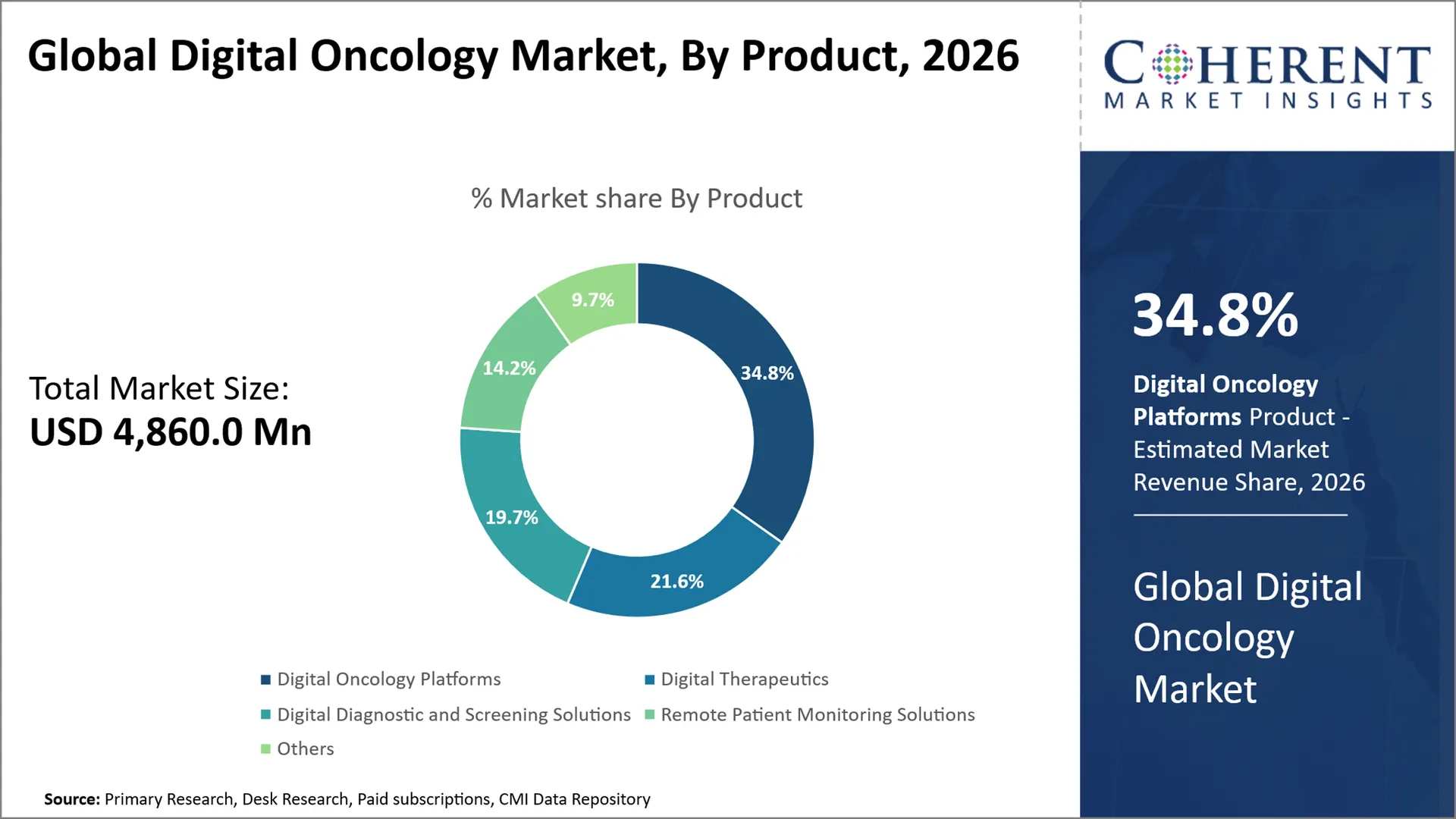
Why Do Digital Oncology Platforms Dominate the Global Digital Oncology Market?
Digital oncology platforms are projected to hold the market share of 34.8% in 2026, as it enables the incorporation of data sets, such as clinical, diagnostic, genomic, imaging, and patient-monitoring data for a combined oncology workflow. The demand is particularly strong in North America, as the developed infrastructure would foster the integrated digital oncology research and care. For instance, in June 2026, the National Cancer Institute's (NCI) Cancer Research Data Commons (CRDC) has surpassed 200,000 subjects and 17 petabytes of cancer data, making it the largest collection of its kind. Incorporating genomic, imaging, clinical and other data, the CRDC allows researchers to harness artificial intelligence to advance cancer research.
- Current Industry Events of 2026
- Market Size Estimation
- Regional Breakdown
- Competitive Landscape
- Customer Intelligence
- Segmental Analysis
- Pricing Analysis
- Key Market Drivers, Challenges & Future Trends
- Customized Insights Section
Why Do Artificial Intelligence and Machine Learning Represent the Largest Technology Segment in the Digital Oncology Market?
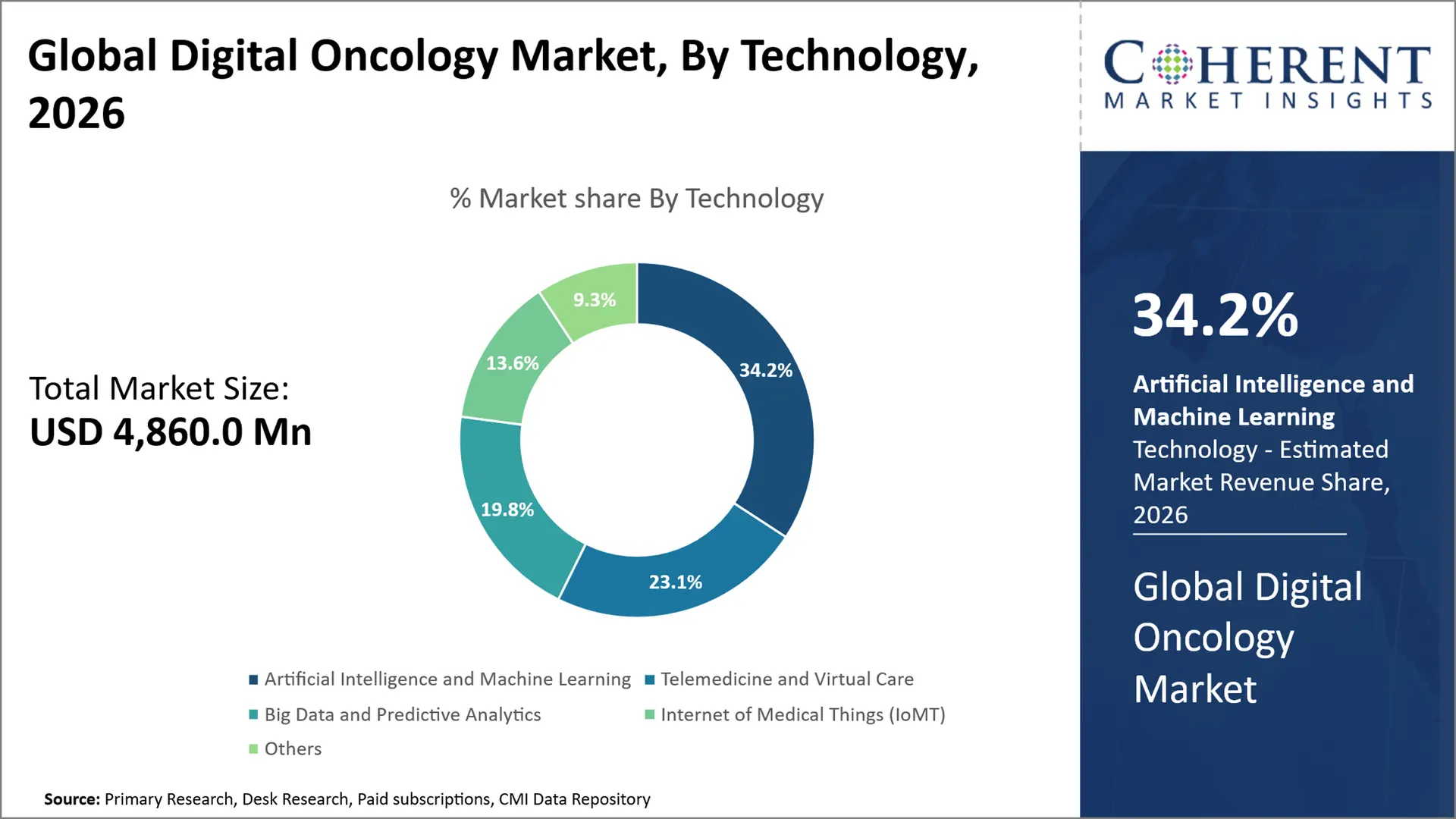
Artificial intelligence and machine learning is projected to hold a market share of 34.2% in 2026, because of its ability to analyze complex imaging, genomic, pathology, and clinical data for detection, risk prediction, and response prediction. Additionally, an increasing abundance of large oncology datasets drives the development of complex AI models, which can then be tested. For instance, in April 2026, the scSurvival machine-learning tool was developed with funding from the U..S National Institutes of Health (NIH) that used single-cell tumor data from over 150 cancer patients to predict survival outcomes and identify high-risk tumor cell populations.
Cancer Screening and Diagnosis Segment Dominates the Global Digital Oncology Market
The cancer screening and diagnosis segment is projected to hold a market share of 28.6% in 2026, attributed to the increasing adoption of digital pathology, AI-assisted imaging, and advanced diagnostic analytics for earlier and potentially more accurate cancer diagnosis. In addition, the convergence of these technologies is further believed to improve the analysis of complex pathology and imaging data and enable scalable diagnostic workflows. For instance, in April 2026, the National Cancer Institute (NCI) hosted a focused seminar on the validation of artificial intelligence in digital pathology for cancer diagnoses with a particular focus on the development of trustworthy AI models and their transformation into clinically validated diagnostic tools.
Current Events and their Impact
Current Events | Description and its Impact |
NCI Focuses on Knowledge Graphs for Cancer AI Data Ecosystems (September 2026) |
|
U.S. FDA Issues Regulatory Framework for Generative AI-Enabled Medical Devices (August 2026) |
|
England Expands AI and Digital Technologies Across Cancer Care (February 2026) |
|
Digital Oncology Market Dynamics
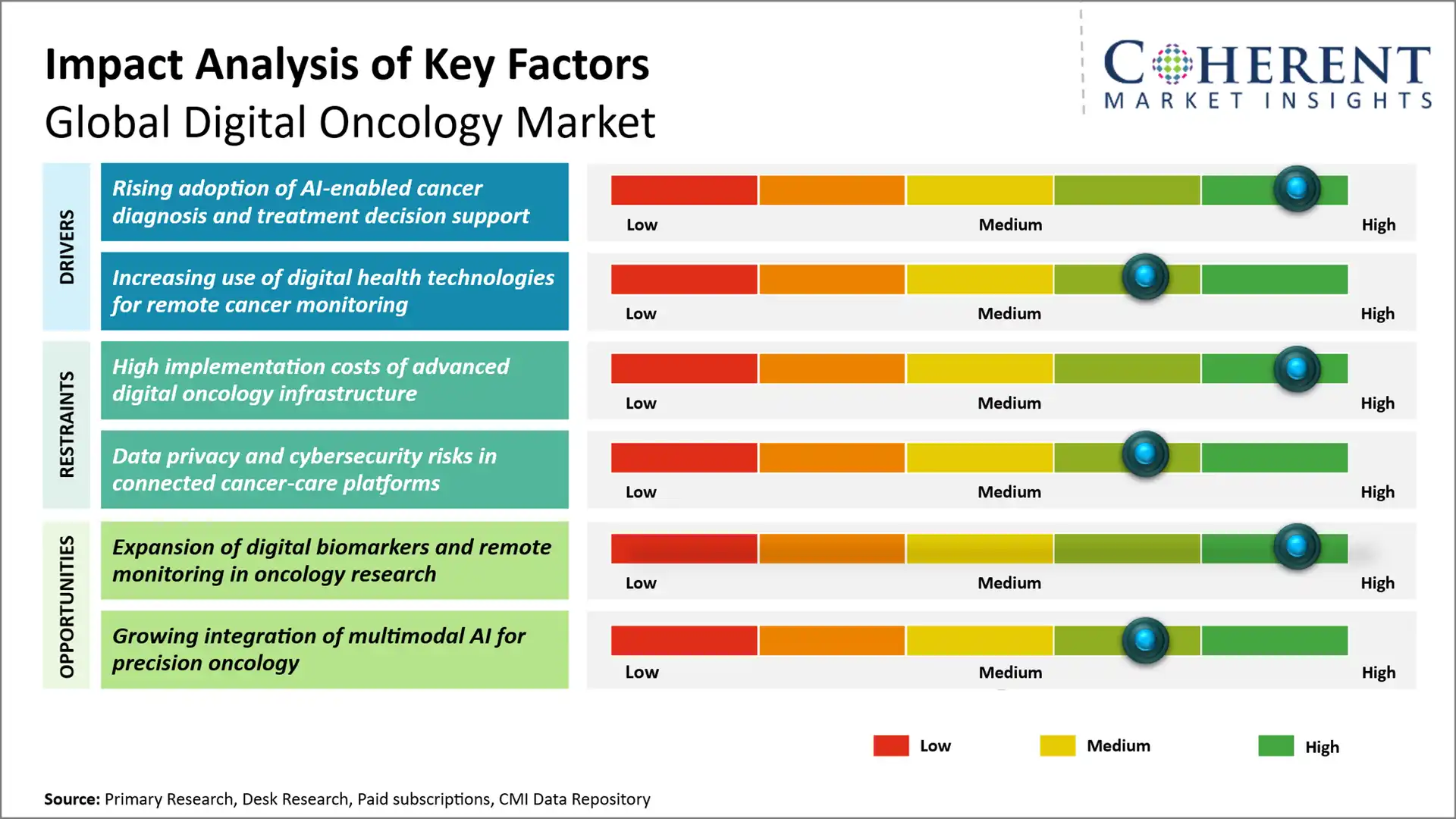
Market Drivers
- Rising adoption of AI-enabled cancer diagnosis and treatment decision support: The increasing integration of AI into oncology workflows is improving the analysis of medical images and clinical data while supporting faster identification of patients requiring further assessment. For instance, in June 2026, the UK Government announced USD 26.45 million (£20 million) to expand proven AI technologies for faster lung cancer diagnosis across NHS trusts in England by 2029, alongside USD 10.71 million (£8.1 million) for additional AI and digital-health pilots.
- Increasing use of digital health technologies for remote cancer monitoring: Increasing use of digital health technologies are enabling continuous monitoring of cancer patients beyond conventional clinical visits through mobile applications, wearables, remote symptom reporting, and connected devices. These tools can support earlier identification of treatment-related changes and facilitate timely intervention. For instance, on September 23, 2026, the National Cancer Institute highlighted the use of wearable devices and remote monitoring technologies to collect patient-reported outcomes and physiological data during cancer clinical trials, supporting ongoing assessment of patient health and treatment response.
- Growing integration of multimodal data for precision oncology: The integration of genomic, pathology, imaging, and clinical data is enabling digital oncology platforms to generate more comprehensive insights for precision cancer care. For instance, on September 10, 2026, Lunit Inc. announced that 10x Genomics would integrate Lunit SCOPE IO, its AI-powered pathology platform, with spatial molecular data to support oncology biomarker discovery and clinical research. The collaboration demonstrates the growing convergence of AI-based pathology and molecular data in digital oncology.
Emerging Trends
- Rise of multimodal AI in precision oncology: AI models are increasingly combining imaging, digital pathology, genomic, and clinical data to improve cancer diagnosis, prognosis, treatment-response prediction, and personalized treatment selection.
- Expansion of digital biomarkers and remote monitoring: Wearables, mobile applications, and remote-monitoring technologies are enabling continuous collection of physiological and patient-reported data, supporting treatment monitoring, toxicity assessment, and digital endpoints in oncology.
- Growing use of AI-ready real-world oncology data: Healthcare systems are increasingly developing interoperable, AI-ready cancer datasets that combine electronic health records, genomics, imaging, and clinical-trial information to support predictive analytics, research, and clinical decision-making.
- Regional Insights
Regional Insights
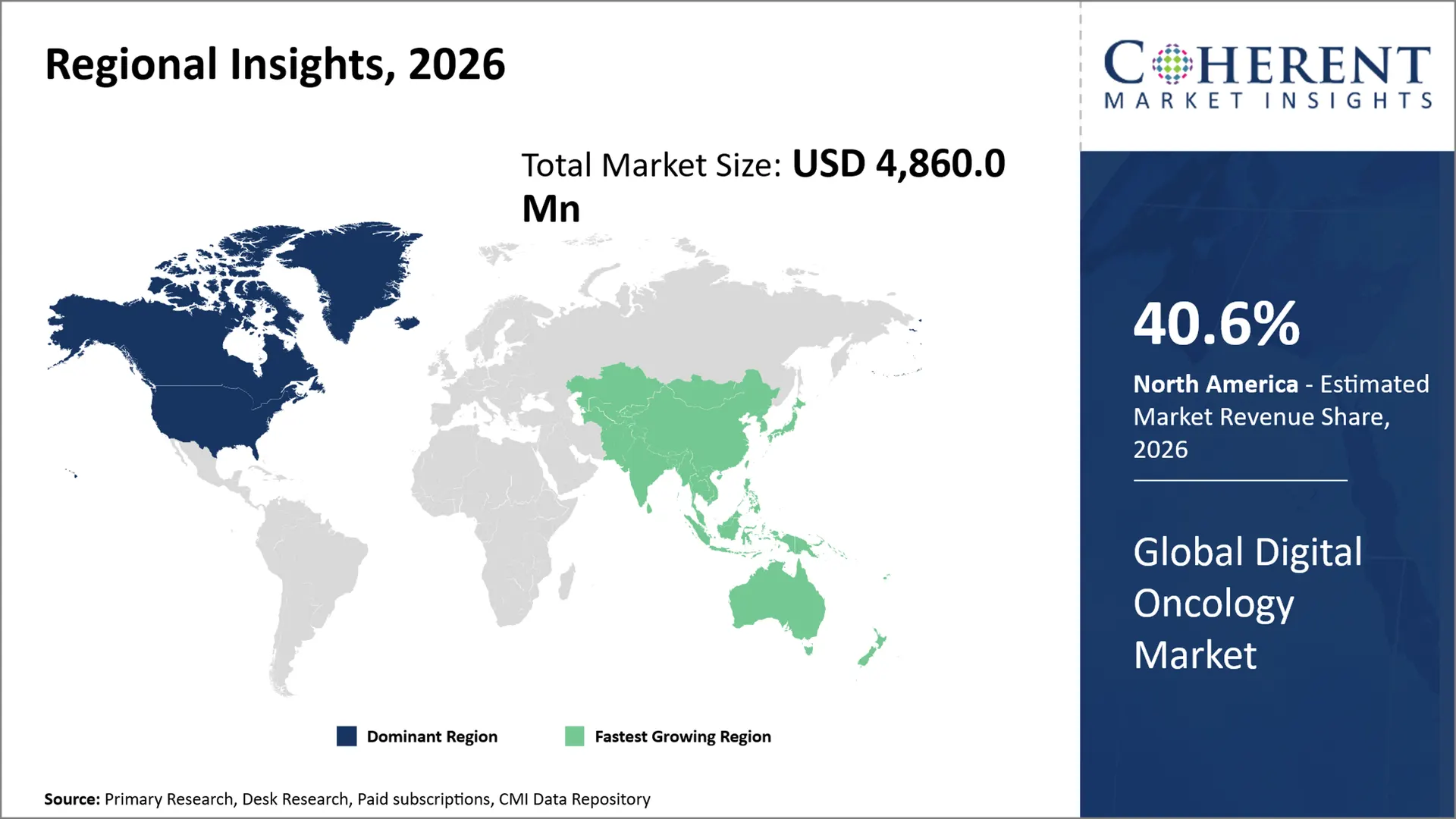
Why is North America a Strong Market for Digital Oncology?
North America leads the global digital oncology market, accounting for an estimated 40.6% share in 2026, owing to its advanced healthcare infrastructure, higher adoption of digital oncology offerings and a robust backing from the government for digital health and cancer studies. For instance, in June 2026, the National Cancer Institute (NCI) released new funding opportunities for its Informatics Technology for Cancer Research (ITCR) program. This NIH-wide program will fund software, computational tools, and informatics technologies for cancer research and management.
The country has a mature cancer research infrastructure and advanced health-data infrastructure to incorporate artificial intelligence, tele oncology, digital diagnostics and clinical decision support systems. Furthermore, increasing fusion of genomics, pathology, imaging and clinical data seems to be improving digital oncology infrastructures and services. Moreover, the increasing healthcare ecosystem and continuous investment in tech-enabled cancer care solutions are also creating immense growth opportunities for the digital oncology ecosystem in North America.
Why Does Asia Pacific Digital Oncology Market Exhibit High Growth?
Asia Pacific is expected to exhibit the fastest growth in the global digital oncology market, registering an estimated CAGR of 19.6% during 2026–2033. The region is projected to account for 24.0% of the global market in 2026, owing to the accelerated digitization of healthcare, rising burden of cancer, broader access to technology-enabled cancer care, and digital health infrastructure. Strengthening of the regional ecosystem through government support to electronic health record systems, artificial intelligence, telemedicine practice and digital health is likely to open up a host of opportunities for market players.
For instance, on September 9, 2026, Japan's Ministry of Health, Labour and Welfare (MHLW) announced its Electronic Medical Record Promotion Plan, with the goal of full implementation of electronic medical records by 2030 and the sharing of health data throughout the country. The overall rising trend of digital healthcare, augmented investments in healthcare systems upgradation and augmented acceptability of remote consultations and digital diagnostics facilitate the Asia Pacific markets' growth in the next few years.
Global Digital Oncology Market Outlook for Key Countries
Why is the U.S. Leading Innovation and Adoption in the Digital Oncology Market?
The U.S. is at the fore front of the digital oncology market because of its use of artificial intelligence, multimodal cancer data, and computational infrastructure in cancer research and treatment. The Cancer Research Data Commons of the National Cancer Institute seems to facilitate broad-scale integration of genomic, imaging, clinical-trial, and population data and thus is paving the way for the application of AI in oncology. Moreover, NCI claims that artificial intelligence has applications in cancer screening, diagnosis, prediction of treatment response, the discovery of drugs, and the decision-making process.
Is Japan a Favorable Market for Digital Oncology Market?
The Japan market offers an ideal testing ground for digital oncology, owing to the government's Medical Digital Transformation (Medical DX) project, which is accelerating development of digital health platforms and the use of electronic health records, global health-information exchange networks and interoperable data infrastructure. Japan is also upgrading its cancer-care network; by 2026, there were 468 designated cancer care hospitals and 13 core cancer genomic medicine hospitals that could provide a fertile ground for AI-enabled diagnosis, genomic oncology, clinical decision support and digitally integrated cancer care.
Is China Emerging as a Key Growth Hub for the Digital Oncology Market?
China is gradually emerging as the newest growth driver for the digital oncology sector with the ongoing trend towards healthcare digitization, a large number of patients with cancer care and growing government-driven adoption of AI in healthcare. The government-driven "AI + Healthcare" implementation policy by the National Health Commission encourages the adoption of AI-enabled medical imaging, clinical decision support and smart applications for major diseases, including cancer. It also seeks wide adoption of AI-assisted imaging and clinical decision support in secondary and tertiary hospitals by 2030.
Why Does Germany Top the European Digital Oncology Market?
Germany leads the European digital oncology market owing to a strong cancer-care landscape, existing health-data infrastructure and the rising adoption of AI and digital solutions by cancer-treatment providers. Germany's network of cancer centers lends itself to a more integrated, AI-enabled use of imaging, pathology, genomic and other clinical data. Digital health initiatives supported by the government seem to be contributing to such infrastructure.
Is Digital Oncology Market Developing in U.K.?
The U.K. is an emerging market for digital oncology driven by the expanding use of AI, digital diagnostics, digital pathology, electronic patient records and remote patient monitoring in cancer pathways by the National Health Service. UK's national cancer plan for England (published in Feb 2026), also specifically lays emphasis on AI-assisted lung cancer diagnosis, digital patient monitoring and using imaging, pathology, genomics and care-plan data.
U.S. FDA Authorization of AI-Enabled Oncology Devices, 2026
Month | Selected AI-Enabled Oncology Devices / Applications |
January | RevealAI-Lung – lung cancer imaging and detection; EMLA – radiation oncology treatment planning |
February | Median LCS / eyonis LCS – lung cancer screening and assessment |
March | AutoContour – radiation oncology treatment planning; syngo.via RT Image Suite – radiation therapy imaging and planning |
April | DeepHealth ProstateAI – prostate cancer imaging; Lunit INSIGHT MMG – AI-assisted mammography |
May | MammoSightAI – breast cancer imaging; ArteraAI Breast – breast cancer risk assessment; Synapse Lung Nodule AI – lung nodule assessment |
June | RadOncAI – radiation oncology; LungMaps – lung imaging; Saige-Dx – AI-assisted pathology; CMN Capillary Function with Oncology Virtual Expert – oncology imaging |
How is the expansion of digital biomarkers and remote monitoring in oncology research creating new growth opportunities in the digital oncology market?
The growth of digital biomarkers and remote monitoring technologies opens new avenues in digital oncology as they enable the ongoing collection of molecular, physiological and patient data beyond conventional clinical assessments. These may enable longitudinal disease monitoring, lead to earlier detection of therapeutic response or disease progression, and enable more personalized decisions in cancer management. For instance, in May 2026, TrilliumBiO and Oncobit launched Oncular in the U.S. It enables quantitative, longitudinal monitoring of uveal melanoma by personalized digital PCR and cloud analysis of circulating tumor DNA (ctDNA). The use of molecular monitoring in conjunction with traditional imaging exemplifies how digital biomarkers could complement continuous monitoring of cancer in addition to precision oncology care pathways.
Market Players, Key Development, and Competitive Landscape
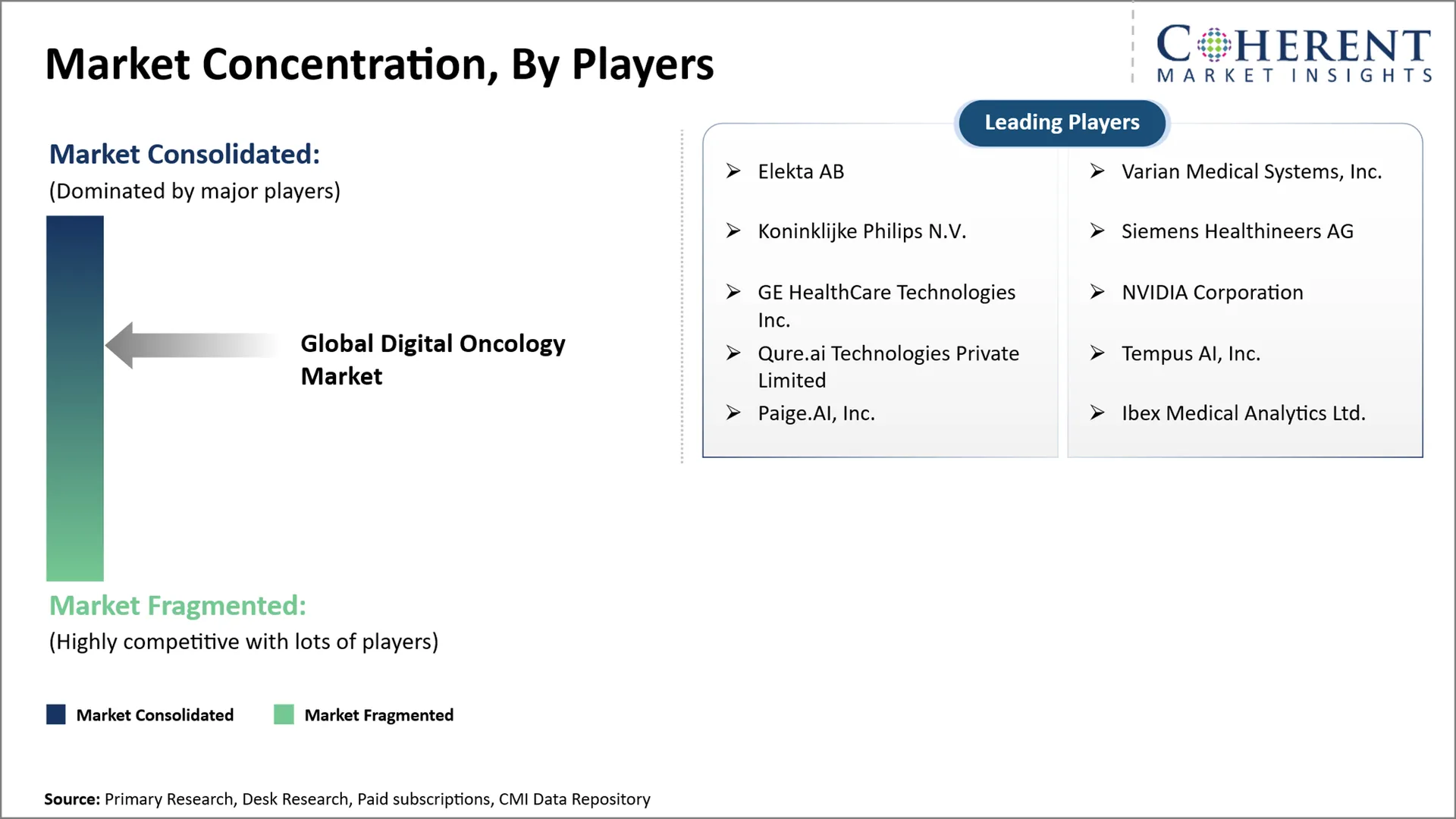
Key Developments
- On September 23, 2026, Oracle announced its Oracle Health Oncology EHR, designed specifically for cancer care and incorporating AI-driven workflows and clinical intelligence from multiple data sources. The solution connects patient information across diagnosis, treatment, and follow-up, supporting personalized treatment planning and clinical decision-making.
- In May 2026, Foundation Medicine announced plans to integrate its genomic testing data with Roche’s navify Clinical Hub to provide AI-powered clinical trial matching, publication search, patient education, and digitized clinical-guideline mapping. The solutions are designed to support faster, personalized treatment decision-making in cancer care.
- In April 2026, ThinkBio.Ai launched ThinkBio Sidney, an AI-driven oncology expert agent at the American Association for Cancer Research (AACR) Annual Meeting 2026. The platform integrates scientific literature, multi-omics datasets, and clinical evidence to generate biologically grounded insights for oncology research and drug-development decisions.
- In February 2026, the American Society of Clinical Oncology (ASCO) and Conexiant launched ASCO AI in Oncology, a digital platform focused on the use of artificial intelligence in cancer care. The platform provides expert-led insights on AI applications in diagnostics, clinical workflows, and personalized treatment pathways, highlighting the growing integration of AI into digital oncology.
Competitive Landscape
The global digital oncology market is moderately competitive, with market dynamics shaped by advances in artificial intelligence (AI), digital diagnostics, precision oncology, remote monitoring, and integration of multimodal cancer data. Market participants are increasingly focusing on expanding clinical applications, strengthening interoperability, and improving the utility of digital tools across diagnosis, treatment, monitoring, and research. Key focus areas include:
- Development of AI and machine learning solutions
- Expansion of digital oncology platforms
- Integration of remote patient monitoring and telemedicine
- Advancement of multimodal and foundation AI models
- Enhancement of interoperability and real-world data capabilities
Market Report Scope
Digital Oncology Market Report Coverage | |||
Report Coverage | Details | ||
Base Year | 2025 | Market Size in 2026: | USD 4,860.0 Mn |
Historical Data For: | 2020 To 2024 | Forecast Period: | 2026 To 2033 |
Forecast Period 2026 To 2033 CAGR: | 17.6% | 2033 Value Projection: | USD 15,117.8 Mn |
Geographies covered: |
| ||
Segments covered: |
| ||
Companies covered: | Elekta AB, Varian Medical Systems, Inc., Koninklijke Philips N.V., Siemens Healthineers AG, GE HealthCare Technologies Inc., NVIDIA Corporation, Qure.ai Technologies Private Limited, Tempus AI, Inc., Paige.AI, Inc., Ibex Medical Analytics Ltd. | ||
Growth Drivers: |
| ||
Restraints & Challenges: |
| ||
Analyst Opinion (Expert Opinion)
- In the coming years, global digital oncology market will move toward integrated, AI-driven cancer-care ecosystems that connect diagnosis, treatment planning, remote monitoring, clinical research, and survivorship within a unified digital workflow. Multimodal AI will increasingly combine imaging, pathology, genomic, clinical, and patient-generated data to support more personalized and continuous cancer care.
- The maximum opportunities are foreseen within artificial intelligence & machine learning for treatment planning & decision support in the U.S. This intersection offers substantial opportunity as oncology increasingly requires integration of complex clinical, imaging, genomic, and real-world data. AI-enabled platforms can strengthen treatment selection, risk assessment, clinical decision support, and personalized care pathways.
- In order to gain a competitive advantage market players should prioritize interoperable, clinically integrated platforms rather than isolated digital tools, with capabilities spanning AI analytics, patient monitoring, clinical data integration, and decision support. Building proprietary oncology datasets, strengthening clinical validation, reducing workflow disruption, and ensuring explainability, cybersecurity, and regulatory readiness can create stronger differentiation.
Speak to the analyst
Want personalized insights?
Take the findings above to one of our principal consultants, or have the report rebuilt around the segments, geographies and competitors you actually track.
Market Segmentation
- Product Insights (Revenue, USD Mn, 2021 - 2033)
- Digital Oncology Platforms
- Digital Therapeutics
- Digital Diagnostic and Screening Solutions
- Remote Patient Monitoring Solutions
- Others
- Technology Insights (Revenue, USD Mn, 2021 - 2033)
- Artificial Intelligence and Machine Learning
- Telemedicine and Virtual Care
- Big Data and Predictive Analytics
- Internet of Medical Things (IoMT)
- Others
- Application Insights (Revenue, USD Mn, 2021 - 2033)
- Cancer Screening and Diagnosis
- Treatment Planning and Decision Support
- Treatment Monitoring
- Patient Monitoring and Support
- Clinical Research and Trials
- Others
- End User Insights (Revenue, USD Mn, 2021 - 2033)
- Hospitals and Cancer Centers
- Oncology Clinics
- Diagnostic Centers
- Pharmaceutical and Biotechnology Companies
- Research and Academic Institutions
- Others
- Regional Insights (Revenue, USD Mn, 2021 - 2033)
- North America
- U.S.
- Canada
- Latin America
- Brazil
- Argentina
- Mexico
- Rest of Latin America
- Europe
- Germany
- U.K.
- Spain
- France
- Italy
- Russia
- Rest of Europe
- Asia Pacific
- China
- India
- Japan
- Australia
- South Korea
- ASEAN
- Rest of Asia Pacific
- Middle East
- GCC Countries
- Israel
- Rest of Middle East
- Africa
- South Africa
- North Africa
- Central Africa
- North America
- Key Players Insights
- Elekta AB
- Varian Medical Systems, Inc.
- Koninklijke Philips N.V.
- Siemens Healthineers AG
- GE HealthCare Technologies Inc.
- NVIDIA Corporation
- Qure.ai Technologies Private Limited
- Tempus AI, Inc.
- Paige.AI, Inc.
- Ibex Medical Analytics Ltd.
Sources
Primary Research Interviews
- Medical oncologists and radiation oncologists specializing in digitally enabled cancer care
- Oncology department directors and cancer-care technology decision-makers
- Clinical AI, oncology informatics, and digital-health specialists
- Precision oncology and molecular diagnostics specialists involved in genomic-driven cancer care
- Digital health, remote monitoring, and AI/ML specialists developing oncology applications
Stakeholders
- Digital oncology platform and cancer-care technology developers
- AI/ML and precision oncology solution providers
- Genomic, molecular diagnostic, digital pathology, and medical-imaging technology providers
- Electronic health record (EHR), clinical data, and healthcare IT solution providers
- Hospitals, cancer centers, oncology clinics, and diagnostic centers
- Healthcare AI implementation, integration, and clinical-validation service providers
- End-use Sectors
- Hospitals & Cancer Centers
- Oncology Clinics
- Diagnostic Centers
- Pharmaceutical & Biotechnology Companies
- Research & Academic Institutions
- Other Healthcare Facilities
- Regulatory & Health Bodies
- U.S. Food and Drug Administration (FDA) – AI-enabled medical devices, oncology diagnostics, digital health, and clinical decision-support technologies
- European Commission – medical devices, artificial intelligence, digital health, and European health-data regulation
- Medicines and Healthcare products Regulatory Agency (MHRA), UK – software, AI, medical devices, and digital health regulation
- Pharmaceuticals and Medical Devices Agency (PMDA), Japan – AI-enabled medical devices, software, and oncology-related medical technologies
- National Medical Products Administration (NMPA), China – medical devices, AI-enabled technologies, and digital health products
- Central Drugs Standard Control Organisation (CDSCO), India – medical devices, software-based technologies, and digital health regulation
Databases
- FDA AI-Enabled Medical Devices List
- FDA 510(k) Premarket Notification Database
- ClinicalTrials.gov
- NCI Cancer Clinical Trials Search
- European Union Clinical Trials Information System (CTIS)
- World Health Organization International Clinical Trials Registry Platform (WHO ICTRP)
Journals
- JCO Clinical Cancer Informatics
- Journal of Digital Imaging
- npj Digital Medicine
- The Lancet Digital Health
- Journal of Clinical Oncology
- Nature Cancer
Associations
- American Society of Clinical Oncology (ASCO)
- American Association for Cancer Research (AACR)
- European Society for Medical Oncology (ESMO)
- American Society for Radiation Oncology (ASTRO)
- Society for Imaging Informatics in Medicine (SIIM)
- International Society for Digital Health and AI in Medicine (ISDA)
- Digital Medicine Society (DiMe)
Public Domain Sources
- U.S. Food and Drug Administration (FDA) – AI-enabled medical devices and digital-health regulatory information
- National Cancer Institute (NCI) – cancer research, clinical trials, AI, and digital oncology information
- National Institutes of Health (NIH) – cancer research and digital-health research information
- National Center for Biotechnology Information (NCBI) – oncology, genomics, biomedical research, and scientific literature
- European Commission – digital health, medical devices, and health-data initiatives
- World Health Organization (WHO) – cancer, digital health, and global health information
Proprietary Elements
- CMI Data Analytics Tool, Proprietary CMI Existing Repository of information for last 10 years.
Get access to 250+ pages report
Every segment, forecast, competitor profile and data table behind the analysis above — available for instant download.
- ESOMAR Member
- ISO 9001:2015 Certified
- D-U-N-S Registered
- GDPR & CCPA Compliant
Frequently Asked Questions
The global digital oncology market is estimated to be valued at USD 4,860.0 Mn in 2026 and is expected to reach USD 15,117.8 Mn by 2033.
Digital oncology platforms dominate due to their ability to integrate cancer diagnosis, treatment planning, patient monitoring, and clinical data within unified digital workflows.
Digital oncology is the use of digital technologies such as AI, telemedicine, data analytics, and connected platforms to improve cancer diagnosis, treatment, monitoring, and care management.
The CAGR of global digital oncology market is projected to be 17.6 % from 2026 to 2033.
Rising adoption of AI-enabled cancer diagnosis and treatment decision support, and increasing use of digital health technologies for remote cancer monitoring are the major factors driving the growth of the global digital oncology market.
High implementation costs of advanced digital oncology infrastructure, and data privacy and cybersecurity risks in connected cancer-care platforms are the major factors hampering the growth of the global digital oncology market.
In terms of technology, artificial intelligence and machine learning is estimated to dominate the market revenue share in 2026.