
Global Digital Substance Use Disorder Care Market Size and Forecast – 2026 To 2033
The global digital substance use disorder care market is expected to grow from USD 5.28 Bn in 2026 to USD 11.96 Bn by 2033, registering a compound annual growth rate (CAGR) of 12.4% from 2026 to 2033. The market for global digital substance use disorder care is projected to grow significantly owing to the rising prevalence of substance use disorders and existing huge treatment gap across the globe.
As per the United Nations Office on Drugs and Crime (UNODC), over 63 million people have experienced drug use disorders globally in 2024, while only 1 in 12 received treatment. This treatment gap is likely to result in the rise of digital therapeutics, telehealth counseling, and mobile health recovery platforms.
Key Takeaways of the Global Digital Substance Use Disorder Care Market
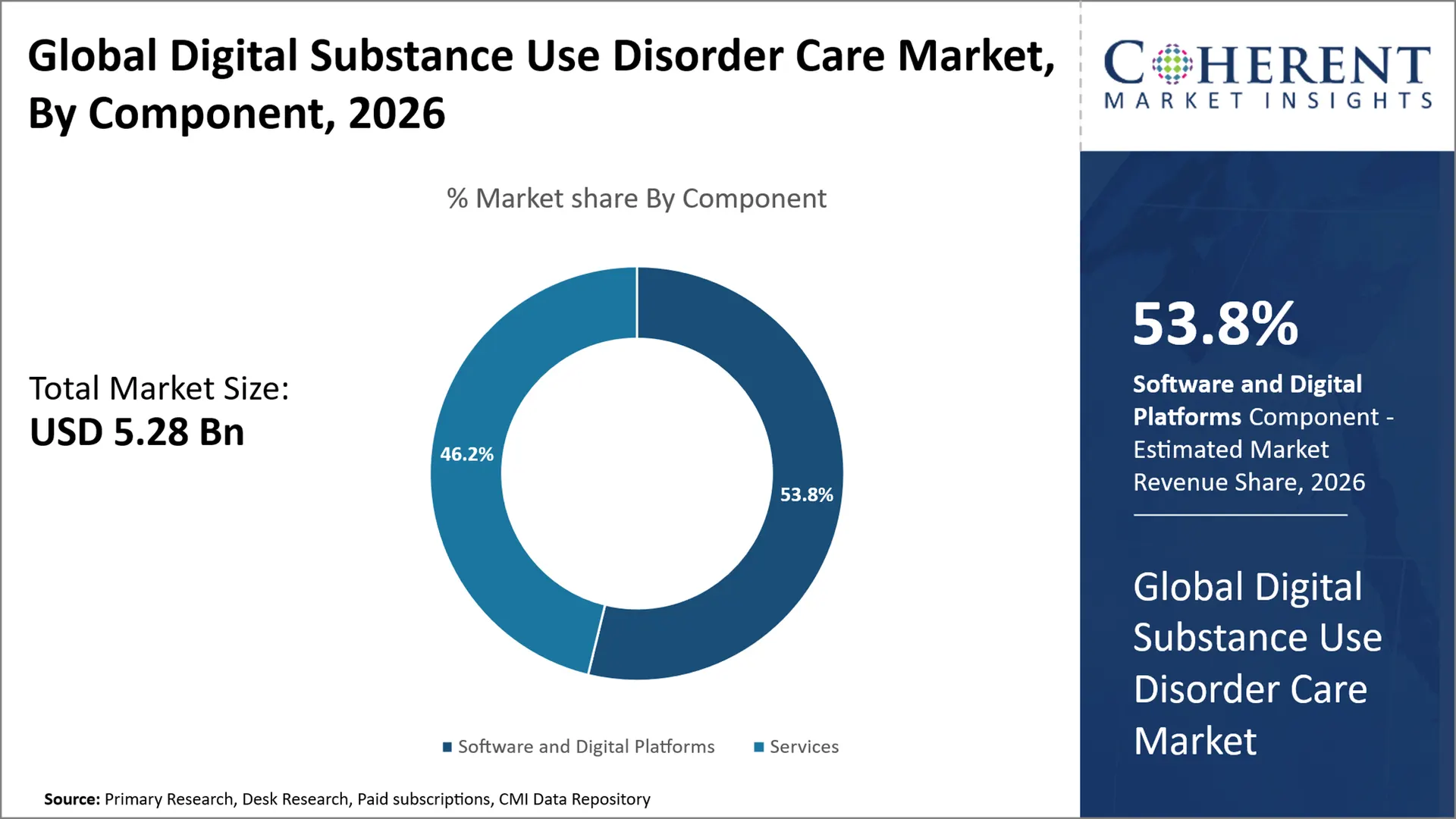
- Software and digital platforms are projected to hold 53.8% of the global digital substance use disorder care market share in 2026, making it dominant component segment, across Asia Pacific attributed to the rising digital healthcare infrastructure and better access to healthcare services remotely. For instance, India’s national eSanjeevani telemedicine portal crossed 500 million consultations in September 2026, demonstrating the expanding reach of digital healthcare delivery and the opportunity to improve the benefits of tech-enabled addiction treatment.
- Telehealth and virtual counseling are projected to hold 28.9% of the global digital substance use disorder care market share in 2026, making it dominant solution type segment, across North America attributed to the existence of robust virtual behavioral healthcare network and the virtual framework for addiction treatment setting regulations. For instance, the U.S. Drug Enforcement Administration has sanctioned the telemedicine flexibilities for the remote administration of controlled substances, namely the drugs used for treating opioid treatment.
- Alcohol use disorder is projected to hold 30.8% of the global digital substance use disorder care market share in 2026, making it dominant substance type segment, across Europe supported by the rising institutional acceptability of technology supported alcohol treatment. For instance, the UK's Department of Health and Social Care's clinical guidelines on alcohol treatment list video consultations, telephone-based intervention and digital face to face programs supported by a practitioner.
- North America market maintains dominance with an expected share of 40.7% in 2026, owing to the existence of a huge behavioral healthcare infrastructure, significant government spending on addiction treatment, and the presence of technologically advanced digital care providers. For instance, in August 2026, the U.S. Substance Abuse and Mental Health Services Administration (SAMHSA) awarded USD 96.7 million in grants and cooperative agreements to improve behavioral health and substance use disorder service.
- Asia Pacific is expected to exhibit the fastest growth in the global digital substance use disorder care market, registering an estimated CAGR of 18.6% during 2026–2033, owing to the growing government focus on digital addiction treatment, development of telehealth infrastructure, and growing demand for available behavioral healthcare. For instance, in August 2026, the Ministry of Health in New Zealand announced the Mental Health and Wellbeing Strategy 2026-2036 that announced augmenting telehealth mental health support through AI and related technology and additionally augmenting access to addiction treatment.
Segmental Insights
Why Do Software and Digital Platforms Dominate the Global Digital Substance Use Disorder Care Market?
Software and digital platforms are projected to hold the market share of 53.8% in 2026, owing to increased adoption of mobile applications, digital screening assessments, patient engagement applications and data-driven recovery management platforms. These applications are expected to provide continuous intervention, improved treatment access, and to monitor recovery. For instance, India’s Ministry of Social Justice and Empowerment launched the Nasha Mukt Bharat Abhiyaan (NMBA) App 2.0 in April 2026, which includes a digital helpline, a list of de-addiction centers, citizen engagement and real-time data on treatment facilities. This underscores the growing importance of software platforms in tackling substances use disorders. (Source: Press Information Bureau)
- Current Industry Events of 2026
- Market Size Estimation
- Regional Breakdown
- Competitive Landscape
- Customer Intelligence
- Segmental Analysis
- Pricing Analysis
- Key Market Drivers, Challenges & Future Trends
- Customized Insights Section
Why Do Telehealth and Virtual Counseling Represent the Largest Solution Type Segment in the Digital Substance Use Disorder Care Market?
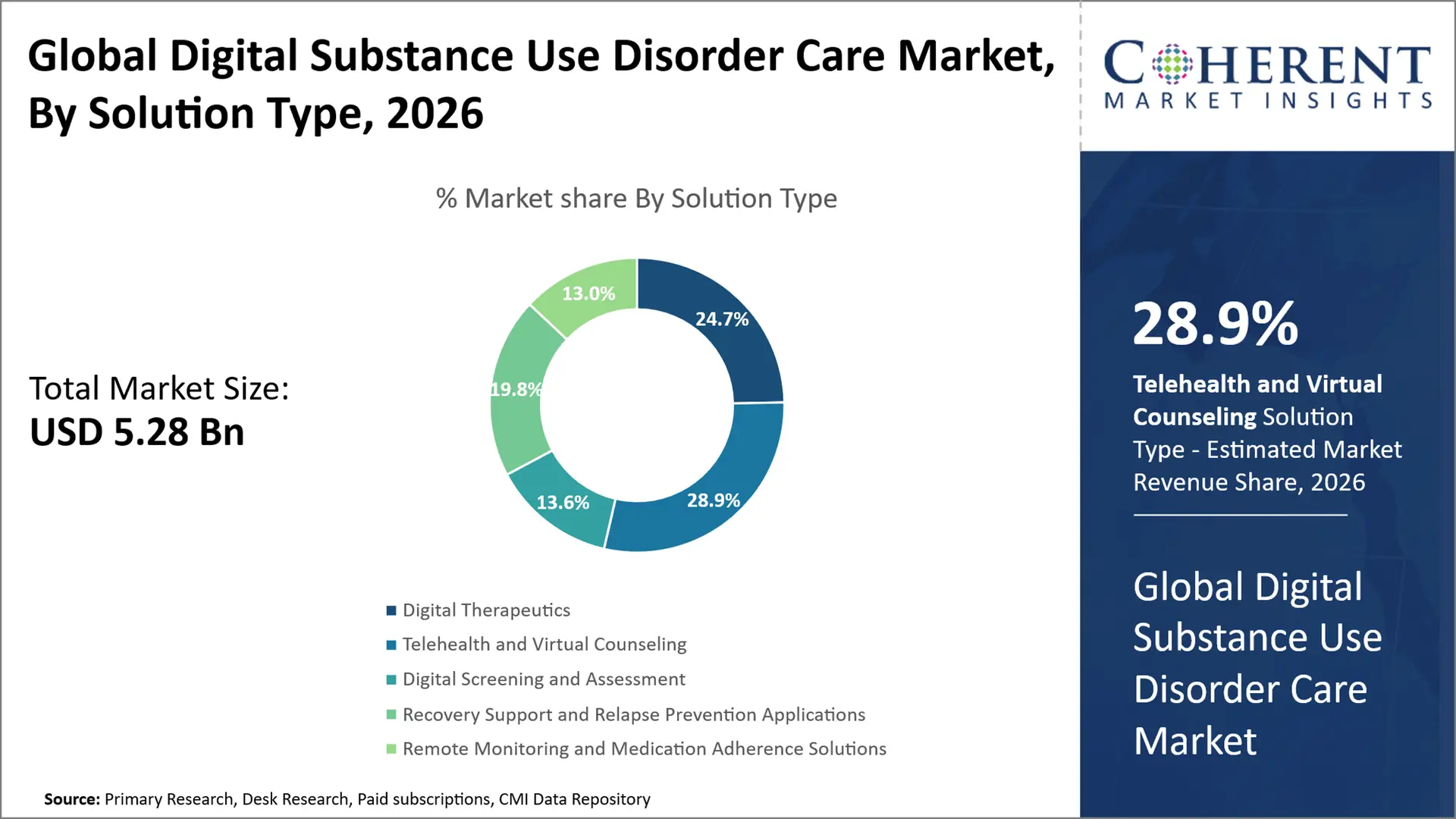
Telehealth and virtual counseling are projected to hold a market share of 28.9% in 2026, owing to the rising usage of digital health monitoring solutions and the treatment for addiction in a discreet way. These technological solutions allow remote counseling, group and individual therapy, and medication-related consults which reduce location barriers and lessen the stigma of attending mental health services. For instance, the Substance Use and Mental Health Services Administration (SAMHSA), part of the U.S. Department of Health and Human Services provides detailed clinical guidelines for the use of telehealth in the treatment of substance use disorder. This includes medication treatment for opioid use disorder, screening, and counseling via telehealth.
Alcohol Use Disorder Segment Dominates the Global Digital Substance Use Disorder Care Market
The alcohol use disorder segment is projected to hold a market share of 30.8% in 2026, owing to the prevalent use of harmful alcohol and growing demand for easily accessible and personalized recovery support. Digital platforms can be used to log alcohol consumption, manage cravings, track progress and access professional help from anywhere. For instance, the U.S. Department of Veterans Affairs has a mobile app, Vet Change, which offers tracking of drinking, offers personalized drinking goals, gives users encouragement and offers professional treatment, illustrating the application of digital solutions in alcohol use disorder management.
Current Events and their Impact
Current Events | Description and its Impact |
HHS and DEA Extend Telemedicine Prescribing Flexibilities for Substance Use Disorder Treatment (January 2026) |
|
Saskatchewan Launches Virtual Access to Addiction Medicine Programme (January 2026) |
|
Digital Substance Use Disorder Care Market Dynamics
Market Drivers
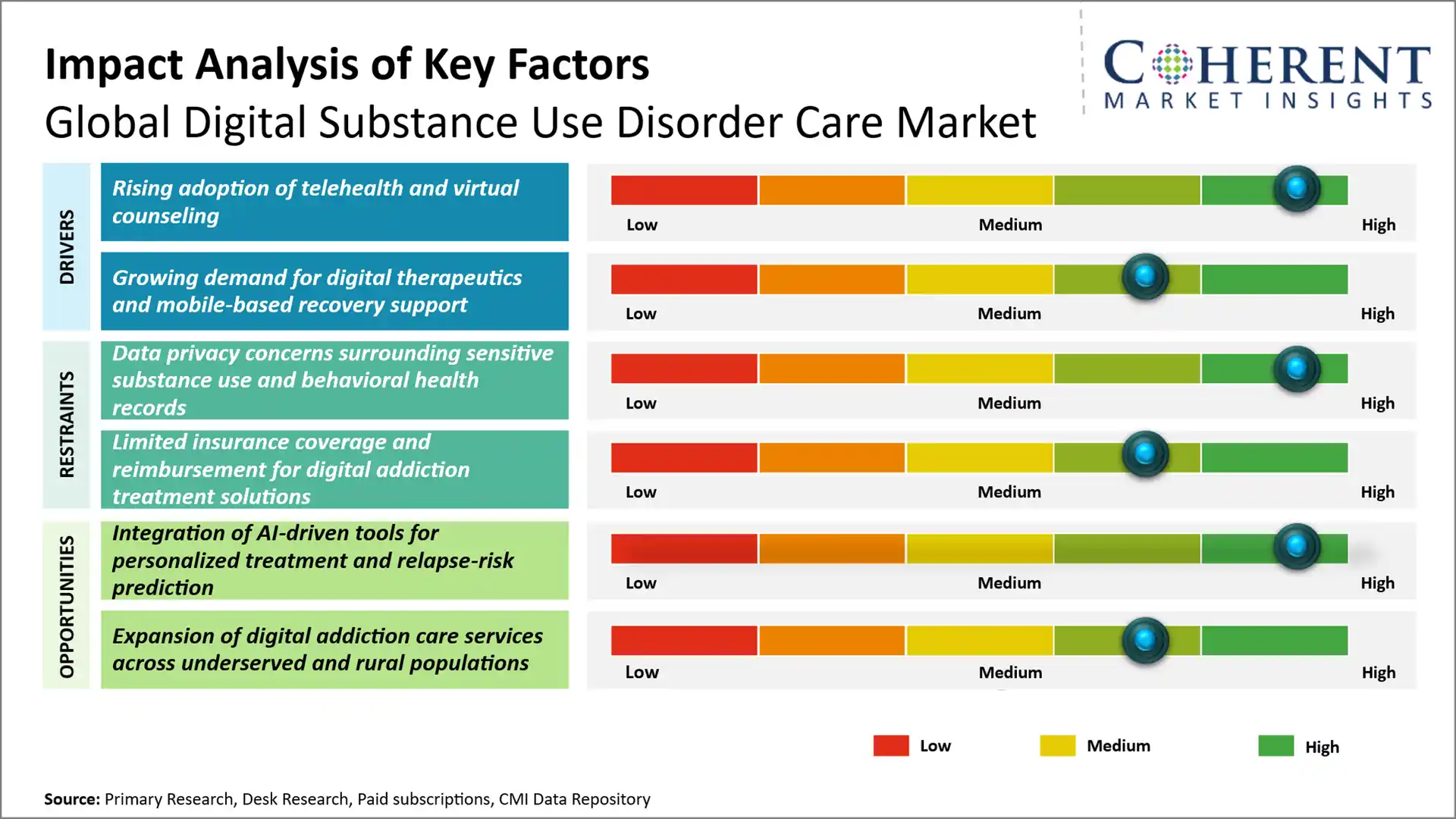
- Rising adoption of telehealth and virtual counseling: Telehealth is expanding access to substance use disorder treatment through remote sessions, individual counseling and virtual group therapy. This approach helps overcome the distance barrier; stigma associated with treatment and the lack of available addiction specialists. For instance, the U.S. Department of Health and Human Services, lists telehealth as one of the treatment delivery options for substance use disorder that includes individual and group therapy, screening and consultations related to medications used to treat opioid use disorder.
- Growing demand for digital therapeutics and mobile-based recovery support: The expanding use of digital therapeutics and mobile apps for recovery is accelerating the penetration of technology-enabled addiction management and tailored recovery programs. These digital health tools allow patients to track their cravings, measure their progress in recovery, implement behavioral interventions, and receive continuous support. For instance, in December 2025, a randomized clinical trial in nine outpatient clinics across the U.S. showed that retention in treatment was 75.5 percent for those using the Recovery Connect mobile tool, versus 63.6 percent at clinics not yet using the tool.
- Growing government focus on substance use disorder treatment and rehabilitation: Rising government expenditure on addiction treatment, counseling and rehabilitation is creating a high demand for the availability and continuity of treatment for SUDs. This is supporting the convergence of digital platforms for tracking patient recovery and long-term support after treatment. For instance, India’s Ministry of Social Justice and Empowerment announced its ‘National Action Plan for Drug Demand Reduction’ (NAPDDR) in June 2026 that encourages treatment, prevention, rehabilitation and social reintegration through government initiatives and community-based services.
Emerging Trends
- Integration of artificial intelligence for relapse prediction and personalized treatment: Artificial Intelligence and Machine Learning Digital substance use disorder care platforms are incorporating artificial intelligence and machine learning to assess patient behavior, identify relapse risks and tailor treatment measures.
- Impact: Predictive Analytics can have a profound effect, as it has the ability to detect behavioral changes and predictors of relapse at the earliest possible opportunity, so clinical intervention can be identified sooner. The use of personalized treatment recommendations can also increase engagement and treatment maintenance.
- Market Relevance: The shift is creating a stronger need for digital therapeutics equipped with AI, predictive monitoring solutions and addiction management solutions based on data. The market therefore offers new providers to develop tailored recovery tools for people with alcohol or opioid use disorder.
- Increased virtual addiction treatment and hybrid recovery solutions: The delivery of digital SUD care is trending toward hybrid models that combines virtual counseling, mobile apps and digital recovery tools, and in-person clinical services.
- Impact: Virtual treatment increases patients' ability to access addiction specialists especially in areas where access is limited and distance is vast. A hybrid model of delivery allows for ongoing follow-up, medication compliance, and long-term monitoring.
- Market Relevance: This momentum is driving demand for telehealth platforms, virtual behavioral counseling and digital recovery integration services. It also opens the door for providers to expand remote treatment programs and also to develop partnerships with hospitals and specialty addiction treatment centers.
Regional Insights
Why is North America a Strong Market for Digital Substance Use Disorder Care?
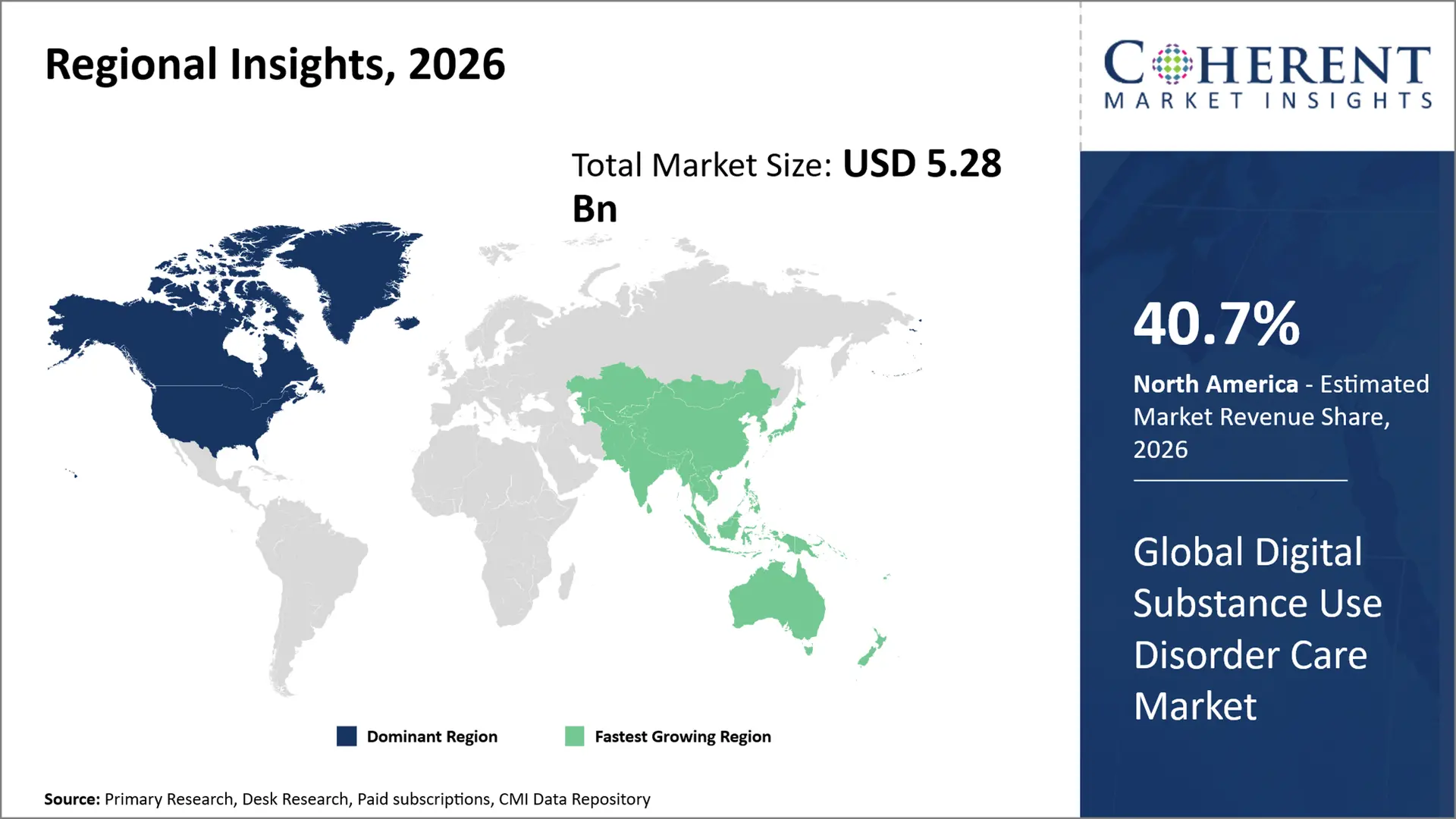
North America leads the global digital substance use disorder care market, accounting for an estimated 40.7% share in 2026, attributed to well-developed healthcare system, technologically advanced healthcare infrastructure, and high telehealth and digital therapeutic penetration. Increased government initiatives for mental health and addiction treatment as well as digital health innovations along with reimbursement models for virtual healthcare further strengthen regional growth.
For instance, in July 2026, U.S. Substance Abuse and Mental Health Services Administration (SAMHSA) announced funding of more than USD 281 Million across 15 grant programmes, with USD 68.2 Million allocated to programs which involves addiction treatment, overdoses prevention and addiction recovery for medications for addiction-assisted treatment and for opioid-addiction. (Source: U.S. Department of Health and Human Services) Furthermore, adoption of digital therapies into existing behavioral healthcare practices is widening treatment access and supporting patient engagement and recovery.
Why Does Asia Pacific Digital Substance Use Disorder Care Market Exhibit High Growth?
Asia Pacific is expected to exhibit the fastest growth in the global digital substance use disorder care market, registering an estimated CAGR of 18.6% during 2026–2033. The region is projected to account for 23.4% of the global market in 2026, owing to the rapid digitalization, proliferation of smart phone and internet, and rising awareness toward treatment for mental health & addiction. Expanding healthcare infrastructure and government support towards digital healthcare delivery and telemedicine, e-health among countries such as China, India, Japan, and South Korea is supporting the transition.
For instance, On October 1, 2026, Japan's Ministry of Health, Labour and Welfare announced the Medical Information Promotion Policy, which provides for the construction of a cloud-based medical infrastructure and the creation of a nationwide platform for sharing medical information, to support health and care record sharing, strengthening the expansion of interoperable digital healthcare services and technology-enabled care.
Global Digital Substance Use Disorder Care Market Outlook for Key Countries
Why is the U.S. Leading Innovation and Adoption in the Digital Substance Use Disorder Care Market?
U.S. leads innovation and adoption in the digital substance use disorder care market owing to the development of digital addiction treatment solutions and the high concentration of AI-enabled remote patient monitoring & virtual counseling subspecialties. The demand for digital technology-based medication-assisted treatment (MAT) supports the wider adoption of virtual addiction treatment, especially for patients with certain, time-sensitive disorders, against a backdrop of general acceptance for tele-health software. The market is also being driven by the introduction of digital therapeutics, and the use of AI-enabled remote patient monitoring in addiction treatment.
Is China a Favorable Market for Digital Substance Use Disorder Care Market?
China is an emerging market for digital substance use disorder care driven by the proliferation of digital healthcare infrastructure, increasing adoption of mobile internet, and a greater penetration of technology in behavioral healthcare. The increasing market demand for easily accessible addiction treatment and rehabilitation services can bring an opportunity for mobile recovery apps, digital patient monitoring, virtual counseling, and AI based treatment support.
Is Japan Emerging as a Key Growth Hub for the Digital Substance Use Disorder Care Market?
Japan appears to be the upcoming hub for growth of the digital substance use disorder care market, driven by its growing digital therapeutics landscape, growing telemedicine infrastructure, and a rising focus on tech-enabled behavioral health. The opportunities would mainly address digital addiction treatment application, virtual counseling, and remote recovery assistance. However, the market for specialized SUD digital care adoption remains an emerging area.
Why Does Germany Top the European Digital Substance Use Disorder Care Market?
Germany has been a frontrunner in the European digital substance use disorder market, as the country has created a well-established pathway for reimbursement of digital health applications (DiGA). Eligible DiGA can be prescribed and reimbursed by statutory health insurance and enable digital interventions to be incorporated into clinical care, even in the case of alcohol consumption. It also provides a clearer path for the clinical assessment and reimbursement of an application.
Is Digital Substance Use Disorder Care Market Developing in UK?
The UK market is emerging, supported by government funding on addiction related technologies, growing adoption of remote alcohol intervention, and the incorporation of digital interventions into mainstream clinical pathways of recovery. Potential areas of opportunity include virtual counseling, AI enabled addiction management, and mobile-based recovery support, but digital interventions are currently more of a second choice for in-person intervention.
Substance Use Disorder Prevalence and Treatment Access in the U.S. (2025)
Indicator | Population / Measure | 2025 Statistics |
People with substance use disorders | Population aged 12 or older | 44.6 million |
People receiving SUD treatment | Population aged 12 or older | 7.6 million |
People with SUD receiving no treatment | Population with past-year SUD | 39.7 million |
People receiving treatment through telehealth | Population aged 12 or older | 3.6 million |
People receiving medication for opioid use disorder | Population aged 12 or older | 2.1 million |
People receiving medication for alcohol use disorder | Population aged 12 or older | 1.1 million |
How is the integration of AI-driven tools for personalized treatment and relapse-risk prediction creating new growth opportunities in the digital substance use disorder care market?
AI-based solutions will probably be unlocking personalized SUD treatment via behavioral evaluation, relapse threat prediction, and well-timed clinical intervention. This might allow doctors and caregivers to observe how the affected person is doing and modify their remedy accordingly. For instance, the U.S. National Institutes of Health (NIH) funds the Survive-OUD project to develop and evaluate AI-based methods to predict relapse among people with opioid use disorder and enable personalized interventions.
Market Players, Key Development, and Competitive Intelligence
Key Developments
- In September 2026, Quel Health launched a telehealth platform focused on GLP-1-based approaches to addiction. The platform offers remote therapy, personalized solutions, drug management and ongoing support to patients. Originally available in 41 U.S. states and Washington, D.C., this program highlights the rising role of tech-powered addiction treatment and the application of new medications to treat addiction.
- In September 2026, Pelago announced the launch of its Behavioral Health Platform, a unified digital platform that consolidates treatment for substance use, mental health, and behavioral addiction. Leveraging the company's voice-first clinical AI system, Sona, to provide patient assessments, and to recommend them to appropriate care pathways and programs with support from licensed clinical professionals.
Competitive Landscape
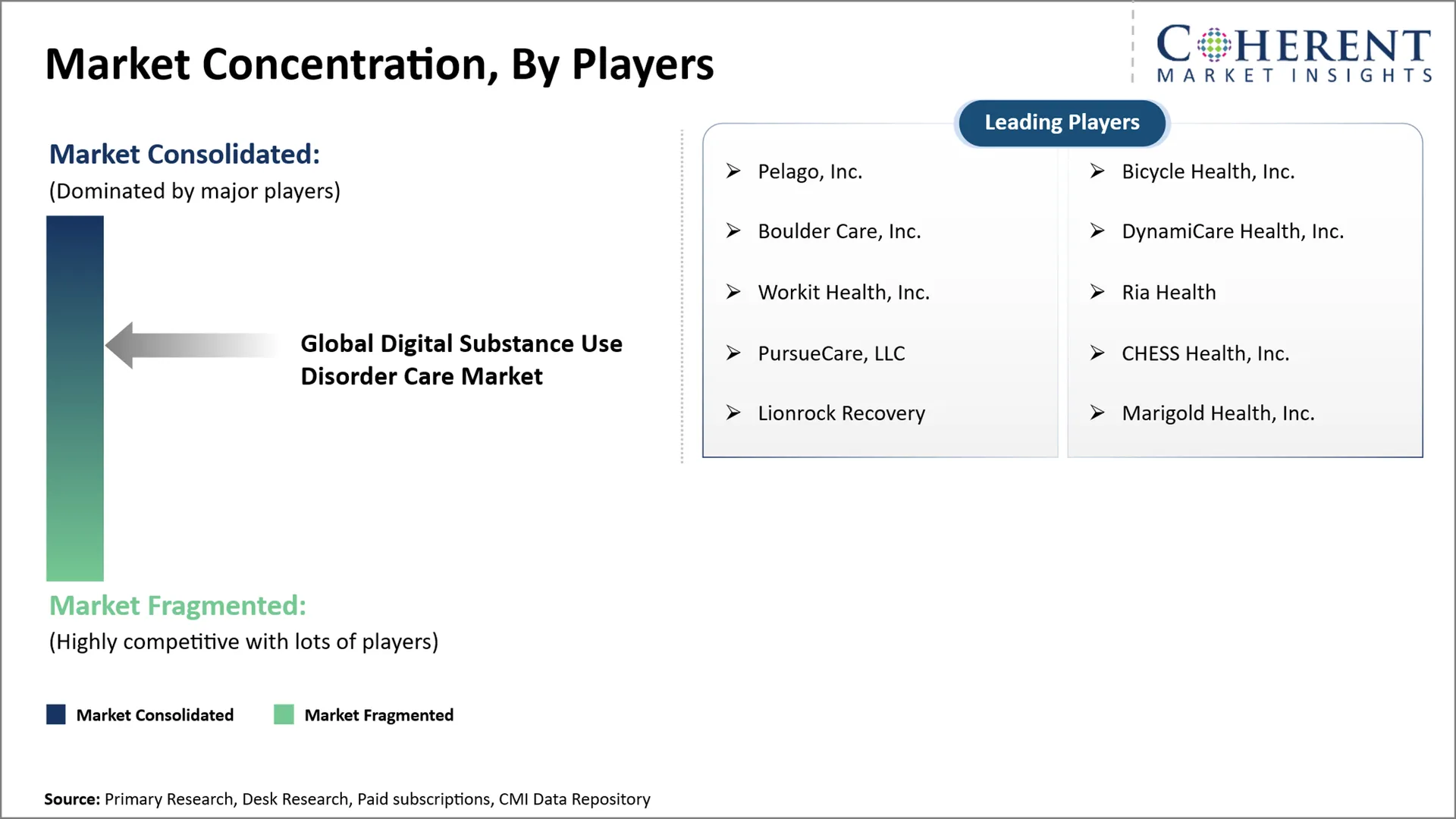
The global digital substance use disorder care market is highly competitive with players mainly competing on digitally-enabled products such as advanced digital therapeutics, telehealth enabled addiction treatment, artificial intelligence powered behavioral health platforms, and technology driven recovery management. Major players are driving their digital stack to strengthen their footprint across the substance use disorder treatment journey, involving screening, virtual counseling, medication compliance, recovery monitoring and relapse prevention.
Key focus areas include
- Development of personalized digital therapeutics for alcohol, opioid and other substance use disorders.
- Integration of digital platforms to medication-assisted treatment (MAT) and clinical treatment pathways.
- Strengthen patient supporters online and virtual recovery communities.
- Data privacy, cybersecurity and regulation and compliance augmentation.
Market Report Scope
Global Digital Substance Use Disorder Care Market Report Coverage | |||
Report Coverage | Details | ||
Base Year | 2025 | Market Size in 2026: | USD 5.28 Bn |
Historical Data For: | 2020 To 2024 | Forecast Period: | 2026 To 2033 |
Forecast Period 2026 To 2033 CAGR: | 12.4% | 2033 Value Projection: | USD 11.96 Bn |
Geographies covered: |
| ||
Segments covered: |
| ||
Companies covered: | Pelago, Inc., Bicycle Health, Inc., Boulder Care, Inc., DynamiCare Health, Inc., Workit Health, Inc., Ria Health, PursueCare, LLC, CHESS Health, Inc., Lionrock Recovery, Marigold Health, Inc. | ||
Growth Drivers: |
| ||
Restraints & Challenges: |
| ||
Analyst Opinion (Expert Opinion)
- In the coming years, global digital substance use disorder care market will evolve into hybrid, virtual artificial intelligence-powered, personalized, and customized addiction care that fuses digital therapeutics, digital and virtual counseling, and recovery services. Digital addiction care will broaden from treatment entry to craving control, medication adherence, body and mind behavior and relapse prevention, and other life skills. In addition, hybrid digital and virtual elements with in-clinic treatment controls will constitute long-term recovery care.
- Most significant opportunity will likely exist in AI-enabled relapse prevention and digital therapeutics for alcohol and opioid use disorders in India and China. These regions offer huge potential for low-cost mobile delivery solutions, virtual counseling and customized recovery apps to compensate for limited specialist addiction treatment services. Solutions designed for local languages, patterned after local care practices, and linked to the established health infrastructure are likely to be more widely adopted.
- In order to gain a competitive advantage market players should focus on clinically validated, easy-to-use services that offer virtual counseling, customized treatment plans, pill trackers, and AI-powered monitoring of recovery. Partnerships with addiction treatment centers, hospitals, insurers and public health organizations may also help to enable wider adoption and easier integration into clinical care settings. Patients' privacy, culturally-specific interventions, and elements designed to keep users engaged could be other key differentiators.
Speak to the analyst
Want personalized insights?
Take the findings above to one of our principal consultants, or have the report rebuilt around the segments, geographies and competitors you actually track.
Market Segmentation
- Component Insights (Revenue, USD Bn, 2021 - 2033)
- Software and Digital Platforms
- Services
- Solution Type Insights (Revenue, USD Bn, 2021 - 2033)
- Digital Therapeutics
- Telehealth and Virtual Counseling
- Digital Screening and Assessment
- Recovery Support and Relapse Prevention Applications
- Remote Monitoring and Medication Adherence Solutions
- Substance Type Insights (Revenue, USD Bn, 2021 - 2033)
- Alcohol Use Disorder
- Opioid Use Disorder
- Tobacco and Nicotine Use Disorder
- Cannabis Use Disorder
- Others
- Treatment Stage Insights (Revenue, USD Bn, 2021 - 2033)
- Prevention and Early Intervention
- Treatment and Recovery
- Relapse Prevention and Continuing Care
- End User Insights (Revenue, USD Bn, 2021 - 2033)
- Patients
- Healthcare Providers
- Addiction Treatment Centers
- Payers
- Others
- Regional Insights (Revenue, USD Bn, 2021 - 2033)
- North America
- U.S.
- Canada
- Latin America
- Brazil
- Argentina
- Mexico
- Rest of Latin America
- Europe
- Germany
- U.K.
- Spain
- France
- Italy
- Russia
- Rest of Europe
- Asia Pacific
- China
- India
- Japan
- Australia
- South Korea
- ASEAN
- Rest of Asia Pacific
- Middle East
- GCC Countries
- Israel
- Rest of Middle East
- Africa
- South Africa
- North Africa
- Central Africa
- North America
- Key Players Insights
- Pelago, Inc.
- Bicycle Health, Inc.
- Boulder Care, Inc.
- DynamiCare Health, Inc.
- Workit Health, Inc.
- Ria Health
- PursueCare, LLC
- CHESS Health, Inc.
- Lionrock Recovery
- Marigold Health, Inc.
Sources
Primary Research Interviews
- Addiction medicine specialists and psychiatrists
- Clinical psychologists and substance use disorder counselors
- Digital health and telehealth platform executives
- Behavioral health technology and digital therapeutics experts
Stakeholders
- Digital substance use disorder care platform providers
- Telehealth and virtual addiction treatment providers
- Digital therapeutics and mobile recovery application developers
- Addiction treatment centers and behavioral healthcare networks
- End-use Sectors
- Hospitals and Healthcare Systems
- Specialty Addiction Treatment Centers
- Outpatient Behavioral Health Clinics
- Home-Based and Community Recovery Services
- Regulatory & Health Bodies
- U.S. Food and Drug Administration (FDA)
- Substance Abuse and Mental Health Services Administration (SAMHSA)
- European Medicines Agency (EMA)
- Central Drugs Standard Control Organisation (CDSCO)
Databases
- ClinicalTrials.gov
- FDA Digital Health Center of Excellence Database
- SAMHSA Behavioral Health Treatment Services Locator
Associations
- American Society of Addiction Medicine (ASAM)
- AADAC, the Association for Addiction Professionals
- International Society of Addiction Medicine (ISAM)
- American Psychological Association (APA), Division 50 – Society of Addiction Psychology
Public Domain Sources
- World Health Organization (WHO)
- United Nations Office on Drugs and Crime (UNODC)
- National Institute on Drug Abuse (NIDA)
- Centers for Disease Control and Prevention (CDC)
Proprietary Elements
- CMI Data Analytics Tool
- Proprietary CMI Existing Repository of information for last 10 years.
Get access to 250+ pages report
Every segment, forecast, competitor profile and data table behind the analysis above — available for instant download.
- ESOMAR Member
- ISO 9001:2015 Certified
- D-U-N-S Registered
- GDPR & CCPA Compliant
Frequently Asked Questions
The global digital substance use disorder care market is estimated to be valued at USD 5.28 Bn in 2026 and is expected to reach USD 11.96 Bn by 2033.
Software and digital platforms dominate because they can offer scalable and personalized treatment, virtual engagement of the patient, and ongoing monitoring of recovery.
Digital substance use disorder treatment uses technology-enabled solutions like mobile apps, telehealth, and digital therapeutics to improve addiction treatment, recovery support, and relapse prevention.
The CAGR of global digital substance use disorder care market is projected to be 12.4% from 2026 to 2033.
Rising adoption of telehealth and virtual counseling, and growing demand for digital therapeutics and mobile-based recovery support are the major factors driving the growth of the global digital substance use disorder care market.
Data privacy concerns surrounding sensitive substance use and behavioral health records, and limited insurance coverage and reimbursement for digital addiction treatment solutions are the major factors hampering the growth of the global digital substance use disorder care market.
In terms of solution type, telehealth and virtual counseling are estimated to dominate the market revenue share in 2026.