

Digital Therapeutics Market Size and Forecast: 2026 to 2033
Digital Therapeutics Market is estimated to be valued at USD 13.93 Bn in 2026 and is expected to reach USD 51.98 Bn in 2033, exhibiting a compound annual growth rate (CAGR) of 20.7% from 2026 to 2033.
Key Takeaways
- By Application, Diabetes holds the largest market share of 24.7% in 2026 owing to its global prevalence of diabetes.
- By Product Type, Software expected to hold largest market share in 2026 owing to the scalability, flexibility & low incremental cost.
- By Sales Channel, Business-to-Business (B2B) acquired the prominent market share in 2026 owing to the demand from healthcare providers.
- By Region, North America dominates the overall market with an estimated share of 47.6% in 2026 owing to the high prevalence of chronic diseases.
Market Overview
The digital therapeutics market is growing quickly as healthcare systems adopt software-driven, evidence-based tools to manage chronic and behavioral conditions. Hospitals, insurers, employers, and patients increasingly use these solutions because they support remote care, personalized treatment, and continuous monitoring. Advances in mobile health, AI, connected devices, and regulatory frameworks further strengthen their clinical credibility and integration into care models. With chronic diseases rising worldwide and digital health infrastructure advancing, digital therapeutics are steadily becoming a central part of modern healthcare.
Current Events and Its Impact on the Digital Therapeutics Market
Current Events | Description and its impact |
Regulatory and Policy Developments in Key Markets |
|
Technological Innovations and Integration |
|
Macroeconomic and Investment Trends |
|
Segmental Insights
- Current Industry Events of 2026
- Market Size Estimation
- Regional Breakdown
- Competitive Landscape
- Customer Intelligence
- Segmental Analysis
- Pricing Analysis
- Key Market Drivers, Challenges & Future Trends
- Customized Insights Section
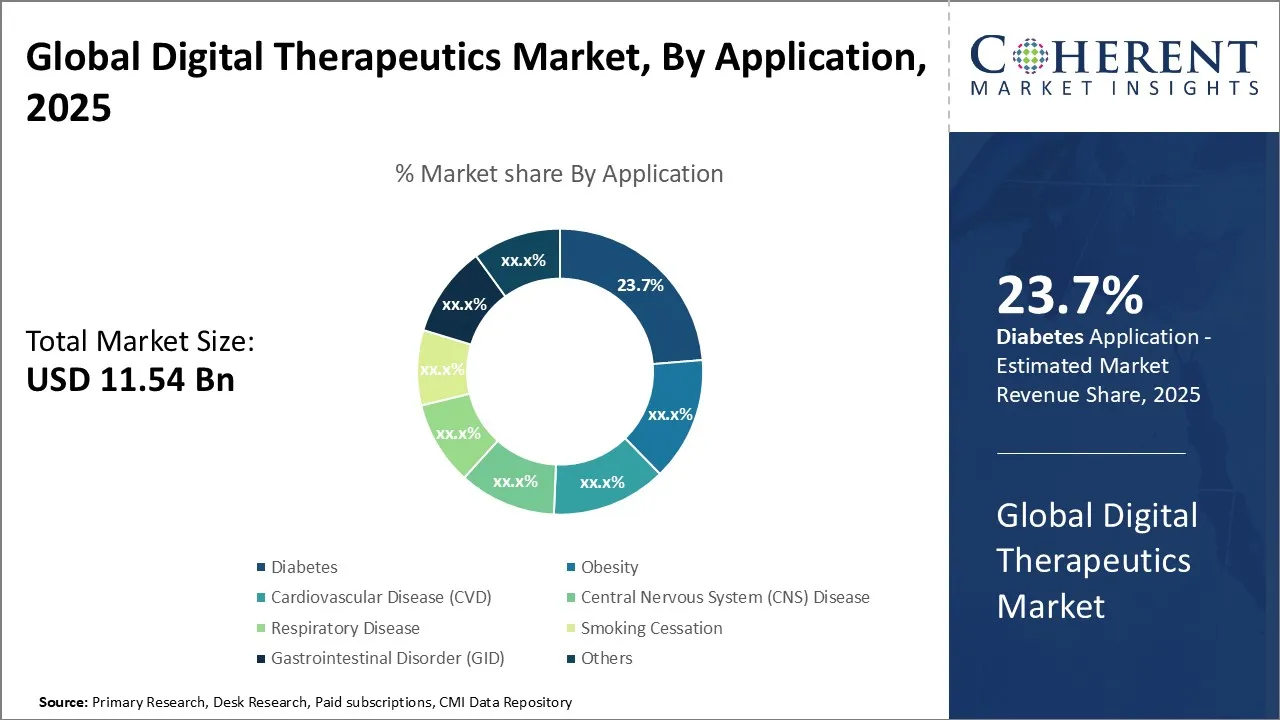
Digital Therapeutics Market Insights, By Application - Diabetes contributes the highest share of the market owing to its demand for continuous, personalized, and remote management
Diabetes holds the largest market share of 24.7% in 2026. Rising diabetes cases and the need for continuous self-management actively drive demand for digital therapeutics. Patients increasingly rely on digital tools for real-time guidance, lifestyle support, and convenient monitoring, as these solutions outperform traditional care in accessibility and responsiveness. Growing use of mobile health apps, connected glucose devices, and personalized digital coaching further accelerates adoption. Healthcare providers and insurers promote these platforms because they enhance adherence, reduce complications, and enable scalable, patient-focused diabetes care. For instance, Better Therapeutics has launched its AspyreRx digital diabetes therapeutic app, providing CBT for adults with type 2 diabetes after FDA de novo review.
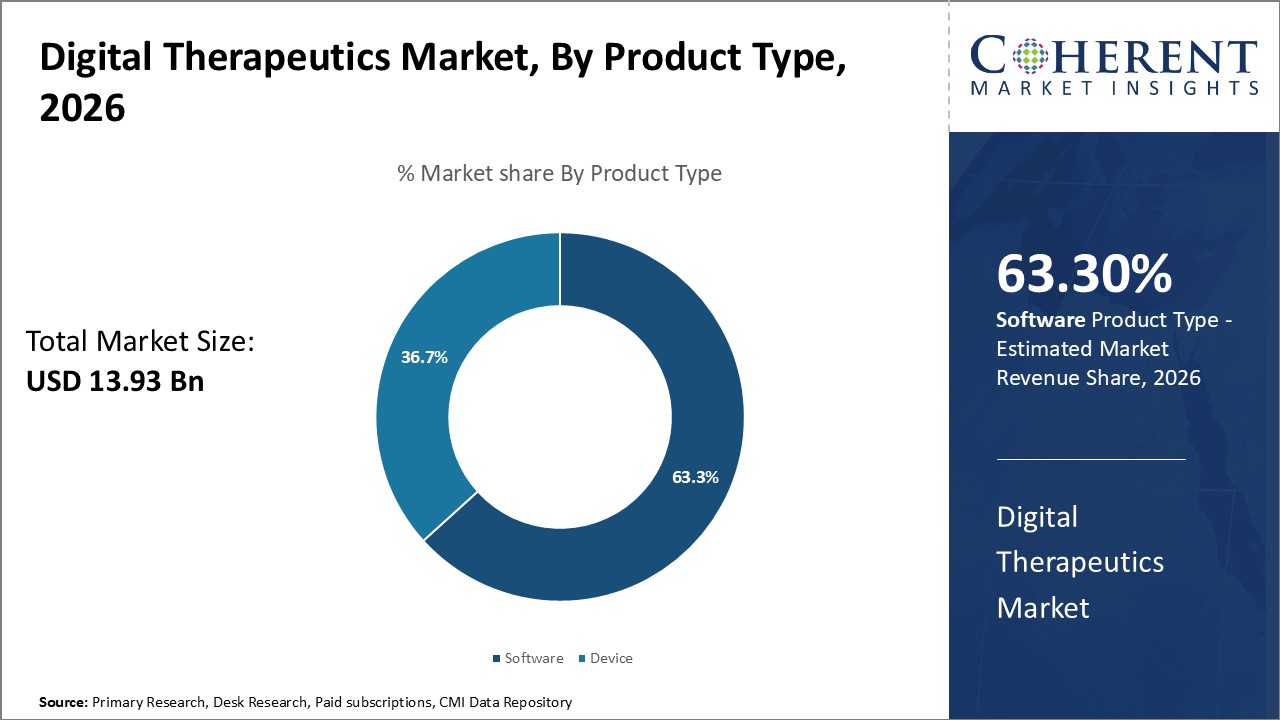
Digital Therapeutics Market Insights, By Product Type - Software contributes the highest share of the market owing to its advancements in digital technologies
Software continues to gain momentum in the digital therapeutics market as healthcare embraces flexible, data-driven care models. Digital platforms deliver scalable interventions, real-time monitoring, and personalized guidance without relying on physical hardware. Increasing use of smartphones, wearable devices, and AI-driven analytics allows therapeutic apps to integrate smoothly into daily habits and clinical workflows. Healthcare providers, payers, and employers actively support software-based solutions because they boost patient engagement, simplify chronic-disease management, and offer cost-effective remote treatment options. For instance, Curebase has released an integrated software and services package for digital therapeutics trials, speeding up enrollment and enabling sponsors to launch studies faster.
Digital Therapeutics Market Insights, By Sales Channel - Business-to-Business (B2B) contribute the highest share of the market owing to its scalability, efficiency and economics compared to traditional care
Rising demand from healthcare providers, insurers, and employers drives the growth of the business-to-business segment in digital therapeutics, as they seek scalable and cost-effective solutions. Organizations actively integrate digital therapeutics into care programs to enhance chronic disease management, improve patient outcomes, and lower long-term healthcare costs. Partnerships between DTx companies and institutions streamline adoption, enable smooth workflow integration, and provide actionable data insights. Regulatory support, clinical validation, and technological advancements further encourage businesses to implement these solutions across large patient populations efficiently
Regional Insights
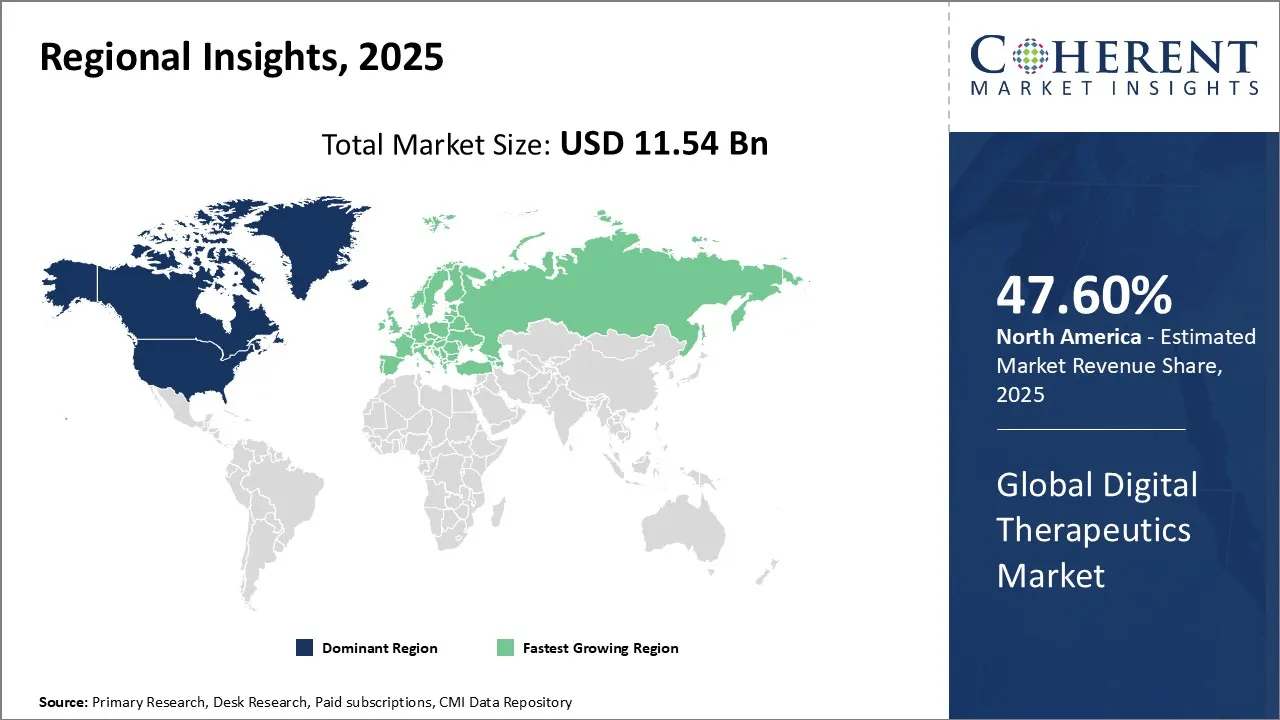
North America Digital Therapeutics Market Trends
North America dominates the overall market with an estimated share of 47.6% in 2026. North America drives the digital therapeutics market with its advanced healthcare infrastructure, widespread use of digital health technologies, and strong regulatory support for digital therapies. The high prevalence of chronic diseases, including diabetes and cardiovascular conditions, pushes patients, providers, insurers, and employers to adopt scalable, remote-care solutions. Leading companies actively innovate, while favorable reimbursement models and integration into clinical care pathways enable digital therapies to play a central role in patient management and preventive care throughout the region. For instance, in April 2026, Click Therapeutics, Inc. has received FDA marketing authorization for the first prescription digital therapeutic to prevent episodic migraine.
Europe Digital Therapeutics Market Trends
Healthcare systems across Europe are actively advancing the digital therapeutics market by adopting digital tools for preventive care, chronic disease management, and mental health support. Strong regulatory frameworks, such as Germany’s digital-health reimbursement scheme, validate and fund these therapies, encouraging patients and providers to implement them. Innovations in mobile health, AI, and remote monitoring enable providers to deliver personalized, accessible care to diverse populations. At the same time, rising chronic disease rates and increasing patient acceptance of digital health drive the steady adoption of DTx throughout Europe. For instance, Healthware and the Digital Therapeutics Alliance have released a report outlining policy pathways to advance digital health adoption in Europe.
United States Digital Therapeutics Market Trends
Patients and providers in the U.S. are actively driving the digital therapeutics market by adopting remote care and personalized treatment solutions for chronic conditions. The widespread use of smartphones, wearable devices, and AI-powered analytics allows digital health apps to provide timely interventions and continuous monitoring. Regulatory support, including streamlined approval pathways and expanded reimbursement options, motivates clinicians and payers to incorporate digital therapies into standard care. At the same time, rising rates of chronic diseases and mental health challenges increase demand for scalable, accessible digital treatments nationwide. For instance, in April 2026, Click Therapeutics, Inc. (“Click”), a leader in prescription medical treatments as both prescription digital therapeutics and software-enhanced drug™ therapies, has launched an updated brand identity and new website to reflect the company’s evolution and vision for the future of medicine.
United Kingdom Digital Therapeutics Market Trends
Healthcare providers, payers, and patients in the United Kingdom are actively expanding the digital therapeutics market by adopting technology-driven care tools for chronic disease, mental health, and preventive care. The NHS and regulatory bodies promote evaluation and reimbursement pathways, encouraging broader clinician and insurer participation. Advances in mobile health apps, wearable integration, AI-powered personalization, and remote monitoring allow digital therapies to integrate smoothly into daily routines and NHS workflows. Rising chronic illness rates, increasing digital health acceptance, and stronger institutional support are driving steady DTx adoption across the UK.
End-user Feedback and Unmet Needs in the Digital Therapeutics Market
- Digital Literacy & Accessibility Gaps: Many users — especially older adults or those with limited tech familiarity — struggle with navigation, setup, or consistent use of digital therapeutics apps. Poor usability or complicated interfaces can discourage adoption or lead to drop-off.
- Unclear Clinical Evidence & Comparison with Traditional Care: Users and providers often find it difficult to judge whether a digital therapeutic is as effective as traditional treatments, because comparative data and long-term outcome evidence remain limited or hard to access.
- Data Privacy, Security & Trust Concerns: Since DTx apps handle sensitive health information, many users worry about privacy, data protection, and potential misuse — which can reduce willingness to share data or engage with the solution fully.
Digital Therapeutics Market Trend
Widespread Mobile & Wearable Integration
Digital therapeutics increasingly rely on smartphone apps and wearable devices to deliver real‑time monitoring, remote care, and personalized interventions. Patients use apps for glucose tracking, behavioral coaching, mental‑health support and more, while wearables feed continuous biometric data back to platforms. This ease of access and convenience helps embed DTx into daily routines and makes care more proactive and continuous — enhancing adherence and therapeutic outcomes.
AI‑Driven Personalization & Adaptive Care
A growing portion of DTx solutions are leveraging AI and machine learning to analyze user data, predict health trends, and deliver customized treatment plans. This enables adaptive interventions that evolve with patient behavior and health status, making therapies more precise and effective. AI‑powered
analytics and chatbots also enable scalable behavioral support, making DTx a viable option across diverse patient needs.
Digital Therapeutics Market Opportunity
Expansion into New Therapeutic Areas & Broader Health Needs
Digital therapeutics can extend far beyond chronic diseases, opening opportunities in mental health, pain management, addiction recovery, post‑surgical rehabilitation, preventive care, and lifestyle wellness. As evidence grows for efficacy, DTx firms can tap a wider range of health conditions, offering non‑drug, accessible interventions. This diversification makes DTx relevant to more patients and increases its role in holistic healthcare
Market Report Scope
Digital Therapeutics Market Report Coverage
| Report Coverage | Details | ||
|---|---|---|---|
| Base Year: | 2025 | Market Size in 2026: | USD 13.93 Bn |
| Historical Data for: | 2020 To 2024 | Forecast Period: | 2026 To 2033 |
| Forecast Period 2026 to 2033 CAGR: | 20.7% | 2033 Value Projection: | USD 51.98 Bn |
| Geographies covered: |
| ||
| Segments covered: |
| ||
| Companies covered: | Happify, Inc., 2Morrow, Inc., Akili Interactive Labs, Inc., Click Therapeutics, Inc., and Fitbit, Inc. (Twine Health, Inc.). | ||
| Growth Drivers: |
| ||
| Restraints & Challenges: |
| ||
Digital Therapeutics Market News
- In November 2025, Lupin Digital Health, India’s leading cardiac digital-therapeutics company, has launched VITALYFE™, an AI-powered cardiometabolic wellness platform to help working professionals improve their heart health.
- In November 2025, Amara Therapeutics launched Dry Days Health, a first-of-its-kind virtual clinic for women living with urinary incontinence, a widely prevalent and under-treated condition.
Analyst Opinion (Expert Opinion)
- The rise of the Digital Therapeutics (DTx) market has begun reshaping how chronic and behavioral conditions are managed — yet its potential remains far from exhausted. Among the strongest indicators of promise is the fact that, as of 2024, more than 360 software–based digital therapies already exist, with over 140 prescription‑grade DTx cleared for at‑home use and more than 220 employed in clinical settings.
- Major real‑world successes further illustrate the opportunity. For example, Omada Health (known for its diabetes prevention and chronic-disease management programs) and Livongo (now part of Teladoc Health) have demonstrated that DTx solutions combining data analytics, behavioral coaching, and remote monitoring can engage patients at scale — appealing to payers, employers, and providers alike.
- Regulatory recognition is another powerful springboard: in April 2025, Click Therapeutics obtained regulatory authorization for the first prescription DTx targeting episodic migraine, marking a milestone for DTx legitimacy in mainstream care. Such clear regulatory pathways reduce entry barriers, increase trust among clinicians and payers, and smooth reimbursement and adoption.
- On the technology front, advances in AI, real‑time data integration, wearables and interoperable health data systems are enabling DTx to deliver personalized, adaptive care with minimal friction. These capabilities make digital therapies especially suited to long-term chronic care — a domain where traditional episodic clinical interventions often fall short.
Speak to the analyst
Want personalized insights?
Take the findings above to one of our principal consultants, or have the report rebuilt around the segments, geographies and competitors you actually track.
Market Segmentation
- Global Digital Therapeutics Market, By Application
- Diabetes
- Obesity
- Cardiovascular Disease (CVD)
- Central Nervous System (CNS) Disease
- Respiratory Disease
- Smoking Cessation
- Gastrointestinal Disorder (GID)
- Others
- Global Digital Therapeutics Market, By Product Type
- Software
- Device
- Global Digital Therapeutics Market, By Sales Channel
- Business-to-Business (B2B)
- Employer
- Healthcare Provider
- Others
- Business-to-Consumer (B2C)
- Patient
- Caregiver
- Regional Insights (Revenue, USD Bn, 2021 - 2033)
- North America
- U.S.
- Canada
- Latin America
- Brazil
- Argentina
- Mexico
- Rest of Latin America
- Europe
- Germany
- U.K.
- Spain
- France
- Italy
- Russia
- Rest of Europe
- Asia Pacific
- China
- India
- Japan
- Australia
- South Korea
- ASEAN
- Rest of Asia Pacific
- Middle East
- GCC Countries
- Israel
- Rest of Middle East
- Africa
- South Africa
- North Africa
- Central Africa
- North America
- Key Players Insights
- Happify, Inc.
- 2Morrow, Inc.
- Akili Interactive Labs, Inc.
- Click Therapeutics, Inc.
- Fitbit, Inc. (Twine Health, Inc.).
Sources
Primary Research interviews
- Healthcare professionals (doctors, therapists, digital health specialists)
- Patients using digital therapeutics solutions
- Hospital and clinic administrators
- Digital therapeutics product developers and innovators
Databases
- PubMed
- ClinicalTrials.gov
- World Health Organization (WHO) Global Health Observatory
- U.S. Food and Drug Administration (FDA) Device and Drug Databases
- European Medicines Agency (EMA) Database
Magazines
- MIT Technology Review (Health & Biotech sections)
- Wired (Digital Health coverage)
- Harvard Business Review (Healthcare Technology articles)
- MedTech Insight
Journals
- Journal of Medical Internet Research (JMIR)
- Nature Digital Medicine
- Frontiers in Digital Health
- Digital Health Journal
- Lancet Digital Health
Newspapers
- The New York Times (Health and Technology sections)
- The Guardian (Health Technology section)
- The Washington Post (Digital Health coverage)
- Financial Times (Healthcare Technology)
Associations
- Digital Therapeutics Alliance (DTA)
- American Medical Association (AMA)
- European Society of Cardiology (Digital Health initiatives)
- Healthcare Information and Management Systems Society (HIMSS)
Public Domain sources
- Government health portals (CDC, NHS, Ministry of Health websites)
- Open-access research publications
- WHO and UN health reports
- Patent databases (Google Patents, USPTO)
Proprietary Elements
- CMI Data Analytics Tool
- Proprietary CMI Existing Repository of information for last 8 years
Get access to 250+ pages report
Every segment, forecast, competitor profile and data table behind the analysis above — available for instant download.
- ESOMAR Member
- ISO 9001:2015 Certified
- D-U-N-S Registered
- GDPR & CCPA Compliant
Missing comfort of reading report in your local language? Find your preferred language:
Transform your Strategy with Exclusive Trending Reports
Frequently Asked Questions
The Digital Therapeutics Market is estimated to be valued at USD 13.93 Bn in 2026, and is expected to reach USD 51.98 Bn by 2033.
The CAGR of the Digital Therapeutics Market is projected to be 20.7% from 2026 to 2033.
Growing burden of chronic diseases and the outbreak of COVID-19 (global pandemic) is fueling the growth of the market.
The diabetes segment is the leading application segment in the market.
Challenges involved with digital therapeutics and concerns about patient data privacy are major factors restraining growth of the market.
Major players operating in the market are Happify, Inc., 2Morrow, Inc., Akili Interactive Labs, Inc., Click Therapeutics, Inc., and Fitbit, Inc. (Twine Health, Inc.).