

Global Endoscopy Operative Devices Market Size and Forecast – 2026 To 2033
The global endoscopy operative devices market is expected to grow from USD 11.64 Bn in 2026 to USD 17.02 Bn by 2033, registering a compound annual growth rate (CAGR) of 5.6% from 2026 to 2033. The market for global endoscopy operative devices is poised for significant expansion, fueled by the rising global burden of colorectal and other gastrointestinal diseases, which is increasing the need for screening and therapeutic endoscopic interventions.
According to the World Health Organization (WHO), approximately 2.0 million new colorectal cancer cases were recorded globally in 2024, making it the third most commonly diagnosed cancer worldwide. This highlights the growing need for early screening, biopsy, polypectomy, tissue removal, and other therapeutic endoscopic interventions, supporting sustained demand for endoscopy operative devices.
Key Takeaways of the Global Endoscopy Operative Devices Market
- Endoscopic access devices are projected to hold 29.3 % of the global endoscopy operative devices market share in 2026, making it dominant product type segment, across North America due to the region’s established therapeutic endoscopy infrastructure and high procedural volumes. The U.S. Centers for Medicare & Medicaid Services (CMS), under NCD 210.3, provides Medicare coverage for colorectal cancer screening tests, including follow-up colonoscopy after a positive covered screening test, supporting continued utilization of colonoscopic procedures and associated operative devices.
- Disposable devices are projected to hold 58.4 % of the global endoscopy operative devices market share in 2026, making it dominant usage segment, across North America due to stringent infection-prevention practices and increasing emphasis on safe handling of endoscopic equipment. In March 2015, the U.S. Food and Drug Administration (FDA) issued its Final Guidance, “Reprocessing Medical Devices in Health Care Settings: Validation Methods and Labeling,” which recommends validated cleaning, disinfection, and sterilization procedures for reusable medical devices and highlights the infection risks associated with inadequate reprocessing.
- Gastrointestinal endoscopy is projected to hold 44.2 % of the global endoscopy operative devices market share in 2026, making it dominant procedure segment, with Asia Pacific emerging as a major growth market due to expanding GI screening and endoscopy capacity. For instance, Japan's Ministry of Health, Labour and Welfare (MHLW) supports nationwide health insurance coverage for gastrointestinal endoscopic procedures, while Japan performs approximately 14.3 million insured GI endoscopies annually, demonstrating the region's substantial procedural base.
- North America market maintains dominance with an expected share of 35.8 % in 2026, bolstered by the region’s established endoscopy infrastructure, high procedural volumes, and strong colorectal disease-management programs. The U.S. Preventive Services Task Force (USPSTF) recommends colorectal cancer screening for adults aged 45–75 years, including colonoscopy every 10 years as one of the recommended screening strategies, supporting sustained demand for endoscopic procedures and associated operative devices.
- Asia Pacific is expected to exhibit the fastest growth in the global endoscopy operative devices market, registering an estimated CAGR of 8.9 % during 2026–2033, driven by expanding screening programs and increasing access to gastrointestinal endoscopy. For instance, in August 2024, China’s National Health Commission issued the Colorectal Cancer Screening and Early Diagnosis and Treatment Program (2024 Edition), recommending colonoscopy as a first-line screening method and specifying periodic colonoscopic follow-up, strengthening the foundation for endoscopy adoption across the country.
Segmental Insights
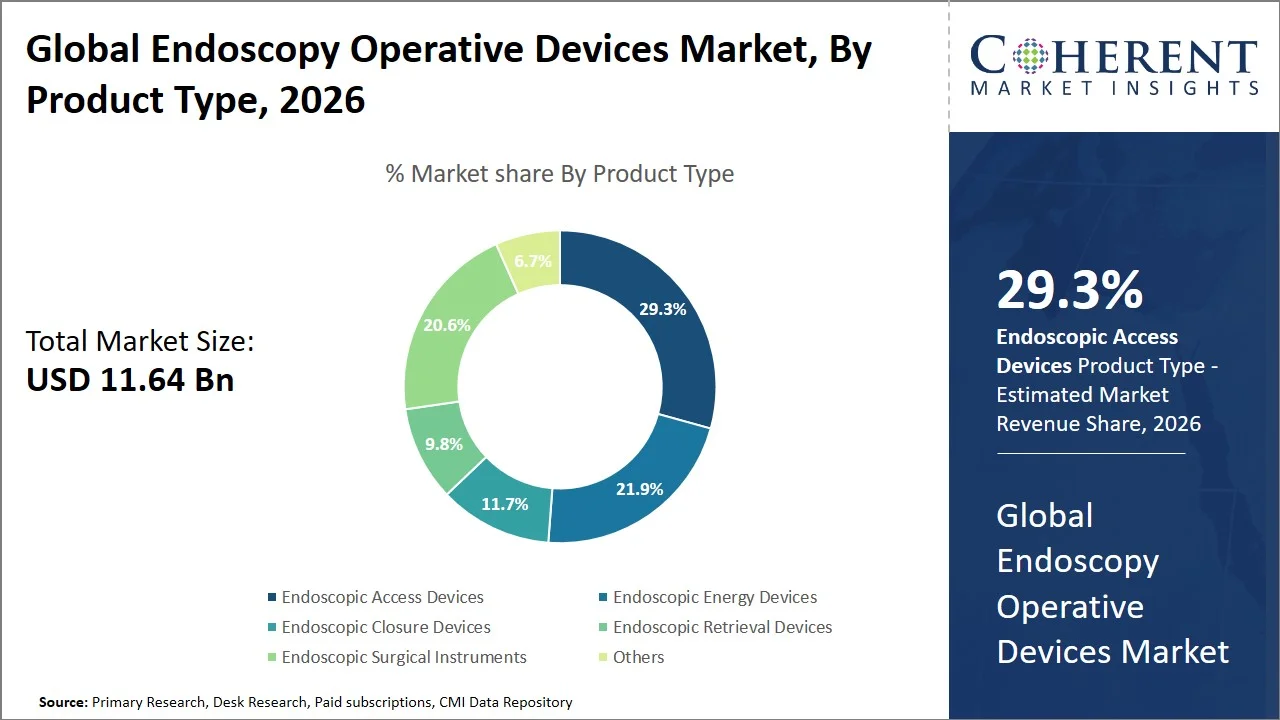
Why Do Endoscopic Access Devices Dominate the Global Endoscopy Operative Devices Market?
Endoscopic access devices are projected to hold the market share of 29.3% in 2026, as they are an integral component in the initial creation and maintenance of access required during minimally invasive procedures. Increasing implementation of laparoscopic, thoracic, gynecological and urological procedures are enhancing the usage of trocars, ports and cannulas with better sealing, fixation, visualization, and instruments compatibility. For instance, the Medtronic’s VersaOne optical trocar aims to facilitate creation and stabilization of a port for entry for gynecologic, general, thoracic and urology endoscopic surgery which highlights the wide applicability of advanced access port technology for these surgical interventions.
- Current Industry Events of 2026
- Market Size Estimation
- Regional Breakdown
- Competitive Landscape
- Customer Intelligence
- Segmental Analysis
- Pricing Analysis
- Key Market Drivers, Challenges & Future Trends
- Customized Insights Section
Why Does Disposable Devices Represent the Largest Usage Segment in the Endoscopy Operative Devices Market?
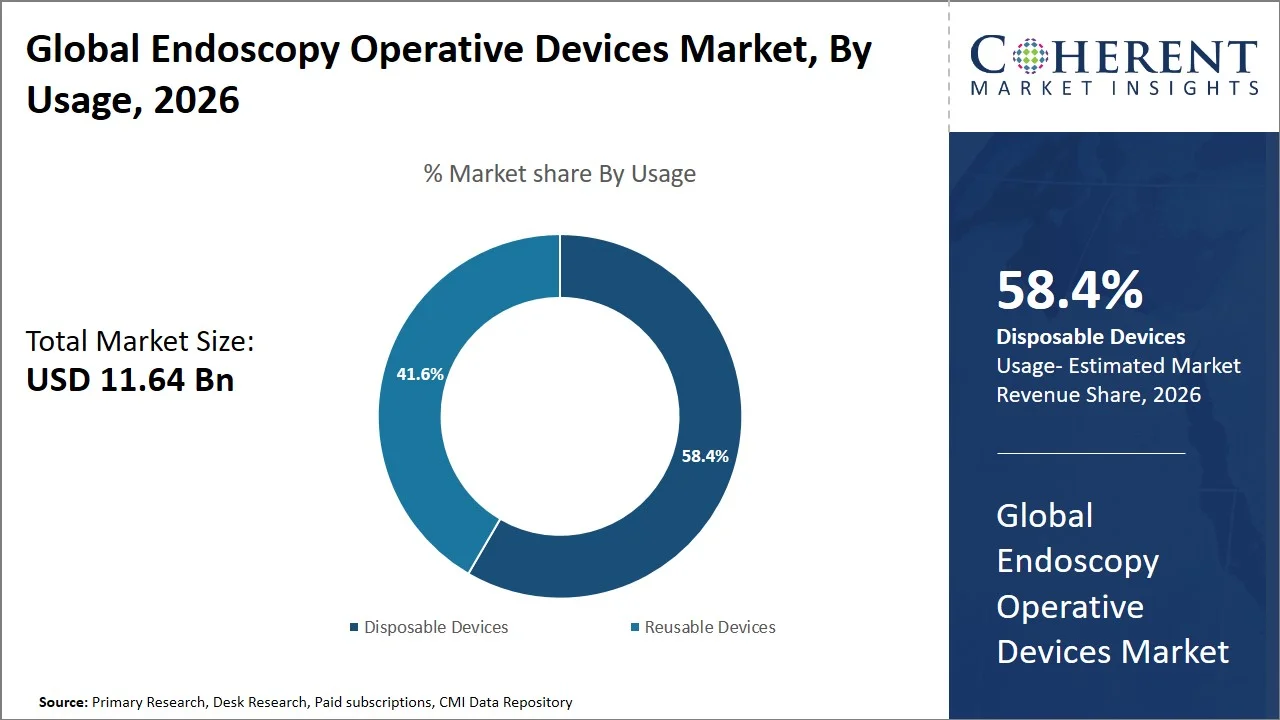
Disposable devices are projected to hold a market share of 58.4% in 2026, owing to the high emphasis on infection control procedures, reduced processing time for procedures and reduced reliance on complex reprocessing workflows. Single use devices allow the user to omit post-operation washing and sterilizing procedures, enhancing operational productivity in high-volume endoscopy settings. The U.S. Food and Drug Administration (FDA) defines single-use devices as those designed to be used on a single patient and for a single use during a single medical procedure and notes their requirements regarding reprocessing, underscoring particular issues involving the safety and the use of single-use technologies.
Gastrointestinal Endoscopy Segment Dominates the Global Endoscopy Operative Devices Market
The gastrointestinal endoscopy segment is projected to hold a market share of 44.2% in 2026, due to its substantial volume for screening, diagnosis, biopsy, polypectomy, and therapeutic interventions. The growth of coloscopy and new gastrointestinal technologies is fueling the demand for biopsy, retrieval, closure, hemostasis, and tissue-removing instruments. For instance, NHS England reported that 85,523 colonoscopies were completed within the bowel cancer screening programme in 2024-25 with 36,282 complete screening colonoscopies carried out involving resection and retrieval of histologically positive adenomas.
Current Events and their Impact
Current Events | Description and its Impact |
Japan Introduced New Reimbursement for Endoscopic Surgical Support Devices (April 2026) |
|
England Updated Bowel Cancer Screening Pathway Requirements (March 2026) |
|
European Commission Issued Updated Colorectal Cancer Screening Recommendations (June 2025) |
|
Endoscopy Operative Devices Market Dynamics
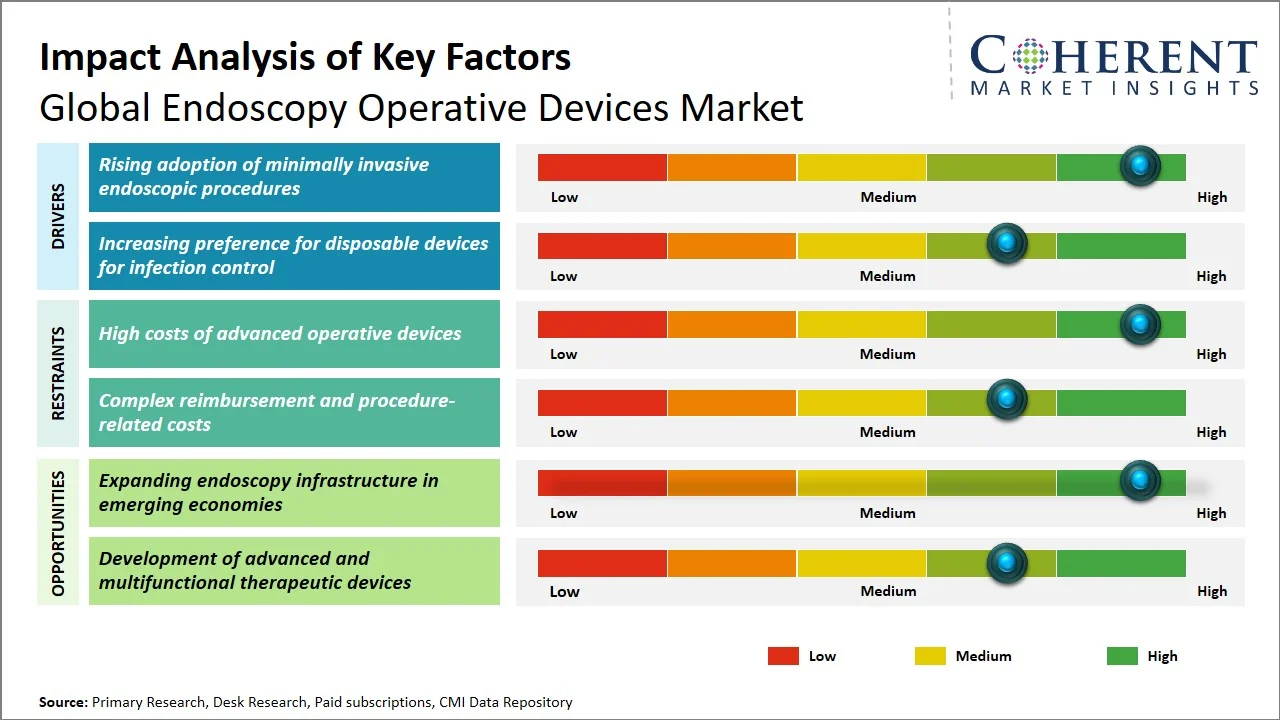
Market Drivers
- Rising adoption of minimally invasive endoscopic procedures: The growing preference for minimally invasive interventions is increasing the use of endoscopic procedures across screening, diagnosis, and therapeutic applications, thereby driving demand for operative instruments and accessories. For instance, in March 2026, the UK National Health Service updated its bowel cancer screening care pathway, specifying colonoscopy as the usual diagnostic test following a positive screening result. The pathway incorporates surveillance and therapeutic management, including follow-up for identified lesions, directly supporting continued utilization of endoscopic procedures.
- Increasing preference for disposable devices for infection control: The growing focus on reducing cross-contamination risks is accelerating the adoption of disposable endoscopic devices and components, particularly where complex reprocessing can create infection-control challenges. For instance, in April 2022, the U.S. Food and Drug Administration (FDA) issued a Safety Communication supporting the transition to fully disposable duodenoscopes and duodenoscopes with disposable components, citing concerns associated with contamination following reprocessing.
- Rising prevalence of gastrointestinal disorders: The increasing burden of gastrointestinal disorders is generating greater demand for endoscopic diagnosis and minimally invasive therapeutic interventions, supporting the use of biopsy, retrieval, closure, and other operative devices. For instance, the WHO European Health Information Gateway reports that diseases of the digestive system remain a measurable cause of mortality across European countries, with data covering conditions classified under ICD-10 codes K00–K93. The continuing disease burden supports the need for endoscopic evaluation and intervention across gastrointestinal conditions.
Emerging Trends
- Integration of Artificial Intelligence in Endoscopic Procedures: AI-enabled systems are increasingly being integrated into endoscopy to support real-time lesion detection, diagnosis, quality assessment, and workflow optimization. This trend is expanding the role of intelligent technologies in both diagnostic and therapeutic endoscopy.
- Growing Adoption of Robotic-Assisted Endoscopy: Robotic platforms are emerging as a key technology for complex therapeutic procedures by improving instrument control, stability, dexterity, and precision. Their development is particularly advancing applications such as endoscopic submucosal dissection and robotic colonoscopy.
- Shift Toward Single-Use and Modular Endoscopic Devices: Increasing interest in single-use and modular systems is reducing reliance on post-procedure reprocessing while supporting infection-control objectives and procedural efficiency. Integration of single-use platforms with AI-based monitoring is further expanding this trend in gastrointestinal endoscopy.
Regional Insights
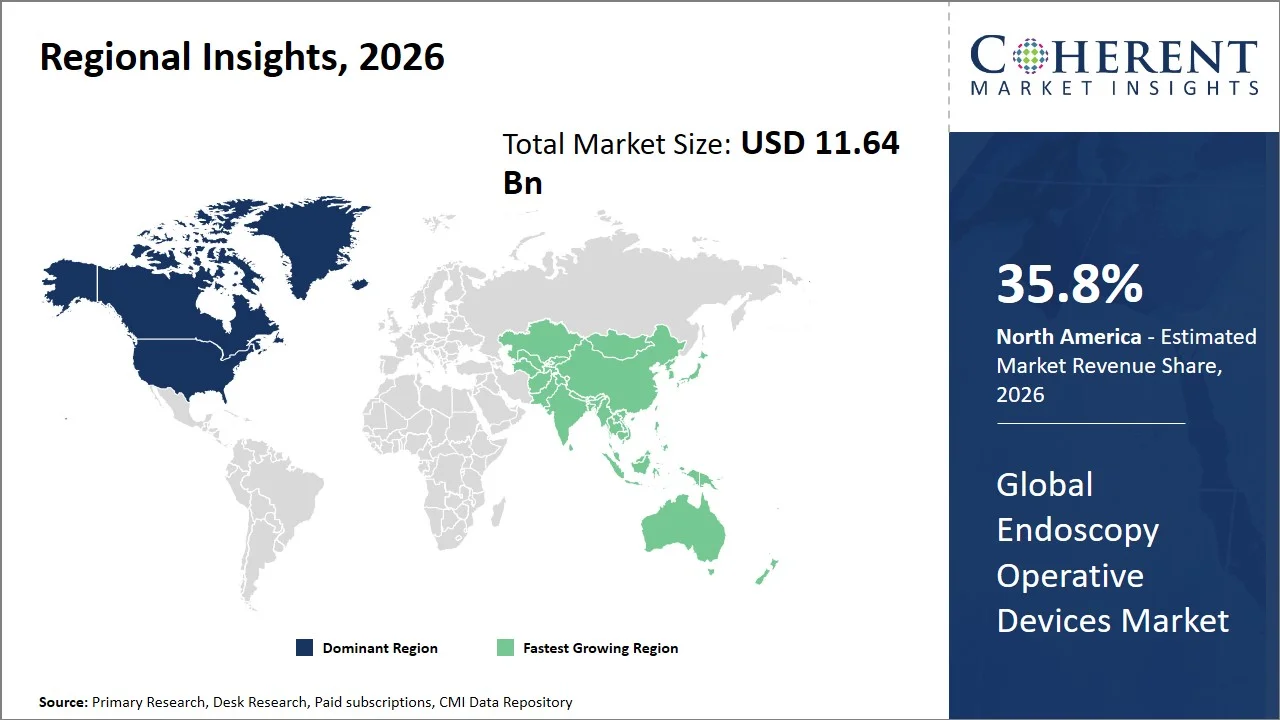
Why is North America a Strong Market for Endoscopy Operative Devices?
North America leads the global endoscopy operative devices market, accounting for an estimated 35.8% share in 2026, because of a robust healthcare infrastructure, advanced adoption rates for minimal invasive procedures, and high R&D investments in the technology. Additionally, government regulations and supporting healthcare policies along well-developed framework in the region promote innovation and ease the adoption of new products.
For instance, in February 2026, the U.S. Food and Drug Administration (FDA) implemented the Quality Management System Regulation (QMSR) to harmonized U.S. Quality requirements for devices with the requirements of the international standard ISO 13485:2016 and updated the regulatory approach to medical device manufacturing. Furthermore, strong reimbursement scenarios along with high expenditure levels of healthcare, contribute to the significant consumption of endoscopy operative devices across clinical settings.
Why Does Asia Pacific Endoscopy Operative Devices Market Exhibit High Growth?
Asia Pacific is expected to exhibit the fastest growth in the global endoscopy operative devices market, registering an estimated CAGR of 8.9% during 2026–2033. The region is projected to account for approximately 25.0% of the global market in 2026, due to growing healthcare infrastructure, Increasing awareness of minimally invasive surgeries and enhanced access to cutting edge endoscopic treatment. Growing development of healthcare capacities in regions like China, India, Japan & the entire South-East Asia is contributing to the surging demand for diagnosis and treatment endoscopy.
Furthermore, government supportive policies fostering indigenous medical device production & enabling imports coupled with better economic availability is a key factor in fueling its growth in the region. For instance, in March 2025, China’s National Medical Products Administration (NMPA) enacted Announcement No.30 to further improve the administrative procedure of domestic manufacturing of imported medical devices and accelerate domestic manufacturing transfer process and the priority in registration and production license granting.
Global Endoscopy Operative Devices Market Outlook for Key Countries
Why is the U.S. Leading Innovation and Adoption in the Endoscopy Operative Devices Market?
The U.S. has been in the forefront of leading innovation and adoption in the endoscopy operative devices market driven by its mature therapeutic endoscopy framework, widespread clinical acceptance of these sophisticated devices. A well-established, collaborative relationship between endoscopy practice, expert treatment centers, and device manufacturers facilitates prompt adoption of technologically innovative, operative endoscopic instruments in all areas. Endoscopy practice is also facilitated by country’s well-developed GI, urology, lung and surgical endoscopy infrastructure, reinforcing broad utilization to the equipment in a diverse and extensive market.
Is Japan a Favorable Market for Endoscopy Operative Devices Market?
Japan provides a favorable environment for the endoscopy operative devices market due to the wide use of endoscopic surgery in most surgical procedures including general abdominal surgery, gynecological surgery, thoracic surgery, surgery of the kidney and urogenital organs. With advanced operative instruments and consumables supported by the nation’s advanced minimally invasive surgical ecosystem and extensive clinical knowledge. Japan stands as a sound base for technology-based endoscopy including that of robotic- assisted and precision-based procedures
Is China Emerging as a Key Growth Hub for the Endoscopy Operative Devices Market?
China represents the major opportunity and will be boosted by its huge patient base, developing capacity of endoscopy use and penetration of minimally-invasive and therapeutical procedures. Availability of the latest advanced technology available in GI endoscopy, urology and surgical solutions in leading hospitals helps to promote the growth of the China market. In the long-term, increase localization for medical-device development and improved access of expertise in endoscopy will drive a long-term opportunity.
Why Does Germany Top the European Endoscopy Operative Devices Market?
Germany leads the European endoscopy operative devices market driven by technologically advanced endoscopy infrastructure coupled with a high density of specialty hospitals and an established adoption of therapeutic endoscopic tools. The extensive clinical experience in advanced GI procedures and surgical, as well as in operative endoscopy further boosts the steady usage of operative instruments and tools. Moreover, a sophisticated medical device system structure allows for quick introduction and adoption of technologically advanced endoscopic innovations in clinics and institutes.
Is Endoscopy Operative Devices Market Developing in India?
India is emerging as a promising end-market for endoscopy operative devices due to increasing procedure volumes, especially for minimally invasive surgery, and expanded endoscopy services available beyond major metropolitan hospitals. Increasing adoption of endoscopic technology for GI therapy, surgery and in urology is creating strong demand for access/retrieval, closure devices, energy devices and tissue-management devices. Furthermore, the growth of private hospital chains networks and their endoscopy service offering in tier-2 and tier-3 cities is adding more market segments to the total addressable market.
Global Surgical Capacity Indicators
Indicator | Global Data / Estimate |
People lacking access to safe, affordable surgical and anaesthesia care | 5.0 billion |
Additional surgical procedures needed annually | 143 million |
Minimum surgical volume target by 2030 | 5,000 procedures per 100,000 population/year |
Countries targeted to track surgical volume by 2030 | 100% |
Target population with access to essential surgical and anaesthesia services by 2030 | ≥80% |
How is the expanding endoscopy infrastructure in emerging economies creating new growth opportunities in the endoscopy operative devices market?
In the emerging economies, increase in healthcare infrastructure and investments toward the public hospitals are presenting significant opportunity for widespread utilization of endoscopy operative devices. The upgradation of hospital under government initiative are improving the access for the specialty units and modern diagnosis & treatment functions beyond major metropolitan centers. For instance, India’s Pradhan Mantri Swasthya Suraksha Yojana (PMSSY) has considered 75 government medical college/institution upgradation projects, adding 150–250 beds and super-specialty departments, while completed projects include dedicated endoscopy facilities.
Market Players, Key Development, and Competitive Landscape
Key Developments
- In June 2026, Olympus Corporation launched new 4K LCD monitors designed to enhance visualization during endoscopic diagnosis and therapy. The monitors feature Mini-LED backlighting and anti-reflection and anti-glare technologies, supporting clearer visualization during procedures. The launch expands Olympus’ endoscopy imaging portfolio and can complement the adoption of advanced operative endoscopy technologies.
- In May 2026, Olympus Corporation signed an exclusive global distribution agreement with EndoRobotics Co., Ltd. to add robot-assisted technologies to its EndoTherapy portfolio. The collaboration aims to expand adoption of advanced therapeutic procedures such as endoscopic submucosal dissection (ESD), supporting more precise and minimally invasive treatment.
- In October 2025, FUJIFILM Healthcare Americas Corporation launched the ELUXEO 8000 Endoscopic Imaging System, featuring 4K resolution, enhanced LED multi-light technology, and a new Amber-Red Color Imaging mode. The system is compatible with Fujifilm’s diagnostic and therapeutic endoscopes and is designed to improve visualization during complex therapeutic procedures.
- In April 2025, Medtronic plc announced a distribution agreement with Dragonfly Endoscopy, Inc. to introduce the Dragonfly pancreaticobiliary system to the U.S. market. The system offers enhanced visualization, maneuverability, and therapeutic capabilities for biliary and pancreatic duct procedures. The agreement expands access to advanced pancreaticobiliary endoscopy and supports the adoption of innovative operative endoscopic technologies.
Competitive Landscape
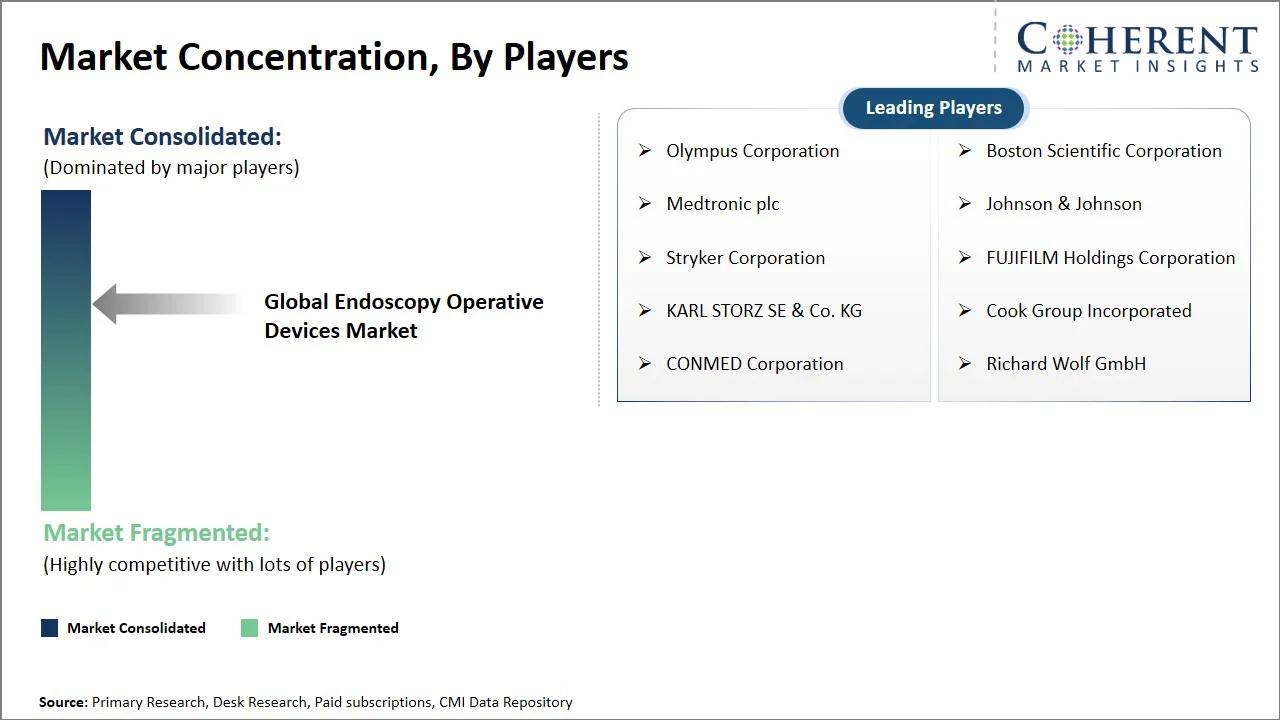
The global endoscopy operative devices market is moderately competitive, with market dynamics shaped by product innovation, expansion of therapeutic endoscopy, increasing adoption of disposable devices, and advancements in energy, closure, access, and retrieval technologies. Market participants are increasingly focusing on improving procedural precision, device ergonomics, infection-control performance, and compatibility with advanced endoscopic platforms while expanding applications across gastrointestinal, urological, gynecological, pulmonary, and surgical procedures. Key focus areas include:
- Development of advanced biopsy, grasping, cutting, dissection, and retrieval instruments
- Advancement of endoscopic closure and hemostasis devices for minimally invasive interventions
- Expansion of single-use and disposable operative devices to support infection-control requirements
- Improvement of energy-based devices for precise tissue cutting, coagulation, and hemostasis
- Development of smaller, flexible, and ergonomically optimized access devices and instruments
- Integration of advanced visualization, navigation, and AI-assisted technologies with operative workflows
- Expansion into emerging markets through cost-effective, locally adapted, and broader-access device offerings
Market Report Scope
Endoscopy Operative Devices Market Report Coverage
| Report Coverage | Details | ||
|---|---|---|---|
| Base Year: | 2025 | Market Size in 2026: | USD 11.64 Bn |
| Historical Data for: | 2020 To 2024 | Forecast Period: | 2026 To 2033 |
| Forecast Period 2026 to 2033 CAGR: | 5.6% | 2033 Value Projection: | USD 17.02 Bn |
| Geographies covered: |
| ||
| Segments covered: |
| ||
| Companies covered: | Olympus Corporation, Boston Scientific Corporation, Medtronic plc, Johnson & Johnson, Stryker Corporation, FUJIFILM Holdings Corporation, KARL STORZ SE & Co. KG, Cook Group Incorporated, CONMED Corporation, Richard Wolf GmbH | ||
| Growth Drivers: |
| ||
| Restraints & Challenges: |
| ||
Analyst Opinion (Expert Opinion)
- In the coming years, global endoscopy operative devices market is expected to move toward more therapeutic, minimally invasive, and procedure-specific solutions, with disposable devices, advanced closure systems, energy devices, and robotic-assisted technologies gaining importance. The market will increasingly shift from standalone instruments toward integrated solutions that improve procedural precision, workflow efficiency, infection control, and patient outcomes. AI-enabled visualization and digitally connected endoscopy platforms are also expected to become important differentiators as technology adoption expands.
- The maximum opportunities are foreseen within endoscopic closure devices for gastrointestinal endoscopy in China, supported by the large and expanding volume of gastrointestinal procedures and increasing adoption of advanced therapeutic endoscopy. Players should prioritize closure and hemostasis solutions designed for complex GI interventions, particularly products that offer reliable tissue approximation, bleeding control, ease of deployment, and compatibility with commonly used endoscopic platforms.
- In order to gain a competitive advantage market players should focus on developing differentiated, procedure-specific devices while expanding disposable and multifunctional product portfolios to address infection-control and workflow requirements. Building local manufacturing or distribution capabilities in high-growth Asian markets, strengthening physician training, and forming partnerships with hospitals and endoscopy centers can improve market access. Companies that combine product innovation with competitive pricing, platform compatibility, and responsive clinical support are likely to gain an advantage over competitors.
Speak to the analyst
Want personalized insights?
Take the findings above to one of our principal consultants, or have the report rebuilt around the segments, geographies and competitors you actually track.
Market Segmentation
- Product Type Insights (Revenue, USD Bn, 2021 - 2033)
- Endoscopic Access Devices
- Endoscopic Energy Devices
- Endoscopic Closure Devices
- Endoscopic Retrieval Devices
- Endoscopic Surgical Instruments
- Others
- Usage Insights (Revenue, USD Bn, 2021 - 2033)
- Disposable Devices
- Reusable Devices
- Procedure Insights (Revenue, USD Bn, 2021 - 2033)
- Gastrointestinal Endoscopy
- Laparoscopy
- Urology Endoscopy
- Gynecology Endoscopy
- Bronchoscopy
- Arthroscopy
- Others
- End User Insights (Revenue, USD Bn, 2021 - 2033)
- Hospitals
- Ambulatory Surgical Centers
- Specialty Clinics
- Others
- Regional Insights (Revenue, USD Bn, 2021 - 2033)
- North America
- U.S.
- Canada
- Latin America
- Brazil
- Argentina
- Mexico
- Rest of Latin America
- Europe
- Germany
- U.K.
- Spain
- France
- Italy
- Russia
- Rest of Europe
- Asia Pacific
- China
- India
- Japan
- Australia
- South Korea
- ASEAN
- Rest of Asia Pacific
- Middle East
- GCC Countries
- Israel
- Rest of Middle East
- Africa
- South Africa
- North Africa
- Central Africa
- North America
- Key Players Insights
- Olympus Corporation
- Boston Scientific Corporation
- Medtronic plc
- Johnson & Johnson
- Stryker Corporation
- FUJIFILM Holdings Corporation
- KARL STORZ SE & Co. KG
- Cook Group Incorporated
- CONMED Corporation
- Richard Wolf GmbH
Sources
Primary Research Interviews
- Gastroenterologists and therapeutic endoscopy specialists involved in diagnostic and interventional procedures
- Endoscopy unit directors and operating-room managers responsible for device utilization and procurement
- Hospital and ambulatory surgical center procurement professionals evaluating endoscopic operative devices
- Medical device distributors and channel partners specializing in endoscopy and minimally invasive surgery
- Biomedical engineers and clinical technology specialists responsible for endoscopic equipment management and reprocessing
Stakeholders
- Endoscopy device manufacturers developing surgical instruments, energy devices, closure systems, access devices, and retrieval devices
- Hospitals, ambulatory surgical centers, and specialty endoscopy centers performing diagnostic and therapeutic procedures
- Gastroenterology, urology, gynecology, pulmonology, and surgical departments using operative endoscopy technologies
- Medical device distributors and specialty suppliers supporting endoscopy equipment procurement and distribution
- Endoscopy reprocessing and infection-prevention service providers
- Academic medical centers and clinical research institutions evaluating emerging endoscopic technologies
- End-use Sectors
- Hospitals and tertiary-care centers performing diagnostic and therapeutic endoscopic procedures
- Ambulatory surgical centers providing minimally invasive and same-day endoscopic interventions
- Specialty clinics focused on gastroenterology, urology, gynecology, pulmonology, and other endoscopic procedures
- Diagnostic and imaging centers offering endoscopic screening, visualization, and tissue-sampling services
- Academic medical centers and research institutions evaluating advanced endoscopic technologies and procedures
- Specialized endoscopy centers providing high-volume gastrointestinal and therapeutic endoscopy services
- Regulatory & Health Bodies
- U.S. Food and Drug Administration (FDA) – Center for Devices and Radiological Health (CDRH)
- European Commission – Medical Devices Coordination Group (MDCG)
- Medicines and Healthcare products Regulatory Agency (MHRA), U.K.
- Pharmaceuticals and Medical Devices Agency (PMDA), Japan
- National Medical Products Administration (NMPA), China
- Health Canada – Medical Devices Directorate
- Therapeutic Goods Administration (TGA), Australia
Databases
- ClinicalTrials.gov – clinical studies involving endoscopic procedures and operative devices
- EU Clinical Trials Information System (CTIS) – clinical trial information in the European Union
- WHO International Clinical Trials Registry Platform (WHO ICTRP) – international clinical-trial records
- FDA MAUDE – medical-device adverse-event and safety reports
- FDA 510(k) Premarket Notification Database – medical-device regulatory information
- EUDAMED – European database on medical devices
- WHO Global Health Observatory (GHO) – global health and medical-device indicators
Journals
- Gastrointestinal Endoscopy
- iGIE: Innovative Gastrointestinal Intervention
- Techniques and Innovations in Gastrointestinal Endoscopy
- Journal of Minimally Invasive Gynecology
Associations
- American Society for Gastrointestinal Endoscopy (ASGE)
- European Society of Gastrointestinal Endoscopy (ESGE)
- Society of American Gastrointestinal and Endoscopic Surgeons (SAGES)
- European Society of Gastroenterology and Endoscopy Nurses and Associates (ESGENA)
- American Urological Association (AUA)
- American Association of Gynecologic Laparoscopists (AAGL)
- American College of Surgeons (ACS)
Public Domain Sources
- U.S. Food and Drug Administration (FDA) – endoscopy-device safety, reprocessing, regulatory, and device information
- World Health Organization (WHO) – medical-device, surgical-care, and global health information
- U.S. Centers for Medicare & Medicaid Services (CMS) – procedure coverage, reimbursement, and utilization information
- U.S. Centers for Disease Control and Prevention (CDC) – endoscopy-related infection prevention and colorectal screening information
- National Institutes of Health (NIH) – publicly funded clinical and medical research
- European Commission – medical-device regulations, conformity assessment, and EUDAMED information
- OECD – healthcare utilization, screening, and health-system statistics
Proprietary Elements
- CMI Data Analytics Tool, Proprietary CMI Existing Repository of information for last 10 years.
Get access to 250+ pages report
Every segment, forecast, competitor profile and data table behind the analysis above — available for instant download.
- ESOMAR Member
- ISO 9001:2015 Certified
- D-U-N-S Registered
- GDPR & CCPA Compliant
Missing comfort of reading report in your local language? Find your preferred language:
Frequently Asked Questions
Endoscopic access devices provide controlled entry and maintain a working channel for introducing and manipulating operative instruments during minimally invasive procedures.
They enable interventions such as biopsy, polypectomy, tissue dissection, hemostasis, foreign-body retrieval, dilation, and endoscopic closure.
Gastrointestinal endoscopy leads due to its extensive use in screening, diagnosis, tissue sampling, lesion removal, and therapeutic interventions.
Reusable devices undergo cleaning and reprocessing between procedures, whereas disposable devices are designed for single-patient use to reduce cross-contamination risks.
Disposable devices minimize the need for repeated reprocessing and can reduce potential contamination risks associated with inadequate cleaning or sterilization.
Biopsy forceps, snares, electrosurgical devices, hemostatic clips, and coagulation accessories are commonly used for tissue removal and bleeding control.
Robotic assistance is improving instrument control, precision, stability, and dexterity in complex therapeutic endoscopic procedures.