

Peptide-Based Gastrointestinal Disorders Therapeutics Market Size and Share Analysis- 2026 To 2033
The Peptide-Based Gastrointestinal Disorders Therapeutics Market size is anticipated to grow at a CAGR of 7.8%, with USD 5.79 Bn in 2026, and is expected to reach USD 9.80 Bn in 2033. The primary growth drivers are largely defined by the increasing prevalence of gastrointestinal disorders, rising adoption of peptide-based therapies, and continued development and commercialization of targeted treatments for conditions such as short bowel syndrome, chronic idiopathic constipation, and irritable bowel syndrome with constipation (IBS-C). In November 2025, the U.S. FDA approved linaclotide (Linzess) for pediatric patients aged 7 years and older with IBS-C, making it the first FDA-approved treatment for pediatric IBS-C; the approval followed its earlier authorization for functional constipation in patients aged 7–17 years.
Key Takeaways
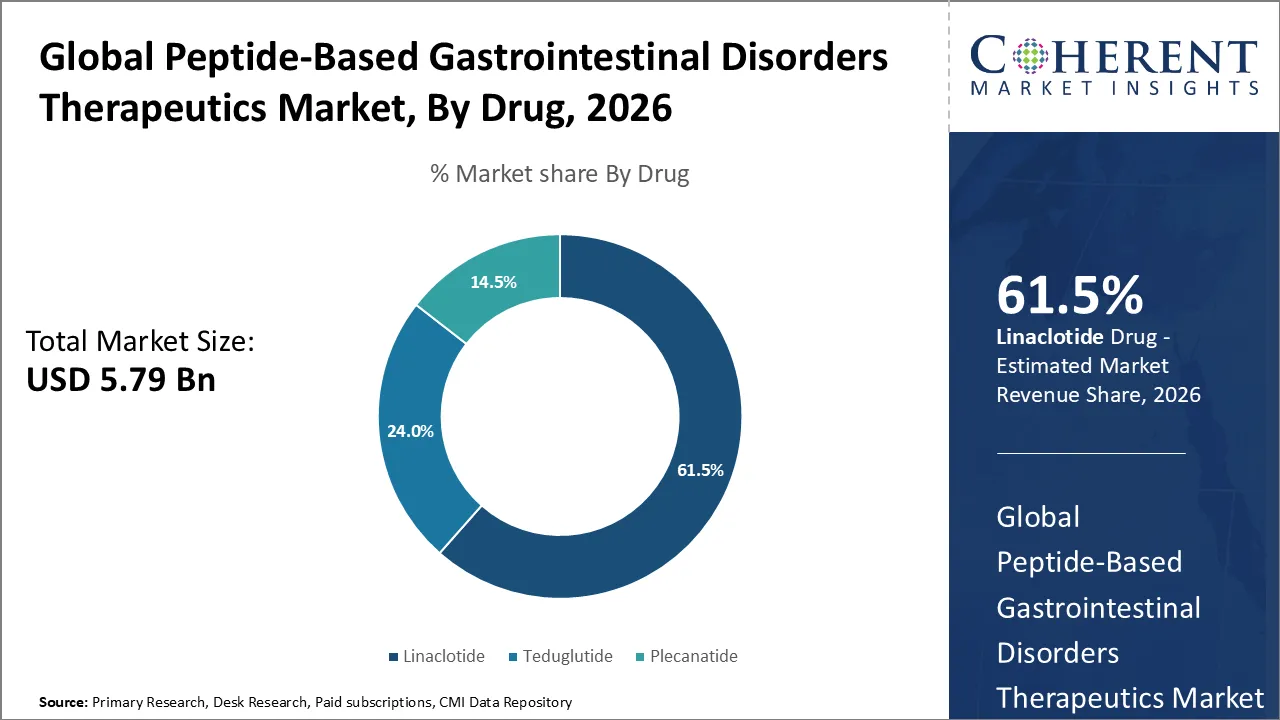
- The linaclotide segment is anticipated to hold 61.5% of the market share by 2026. Growth in the segment is supported by established use in irritable bowel syndrome with constipation (IBS-C) and chronic idiopathic constipation (CIC) and continued label expansion. The U.S. LINZESS prescription demand was 234 million capsules in 2025, an increase of 11% year-over-year. U.S. net sales were USD 864.5 million.
- The irritable bowel syndrome segment is expected to lead the application category with 43.5% in 2026. The segment’s dominance is primarily supported by the broad clinical use of oral guanylate cyclase-C agonist peptides, including linaclotide and plecanatide, for IBS-C. The FDA’s 2025 pediatric approval of linaclotide further expanded the addressable IBS-C population, while Ironwood reported that LINZESS had treated more than 5.7 million unique patients since launch by the end of 2025.
- The oral segment is projected to account for the dominant share of 76.0% in 2026. The segment’s growth is attributable to the strong commercial presence of orally administered peptide therapies such as linaclotide and plecanatide, which are used in chronic constipation and IBS-C, compared with injectable peptide therapies such as teduglutide that address narrower indications including short bowel syndrome. In Q1 2026 alone, U.S. LINZESS prescription demand reached 56.0 million capsules, increasing 5% year-over-year, while U.S. net sales rose to USD 272.5 million.
- The retail pharmacies segment is expected to dominate the distribution channel category with a share of 48.5% in 2026. The segment benefits from the chronic nature of conditions such as IBS-C and CIC which are predominantly treated on an outpatient basis and the need for repeat prescriptions for oral peptide therapeutics. Bausch Health reported USD 30 million in Trulance revenue in Q4 2025, with the product accounting for around 4% of the company’s Salix segment revenue during the quarter, indicating continued commercial utilization of oral peptide-based GI therapies through prescription channels.
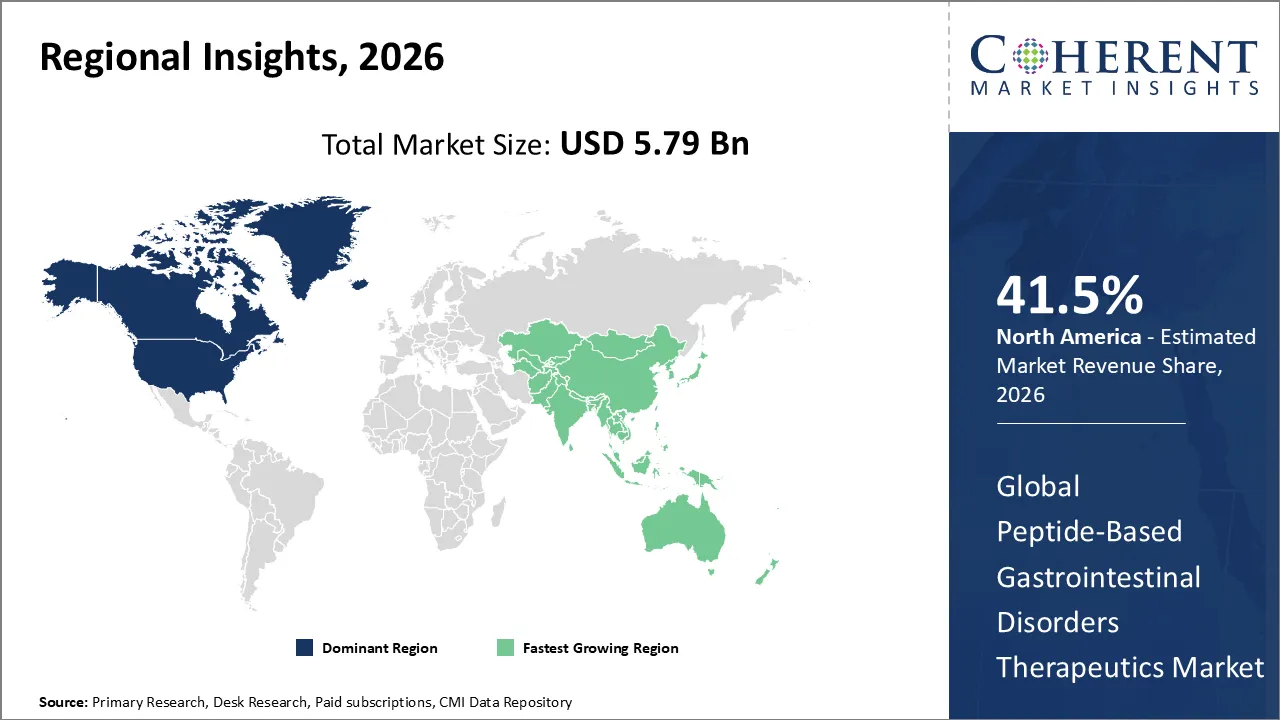
- North America is expected to acquire the prominent market share of 41.5% in 2026. The region’s position is supported by early regulatory approvals, strong uptake of branded peptide gastrointestinal therapies, and continued commercial and clinical development activity. In August 2026, Ironwood raised its full-year U.S. LINZESS net-sales guidance to USD 1.15–1.20 Bn, representing growth of more than 30% year-over-year; Q2 2026 U.S. LINZESS net sales reached USD 282.3 million, while prescription demand totaled 59.8 million capsules, up 4% from Q2 2025.
Market Drivers
Growing Burden of IBS and Functional Constipation is Expanding Demand for Peptide-Based GI Therapies
The growing prevalence of chronic functional gastrointestinal disorders is increasing the pool of patients for peptide-based therapeutics like linaclotide and plecanatide. These agents are increasingly used in conditions such as irritable bowel syndrome with constipation (IBS-C), chronic idiopathic constipation and functional constipation, where long-term symptom management is often needed.
A systematic review and meta-analysis of 44 countries with 459,061 participants in 2026 estimated the pooled prevalence of functional constipation to be 12.14% (95% confidence interval [CI], 10.43% to 13.94%). The rate was especially high among older adults at 19.89% compared to 12.06% among children and 9.50% among adults, showing a significant need for treatment across a range of age groups.
Expansion of Indications and Late-Stage Peptide Pipelines is Accelerating Market Growth
Continued regulatory expansion of existing peptide therapeutics, alongside development of next-generation peptide analogs, is broadening the addressable market for gastrointestinal disorders.
The unmet need in SBS-IF remains substantial. At Digestive Disease Week 2026, a survey involving 336 healthcare professionals in the U.S. and Europe found that 59.8% identified central-line infections as a common complication of long-term parenteral nutrition, while 48.2% cited central venous catheter-related problems as a major limitation of therapy. Such treatment burdens are encouraging development of peptide therapies designed to improve intestinal absorption and reduce dependence on parenteral support.
Current Events and Their Impact on the Peptide-Based Gastrointestinal Disorders Therapeutics Market
Current Event | Description and its Impact |
FDA Expands LINZESS Approval to Pediatric IBS-C Patients (November 2025) |
|
CMS Implements 2026 Medicare Part D Redesign Under the Inflation Reduction Act |
|
- Current Industry Events of 2026
- Market Size Estimation
- Regional Breakdown
- Competitive Landscape
- Customer Intelligence
- Segmental Analysis
- Pricing Analysis
- Key Market Drivers, Challenges & Future Trends
- Customized Insights Section
Segmental Insights
Why is Linaclotide Acquiring the Largest Share?
On the basis of drug, the linaclotide segment is projected to account for the largest Peptide-Based Gastrointestinal Disorders Therapeutics Market share of 61.5% in 2026. The segment’s growth is owing to linaclotide’s established use across IBS-C, chronic idiopathic constipation, and pediatric functional constipation, along with continued indication expansion and strong prescription demand.
Ironwood estimates that approximately 28.5 million U.S. adults may have CIC and 11.5 million may have IBS-C, while LINZESS has treated approximately 5 million unique patients since launch. This combination of a large eligible population, established clinical use, and growing prescription volume supports linaclotide’s prominent position within peptide-based gastrointestinal therapeutics.
Why is Irritable Bowel Syndrome Holding the Largest Application Share?
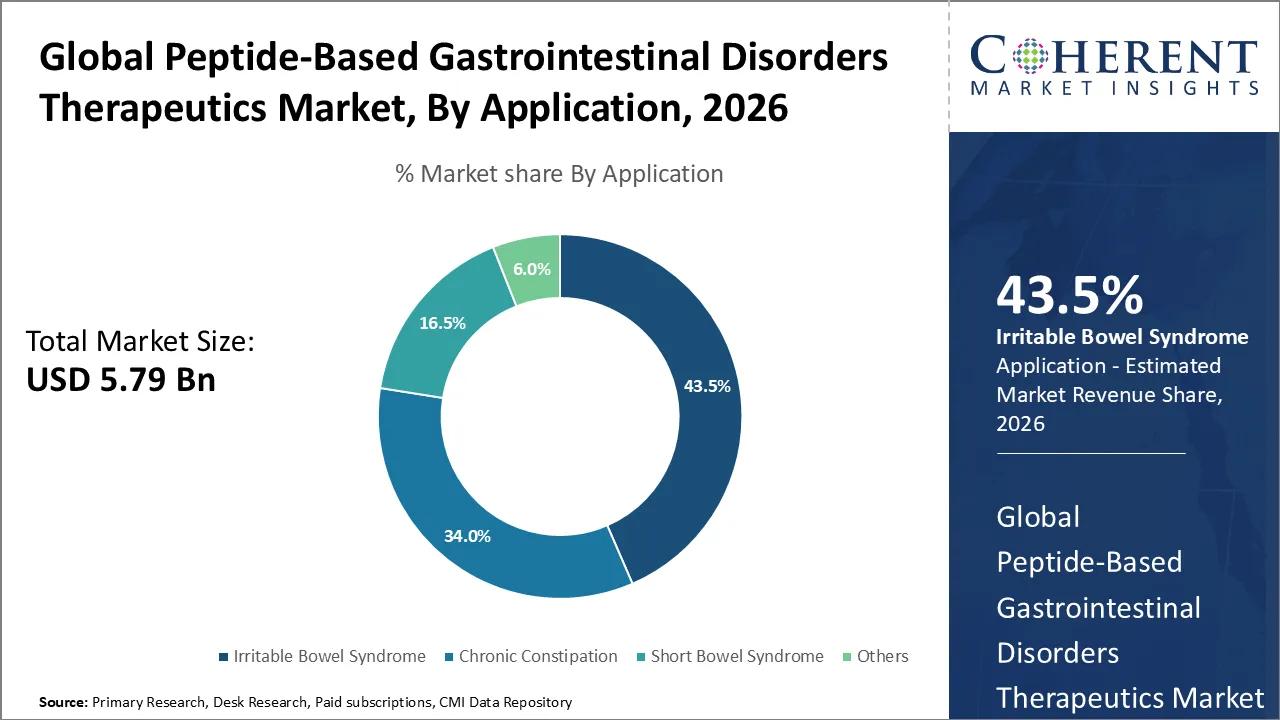
On the basis of application, the irritable bowel syndrome segment is expected to lead with a 43.5% market share in 2026. The segment’s dominance is owing to the substantial global burden of IBS, chronic symptom recurrence, and availability of targeted peptide therapies such as linaclotide and plecanatide for IBS with constipation (IBS-C).
A 2025 systematic review and meta-analysis of 43 studies with 188,885 participants estimated global IBS prevalence to be 13.21% using Rome III criteria and 17.14% using Rome IV criteria. Prevalence was 20.17% for women and 11.45% for men, indicating a large patient population with long-term symptom management.
In April 2026, Bausch Health Companies entered into a confidential settlement with MSN Laboratories relating to patent litigation for TRULANCE (plecanatide) 3 mg, approved for adults with IBS-C and chronic idiopathic constipation.
Why is the Oral Route of Administration Acquiring the Largest Share?
On the basis of route of administration, the oral segment is projected to account for the largest market share of 76.0% in 2026. The segment’s growth is owing to the established oral administration of major commercial peptide GI therapies, greater convenience for long-term outpatient treatment, and reduced treatment burden compared with injectable therapies used for narrower gastrointestinal indications.
The latest FDA prescribing information specifies LINZESS as an oral capsule administered once daily. Adults with IBS-C receive 290 mcg once daily, while adults with CIC can receive 145 mcg or 72 mcg once daily; pediatric IBS-C patients aged 7 years and older receive 145 mcg once daily. The product is available in 72 mcg, 145 mcg, and 290 mcg oral capsule strengths, allowing dosing across multiple approved GI indications.
In May 2026, FDA expanded LINZESS use in functional constipation to children aged 2 years and older, further widening the population receiving an orally administered peptide GI therapy.
Why are Retail Pharmacies Holding the Largest Distribution Channel Share?
On the basis of distribution channel, the retail pharmacies segment is estimated to lead with a 48.5% share in 2026. The segment’s growth is supported by the outpatient nature of IBS-C and chronic constipation management, recurring prescriptions for oral therapies, and the large volume of maintenance treatment dispensed through community and retail pharmacy networks.
According to the National Association of Chain Drug Stores (NACDS), its member companies operate more than 40,000 pharmacies across the U.S. and fill over 3 billion prescriptions annually, demonstrating the extensive dispensing infrastructure available for chronic prescription medicines, including gastrointestinal therapies.
Peptide-Based Gastrointestinal Disorders Therapeutics Market Trends
- Growing focus on real-world prescription growth and commercially validated peptide mechanisms is driving continued market investment. In Q2 2026, Ironwood’s LINZESS U.S. collaboration revenue was USD 110.0 million, up 28% year-over-year, and the brand collaboration generated USD 214.6 million in net profit, up 30%. The commercial margin also improved to 78% from 69% in Q2 2025, indicating the increasing economic maturity of established peptide-based GI therapies.
- The market is witnessing rising development of long-acting peptide analogs to reduce the treatment burden. In June 2026, Ironwood Pharmaceuticals commenced the Phase III STARS-2 trial of apraglutide, a synthetic GLP-2 analog, which is administered once weekly and is long-acting, for short bowel syndrome with intestinal failure. The study is assessing reduction in weekly parenteral-support volume, clinical response, fewer parenteral-support days, and achievement of enteral autonomy.
- A trend is emerging to extend peptide therapies beyond common constipation disorders into rare and severe gastrointestinal diseases. Ironwood stated that in prior Phase III STARS data, once-weekly administration of apraglutide demonstrated a statistically significant reduction in weekly parenteral-support volume in patients with short bowel syndrome dependent on parenteral support. This is broadening the commercial scope of gastrointestinal peptide drugs beyond IBS-C and chronic idiopathic constipation.
Regional Insights
North America Dominates Owing to Strong Commercial Adoption and Established Peptide-Based GI Therapy Infrastructure
North America is expected to account for 41.5% of the Peptide-Based Gastrointestinal Disorders Therapeutics Market in 2026. The region’s dominance is due to the high commercialization of peptide-based gastrointestinal therapies, well-established reimbursement and prescription infrastructure, high consumption of linaclotide for IBS-C and chronic constipation, and continued investment by companies such as Ironwood Pharmaceuticals and AbbVie.
Commercial activity also extends beyond the U.S. Ironwood reported approximately USD 1.8 million in combined linaclotide royalty revenue from Canada and Mexico during the first half of 2026, compared with about USD 1.4 million in the first half of 2025. AbbVie holds commercialization rights for CONSTELLA in Canada and LINZESS in Mexico, demonstrating the established multi-country commercialization infrastructure supporting North America’s leading market position.
Asia Pacific Peptide-Based Gastrointestinal Disorders Therapeutics Market Trends
Asia Pacific is expected to be the fastest-growing region in the Peptide-Based Gastrointestinal Disorders Therapeutics Market over the forecast period. Regional growth is being supported by the large gastrointestinal disease burden, expanding commercialization of established peptide therapies in China and Japan, and increasing involvement of regional pharmaceutical companies in peptide-based GI treatment development and licensing.
A 2026 systematic review and meta-analysis involving 65 studies, 197,764 participants, and 23,341 IBS cases estimated the pooled prevalence of IBS in China at 11.0%. Among IBS subtypes, the prevalence of IBS-C was approximately 3.9%, demonstrating a sizeable addressable population for constipation-targeted peptide therapeutics such as linaclotide.
In May 2026, AstraZeneca transferred its linaclotide development, manufacturing, and commercialization rights in China, Hong Kong, and Macau to Grand Life Sciences. Under the arrangement, Grand Life Sciences is required to pay Ironwood tiered royalties ranging from the mid-single digits to as high as 20% of annual net sales, with potential sales-based milestone payments of up to USD 90 million.
Strong Commercialization of Linaclotide and Expanding Pediatric Indications are Strengthening the Peptide-Based Gastrointestinal Disorders Therapeutics Market in the United States
The U.S. Peptide-Based Gastrointestinal Disorders Therapeutics Market is witnessing strong growth owing to established use of peptide-based therapies for IBS-C and chronic constipation, broad insurance and retail-pharmacy access, and continued lifecycle expansion of leading products such as LINZESS (linaclotide).
The U.S. market continues to broaden through pediatric treatment expansion. In May 2026, LINZESS was approved for functional constipation in patients aged 2 years and older and remained the only FDA-approved prescription therapy for pediatric functional constipation at that time. Ironwood stated that the 72 mcg formulation was available as a once-daily treatment with established formulary coverage for most patients.
China Peptide-Based Gastrointestinal Disorders Therapeutics Market Trends
China is expected to witness strong growth in the Peptide-Based Gastrointestinal Disorders Therapeutics Market over the forecast period. The growth is supported by a sizeable IBS patient population, continued commercialization of linaclotide, and increasing participation of domestic pharmaceutical companies in the development and marketing of peptide-based gastrointestinal therapies.
In 2026 meta-analysis found that IBS prevalence was highest among Chinese adults aged 18–59 years at 12.0%, compared with 8.2% among older adults and 1.4% among children, indicating that working-age adults represent a particularly important treatment population for chronic gastrointestinal therapies.
Who are the Major Companies in Peptide-Based Gastrointestinal Disorders Therapeutics Industry
Some of the major key players in Peptide-Based Gastrointestinal Disorders Therapeutics Market are Ironwood Pharmaceuticals, Inc., NPS Pharmaceuticals, Inc., Synergy Pharmaceuticals Inc., Astellas Pharma Inc., Allergan plc., and Cipher Pharmaceuticals Inc.
Key News
- In May 2026, Ironwood presented multiple new linaclotide analyses at Digestive Disease Week 2026, including a post-hoc Phase III assessment of linaclotide efficacy and safety by race, ethnicity, and age in IBS-C, an analysis in adults with severe chronic idiopathic constipation, and pediatric safety data in patients aged 2–5 years with functional constipation.
- In September 2025, Takeda updated the U.S. prescribing information for GATTEX, which remains indicated as a GLP-2 analog for adults and pediatric patients aged 1 year and older with short bowel syndrome who are dependent on parenteral support.
Market Report Scope
Peptide-Based Gastrointestinal Disorders Therapeutics Market Report Coverage
Report Coverage | Details | ||
Base Year: | 2025 | Market Size in 2026: | USD 5.79 Bn |
Historical Data for: | 2020 to 2024 | Forecast Period: | 2026 to 2033 |
CAGR: | 7.8% | 2033 Value Projection: | USD 9.80 Bn |
Geographies covered: |
| ||
Segments covered: |
| ||
Companies covered: | Ironwood Pharmaceuticals, Inc., NPS Pharmaceuticals, Inc., Synergy Pharmaceuticals Inc., Astellas Pharma Inc., Allergan plc., and Cipher Pharmaceuticals Inc. | ||
Growth Drivers: |
| ||
Restraints & Challenges: |
| ||
Analyst Opinion
- The Peptide-Based Gastrointestinal Disorders Therapeutics Market is entering a broader treatment phase as companies move beyond IBS-C and chronic constipation into rare gastrointestinal disorders such as short bowel syndrome with intestinal failure (SBS-IF). Ironwood estimates that around 18,000 adult patients across the U.S., Europe, and Japan have SBS-IF and remain chronically dependent on parenteral support, indicating a meaningful unmet-need population for next-generation GLP-2 peptide therapies.
- The market outlook is also being strengthened by regulatory validation of newer peptide mechanisms. In September 2026, the EMA’s CHMP issued a positive opinion for Zeydovio (glepaglutide), a long-acting GLP-2 analog for adults with short bowel syndrome. EMA noted that twice-weekly glepaglutide produced a greater reduction in weekly parenteral-support volume than placebo over 24 weeks, suggesting that longer-acting peptide therapies could become an increasingly important competitive segment.
- Persistent treatment burden is likely to support demand for therapies that reduce dependence on parenteral nutrition rather than only treating symptoms. In a 2026 healthcare-professional survey, 46.4% of respondents identified reducing the number of days per week on total parenteral nutrition as the most important future treatment attribute, while 30.1% prioritized reducing daily TPN hours.
Speak to the analyst
Want personalized insights?
Take the findings above to one of our principal consultants, or have the report rebuilt around the segments, geographies and competitors you actually track.
Market Segmentation
- By Drug (Revenue, USD Bn, 2021-2033)
- Linaclotide
- Teduglutide
- Plecanatide
- By Application (Revenue, USD Bn, 2021-2033)
- Irritable Bowel Syndrome
- Chronic Constipation
- Short Bowel Syndrome
- Others
- By Route of Administration (Revenue, USD Bn, 2021-2033)
- Oral
- Injectable
- By Distribution Channel (Revenue, USD Bn, 2021-2033)
- Hospital Pharmacies
- Retail Pharmacies
- Online Pharmacies
- By Region (Revenue, USD Bn, 2021-2033)
- North America
- U.S.
- Canada
- Latin America
- Brazil
- Mexico
- Argentina
- Rest of Latin America
- Europe
- Germany
- U.K.
- France
- Italy
- Spain
- Russia
- Rest of Europe
- Asia Pacific
- China
- India
- Japan
- Australia
- South Korea
- ASEAN
- Rest of Asia Pacific
- Middle East
- GCC
- Israel
- Rest of Middle East
- Africa
- South Africa
- Central Africa
- North Africa
- North America
Sources
Primary Research Interviews
- Gastroenterologists and gastrointestinal specialists
- Clinical pharmacologists and peptide therapeutics researchers
- R&D heads from gastrointestinal drug development companies
- Medical affairs and clinical development executives
- Hospital and retail pharmacy procurement professionals
- Payers, reimbursement specialists, and formulary decision-makers
- Key opinion leaders (KOLs) in IBS-C, chronic constipation, short bowel syndrome, and peptide therapeutics
Databases
- U.S. Food and Drug Administration (FDA)
- European Medicines Agency (EMA)
- ClinicalTrials.gov
- World Health Organization (WHO)
- National Institutes of Health (NIH)
- PubMed / National Library of Medicine (NLM)
- Centers for Medicare & Medicaid Services (CMS)
Magazines
- BioPharma Dive
- Pharmaceutical Technology
- Fierce Pharma
- Pharmaceutical Executive
- Drug Discovery & Development
- Gastroenterology & Endoscopy News
Journals
- Gastroenterology
- American Journal of Gastroenterology
- Clinical Gastroenterology and Hepatology
- Neurogastroenterology & Motility
- Alimentary Pharmacology & Therapeutics
- Therapeutic Advances in Gastroenterology
- Journal of Parenteral and Enteral Nutrition
Newspapers
- The Wall Street Journal
- Financial Times
- Reuters
- Bloomberg
- The New York Times
- The Economic Times
Associations
- American Gastroenterological Association (AGA)
- American College of Gastroenterology (ACG)
- United European Gastroenterology (UEG)
- European Society for Clinical Nutrition and Metabolism (ESPEN)
- American Society for Parenteral and Enteral Nutrition (ASPEN)
- International Foundation for Gastrointestinal Disorders (IFFGD)
Public Domain Sources
- Company Annual Reports, SEC Filings, and Investor Presentations
- FDA Drug Labels, Approval Letters, and Regulatory Updates
- EMA Assessment Reports and CHMP Opinions
- Clinical Trial Registries and Published Trial Results
- Peer-Reviewed Epidemiology and Real-World Evidence Studies
- Government Reimbursement and Drug-Pricing Publications
- Company Press Releases Related to Linaclotide, Plecanatide, Teduglutide, and Next-Generation GLP-2 Analogs
- Patent Databases such as WIPO, USPTO, and Google Patents
Proprietary Elements
- CMI Data Analytics Tool
- Proprietary CMI Existing Repository of Information for the Last 10 Years
Get access to 250+ pages report
Every segment, forecast, competitor profile and data table behind the analysis above — available for instant download.
- ESOMAR Member
- ISO 9001:2015 Certified
- D-U-N-S Registered
- GDPR & CCPA Compliant
Missing comfort of reading report in your local language? Find your preferred language:
Transform your Strategy with Exclusive Trending Reports
Frequently Asked Questions
The Peptide-Based Gastrointestinal Disorders Therapeutics Market is expected to reach USD 9.80 Bn in 2033.
Major players operating in the global Peptide-Based Gastrointestinal Disorders Therapeutics Market include Ironwood Pharmaceuticals, Inc., NPS Pharmaceuticals, Inc., Synergy Pharmaceuticals Inc., Astellas Pharma Inc., Allergan plc., and Cipher Pharmaceuticals Inc.
The high treatment cost of branded peptide therapeutics and limited availability of peptide-based GI therapies in emerging markets are among the key factors hampering market growth.
The increasing prevalence of irritable bowel syndrome and chronic constipation, along with the expanding use of peptide-based therapies such as linaclotide and plecanatide, is driving market growth.
The Peptide-Based Gastrointestinal Disorders Therapeutics Market is anticipated to grow at a CAGR of 7.8% between 2026 and 2033.
Among regions, North America is expected to hold the largest share of the global market, accounting for approximately 41.5% in 2026.
Peptide-based gastrointestinal disorder therapeutics are peptide or peptide-analog medicines used to manage GI conditions such as IBS-C, chronic constipation, and short bowel syndrome. Major therapies in the market include linaclotide, teduglutide, and plecanatide.