

Peptide Therapeutics Market Size and Forecast – 2026 to 2033
The global peptide therapeutics market is estimated to be valued at USD 53,869.3 Mn in 2026 and is expected to exhibit a compound annual growth rate (CAGR) of 6.8% during the forecast period, reaching USD 85,376.8 Mn in 2033.
Key Takeaways from the Peptide Therapeutics Market Report
- Branded peptide therapeutics are expected to remain the top-selling product type, accounting for a market share of over 61% in 2026.
- Cancer is slated to remain the most lucrative application of peptide therapeutics during the assessment period.
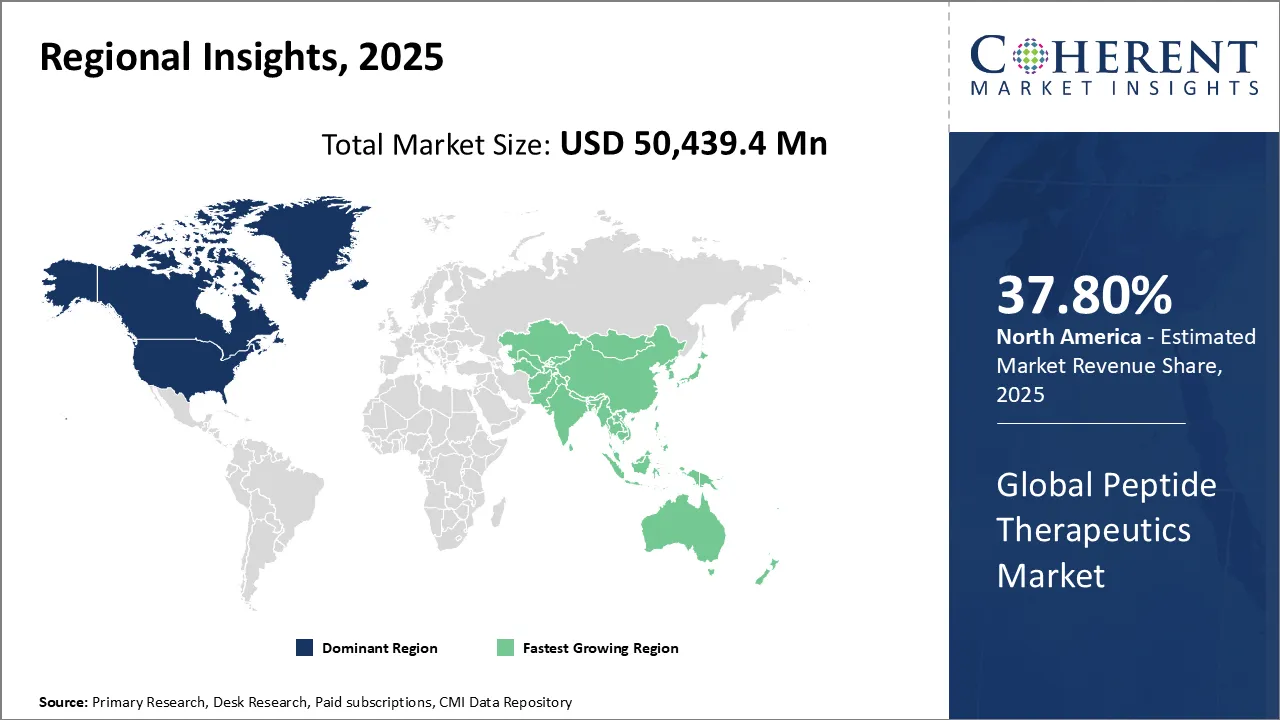
- North America, with an estimated share of 37.8% in 2026, is set to dominate the global peptide therapeutic industry.
- Europe is projected to remain the second-leading market for peptide therapeutics during the forecast period.
- Asia Pacific is poised to emerge as the most lucrative pocket for peptide therapeutics companies in the coming years.
Peptide Therapeutics Market Overview
The global peptide therapeutics market is projected to grow steadily during the forecast period. This can be attributed to rising prevalence of chronic & metabolic diseases, advancements in peptide drug development technologies, and growing interest in peptide-based therapeutics.
Therapeutic peptides are short chains of amino acids with molecular weights typically between 500 and 5,000 Da. They play an important role in treating various diseases due to their high specificity, safety, and effectiveness.
The development of peptide drugs has grown significantly since the first therapeutic peptide, insulin, was introduced in 1922. Today, more than 80 peptide-based drugs have been approved worldwide, with many others under clinical development. This growing pipeline highlights the increasing importance of peptide therapeutics in the global pharmaceutical industry.
Innovation in peptide therapeutics is breathing new life into the target market. Companies are developing novel peptide-based therapeutics as well as delivery methods to stay ahead of the competition.
For instance, in August 2025, BioMed X and Novo Nordisk partnered to develop novel oral-formulation technologies for therapeutic peptides. The collaboration seeks to develop innovative technologies that improve oral delivery as well as absorption of peptide-based drugs.
Current Events and Their Impact on the Peptide Therapeutics Market
Current Event | Description and its Impact |
U.S. FDA Regulatory Modernization and Accelerated Approval Pathways |
|
Artificial Intelligence and Computational Drug Discovery Revolution |
|
Segmental Insights
- Current Industry Events of 2026
- Market Size Estimation
- Regional Breakdown
- Competitive Landscape
- Customer Intelligence
- Segmental Analysis
- Pricing Analysis
- Key Market Drivers, Challenges & Future Trends
- Customized Insights Section
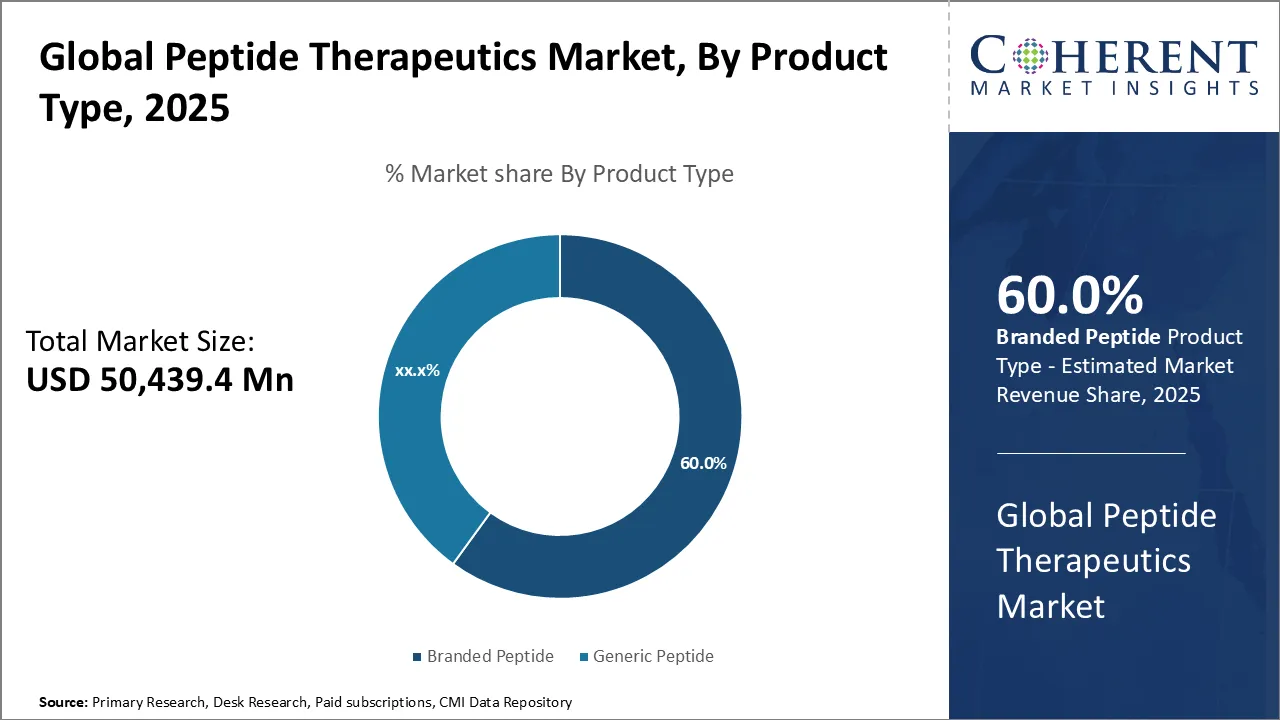
Peptide Therapeutics Market Insights, By Product Type: Branded Peptide Therapeutics Remain a Highly Sought-After Product Type
As per Coherent Market Insights latest analysis, branded peptide segment is expected to dominate the market, accounting for more than 61% of the market share in 2026. This can be attributed to rising preference for branded peptide therapeutics globally.
Branded peptide therapeutics are popular because they are made and sold by well-known pharmaceutical companies with strong research and development teams. These companies invest heavily in clinical research to make sure their medicines are safe, effective, and approved by major health authorities. Because of this, doctors and patients often choose branded drugs as they trust their quality and reliability.
Furthermore, branded peptide therapeutics usually offer better patient support programs, clear usage instructions, and are more widely available in pharmacies and hospitals. Their strong reputation and reliable results make them the preferred choice for many people. This trust and demand contribute to the large market share held by branded peptide therapeutics.
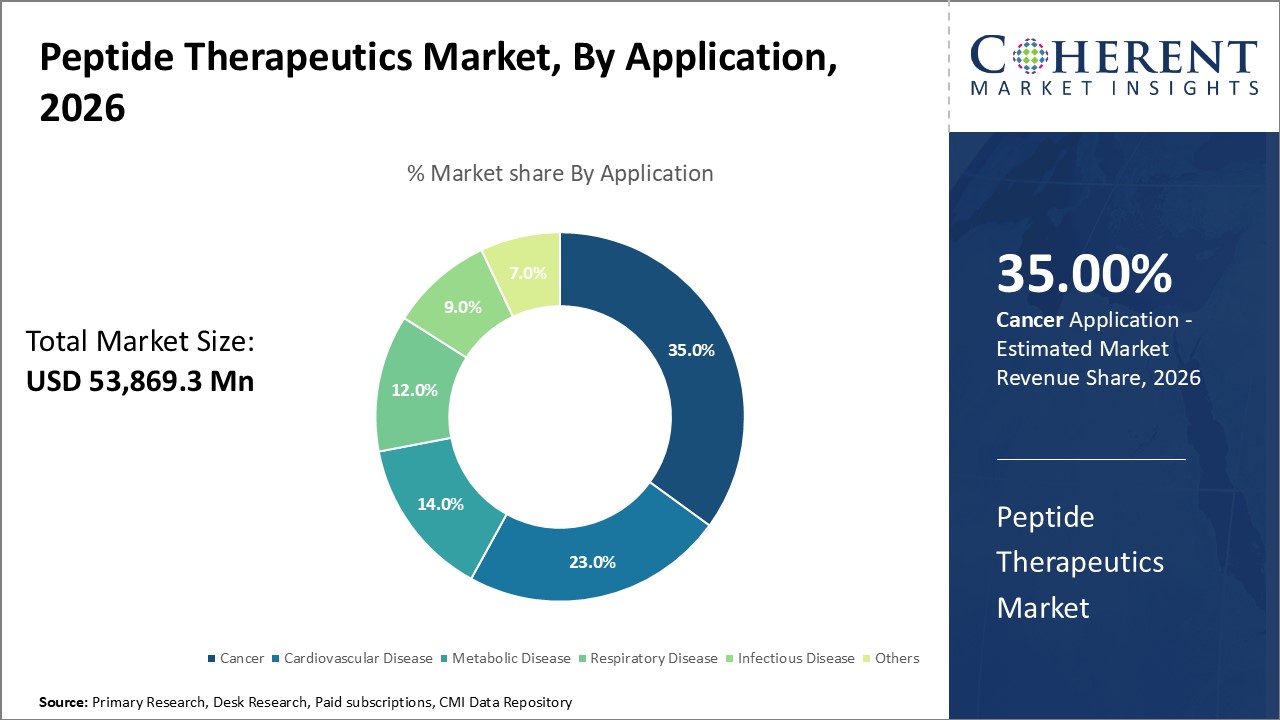
Peptide Therapeutics Market Insights, By Application: Cancer Remains the Most Lucrative Application of Peptide Therapeutics
Cancer segment is projected to dominate the market over the forecast period. This is due to increasing usage of peptide therapeutics to treat cancer. Increasing cancer incidence worldwide and rising need for more personalized and targeted therapies are fueling adoption of peptide-based treatments in oncology.
Peptide therapeutics have the tendency to specifically target cancer cells without harming healthy tissue. This precision reduces side effects compared to traditional chemotherapy and improves treatment effectiveness.
Ongoing research and development have broadened the use of peptides in cancer treatment, such as in targeted drug delivery, immunotherapy, and combination therapies. Pharmaceutical companies are investing heavily in peptide-based cancer drugs because of their high success rates in clinical trials and their potential to improve patient outcomes.
Regional Insights
North America Remains at the Epicenter of Peptide Therapeutics Market Growth
North America is expected to retain its dominance over the global peptide therapeutics market during the forecast period, capturing 37.8% share in 2026. This can be attributed to rising cancer cases, growing demand for advanced therapies, and strong presence of leading players.
North America is home to some of the leading pharmaceutical and biotech companies, including Amgen, Eli Lilly, and Pfizer. These companies are heavily investing in R&D to develop advanced treatments like peptide-based therapeutics.
For instance, in September 2026, Eli Lilly announced plans to construct a $6.5 billion manufacturing plant in Houston, Texas. The new facility will produce active pharmaceutical ingredients for orforglipron and for Lilly's cancer, autoimmune, and other advanced therapies. These developments will likely support market expansion in the region during the forecast period.
Asia Pacific Becoming Fastest-Growing Peptide Therapeutics Market
Asia Pacific is slated to emerge as the most remunerative market for peptide therapeutics during the assessment period. This is attributable to increasing healthcare investments, expanding pharmaceutical manufacturing, and rising awareness of peptide-based treatments among patients and doctors.
Countries like China, Japan, and India are seeing rapid adoption of peptide therapeutics due to supportive government initiatives as well as a growing patient population. Additionally, lower production costs and a rising number of clinical trials make Asia Pacific a highly attractive market for peptide therapeutics.
Many companies are establishing their facilities across Asia Pacific nations like India and China to boost their sales. For instance, in March 2026, AstraZeneca announced a $2.5 billion investment in a new R&D center, manufacturing facilities, and biotech collaborations in Beijing.
Peptide Therapeutics Market Outlook – Country-wise
U.S. Peptide Therapeutics Market Forecast
The United States peptide therapeutics industry is expected to register steady growth during the forecast period. This is mostly due to increasing prevalence of chronic diseases, especially cancer, diabetes, and cardiovascular disorders, which require advanced peptide-based treatments.
Strong R&D capabilities and well-established pharmaceutical infrastructure are also boosting market growth in the nation. Similarly, increasing investments by leading biotech companies in peptide development are supporting market expansion.
The U.S. is also benefiting from regulatory support, such as fast-track approvals for innovative therapies, and growing awareness among healthcare professionals and patients regarding the benefits of peptide therapeutics. Increasing investments in personalized medicine and targeted drug delivery are further boosting the adoption of peptide-based treatments in the country.
China Peptide Therapeutics Market Trends
China is becoming a hotbed for manufacturers of peptide therapeutics. This can be attributed to supportive government initiatives, including subsidies and favorable policies for biotech and pharmaceutical industries. Rapid expansion of domestic pharmaceutical manufacturing and increasing collaborations with global biotech companies are also accelerating market development.
Moreover, rising awareness among doctors and patients about peptide-based treatments, along with a growing population of patients with chronic and lifestyle-related diseases, is driving demand. China’s focus on cost-effective production and scaling up of peptide therapeutics is attracting both domestic and international players to strengthen their presence in the market.
For instance, China has implemented policies like "Made in China 2026" and Circular No. 53 to stimulate transformation of the country's life sciences industry, including the peptide therapeutics sector. These policies are creating a fertile ground for peptide therapeutics market growth in the nation.
Market Concentration and Competitive Landscape
Leading peptide therapeutics companies are focusing on strong research and development (R&D) to create innovative and effective treatments. They are investing heavily in discovering new peptides that can target specific diseases such as cancer, diabetes, and cardiovascular disorders.
Many companies are also forming collaborations with universities, research institutes, and other pharmaceutical firms to speed up the development process and share expertise. Similarly, they are using mergers and acquisition to expand their portfolio as well as boost their sales.
For instance, in September 2025, Pfizer acquired Metsera and its next-generation obesity portfolio. The deal aims to strengthen Pfizer’s position in developing innovative treatments for obesity.
Another key strategy is expanding their market presence globally. Companies are entering new regions, especially in Asia Pacific, to reach a larger patient base and benefit from growing healthcare infrastructure. They are also adopting advanced manufacturing technologies to reduce production costs and improve the quality of peptide drugs.
Peptide Therapeutics Industry News
- In August 2025, Teva Pharmaceuticals announced FDA approval and U.S. launch of Generic Saxenda (liraglutide injection). It is the first generic GLP-1 receptor agonist indicated for weight loss.
- In March 2025, OPKO Health and Entera Bio teamed up to develop an oral GLP-1/glucagon tablet to treat obesity and metabolic disorders. They plan to start clinical trials later in 2025 using Entera’s oral delivery technology.
Market Report Scope
Peptide Therapeutics Market Report Coverage
| Report Coverage | Details | ||
|---|---|---|---|
| Base Year: | 2025 | Market Size in 2026: | USD 53,869.3 Mn |
| Historical Data for: | 2020 To 2024 | Forecast Period: | 2026 To 2033 |
| Forecast Period 2026 to 2033 CAGR: | 6.8% | 2033 Value Projection: | USD 85,376.8 Mn |
| Geographies covered: |
| ||
| Segments covered: |
| ||
| Companies covered: | Teva Pharmaceutical Industries Ltd, Novo Nordisk A/S, OPKO Health Inc., Lilly, Hanmi Pharm. Co., Sanofi, Circle Pharma, Pfizer Inc., Novartis AG, PeptiDream Inc., Amgen Inc., AstraZeneca, Bachem Holding AG, CordenPharma International, Ipsen Pharma, Merck KGaA, PolyPeptide Group, Bayer AG. | ||
| Growth Drivers: |
| ||
| Restraints & Challenges: |
| ||
Peptide Therapeutics Market Drivers
Rising Prevalence of Cancer
The global cancer burden is rising rapidly. According to the World Health Organization (WHO), the annual number of new cancer cases is expected to exceed 35 million by 2050. This increase is driving demand for peptide therapeutics, which are increasingly used in cancer treatment.
Increasing Research and Development Activities
Peptide therapeutics play an important role in developing new drugs and treatments. Thus, increasing research and development activities by leading pharmaceutical and biotech companies to expand their product portfolios are expected to drive market growth over the forecast period. For example, an August 2022 article in Biomedicines highlighted the use of peptide-based drug development for creating new cancer treatments, demonstrating the growing impact of R&D in this field.
Peptide Therapeutics Market Trends
Growing Preference for Targeted Therapies with Improved Safety
There is a rising preference for targeted therapies with improved safety/efficacy profiles in the contemporary world. This is expected to drive demand for peptide therapeutics during the forthcoming period.
Peptides offer high specificity, lower off‐target effects, and lower immunogenicity compared to some biologics/small molecules. This is making them attractive for complex diseases like cancer and metabolic disorders.
Analyst Opinion (Expert Opinion)
- The peptide therapeutics market is changing rapidly due to progress in molecular design, new delivery methods, and a better understanding of how diseases work. These developments are not just small improvements. They represent a major shift toward more personalized and precise medical treatments.
- Traditional peptide design often focused on single-target efficacy. However, the advent of platforms like PepTune has revolutionized this approach. PepTune employs a multi-objective discrete diffusion model, optimizing peptides for multiple therapeutic properties simultaneously, such as target binding affinity, solubility, and membrane permeability. This advancement significantly enhances the therapeutic potential of peptides, allowing for more tailored and effective treatments.
- Incorporating NSAAs into peptide sequences has opened new avenues for enhancing peptide stability and specificity. The development of NS-Pep, a framework for co-designing peptides with NSAAs, has demonstrated improvements in sequence recovery rate as well as binding affinity. This integration addresses previously challenging aspects of peptide design, such as side-chain modeling and geometric representation, thereby broadening the scope of peptide therapeutics.
- PDCs are at the forefront of targeted cancer therapy. Recent developments in deep learning frameworks like PDCNet have enhanced the prediction of PDC activity, facilitating the design of more effective conjugates. By accurately forecasting the activity of PDCs, these tools streamline the development process, potentially accelerating the availability of novel cancer therapies.
- Strategic partnerships in the peptide therapeutics industry show how important this sector is becoming. For example, Roche teamed up with Zealand Pharma in a $5.3 billion deal to develop petrelintide, an amylin-based drug for weight loss. This partnership demonstrates the industry's strong focus on tackling complex metabolic disorders. Such collaborations help boost research and development and also show the market’s potential for high returns.
Speak to the analyst
Want personalized insights?
Take the findings above to one of our principal consultants, or have the report rebuilt around the segments, geographies and competitors you actually track.
Market Segmentation
- Product Type Insights (Revenue, USD Mn, 2021 - 2033)
- Branded Peptide
- Generic Peptide
- Application Insights (Revenue, USD Mn, 2021 - 2033)
- Cancer
- Cardiovascular diseases
- Metabolic diseases
- Respiratory diseases
- Infectious diseases
- Others
- Route of Administration Insights (Revenue, USD Mn, 2021 - 2033)
- Oral Administration
- Parenteral Administration
- Others
- Regional Insights (Revenue, USD Mn, 2021 - 2033)
- North America
- U.S.
- Canada
- Latin America
- Brazil
- Argentina
- Mexico
- Rest of Latin America
- Europe
- Germany
- U.K.
- Spain
- France
- Italy
- Russia
- Rest of Europe
- Asia Pacific
- China
- India
- Japan
- Australia
- South Korea
- ASEAN
- Rest of Asia Pacific
- Middle East
- GCC Countries
- Israel
- Rest of Middle East
- Africa
- South Africa
- North Africa
- Central Africa
- North America
- Key Players Insights
- Teva Pharmaceutical Industries Ltd
- Novo Nordisk A/S
- OPKO Health Inc.
- Lilly
- Hanmi Pharm.Co.
- Sanofi
- Circle Pharma
- Pfizer Inc.
- Novartis AG
- PeptiDream Inc.
- Amgen Inc.
- AstraZeneca
- Bachem Holding AG
- CordenPharma International
- Ipsen Pharma
- Merck KGaA
- PolyPeptide Group
- Bayer AG
Sources
Primary Research Interviews
- Interviews with key opinion leaders in peptide drug discovery, such as Tomi Sawyer, Chief Drug Hunter and President of Maestro Therapeutics.
Databases
- PepTherDia: A manually curated database containing a searchable list of approved peptide drugs and diagnostic agents.
Magazines
- Solvias Insights: Articles discussing the rise of peptide therapeutics and their impact on the pharmaceutical industry.
Journals
- Nature Communications: "Advance in peptide-based drug development: delivery strategies and challenges."
- International Journal of Peptide Research and Therapeutics: Publishes the latest developments in peptide therapeutics.
- Trends in Biochemical Sciences: "Chemical approaches to transform peptides into therapeutics."
Newspapers
- Yahoo Finance: Articles covering the growth projections and market size of peptide therapeutics.
Associations
- American Peptide Society: An organization dedicated to advancing the science and application of peptides.
Public Domain Sources
- PubMed Central: "Peptides as Therapeutic Agents: Challenges and Future Directions."
- National Institutes of Health (NIH): Repository of research articles and clinical trial information related to peptide therapeutics.
Proprietary Elements
- CMI Data Analytics Tool
- Proprietary CMI Existing Repository of information for last 8 years
Get access to 250+ pages report
Every segment, forecast, competitor profile and data table behind the analysis above — available for instant download.
- ESOMAR Member
- ISO 9001:2015 Certified
- D-U-N-S Registered
- GDPR & CCPA Compliant
Missing comfort of reading report in your local language? Find your preferred language:
Transform your Strategy with Exclusive Trending Reports
Frequently Asked Questions
The global market is estimated to be valued at USD 53,869.3 Mn in 2026.
The global peptide therapeutics market value is expected to reach USD 85,376.8 Mn by 2033.
The global market is projected to record a CAGR of 6.8% from 2026 to 2033.
Rising prevalence of cancer and metabolic disorders, increasing research and development activities, and adoption of inorganic strategies like partnerships by key players.
Branded peptide segment dominates the market.
Variable immune responses, MHC restrictions, low immunogenicity of some peptides, and the need for adjuvants like aluminum-based compounds to enhance effectiveness.
Major players operating in the market include Teva Pharmaceutical Industries Ltd, Novo Nordisk A/S, OPKO Health, Inc., Lilly, Hanmi Pharm.Co., Sanofi, Circle Pharma, Pfizer Inc., Novartis AG, PeptiDream Inc., Amgen Inc., AstraZeneca, Bachem Holding AG, CordenPharma International, Ipsen Pharma, Merck KGaA, PolyPeptide Group, and Bayer AG.