

Sertraline HCL Market Size and Forecast: 2026-2033
The Sertraline Hcl Market is estimated to be valued at USD 2.1 Bn in 2026 and is expected to reach USD 3.1 Bn by 2033, exhibiting a compound annual growth rate (CAGR) of 4.1% from 2026 to 2033.
Key Takeaways
- By Type, 25mg hold the largest market share of 36.7% in 2026 owing to the rising prevalence of mental health disorders.
- By Application, Depression expected to hold the largest market share of 38.8% in 2026 owing to the social & economic stressors.
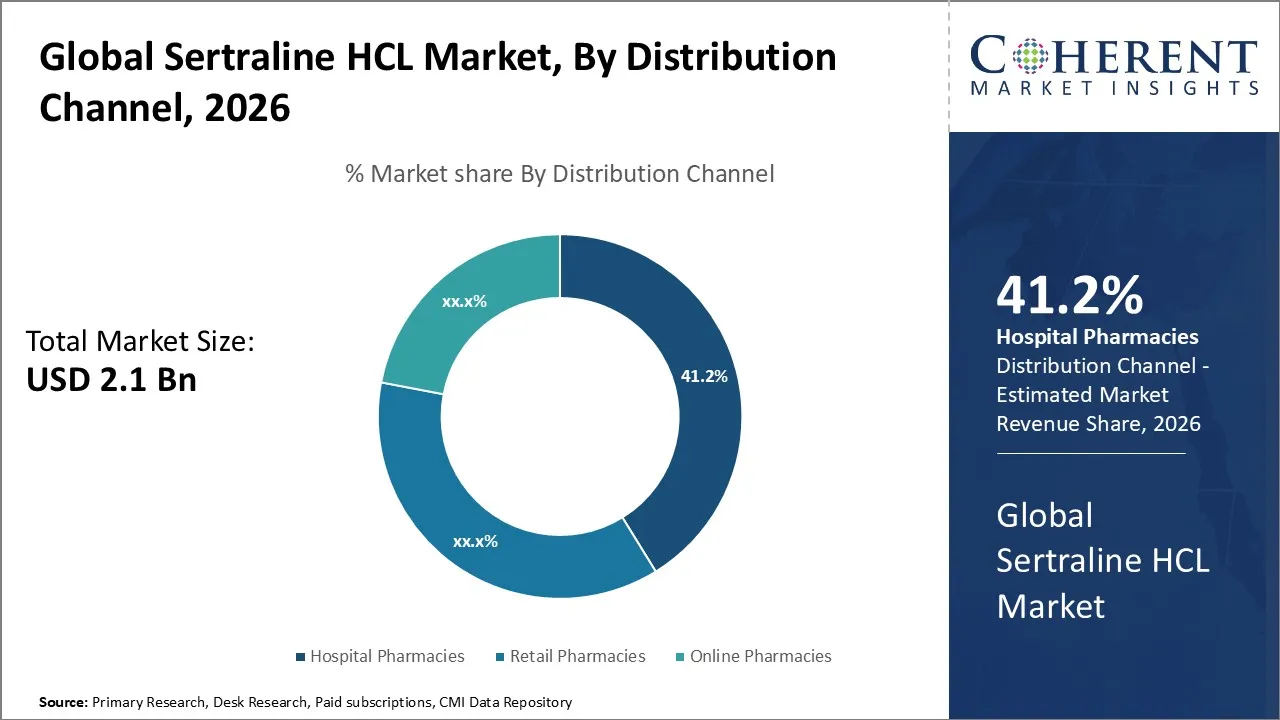
- By Distribution Channel, Hospital Pharmacies acquired the prominent market share of 41.2% in 2026 owing to its integrated clinical care in hospitals.
- By Region, North America dominates the overall market with an estimated share of 38.8% in 2026 owing to the high prevalence and diagnosis of mental health disorders.
Market Overview
The Sertraline HCl market is expanding rapidly as more people experience depression, anxiety, and related mental health disorders. Growing awareness, better diagnosis, and reduced stigma have enabled patients to access treatment, while generic formulations have lowered costs. Hospital and retail pharmacies, supported by robust distribution networks, provide widespread availability. Chronic treatment practices, diverse therapeutic uses, and strong demand in developed regions, especially North America and Europe, continue to drive market growth.
Current Events and their Impact on the Sertraline HCL Market
Current Events | Description and its impact |
Geopolitical and Regulatory Changes |
|
Economic and Market Dynamics |
|
Segmental Insights
- Current Industry Events of 2026
- Market Size Estimation
- Regional Breakdown
- Competitive Landscape
- Customer Intelligence
- Segmental Analysis
- Pricing Analysis
- Key Market Drivers, Challenges & Future Trends
- Customized Insights Section
Sertraline HCL Market Insights, By Distribution Channel - Hospital Pharmacies contribute the highest share of the market owing to its immediate and controlled medication access
Hospital Pharmacies acquired the prominent market share of 41.2% in 2026. Hospital pharmacies strengthen the Sertraline HCl market by enabling physicians to initiate and adjust antidepressant therapy across inpatient and outpatient settings under close supervision. They manage complex cases, including patients with multiple conditions, which increases the need for controlled dispensing and monitoring. Trained pharmacists actively provide counseling and support adherence, enhancing treatment outcomes. Institutional procurement systems and formulary inclusion maintain steady supply, while increasing hospital visits for mental health concerns continue to drive demand through this channel.
Sertraline HCL Market Insights, By Type - 25mg contribute the highest share of the market owing to its healthcare access and infrastructure improvements
25mg hold the largest market share of 36.7% in 2026. Clinicians drive the 25 mg segment of the Sertraline HCl market by using it for dose initiation and gradual titration, enabling tailored treatment and reduced side effects. They frequently prescribe this strength to sensitive groups such as elderly patients, adolescents, and individuals with comorbid conditions. Growing emphasis on personalized care, better patient adherence, and cautious prescribing practices further boost demand, while its role in early-stage therapy and dose adjustments ensures consistent use across clinical settings. For instance, Pfizer’s Japanese subsidiary launched Zoloft (sertraline HCl) tablets in 25 mg and 50 mg doses to treat depression and panic disorder.
Sertraline HCL Market Insights, By Application - Depression contributes the highest share of the market owing to its biological and genetic factors
Depression expected to hold the largest market share of 38.8% in 2026. Rising exposure to chronic stress, social isolation, and rapidly changing lifestyles drives depression-related demand in the Sertraline HCl market by negatively affecting mental well-being. Economic pressure, digital fatigue, and low physical activity increase case incidence and diagnosis rates. Healthcare professionals actively recognize mental health conditions and expand screening practices, further boosting identification. The strong link between chronic illnesses and depressive symptoms also sustains demand, as clinicians continue to rely on effective antidepressant therapies for long-term management.
Regional Insights
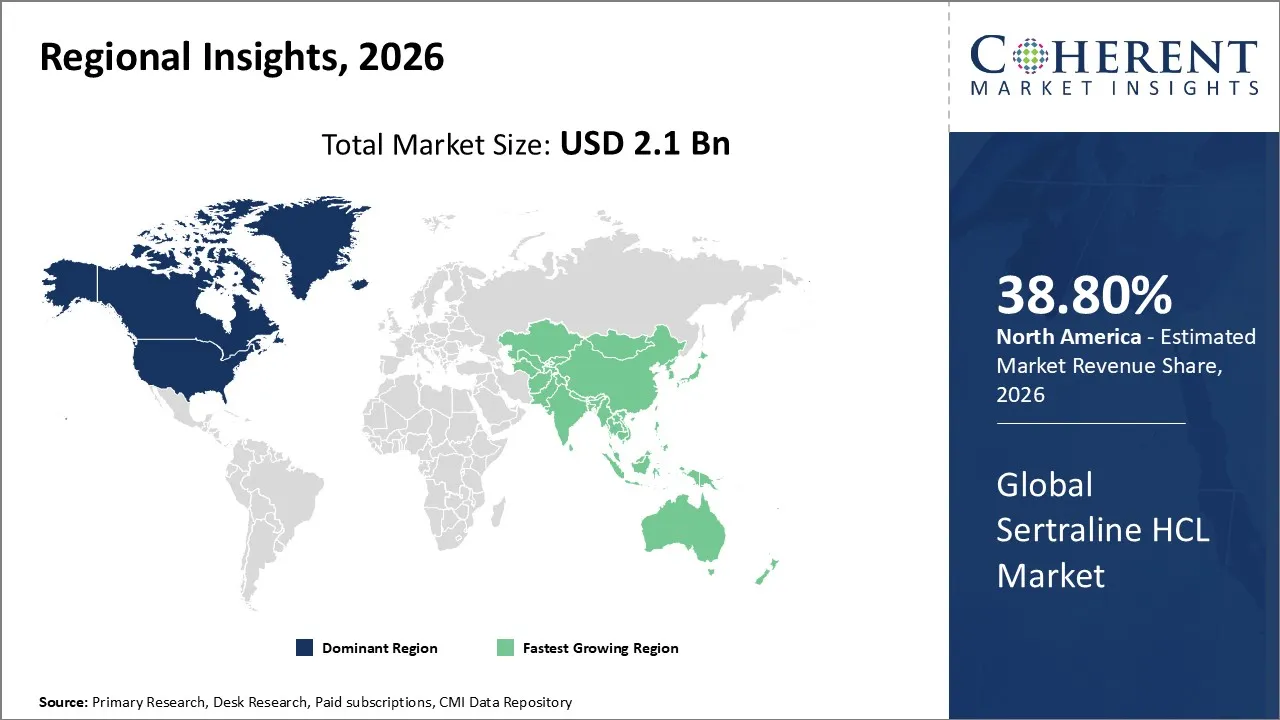
North America Sertraline HCL Market Trends
North America dominates the overall market with an estimated share of 38.80% in 2026. Healthcare providers in North America drive Sertraline HCl market trends by widely adopting antidepressants as first-line therapy and increasingly using telehealth for mental health consultations. Manufacturers expand generic options and secure approvals to improve affordability and access. Pharmacies strengthen distribution through advanced and online networks, extending patient reach, while companies develop patient-friendly formulations to boost adherence. At the same time, healthcare systems prioritize mental health, and consistent prescribing practices across the United States and Canada maintain steady regional demand. For instance, in August 2025, Zenara Pharma received U.S. FDA approval for its ANDA for sertraline hydrochloride capsules (150 mg and 200 mg), the first generic version of Almatica Pharma’s reference drug.
Asia Pacific Sertraline HCL Market Trends
Rising mental health awareness and improving access to psychiatric care are shaping the Asia Pacific Sertraline HCl market across urban and semi-urban areas. Governments and healthcare organizations actively expand mental health programs, which encourages diagnosis and treatment uptake. Manufacturers increase the availability of low-cost generics to improve affordability in price-sensitive markets. Retail and online pharmacies broaden distribution reach, while changing lifestyles and growing work-related stress drive higher demand for antidepressants, supporting continued market expansion in the region. For instance, in July 2025, Zenara Pharma received U.S. FDA approval for its ANDA for sertraline hydrochloride capsules (150 mg and 200 mg), the first generic equivalent of Almatica Pharma’s reference drug.
United States Sertraline HCL Market Trends
Healthcare providers drive the United States Sertraline HCl market by increasingly recognizing mental health conditions and integrating antidepressants as standard treatment. They use telemedicine and digital consultations to reach more patients efficiently. Manufacturers expand access through widely available generic formulations, while hospital and retail pharmacies ensure strong distribution and accessibility. Clinicians and support programs actively promote patient adherence, and proactive mental health initiatives boost treatment uptake, maintaining steady demand and establishing the U.S. as a key and stable market in the global Sertraline HCl landscape. For instance, Wanbury launched its FY24-25 API portfolio, featuring products such as Sertraline HCl, Diphenhydramine HCl, Diphenhydramine Citrate, and Metformin HCl.
India Sertraline HCL Market Trends
Rising mental health awareness and increasing patient demand for depression and anxiety treatment drive growth in the India Sertraline HCl market. Healthcare providers actively expand psychiatric services in urban and semi-urban areas, while hospitals and retail pharmacies strengthen access and distribution. Manufacturers improve patient reach by offering affordable generic formulations, and digital health platforms facilitate consultations and prescription management. Changing lifestyles, academic pressures, work-related stress, and growing acceptance of antidepressant therapy continue to fuel consistent market expansion across the country.
Sertraline HCL Market Trend
Rising Mental Health Awareness
Growing recognition of depression, anxiety, and related disorders is driving Sertraline HCl adoption globally. Public campaigns, workplace mental health programs, and school-based initiatives are increasing patient willingness to seek treatment. Healthcare providers are more proactive in screening and diagnosing conditions, leading to higher prescription volumes. Patients are also more informed about therapy options, which encourages early intervention and continuous medication adherence, positioning Sertraline HCl as a first-line treatment in both clinical and community settings.
Expansion of Generic Formulations
The increasing availability of generic Sertraline HCl has improved affordability and accessibility across diverse patient populations. Manufacturers are offering multiple dosage forms and strengths, enabling clinicians to tailor therapy effectively. Generics reduce the financial barrier for long-term antidepressant use and enhance prescription rates in emerging markets. Retail and hospital pharmacies benefit from bulk procurement of generics, facilitating wider distribution. This trend strengthens the drug’s market presence and ensures sustainable demand across price-sensitive and cost-conscious regions.
Sertraline HCL Market Opportunity
Development of Patient-Friendly Formulations
There is a growing opportunity to develop easy-to-swallow tablets, liquid suspensions, or orally disintegrating formulations to improve adherence, particularly among pediatric, geriatric, and sensitive patients. Such innovations can minimize side effects, simplify dose titration, and encourage long-term therapy. Pharmaceutical companies can leverage this demand by introducing differentiated products that support personalized care, enhancing patient satisfaction and loyalty, and capturing a larger share of the antidepressant market.
Market Report Scope
Sertraline HCL Market Report Coverage
| Report Coverage | Details | ||
|---|---|---|---|
| Base Year: | 2025 | Market Size in 2026: | USD 2.1 Bn |
| Historical Data for: | 2020 To 2024 | Forecast Period: | 2026 To 2033 |
| Forecast Period 2026 to 2033 CAGR: | 4.1% | 2033 Value Projection: | USD 3.1 Bn |
| Geographies covered: |
| ||
| Segments covered: |
| ||
| Companies covered: | Pfizer Inc., Teva Pharmaceutical Industries Ltd., Novartis AG, Accord Biopharma, Apotex Inc., Aurobindo Pharma USA, InvaGen, Lupin, Camber Pharmaceuticals, Mylan N.V. (a Part of Viatris Inc.), Sun Pharmaceutical, Wockhardt, Alpic Biotech | ||
| Growth Drivers: |
| ||
| Restraints & Challenges: |
| ||
Sertraline HCL Market News
- In March 2026, Wanbury Limited received ANVISA Brazil approval for Sertraline Form II and regulatory clearance for special grade Metformin DC from a key customer, strengthening its 75% Sertraline market share in Brazil.
Analyst Opinion (Expert Opinion)
- The current landscape of the Sertraline HCl market reflects its entrenched clinical role and persistent demand driven by real‑world prescribing behavior, but also reveals nuanced challenges that must be addressed strategically. In the United States alone, Sertraline ranks among the top‑prescribed medications, with over 42 million prescriptions in 2023, accounting for roughly 32 % of all SSRI antidepressant use, underscoring its dominant position within the class. Such prescription volumes demonstrate strong clinician confidence in Sertraline’s therapeutic utility, particularly for depression and anxiety disorders where it remains a first‑line choice in primary care and psychiatric settings.
- However, expert evaluation points to treatment complexity and patient heterogeneity as ongoing market challenges. Real‑world evidence shows that achieving a stable dose often requires multiple adjustments, with nearly half of patients changing their dose at least once before stabilization, indicating the importance of flexible prescribing and monitoring frameworks in clinical practice. Additionally, while Sertraline’s efficacy in reducing anxiety and improving quality of life is clinically supported, evidence for rapid depressive symptom reduction is mixed in certain primary care studies, calling for differentiated messaging and outcome tracking in treatment settings.
Speak to the analyst
Want personalized insights?
Take the findings above to one of our principal consultants, or have the report rebuilt around the segments, geographies and competitors you actually track.
Market Segmentation
- By Type
- 25 mg
- 50 mg
- 100 mg
- Others
- By Application
- Obsessive-Compulsive Disorder
- Depression
- Panic Disorder
- Premenstrual Dysphoric Disorder
- Others
- By Distribution Channel
- Hospital Pharmacies
- Retail Pharmacies
- Online Pharmacies
- By Regional Insights
- North America
- U.S.
- Canada
- Latin America
- Brazil
- Argentina
- Mexico
- Rest of Latin America
- Europe
- Germany
- U.K.
- Spain
- France
- Italy
- Russia
- Rest of Europe
- Asia Pacific
- China
- India
- Japan
- Australia
- South Korea
- ASEAN
- Rest of Asia Pacific
- Middle East
- GCC Countries
- Israel
- Rest of Middle East
- Africa
- South Africa
- North Africa
- Central Africa
- North America
- Key Players Insights
- Pfizer Inc.
- Teva Pharmaceutical Industries Ltd.
- Novartis AG
- Accord Biopharma
- Apotex Inc.
- Aurobindo Pharma USA
- InvaGen
- Lupin
- Camber Pharmaceuticals
- Mylan N.V. (a Part of Viatris Inc.)
- Sun Pharmaceutical
- Wockhardt
- Alpic Biotech
Sources
Primary Research interviews
- Interviews with psychiatrists and general practitioners
- Interviews with pharmacists and pharmacy chains
- Interviews with hospital procurement managers
- Interviews with patients and patient advocacy groups
Databases
- PubChem
- ClinicalTrials.gov
- FDA Orange Book
- WHO Drug Information Database
Magazines
- Pharmaceutical Executive
- Drug Topics
- Medscape Pharmacology Updates
Journals
- Journal of Clinical Psychiatry
- International Journal of Neuropsychopharmacology
- Journal of Affective Disorders
- Current Psychiatry Reports
Newspapers
- The New York Times – Health Section
- The Guardian – Medicine and Health
- Financial Times – Pharmaceuticals Section
Associations
- American Psychiatric Association (APA)
- American Pharmacists Association (APhA)
- National Institute of Mental Health (NIMH)
Public Domain sources
- FDA Drug Approval Reports
- WHO Essential Medicines List
- CDC Mental Health Statistics
Proprietary Elements
- CMI Data Analytics Tool
- Proprietary CMI Existing Repository of information for last 8 years
Get access to 250+ pages report
Every segment, forecast, competitor profile and data table behind the analysis above — available for instant download.
- ESOMAR Member
- ISO 9001:2015 Certified
- D-U-N-S Registered
- GDPR & CCPA Compliant
Missing comfort of reading report in your local language? Find your preferred language:
Transform your Strategy with Exclusive Trending Reports
Frequently Asked Questions
The Sertraline Hcl Market is estimated to be valued at USD 2.1 Bn in 2026 and is expected to reach USD 3.1 Bn by 2033.
Factors such as increasing prevalence of mental disorders and increasing product launches for sertraline HCl which is expected to drive the market.
Depression segment is expected to hold a major market share during the forecast period.
The major factors hampering growth of the market include product recall
Major players operating in the market are Pfizer Inc., Teva Pharmaceutical Industries Ltd., Novartis AG, Accord Biopharma, Apotex Inc., Aurobindo Pharma USA, InvaGen, Lupin, Camber Pharmaceuticals, Mylan (a part of Viatris Inc.), Sun Pharmaceutical, Wockhardt, Alpic Biotech