

Eye Inflammation Treatment Market Size and Forecast — 2026-2033
Eye inflammation treatment market is estimated to be valued at USD 701.5 Mn in 2026 and is expected to reach USD 1,075.8 Mn by 2033, exhibiting a compound annual growth rate (CAGR) of 6.3% from 2026 to 2033.
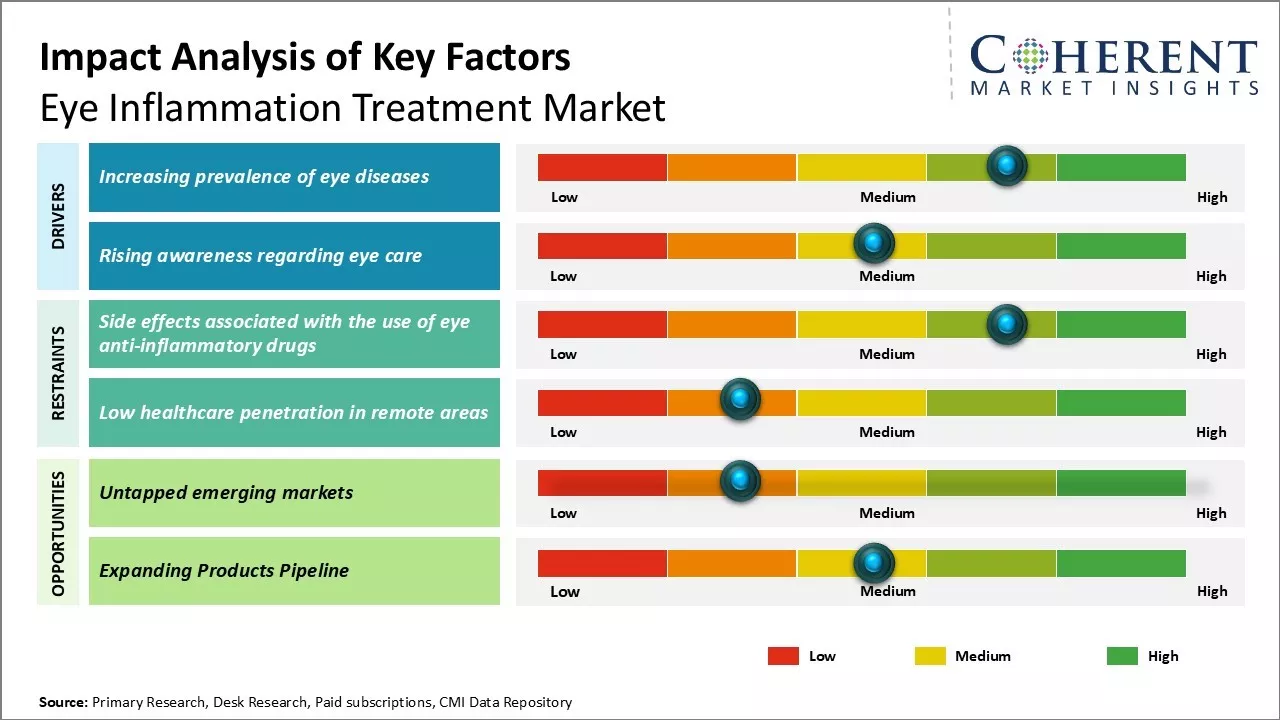
The rising incidence of eye diseases such as conjunctivitis, uveitis, and iritis is significantly boosting demand for eye inflammation treatment drugs. Key drivers include aging population, increased environmental factors leading to ocular infections, and heightened awareness of eye health. However, challenges such as high treatment costs and limited access to advanced therapies may restrain the market growth. As healthcare spending rises, particularly in emerging economies, the market is poised for expansion, driven by innovations in treatment technologies and a growing pipeline of effective therapeutic options.
Insights By Drug Class
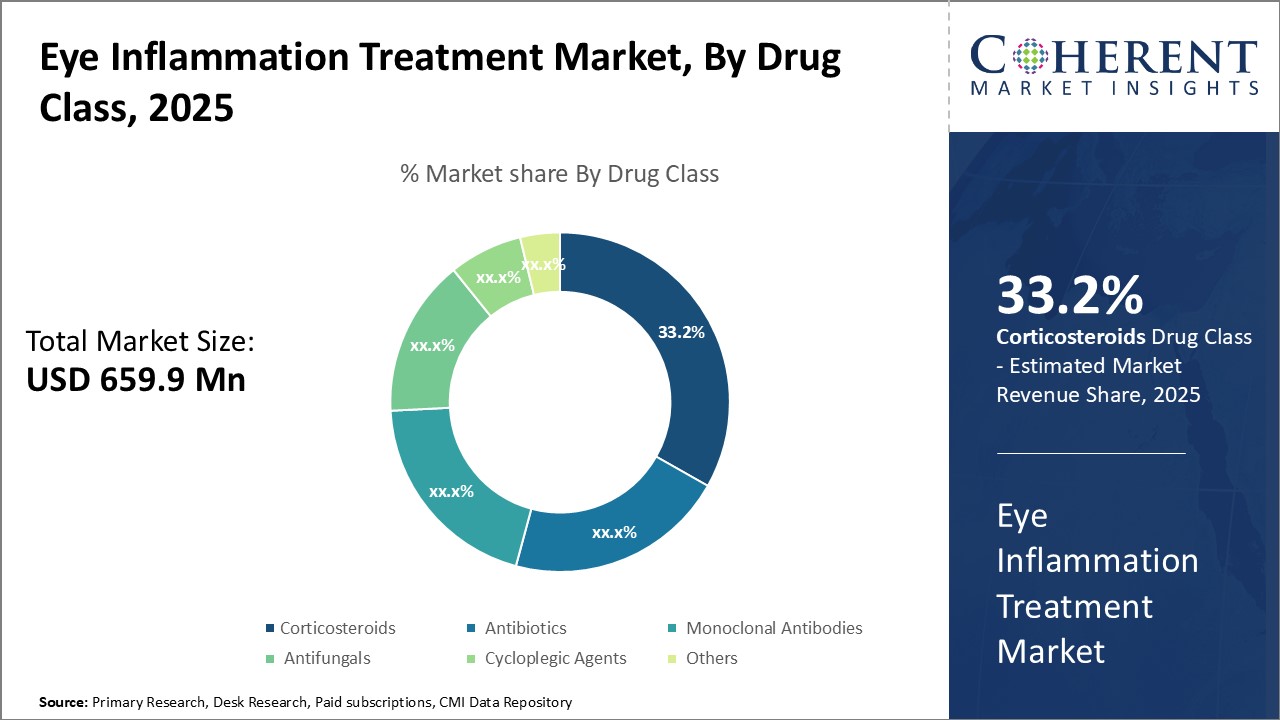
Insights By Drug Class- Effective Relief Drives Corticosteroids Dominance
In terms of drug class, corticosteroids segment is estimated to contribute the highest market share of 34.2% in 2026, owing to their rapid efficacy in alleviating inflammation and associated symptoms. These effectively reduce redness, itching, and swelling, providing immediate relief, which makes them a preferred choice for patients and doctors alike. Their proven safety profile further enhances their adoption as a first-line treatment option.
Insights, By Dosage Form
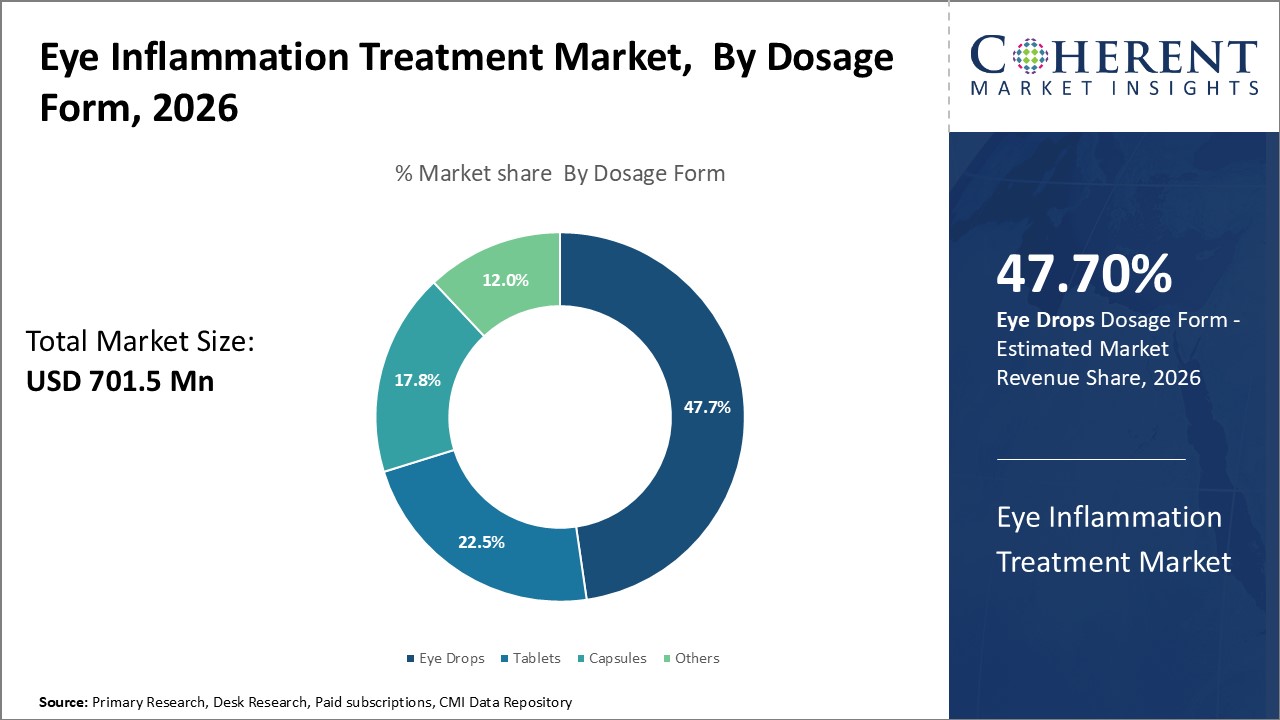
Insights, By Dosage Form- Dosage Convenience Boosts Eye Drops’ Leadership
In terms of dosage form, eye drops segment is estimated to contribute the highest market share of 47.7% in 2026, owing to their convenience and non-invasive delivery method. They provide targeted medication directly to site of inflammation, ensuring high drug concentration with minimal systemic absorption. The ease of use makes eye drops preferable for self-administration, enhancing patient compliance and reducing concerns about swallowing pills, thus, driving their popularity.
Insights, By Distribution Channel:
Insights, By Distribution Channel: Increased Access Through Hospital Pharmacies Boosts their Share
In terms of distribution channel, hospital pharmacies segment is estimated to contribute the highest market share of 54.9% in 2026. This is due to better access and purchasing influence. Patients often obtain prescribed medications directly from hospital pharmacies, ensuring continuity of care and compliance with insurance requirements. This direct access facilitates timely treatment, as hospital pharmacies are integrated within healthcare facilities, allowing for immediate dispensing of medications post-consultation.
Regional Insights
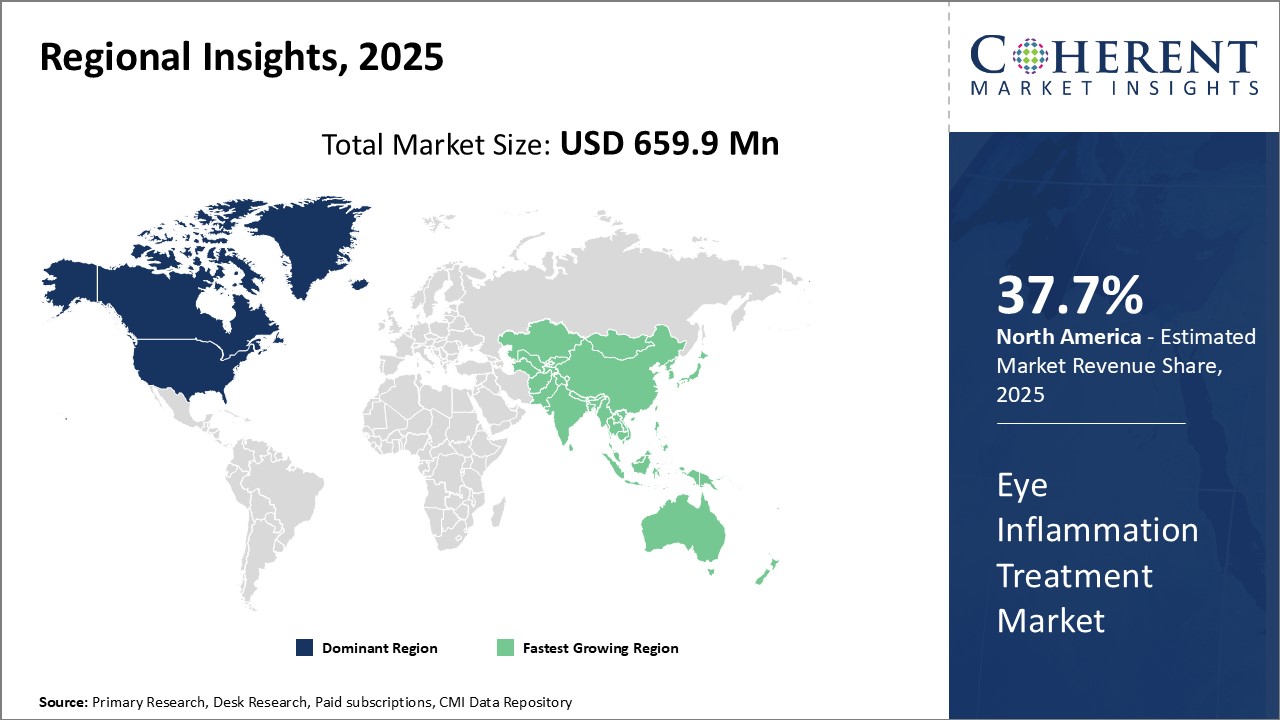
Dominating Region- North America
North America is expected to dominate the market with an estimated market share of 37.7% in 2026, due to well-established healthcare infrastructure and high healthcare expenditure. Presence of leading pharmaceutical companies in the region has ensured easy access to advanced treatment options for eye conditions.
Fastest-Growing Region- Asia Pacific
Asia Pacific region exhibits the fastest growth in eye inflammation treatment market, accounting for 22.9% in 2026. Rising geriatric population especially in China and India, growing awareness about eye care, and increasing healthcare spending in emerging economies contribute to the demand for eye care products and treatments.
Eye Inflammation Treatment Market Outlook for Key Countries
U.S.’ increasing adoption of ocular therapies
The U.S. eye inflammation treatment market growth is driven by new product launches and increasing adoption of ocular therapies. Major companies such as Merck & Co. Inc. and AbbVie Inc. have established a strong presence, focusing on innovative treatments to address various eye conditions. This dynamic environment fosters competition and enhances patient access to effective therapies, thus, improving outcomes in ocular health management.
China’s large patient population
China eye inflammation treatment industry is rapidly expanding due to a large patient population and favorable regulatory environment that promotes domestic innovation. Chinese ophthalmic manufacturers are making significant advancements in research and development, focusing on novel therapies to address various eye conditions. This growth presents valuable opportunities for eye inflammation treatment industry players to enhance their product offerings and improve patient outcomes in the region.
Strong presence of generic drugmakers in India
India continues to lead the Asia Pacific eye inflammation treatment industry growth due to strong presence of generic drugmakers in the country. Recent elimination of import duties on certain ophthalmic products can enhance the uptake of cost-effective treatments. This regulatory change will improve access to essential medications, driving growth and benefiting patients across the country.
Japan’ s extensive portfolios of eye care products
Japan eye inflammation treatment industry is primarily dominated by Bayer and Santen Pharmaceutical, due to extensive portfolios of eye care products and recent drug approvals. Their collaboration has led to the launch of innovative therapies, such as the ophthalmic VEGF inhibitor Eylea, which addresses critical conditions like age-related macular degeneration and diabetic macular edema. This strong market presence enhances patient access to effective treatments and supports ongoing advancements in ocular health.
Market Players, Key Development, and Competitive Intelligence
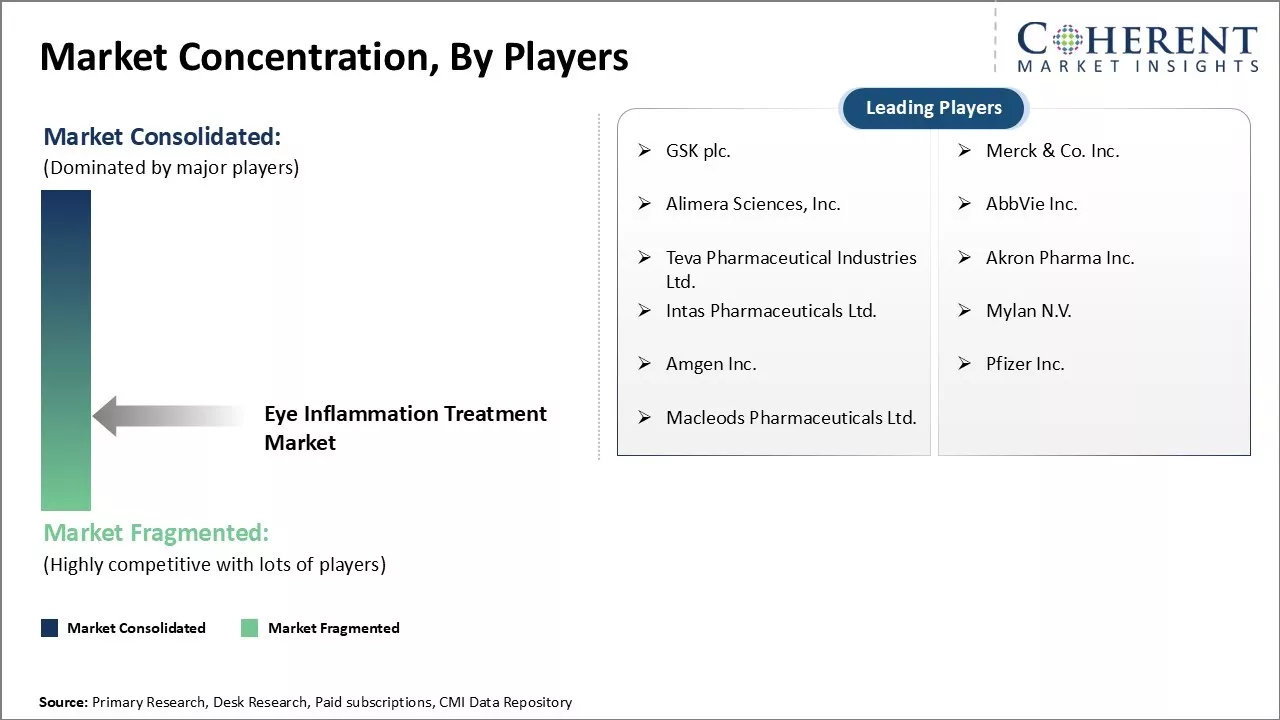
Top Strategies Followed by Eye Inflammation Treatment Market
- Leading companies in eye inflammation treatment sector heavily focuses on research and development to introduce innovative products. For instance, Allergan invests over 20% of its annual revenue into R&D. This has enabled Allergan to launch breakthrough treatments such as Restasis and Bepreve. Other major players like Alcon and Novartis also allocate significant portions of their budgets towards developing advanced eye care solutions.
- Companies in mid-tier positions strategize to provide affordable options such as prescription eye drops. For example, Akorn targets price-conscious consumers through its GoodSense line of generic treatments that are 20-30% cheaper than branded alternatives. Sandoz has a similar strategy with its line of cost-effective generics. These mid-sized companies compete effectively through affordable solutions without compromising on quality
- Small startups target specific customer segments or needs. For example, Eyedetec focuses exclusively on dry eye caused by computer use. Eyedetec's Linea treatment utilizes a unique self-heating mechanism specifically designed for addressing dry eye conditions, particularly those caused by prolonged computer use. This innovative approach enhances user comfort and treatment efficacy.
Emerging Startups in the Eye Inflammation Treatment Market
- Innovative Technologies- Some startups are developing game-changing technologies. For instance, the U.K.-based company Optasense created a "lab-on-a-chip" platform that can rapidly test tear samples for inflammatory markers, expediting disease diagnosis. Cloudz uses artificial intelligence in its "Eye on AI" system to identify common eye conditions through smartphone images, improving access to screening. The adoption of such advanced innovations has potential to transform case management and drive down healthcare costs.
- Sustainable Solutions- Companies like Eyeswise and Green Polymer are focused on eco-friendly materials. Eyeswise manufactures packaging and products from bamboo, reducing plastic waste. Green Polymer produces degradable surgical tools made of polyglycolic acid.
Key Developments
- On September 16, 2024, Eyenovia, a pharmaceutical company, announced the launch of clobetasol propionate ophthalmic suspension 0.05% in the U.S. This medication is designed to manage postoperative eye inflammation treatment and pain following ocular surgeries, marking a significant advancement in eye care.
- On March 4, 2024, Formosa Pharmaceuticals, Inc., a Taiwan-based pharmaceutical company, and AimMax Therapeutics, a U.S. biopharmaceutical company, announced that the U.S. Food and Drug Administration (FDA) had approved clobetasol propionate ophthalmic suspension 0.05% (APP13007) for treating post-operative inflammation and pain following ocular surgery
- In June 2023, Novartis AG, global pharmaceutical company, announced an agreement to divest its 'front of eye' ophthalmology assets to Bausch + Lomb, a global eye health company. This agreement includes Xiidra, the U.S. FDA first approved prescription treatment for the signs and symptoms of dry eye disease, as well as the investigational drug SAF312 (libvatrep), which is being developed as a first-in-class therapy for chronic ocular surface pain (COSP)
- Current Industry Events of 2026
- Market Size Estimation
- Regional Breakdown
- Competitive Landscape
- Customer Intelligence
- Segmental Analysis
- Pricing Analysis
- Key Market Drivers, Challenges & Future Trends
- Customized Insights Section
Market Report Scope
Eye Inflammation Treatment Market Report Coverage
| Report Coverage | Details | ||
|---|---|---|---|
| Base Year: | 2025 | Market Size in 2026: | USD 701.5 Mn |
| Historical Data for: | 2020 To 2024 | Forecast Period: | 2026 To 2033 |
| Forecast Period 2026 to 2033 CAGR: | 6.3% | 2033 Value Projection: | USD 1,075.8 Mn |
| Geographies covered: |
| ||
| Segments covered: |
| ||
| Companies covered: | GSK plc., Merck & Co. Inc., Alimera Sciences, Inc., AbbVie Inc., Teva Pharmaceutical Industries Ltd., Akron Pharma Inc., Intas Pharmaceuticals Ltd., Mylan N.V., Amgen Inc., Pfizer Inc., and Macleods Pharmaceuticals Ltd. | ||
| Growth Drivers: |
| ||
| Restraints & Challenges: |
| ||
Market Dynamics
Market Driver - Increasing prevalence of eye diseases
Global eye inflammation treatment market remains driven by the rising prevalence of eye diseases across the world. Various eye conditions such as conjunctivitis, uveitis, iritis and others which lead to inflammation have increased in recent decades. For instance, on August 17, 2024, according to the data published by Medscape eMedicine, the incidence of bacterial conjunctivitis in the U.S. is 135 cases per 10,000 population annually.
Market Challenge - Side effects associated with the use of eye anti-inflammatory drugs
Side effects associated with the use of eye anti-inflammatory drugs can hamper the global eye inflammation treatment industry growth. For instance, according to data published in July 2022, by Mayo Foundation for Medical Education and Research, an academic medical center, eye anti-inflammatory drugs may sometime have side effects such as blurred vision or other change in vision, fever or chills, pain, bleeding in the eye, and others which can become worse while using drugs.
Market Opportunity - Untapped emerging markets
Eye inflammation treatment market faces significant unmet demands in emerging regions. Particularly in Asia Pacific and Latin America, rising eye disease prevalence due to aging population, increasing pollution, and limited access to care presents lucrative opportunities for manufacturers. Addressing affordability and improving awareness could allow these markets to contribute significantly to global revenue in ophthalmology sector that are expanding and generating substantial income on a global scale, offering companies avenues for growth and geographical diversification.
Analyst Opinion (Expert Opinion)
Key Takeaways from Analyst
Eye inflammation treatment market is expected to witness steady growth over the forecast period, owing to rising prevalence of eye diseases globally.
North America dominates the eye inflammation treatment industry due to well-established healthcare infrastructure and high healthcare spending. However, Asia Pacific is likely to witness highest growth due to large patient pool and improving access to healthcare in developing countries of the region.
Low awareness about eye conditions in developing nations can hamper the eye inflammation treatment industry growth. Availability of generic alternatives for major drugs may increase pricing pressure on leading players.
Speak to the analyst
Want personalized insights?
Take the findings above to one of our principal consultants, or have the report rebuilt around the segments, geographies and competitors you actually track.
Market Segmentation
- By Drug Class Insights (Revenue, USD Mn, 2021 – 2033)
- Corticosteroids
- Antibiotics
- Monoclonal Antibodies
- Antifungals
- Cycloplegic Agents
- Others
- By Dosage Form Insights (Revenue, USD Mn, 2021 – 2033)
- Eye Drops
- Tablets
- Capsules
- Others
- By Distribution Channel Insights (Revenue, USD Mn, 2021 – 2033)
- Hospital Pharmacies
- Retail Pharmacies
- Online Pharmacies
- By Regional Insights (Revenue, USD Mn, 2021 – 2033)
- North America
- U.S.
- Canada
- Latin America
- Brazil
- Argentina
- Mexico
- Rest of Latin America
- Europe
- Germany
- U.K.
- Spain
- France
- Italy
- Russia
- Rest of Europe
- Asia Pacific
- China
- India
- Japan
- Australia
- South Korea
- ASEAN
- Rest of Asia Pacific
- Middle East
- GCC Countries
- Israel
- Rest of Middle East
- Africa
- South Africa
- North Africa
- Central Africa
- North America
- Key Players Insights
- GSK plc.
- Merck & Co. Inc.
- Alimera Sciences, Inc.
- AbbVie Inc.
- Teva Pharmaceutical Industries Ltd.
- Akron Pharma Inc.
- Intas Pharmaceuticals Ltd.
- Mylan N.V.
- Amgen Inc.
- Pfizer Inc.
- Macleods Pharmaceuticals Ltd.
Get access to 250+ pages report
Every segment, forecast, competitor profile and data table behind the analysis above — available for instant download.
- ESOMAR Member
- ISO 9001:2015 Certified
- D-U-N-S Registered
- GDPR & CCPA Compliant
Missing comfort of reading report in your local language? Find your preferred language:
Transform your Strategy with Exclusive Trending Reports
Frequently Asked Questions
The Eye Inflammation Treatment Market is estimated to be valued at USD 701.5 Mn in 2026, and is expected to reach USD 1.075.8 Mn by 2033.
The CAGR of the Eye Inflammation Treatment Market is projected to be 6.3% from 2026 to 2033.
Increasing prevalence of eye diseases and rising awareness regarding eye care are the major factors driving the growth of eye inflammation treatment market.
Side effects associated with the use of eye anti-inflammatory drugs and low healthcare penetration in remote areas are the major factors hampering the growth of eye inflammation treatment market.
In terms of drug class, corticosteroids segment is estimated to dominate the market in 2026.
GSK plc., Merck & Co. Inc., Alimera Sciences, Inc., AbbVie Inc., Teva Pharmaceutical Industries Ltd., Akron Pharma Inc., Intas Pharmaceuticals Ltd., Mylan N.V., Amgen Inc., Pfizer Inc., and Macleods Pharmaceuticals Ltd. are the major players.
North America is expected to lead the eye inflammation treatment market in 2026.