

Bowen Disease Treatment Market Size and Share Analysis- 2026 To 2033
The Bowen Disease Treatment Market size is anticipated to grow at a CAGR of 3.9% with USD 800 Mn in 2026 and is expected to reach USD 1,050 Mn in 2033. The primary drivers are largely defined by the rising cases of non-melanoma skin cancer, increasing elderly population, wider adoption of topical therapies, and growing use of photodynamic therapy in dermatology clinics. Bowen disease is also known as squamous cell carcinoma in situ, and the British Association of Dermatologists lists cryotherapy, curettage, 5-fluorouracil cream, imiquimod cream, and excision as treatment options. supporting long-term treatment demand.
Key Takeaways
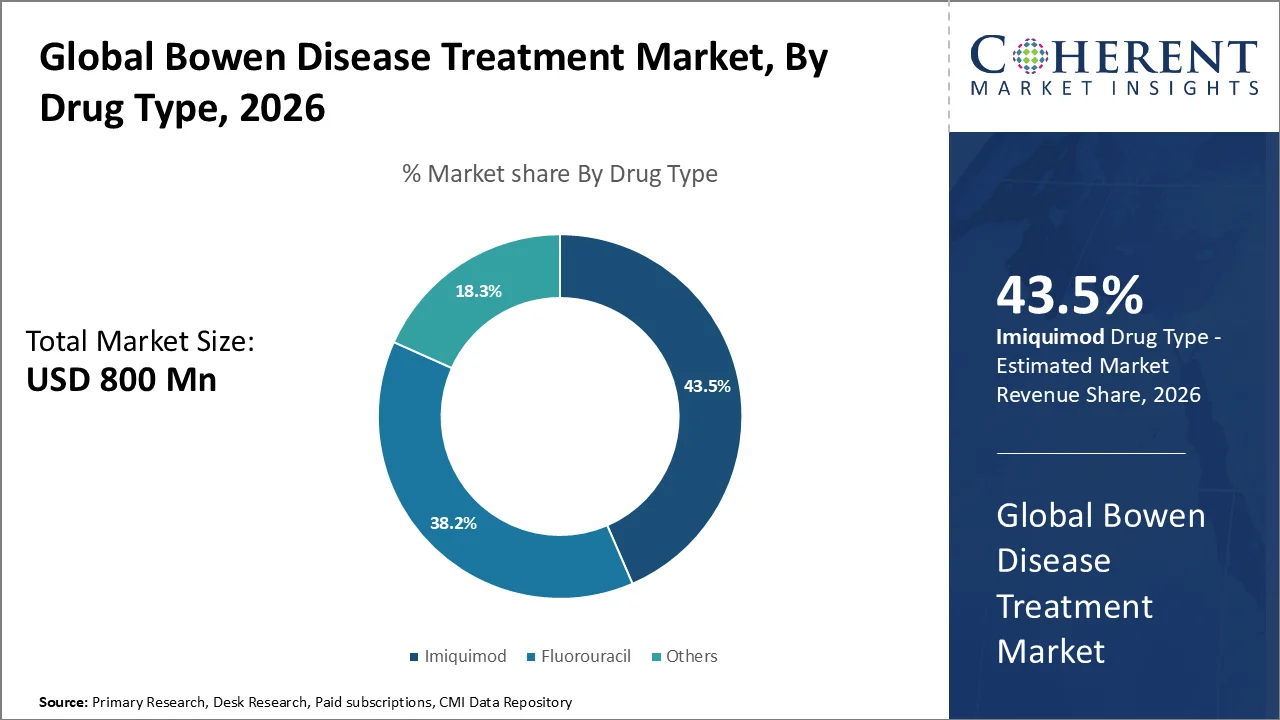
- Imiquimod is likely to dominate the market with 43.5% in 2026. The segment’s growth is owing to its immune-modulating action, topical administration, and clinical relevance. The FDA label for Aldara states that imiquimod is indicated for actinic keratoses and superficial basal cell carcinoma in immunocompetent adults, showing its strong position in prescription dermatology.
- Hospital Pharmacies segment is set to lead with 48.2% in 2026. The segment’s growth is owing to the diagnosis-led prescribing, biopsy confirmation, dermatology referrals, and treatment monitoring. Bowen disease often requires physician evaluation before topical therapy, cryotherapy, PDT, or surgery. This strengthens hospital pharmacy involvement in dispensing and follow-up-linked prescription management.
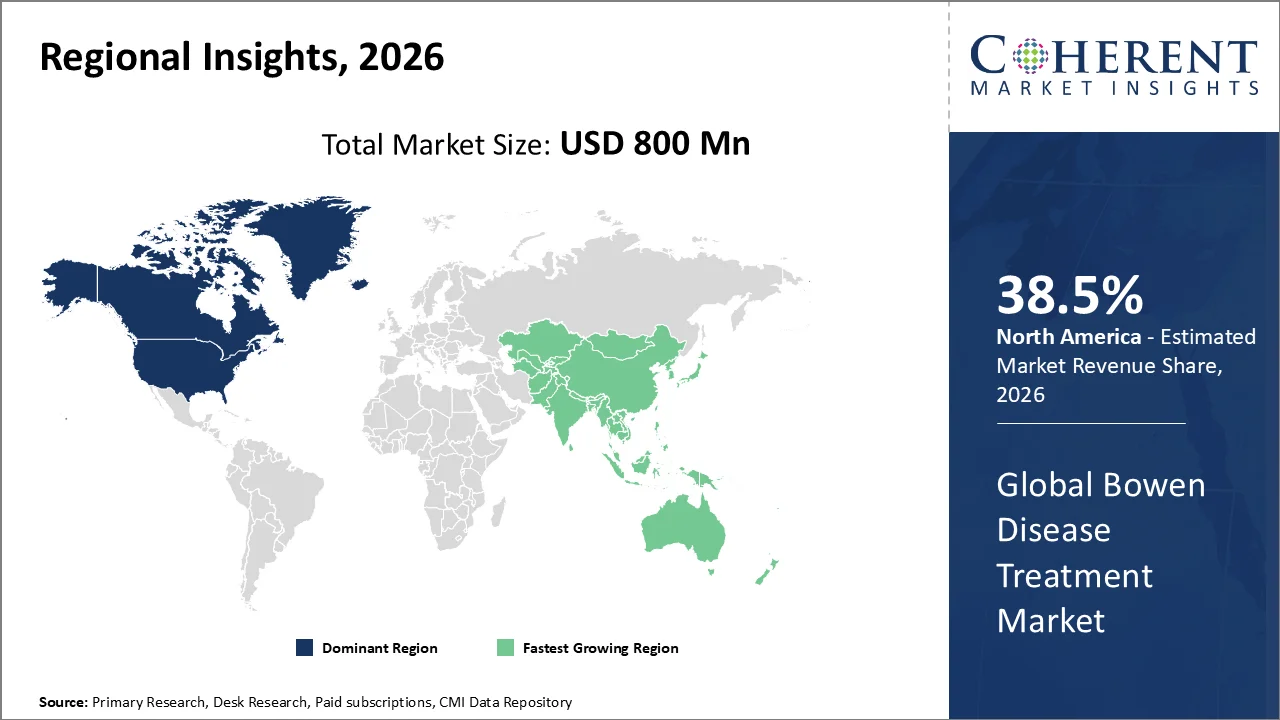
- North America is expected to acquire the prominent share of 38.5% in 2026. The region’s growth is owing to the high skin cancer burden, strong dermatology infrastructure, and availability of prescription topical and photodynamic therapy CDC states that skin cancer is the most common cancer form in the U.S., and around 6.1 Mn adults are treated each year for basal and squamous cell carcinomas.
Segmental Insights
Why is Imiquimod Acquiring the Largest Share?
On the basis of drug type, the imiquimod segment is projected to account for the largest Bowen Disease Treatment Market share of 43.5% in 2026. The segment’s growth is owing to its role as a topical immune response modifier, widely used in non-invasive treatment of squamous cell carcinoma in situ (Bowen disease), especially in elderly and high-risk dermatology patients.
According to the U.S. Food and Drug Administration (FDA), imiquimod is approved for dermatological indications like This regulatory approval strengthens the clinician confidence in its dermatology applications and supports the off-label use in Bowen disease management.
In addition, the U.K. National Health Service (NHS) recognizes imiquimod cream as a treatment option for Bowen disease in cases where surgery or cryotherapy may not be suitable, thereby highlighting its importance as a non-invasive outpatient therapy.
- Current Industry Events of 2026
- Market Size Estimation
- Regional Breakdown
- Competitive Landscape
- Customer Intelligence
- Segmental Analysis
- Pricing Analysis
- Key Market Drivers, Challenges & Future Trends
- Customized Insights Section
Hospital Pharmacies hold the Largest Market Share
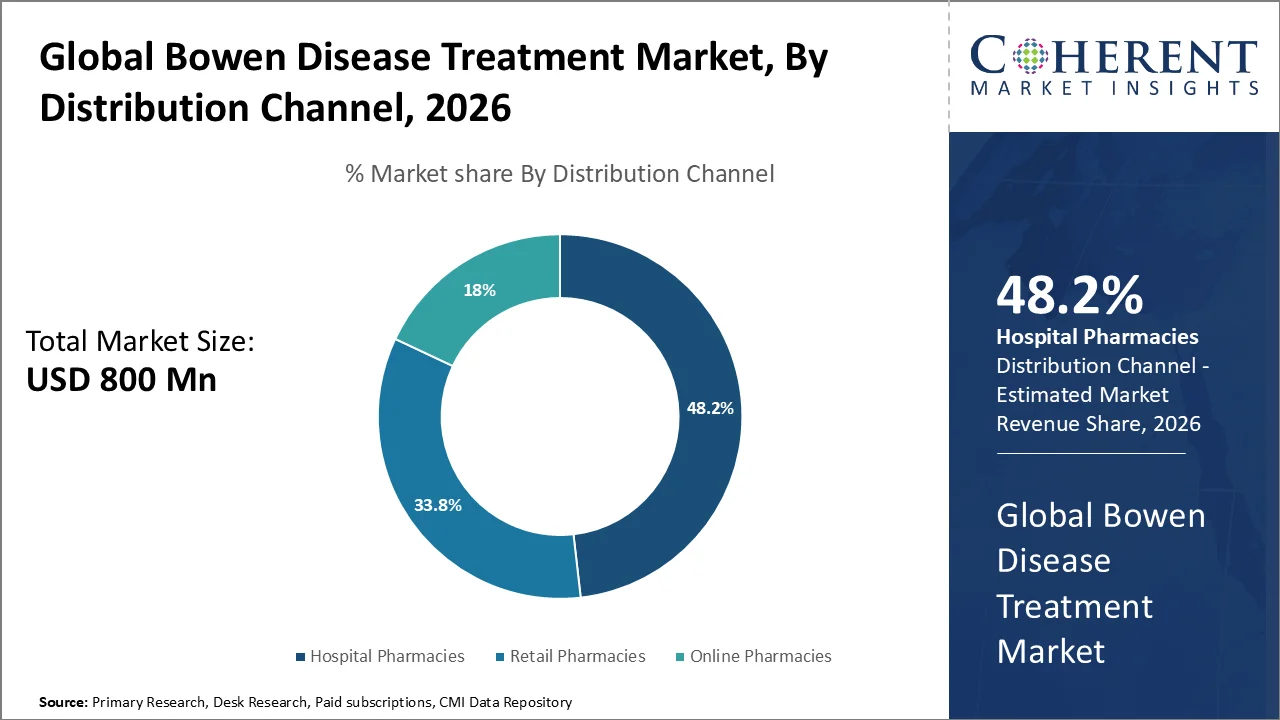
On the basis of distribution channel, the hospital pharmacies segment lead with a major 48.2% share in 2026. The segment’s growth is owing to the central role in diagnosis-led dermatological treatment pathways. Bowen disease is typically confirmed through clinical examination and biopsy before therapy initiation, making hospital-based dermatology departments the primary point of care.
According to the Centers for Disease Control and Prevention (CDC), skin cancer remains the most common cancer type in the United States, with millions of keratinocyte cancer treatments performed annually in healthcare systems, reinforcing hospital-level treatment dependency.
The NHS clinical pathway for Bowen disease also highlights hospital-based diagnosis and specialist-led treatment selection including options like topical chemotherapy (5-FU), imiquimod, cryotherapy, and photodynamic therapy, which are typically dispensed via hospital pharmacies.
Rising Burden of Skin Cancer and UV-linked Lesions are Transforming the Bowen Disease Treatment Market in the US
The increasing prevalence of skin cancer and UV-linked lesions is transforming the Bowen Disease Treatment Market in the U.S. Bowen disease is a form of squamous cell carcinoma in situ, and demand for treatment is increasing as skin cancer remains the most common cancer in the U.S.
The American Academy of Dermatology estimates that about 9,500 people are diagnosed with skin cancer every day in the U.S., thereby supporting higher dermatology visits as well as early lesion treatment. UV-linked risk also remains high, as CDC notes that more than one-third of adults get sunburned annually, thereby reinforcing the need for early lesion detection and management.
In January 2024, DermaSensor received the FDA clearance for its AI-powered, non-invasive skin cancer detection device designed to identify melanoma, basal cell carcinoma, and squamous cell carcinoma in real time.
LED-Based Photodynamic Therapy: A Major Breakthrough in Bowen Disease Treatment Market
LED-based photodynamic therapy is emerging as an important breakthrough in the Bowen Disease Treatment Market. It combines topical photosensitizing agents with controlled light exposure to destroy abnormal cells. In Bowen disease care, PDT is valued for non-invasive treatment, good cosmetic outcomes, and suitability for selected lesions where surgery may be less preferred.
The technology improves procedure delivery by standardizing light exposure, reducing dependence on older lamp systems, and supporting in-office workflows. It benefits elderly patients, multiple-lesion cases, and slow-healing sites. A randomized study comparing excision, 5-fluorouracil, and methyl aminolevulinate PDT reported sustained clearance of 97.4% after excision, 85.7% after 5-fluorouracil, and 82.1% after MAL-PDT. This shows that non-invasive treatments remain clinically relevant when balanced against cosmetic outcomes and patient preferences.
In February 2026, Biofrontera announced positive Phase 3 results for Ameluz PDT with the RhodoLED platform in actinic keratoses on extremities, neck, and trunk. The study enrolled 172 patients, and Ameluz PDT achieved 45.6% complete clearance versus 16.7% with vehicle PDT in the full analysis set.
Current Events and Their Impact on the Bowen Disease Treatment Market
Current Event | Description and its Impact |
U.S. FDA Approves Adjuvant Cemiplimab for High-risk CSCC (October 2025) |
|
CMS Superficial Radiation Therapy Coverage Policy Becomes Effective (March 2026) |
|
Bowen Disease Treatment Market Trends
- Topical therapy and PDT are gaining importance as patients and clinicians seek alternatives to surgery for selected lesions. The NHS lists imiquimod, 5-fluorouracil, This is expected to support the demand for topical drugs and clinic-based non-invasive dermatology procedures.
- Bowen disease is more relevant in older populations owing to cumulative UV exposure and immune changes. The WHO states that the global population aged 60+ will reach 1.4 billion by 2030 and 2.1 billion by 2050. This demographic shift is expected to increase diagnosis as well as treatment volumes.
- Cancer Research UK reports around 156,000 new non-melanoma skin cancer cases annually in the UK and projects incidence rates to rise by 14% between 2023–2025 and 2038–2040. This supports the long-term demand for early lesion treatment and dermatology follow-up.
- The CMS reported that the 2025 Medicare Part D redesign caps covered prescription out-of-pocket spending at USD 2,000. Since Bowen disease often affects older patients, better prescription affordability may support adherence to topical therapies and reduce discontinuation caused by cost concerns.
Regional Insights
North America Dominates Owing to the Strong Dermatology Infrastructure
The North America region accounts for 38.5% of the market share in 2026. The region’s growth is owing to the high skin cancer burden, strong diagnostic access, availability of prescription dermatology devices, and high use of procedural care such as PDT, cryotherapy, excision, and biopsy-based diagnosis. CDC states that skin cancer is the most common cancer form in the U.S., while basal and squamous cell carcinomas are not normally collected by central cancer registries, indicating undercounting in routine cancer statistics.
The region also benefits from strong treatment infrastructure. IARC’s GLOBOCAN non-melanoma skin cancer fact sheet shows Northern America accounted for 48.8% of 5-year prevalent non-melanoma skin cancer cases by continent in 2022. This high prevalence supports strong demand for topical therapies, procedural treatments, and follow-up care.
Asia Pacific Bowen Disease Treatment Market Trends
Asia Pacific is expected to witness strong growth in Bowen Disease Treatment Market over the forecast period. The region’s growth is owing to the expanding dermatology access, growing elderly population, rising diagnosis of skin lesions, and increased availability of topical generics. Countries such as Japan, Australia, China, India, and South Korea are expected to support demand through aging demographics and expanding specialty care.
Australia represents a high-burden market due to UV exposure. Cancer Council NSW states that Australia has one of the highest skin cancer rates globally, around 2 out of 3 Australians will be diagnosed with some form of skin cancer during their lifetime, and over 1 million treatments are given each year for non-melanoma skin cancers.
Hong Kong also shows measurable non-melanoma disease burden. The Centre for Health Protection reported 1,087 new non-melanoma skin cancer cases in 2023, with a crude incidence rate of 14.4 per 100,000 population. This supports rising need for diagnosis, topical therapy, and dermatology follow-up across urban healthcare systems.
High Skin Cancer Treatment Volume and Advanced Dermatology Clinic Infrastructure is Accelerating the Bowen Disease Treatment Market in United States
The U.S. market is important due to high skin cancer treatment volume, strong prescription drug availability, and advanced dermatology clinic infrastructure. The CDC states that around 6.1 million adults are treated each year for basal and squamous cell carcinomas at an estimated cost of USD 8.9 billion, thereby reflecting the high economic burden of keratinocyte cancer care.
The U.S. also leads in PDT innovation. Sun Pharma’s next-generation LED BLU-U device approval in May 2025 strengthens the availability of advanced in-office photodynamic therapy systems. This is expected to support dermatologists in managing precancerous and early skin cancer-related lesions, including care pathways relevant to Bowen disease treatment selection.
Australia Bowen Disease Treatment Market Trends
In the Australia, the growth in the Bowen Disease Treatment Market is driven by the high UV exposure, strong skin cancer awareness, and high treatment volumes for keratinocyte cancers. Cancer Council NSW states that non-melanoma skin cancer is the most common cancer diagnosed in Australia and that SCC occurs mostly in people over 50.
The market is also supported by screening awareness and frequent use of primary care and dermatology services. High treatment volumes for non-melanoma skin cancer create demand for topical therapies, surgical excision, cryotherapy, and PDT. Australia is therefore expected to remain an important revenue contributor in Asia Pacific, especially for early-stage lesion management and elderly patient care.
Who are the Major Companies in Bowen Disease Treatment Industry
Some of the major key players in Bowen Disease Treatment Market are Galderma S.A., Sirnaomics, Inc., PEPLIN INC, Ponce Therapeutics, Intas Laboratories Pvt Ltd, Cadila Pharmaceuticals Ltd., VHB Life Sciences Limited, Neon Laboratories Ltd, Teva Pharmaceutical Ltd, and Actavis Group.
Key News
- In March 2026, SkinCure Oncology introduced FDA-cleared GentleBeam to expand its Image-Guided SRT platform for treating nonmelanoma skin cancers, including squamous cell carcinoma. The technology enhances visualization and treatment precision using Photosonic imaging to improve planning, dose delivery, and tumor targeting in dermatology practices.
- In April 2025, SkinCure Oncology announced that its GentleCure Image-Guided Superficial Radiation Therapy (IGSRT) program successfully treated its 100,000th patient with nonmelanoma skin cancer including squamous cell carcinoma. The nonsurgical treatment combines high-definition imaging with the low-dose X-rays and has demonstrated a cure rate exceeding 99% for early-stage cases.
Market Report Scope
Bowen Disease Treatment Market Report Coverage
| Report Coverage | Details | ||
|---|---|---|---|
| Base Year: | 2025 | Market Size in 2026: | USD 800 Mn |
| Historical Data for: | 2020 To 2024 | Forecast Period: | 2026 To 2033 |
| Forecast Period 2026 to 2033 CAGR: | 3.9% | 2033 Value Projection: | USD 1,050 Mn |
| Geographies covered: |
| ||
| Segments covered: |
| ||
| Companies covered: | Galderma S.A., Sirnaomics, Inc., PEPLIN INC, Ponce Therapeutics, Intas Laboratories Pvt Ltd, Cadila Pharmaceuticals Ltd., VHB Life Sciences Limited, Neon Laboratories Ltd, Teva Pharmaceutical Ltd, and Actavis Group. | ||
| Growth Drivers: |
| ||
| Restraints & Challenges: |
| ||
Analyst Opinion
- Bowen disease treatment is driven by rising skin cancer burden. Bowen disease is squamous cell carcinoma in situ, and dermatologists usually treat or monitor it because it can progress into invasive squamous cell carcinoma. In the U.S., current estimates indicate that one in five Americans will develop skin cancer in their lifetime, supporting steady demand for early lesion diagnosis and treatment.
- UV exposure is a major demand driver for the bowen disease treatment. The CDC data shows 88.1 million U.S. adults, or 35.1%, had at least one sunburn in the previous 12 months, thereby increasing the pool of patients needing skin checks, biopsy confirmation, and treatment for UV-linked lesions.
- Treatment adoption is supported by multiple non-invasive options. NCI notes that Bowen disease management is similar to good-risk SCC and that high complete-response rates are achievable with photodynamic therapy, while topical 5-FU and imiquimod remain important outpatient options.
Speak to the analyst
Want personalized insights?
Take the findings above to one of our principal consultants, or have the report rebuilt around the segments, geographies and competitors you actually track.
Market Segmentation
- By Drug Type (Revenue, USD Mn, 2021-2033)
- Fluorouracil
- Imiquimod
- Others
- By Distribution Channel (Revenue, USD Mn, 2021-2033)
- Hospital Pharmacies
- Retail Pharmacies
- Online Pharmacies
- Global Bowen Disease Treatment Market, By Region (Revenue, USD Mn, 2021-2033)
- North America
- U.S.
- Canada
- Latin America
- Brazil
- Mexico
- Argentina
- Rest of Latin America
- Europe
- Germany
- U.K.
- France
- Italy
- Spain
- Russia
- Rest of Europe
- Asia Pacific
- China
- India
- Japan
- Australia
- South Korea
- ASEAN
- Rest of Asia Pacific
- Middle East
- GCC
- Israel
- Rest of Middle East
- Africa
- South Africa
- Central Africa
- North Africa
- North America
Sources
Primary Research Interviews
- Dermatologists
- Oncologists
- Dermatology Clinic Owners
- Hospital Procurement Managers
- Pharmaceutical Product Managers
- Topical Drug Manufacturers
- Photodynamic Therapy Device Providers
- Cryotherapy Equipment Suppliers
- Mohs Surgery Specialists
- Others
Databases
- Bloomberg Terminal
- Thomson Reuters Eikon
- Euromonitor International
- Others
Magazines
- Dermatology Times
- Practical Dermatology
- Oncology Times
- The Dermatologist
- Medical Device Network
- Others
Journals
- British Journal of Dermatology
- Journal of the American Academy of Dermatology
- JAMA Dermatology
- Dermatologic Surgery
- Clinical and Experimental Dermatology
- Acta Dermato-Venereologica
- Others
Newspapers
- Financial Times
- The Wall Street Journal
- Reuters
- Bloomberg News
- The New York Times
- Others
Associations
- American Academy of Dermatology Association (AAD)
- British Association of Dermatologists (BAD)
- European Academy of Dermatology and Venereology (EADV)
- Skin Cancer Foundation
- American Society for Dermatologic Surgery (ASDS)
- European Dermatology Forum (EDF)
- Others
Public Domain Sources
- U.S. Food and Drug Administration (FDA)
- National Cancer Institute (NCI)
- Centers for Disease Control and Prevention (CDC)
- World Health Organization (WHO)
- European Medicines Agency (EMA)
- National Institute for Health and Care Excellence (NICE)
- ClinicalTrials.gov
- PubMed
- Others
Proprietary Elements
- CMI Data Analytics Tool
- Proprietary CMI Existing Repository of Information for the Last 10 Years
Get access to 250+ pages report
Every segment, forecast, competitor profile and data table behind the analysis above — available for instant download.
- ESOMAR Member
- ISO 9001:2015 Certified
- D-U-N-S Registered
- GDPR & CCPA Compliant
Missing comfort of reading report in your local language? Find your preferred language:
Transform your Strategy with Exclusive Trending Reports
Frequently Asked Questions
The Bowen Disease Treatment Market is expected to reach USD 1,050 Mn in 2033.
Major players operating in the global Bowen Disease Treatment Market include Galderma S.A., Sirnaomics, Inc., PEPLIN INC, Ponce Therapeutics, Intas Laboratories Pvt Ltd, Cadila Pharmaceuticals Ltd., VHB Life Sciences Limited, Neon Laboratories Ltd, Teva Pharmaceutical Ltd, and Actavis Group.
The misdiagnosis of lesions as benign conditions, a reliance on low-cost generic topical agents, and the lack of standardized global treatment guidelines are the key factors hampering growth of the market.
The rising prevalence of skin cancers, an aging global population, and increased sun exposure is boosting the demand for Bowen Disease Treatment.
The Bowen Disease Treatment Market is anticipated to grow at a CAGR of 3.9% between 2026 and 2033.
Among regions, North America is expected to account for a largest market share in the global Bowen Disease Treatment Market over the forecast period.
The Bowen Disease Treatment Market includes topical drugs, hospital-based treatments, retail pharmacy products, and online pharmacy distribution used for managing Bowen disease, also known as squamous cell carcinoma in situ.