

Digital Healthcare Market Size and Forecast
The global digital healthcare market is estimated to be valued at USD 323.87 Bn in 2026 and is expected to reach USD 1,258.64 Bn by 2033, exhibiting a compound annual growth rate (CAGR) of 21.4% from 2026 to 2033.
Key Takeaways
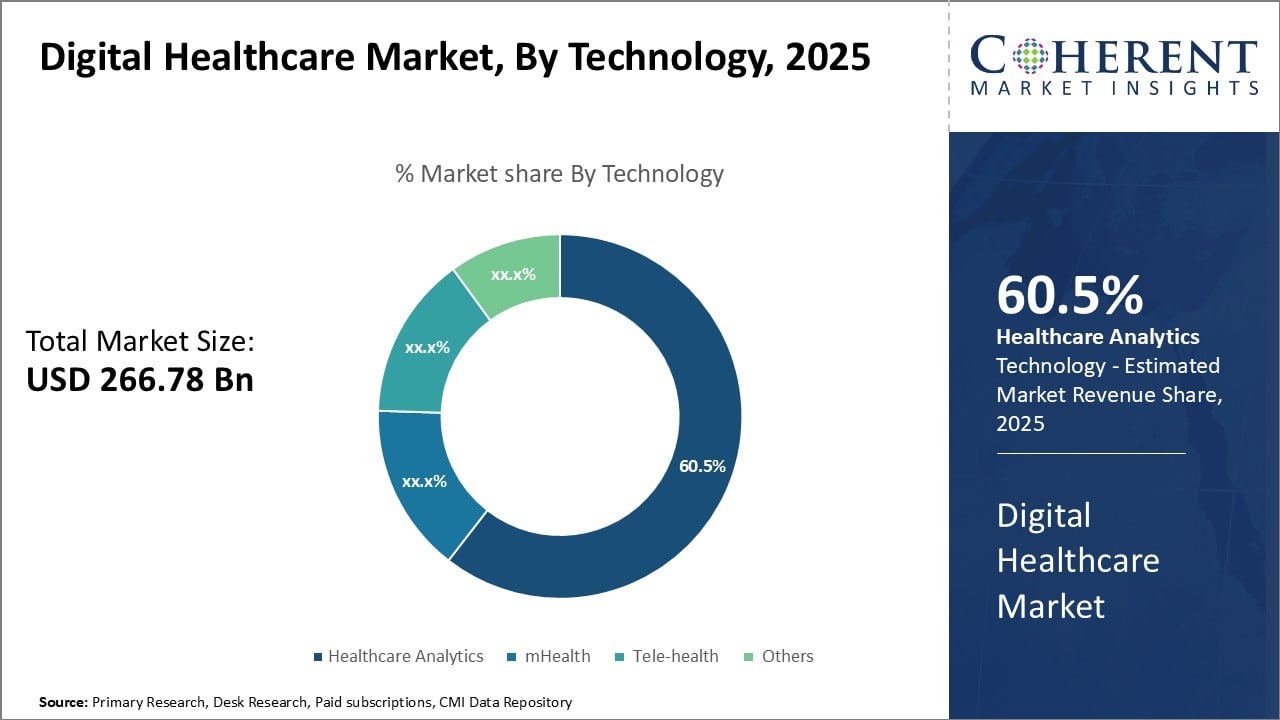
- Based on Technology, Tele-health acquired the prominent share of 61.5% in 2026 owing to the digitization of healthcare data, aging populations, and patient demands for personalized care.
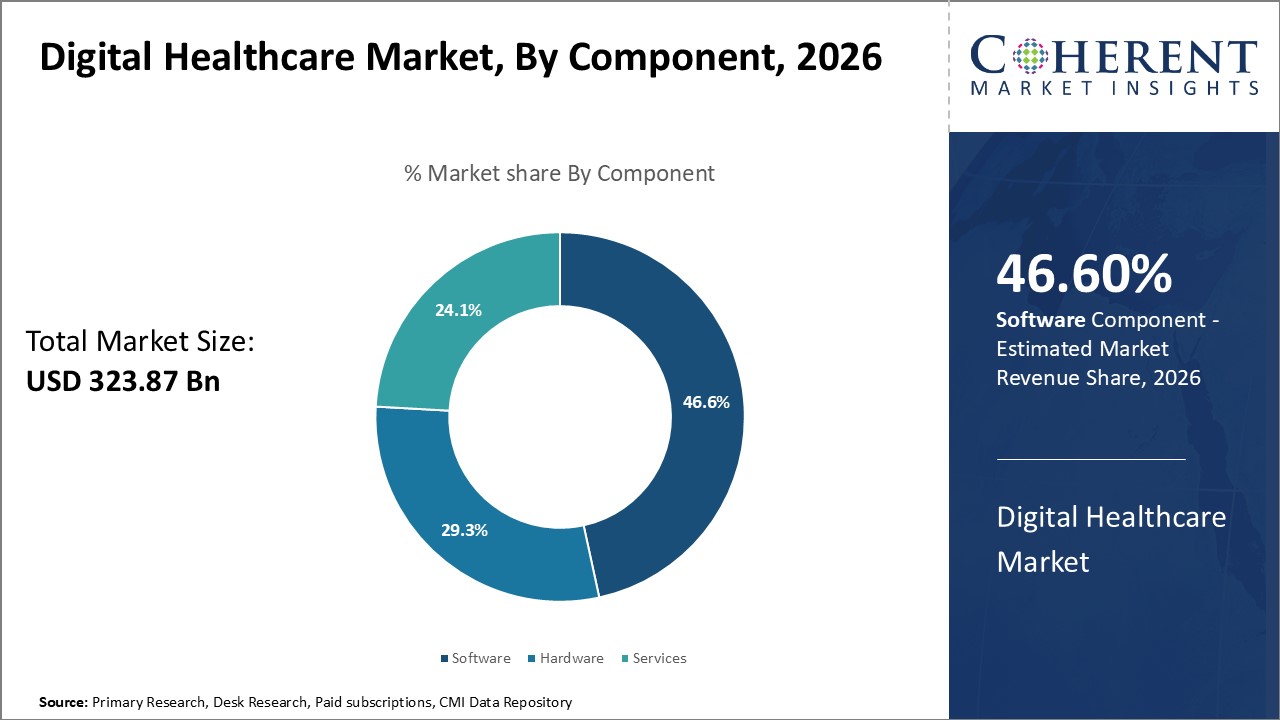
- On the basis of Component Segment, Software dominates the overall market with an estimated share of 46.60% in 2026 owing to its critical role in enabling digital healthcare solutions.
- On the basis of End-User segment, the Hospitals segment dominates the market with a market share of 41.62%. Electronic health records, remote monitoring, telehealth and predictive analytics boost clinical efficiency and workflow inside hospitals.
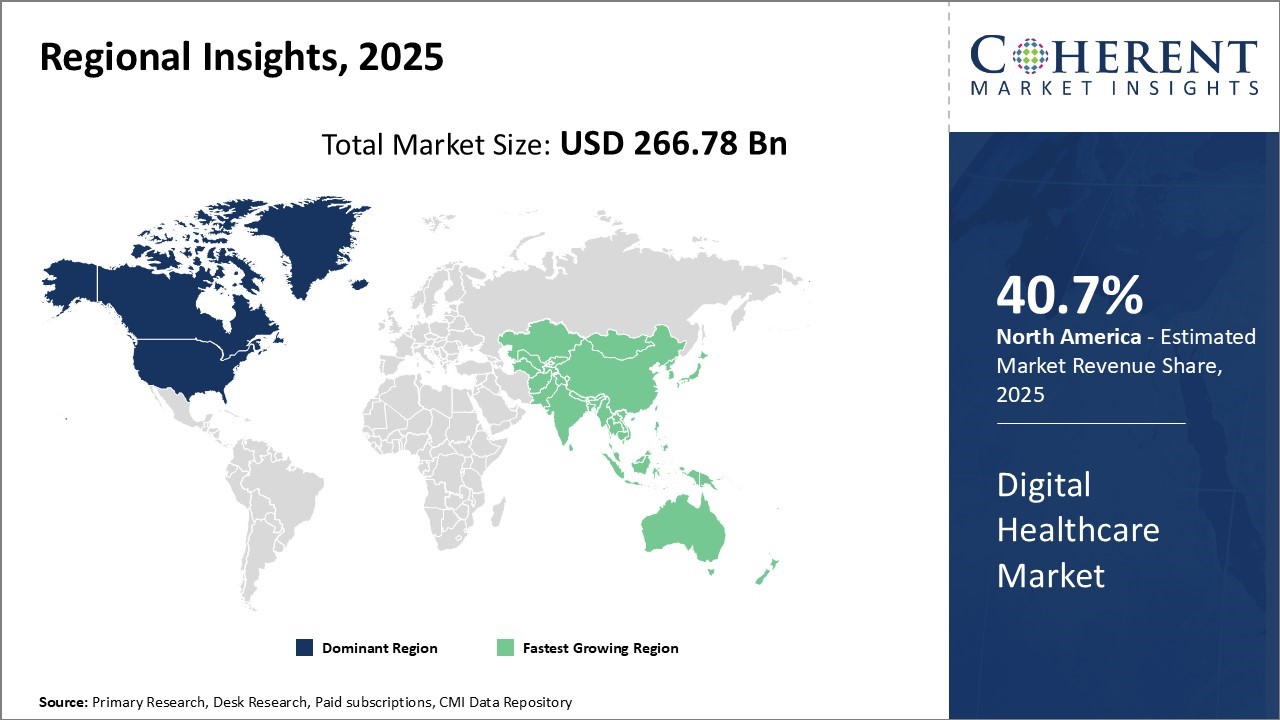
- Based on Region, North America led the overall digital healthcare market growth on account of high adoption rates of digital health solutions among both healthcare providers and consumers across United States.
Market Overview
The digital healthcare market is growing due to the rising chronic diseases, growing geriatric population, and increasing preference for online consultations and e-pharmacies. Moreover, there is growing demand for self-care and personalized medicine solutions along with emergence of digital therapeutics and artificial intelligence driven tools for disease prediction and management. Apart from this, integration of digital health solutions across care settings along with government support through favorable regulations can drive the market growth during the forecast period.
Current Events and their Impact on the Digital Healthcare Market
Current Events | Description and its impact |
Regulatory and Policy Changes
|
|
Global Health Initiatives
|
|
Role of Artificial Intelligence (AI) in the Digital Healthcare Market
Artificial Intelligence (AI) plays a transformative role in the digital healthcare market, driving efficiency, personalization, and predictive capabilities. AI powers diagnostic imaging, virtual health assistants, and clinical decision support systems, enabling faster, more accurate diagnoses and treatment plans. In remote monitoring, AI analyzes real-time patient data to flag risks early. It also enhances operational workflows in hospitals, reducing administrative burdens. In September 2024, the National Health Authority (NHA) and IIT Kanpur signed a Memorandum of Understanding (MoU), under which a federated learning platform across a variety of machine learning model pipelines, a quality-preserving database, an open benchmarking platform for comparing & validating AI models, and a consent management system for research under ABDM would be developed by IIT Kanpur. The platform will subsequently be operated and governed by NHA, thereby unlocking the immense potential of AI for improving health outcomes.
- Current Industry Events of 2026
- Market Size Estimation
- Regional Breakdown
- Competitive Landscape
- Customer Intelligence
- Segmental Analysis
- Pricing Analysis
- Key Market Drivers, Challenges & Future Trends
- Customized Insights Section
Reimbursement Policies in the Digital Healthcare Market
Reimbursement policies are critical enablers for digital health adoption. They determine how healthcare providers get paid for telehealth, remote patient monitoring (RPM), digital therapeutics (DTx), and other technology-driven care models. Moreover, private players increasingly cover virtual care and digital tools, often aligning with value-based care models focused on outcomes. European countries have diverse reimbursement models, some with national coverage (e.g., France’s teleconsultation reimbursement), others relying on regional contracts.
Segmental Insights
Digital Healthcare Market Insights, By Technology
Healthcare Analytics Contribute the highest share of the market owing to predictive models to enhance medical, financial, and operational aspects of healthcare
In terms of technology, healthcare analytics segment is estimated to contribute the highest market share of 61.5% in 2026. It utilizes data, statistical analysis, and predictive models to enhance medical, financial, and operational aspects of healthcare. Factors driving its prominence include the digitization of healthcare data, aging populations, and patient demands for personalized care. It aids in evidence-based decision-making, cost reduction, and improved outcomes. mHealth, involving mobile technologies for health monitoring, and Tele-health, enabling remote clinical services, are rapidly growing segments.
For instance, according to an article published by the WHO, Teleradiology is currently the most developed telemedicine service area globally, with just over 60% of responding countries offering some form of service, and over 30% of countries having an established service. While the proportion of countries with any form of service ranged from almost 40% for teledermatology and telepathology to approximately 25% for telepsychiatry, the proportion of countries with established services in those three areas was comparable at approximately 15%. The delivery of healthcare services remotely using telecommunications technology—such as video calls, apps, messaging, and wearable devices. It includes virtual consultations, remote patient monitoring, mobile health apps, and digital diagnostics. These factors are further positively influencing the digital healthcare market share.
Digital Healthcare Market Insights, By Component
Software drives the largest component segment due to its critical role in enabling digital healthcare solutions
In terms of component, software segment is estimated to contribute the highest market share of 46.60% in 2026, owing to its critical role in enabling digital healthcare solutions. A wide range of healthcare software including electronic health records, telemedicine portals, remote patient monitoring systems, and clinical decision support are indispensable tools that improve the overall efficiency and outcomes of healthcare delivery. For instance, according to the OECD, in 2023, EU countries made significant investments to ensure reliable nationwide access to HER software, with the average availability of online digital health services rising by 8 percentage points from 2022 to reach an average of 79%. Software allows seamless data collection, storage, and sharing between providers, payers, and patients. Advanced analytical capabilities in software help providers make more informed care decisions. Customizable software solutions also offer flexibility to users. Meanwhile, innovations in AI and machine learning are further enhancing the capabilities of healthcare software.
Digital Healthcare Market Insights, By End User
The Hospitals lead digital healthcare adoption due to their large patient volumes
In terms of end user, hospital & clinics segment is estimated to contribute the highest market share of 41.62% in 2026 due to their large patient volumes and leadership role in coordinating care. Hospitals are among the early adopters of digital healthcare systems as these solutions help enhance various aspects of their complex operations. Electronic health records, remote monitoring, telehealth and predictive analytics boost clinical efficiency and workflow inside hospitals. The growing number of patients is positively influencing the digital healthcare market forecast. For instance, according to the Asian Medical Tourism, the number of hospitals in India has jumped from 43,500 in 2019 to 54,000 in 2024, according to a report by Pharmarack. The number of aggregate hospital beds has surged from 1.1 million to 1.3 million during the same period.
Regional Insights
North America Digital Healthcare Market Trends
North America has established itself as the dominant region in the global digital healthcare market it has share of 40.7% in 2026 With the U.S. being home to leading technology companies and startups, the region has a strong industry presence and high adoption rates of digital health solutions among both healthcare providers and consumers. Telehealth and remote patient monitoring services first gained popularity in the U.S., allowing North American consumers early access to virtual care options. Several virtual care platforms and connected healthcare devices were first launched and made commercially available in this region. Significant public and private sector investments in telemedicine, AI-powered diagnosis, and digital therapeutics have further helped North America to maintain its superior position. For instance, in October 2024, Softserve launched AI dreams in healthcare a reality with SoftServe at HLTH 2024 to develop tailored AI strategies to meet unique business challenges and goals This is further propelling the digital healthcare market demand.
Asia Pacific Digital Healthcare Market Trends
Asia Pacific region has emerged as the fastest growing regional market for digital healthcare. Countries like India, China, Japan and South Korea are swiftly expanding their digital healthcare infrastructure and rapidly increasing investments in this sector. The presence of large patient pools and rising healthcare expenditures in these nations can offer growth opportunities. Digital health also offers solutions to meet the healthcare needs of vast rural populations with limited access to traditional healthcare facilities. Local governments are putting policies in place to promote digital healthcare adoption and development. For instance, in 2024, Australia released the National Digital Health Strategy to enhance digital health services and infrastructure.
United States Digital Healthcare Market
Rising rates of chronic illness, an aging population, and developments in artificial intelligence (AI), telemedicine, remote patient monitoring, and mobile health apps are driving growth. The market is also accelerated by the growing use of digital therapies and favorable reimbursement practices. Besides this, cybersecurity and regulatory issues continue to be important factors. The digital health industry in the United States is expected to continue expanding and revolutionize healthcare delivery by making it more efficient, individualized, and accessible. According to AMA, industry surveys shows, more than 40% of U.S. physicians experience burnout at some point in their careers. As the physician’s powerful ally in patient care, the AMA is working to change this statistic.
China Digital Healthcare Market Trends
China’s digital health market is rapidly expanding, driven by strong government initiatives like the “Healthy China 2030” plan, which promotes AI, telemedicine, and smart hospital development. Valued at tens of billions USD in 2024, the market benefits from heavy investments by tech giants such as Tencent, Alibaba, and Baidu. Rising chronic diseases and an aging population boost demand for remote patient monitoring and digital therapeutics. Advanced AI-powered diagnostics and integrated electronic medical records are transforming care delivery. Despite challenges like data privacy and regulatory hurdles, China remains Asia Pacific’s digital health leader, poised for continued growth fueled by innovation and digital infrastructure expansion.
End-user Feedback and Unmet Needs in the Digital Healthcare Market
End-user Feedback and Unmet Needs
- Convenience & Accessibility: Users appreciate telehealth and remote monitoring for saving travel time and providing care from home.
- Personalization: Digital tools offering tailored health insights and real-time monitoring enhance patient engagement.
- Comprehensive Support: Many users require better education, technical support, and clinical guidance to effectively use digital health tools.
Pricing Analysis
- Subscription Models: Many digital health platforms such as telehealth services, mobile health apps, and digital therapeutics offer monthly or annual subscriptions, ranging from $10 to several hundred dollars depending on features and user base.
- Device Pricing: Home-use medical devices like blood pressure monitors, glucose meters, and wearable health trackers range from $50 to $500+, influenced by technology sophistication and connectivity features.
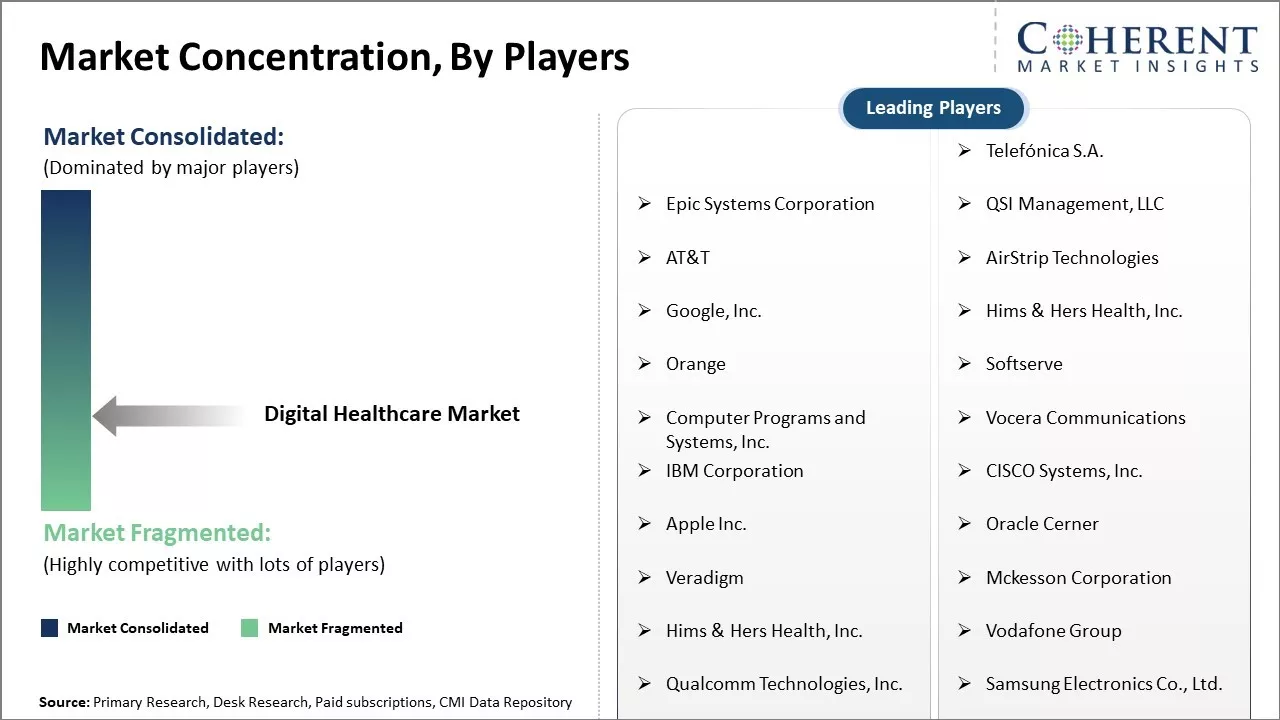
Market Concentration and Competitive Landscape
- In March 2025, Telefónica announces the launch of an innovation centre with AWS for the creation of SaaS products for telecoms based on Open Gateway APIs.
- In April 2025, Hims & Hers Health, Inc. announced a long-term collaboration with Novo Nordisk designed to make proven obesity care and treatments more accessible, more affordable, and more connected for millions of Americans.
- In June 2025, Hartford HealthCare Launched OnMed CareStations—Virtual Medical Kiosks. This innovative health hub brings real-time, high-tech virtual care directly to travelers and airport staff — redefining how and where care is delivered.
- In March 2024, Microsoft Azure to Adopted NVIDIA Grace Blackwell Superchip to Accelerate Customer and First-Party AI Offerings NVIDIA DGX Cloud’s Native Integration with Microsoft Fabric to Streamline Custom AI Model Development with Customer’s Own Data.
Market Report Scope
Digital Healthcare Market Report Coverage
| Report Coverage | Details | ||
|---|---|---|---|
| Base Year: | 2025 | Market Size in 2026: | USD 323.87 Bn |
| Historical Data for: | 2020 To 2024 | Forecast Period: | 2026 To 2033 |
| Forecast Period 2026 to 2033 CAGR: | 21.4% | 2033 Value Projection: | USD 1,258.64 Bn |
| Geographies covered: |
| ||
| Segments covered: |
| ||
| Companies covered: | Elefónica S.A., Epic Systems Corporation, QSI Management, LLC, AT&T, AirStrip Technologies, Google, Inc., Hims & Hers Health, Inc., Orange, Softserve, Computer Programs and Systems, Inc., Vocera Communications, IBM Corporation, CISCO Systems, Inc., Apple Inc., Oracle Cerner, Veradigm, Mckesson Corporation, Hims & Hers Health, Inc., Vodafone Group, Qualcomm Technologies, Inc., Samsung Electronics Co., Ltd., General Electric Company | ||
| Growth Drivers: |
| ||
| Restraints & Challenges: |
| ||
Digital Healthcare Market Trend
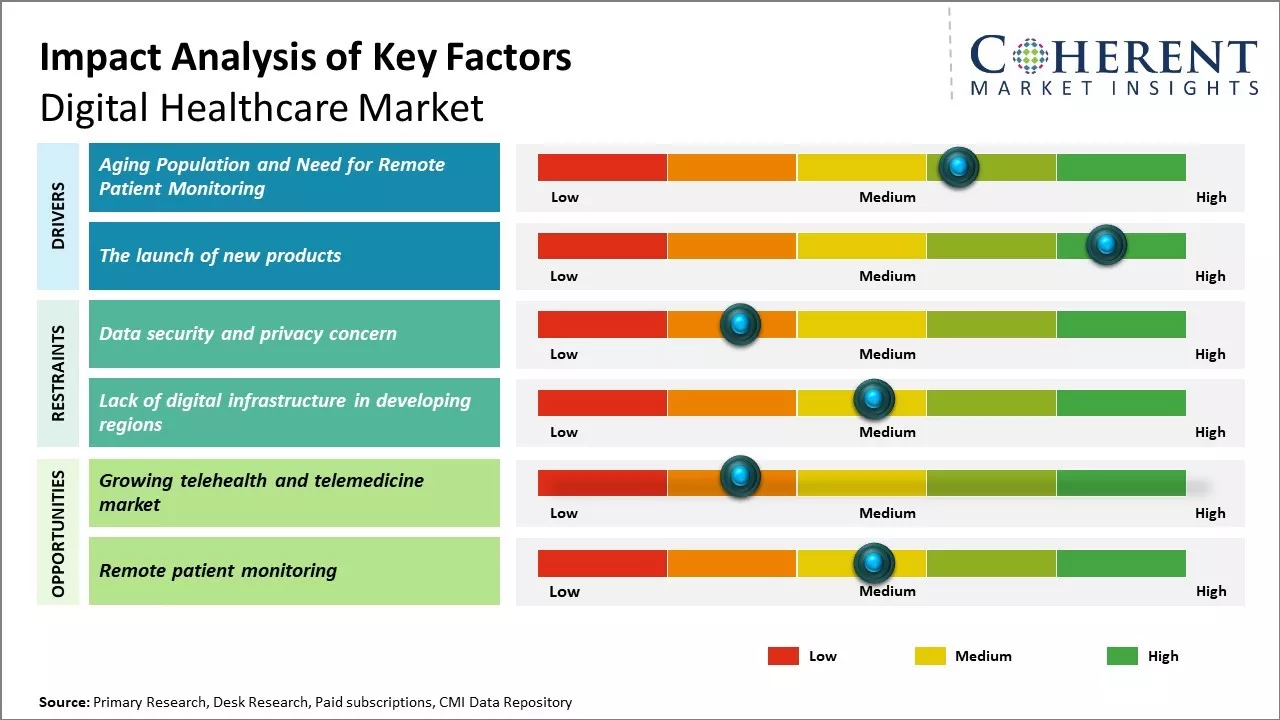
Aging Population and Need for Remote Patient Monitoring
An increasing number of patients are receiving long-term care diagnoses due to chronic diseases and other problems brought on by an aging global population. The increased monitoring requirements of an ageing population cannot be met by traditional in-office doctor visits. Digital healthcare solutions empower patients to be more proactive in managing their wellness from the comfort of their home. Remote patient monitoring devices, apps, and telehealth services allow serious medical conditions to be managed virtually on an ongoing basis between patient and provider check-ins. Vital signs such as blood pressure, blood glucose, heart rate, oxygen levels, etc., can automatically be digitally transmitted to healthcare professionals for review. This alleviates strain on medical clinics as well as hospitals by lowering unnecessary in-person visits. According to WHO, by 2030, 1 in 6 people in the world will be aged 60 years or over. The share of the population aged 60 years and over will increase from 1 billion in 2020 to 1.4 billion. By 2050, the world’s population of people aged 60 years and older will double (2.1 billion). The number of persons aged 80 years or older is expected to triple between 2020 and 2050 to reach 426 million. This is further expected to positively influence the digital healthcare market forecast.
Escalating Chronic Disease Burden
A high prevalence of chronic diseases such as diabetes, cardiovascular conditions, and respiratory illnesses is a major driver for the digital healthcare market. According to the World Health Organization (WHO), Noncommunicable diseases (NCDs) killed at least 43 million people in 2021, equivalent to 75% of non-pandemic-related deaths globally. Digital health technologies like remote patient monitoring (RPM), wearable devices, and telehealth enable real-time tracking and personalized care, reducing hospital visits along with improving outcomes.
Technological advancement, especially the integration of Artificial Intelligence (AI), is transforming healthcare delivery and fueling market growth. AI-powered tools improve diagnostic accuracy, predict patient risks, and automate administrative tasks, increasing efficiency and reducing costs. Innovations in telemedicine platforms, big data analytics, as well as mobile health applications empower providers to deliver personalized, scalable care, making technology adoption a cornerstone of the expanding digital healthcare ecosystem worldwide.
Digital Healthcare Market Opportunities: Growing Telehealth and Telemedicine Market
Growing telehealth and telemedicine market can offer growth opportunities for the digital healthcare sector. With global healthcare infrastructure being challenged by the ongoing COVID-19 pandemic, telehealth has provided an innovative solution for physical distancing and virtual care. Healthcare providers have adopted telehealth at an unprecedented rate to evaluate and treat patients remotely, reducing the need for in-person visits and preserving critical medical supplies. For instance, in October 2022, The Government has launched a “National Tele Mental Health Programme”, to improve access to quality mental health counselling and care services in the country. As on January 20, 2025, 36 States/ UTs have set up 53 Tele MANAS Cells and have started tele mental health services. More than 17.6 lakh calls have been handled on the helpline number.
Analyst Opinion (Expert Opinion)
- The Digital Healthcare Market is undergoing a structural realignment driven by regulatory enforcement, infrastructure-level data interoperability, and value-based care models. This is not an evolution—it’s a dismantling of legacy systems that failed to scale or integrate.
- The implementation of the 21st Century Cures Act Final Rule has transformed health data from a proprietary asset into a regulated utility. More than 60% of U.S. hospitals have adopted FHIR APIs, enabling real-time, cross-platform patient data access. Companies like Redox and Health Gorilla are capitalizing on this shift by providing middleware solutions that allow EHR systems to talk to each other—an infrastructure play, not a software feature.
- Artificial Intelligence in digital diagnostics is gaining FDA traction not because of hype, but because of its clinical precision in low-risk, high-volume use cases. For instance, Aidoc’s AI-based triage system, now deployed in over 1,000 U.S. hospitals, demonstrated a 26% reduction in time-to-treatment for intracranial hemorrhages, as per a 2023 Mount Sinai Health System study. This is operational efficiency with measurable clinical upside—not speculative AI.
- Global demographic shifts are creating demand for user-centric digital diagnostics. In Japan, where over 35% of the population will be over 65 by 2030 (UN, 2023), startups like CureApp are designing hypertension management platforms specifically for elderly patients, with simplified UX and caregiver integration. This is digital health tailored for population structure—not just device penetration.
Speak to the analyst
Want personalized insights?
Take the findings above to one of our principal consultants, or have the report rebuilt around the segments, geographies and competitors you actually track.
Market Segmentation
- Technology Insights (Revenue, USD Bn, 2021 - 2033)
- Healthcare Analytics
- mHealth
- Tele-health
- Others
- Component Insights (Revenue, USD Bn, 2021 - 2033)
- Software
- Hardware
- Services
- End User Insights (Revenue, USD Bn, 2021 - 2033)
- Hospital & Clinics
- Patients
- Providers
- Payers
- Others
- Regional Insights (Revenue, USD Bn, 2021 - 2033)
- North America
- U.S.
- Canada
- Latin America
- Brazil
- Argentina
- Mexico
- Rest of Latin America
- Europe
- Germany
- U.K.
- Spain
- France
- Italy
- Russia
- Rest of Europe
- Asia Pacific
- China
- India
- Japan
- Australia
- South Korea
- ASEAN
- Rest of Asia Pacific
- Middle East
- GCC Countries
- Israel
- Rest of Middle East
- Africa
- South Africa
- North Africa
- Central Africa
- North America
- Key Players Insights
- Telefónica S.A.
- Epic Systems Corporation
- QSI Management, LLC
- AT&T
- AirStrip Technologies
- Google, Inc.
- Hims & Hers Health, Inc.
- Orange
- Softserve
- Computer Programs and Systems, Inc.
- Vocera Communications
- IBM Corporation
- CISCO Systems, Inc.
- Apple Inc.
- Oracle Cerner
- Veradigm
- Mckesson Corporation
- Hims & Hers Health, Inc.
- Vodafone Group
- Qualcomm Technologies, Inc.
- Samsung Electronics Co., Ltd.
- General Electric Company
Market Segmentation
- Technology Insights (Revenue, USD Bn, 2020 - 2032)
- Healthcare Analytics
- mHealth
- Tele-health
- Others
- Component Insights (Revenue, USD Bn, 2020 - 2032)
- Software
- Hardware
- Services
- End User Insights (Revenue, USD Bn, 2020 - 2032)
- Hospital & Clinics
- Patients
- Providers
- Payers
- Others
- Regional Insights (Revenue, USD Bn, 2020 - 2032)
- North America
- U.S.
- Canada
- Latin America
- Brazil
- Argentina
- Mexico
- Rest of Latin America
- Europe
- Germany
- U.K.
- Spain
- France
- Italy
- Russia
- Rest of Europe
- Asia Pacific
- China
- India
- Japan
- Australia
- South Korea
- ASEAN
- Rest of Asia Pacific
- Middle East
- GCC Countries
- Israel
- Rest of Middle East
- Africa
- South Africa
- North Africa
- Central Africa
- North America
- Key Players Insights
- Telefónica S.A.
- Epic Systems Corporation
- QSI Management, LLC
- AT&T
- AirStrip Technologies
- Google, Inc.
- Hims & Hers Health, Inc.
- Orange
- Softserve
- Computer Programs and Systems, Inc.
- Vocera Communications
- IBM Corporation
- CISCO Systems, Inc.
- Apple Inc.
- Oracle Cerner
- Veradigm
- Mckesson Corporation
- Hims & Hers Health, Inc.
- Vodafone Group
- Qualcomm Technologies, Inc.
- Samsung Electronics Co., Ltd.
- General Electric Company
Sources
Primary Research Interviews from the following stakeholders
Stakeholders
- In-depth interviews with digital healthcare solution providers, hospital administrators, clinical informaticists, telehealth operations managers, AI-health platform developers, and regulatory compliance officers across the U.S., Japan, Germany, and India.
Databases
- U.S. Food and Drug Administration (FDA) MAUDE and 510(k) databases
- ClinicalTrials.gov
- Centers for Medicare & Medicaid Services (CMS) Data
- HealthIT.gov API Adoption Tracker
- OECD Health Statistics Database
- Japan e-Stat Portal for Statistical Data
- European Commission Open Data Portal
Magazines
- Healthcare Innovation
- MedTech Intelligence
- Nature Digital Medicine – Magazine Section
- Wired Health
- IEEE Pulse
Journals
- The Lancet Digital Health
- npj Digital Medicine
- Journal of Medical Internet Research (JMIR)
- Health Affairs
- JAMA Health Forum
- Artificial Intelligence in Medicine
Newspapers
- The Wall Street Journal – Health & Tech
- The New York Times – Health Section
- The Japan Times – Healthcare and Technology
- Financial Times – Healthcare Innovation Coverage
- The Hindu – Sci-Tech Health
Associations
- American Telemedicine Association (ATA)
- HIMSS (Healthcare Information and Management Systems Society)
- Digital Medicine Society (DiMe)
- European Society for Medical Oncology (ESMO) – Digital Health Group
- Japan Telemedicine and Telecare Association (JTTA)
Public Domain Sources
- WHO Global Observatory for eHealth
- National Health Service (NHS) Digital
- U.S. Department of Health and Human Services (HHS) Open Data
- eHealth Network – European Commission
- Statutory health insurance policy briefs (public filings)
- Congressional Research Service (CRS) Reports – Health IT
Proprietary Elements
- CMI Data Analytics Tool, and Proprietary CMI Existing Repository of information for last 8 years
*Definition: The digital healthcare market encompasses technologies and services that use digital tools to improve health outcomes, care delivery, and system efficiency. It includes telehealth, remote patient monitoring, mobile health apps, electronic health records (EHRs), AI-driven diagnostics, and digital therapeutics. This market bridges healthcare and technology, enabling real-time data exchange, personalized care, and expanded access, particularly in remote or underserved areas.
Get access to 250+ pages report
Every segment, forecast, competitor profile and data table behind the analysis above — available for instant download.
- ESOMAR Member
- ISO 9001:2015 Certified
- D-U-N-S Registered
- GDPR & CCPA Compliant
Missing comfort of reading report in your local language? Find your preferred language:
Transform your Strategy with Exclusive Trending Reports
Frequently Asked Questions
The Digital Healthcare Market is estimated to be valued at USD 323.87 Bn in 2026, and is expected to reach USD 1,258.64 Bn by 2033.
The CAGR of the Digital Healthcare Market is projected to be 21.4% from 2026 to 2033.
Aging population and need for remote patient monitoring and launch of new products are the major factors driving the growth of global digital healthcare market.
Data security and privacy concern and lack of digital infrastructure in developing regions are the major factors hampering the growth of global digital healthcare market.
In terms of technology, healthcare analytics segment is estimated to dominate the market in 2026.
Telefónica S.A., Epic Systems Corporation, QSI Management, LLC, AT&T, AirStrip Technologies, Google, Inc., Hims & Hers Health, Inc., Orange, Softserve, Computer Programs and Systems, Inc., Vocera Communications, IBM Corporation, CISCO Systems, Inc., Apple Inc., Oracle Cerner, Veradigm, Mckesson Corporation, Hims & Hers Health, Inc., Vodafone Group, Qualcomm Technologies, Inc., Samsung Electronics Co., Ltd., General Electric Company are the major players.
North America is expected to lead the global digital healthcare market.