

Telemedicine Market Size and Forecast – 2026 to 2033
The Telemedicine Market is anticipated to grow at a CAGR of 17.4% with USD 188.7 Bn in 2026 and is expected to reach USD 707.8 Bn in 2033. The Telemedicine Market is driven by rising healthcare costs, growing demand for remote medical services, widespread smartphone and internet use, improved rural healthcare access, and supportive government policies and reimbursement programs. As of 2026, approximately 5.83 Bn people worldwide are unique mobile phone users, equivalent to 70.4% of the global population.
Key Takeaways
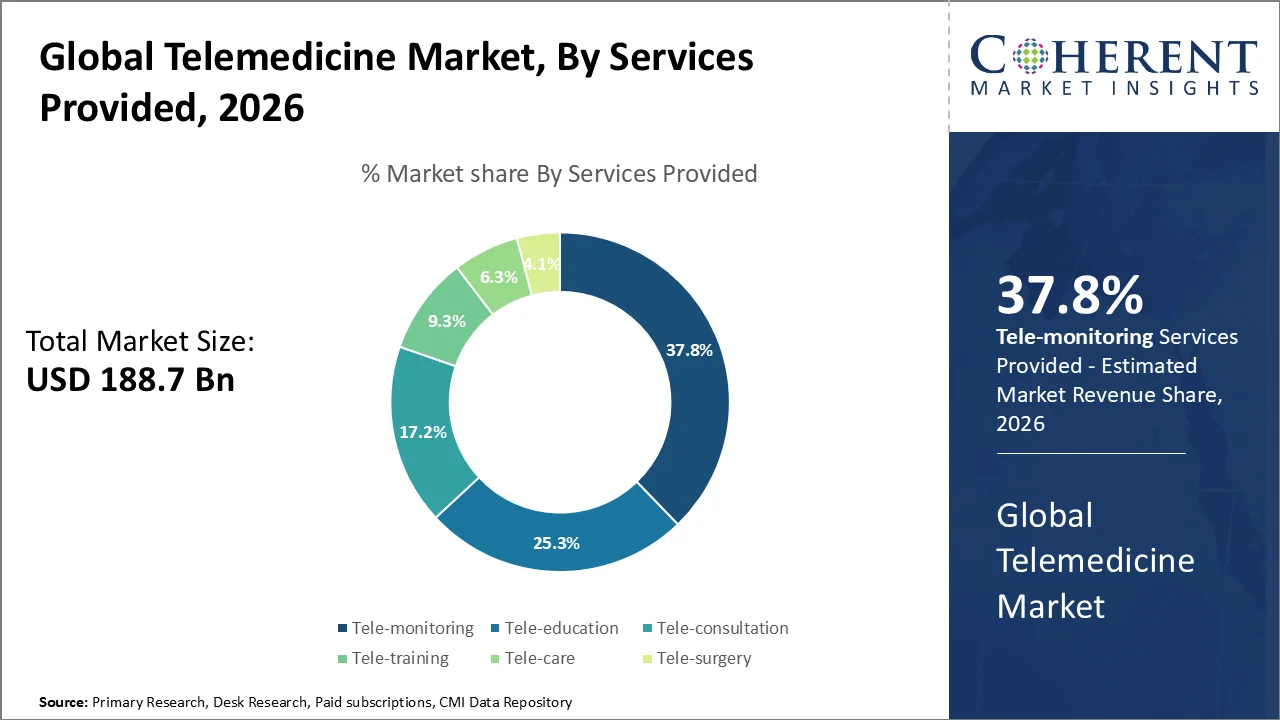
- Tele-monitoring holds the largest market share of 37.8% in 2026 owing to the rising prevalence of chronic diseases. In the United States, multimorbidity is increasingly prevalent, with 42% of adults living with two or more chronic conditions and 12% living with five or more.
- Neurology expected to hold the largest market share of 38.9% in 2026 owing to its shortage of neurologists. According to an article published by Rebuild After Stroke, the United States is experiencing a significant shortage of neurologists, resulting in prolonged wait times and limited access to specialized neurological care for stroke survivors.
- Hospitals acquired the prominent market share of 47.5% in 2026 owing to the need to expand access to specialist care.
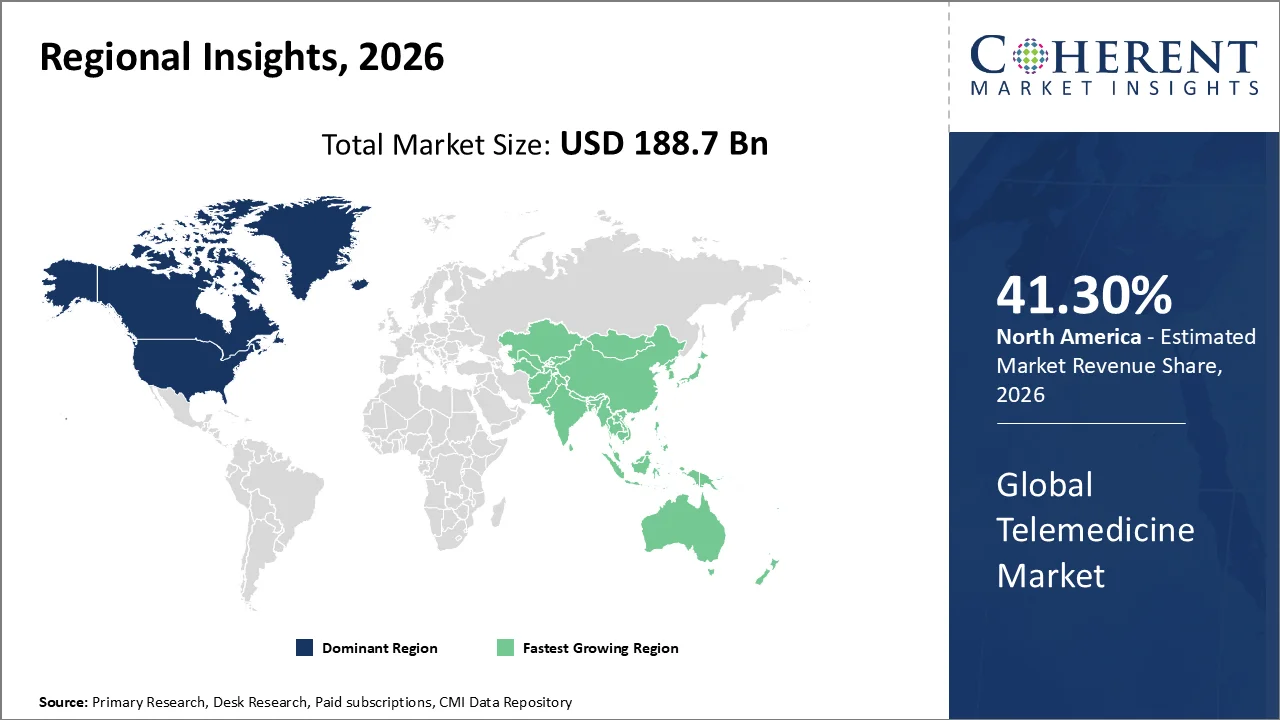
- North America is expected to acquire the dominant share of 41.3% in 2026 owing to its favorable reimbursement and telehealth The U.S. federal government has expanded telehealth access through a combination of permanent and temporary policy measures, including allowing Medicare beneficiaries to receive non-behavioral/mental health telehealth services from their homes and eliminating geographic restrictions on originating sites through December 31, 2027.
Current Events and Their Impact on the Telemedicine Market
Current Event | Description and its Impact |
U.S. Medicare Telehealth Flexibilities Extended Through 2027 |
|
DEA Extends Telemedicine Prescribing Flexibilities Through December 31, 2026 |
|
Segmental Insights
- Current Industry Events of 2026
- Market Size Estimation
- Regional Breakdown
- Competitive Landscape
- Customer Intelligence
- Segmental Analysis
- Pricing Analysis
- Key Market Drivers, Challenges & Future Trends
- Customized Insights Section
Why is Tele-monitoring Acquiring the Largest Market Share?
Tele-monitoring holds the largest market share of 37.8% in 2026. Tele-monitoring in the Telemedicine Market is gaining momentum as chronic diseases become more prevalent, patients seek continuous care, and healthcare providers shift toward home-based services. Healthcare organizations increasingly use connected medical devices, wearables, IoT, and cloud-based platforms to collect and transmit patient data in real time. These technologies help clinicians detect health issues early, intervene promptly, reduce unnecessary hospital visits, and improve patient convenience. Healthcare digitization, population aging, and supportive reimbursement and telehealth policies also encourage providers to integrate tele-monitoring into routine care. For instance, in April 2026, A doctor-led, AI-enabled healthcare ecosystem launched in Chennai, Tamil Nadu, to expand its presence across southern India and strengthen preventive healthcare by providing real-time medical supervision beyond traditional hospital settings.
Neurology expected to hold the largest market share
Neurology expected to hold the largest market share of 38.9% in 2026 owing to its lower healthcare and patient costs. Neurology in the Telemedicine Market is gaining traction as neurological disorders become more prevalent, neurologist shortages persist, and patients in rural and underserved areas face limited access to specialists. Teleneurology allows healthcare providers to deliver faster consultations, especially for time-sensitive conditions such as stroke, while helping clinicians manage epilepsy, Parkinson’s disease, and other chronic disorders over the long term. Healthcare organizations increasingly adopt digital platforms, smartphones, and remote-care technologies to improve access and continuity. Patient demand for convenient consultations and supportive telehealth policies further drives providers to expand virtual neurological services. For instance, in April 2026, Methinks launched Neuro-rescue, a project that uses artificial intelligence (AI) and telemedicine to accelerate the diagnosis and treatment of neurological conditions for patients arriving at non-specialized emergency departments.
Which End User segment dominates the market?
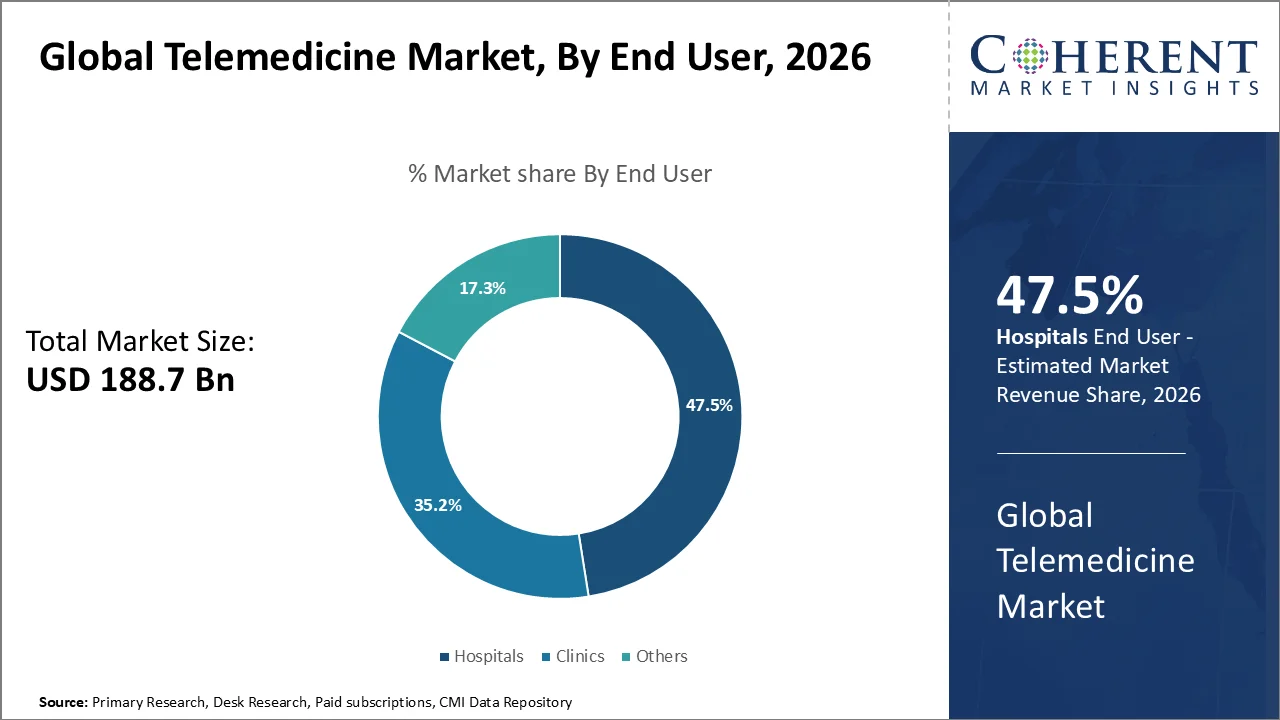
Hospitals acquired the prominent market share of 47.5% in 2026. Hospitals are expanding their presence in the Telemedicine Market to improve access to specialists, manage increasing patient volumes, and enhance healthcare efficiency. Timor-Leste’s Ministry of Health, in collaboration with the World Health Organization (WHO), launched a three-day national telemedicine orientation workshop in Dili to expand access to specialist healthcare for remote and rural communities facing geographic and infrastructure-related barriers. They use telemedicine to deliver remote consultations, monitor patients after discharge, and manage chronic conditions more effectively. Hospitals also integrate electronic health records, cloud platforms, AI, and connected medical devices to strengthen virtual care services. Moreover, healthcare professional shortages, growing demand for home-based care, cost-saving requirements, and government investment in digital healthcare infrastructure encourage hospitals to adopt and expand telemedicine solutions.
Telemedicine Market Trends
- Integration of artificial intelligence (AI) and digital health technologies is expanding the capabilities of telemedicine by supporting medical imaging, clinical decision-making, data analysis, and other diagnostic applications. The U.S. FDA reported that it had authorized more than 1,000 AI-enabled medical devices through established premarket pathways, demonstrating the increasing integration of AI into healthcare technologies.
- Expansion of telemedicine in rural and underserved areas is helping address geographic barriers to healthcare access, particularly where conventional health infrastructure and specialist availability are limited. WHO identifies digital health as an important component of strengthening health systems and improving access for rural and remote populations.
- Advancements in 5G and high-speed connectivity are improving the infrastructure required for high-quality video consultations, remote monitoring, and other data-intensive virtual-care applications. According to the International Telecommunication Union (ITU), 5G networks covered 55% of the world's population in 2025, while approximately 3 billion 5G subscriptions represented about one-third of global mobile broadband subscriptions.
- Supportive government policies and reimbursement mechanisms continue to influence telemedicine adoption by improving payment availability and establishing frameworks for virtual care. For example, U.S. Medicare broadly covers remote patient monitoring for acute and chronic conditions, with separate payment for the principal components of RPM services.
Regional Insights
North America dominates owing to Pressure to reduce healthcare costs
North America is expected to acquire the dominant share of 41.30% in 2026. North America’s Telemedicine Market continues to grow as chronic diseases increase, populations age, and patients seek accessible and convenient healthcare. Healthcare providers leverage advanced digital infrastructure, widespread smartphone and broadband use, AI, cloud platforms, and remote monitoring technologies to deliver virtual care more effectively. Physician shortages and high healthcare costs also push providers toward telemedicine solutions. Furthermore, government initiatives, favorable reimbursement policies, and increasing patient and provider acceptance of virtual consultations encourage healthcare organizations to expand telemedicine services throughout the region. In March 2026, Stealth Health expanded into the U.S. in January 2026, launching direct-to-patient telemedicine and white-label platforms for healthcare organizations nationwide.
Asia Pacific Telemedicine Market Trends
The Asia Pacific telemedicine market is gaining momentum as patients seek accessible and affordable healthcare, especially in remote and underserved areas. Rising smartphone and internet use, expanding 5G networks, and stronger digital healthcare infrastructure enable providers to deliver more virtual consultations and remote monitoring services. Increasing chronic disease cases and aging populations drive demand for continuous care. India’s population aged 60 years and above is projected to reach approximately 347 million by 2050, accounting for about 20% of the country’s total population. Governments are also promoting digital health initiatives, while healthcare workforce shortages encourage telemedicine adoption. In addition, cost efficiencies and advances in artificial intelligence, cloud computing, and connected devices continue to strengthen market growth.
United States Telemedicine Market Trends
The United States telemedicine market benefits from rising demand for convenient and accessible healthcare, especially in rural and underserved communities. Patients increasingly use virtual consultations and remote monitoring to manage chronic conditions and support ongoing care. Healthcare providers leverage smartphones, connected devices, cloud platforms, and advanced software to enhance service delivery. Government initiatives, supportive reimbursement policies, and value-based care models encourage providers to adopt telemedicine solutions. Growing demand for mental health services and patients’ preference for flexible healthcare options further drive telemedicine adoption across the country. For instance, Doc.com launched a new telemedicine platform that combines artificial intelligence and blockchain technology to improve patient access, data security, and care coordination.
China Telemedicine Market Trends
China’s telemedicine market is expanding as patients increasingly seek convenient and accessible healthcare, especially in rural and underserved regions. The government actively promotes “Internet+ Healthcare” initiatives and supports the growth of internet hospitals, strengthening digital healthcare delivery. Healthcare providers are adopting 5G, artificial intelligence, big data, and connected devices to enhance service quality and accessibility, while stronger digital infrastructure and online healthcare platforms continue to accelerate adoption.
Who are the Major Companies in Telemedicine Industry
Some of the major key players in Telemedicine are McKesson, Cardio Net Inc., Cerner, IBM Corporation, Medtronic, Inc, Philips Healthcare Honeywell Life Care Solutions, GE Healthcare, AMD Telemedicine and Cisco Systems.
Key News
- In May 2026, Minister of Health and Family Welfare Mukesh Mahaling inaugurated Vedanta Aluminium’s 24x7 telemedicine facility in Lanjigarh, launched with Tata 1mg to expand specialist healthcare access across remote villages in Kalahandi.
Market Report Scope
Telemedicine Market Report Coverage
| Report Coverage | Details | ||
|---|---|---|---|
| Base Year: | 2025 | Market Size in 2026: | USD 188.7 Bn |
| Historical Data for: | 2020 To 2024 | Forecast Period: | 2026 To 2033 |
| Forecast Period 2026 to 2033 CAGR: | 17.4% | 2033 Value Projection: | USD 707.8 Bn |
| Geographies covered: |
| ||
| Segments covered: |
| ||
| Companies covered: | McKesson, Cardio Net Inc., Cerner, IBM Corporation, Medtronic, Inc, Philips Healthcare Honeywell Life Care Solutions, GE Healthcare, AMD Telemedicine and Cisco Systems. | ||
Analyst Opinion
- Telemedicine is shifting from a convenience service to an essential healthcare delivery channel. China has more than 1.4 billion people, while healthcare resources remain unevenly distributed between major cities and rural regions. The scale of this access gap makes remote consultation structurally important rather than trend-driven. In 2023, China recorded more than 100 million online medical consultations, demonstrating that patients and providers are increasingly using digital channels for routine and follow-up care.
- China’s policy environment is turning telemedicine into a mainstream clinical model. The government has actively promoted “Internet+ Healthcare” and expanded internet hospitals, with China having more than 3,000 internet hospitals in recent years. This regulatory backing significantly reduces adoption friction because hospitals can integrate online consultations, prescription services, and remote follow-up into established care pathways rather than treating telemedicine as a standalone digital product.
- The strongest opportunity lies in chronic disease management, not one-off virtual consultations. China has more than 300 million people living with hypertension, creating a massive recurring need for monitoring and follow-up. Remote monitoring, digital prescriptions, and virtual physician interactions can reduce unnecessary hospital visits while maintaining continuity of care. We believe this recurring-use model will prove more commercially durable than telemedicine platforms focused primarily on episodic consultations.
- 5G and connected medical devices are moving Chinese telemedicine beyond video calls. China has built more than 4 million 5G base stations, creating an unusually strong connectivity foundation for remote diagnostics, wearable monitoring, and hospital-to-hospital collaboration. The practical implication is significant: telemedicine providers can increasingly combine virtual consultations with real-time patient data, making remote care more clinically actionable and expanding adoption across specialist and chronic-care applications.
Speak to the analyst
Want personalized insights?
Take the findings above to one of our principal consultants, or have the report rebuilt around the segments, geographies and competitors you actually track.
Market Segmentation
- By Services provided (Revenue, USD Bn, 2021-2033)
- Tele-monitoring
- Tele-education
- Tele-consultation
- Tele-training
- Tele-care
- Tele-surgery
- By Application (Revenue, USD Bn, 2021-2033)
- Neurology
- Orthopedics
- Emergency care
- Cardiology
- Dermatology
- Internal medicine
- Others
- By End User (Revenue, USD Bn, 2021-2033)
- Hospitals
- Clinics
- Others
- By Region (Revenue, USD Bn, 2021-2033)
- North America
- U.S.
- Canada
- Latin America
- Brazil
- Mexico
- Argentina
- Rest of Latin America
- Europe
- Germany
- U.K.
- France
- Italy
- Spain
- Russia
- Rest of Europe
- Asia Pacific
- China
- India
- Japan
- Australia
- South Korea
- ASEAN
- Rest of Asia Pacific
- Middle East
- GCC
- Israel
- Rest of Middle East
- Africa
- South Africa
- Central Africa
- North Africa
- North America
Sources
Primary Research interviews
- Telemedicine platform executives and senior management
- Healthcare providers, physicians, and hospital administrators
- Digital health technology providers
- Telemedicine service operators
- Healthcare IT and clinical informatics professionals
- Regulatory and healthcare policy experts
- Remote patient monitoring and connected-device specialists
- Investors and industry participants across digital healthcare
Databases
- PubMed/MEDLINE
- Embase
- Scopus
- Web of Science
- Cochrane Library
- CINAHL
- ClinicalTrials.gov
- Google Scholar
- WHO Global Health Observatory
- World Bank Data
- OECD Health Statistics
Magazines
- Healthcare IT News
- MobiHealthNews
- Medical Economics
- Digital Health
- HealthTech Magazine
- Healthcare Innovation
Journals
- Journal of Medical Internet Research (JMIR)
- Telemedicine and e-Health
- npj Digital Medicine
- BMC Health Services Research
- BMC Medical Informatics and Decision Making
- The Lancet Digital Health
- Journal of Telemedicine and Telecare
- International Journal of Medical Informatics
Newspapers
- The New York Times
- The Wall Street Journal
- Financial Times
- Reuters
- The Guardian
- The Hindu
- The Economic Times
- China Daily
Associations
- American Telemedicine Association (ATA)
- World Health Organization (WHO)
- International Telecommunication Union (ITU)
- American Medical Association (AMA)
- HIMSS
- International Society for Telemedicine and eHealth (ISfTeH)
- European Connected Health Alliance (ECHAlliance)
Public Domain sources
- World Health Organization (WHO) digital health and telemedicine publications
- International Telecommunication Union (ITU) telemedicine standards and technical reports
- U.S. Food and Drug Administration (FDA) digital health resources
- U.S. Centers for Disease Control and Prevention (CDC)
- U.S. Centers for Medicare & Medicaid Services (CMS)
- National Institutes of Health (NIH)
- U.S. National Library of Medicine (NLM)
- Government of India – Ministry of Health and Family Welfare
- eSanjeevani and National Health Authority resources
- European Commission digital health publications
- OECD health-system datasets
- World Bank healthcare and digital-development datasets
- National statistical offices and health ministries
Proprietary Elements
- CMI Data Analytics Too
- Proprietary CMI Existing Repository of information for last 10 years
Get access to 250+ pages report
Every segment, forecast, competitor profile and data table behind the analysis above — available for instant download.
- ESOMAR Member
- ISO 9001:2015 Certified
- D-U-N-S Registered
- GDPR & CCPA Compliant
Missing comfort of reading report in your local language? Find your preferred language:
Transform your Strategy with Exclusive Trending Reports
Frequently Asked Questions
The Telemedicine Market is anticipated to grow at a CAGR of 17.4% with USD 188.7 Bn in 2026 and is expected to reach USD 707.8 Bn in 2033.
Key drivers include increasing demand for remote healthcare, physician shortages in underserved areas, rising chronic disease prevalence, and government support for digital healthcare infrastructure.
Virtual consultations, remote patient monitoring, e-prescriptions, telepsychiatry, teledermatology, and chronic disease management are among the most widely adopted telemedicine services.
Advances in 5G, artificial intelligence, cloud computing, wearable devices, and connected medical equipment are enabling providers to deliver more personalized and data-driven remote care.
Conditions such as diabetes, hypertension, and cardiovascular diseases require continuous monitoring and follow-up.
North America offers substantial opportunities because of its large patient population, and persistent differences in healthcare access between urban and rural areas.