

Neurology Monitoring Market Size and Forecast – 2026 to 2033
The Neurology Monitoring Market is anticipated to grow at a CAGR of 6.1% with USD 14.1 Bn in 2026 and is expected to reach USD 17.3 Bn in 2033. Rising prevalence of neurological disorders such as Alzheimer’s disease and Parkinson’s disease drives the neurology monitoring market, while aging populations increase demand. According to the World Health Organization, neurological disorders affect more than 3 Bn people worldwide, representing about 43% of the global population, and are the leading cause of illness, disability, and years lived with disability (YLDs). They also contribute to millions of deaths each year.
Key Takeaways
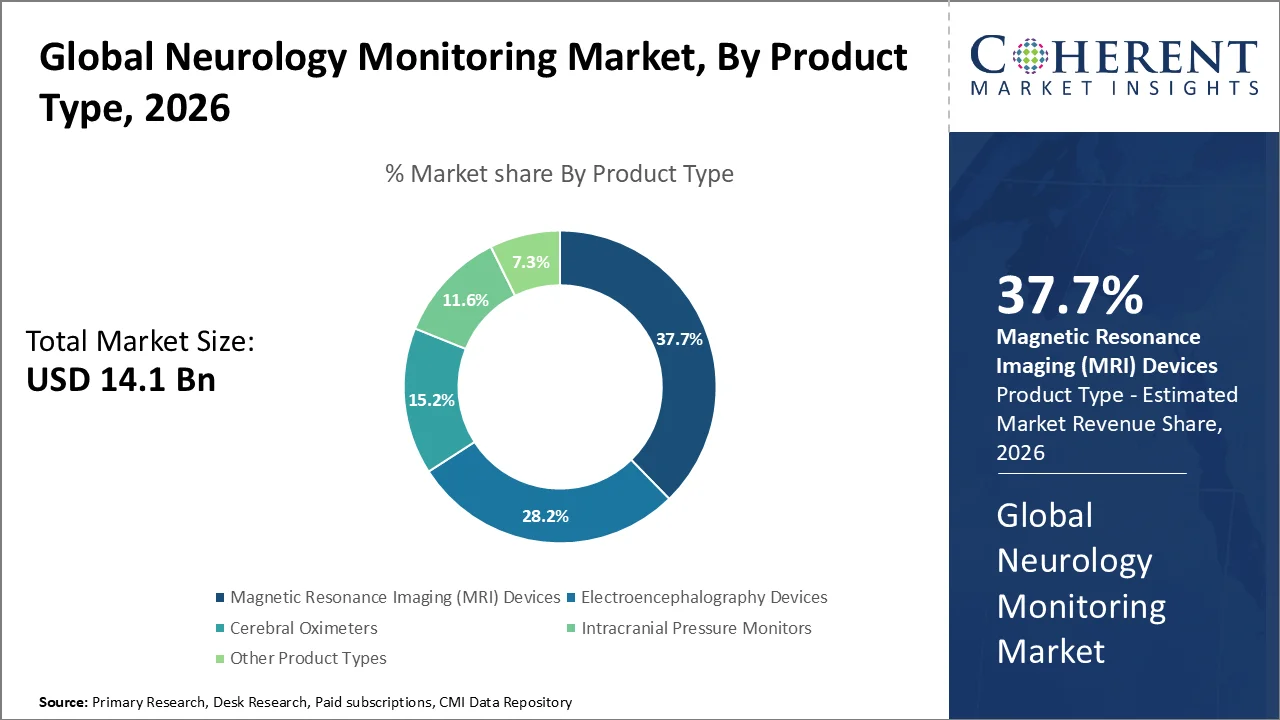
- Magnetic Resonance Imaging (MRI) Devices are expected to hold the largest market share of 37.7% in 2026, driven by continuous advancements in high-field MRI systems and growing demand for early neurological disease detection. More than 40 million MRI scans are performed annually in the United States alone, making MRI one of the most utilized neuroimaging modalities for evaluating brain and spinal disorders.
- Sleep Disorders are projected to account for 41.1% of the market share in 2026, supported by increasing screening initiatives and rising demand for sleep diagnostics. According to the American Academy of Sleep Medicine, approximately 26% of U.S. adults aged 30–70 years are estimated to have obstructive sleep apnea, a condition that often requires neurological monitoring and sleep studies for diagnosis and management.
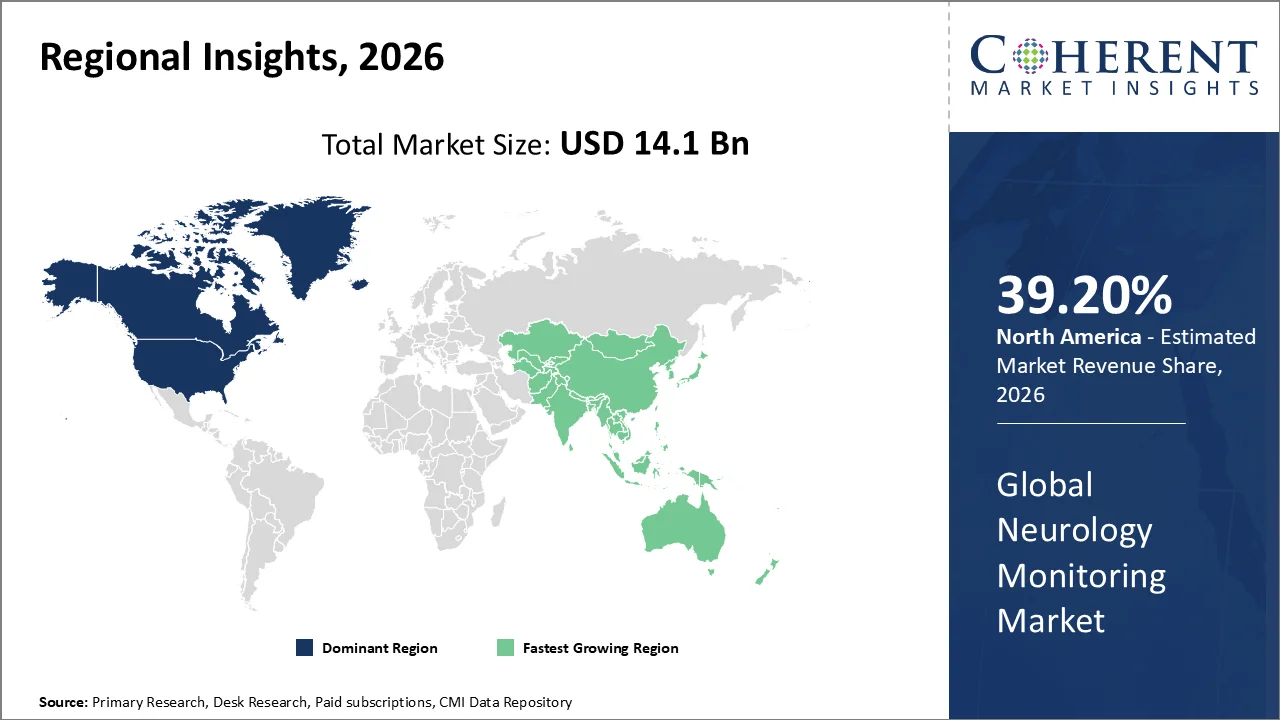
- North America is expected to dominate the market with a 39.2% share in 2026, supported by strong investments in neuroscience research and healthcare technology. The National Institutes of Health invests over USD 8 Bn annually in neuroscience-related research, accelerating innovation in neurodiagnostic and neurological monitoring technologies across the region.
Current Events and Their Impact on the Neurology Monitoring Market
Current Event | Description and its Impact |
FDA Expansion of AI-Enabled Medical Device Regulatory Framework |
|
Medicare Reimbursement Expansion for Remote Physiologic Monitoring (RPM) |
|
Segmental Insights
- Current Industry Events of 2026
- Market Size Estimation
- Regional Breakdown
- Competitive Landscape
- Customer Intelligence
- Segmental Analysis
- Pricing Analysis
- Key Market Drivers, Challenges & Future Trends
- Customized Insights Section
Why is Magnetic Resonance Imaging (MRI) Devices Acquiring the Largest Market Share?
Magnetic Resonance Imaging (MRI) Devices hold the largest market share of 37.7% in 2026. Rising prevalence of neurological disorders such as Alzheimer’s disease, Parkinson’s disease, and Stroke drives the demand for Magnetic Resonance Imaging (MRI) devices in neurology monitoring, as clinicians rely on them for accurate and continuous brain assessment. In 2025, approximately 7.2 million Americans aged 65 and older are living with Alzheimer's dementia. Healthcare providers increasingly adopt non-invasive, high-resolution imaging, while advancements like functional MRI and diffusion imaging improve diagnostic precision. The growing emphasis on early diagnosis, expanding aging populations, and AI integration by companies such as GE HealthCare and Siemens Healthineers further accelerate adoption. For instance, in July 2025, Cook Medical, based in Bloomington, Indiana, launched an interventional MRI division to address unmet clinical needs in complex procedures. The division will develop minimally invasive devices designed specifically for interventional MRI settings, rather than adapting traditional MRI tools, aiming to improve procedure precision and expand clinical applications.
Sleep Disorders expected to hold largest market share
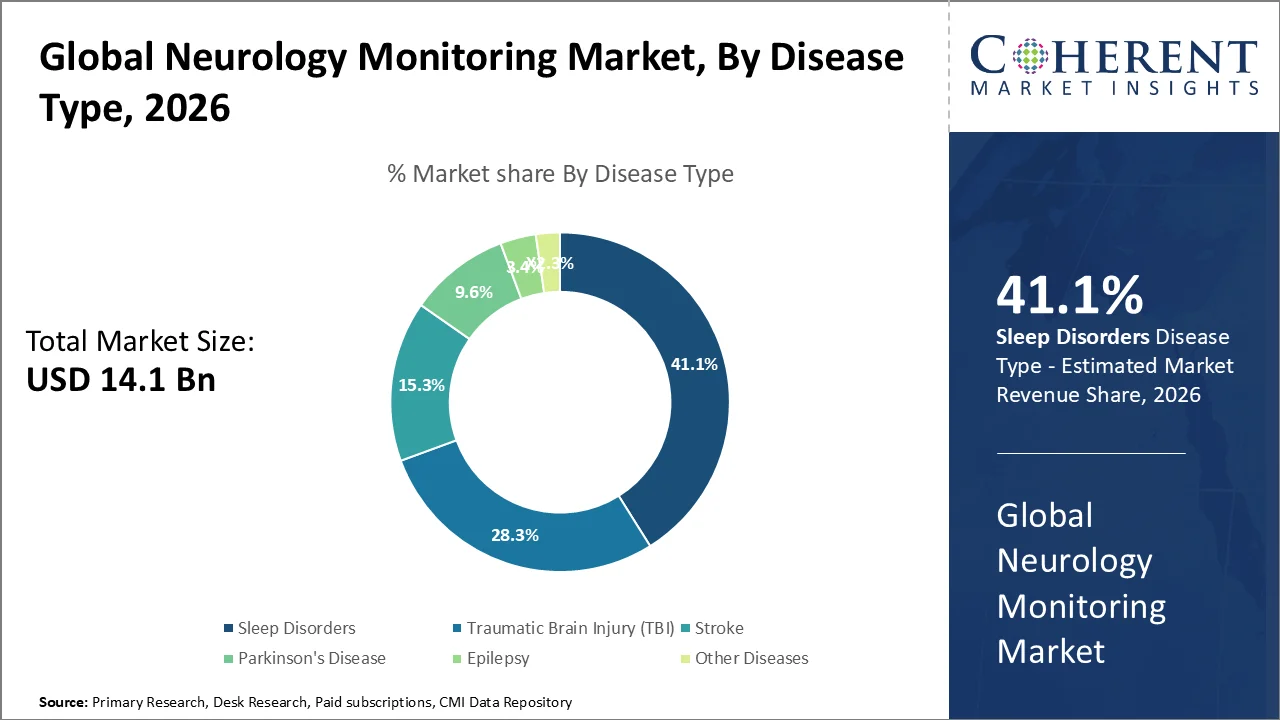
Sleep Disorders expected to hold largest market share of 41.1% in 2026 owing to its expansion of sleep clinics and labs. The rising prevalence of sleep conditions such as Insomnia, Obstructive sleep apnea, and Narcolepsy increases demand in the neurology monitoring market, as clinicians rely on accurate tools for diagnosis and long-term assessment. Insomnia affects more than 16% of adults globally, making it one of the most common sleep disorders worldwide. Healthcare providers are expanding awareness of sleep health, recognizing strong links with neurological disorders, and adopting home-based and wearable monitoring devices. Companies such as Philips Healthcare and ResMed are advancing technology and integrating AI to improve monitoring efficiency and accessibility. For instance, in January 2026, Inogen Inc., a medical technology company specializing in home-use respiratory products, launches a new line of continuous positive airway pressure masks and enters the sleep apnea market.
Neurology Monitoring Market Trends
- Rising demand for minimally invasive and non-invasive monitoring techniques, such as EEG and advanced neuroimaging, is improving patient safety and enabling continuous neurological assessment. EEG remains one of the most widely used neurological diagnostic tools, with over 500,000 long-term EEG monitoring procedures performed annually in the United States, supporting diagnosis of epilepsy, sleep disorders, and brain injuries.
- Expansion of wearable and remote monitoring devices is accelerating the shift toward home-based neurological care. The number of connected wearable devices worldwide is expected to exceed 1.1 billion units by 2028, supporting continuous monitoring of neurological parameters, patient activity, sleep quality, and disease progression outside clinical settings.
- Favorable reimbursement policies and government healthcare initiatives are expanding access to neurological monitoring services. In the United States, reimbursement for Remote Physiologic Monitoring (RPM) services continues to support adoption of connected monitoring technologies, while India's Ayushman Bharat program provides health coverage to more than 500 million beneficiaries, improving access to neurological diagnostics and specialized care across underserved populations.
Regional Insights
North America dominates owing to strong adoption of critical care monitoring
North America is expected to acquire the dominant share of 39.20% in 2026. North America leads the neurology monitoring market because it has a high prevalence of neurological disorders such as Alzheimer’s disease, Parkinson’s disease, and Stroke, which drive the need for continuous monitoring and advanced diagnostics. According to the Parkinson's Foundation, approximately 1.1 million people in the United States are living with Parkinson's disease, with the number projected to increase to 1.2 million by 2030. Healthcare providers actively adopt advanced technologies, supported by strong infrastructure and high healthcare spending. The region increasingly uses AI-enabled monitoring systems, expands neurocritical care units, and strengthens demand for remote patient monitoring. Companies such as GE HealthCare and Siemens Healthineers further accelerate innovation and market growth through early technology adoption and strong R&D efforts. For instance, in November 2025, Sandoz launched TYRUKO (natalizumab-sztn) in the US, the first FDA-approved natalizumab biosimilar for relapsing forms of multiple sclerosis. Developed by Polpharma Biologics, TYRUKO strengthens Sandoz’s neurology portfolio and supports its growth strategy in the US market.
Asia Pacific Neurology Monitoring Market Trends
Healthcare providers across Asia Pacific drive growth in the neurology monitoring market as they manage a rising number of patients with conditions such as epilepsy, stroke, and Parkinson’s disease. India is home to an estimated 10–12 million people with epilepsy, representing nearly one-sixth of the global epilepsy burden. The condition affects approximately 0.5–1% of the population, with prevalence rates reaching 1.9% in rural areas, compared with 0.6% in urban regions. An expanding elderly population increases demand for continuous neurological assessment. Hospitals and clinics upgrade their capabilities by adopting advanced tools like EEG, EMG, and integrated neuroimaging systems. Governments promote digital health programs, while growing awareness of early diagnosis encourages healthcare facilities to invest in modern monitoring technologies that enhance patient care and outcomes. For instance, in July 2025, Marengo Asia Hospitals launched the Marengo Asia International Institute of Neuro & Spine (MAIINS) in Gurugram and appoints neurologist Dr. Praveen Gupta to lead the institute and head its neurology department.
United States Neurology Monitoring Market Trends
Rising cases of neurological disorders such as epilepsy, stroke, and dementia drive demand for continuous monitoring tools in the United States neurology monitoring market. Approximately 6.7 million older adults in the United States are living with Alzheimer’s disease, and this number is projected to double by 2060. Healthcare providers increasingly adopt advanced EEG, EMG, and brain imaging technologies to improve diagnostic precision and patient tracking. Telehealth and remote care solutions enable real-time neurological assessment across settings. Hospitals expand critical care facilities and prioritize early detection, while sustained healthcare investment and the integration of artificial intelligence-based analytics actively support market expansion. For instance, NeuroVigil launched its investigational iBrain device in the U.S., enabling noninvasive, portable recording of brain electrical activity in patients with neurological conditions.
Japan Neurology Monitoring Market Trends
Japan’s neurology monitoring market grows as an aging population drives higher demand for diagnosing and managing disorders such as stroke, Alzheimer’s disease, and Parkinson’s disease. Healthcare providers strengthen services by adopting advanced tools including EEG, EMG, and neuroimaging technologies. Hospitals and clinics increasingly integrate artificial intelligence, remote monitoring systems, and precision medicine to improve patient care. Government initiatives support neurological healthcare improvements, while medical institutions invest in upgraded diagnostic equipment, reinforcing steady market development and clinical efficiency.
Who are the Major Companies in Neurology Monitoring Industry
Some of the major key players in Neurology Monitoring are Masimo Corporation, Drägerwerk AG & Co. KgaA, Advanced Brain Monitoring Inc., Medtronic plc, Compumedics Limited, Siemens Healthcare GmbH, Koninklijke Philips N.V, Nihon Kohden Corporation, Natus Medical Incorporated, and General Electric Company (GE Healthcare)
Key News
- In June 2026, MSWA and Founders Factory announced the first cohort of startups selected for the MS & Neurological Care Accelerator, a global-first program focused on developing technologies that enhance outcomes for people living with multiple sclerosis and other neurological conditions.
Market Report Scope
Neurology Monitoring Market Report Coverage
| Report Coverage | Details | ||
|---|---|---|---|
| Base Year: | 2025 | Market Size in 2026: | USD 14.1 Bn |
| Historical Data for: | 2020 To 2024 | Forecast Period: | 2026 To 2033 |
| Forecast Period 2026 to 2033 CAGR: | 6.1% | 2033 Value Projection: | USD 17.3 Bn |
| Geographies covered: |
| ||
| Segments covered: |
| ||
| Companies covered: | Masimo Corporation, Drägerwerk AG & Co. KgaA, Advanced Brain Monitoring Inc., Medtronic plc, Compumedics Limited, Siemens Healthcare GmbH, Koninklijke Philips N.V, Nihon Kohden Corporation, Natus Medical Incorporated, and General Electric Company (GE Healthcare). | ||
Analyst Opinion
- Neurology monitoring demand is being shaped by a measurable clinical burden rather than discretionary healthcare expansion. Neurological disorders affect more than 3 billion people globally, with conditions such as stroke, epilepsy, Alzheimer’s disease, and Parkinson’s disease contributing significantly to long-term disability. This creates sustained reliance on continuous brain and nerve activity monitoring rather than episodic diagnosis.
- Stroke alone accounts for over 12 million new cases annually worldwide, and clinical guidelines increasingly emphasize real-time neurological assessment using EEG and multimodal monitoring in acute care units. For example, continuous EEG monitoring is now routinely used in intensive care settings to detect non-convulsive seizures that are often missed in standard examinations, directly increasing device utilization in hospitals.
- Alzheimer’s disease cases exceed 55 million globally, and clinicians are shifting toward early detection using neurophysiological and imaging-based monitoring tools rather than late-stage intervention. In practice, advanced EEG biomarkers and digital cognitive monitoring platforms are being integrated into neurology departments, particularly in countries like Japan, where aging demographics intensify demand for long-term neuro-monitoring systems in both hospital and home-care environments.
Speak to the analyst
Want personalized insights?
Take the findings above to one of our principal consultants, or have the report rebuilt around the segments, geographies and competitors you actually track.
Market Segmentation
- By Product Type (Revenue, USD Bn, 2021-2033)
- Magnetic Resonance Imaging (MRI) Devices
- Electroencephalography Devices
- Cerebral Oximeters
- Intracranial Pressure Monitors
- Other Product Types
- By Disease Type (Revenue, USD Bn, 2021-2033)
- Traumatic Brain Injury (TBI)
- Stroke
- Sleep Disorders
- Parkinson's Disease
- Epilepsy
- Other Diseases
- By Region (Revenue, USD Bn, 2021-2033)
- North America
- U.S.
- Canada
- Latin America
- Brazil
- Mexico
- Argentina
- Rest of Latin America
- Europe
- Germany
- U.K.
- France
- Italy
- Spain
- Russia
- Rest of Europe
- Asia Pacific
- China
- India
- Japan
- Australia
- South Korea
- ASEAN
- Rest of Asia Pacific
- Middle East
- GCC
- Israel
- Rest of Middle East
- Africa
- South Africa
- Central Africa
- North Africa
- North America
Sources
Primary Research interviews
- Interviews with neurologists, neurophysiologists, and ICU specialists involved in EEG/EMG monitoring and stroke care pathways
- Discussions with hospital procurement heads and biomedical engineers responsible for neurology equipment selection and deployment
- Insights from clinical technicians and sleep disorder centers using long-term brain activity monitoring systems
Databases
- World Health Organization (WHO) neurological disorder datasets and global burden of disease statistics
- National health ministry repositories and hospital discharge databases
- ClinicalTrials.gov and other clinical study registries for neurology monitoring device validation studies
- PubMed-indexed biomedical and clinical datasets
Magazines
- Neurodiagnostic and clinical neurology trade publications
- Healthcare technology and medical devices-focused industry magazines
- ICU and critical care practice magazines featuring monitoring advancements
Journals
- Journal of Clinical Neurophysiology
- Stroke: A Journal of Cerebral Circulation
- Neurology
- Epilepsia
- Journal of Neuroscience Methods
Newspapers
- Financial and healthcare coverage sections of major international newspapers reporting on neurological care trends and hospital technology adoption
- National newspapers covering public health infrastructure and aging population impacts
Associations
- World Federation of Neurology
- American Clinical Neurophysiology Society
- International League Against Epilepsy
- World Stroke Organization
- National neurological and neurodiagnostic professional bodies
Public Domain sources
- Government health ministry reports and national dementia strategies
- WHO fact sheets on neurological disorders and aging demographics
- Hospital annual reports and publicly available clinical guidelines
- Academic conference proceedings and open-access neurology symposium papers
Proprietary Elements
- CMI Data Analytics Tool
- Proprietary CMI Existing Repository of information for last 10 years
Get access to 250+ pages report
Every segment, forecast, competitor profile and data table behind the analysis above — available for instant download.
- ESOMAR Member
- ISO 9001:2015 Certified
- D-U-N-S Registered
- GDPR & CCPA Compliant
Missing comfort of reading report in your local language? Find your preferred language:
Transform your Strategy with Exclusive Trending Reports
Frequently Asked Questions
The Neurology Monitoring Market is anticipated to grow at a CAGR of 6.1% with USD 14.1 Bn in 2026 and is expected to reach USD 17.3 Bn in 2033.
Increase in incidence or prevalence of neurological disorders and increase in demand for neurology patient monitoring devices is fueling the market.
The Magnetic Resonance Imaging (MRI) Devices segment is the leading product type segment in the market.
High cost of neurology monitoring devices and shortage of trained professionals are major factors restraining the market.
Major players operating in the market are Masimo Corporation, Drägerwerk AG & Co. KgaA, Advanced Brain Monitoring Inc., Medtronic plc, Compumedics Limited, Siemens Healthcare GmbH, Koninklijke Philips N.V, Nihon Kohden Corporation, Natus Medical Incorporated, and General Electric Company (GE Healthcare).