

Global Cancer Immunotherapy Market Size and Share Analysis – (2026-2033)
Global cancer immunotherapy market is estimated to be valued at USD 178.22 Bn in 2026 and is expected to reach USD 406.47 Bn by 2033, exhibiting a compound annual growth rate (CAGR) of 12.5% from 2026 to 2033.
Key Takeaways
- Based on Therapy Type, Monoclonal Antibodies Segment is projected to hold a 38.3% market share in 2026. This is due to their targeted action, proven efficacy, and expanding use across multiple cancer types.
- Based on Route of Administration, Oral Segment is expected to hold 50.7% of the market share in 2026. This is due to increased patient preference for convenient, non-invasive cancer immunotherapy treatments.
- Based on Cancer Type, Breast Cancer Segment is anticipated to hold 25.2% of the market share in 2026 This is due to rising incidence rates and growing adoption of immunotherapy as a complementary treatment option.
- North America dominates the market and is projected to hold 44.3% of the market share in 2026. This can be attributed to increasing demand for advanced treatment options and high adoption of new immunotherapies in the region.
Market Overview
The cancer immunotherapy market is expected to witness considerable growth over the forecast period. Increasing adoption of target therapy over conventional therapy drives the market growth. Increasing demand for effective, affordable and painless therapies for cancer treatment has led to major investments in R&D of immunotherapy by large pharmaceutical companies. The development of combination therapies using immunotherapy with chemotherapy and radiation therapy has shown promising results. Increasing focus on precision medicines and personalized treatment for patients are likely to create new opportunities in the market in the coming years. However, the high cost of therapy and need for further research to increase the efficacy is expected to restrain the market growth.
Current Events and Its Impact on Cancer Immunotherapy Market
Current Events | Description and its impact |
Transition to New IQF & Flavor-Preserving Technologies |
|
AI-Powered Cold-Chain & Predictive Supply Systems |
|
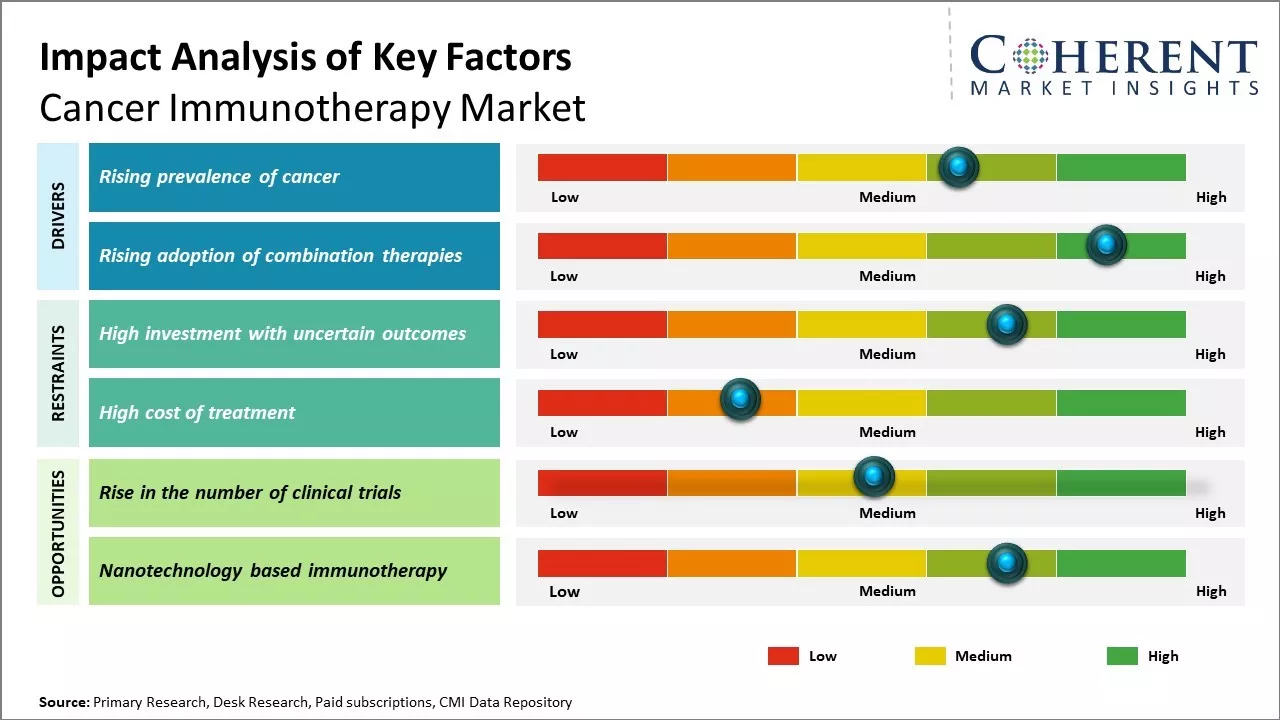
Cancer Immunotherapy Market Driver
- Rising prevalence of cancer
Increasing prevalence of cancer across the world has become a major driver for growth of cancer immunotherapy market. Cancer has been on the rise globally due to factors such as changing lifestyles, rising pollution levels, growing tobacco consumption, aging population, and genetic factors.
According to estimates by the World Health Organization published in February 2025, the global burden of cancer is expected to increase significantly in the coming decades with the number of new cancer cases expected to rise from 20 million in 2022 to over 35 million by 2050. The four most common cancers in terms of incidence are lung cancer, breast cancer, colorectal cancer, and prostate cancer. Cancer is becoming one of the leading causes of death worldwide responsible for an estimated 9.6 million deaths in 2018.
This rising prevalence of various cancer types puts enormous strain on healthcare systems and also affects public health. With the limitations of traditional treatment methods like chemotherapy, surgery, and radiation therapy, healthcare providers and patients are looking for more effective and targeted treatment options. Immunotherapy has emerged as a promising alternative as it helps stimulate the body's own immune system to identify and attack cancer cells precisely, thus, driving the market growth over the forecasted period.
- Rising adoption of combination therapies
There is a growing recognition in the oncology space that monotherapies may have limited efficacy against many solid tumor cancers. Combination therapies that amalgamate the mechanisms of two or more treatment types are demonstrating improved clinical outcomes as compared to single drug therapies. The paradigm is steadily shifting from sequential single agent treatments to rational combination regimens.
Immunotherapy combinations that incorporate other modalities like targeted therapies, chemotherapy, and radiotherapy are showing especially promising results by overcoming the immune escape mechanisms. For example, combining immune checkpoint inhibitors like anti-PD-1/PD-L1 drugs with angiogenesis inhibitors is enhancing anti-tumor responses. The success of 'chemio-immunotherapy', which involves immune therapies along with chemotherapy, has encouraged many such combination trials.
Market Opportunities – Rise in the number of clinical trials
The move away from traditional chemotherapy and towards more targeted immunotherapies has transformed cancer treatment. Immunotherapies have shown promising results for several cancer types and lines of therapy. As more immunotherapies gain approval and clinician experience grows, the eligible patient pool and number of treatment options will expand significantly. Ongoing research into combination regimens, biomarker identification, and new immunotherapy drugs is anticipated to create lucrative market growth opportunities.
- Current Industry Events of 2026
- Market Size Estimation
- Regional Breakdown
- Competitive Landscape
- Customer Intelligence
- Segmental Analysis
- Pricing Analysis
- Key Market Drivers, Challenges & Future Trends
- Customized Insights Section
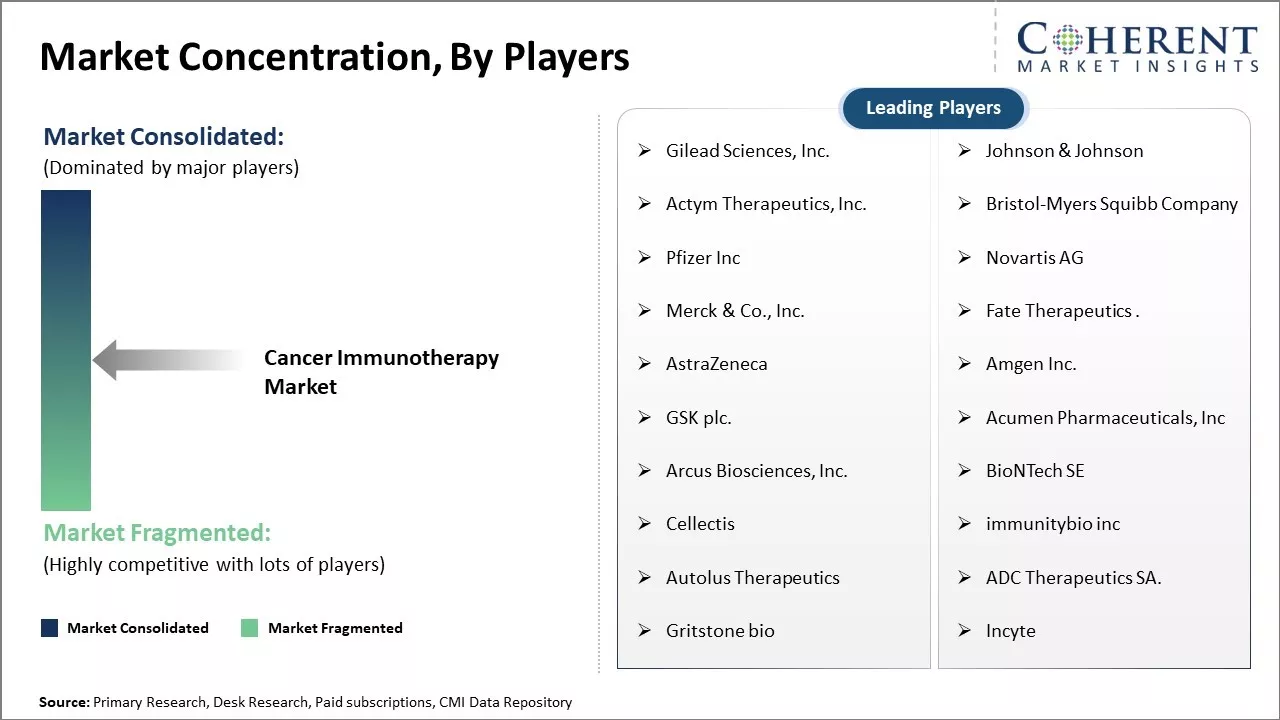
Market Concentration and Competitive Landscape
Segmental Insights
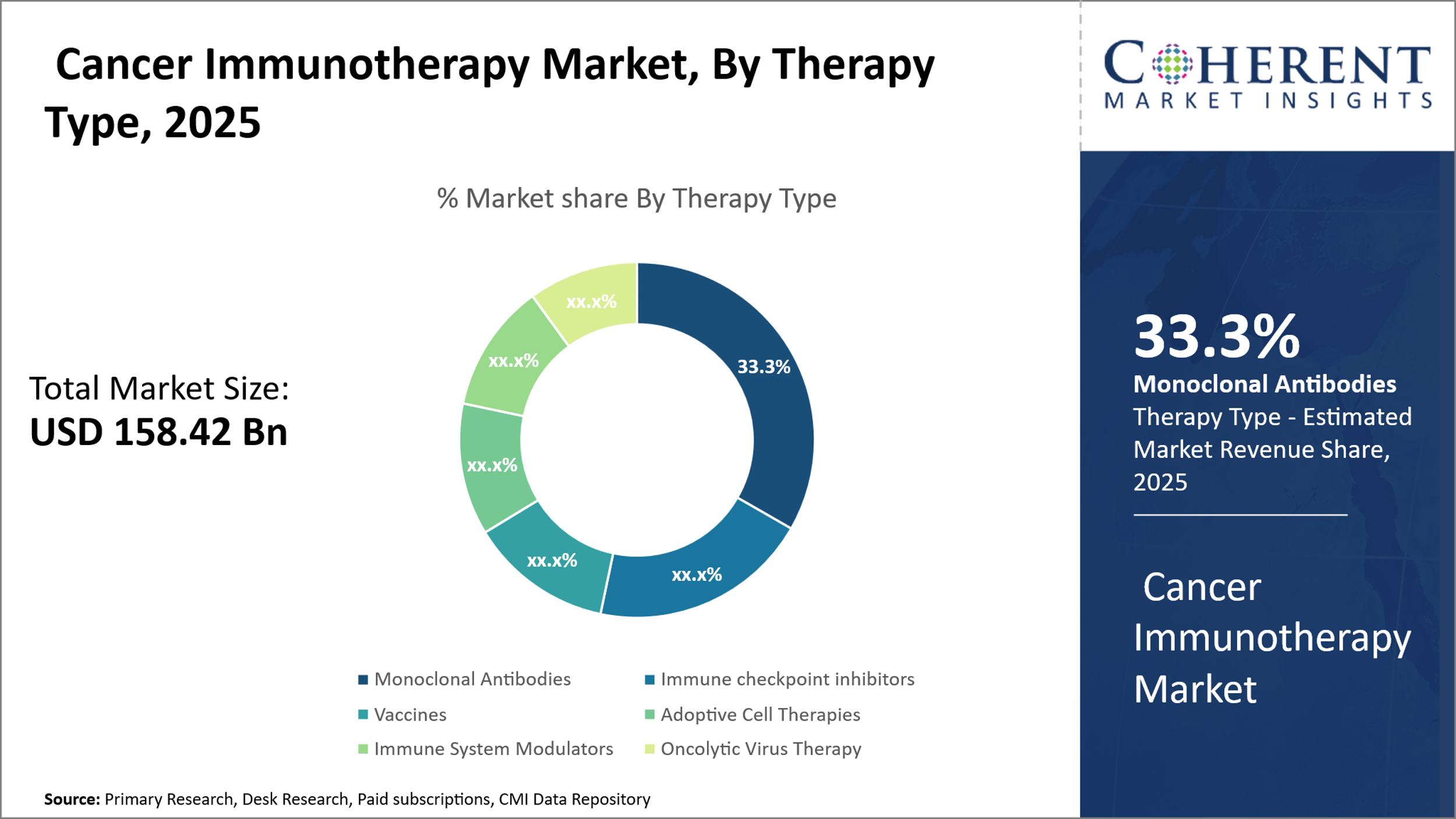
Cancer Immunotherapy Market Insights, By Therapy Type - Rise in research and development drives Monoclonal Antibodies growth
Therapy Type segment is sub-segmented into immune checkpoint inhibitors, monoclonal antibodies, vaccines, adoptive cell therapies, immune system modulators, and oncolytic virus therapy. Monoclonal antibodies segment is estimated to hold 38.3% share of the market in 2026. Monoclonal antibodies are artificially created antibodies that can bind to specific proteins or antigens.
In cancer immunotherapy, these are designed to target markers found on cancerous cells or immune cells. This high degree of selectivity allows monoclonal antibodies to engage immune cells like T cells or block certain immune checkpoints while minimizing potential damage to healthy cells. Some key attributes driving the popularity of monoclonal antibody therapies include enhanced precision, reduced side effects, and potent anti-tumor responses when combined with other therapies.
Popular monoclonal antibodies for cancer include rituximab for lymphoma, trastuzumab for breast cancer, and cetuximab for colorectal cancer. Their antibody-dependent cellular cytotoxicity enables targeted elimination of cancer by marking cells for destruction by the immune system. Approvals of newer monoclonal antibodies like nivolumab, pembrolizumab, and atezolizumab that target immune checkpoint inhibitors PD-1 and PD-L1 have further increased their usage.
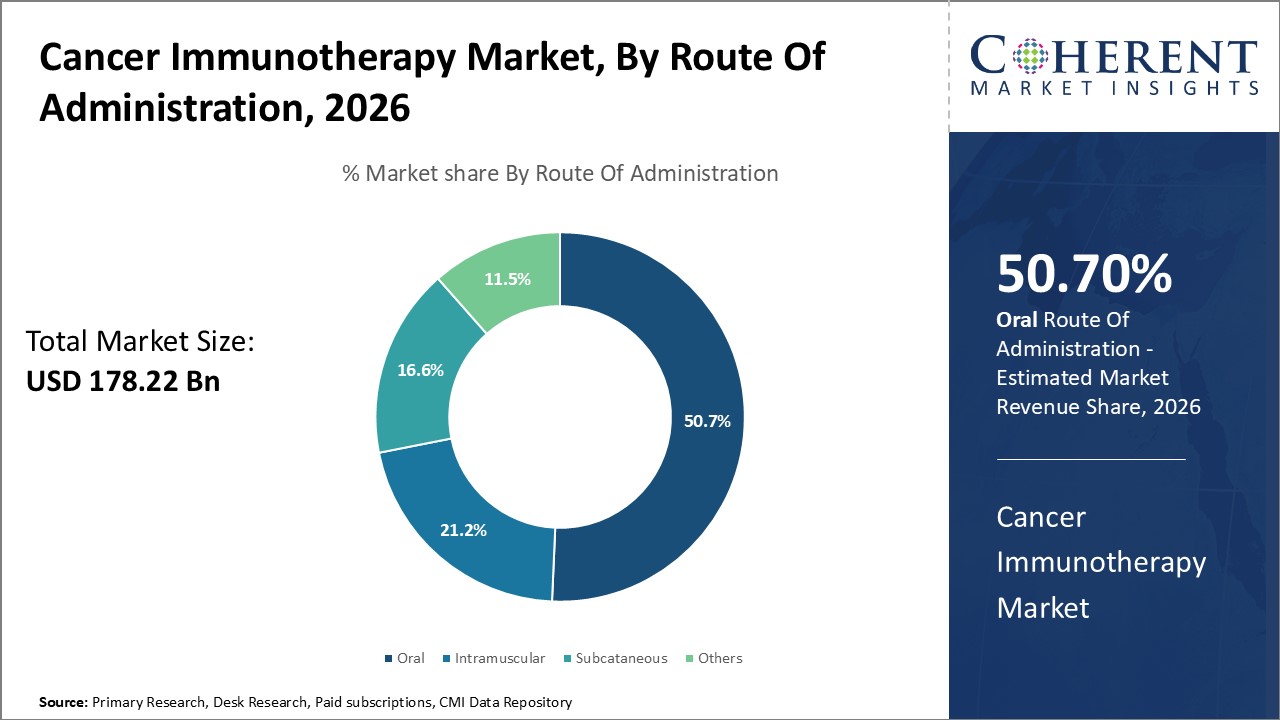
Cancer Immunotherapy Market Insights, By Route of Administration
Route of Administration segment is sub-segmented into intravenous (IV), oral, intramuscular, subcutaneous, and others. Oral segment is anticipated to hold 50.7% of the market share in 2026. Unlike injections or infusions that require visiting medical facilities, oral drugs can be self-administered at home, reducing healthcare resource utilization and costs. This positions oral therapies as more accessible options suitable for long-term use, important considerations that drive patient preference and adherence.
Moreover, orally administered drugs enable flexibility in dosing schedules tailored to individual needs versus fixed periodic dosing with parenteral therapies. The non-invasive oral route minimizes pain and discomfort associated with injections, improving quality of life. This is particularly valuable for cancer immunotherapies, given their long-term administration.
Recent approvals of checkpoint inhibitors like nivolumab and pembrolizumab in oral formulations reflect a shift towards convenient oral dosing. Overall, the simplicity, comfort and flexibility offered by oral cancer immunotherapies compared to other routes enhances patient satisfaction, a key factor supporting their uptake.
Cancer Immunotherapy Market Insights, By Cancer Type-The growing prevalence of breast cancer
Cancer Type segment is sub-segmented into lymphoma, breast cancer, colorectal cancer, bladder cancer, skin cancer, lung cancer, kidney cancer, and others. Breast cancer segment is anticipated to hold 25.2% of the market share in 2026. Breast cancer was traditionally seen as less immunogenic versus other tumor types. However, research increasingly shows that immune activity plays an important role in breast cancer development and treatment outcomes.
Several ongoing clinical trials are evaluating immunotherapy agents across different breast cancer subtypes and stages of disease. Trastuzumab's interaction with immune cells demonstrates the interplay of targeted and immune therapies. Additionally, vaccines are being investigated as an adjuvant treatment to prevent disease recurrence.
Regional Insights
North America Cancer Immunotherapy Market Analysis and Trends
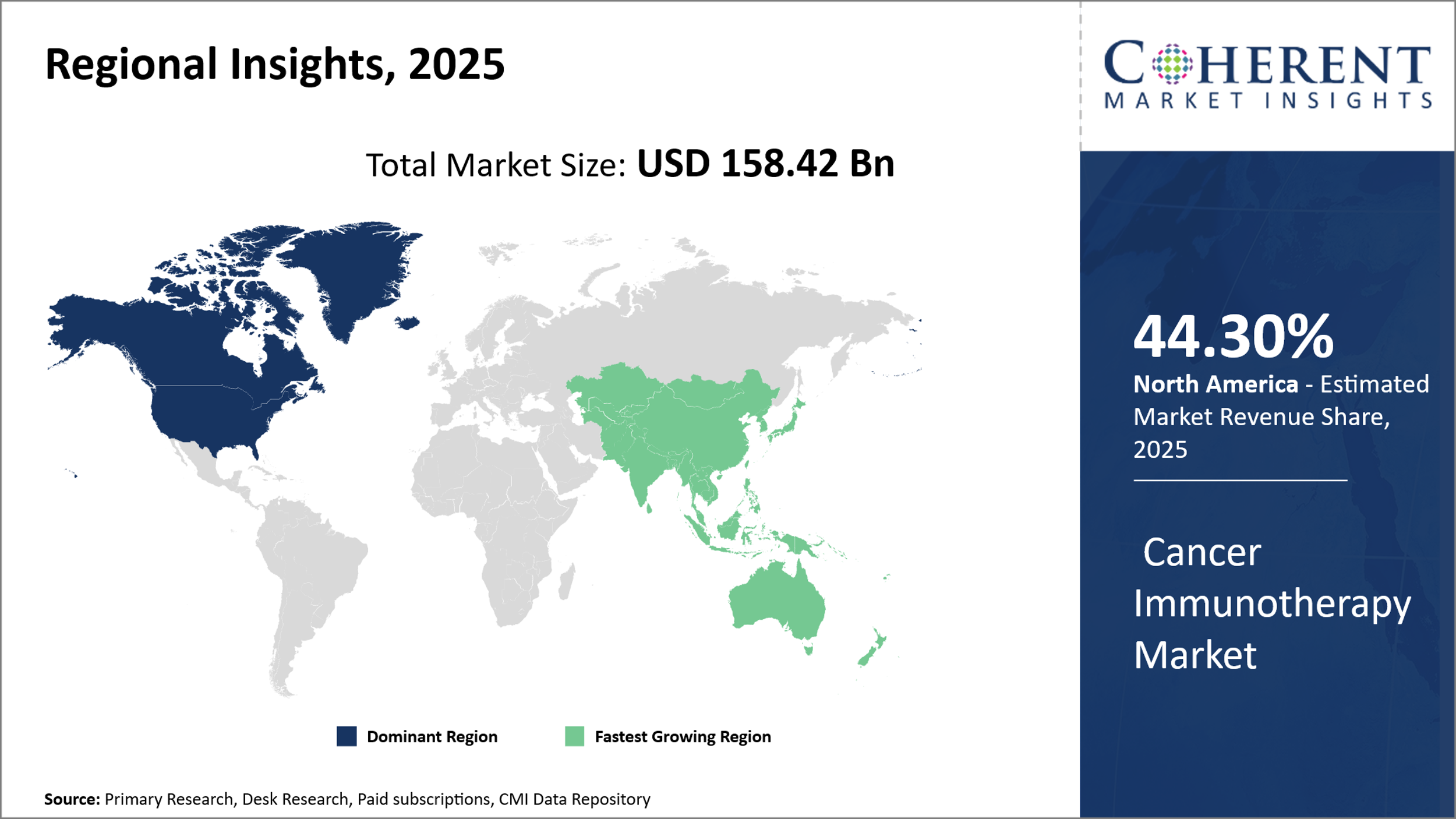
North America has dominated the global cancer immunotherapy market and is expected to continue its leadership during the forecast period and is projected to hold 44.30% of the market share in 2026. This can be attributed to increasing demand for advanced treatment options and high adoption of new immunotherapies in the region.
The U.S. accounts for the largest share mainly due to the strong presence of key market players and rising investments in R&D activities. Further, favorable reimbursement policies have encouraged patients to opt for immunotherapy.
Asia Pacific is recognized as the fastest growing regional market due to rising cancer patient population combined with growing healthcare expenditures in countries like China and India. Increasing awareness regarding cancer immunotherapy and establishment of manufacturing facilities by global leaders is also aiding regional expansion. China, in particular, poses high export potential owing to the presence of a well-defined regulatory framework and low-cost manufacturing advantage.
Cancer Immunotherapy Market Dominating Countries
United States Cancer Immunotherapy Market Analysis and Trend
The United States remains way ahead of everyone else in the field of cancer immunotherapy. With a well-developed biotech industry, favorable government support, and established healthcare infrastructure, it is home to most of the top drug companies developing cutting-edge immunotherapies. It has a high rate of patient population participating in clinical trials, accelerating the development and approval of new treatments.
China Cancer Immunotherapy Market Analysis and Trend
China is rapidly emerging as a significant player in cancer immunotherapy. Its government has heavily invested in biotech research and healthcare improvement. The country now boasts more local companies working on immuno-oncology, supported by regulatory reforms that speed up drug approvals. China's huge patient population offers a once-in-a-lifetime opportunity for large-scale clinical trials and market growth.
Europe Cancer Immunotherapy Market Analysis and Trend
Europe, with the likes of Germany, France, and the UK taking the lead, is primed in the field of immunotherapy. The continent has in place collaborative research initiatives and strict regulatory measures that require innovative standards. European healthcare systems built around personalized medicine additionally underpin the adoption of immunotherapies.
Japan Cancer Immunotherapy Market Analysis and Trend
Japan is a crucial market for Asia for cancer immunotherapy because of the very advanced healthcare system and aging population with high incidence rates of cancer. The country has gradually developed in terms of new drug adoption and promotes local innovation through programs financed by the government.
Market Report Scope
Cancer Immunotherapy Market Report Coverage
| Report Coverage | Details | ||
|---|---|---|---|
| Base Year: | 2025 | Market Size in 2026: | USD 178.22 Bn |
| Historical Data for: | 2020 To 2024 | Forecast Period: | 2026 To 2033 |
| Forecast Period 2026 to 2033 CAGR: | 12.5% | 2033 Value Projection: | USD 406.47 Bn |
| Geographies covered: |
| ||
| Segments covered: |
| ||
| Companies covered: | Gilead Sciences, Inc., Johnson & Johnson, Actym Therapeutics, Inc., Bristol-Myers Squibb Company, Pfizer Inc, Novartis AG, Merck & Co., Inc., Fate Therapeutics., AstraZeneca, Amgen Inc., GSK plc., Acumen Pharmaceuticals, Inc, Arcus Biosciences, Inc., BioNTech SE, Cellectis, immunitybio inc, Autolus Therapeutics, ADC Therapeutics SA., Gritstone bio, Incyte | ||
| Growth Drivers: |
| ||
| Restraints & Challenges: |
| ||
Cancer Immunotherapy Industry News
- In March 2024, Bristol Myers Squibb announced that the U.S. FDA had approved Opdivo (nivolumab) in combination with cisplatin and gemcitabine for the first-line treatment of adult patients with unresectable or metastatic urothelial carcinoma (UC), the most common kind of bladder cancer.
Analyst Opinion ( Expert Opinion)
- The cancer immunotherapy market is one of the most disruptive spaces in modern oncology, driven by revolutionizing scientific advancements and historically high clinical response rates. The top drivers of the market include the rising incidence of cancer all over the world, increased application of personalized medicine approaches, and enormous research and development expenditures by pharmaceutical giants. The growing need for targeted medications over traditional chemotherapy is revolutionizing treatment modalities, as immunotherapies are found to be more effective in terms of efficacy with fewer side effects.
- However, the market is closely bound by prohibitively costly treatment, which limits patient access, regulatory challenges that are high in terms of approval of such products, and patient response heterogeneity by cancer type. Production complexity and cold storage requirements also slow down market growth, particularly in emerging markets.
- Significant opportunities for cancer immunotherapy market expansion lie in the growth of applications beyond traditional oncology uses, alongside favorable progress in combination therapies and the discovery of novel biomarkers. The application of artificial intelligence in drug discovery and patient stratification further offers promising avenues for market players. Additionally, the development of biosimilars presents potential cost-reduction strategies, enhancing the affordability of cancer immunotherapy treatments.
- North America dominates the market landscape, driven by robust healthcare infrastructure, favorable reimbursement regimes, and focused presence of leading biotechnology companies. Asia-Pacific is, nonetheless, the growth rate leader, propelled by expanding healthcare expenditure, expanding patient pools, and research investments in biotechnology. China and India, in particular, register more conspicuous adoption rates, supported by pro-innovative government policies for cancer therapies and improving healthcare reach among broader populations.
Speak to the analyst
Want personalized insights?
Take the findings above to one of our principal consultants, or have the report rebuilt around the segments, geographies and competitors you actually track.
Market Segmentation
- Therapy Type Insights (Revenue, USD Bn, 2021 - 2033)
- Immune checkpoint inhibitors
- Vaccines
- Preventive Vaccines
- Therapeutic Vaccines
- Adoptive Cell Therapies
- Tumor-infiltrating lymphocyte (TIL) therapy
- CAR T-cell therapy
- Engineered T-cell receptor (TCR) therapy
- Natural killer (NK) cell therapy
- Immune System Modulators
- Interferons
- Immunomodulators (IMiDs)
- Interleukins
- Monoclonal antibodies
- Naked monoclonal antibodies
- Conjugated monoclonal antibodies
- Bispecific monoclonal antibodies
- Oncolytic Virus Therapy
- Route Of Administration Insights (Revenue, USD Bn, 2021 - 2033)
- Subcutaneous
- Oral
- Intramuscular
- Intravenous (IV)
- Other
- Cancer Type Insights (Revenue, USD Bn, 2021 - 2033)
- Lymphoma
- Breast Cancer
- Colorectal Cancer
- Bladder Cancer
- Skin Cancer
- Lung Cancer
- Kidney Cancer
- Others
- Distribution Channel Insights (Revenue, USD Bn, 2021 - 2033)
- Hospital Pharmacies
- Retail Pharmacies
- Online Pharmacies
- Regional Insights (Revenue, USD Bn, 2021 - 2033)
- North America
- U.S.
- Canada
- Latin America
- Brazil
- Argentina
- Mexico
- Rest of Latin America
- Europe
- Germany
- U.K.
- Spain
- France
- Italy
- Russia
- Rest of Europe
- Asia Pacific
- China
- India
- Japan
- Australia
- South Korea
- ASEAN
- Rest of Asia Pacific
- Middle East
- GCC Countries
- Israel
- Rest of Middle East
- Africa
- South Africa
- North Africa
- Central Africa
- Key Players Insights
- Gilead Sciences, Inc.
- Johnson & Johnson
- Actym Therapeutics, Inc.
- Bristol-Myers Squibb Company
- Pfizer Inc
- Novartis AG
- Merck & Co., Inc.
- Fate Therapeutics .
- AstraZeneca
- Amgen Inc.
- GSK plc.
- Acumen Pharmaceuticals, Inc.
- Arcus Biosciences, Inc.
- BioNTech SE
- Cellectis
- immunitybio Inc.
- Autolus Therapeutics
- ADC Therapeutics SA.
- Gritstone bio
- Incyte
Sources
Primary Research Interviews
- Oncologists and Cancer Specialists
- Pharmaceutical and Biotechnology Company Executives
- Hospital Administrators and Healthcare Providers
- Regulatory Affairs Professionals
- Others
Databases
- ClinicalTrials.gov
- FDA Orange Book Database
- GlobalData Pharmaceutical Intelligence Center
- IQVIA Market Research Database
- Others
Magazines
- Cancer Today Magazine
- Oncology Times
- BioWorld Intelligence Magazine
- Pharmaceutical Executive Magazine
- Others
Journals
- Journal of Clinical Oncology
- Nature Reviews Drug Discovery
- Cancer Immunology Research
- Others
Newspapers
- The Wall Street Journal
- Financial Times
- Reuters Health News
- BioPharma Dive
- Others
Associations
- American Society of Clinical Oncology (ASCO)
- Society for Immunotherapy of Cancer (SITC)
- International Association for the Study of Cancer (IARC)
- Pharmaceutical Research and Manufacturers of America (PhRMA)
- Others
Public Domain Sources
- World Health Organization (WHO) Reports
- National Cancer Institute (NCI) Publications
- European Medicines Agency (EMA) Guidelines
- U.S. Food and Drug Administration (FDA) Publications
- Others
Proprietary Elements
- CMI Data Analytics Tool
- Proprietary CMI Existing Repository of information for last 8 years
Get access to 250+ pages report
Every segment, forecast, competitor profile and data table behind the analysis above — available for instant download.
- ESOMAR Member
- ISO 9001:2015 Certified
- D-U-N-S Registered
- GDPR & CCPA Compliant
Missing comfort of reading report in your local language? Find your preferred language:
Transform your Strategy with Exclusive Trending Reports
Frequently Asked Questions
The Cancer Immunotherapy Market size is estimated to be valued at USD 178.22 Bn in 2026, and is expected to reach USD 406.47 Bn by 2033.
The CAGR of the global Market is projected to be 12.5% from 2026 to 2033.
Rising prevalence of cancer and Rising adoption of combination therapies are the major factor driving the growth of Cancer Immunotherapy industry.
High investment with uncertain outcomes and High cost of treatment are the major factor hampering the growth of global Market.
The future of personalized cancer immunotherapy lies in developing tailored treatments based on individual genetic profiles to improve efficacy and reduce side effects.
While competitive, the cancer immunotherapy market is not oversaturated due to ongoing innovation and unmet patient needs driving continuous growth.
Investors are focusing on novel therapies, combination treatments, and technologies that enhance immune response and patient outcomes in cancer immunotherapy.