

Lung Cancer Therapeutics Market Size and Forecast — 2026 - 2033
The Global Lung Cancer Therapeutics Market size is estimated to be valued at USD 15.8 billion in 2026 and is expected to reach USD 32.7 billion by 2033, exhibiting a compound annual growth rate (CAGR) of 11.2% from 2026 to 2033.
Overview
The Lung Cancer therapeutics market is driven by the rising global incidence of lung cancer, largely linked to smoking, air pollution, and occupational hazards. Advances in targeted therapies and immunotherapies, such as checkpoint inhibitors, are significantly improving survival rates and treatment outcomes. Increased adoption of personalized medicine based on genetic profiling is further accelerating demand. Government initiatives for early screening and cancer awareness, along with expanding healthcare infrastructure in emerging economies, are also contributing to market growth. Additionally, strong pipelines, ongoing clinical trials, and regulatory support for innovative drugs continue to drive advancements in lung cancer treatment.
Key Takeaways
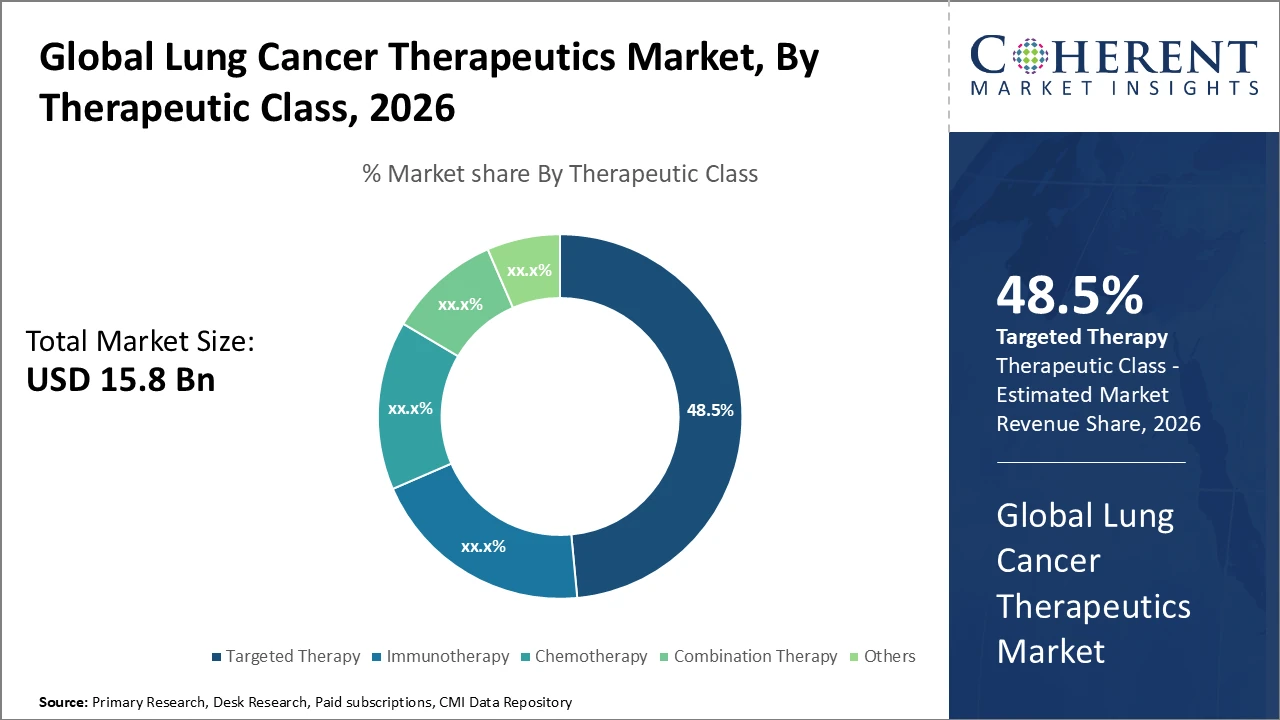
Targeted therapy leads lung cancer therapeutics market segments with a dominant 48.5% share, driven by advancements in precision medicine and molecular biomarker-guided treatment protocols.
Immunotherapy is the fastest-growing segment, supported by expanded regulatory approvals and favorable clinical outcomes in NSCLC patients worldwide.
Asia Pacific is emerging as a lucrative market due to increasing lung cancer incidence and improved accessibility to novel therapies.
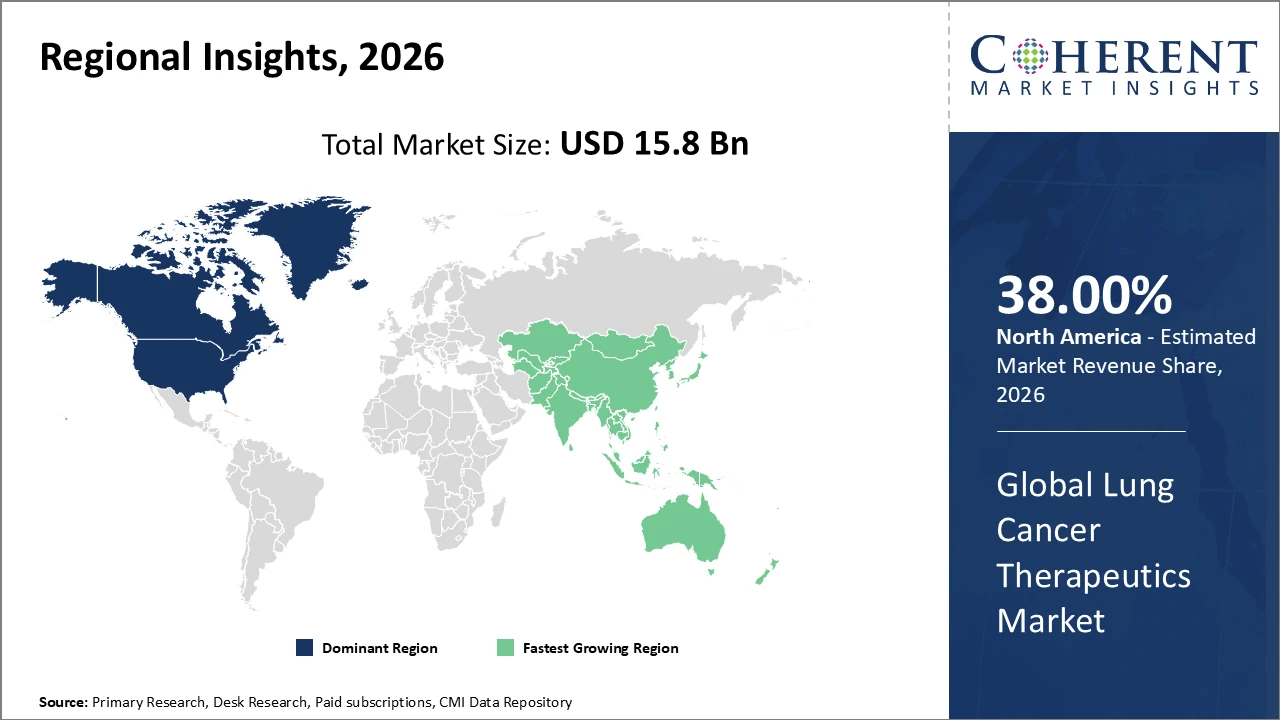
North America holds the largest industry share in lung cancer therapeutics, fueled by robust oncology infrastructure, presence of leading market players, and extensive clinical trial pipelines.
Lung Cancer Therapeutics Market Segmentation Analysis
Lung Cancer Therapeutics Market Insights, By Therapeutic Class
Targeted therapy dominates the lung cancer therapeutics market, driven by the adoption of molecularly targeted drugs that address mutations such as EGFR, ALK, and ROS1, offering enhanced efficacy and safety compared to traditional treatments. Immunotherapy is the fastest-growing segment, fueled by the success of PD-1 and PD-L1 inhibitors, which have expanded indications and shown strong clinical outcomes. Chemotherapy remains essential, particularly for small cell lung cancer, often integrated into combination regimens. Combination therapies are gradually increasing due to observed synergistic effects in clinical trials. The Others segment includes emerging treatments like therapeutic vaccines and gene therapy, reflecting ongoing innovation in the field.
Lung Cancer Therapeutics Market Insights, By Drug Type
Small molecule inhibitors dominate the lung cancer therapeutics market, valued for their excellent tissue penetration and oral bioavailability, making them ideal for targeted therapies such as tyrosine kinase inhibitors (TKIs) that address mutations common in NSCLC. Monoclonal antibodies are the fastest-growing subsegment, driven by the success of checkpoint inhibitors and antibody-drug conjugates, offering high specificity with manageable safety profiles. Vaccine therapies are emerging, leveraging neoantigen-targeted strategies to stimulate immune responses. The Others category includes innovative biologics and cell-based therapies currently under preclinical investigation. These trends reflect ongoing diversification and innovation in treatment modalities for lung cancer management.
Lung Cancer Therapeutics Market Insights, By Application
NSCLC dominates the lung cancer therapeutics market, accounting for approximately 85% of cases. Its high prevalence and the availability of actionable molecular targets drive extensive therapeutic development and commercialization. SCLC, though less common, represents the fastest-growing segment, fueled by recent advances in immunotherapies and combination treatment strategies that have shown meaningful survival benefits. The Others segment encompasses rare lung cancer types and specialized indications, currently holding smaller market share but attracting growing attention due to ongoing research and an expanding innovation pipeline. These trends highlight both the established dominance of NSCLC therapies and emerging opportunities in less common lung cancers.
Lung Cancer Therapeutics Market Trends
The adoption of combination immunotherapies is reshaping treatment regimens, with multi-drug protocol sales increasing by 18% in 2025.
Integration of AI in diagnostics has accelerated mutation identification, reducing average diagnostic turnaround times by 25% in leading centers worldwide.
Expanding lung cancer screening programs, particularly in North America and Europe, have enabled earlier detection, driving demand for adjuvant therapeutics.
In the U.S., lung cancer screening rates increased by 30% between 2024 and 2026, directly contributing to market growth.
Lung Cancer Therapeutics Market Insights, By Geography
North America Lung Cancer Therapeutics Market Analysis and Trends
In North America, the Lung Cancer Therapeutics market is dominated by a combination of advanced oncology expertise, strong healthcare infrastructure, and favorable reimbursement policies. The region accounted for over 38% of the global market share in 2026, driven by high adoption of targeted therapies, immunotherapies, and combination treatment regimens. Leading pharmaceutical companies, including Merck & Co. and Roche, are pivotal in introducing innovative drugs and expanding clinical trial programs, fostering rapid market growth. Additionally, widespread awareness of lung cancer screening and early detection programs contributes to increased demand for therapeutics, reinforcing North America’s position as a key global market hub.
Asia Pacific Lung Cancer Therapeutics Market Analysis and Trends
The Asia Pacific region is experiencing the fastest growth in the lung cancer therapeutics market, with a CAGR exceeding 14%, driven by rising lung cancer prevalence linked to pollution, smoking, and urbanization. Government investments in healthcare infrastructure, improved insurance coverage, and enhanced hospital capacities further support market expansion. China and India are the primary contributors, benefiting from regulatory reforms that accelerate drug approvals, encourage local manufacturing, and broaden market access. Additionally, increasing awareness of early detection and treatment options, along with growing adoption of advanced therapies, positions Asia Pacific as a critical and rapidly expanding region in the global lung cancer therapeutics market.
Lung Cancer Therapeutics Market Outlook for Key Countries
USA Lung Cancer Therapeutics Market Analysis and Trends
The USA remains the largest contributor to the Lung Cancer Therapeutics market, supported by advanced oncology care infrastructure and early adoption of innovative therapies. In 2026, the country accounted for nearly 30% of global market revenue. Major pharmaceutical companies, including AstraZeneca and Bristol-Myers Squibb, have engaged in strategic clinical collaborations, accelerating the launch of novel drugs and combination therapies. Additionally, initiatives promoting value-based care and expanded lung cancer screening programs have improved early diagnosis and treatment uptake. High healthcare expenditure, robust regulatory frameworks, and patient awareness continue to reinforce the U.S. as a leading market in lung cancer therapeutics.
Germany Lung Cancer Therapeutics Market Analysis and Trends
The Germany Lung Cancer Therapeutics market is characterized by steady growth, driven by a well-established healthcare system, advanced oncology infrastructure, and strong R&D capabilities. Targeted therapies and immunotherapies dominate, supported by high adoption rates and favorable clinical outcomes. Government initiatives and national cancer programs promote early detection and increase patient access to innovative treatments. Combination therapies are gaining traction, reflecting global treatment trends. Additionally, Germany benefits from robust clinical trial activity and regulatory support for novel therapeutics. Rising awareness of lung cancer risk factors and the integration of precision medicine approaches further fuel market expansion, positioning Germany as a key European hub for lung cancer therapeutics.
Analyst Opinion
Precision medicine continues to dominate the lung cancer therapeutics market. In 2024, therapies targeting EGFR mutations and ALK rearrangements accounted for over 45% of total market revenue, highlighting the importance of molecular diagnostics. These targeted therapies reduced hospitalization rates by approximately 15% compared to conventional chemotherapy, demonstrating both clinical and economic benefits.
Immunotherapy agents, particularly immune checkpoint inhibitors, reshaped demand in 2025. PD-1 and PD-L1 inhibitors experienced annual revenue growth exceeding 23%, with projected immunotherapy market share rising 28% by 2026 due to expanded NSCLC indications.
Early-stage lung cancer detection through screening programs drives market growth. The National Lung Screening Trial published in 2026 showed a 20% reduction in mortality with low-dose CT screening, increasing demand for adjuvant therapeutics.
Biopharmaceutical companies increased production capacities for key lung cancer drugs by around 30% in 2024 to meet global demand, stabilizing pricing and reducing lead times. Export volumes of novel therapeutics to emerging economies grew 18% in 2025, expanding international market reach.
- Current Industry Events of 2026
- Market Size Estimation
- Regional Breakdown
- Competitive Landscape
- Customer Intelligence
- Segmental Analysis
- Pricing Analysis
- Key Market Drivers, Challenges & Future Trends
- Customized Insights Section
Market Scope
| Report Coverage | Details | ||
|---|---|---|---|
| Base Year: | 2025 | Market Size in 2026: | USD 15.8 billion |
| Historical Data for: | 2020 To 2024 | Forecast Period: | 2026 To 2033 |
| Forecast Period 2026 to 2033 CAGR: | 11.2% | 2033 Value Projection: | USD 32.7 billion |
| Geographies covered: |
| ||
| Segments covered: |
| ||
| Companies covered: | AstraZeneca, Pfizer Inc., Novartis AG, Eli Lily and Company, Johnson & Johnson, Sanofi, AbbVie Inc., Amgen Inc., Roche Holdings AG, Merck & Co. | ||
| Growth Drivers: |
| ||
Lung Cancer Therapeutics Market Growth Factors
The adoption of molecular diagnostics is driving rapid growth in the lung cancer therapeutics market by enabling precise patient stratification and targeted therapy deployment, reducing adverse events and improving overall survival. Expanding reimbursement frameworks in developed countries have enhanced access to high-cost therapies, with insurance approvals increasing by 25% in 2026. Rising lung cancer prevalence in the Asia Pacific, driven by air pollution and tobacco use, has pressured healthcare systems to adopt innovative therapeutics, boosting demand from 2024 to 2026. Additionally, regulatory fast-track programs for breakthrough drugs have shortened market entry timelines by 20–30%, further accelerating market expansion globally.
Lung Cancer Therapeutics Market Development
In June 2025, Glenmark Pharmaceuticals launched Tevimbra in India after approval from CDSCO. Developed by BeiGene, the drug is used to treat non-small cell lung cancer and oesophageal squamous cell carcinoma, for both first- and second-line therapy. This launch marks Glenmark’s entry into India’s immune-oncology segment and broadens treatment options for cancer patients.
Key Players
Leading Companies of the Market
AstraZeneca
Pfizer Inc.
Novartis AG
Eli Lily and Company
Johnson & Johnson
Sanofi
AbbVie Inc.
Amgen Inc.
Roche Holdings AG
Merck & Co.
Several market players pursued aggressive research partnerships and licensing agreements to accelerate the launch of next-generation lung cancer therapeutics. In 2025, AstraZeneca’s collaboration with BeiGene expanded its portfolio with innovative bispecific antibodies, delivering 15% higher progression-free survival rates in clinical studies. Similarly, Merck & Co.’s strategic acquisitions of smaller biotech firms in 2024 facilitated the integration of advanced molecular diagnostic platforms, enhancing precision therapy capabilities. These initiatives strengthened competitive positioning, improved treatment outcomes, and contributed to a 12% increase in market revenue, highlighting the critical role of strategic collaborations and acquisitions in driving growth in the lung cancer therapeutics sector.
Lung Cancer Therapeutics Market Future Outlook
The Lung Cancer Therapeutics market is poised for robust growth, driven by advances in precision medicine, immunotherapies, and combination treatment regimens. Emerging technologies, including next-generation tyrosine kinase inhibitors and bispecific antibodies, are expected to expand patient access and improve survival outcomes. Increased adoption of molecular diagnostics will enable more personalized therapy selection, while expanding lung cancer screening programs will boost early-stage treatment demand. Asia Pacific is projected to witness the fastest growth due to rising incidence rates and improved healthcare infrastructure. Overall, continued innovation, strategic collaborations, and regulatory support are set to shape a dynamic and rapidly evolving global lung cancer therapeutics market.
Lung Cancer Therapeutics Market Historical Analysis
The Lung Cancer Therapeutics market has experienced significant growth over the past decade, driven by rising lung cancer prevalence and advancements in targeted therapies. Early treatment options primarily relied on chemotherapy, with limited efficacy and high toxicity. The introduction of tyrosine kinase inhibitors in the early 2010s transformed treatment for patients with actionable mutations, improving survival outcomes. Immunotherapies, including PD-1 and PD-L1 inhibitors, gained approval in the mid-2010s, further reshaping treatment paradigms. Combination therapies and personalized medicine approaches gradually emerged, enhancing efficacy and safety. Historical trends highlight the market’s evolution from conventional chemotherapy toward precision-targeted and immune-based therapeutic strategies.
Sources
Primary Research Interviews:
Oncologists, pulmonologists, and clinical researchers involved in lung cancer diagnosis, treatment planning, and patient management.
Product managers, R&D scientists, and clinical trial coordinators from pharmaceutical companies developing targeted therapies, immunotherapies, and combination regimens.
Experts from biotech firms and diagnostic companies focusing on molecular profiling, precision medicine, and next-generation drug delivery systems.
Magazines:
Pharmaceutical Technology – Trends in drug development, targeted therapies, and oncology treatments.
Oncology Times – Updates on clinical research, treatment adoption, and cancer care innovations.
Cancer Therapy Advisor – Insights on therapeutic guidelines, novel lung cancer drugs, and patient management strategies.
Journals:
Journal of Thoracic Oncology – Research on lung cancer therapeutics, molecular targets, and clinical outcomes.
Lung Cancer – Studies on treatment efficacy, immunotherapies, and precision medicine approaches.
Cancer Medicine – Research on emerging therapies, combination treatments, and patient response evaluation.
Newspapers:
The Wall Street Journal – Corporate developments, investments, and acquisitions in the oncology and pharmaceutical sectors.
Financial Times – Market trends, healthcare policies, and regulatory updates affecting lung cancer therapeutics.
Reuters – Product launches, clinical trial results, and market performance in the oncology industry.
Bloomberg – Investment trends, company strategies, and revenue performance in lung cancer therapeutics.
Associations:
American Society of Clinical Oncology (ASCO) – Research, clinical guidelines, and market insights on cancer treatment.
European Society for Medical Oncology (ESMO) – Policy updates, treatment standards, and lung cancer research initiatives.
International Association for the Study of Lung Cancer (IASLC) – Global research data, clinical best practices, and emerging therapeutics trends.
Get access to 250+ pages report
Every segment, forecast, competitor profile and data table behind the analysis above — available for instant download.
- ESOMAR Member
- ISO 9001:2015 Certified
- D-U-N-S Registered
- GDPR & CCPA Compliant
Missing comfort of reading report in your local language? Find your preferred language:
Transform your Strategy with Exclusive Trending Reports
Frequently Asked Questions
The market dominance lies with companies such as AstraZeneca, Merck & Co., Roche, and Novartis, who collectively hold the largest market share due to their robust portfolios and pipeline innovations.
By 2033, the market size is forecasted to reach USD 32.7 billion, expanding at a CAGR of 11.2% driven by rapidly evolving targeted and immunotherapeutic options.
NSCLC continue to represent the largest end-user segment owing to increasing patient volumes and integration of advanced lung cancer therapies.
Emerging trends like liquid biopsy adoption and personalized immunotherapy vaccines will drive dynamic shifts in treatment protocols, accelerating growth in global market revenue.
Competition is intense with continuous innovation and strategic alliances; however, cost barriers and regulatory complexities remain significant market restraints.
Collaborative R&D, licensing deals, and targeted geographic expansions are prominent strategies facilitating accelerated market penetration and business growth.