

Targeted Therapy Market Size and Share Analysis - Growth Trends and Forecasts (2026 - 2033)
The targeted therapy market is anticipated to grow at a CAGR of 6.87% with USD 91.58 Bn in 2026 and is expected to reach USD 147.1 Bn in 2033. The market has grown rapidly due to biologics’ popularity and rapid growth. In addition, the global market is expanding due to increased investment in the biotechnology sector (there is 16,458 Global Biotechnology businesses as of 2026). The monoclonal antibody is one of the most popular medicines to come out of the biologics industry's explosive growth and development. The targeted therapeutics effectively stop the proliferation of tumor cells.
Key Takeaways
- Monoclonal antibodies is expected to account the largest share of 60% in 2026, they are highly precise, widely approved, and strongly used in modern cancer treatment. In 2026, approximately 2,114,850 new cancer cases and 626,140 cancer deaths are projected to occur in the United States.
- Breast cancer will dominate with 30% in 2026, one of the most commonly diagnosed cancers worldwide. In 2026, approximately 321,910 women will be diagnosed with invasive breast cancer and 60,730 women will be diagnosed with ductal carcinoma in situ (DCIS), which is non-invasive.
- Hospital pharmacies will dominate with 42% in 2026, targeted therapies often include: monoclonal antibodies, IV biologics, high-risk oncology drugs, these require hospital supervision. Over 70% of oncology drugs and most monoclonal antibodies and IV biologics are administered in hospital settings, requiring clinical supervision, infusion infrastructure, and patient monitoring.
- North America is expected to acquire the dominant share of 48% in 2026, with highly developed cancer treatment centers. In 2026, the ACS estimates that there will be more than 2.1 million new cancer diagnoses (or about 5800 cases daily) in the United States.
Segmental Insights
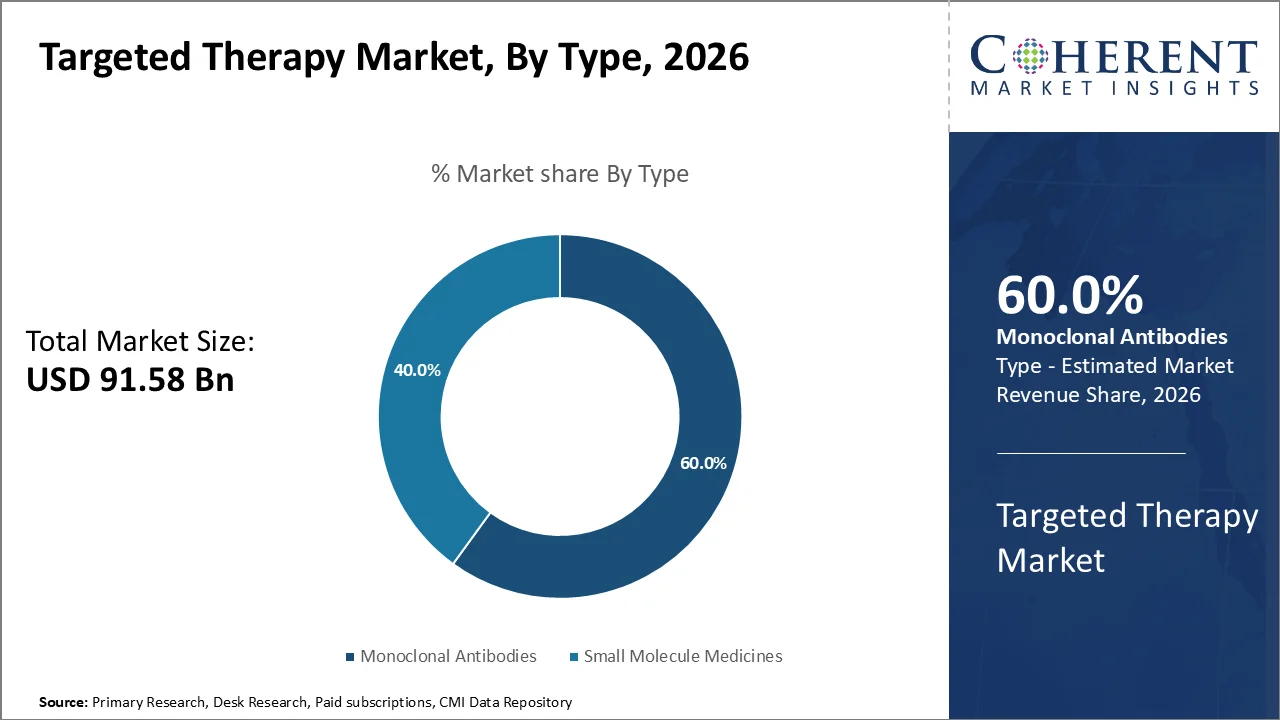
Why is Monoclonal Antibodies Acquiring the Largest Market Share?
Monoclonal antibodies is projected to account for the largest share of type in 2026, representing approximately 60% of the total volume. Owing to their specificity, efficacy, and expanding applications across a wide range of diseases, particularly in oncology and autoimmune disorders. Epidemiological studies have shown that the incidence (rate of new cases) of global autoimmune diseases has risen yearly by 19.1% with rheumatological diseases such as Sjögren’s and lupus rising 7.1% per year.
Monoclonal antibodies have revolutionized treatment modalities by enabling therapies that selectively target specific antigens expressed on the surface of diseased cells, hence improving treatment outcomes while minimizing off-target effects. For example, drugs including Rituximab, which targets CD20 on B-cells, have become a cornerstone therapy for various types of non-Hodgkin's lymphoma as well as chronic lymphocytic leukemia.
Similarly, Trastuzumab targets the HER2 receptor in certain breast cancers, majorly improving survival rates. These instances shows the clinical effectiveness that monoclonal antibodies provide in the management of complex as well as previously hard-to-treat diseases.
- Current Industry Events of 2026
- Market Size Estimation
- Regional Breakdown
- Competitive Landscape
- Customer Intelligence
- Segmental Analysis
- Pricing Analysis
- Key Market Drivers, Challenges & Future Trends
- Customized Insights Section
Breast Cancer holds the Largest Market Share
Based on application, breast cancer dominates the market, accounting for a significant 30% share in 2026. Breast cancer is one of the most commonly diagnosed cancers worldwide, particularly among women, which inherently drives a substantial demand for advanced treatment modalities that makes better patient outcomes. According to the National Breast Cancer Foundation, Inc, 1 in 8 women in the United States will be diagnosed with breast cancer in her lifetime. This year, approximately 382,640 women in the U.S. will be diagnosed with breast cancer including 321,910 with invasive breast cancer and 60,730 with non-invasive (in situ) breast cancer.
The introduction of targeted therapies including HER2 inhibitors (e.g., trastuzumab and pertuzumab) has changes treatment protocols, providing precision medicine approaches that specifically target cancer cells while minimizing harm to healthy tissues. Initiatives by organizations like the National Cancer Institute (NCI) as well as the Breast Cancer Research Foundation have largely accelerated research into molecular targets as well as biomarkers that enable early detection with personalized therapy.
For example, the success of therapies targeting the HER2 receptor as well as hormone receptor-positive breast cancer subtypes shows why this segment dominates the targeted therapy landscape. Moreover, ongoing clinical trials continually support expansion in approved indications as well as refinements in treatment regimens, which stimulate high adoption globally.
Hospital Pharmacies holds the Largest Market Share
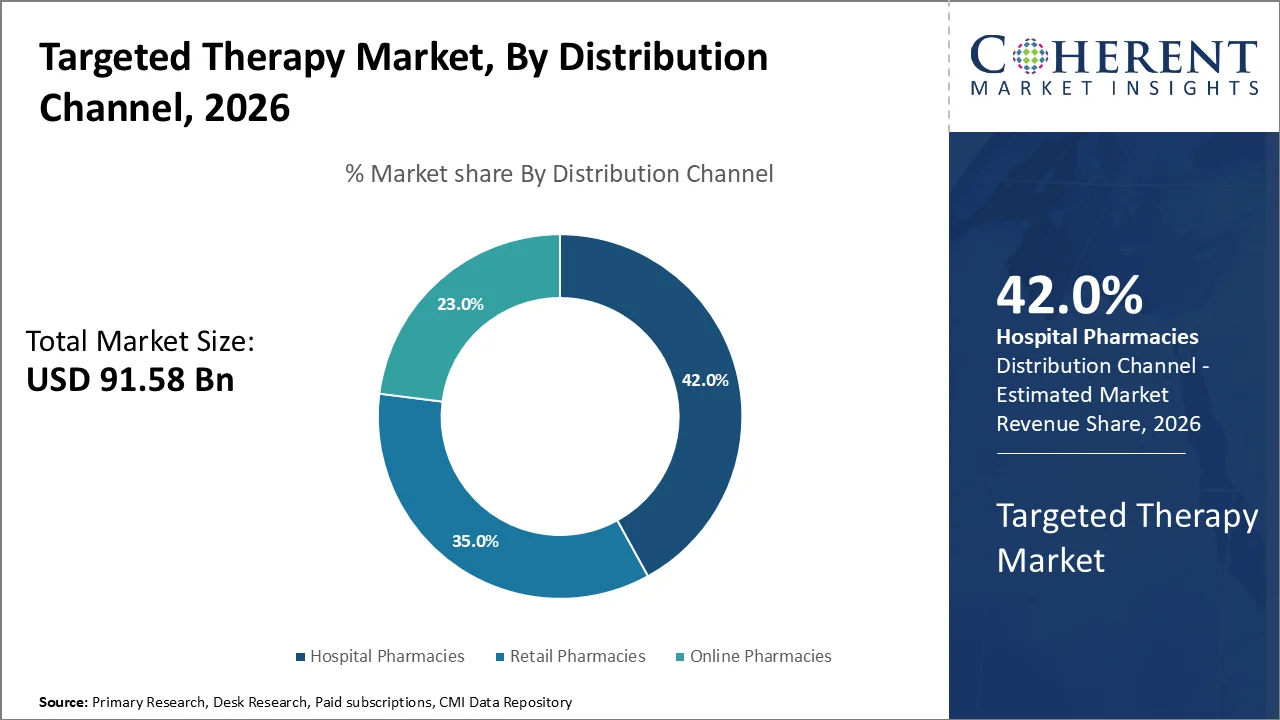
Based on distribution channel, hospital pharmacies dominate the market, accounting for a significant 42% share in 2026, their direct integration with healthcare providers, advanced infrastructure, as well as major role that they play in delivering specialized treatments are the growth inducing factors.
Targeted therapies, which often require precise administration and stringent storage conditions, are predominantly dispensed within hospital settings where oncologists and specialized medical teams oversee the entire treatment course.
This makes sure efficacy as well as safety, making hospital pharmacies the preferred distribution channel. For example, leading cancer treatment centers supported by government led health departments and nonprofit organizations such as the National Cancer Institute emphasize hospital dispensation for immunotherapies and personalized medicines, citing better patient monitoring and adherence to treatment protocols.
Market Drivers
Companion Diagnostics and Biomarker Technologies: A major breakthrough in Targeted Therapy
Companion diagnostics and biomarker technologies help doctors choose the right treatment for each patient. They do this by checking special “biomarkers” in the body, such as genes or proteins, which show whether a drug will work or not.
One key method is Next-Generation Sequencing (NGS), which studies many genes at once to find cancer changes. It helps doctors quickly select the best targeted therapy and can even reduce the need for invasive tissue biopsies. Another method is Immunohistochemistry (IHC) and FISH, which detect specific proteins or gene changes in cancer cells, such as HER2 in breast cancer, to guide treatment decisions.
Current Events and Their Impact on the Targeted Therapy Market
Current Event | Description and its Impact |
FDA acceleration of biosimilar approvals in oncology and autoimmune diseases (2025–2026 policy shift) |
|
Rapid rise in biosimilar approvals for key biologics in 2025–2026 (e.g., denosumab, pegfilgrastim, golimumab) |
|
Targeted Therapy Market Trends
- Increasing adoption of genomic profiling and biomarker testing is enabling more personalized treatment regimens, enhancing the efficacy of targeted therapies. 2 Among the surveyed adults who had heard the term (38%), only 2 in 10 believed they were very informed about personalized medicine.
- While oncology remains the dominant application, targeted therapy is progressively being explored for autoimmune disorders, neurological diseases, and rare genetic conditions. More than 70% of rare conditions are genetic in origin.
- Innovations including antibody-drug conjugates (ADCs), small molecule inhibitors, immune checkpoint inhibitors, etc., are reshaping therapeutic landscapes.
- Pharmaceutical companies are highly collaborating with biotech firms to accelerate drug discovery and improve pipeline diversity. Over the past decade, 32% of innovative drug approvals were sponsored by emerging biotech companies.
Regional Insights
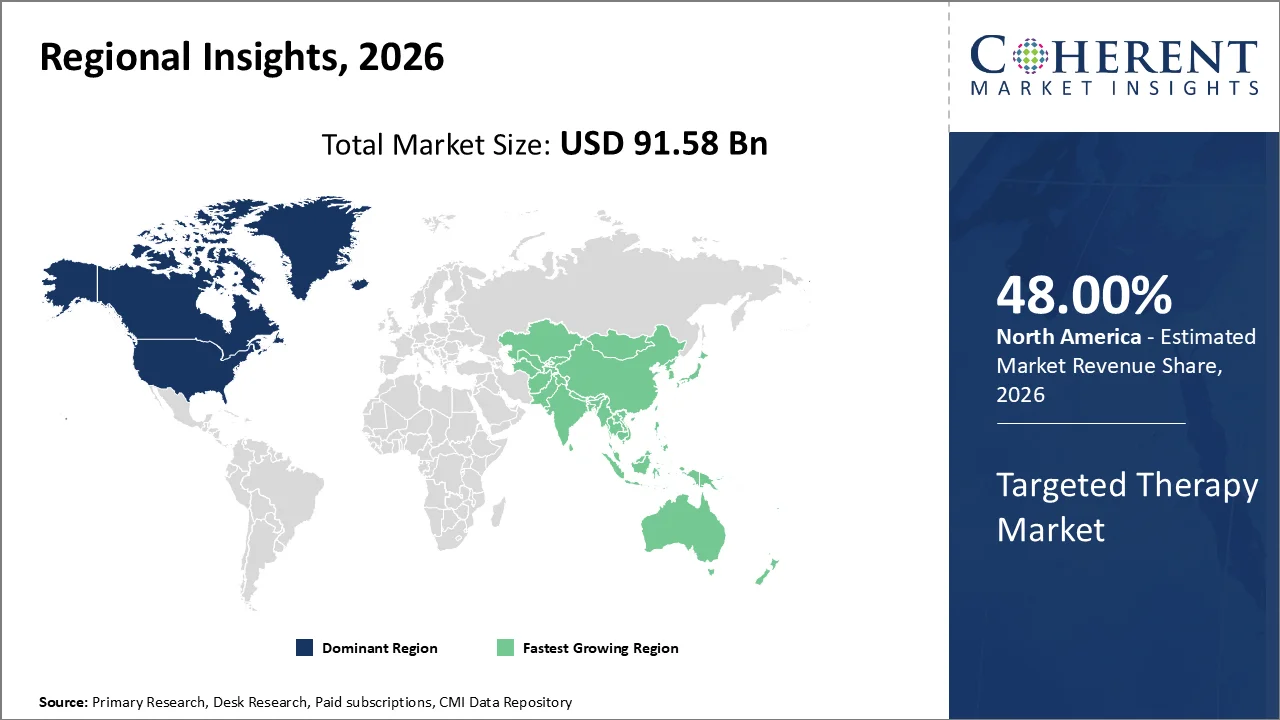
North America dominates owing to several established healthcare infrastructure facets
North America account 48% market share in 2026, owing to several established healthcare infrastructure facets, advanced research capabilities, and sustained policy support that drives innovation and adoption of cutting-edge therapeutics. The spending at net prices is forecast to grow 4.5 to 7.5% through 2030, while 6 to 9% at list prices.
The United States, Canada, and Mexico, individually and collectively, represent a highly mature healthcare ecosystem where targeted therapies particularly those focusing on oncology and rare diseases—are rapidly integrated into clinical practice.
For example, the National Cancer Institute (NCI), a part of the U.S. Department of Health and Human Services, continually funds large-scale genomic and molecular profiling programs that facilitate the identification of novel biomarkers, which underpin the development of personalized therapies.
Asia Pacific Targeted Therapy Market Trends
The Asia Pacific region is poised to be the fastest-growing region through 2026-2033, expanding at a CAGR of approximately 8.2%. The driving forces behind ascendancy of Asia Pacific as a leading segment stem primarily from demographic trends, increased healthcare expenditures by the government authorities, expanding oncology diagnosis rates, and rapid technological adoption. According to the Cancer Atlas, Southern, Eastern, and Southeast Asia collectively account for 49% of all new cancer cases globally, that's 9.2 million new diagnoses every single year.
Countries including China, India, Japan, South Korea, etc., have significantly advanced their healthcare systems, particularly related to cancer diagnostics. For example, China’s National Health Commission’s recent implementation of policies aimed at improving cancer care infrastructure, at the same time public-private partnerships collaborating to develop biosimilars and advanced targeted treatments, has substantially boosted therapy availability.
Additionally, high investments in biotechnology as well as pharma manufacturing in Asia Pacific economies have spurred local development and production of targeted therapies, reducing dependency on imports and accelerating delivery timelines. Notably, Japan maintains a pioneering role in drug innovation and regulatory expediency, further amplifying the region’s leadership.
Significant Investments in Biomedical Research is Accelerating the Targeted Therapy Market Demand in United States
The U.S. contributes the highest share in the targeted therapy market in the region owing to its advanced healthcare infrastructure, high investments in biomedical research, as well as robust pipeline of novel targeted therapy drugs.
The presence of numerous leading pharmaceutical companies, biotechnology firms, and research institutions, many headquartered in states like California and Massachusetts, has propelled the U.S. to the forefront of innovations in targeted therapies, particularly in oncology.
For example, the National Cancer Institute (NCI), under the U.S. National Institutes of Health (NIH), has played a pivotal role in funding clinical trials and translational research that support the development of next-generation targeted therapies.
For instance, in June 2026, AstraZeneca’s Truqap in combination with abiraterone and prednisone has been approved in the US as the first and only targeted treatment for adult patients with PTEN-deficient metastatic androgen pathway modulation-naïve or sensitive (mAPMN/S) prostate cancer, previously referred to as metastatic hormone-sensitive prostate cancer (mHSPC), as detected by a US Food and Drug Administration (FDA)-authorised test.
China Targeted Therapy Market Trends
The China subsegment contributes the highest share in the targeted therapy market in APAC owing to several interrelated factors that underscore its dominance. One of the most pivotal drivers is the significant investment by the country in oncology research and development, propelled by strong government support and public-private partnerships.
The Chinese government’s “Healthy China 2030” initiative prioritizes cancer treatment innovation as well as access to advanced therapies, which has led to substantial funding towards biopharmaceutical research specifically targeting cancer. For example, the National Cancer Center (NCC) of China reported a substantial surge in clinical trials related to targeted cancer therapies, making China one of the leading countries in Asia for oncology drug development and approvals.
Furthermore, the expanding aging population in China has escalated the incidence of cancer cases, increasing the demand for precise and effective targeted therapies. The presence of major domestic pharmaceutical companies such as BeiGene and Innovent Biologics, which focus heavily on developing novel targeted drugs and biosimilars, has further anchored China’s leadership in this market segment.
Who are the Major Companies in Targeted Therapy Industry
Some of the major key players in targeted therapy market include, Amgen Inc., GlaxoSmithKline plc, Sanofi, Takeda Pharmaceutical Company Limited, Merck & Co., Inc., Novartis AG, Pfizer Inc., F. Hoffmann-La Roche Ltd, AstraZeneca, Seagen Inc., Bayer AG, and Bristol Myers Squibb
Key News
- In January 2026, Revolution Medicines, Inc., a late-stage clinical oncology company developing targeted therapies for patients with RAS-addicted cancers, announced that the U.S. Food and Drug Administration (FDA) has granted Breakthrough Therapy Designation to zoldonrasib, a RAS(ON) G12D-selective inhibitor, for the treatment of adult patients with KRAS G12D-mutated locally advanced or metastatic NSCLC who have been previously treated with anti-PD-1/PD-L1 therapy and platinum-based chemotherapy.
- In January 2025, Cellectis, a clinical-stage biotechnology company using its pioneering gene editing platform to develop life-saving cell and gene therapies, outlined its strategic priorities and key catalysts expected for 2026.
Market Report Scope
Targeted Therapy Market Report Coverage
| Report Coverage | Details | ||
|---|---|---|---|
| Base Year: | 2025 | Market Size in 2026: | USD 91.58 Bn |
| Historical Data for: | 2020 To 2024 | Forecast Period: | 2026 To 2033 |
| Forecast Period 2026 to 2033 CAGR: | 6.87% | 2033 Value Projection: | USD 147.1 Bn |
| Geographies covered: |
| ||
| Segments covered: |
| ||
| Companies covered: | Amgen Inc., GlaxoSmithKline plc, Sanofi, Takeda Pharmaceutical Company Limited, Merck & Co., Inc., Novartis AG, Pfizer Inc., F. Hoffmann-La Roche Ltd, AstraZeneca, Seagen Inc., Bayer AG, and Bristol Myers Squibb | ||
| Growth Drivers: |
| ||
| Restraints & Challenges: |
| ||
Analyst Opinion
- The targeted therapy market is witnessing significant transformation driven by advancements in personalized medicine and molecular biology. By 2030, personalized medicine could make up 40% of new drugs.
- One of the primary drivers is the high prevalence of chronic diseases including cancer, autoimmune disorders, genetic conditions, etc., which necessitate more precise as well as effective treatment options. The prevalence of at least one chronic condition increased from 72.3% to 76.4%.
- Innovations in genomic profiling and biomarker identification have promote the development of therapies that specifically target disease pathways, hence improving patient outcomes and reducing adverse effects compared to conventional treatments.
- However, high development costs as well as stringent regulatory requirements remain key restraints, potentially slowing market entry for novel therapies.
- Moreover, the expanding adoption of companion diagnostics is helping with critical opportunities by enabling more precise patient selection as well as monitoring, which improve therapy effectiveness and market acceptance.
- The integration of artificial intelligence and machine learning in drug discovery and patient data analysis is set to further streamline targeted therapy development and commercialization processes.
Speak to the analyst
Want personalized insights?
Take the findings above to one of our principal consultants, or have the report rebuilt around the segments, geographies and competitors you actually track.
Market Segmentation
- By Type (Revenue, USD Bn, 2021-2033)
- Small Molecule Medicines
- Monoclonal Antibodies
- By Application (Revenue, USD Bn, 2021-2033)
- Breast Cancer
- Colorectal Cancer
- Leukemia
- Lung Cancer
- Lymphoma
- Renal Cancer
- Others
- By Distribution Channel (Revenue, USD Bn, 2021-2033)
- Hospital Pharmacies
- Retail Pharmacies
- Online Pharmacies
- By Region (Revenue, USD Bn, 2021-2033)
- North America
- U.S.
- Canada
- Latin America
- Brazil
- Mexico
- Argentina
- Rest of Latin America
- Europe
- Germany
- U.K.
- France
- Italy
- Spain
- Russia
- Rest of Europe
- Asia Pacific
- China
- India
- Japan
- Australia
- South Korea
- ASEAN
- Rest of Asia Pacific
- Middle East
- GCC
- Israel
- Rest of Middle East
- Africa
- South Africa
- Central Africa
- North Africa
- North America
Sources
Primary Research Interviews
- Oncologists
- Pharmaceutical Manufacturers
- Key Opinion Leaders (KOLs)
- Hospital Procurement Managers
- Others
Databases
- Evaluate Pharma
- GlobalData Healthcare
- Clarivate
- Bloomberg Terminal
- Others
Magazines
- Pharmaceutical Executive
- Oncology Times
- BioPharm International
- Genetic Engineering & Biotechnology News
- Others
Journals
- The Lancet Oncology
- Journal of Targeted Therapies in Cancer
- Cancer Research
- Molecular Cancer Therapeutics
- Others
Newspapers
- The Wall Street Journal (Health Section)
- The Economic Times (Healthcare)
- The New York Times (Science & Health)
- PharmaTimes
- Others
Associations
- American Society of Clinical Oncology (ASCO)
- European Society for Medical Oncology (ESMO)
- Biotechnology Innovation Organization (BIO)
- International Society for Targeted Therapy (ISTT)
- Others
Public Domain Sources
- World Health Organization (WHO)
- U.S. Food and Drug Administration (FDA)
- ClinicalTrials.gov
- Centers for Disease Control and Prevention (CDC)
- Others
Proprietary Elements
- CMI Data Analytics Tool
- Proprietary CMI Existing Repository of information for last 10 years
Get access to 250+ pages report
Every segment, forecast, competitor profile and data table behind the analysis above — available for instant download.
- ESOMAR Member
- ISO 9001:2015 Certified
- D-U-N-S Registered
- GDPR & CCPA Compliant
Missing comfort of reading report in your local language? Find your preferred language:
Transform your Strategy with Exclusive Trending Reports
Frequently Asked Questions
The targeted therapy market is expected to reach USD 147.1 Bn in 2033.
Major players operating in the global targeted therapy market include Amgen Inc., GlaxoSmithKline plc, Sanofi, Takeda Pharmaceutical Company Limited, Merck & Co., Inc., Novartis AG, Pfizer Inc., F. Hoffmann-La Roche Ltd, AstraZeneca, Seagen Inc., Bayer AG, and Bristol Myers Squibb
High cost of treatment and lack of skilled surgeons is expected to restrain the targeted therapy market growth over the forecast period.
Strong pipeline products are driving growth of the global targeted therapy market.
The targeted therapy market is anticipated to grow at a CAGR of 6.87% between 2026 and 2033.
Among regions, North America is expected to account for a largest market share in the global targeted therapy market over the forecast period.
Neither treatment is inherently better; the best choice depends entirely on your specific cancer's genetic makeup and stage. Targeted therapy is highly precise and often causes fewer side effects, but it only works if your tumor has specific genetic mutations.