

Prostate Cancer Therapeutics Market Size and Forecast: 2026-203 3
The Prostate Cancer Therapeutics Market is anticipated to grow at a CAGR of 8.1% with USD 22.2 Bn share in 2026 and is expected to reach USD 29.3 Bn in 2033. Rising prostate cancer cases, expanding aging populations, and greater awareness of early diagnosis are driving the prostate cancer therapeutics market. Healthcare companies are advancing targeted therapies, immunotherapy, and hormone treatments to improve patient outcomes. In 2026, prostate cancer is projected to account for 333,830 new cases and 36,320 deaths in the U.S., representing 15.8% of all new male cancer cases and remaining the most commonly diagnosed cancer among men.
Key Takeaways
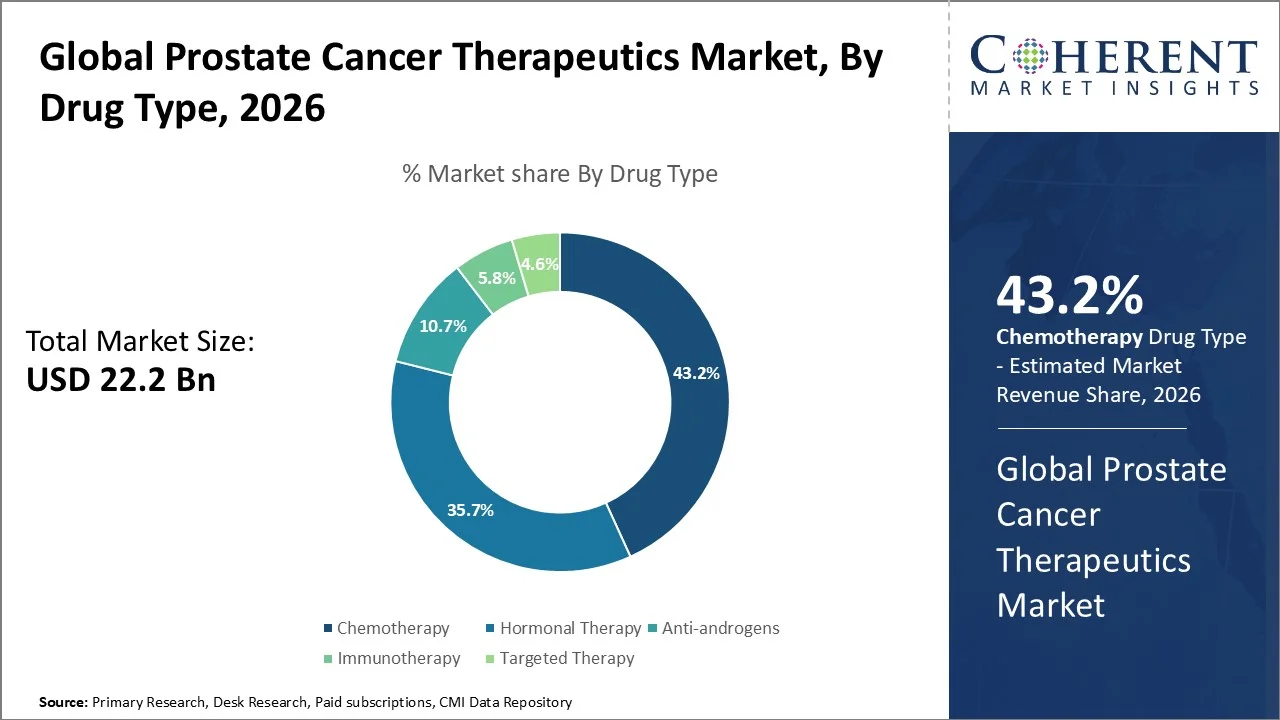
- Chemotherapy holds the largest market share of 43.2% in 2026 owing to its rising incidence of prostate cancer.
- Hospital Pharmacies expected to hold largest market share of 44.8% in 2026 owing to the administration of complex and injectable therapies.
- By Region, North America is expected to acquire the dominant share of 39.20% in 2026 owing to the advanced healthcare infrastructure. In 2025, approximately one in eight men (12.8%) in the U.S. is expected to be diagnosed with prostate cancer, totaling 313,780 new cases.
Current Events and Their Impact on the Prostate Cancer Therapeutics Market
Current Event | Description and its Impact |
FDA approves AKEEGA® (niraparib + abiraterone) for BRCA2‑mutated metastatic CSPC |
|
CMS issues permanent reimbursement codes for PSMA‑PET imaging & diagnostics |
|
Segmental Insights
- Current Industry Events of 2026
- Market Size Estimation
- Regional Breakdown
- Competitive Landscape
- Customer Intelligence
- Segmental Analysis
- Pricing Analysis
- Key Market Drivers, Challenges & Future Trends
- Customized Insights Section
Why is Chemotherapy Acquiring the Largest Market Share?
Chemotherapy holds the largest market share of 43.2% in 2026. The growing prevalence of advanced and metastatic prostate cancer continues to drive demand for chemotherapy in the prostate cancer therapeutics market. Healthcare providers increasingly combine chemotherapy with hormone therapy and targeted treatments to improve patient survival outcomes and enhance clinical adoption. Pharmaceutical companies are developing advanced taxane-based drugs, while expanding hospital oncology infrastructure supports wider treatment access. Rising demand for effective therapies for castration-resistant prostate cancer further accelerates market growth. Additionally, ongoing clinical trials and favorable reimbursement policies encourage the continued adoption of chemotherapy treatments. For instance, in March 2026, Cumberland Pharmaceuticals Inc. has launched a new Sancuso (granisetron transdermal system) website to give healthcare professionals and patients easier access to educational content, clinical information, and expert insights on preventing chemotherapy-induced nausea and vomiting (CINV).
Which Distribution Channel dominates the market?
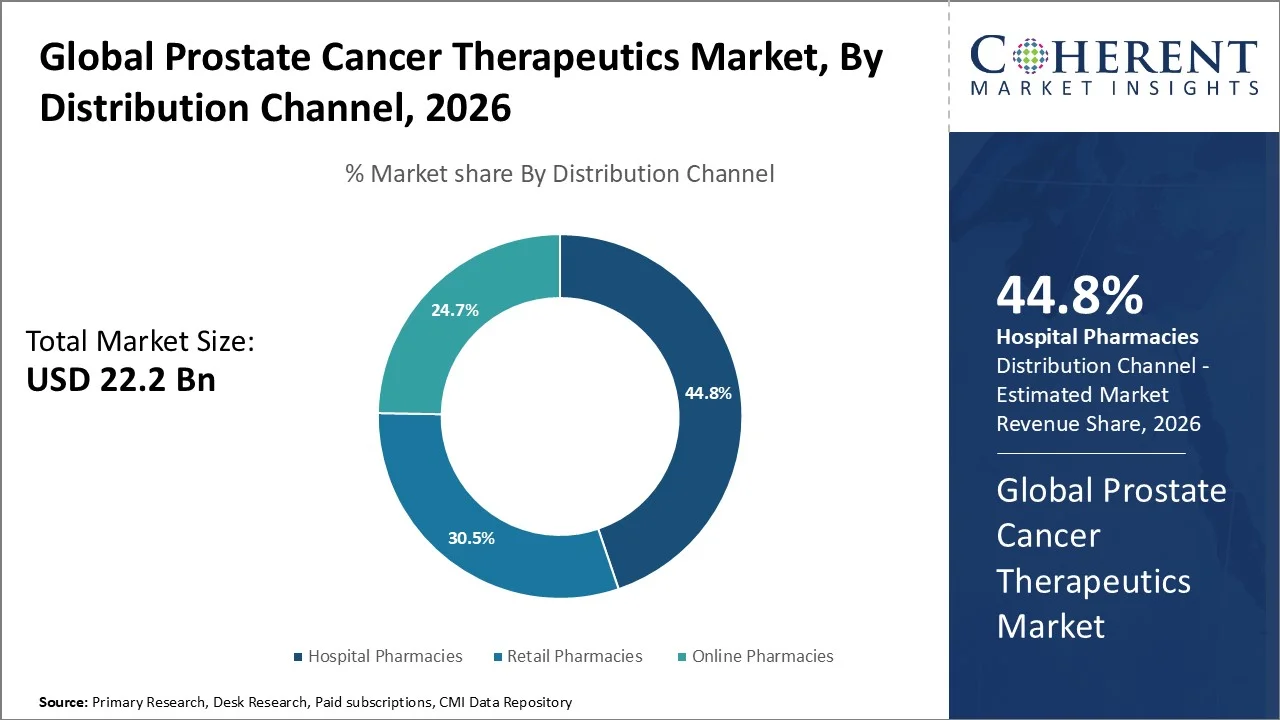 Hospital Pharmacies expected to hold largest market share of 44.8% in 2026 owing to the increase in clinical trials and early access programs. Hospital pharmacies significantly drive the prostate cancer therapeutics market by managing complex oncology treatments and handling specialized drug distribution. Healthcare providers increasingly rely on hospital pharmacies to administer chemotherapy, immunotherapy, radiopharmaceuticals, and targeted therapies that require clinical supervision and advanced storage capabilities. Rising prostate cancer patient admissions, expanding oncology departments, and better access to multidisciplinary cancer care continue to support segment growth. Additionally, healthcare systems are adopting precision medicine approaches, while favorable reimbursement policies and growing clinical trial activities further increase demand for hospital pharmacy services.
Prostate Cancer Therapeutics Market Trends
- Expanding clinical trials and research activities accelerate the development of novel immunotherapies, combination therapies, and next‑generation hormone treatments for advanced prostate cancer. The number of active Phase II–III prostate cancer clinical trials has increased by over 30% between 2023 and 2026, with more than 400 ongoing global studies evaluating novel immuno‑oncology and combination regimens.
- Growing demand for radioligand and PSMA‑targeted therapies expands due to their ability to deliver precise tumor targeting with reduced damage to healthy tissues. PSMA‑targeted therapies like Pluvicto are projected to achieve a 27% annual adoption growth rate by 2026, with radioligands representing ~18% of all advanced metastatic treatment shares in top five markets (U.S., EU5, Japan).
Regional Insights
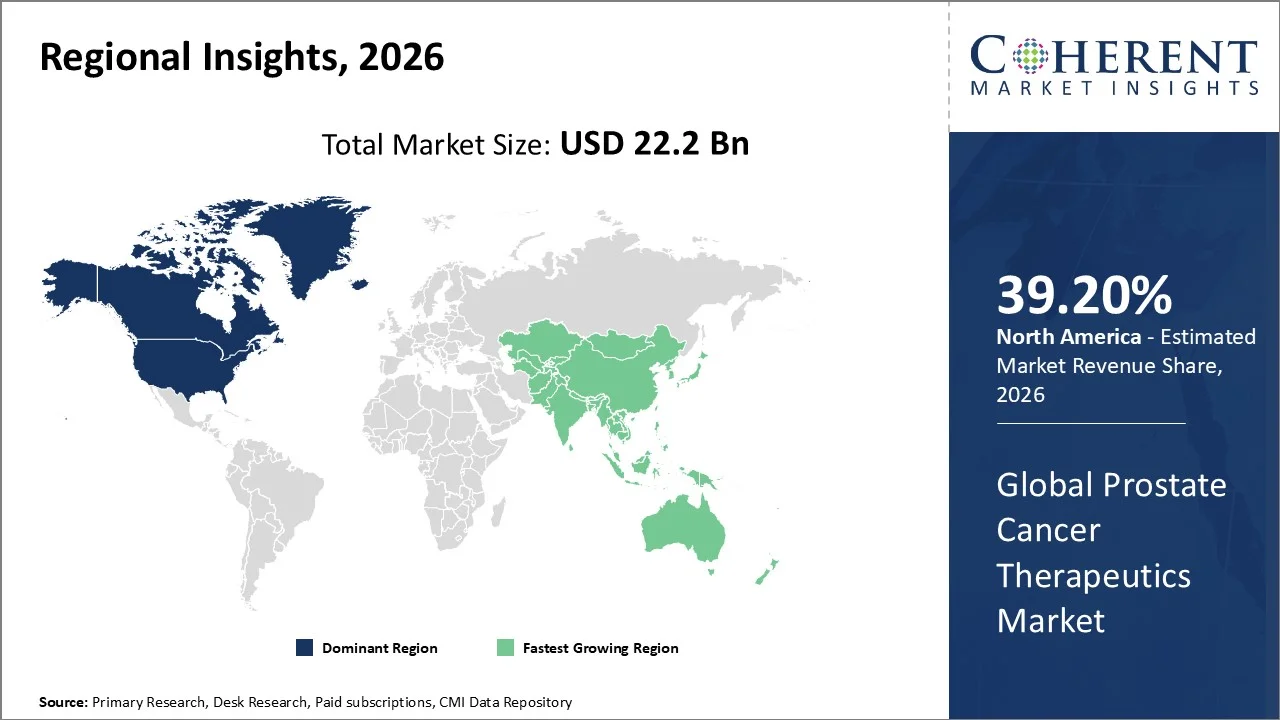
North America dominates owing to rapid adoption of innovative therapies
North America is expected to acquire the dominant share of 39.20% in 2026. North America drives the prostate cancer therapeutics market because it reports high disease prevalence and maintains advanced healthcare infrastructure. Healthcare providers across the region actively adopt innovative treatments, including hormone therapies, targeted therapies, immunotherapies, and radiopharmaceuticals, supported by rapid regulatory approvals. Pharmaceutical companies invest heavily in research and development, while extensive clinical trials accelerate drug innovation. Favorable reimbursement systems improve patient access to high-cost therapies, and rising awareness along with early screening programs further increase demand for advanced prostate cancer treatments across the region. For instance, Candel Therapeutics has partnered with EVERSANA through a commercialization agreement to prepare for a potential U.S. launch of aglatimagene besadenovec (CAN-2409) for treating intermediate- to high-risk localized prostate cancer.
Asia Pacific Prostate Cancer Therapeutics Market Trends
Rising awareness, an aging male population, and improved healthcare infrastructure are driving steady growth in the Asia Pacific prostate cancer therapeutics market. India’s elderly population aged 60 years and above is expanding rapidly, rising from 104 million in 2011 and projected to reach 173 million by 2026. Healthcare providers increasingly adopt advanced hormonal therapies, targeted drugs, and immunotherapy, reshaping treatment patterns. Expanding diagnostic capabilities and early screening programs support timely intervention. Pharmaceutical companies invest in innovative pipelines and personalized medicine approaches. Government initiatives and hospital expansion enhance access to modern treatments across emerging and developed economies in the Asia Pacific region and beyond. For instance, in January 2026, Ruby Hall Clinic launched India’s first robotic High-Intensity Focused Ultrasound (HIFU) therapy for prostate cancer and will offer the non-invasive treatment at its newly inaugurated Kalyani Institute of Robotic HIFU Therapy.
United States Prostate Cancer Therapeutics Market Trends
Rising prostate cancer incidence, growing awareness, and continuous advancements in treatment options drive strong growth in the United States prostate cancer therapeutics market. Healthcare providers increasingly adopt hormonal therapies, targeted therapies, immunotherapy, and precision medicine approaches. Improved diagnostic technologies and early detection methods support timely treatment decisions. Pharmaceutical companies expand research pipelines and introduce novel drug candidates. Supportive regulatory approvals and healthcare infrastructure development strengthen market expansion across oncology care settings and hospitals nationwide. For instance, Celltrion USA has launched STOBOCLO (denosumab-bmwo) in the U.S. as a biosimilar to PROLIA and XGEVA, offering a 60 mg/mL injection approved for treating and preventing osteoporosis and bone loss in high-risk patients, including men with nonmetastatic prostate cancer receiving androgen deprivation therapy.
China Prostate Cancer Therapeutics Market Trends
China’s prostate cancer therapeutics market continues to expand steadily as awareness of the disease increases, screening practices improve, and the male population ages. Hormonal therapy still leads as the primary treatment option, while clinicians increasingly adopt newer approaches such as immunotherapy, targeted therapies, and radioligand treatments. Pharmaceutical companies and global partners actively drive drug innovation and clinical research. At the same time, healthcare systems strengthen hospital infrastructure and oncology services, improving patient access to advanced treatments across urban and regional centers.
Who are the Major Companies in Prostate Cancer Therapeutics Industry
Some of the major key players in Prostate Cancer Therapeutics are Johnson & Johnson, Astella, Inc, Sanofi-Aventis, Bayer AG, AstraZeneca Plc, Pfizer Inc., Dendreon Corporation (Sanpower Group Co. Ltd.), Ipsen Group, Tolmar Inc, Endo Pharmaceuticals, AbbVie, Inc.
Key News
- In March 2026, Prostate Cancer Foundation has launched the Hastens-PCF Global Health Award to promote equitable prostate cancer detection, diagnosis, and treatment in emerging countries and to support the expansion of the STAMPEDE2 clinical trial for advanced prostate cancer in Nigeria.
Market Report Scope
Prostate Cancer Therapeutics Market Report Coverage
| Report Coverage | Details | ||
|---|---|---|---|
| Base Year: | 2025 | Market Size in 2026: | USD 22.2 Bn |
| Historical Data for: | 2020 To 2024 | Forecast Period: | 2026 To 2033 |
| Forecast Period 2026 to 2033 CAGR: | 8.1% | 2033 Value Projection: | USD 29.3 Bn |
| Geographies covered: |
| ||
| Segments covered: |
| ||
| Companies covered: | Johnson & Johnson, Astella, Inc, Sanofi-Aventis, Bayer AG, AstraZeneca Plc, Pfizer Inc., Dendreon Corporation (Sanpower Group Co. Ltd.), Ipsen Group, Tolmar Inc, Endo Pharmaceuticals, AbbVie, Inc. | ||
Analyst Opinion
- Prostate cancer therapeutics demand is structurally driven, not cyclical, with an estimated 1.5 million new prostate cancer cases diagnosed globally each year, making it one of the most frequently diagnosed malignancies in men. In major aging populations like China, incidence is accelerating as PSA screening adoption expands and late-stage detection remains common, reinforcing continuous treatment need rather than episodic demand.
- Androgen deprivation therapy (ADT) continues to anchor treatment paradigms, used in a large majority of advanced prostate cancer cases, particularly in metastatic settings where testosterone suppression remains the clinical backbone. However, real-world oncology practice shows increasing sequential use of next-generation hormonal agents such as abiraterone and enzalutamide, especially in patients who progress after first-line ADT, extending treatment duration per patient.
- Clinical outcomes data are actively reshaping prescribing behavior. Trials such as the LATITUDE and ARCHES studies demonstrated significant survival improvements when next-generation hormonal agents are added early in the disease course, with median overall survival benefits extending beyond standard ADT alone. This evidence is accelerating physician preference toward combination and earlier-line intensified regimens.
- Radioligand therapy is emerging as a disruptive shift in late-line management, with therapies like Lu-177–PSMA-617 (Pluvicto) showing meaningful survival extension in metastatic castration-resistant prostate cancer, including delayed disease progression in heavily pretreated patients. As real-world access expands, especially in tertiary oncology centers, these precision therapies are expected to redefine treatment sequencing and raise clinical adoption standards globally.
Speak to the analyst
Want personalized insights?
Take the findings above to one of our principal consultants, or have the report rebuilt around the segments, geographies and competitors you actually track.
Market Segmentation
- By Drug Type (Revenue, USD Bn, 2021-2033)
- Hormonal Therapy
- Anti-androgens
- Immunotherapy
- Targeted Therapy
- Chemotherapy
- By Distribution Channel (Revenue, USD Bn, 2021-2033)
- Hospital Pharmacies
- Retail Pharmacies
- Online Pharmacies
- By Region
- North America
- U.S.
- Canada
- Latin America
- Brazil
- Mexico
- Argentina
- Rest of Latin America
- Europe
- Germany
- U.K.
- France
- Italy
- Spain
- Russia
- Rest of Europe
- Asia Pacific
- China
- India
- Japan
- Australia
- South Korea
- ASEAN
- Rest of Asia Pacific
- Middle East
- GCC
- Israel
- Rest of Middle East
- Africa
- South Africa
- Central Africa
- North Africa
- North America
- Key Players
- Johnson & Johnson
- Astella, Inc
- Sanofi-Aventis
- Bayer AG
- AstraZeneca Plc
- Pfizer Inc.
- Dendreon Corporation (Sanpower Group Co. Ltd.)
- Ipsen Group
- Tolmar Inc
- Endo Pharmaceuticals
- AbbVie, Inc.
Sources
Primary Research Interviews
- Oncologists specializing in urology and medical oncology
- Hospital procurement managers and clinical decision-makers
- Pharmaceutical R&D scientists involved in oncology drug development
- Key opinion leaders (KOLs) in prostate cancer treatment
- Oncology nurses and clinical pharmacists involved in therapy administration
Databases
- National cancer registries and epidemiology databases
- Clinical trial registries (global oncology studies)
- Drug regulatory approval databases
- Biomedical and life sciences literature databases
- Hospital and insurance claims databases (aggregated datasets)
Magazines
- Oncology-focused medical magazines
- Pharmaceutical industry publications
- Clinical practice and healthcare management magazines
- Life sciences innovation magazines
- Healthcare technology magazines
Journals
- Peer-reviewed oncology journals
- Urology and genitourinary cancer research journals
- Clinical pharmacology journals
- Immunotherapy and targeted therapy journals
- Cancer epidemiology and biomarker research journals
Newspapers
- Leading national business newspapers covering healthcare developments
- Financial newspapers reporting pharmaceutical launches and approvals
- Health and science sections of mainstream newspapers
- International medical news coverage outlets
Associations
- Urology and oncology professional associations
- Cancer research and advocacy organizations
- Clinical oncology societies
- Pharmaceutical industry associations
- Patient support and awareness organizations focused on prostate cancer
Public Domain Sources
- Government health ministry publications and cancer control programs
- WHO cancer-related reports and datasets
- FDA / EMA public drug approval announcements
- National health statistics portals
- Open-access clinical trial summaries
Proprietary Elements
- CMI Data Analytics Tool
- Proprietary CMI Existing Repository of information for last 10 years
Get access to 250+ pages report
Every segment, forecast, competitor profile and data table behind the analysis above — available for instant download.
- ESOMAR Member
- ISO 9001:2015 Certified
- D-U-N-S Registered
- GDPR & CCPA Compliant
Missing comfort of reading report in your local language? Find your preferred language:
Transform your Strategy with Exclusive Trending Reports
Frequently Asked Questions
The Prostate Cancer Therapeutics Market is anticipated to grow at a CAGR of 8.1% with USD 22.2 Bn share in 2026 and is expected to reach USD 29.3 Bn in 2033.
Major players operating in the global prostate cancer therapeutics market include Johnson & Johnson, Astella, Inc, Sanofi-Aventis, Bayer AG, AstraZeneca Plc, Pfizer Inc., Dendreon Corporation (Sanpower Group Co. Ltd.), Ipsen Group, Tolmar Inc, Endo Pharmaceuticals, and AbbVie, Inc.
High cost associated with drugs and poor reimbursement of treatment cost are some of the major factors that are expected to hamper growth of the market over the forecast period.
Increasing prevalence of prostate cancer and robust development of biosimilars by manufacturers to ensure affordable treatment to the patients are some of the major factors that are expected to propel growth of the market over the forecast period
The global prostate cancer therapeutics market is estimated to exhibit a CAGR of 8.1% over the forecast period.