

HIV-Associated Lipodystrophy Treatment Market Size and Share Analysis - 2026 To 2033
The HIV-Associated Lipodystrophy Treatment Market size is anticipated to grow at a CAGR of 4.0%, from USD 199.2 Mn in 2026 to approximately USD 263.0 Mn by 2033. The market growth is primarily driven by the increasing number of people receiving long-term antiretroviral therapy, rising awareness regarding HIV-associated fat redistribution disorders, growing demand for pharmacological treatments such as tesamorelin, and increasing adoption of cosmetic and reconstructive procedures for managing facial lipoatrophy and abnormal fat accumulation. Improvements in HIV survival rates, greater emphasis on patients’ quality of life, and expanding access to specialized HIV care are also expected to support market growth during the forecast period. According to UNAIDS, approximately 40.8 Mn people were living with HIV globally in 2024, of whom 31.6 Mn were accessing antiretroviral therapy, compared with only 7.7 Mn in 2010.
Key Takeaways
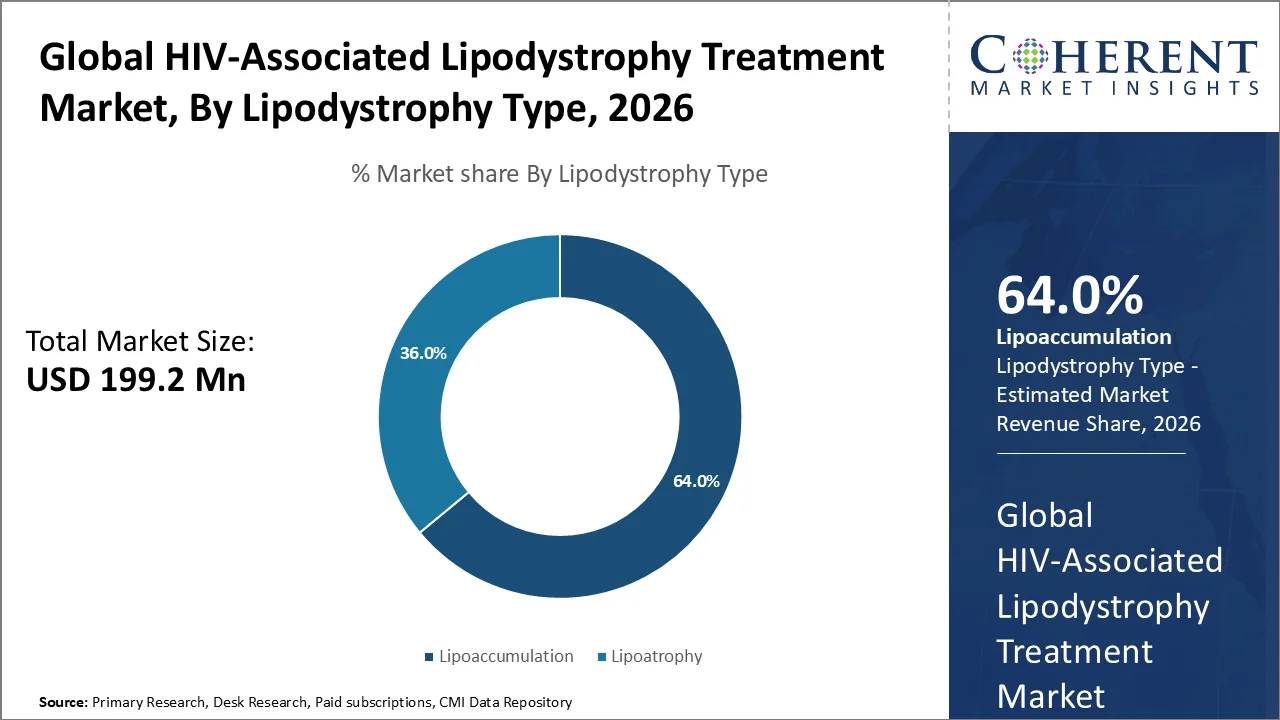
- The lipoaccumulation segment is likely to dominate the HIV-associated lipodystrophy treatment market with approximately 64.0% share in 2026. The segment’s dominance is attributed to the continued occurrence of excess visceral and central abdominal fat among people receiving modern antiretroviral therapy, its association with insulin resistance and cardiovascular risk, and the availability of a specifically approved pharmacological treatment for abdominal fat reduction. A recent multicentre VAMOS study involving 170 virally suppressed people with HIV reported that 58% had excess visceral abdominal fat, while the median visceral fat area was 148 cm².
- The anabolism modulators segment is expected to dominate the therapeutic-class category with approximately 57.5% share in 2026. Growth hormone and growth hormone-releasing factor analogues are expected to account for the majority of this segment, primarily owing to the established use of tesamorelin for reducing excess abdominal fat in adults with HIV-associated lipodystrophy. In March 2025, the U.S. FDA approved EGRIFTA WR, a new tesamorelin formulation specifically indicated for this patient population.
- The retail pharmacies market, which includes retail specialty pharmacies, is projected to dominate the distribution channel market with a share of about 52.0% in 2026. The dominance in the segment is due to the fact that HIV-related lipodystrophy is treated as an outpatient condition, repeat prescriptions, administration of injectable tesamorelin at home, and the dispensation of metabolic drugs such as metformin via retail pharmacies. In September 2025, Theratechnologies reported that specialty pharmacies have started purchasing EGRIFTA WR for patients.
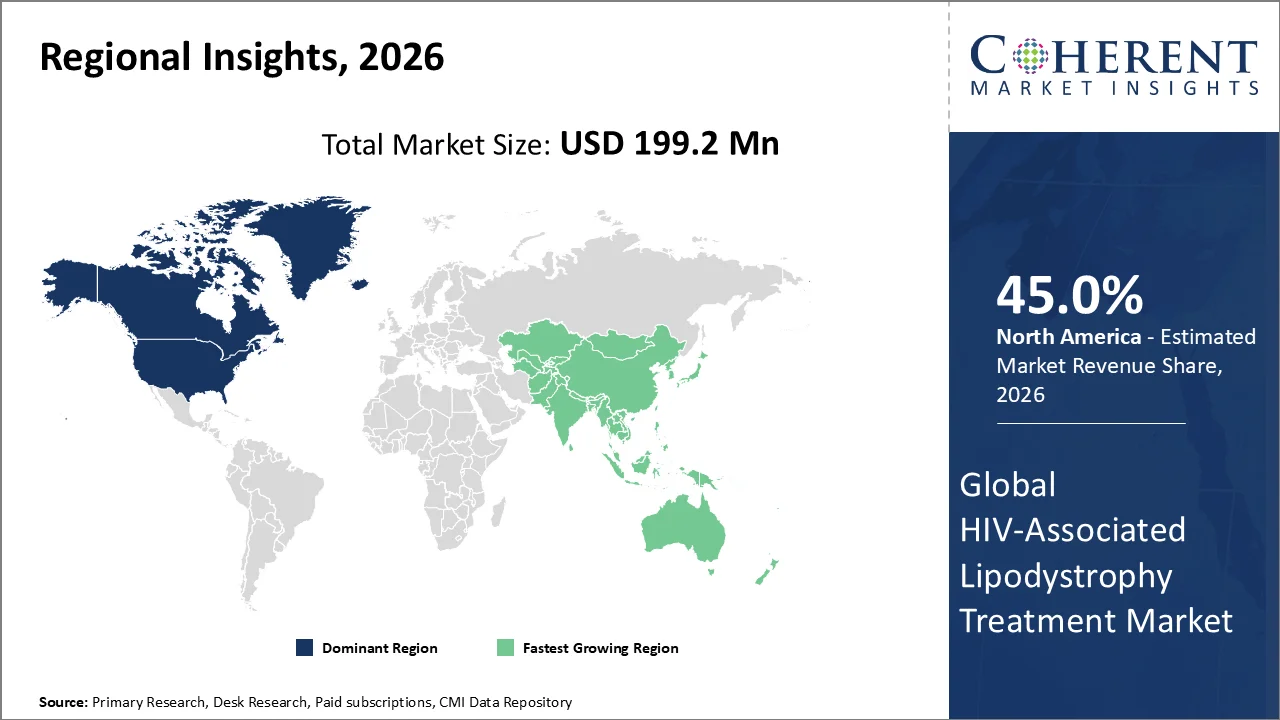
- North America is anticipated to dominate the global HIV-associated lipodystrophy treatment market with approximately 45.0% share in 2026. The region’s dominance is attributed to its large diagnosed and ageing HIV population, high access to specialist HIV care, greater treatment affordability, established reimbursement for specialty medicines, and the U.S. availability of tesamorelin. According to the CDC, 1,158,701 people were living with diagnosed HIV in the United States at the end of 2024, including 300,819 people aged 55–64 years, while viral suppression among people with HIV increased to 69%.
Market Drivers
ART-Related Weight and Body-Composition Changes are Increasing Treatment Demand
The rising incidence of weight gain, central adiposity, insulin resistance, and other changes in body composition seen as a result of antiretroviral therapy has created a need for HIV-related lipodystrophy diagnosis and management. Individuals suffering from excessive fat deposition in their abdomen might need treatment with pharmacotherapy, metabolic assessment, dietary modification, or surgery.
A 2024 study of 2,624 patients starting antiretroviral drugs by the AIDS Clinical Trials Group found an average increase of 3.6 kg weight in the first 48 weeks. In the follow-up, 130 subjects got diabetes, 360 had metabolic syndromes, and 424 had a cardiometabolic condition.
Growing Cardiometabolic Burden is Strengthening the Need for Early Intervention
HIV-induced fat redistribution is now gaining attention as an aspect of cardiometabolic risk management and not just a cosmetic issue. Visceral adiposity may be accompanied by dyslipidemia, glucose intolerance, high blood pressure, and insulin resistance, thus prompting clinicians to test patients for such conditions more often.
A study conducted in March 2025, which was done prospectively on a group of 449 HIV-infected individuals before initiating their ARTs, revealed that 16.9% of them were suffering from metabolic syndrome. Of them, 49.8% had low levels of HDL cholesterol, 26.1% had high triglyceride levels, 23.1%
Current Events and Their Impact on the HIV-Associated Lipodystrophy Treatment Market
Current Event | Description and its Impact |
U.S. HHS/NIH Expands HIV Guidelines to Cover Cardiovascular and Metabolic Complications (September 2025) |
|
CMS Implements Medicare Part D Out-of-Pocket Cap and Prescription Payment Plan (January–May 2025) |
|
- Current Industry Events of 2026
- Market Size Estimation
- Regional Breakdown
- Competitive Landscape
- Customer Intelligence
- Segmental Analysis
- Pricing Analysis
- Key Market Drivers, Challenges & Future Trends
- Customized Insights Section
Segmental Insights
Why is Lipoaccumulation Acquiring the Largest Share?
On the basis of lipodystrophy type, the lipoaccumulation category is expected to hold the leading position in terms of the HIV-associated lipodystrophy treatment market share, estimated at about 64.0% in 2026. The leadership of the segment is explained by the fact that visceral and central abdominal fat keeps accumulating in those patients who have been taking anti-retroviral therapy for a prolonged period of time.
According to research conducted on the usage of anthropometric measurements and published in the journal AIDS in June 2026, the number of HIV patients with obesity rose from 45%, using the traditional definition, to 78% based on the new definition.
In March 2025, Theratechnologies presented new findings from the Visceral Adiposity Measurement and Observation Study (VAMOS) at the 2025 Conference on Retroviruses and Opportunistic Infections.
Why are Anabolism Modulators Acquiring the Largest Share?
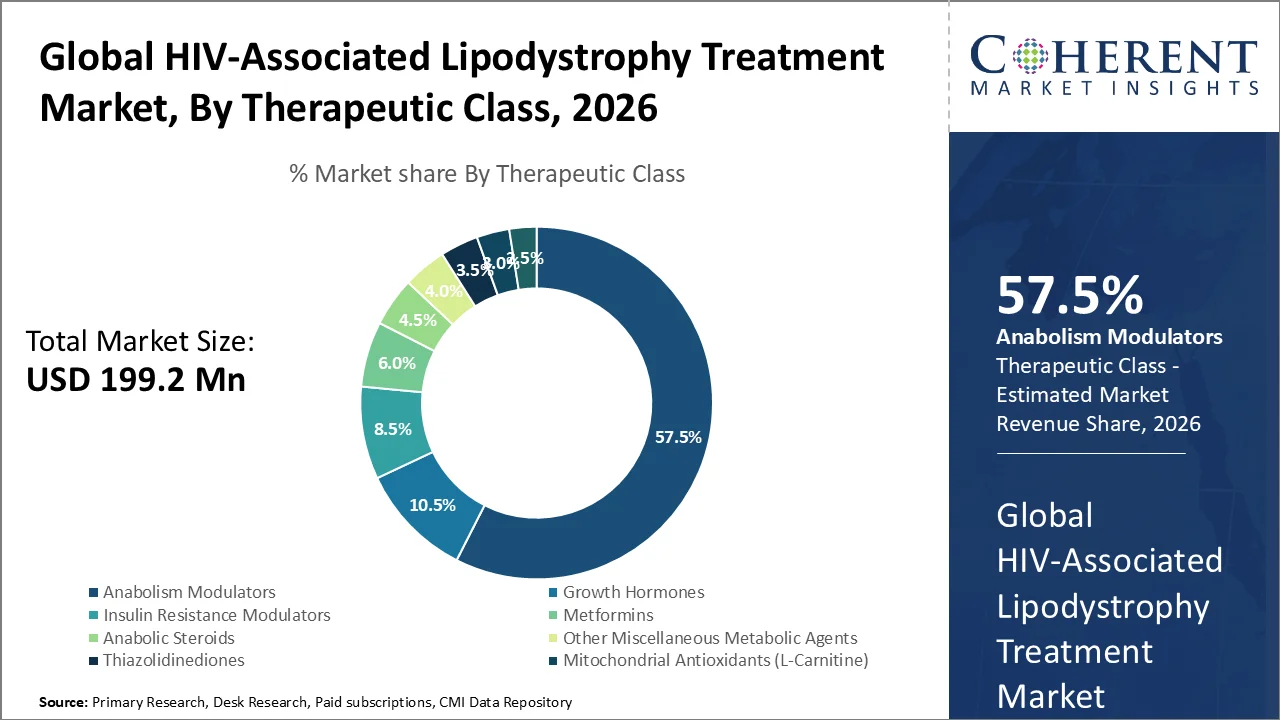
Based on therapeutic type, the anabolism regulators segment is forecast to account for the largest share of HIV lipodystrophy treatment market valued at around 57.5% in 2026. This market segment can be attributed to growth hormone releasing factor agonists, especially Tesamorelin, because of their selective effect on excessive fat deposition in abdomen and lack of directly competing drugs in market.
In July 2025, Theratechnologies announced its highest-ever number of patients being enrolled in its EGRIFTA line, reflecting its ongoing popularity of prescribing treatments involving growth hormone-releasing factor. Although there was a temporary shortage of the product, the average selling price of EGRIFTA SV rose by around 5.0% in the second quarter of fiscal 2025. The firm indicated that there was solid demand for EGRIFTA WR and EGRIFTA SV sales.
Why are Retail and Specialty Pharmacies Acquiring the Largest Share?
On the basis of distribution channel, the retail pharmacies segment, including retail specialty pharmacies, is anticipated to account for the largest market share of approximately 52.0% in 2026. The segment’s growth is attributable to the outpatient nature of HIV-associated lipodystrophy treatment, home administration of injectable therapies, recurring prescription fulfilment, insurance verification, prior-authorization support, and direct medicine delivery through specialty-pharmacy networks.
The concentration of specialty-drug fulfilment among major pharmacy benefit managers further supports the segment. The three largest U.S. pharmacy benefit managers, CVS Caremark, Optum Rx, and Express Scripts, collectively control approximately 70% of specialty-drug prescriptions in the United States. This concentrated pharmacy infrastructure allows manufacturers and healthcare providers to manage reimbursement, patient onboarding, refill coordination, and distribution of high-cost medicines through established specialty-retail networks.
In February 2025, Theratechnologies resumed the U.S. distribution of EGRIFTA SV (tesamorelin) after receiving authorization from the U.S. FDA to release two newly manufactured batches, representing up to six months of patient supply. The product was made available for immediate shipment to network pharmacies.
HIV-Associated Lipodystrophy Treatment Market Trends
- The landscape for treatment modalities is gradually moving away from the management of classical peripheral lipoatrophy to central adiposity and weight gain. According to a study conducted in 2026 involving 499 treatment-naïve individuals with HIV, the group of patients on bictegravir/emtricitabine/tenofovir alafenamide gained 1.10 kg/m² of body mass index in 48 weeks while the one on dolutegravir/lamivudine gained 0.71 kg. This trend is increasing demand for abdominal-fat reduction, weight-management, and insulin-resistance treatments.
- GLP-1 receptor agonists are emerging as potential adjunctive treatments for HIV-associated lipohypertrophy and excess visceral fat. The updated U.S. HIV clinical guidelines cite a randomized trial involving 108 people with HIV-associated lipohypertrophy, in which once-weekly semaglutide produced an estimated 10.4% weight reduction, together with significant decreases in total body fat, abdominal fat, and visceral adipose tissue. This is broadening the potential treatment landscape beyond tesamorelin and conventional insulin-resistance modulators.
- Clinical research is expanding treatment objectives beyond visible fat reduction toward inflammation, cognitive health, and biological ageing. A separate 2026 analysis of 84 adults with HIV-associated lipohypertrophy reported reductions across several epigenetic ageing measures after 32 weeks of semaglutide treatment. These developments may encourage wider evaluation of metabolic therapies based on systemic health benefits rather than body-composition outcomes alone.
Regional Insights
North America Dominates Owing to High Treatment Access and Specialty-Care Infrastructure
North America is anticipated to account for approximately 45.0% of the global HIV-associated lipodystrophy treatment market in 2026. The region’s dominance is attributed to its well-established HIV-care infrastructure, high utilization of antiretroviral therapy, access to metabolic and endocrinology specialists, comparatively strong reimbursement coverage, and established availability of targeted specialty treatments for HIV-associated abdominal-fat accumulation.
The U.S. CDC reported 38,793 HIV diagnoses in 2024, demonstrating the continued addition of patients requiring long-term antiretroviral treatment and monitoring for metabolic and body-composition complications. The U.S. South alone accounted for 51% of new diagnoses, supporting sustained demand across major treatment centres and specialty-pharmacy networks.
In September 2025, Michigan-based Future Pak, LLC, through its affiliate CB Biotechnology, completed the acquisition of Theratechnologies, the developer and commercializer of the EGRIFTA tesamorelin franchise for HIV-associated lipodystrophy.
Asia Pacific HIV-Associated Lipodystrophy Treatment Market Trends
Asia Pacific is anticipated to witness the fastest growth in the HIV-associated lipodystrophy treatment market during 2026–2033. Regional growth is expected to be driven by the large HIV patient population, continued expansion of antiretroviral-treatment coverage, increasing survival among treated patients, transition toward long-term chronic HIV management, and rising recognition of ART-associated weight gain and metabolic complications.
According to UNAIDS, an estimated 6.9 million people had HIV in the Asia Pacific region in 2024, where 69% of these individuals were on antiretroviral therapy. Additionally, there were an estimated 300,000 new cases of HIV in the Asia Pacific region in 2024, which implies that there is a need for continued initiation and monitoring of patients on antiretroviral therapy. The coverage of antiretrovirals is above 90% in Cambodia but still under 50% in some countries.
In April 2025, Galderma announced the commercial launch of Sculptra, its poly-L-lactic acid regenerative biostimulator, in China following approval from the National Medical Products Administration.
Comprehensive HIV-Care Coverage and an Ageing Treated Population are Supporting the U.S. Market
The U.S. HIV-Associated Lipodystrophy Treatment Market is expected to maintain a leading position owing to its extensive HIV-care infrastructure, strong public reimbursement and medication-support programs, availability of specialist metabolic care, and growing emphasis on managing chronic complications among people receiving long-term antiretroviral therapy.
In December 2025, the U.S. Health Resources and Services Administration reported that the Ryan White HIV/AIDS Program served 601,853 people in 2024, representing more than 50% of people with diagnosed HIV in the country. Approximately 91.4% of patients receiving medical care through the program achieved viral suppression, while 47.4% of clients were aged 50 years or older.
China HIV-Associated Lipodystrophy Treatment Market Trends
China is expected to witness strong growth in the HIV-Associated Lipodystrophy Treatment Market over the forecast period. The growth is attributed to expanding antiretroviral-treatment coverage, rapid ART initiation, improving viral suppression, increasing use of modern treatment regimens, and the gradual transition of HIV care from acute infection management toward long-term metabolic and ageing-related care.
China’s national HIV/AIDS Prevention and Control Plan for 2024–2030, announced in December 2024, established targets for more than 95% of diagnosed people with HIV to receive antiretroviral treatment and more than 95% of treated patients to achieve viral suppression. These treatment targets are intended to be maintained and further improved through 2030, creating a larger population receiving continuous, long-duration ART.
Who are the Major Companies in HIV-Associated Lipodystrophy Treatment Industry
Some of the major key players in HIV-Associated Lipodystrophy Treatment Market are Theratechnologies Inc., GlaxoSmithKline plc, Novelion Therapeutics Inc., AstraZeneca plc, AbbVie Inc., and Bristol-Myers Squibb.
Key News
- In July 2026, GSK’s specialist HIV company, ViiV Healthcare, announced new clinical and real-world findings for Cabenuva, its long-acting cabotegravir and rilpivirine treatment.
- In June 2026, AstraZeneca announced that its oral GLP-1 receptor agonist elecoglipron would advance into Phase III development. In the VISTA Phase IIb trial, the therapy produced up to 11.8% weight reduction at 36 weeks, while the SOLSTICE trial reported an HbA1c reduction of up to 1.9 percentage points among adults with type 2 diabetes.
Market Report Scope
HIV-Associated Lipodystrophy Treatment Market Report Coverage
| Report Coverage | Details | ||
|---|---|---|---|
| Base Year: | 2025 | Market Size in 2026: | USD 199.2 Mn |
| Historical Data for: | 2020 To 2024 | Forecast Period: | 2026 To 2033 |
| Forecast Period 2026 to 2033 CAGR: | 4.0% | 2033 Value Projection: | USD 263.0 Mn |
| Geographies covered: |
| ||
| Segments covered: |
| ||
| Companies covered: | Theratechnologies Inc., GlaxoSmithKline plc, Novelion Therapeutics Inc., AstraZeneca plc, AbbVie Inc., and Bristol-Myers Squibb. | ||
| Growth Drivers: |
| ||
| Restraints & Challenges: |
| ||
Analyst Opinion
- The HIV-associated lipodystrophy treatment market is evolving from a predominantly appearance-focused category into an important component of long-term cardiometabolic HIV care. The U.S. NIH guidelines updated in September 2025 state that life expectancy among people receiving continuous ART is approaching that of people without HIV, while weight gain, insulin resistance, dyslipidemia, metabolic syndrome, and cardiovascular disease are increasing with prolonged survival. This shift is expected to strengthen demand for routine metabolic screening, abdominal-fat assessment, pharmacological intervention, and coordinated care involving HIV specialists, endocrinologists, and nutrition professionals.
- Treatment diversification represents the market’s largest long-term commercial opportunity, although near-term revenue will remain concentrated in targeted tesamorelin therapy. The September 2025 NIH guidelines recognize growing clinical interest in GLP-1 and dual GLP-1/GIP receptor agonists for people with HIV experiencing obesity, lipohypertrophy, and metabolic complications. However, the panel states that HIV-specific evidence remains limited and recommends prescribing these medicines according to their general obesity and diabetes indications. Therefore, GLP-1 therapies may expand the addressable treatment population, but additional HIV-specific trials and regulatory approvals will be necessary before they become direct competitors within the lipodystrophy market.
- Limited therapeutic competition and dependence on a small number of specialty products create both pricing potential and supply-chain risk. In May 2026, an NIH-funded study evaluating tesamorelin for body composition, visceral adiposity, insulin sensitivity, and hepatic fat in people with HIV-associated lipodystrophy was reported as terminated because the study drug was unavailable. The disruption demonstrates that constrained product availability can affect not only patient access but also clinical research and evidence generation. Manufacturers capable of ensuring reliable production, specialty-pharmacy distribution, and alternative formulation development are therefore likely to gain a meaningful competitive advantage.
Speak to the analyst
Want personalized insights?
Take the findings above to one of our principal consultants, or have the report rebuilt around the segments, geographies and competitors you actually track.
Market Segmentation
- By Lipodystrophy Type (Revenue, USD Mn, 2021-2033)
- Lipoatrophy
- Lipoaccumulation
- By Therapeutic Class (Revenue, USD Mn, 2021-2033)
- Anabolism modulators
- Growth hormones
- Anabolic steroids
- Insulin resistance modulators
- Metformins
- Thiazolidinediones
- Mitochondrial antioxidants (l-carnitine)
- Miscellaneous metabolic agents
- By Distribution Channel (Revenue, USD Mn, 2021-2033)
- Hospital pharmacies
- Retail pharmacies
- Online pharmacies
- By Region (Revenue, USD Mn, 2021-2033)
- North America
- U.S.
- Canada
- Latin America
- Brazil
- Mexico
- Argentina
- Rest of Latin America
- Europe
- Germany
- U.K.
- France
- Italy
- Spain
- Russia
- Rest of Europe
- Asia Pacific
- China
- India
- Japan
- Australia
- South Korea
- ASEAN
- Rest of Asia Pacific
- Middle East
- GCC
- Israel
- Rest of Middle East
- Africa
- South Africa
- Central Africa
- North Africa
- North America
Sources
Primary Research Interviews
- HIV and infectious-disease specialists
- Endocrinologists and metabolic-disease specialists
- Physicians managing HIV-associated lipodystrophy
- Dermatologists and reconstructive plastic surgeons
- Hospital and retail specialty pharmacists
- Pharmaceutical medical-affairs and commercial executives
- Payer, reimbursement, and formulary decision-makers
- Ryan White and AIDS Drug Assistance Program administrators
- HIV patient-advocacy organizations
- Key opinion leaders in HIV metabolic complications
Databases
- UNAIDS AIDSinfo and Global AIDS Monitoring
- World Health Organization Global Health Observatory
- CDC National HIV Surveillance System
- CDC AtlasPlus
- NIH ClinicalInfo HIV Guidelines
- ClinicalTrials.gov
- PubMed/MEDLINE
- U.S. FDA Drugs@FDA and Purple Book
- European Medicines Agency database
- HRSA Ryan White HIV/AIDS Program data
- CMS Medicare Part D databases
- OECD Health Statistics
- World Bank Health, Nutrition and Population Statistics
Magazines and Healthcare Publications
- TheBodyPro
- POZ Magazine
- Contagion
- Healio Infectious Disease
- Pharmacy Times
- Managed Healthcare Executive
- Medscape Infectious Diseases
- Fierce Pharma
- BioPharma Dive
- Pharmaceutical Technology
Journals
- AIDS
- Journal of Acquired Immune Deficiency Syndromes
- The Lancet HIV
- HIV Medicine
- Clinical Infectious Diseases
- Open Forum Infectious Diseases
- Journal of the International AIDS Society
- BMC Infectious Diseases
- AIDS Research and Therapy
- Current HIV/AIDS Reports
- Antiviral Therapy
- Journal of Clinical Endocrinology & Metabolism
Newspapers and Business News Sources
- Reuters
- The New York Times
- The Guardian
- The Wall Street Journal
- Financial Times
- Bloomberg
- STAT News
- The Economic Times
Associations
- International AIDS Society
- HIV Medicine Association
- Infectious Diseases Society of America
- American Academy of HIV Medicine
- European AIDS Clinical Society
- British HIV Association
- International Association of Providers of AIDS Care
- National Alliance of State and Territorial AIDS Directors
- Endocrine Society
- American Society of Plastic Surgeons
- European AIDS Treatment Group
- National AIDS Trust
Public Domain Sources
- Company annual reports and investor presentations
- SEC and other regulatory filings
- Company product-launch and press-release announcements
- FDA approval letters and prescribing information
- EMA European Public Assessment Reports
- NIH and HHS HIV-treatment guidelines
- UNAIDS, WHO, and CDC epidemiological reports
- HRSA Ryan White program reports
- CMS, Medicaid, and ADAP reimbursement documents
- Clinical-trial registries and study protocols
- CROI, IAS, IDWeek, and AIDS conference abstracts
- University and hospital research publications
- National HIV-treatment and prevention policies
- Specialty-pharmacy access and distribution documents
- Patent databases such as WIPO, USPTO, and Google Patents
- Publicly available pricing and formulary documents
Company-Specific Sources
- Theratechnologies annual reports and SEC filings
- EGRIFTA product websites and prescribing information
- GlaxoSmithKline and ViiV Healthcare publications
- AstraZeneca annual reports and pipeline updates
- AbbVie clinical-development publications
- Bristol Myers Squibb product and regulatory documents
- Manufacturer patient-support program documents
- Pharmaceutical distributor and specialty-pharmacy updates
Proprietary Elements
- CMI Data Analytics Tool
- Proprietary CMI repository covering the last 10 years
Get access to 250+ pages report
Every segment, forecast, competitor profile and data table behind the analysis above — available for instant download.
- ESOMAR Member
- ISO 9001:2015 Certified
- D-U-N-S Registered
- GDPR & CCPA Compliant
Missing comfort of reading report in your local language? Find your preferred language:
Transform your Strategy with Exclusive Trending Reports
Frequently Asked Questions
The HIV-Associated Lipodystrophy Treatment Market is expected to increase from USD 199.2 Mn in 2026 to approximately USD 263.0 Mn by 2033.
Major players operating in the global HIV-Associated Lipodystrophy Treatment Market include Theratechnologies Inc., GlaxoSmithKline plc, Novelion Therapeutics Inc., AstraZeneca plc, AbbVie Inc., and Bristol-Myers Squibb.
The limited availability of specifically approved treatments and the high cost of long-term specialty therapies are the primary factors hampering market growth. Additional challenges include reimbursement barriers, limited access to specialist care, treatment-related adverse effects, and the possibility of fat reaccumulation after treatment discontinuation.
The increasing prevalence of HIV-associated fat redistribution disorders, growing use of long-term antiretroviral therapy, rising incidence of visceral-fat accumulation and metabolic complications, and expanding demand for tesamorelin and reconstructive treatments are driving market growth.
The HIV-Associated Lipodystrophy Treatment Market is anticipated to grow at a CAGR of approximately 4.0% between 2026 and 2033.
North America is expected to dominate the global market with approximately 45.0% share in 2026. The region benefits from established HIV-care infrastructure, specialist access, reimbursement coverage, specialty-pharmacy networks, and the availability of tesamorelin in the U.S.
Asia Pacific is anticipated to witness the fastest growth during the forecast period. Growth is supported by its large HIV population, expanding antiretroviral-treatment coverage, increasing survival among treated patients, and rising recognition of ART-associated metabolic complications.