

Trigeminal Neuralgia Treatment Market Size and Share Analysis - 2026 To 2033
The trigeminal neuralgia treatment market is anticipated to grow at a CAGR of 4.23% with USD 264.7 Mn in 2026 and is expected to reach USD 368.3 Mn in 2033. Increasing number of geriatric populations (130.5 Mn (about 10%) in 2021 to 538.8 Mn (36%) by 2081) is expected to drive growth of the trigeminal neuralgia treatment market worldwide as elderly people are more prone to get affected. Neurological disorders include a wide range of conditions that affect the brain, spinal cord, and peripheral nerves. This rise is largely attributed to the aging population, as advancing age increases the risk of disorders such as Alzheimer’s disease, Parkinson’s disease, and stroke.
Key Takeaways
- Surgical procedures segment is expected to account the largest share of 55% in 2026, higher treatment cost, increasing adoption of minimally invasive procedures, rising number of patients requiring intervention after medication failure. Experts expect minimally invasive procedures to increase by about 40% by 2026
- Trigeminal neuralgia segment will dominate with 45% in 2026, high disease severity, greater demand for specialized treatments, availability of advanced surgical options, and significant healthcare burden. Around 25 new cases of Trigeminal Neuralgia are reported each year per 100,000 people worldwide, and about 45 out of every 100,000 people are living with the disease.
- Hospitals segment will dominate with 50% in 2026, availability of specialized neurosurgeons, advanced diagnostic infrastructure, operating rooms, and ability to perform complex procedures such as microvascular decompression. Microvascular decompression (MVD) helped about 88% of Trigeminal Neuralgia patients achieve good pain relief after surgery.
- North America is expected to acquire the dominant share of 45% in 2026, high prevalence of trigeminal neuralgia diagnosis, advanced neurosurgical infrastructure, strong adoption of MVD and SRS, and favorable healthcare spending. Every year, about 14,000 people in the U.S. are diagnosed with Trigeminal Neuralgia, and around 140,000 people are currently living with the condition.
Segmental Insights
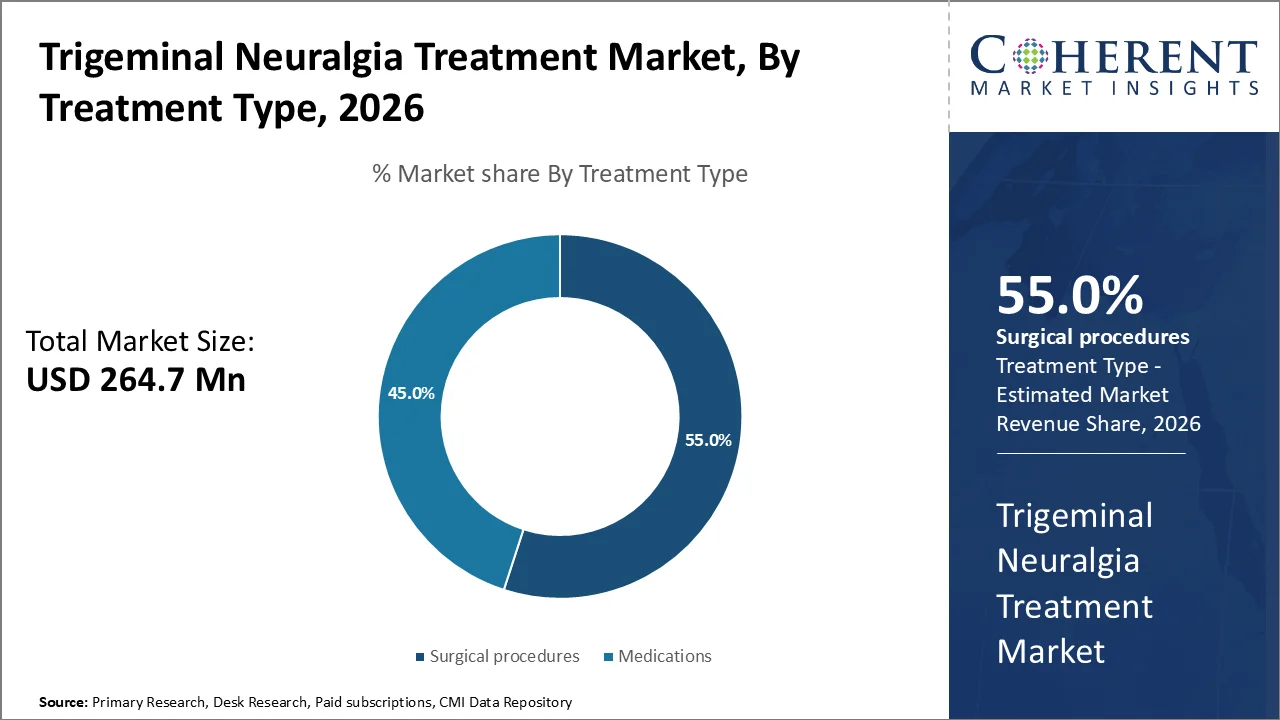
Why is Surgical Procedures Segment Acquiring the Largest Market Share?
Surgical Procedures is projected to account for the largest share of treatment type in 2026, representing approximately 55% of the total volume. This dominance is deeply rooted in the clinical superiority that these interventions offer over conservative treatment approaches, particularly for patients who develop medication resistance or who experience intolerable side effects from pharmacological management. According to a study published in PubMed, the demand for surgery is expected to surge by 36% to 59% by 2026, with the most likely estimate being around 51%, as the population is growing as well as people are living longer.
Trigeminal neuralgia, classified by the International Association for the Study of Pain (IASP) as one of the most severe forms of orofacial pain known to medicine, usually progresses to a stage where surgical intervention becomes not merely an option but a clinical necessity.
The Facial Pain Association, a United States-based nonprofit organization dedicated to supporting patients with facial pain disorders, has consistently highlighted that a significant proportion of trigeminal neuralgia patients eventually require surgical treatment because medications fail to provide adequate relief or cause unacceptable adverse events over prolonged usage periods.
- Current Industry Events of 2026
- Market Size Estimation
- Regional Breakdown
- Competitive Landscape
- Customer Intelligence
- Segmental Analysis
- Pricing Analysis
- Key Market Drivers, Challenges & Future Trends
- Customized Insights Section
Why is Trigeminal neuralgia Segment Acquiring the Largest Market Share?
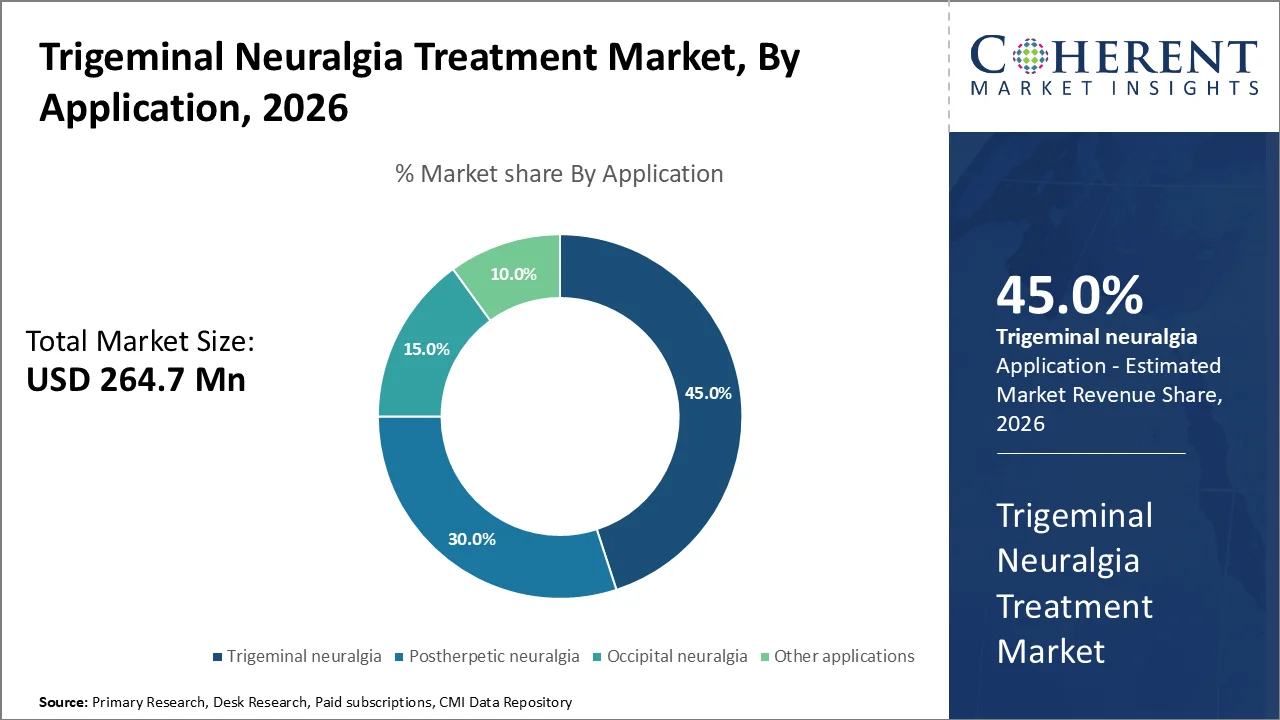
Trigeminal neuralgia is projected to account for the largest share of solutions in 2026, representing approximately 45% of the total volume. Usually referred to as the "suicide disease" owing to the debilitating intensity of pain it inflicts, trigeminal neuralgia is characterized by sudden, severe, electric shock-like facial pain that can be triggered by everyday activities such as eating, speaking, even a gentle touch on the face, etc.
This extreme pain burden majorly impairs quality of life as well as compels patients to actively look for medical intervention, thereby sustaining consistent demand for treatment options across pharmacological, surgical, and interventional modalities.
According to a recent study, about 25 people out of every 100,000 develop Trigeminal Neuralgia each year, while around 45 people out of every 100,000 are living with the condition globally.
Hospitals Segment holds the Largest Market Share
Based on end user, hospitals dominates the market, accounting for a significant 50% share in 2026. Their unparalleled capacity to deliver comprehensive, as well as multidisciplinary care that this complex neurological condition demands are the growth inducing factors.
Trigeminal neuralgia management often requires a coordinated approach involving neurologists, neurosurgeons, pain specialists, radiologists, and anesthesiologists, all of whom are typically concentrated within large hospital systems.
Procedures such as Microvascular Decompression (MVD), which is widely considered the most effective surgical intervention for trigeminal neuralgia, are exclusively performed in hospital settings with advanced neurosurgical infrastructure. Microvascular Decompression (MVD) helps about 95% of Trigeminal Neuralgia patients achieve good pain relief.
Market Drivers
Microvascular Decompression (MVD) is transforming the Trigeminal Neuralgia Treatment Industry
Microvascular Decompression (MVD) is the gold standard surgery for treating Trigeminal Neuralgia (TN), a condition that causes severe facial pain. The procedure removes pressure on the trigeminal nerve caused by nearby blood vessels. Modern MVD uses advanced technologies such as 3D HD endoscopes, nerve monitoring (IONM), exoscopes, as well as neuronavigation to improve accuracy and safety. For example, IONM with BAEPs has aid lower hearing loss risk from around 2.5% to less than 1%, while navigation systems improve surgical targeting.
Leading companies as well as hospitals have adopted these technologies to improve MVD outcomes. Stryker’s 3D exoscope and navigation systems have helped reduce surgery time by 15–20%, Medtronic’s IONM systems are used in over 600 neurosurgical centers with hearing preservation rates of 97–99%, and centers like Mayo Clinic and Cleveland Clinic have reported about 12% lower complication rates with advanced exoscopic techniques. These improvements make MVD safer, more precise, and easier to teach.
For instance, in April 2026, Kyung Hee University Hospital’s Trigeminal Neuralgia Clinic became the first hospital in Korea to perform 1,000 MVD surgeries for treating Trigeminal Neuralgia.
Percutaneous Rhizotomy Technologies: A major breakthrough in Trigeminal Neuralgia Treatment
Percutaneous Rhizotomy is a minimally invasive treatment for Trigeminal Neuralgia (TN) that lower facial pain by targeting the trigeminal nerve. The procedure is performed through a small opening near the base of the skull and includes three main methods: Radiofrequency Thermocoagulation (uses controlled heat to block pain signals), Glycerol Rhizolysis (uses a chemical injection to damage pain fibers), as well as Balloon Microcompression (uses a small balloon to gently press the nerve). Modern imaging and monitoring systems help make these procedures safer and more accurate.
Companies such as Cosman Medical (part of Integra LifeSciences) and Avanos Medical have developed advanced tools for these treatments. Cosman’s RF systems use temperature control and real-time monitoring, helping achieve immediate pain relief in around 90–95% of patients. Avanos RF electrode systems are used in pain centers worldwide and support outpatient treatment of TN, allowing patients to receive effective pain control with shorter recovery times.
Current Events and Their Impact on the Trigeminal Neuralgia Treatment Market
Current Event | Description and its Impact |
Growing Regulatory Focus on Neuromodulation and Minimally Invasive Pain Therapies (2025–2026) |
|
Increasing Adoption of Minimally Invasive Trigeminal Neuralgia Procedures (2025–2026) |
|
Trigeminal Neuralgia Treatment Market Trends
- One of the most defining trends reshaping the TN treatment landscape is the accelerating preference for minimally invasive surgical techniques over conventional open surgeries. Procedures such as percutaneous balloon compression, glycerol rhizotomy, radiofrequency thermocoagulation, and stereotactic radiosurgery particularly Gamma Knife and CyberKnife systems are gaining significant clinical acceptance. According to the University of Alberta, a new Gamma Knife trial is offering hope for people with Trigeminal Neuralgia. The study is exploring whether early use of this non-invasive treatment can provide long-term pain relief after diagnosis.
- A growing number of novel molecular entities targeting voltage-gated sodium channels (Nav1.7, Nav1.3) and other nociceptive pathways are in various stages of clinical development.
- Artificial intelligence (AI) with machine learning (ML) are highly being deployed to enhance diagnostic accuracy as well as personalize treatment planning for TN patients.
- Historically, TN has suffered from major underdiagnosis and misdiagnosis, often being confused with dental pain, cluster headaches, or temporomandibular joint disorders.
Regional Insights
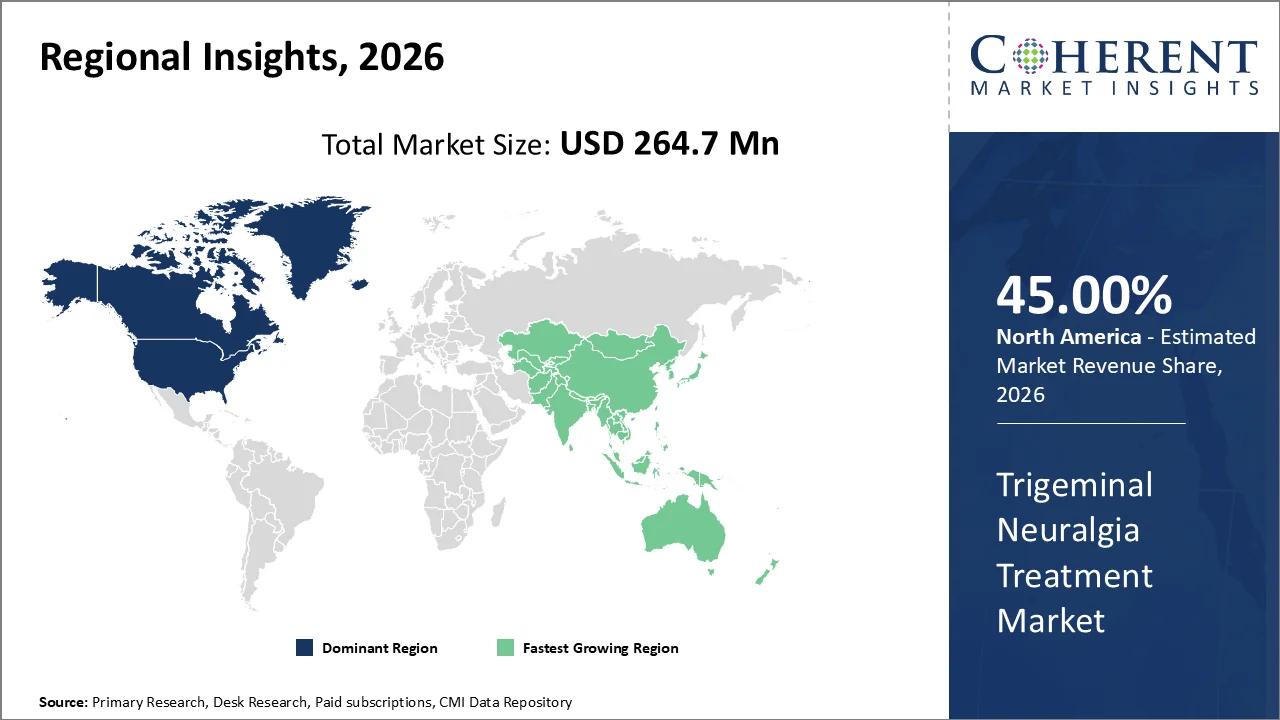
North America dominates owing to widespread adoption of cutting-edge neurosurgical technologies
North America account 45.0% market share in 2026, owing to widespread adoption of cutting-edge neurosurgical technologies, and robust insurance reimbursement frameworks that facilitate patient access to specialized trigeminal neuralgia treatments.
The United States hosts a significant concentration of tertiary care neurology centers equipped with Gamma Knife radiosurgery systems, microvascular decompression surgical suites, as well as multidisciplinary pain management clinics focused towards facial pain disorders. According to the American Hospital Association (AHA), the United States has around 6,100 hospitals. This large healthcare network supports access to advanced medical care, including specialized neurology services and treatments for conditions such as Trigeminal Neuralgia.
According to the National Institute of Neurological Disorders and Stroke (NINDS), trigeminal neuralgia is one of the most painful conditions known to medical science, and the U.S. healthcare system has responded with structured care pathways as well as comprehensive treatment guidelines. The American Association of Neurological Surgeons (AANS) actively promotes awareness campaigns as well as clinical training programs specifically designed to improve trigeminal neuralgia diagnosis and intervention rates across North American hospitals.
Asia Pacific Trigeminal Neuralgia Treatment Market Trends
The Asia Pacific region is poised to be the fastest-growing region through 2026-2033, expanding at a CAGR of approximately 6.8%. Driven by rapidly expanding healthcare infrastructure in emerging economies including India, Indonesia, Vietnam, the Philippines, etc., where previously underserved neurological patient populations are gaining high access to specialized medical care. According to the Australian Government DFAT (2024), new healthcare infrastructure spending in the region is expected to reach up to USD39.1 billion every year until 2030. Indonesia alone may account for around 40% of this investment need, showing the growing demand for better healthcare facilities as well as services.
The Indian government's Ayushman Bharat Pradhan Mantri Jan Arogya Yojana scheme has broadened health coverage for complex neurological interventions, enabling more patients suffering from chronic facial pain conditions such as trigeminal neuralgia to look for definitive surgical and pharmacological treatments.
Additionally, the high penetration of stereotactic radiosurgery, particularly Gamma Knife technology, in urban tertiary hospitals across Southeast Asia reflects the evolving treatment landscape of region. The Ministry of Public Health of Thailand has prioritized neurology capacity building, resulting in the establishment of dedicated pain clinics in Bangkok and Chiang Mai that now manage complex cranial neuralgia cases.
High Per-Capita Healthcare Expenditure is Accelerating the Trigeminal Neuralgia Treatment Market Demand in U.S.
The U.S. contributes the highest share in the market in North America, owing to its exceptionally well-established neurosurgical infrastructure, high per-capita healthcare expenditure, and the disproportionately large patient population diagnosed with trigeminal neuralgia across its aging demographic base.
According to the National Institute of Neurological Disorders and Stroke (NINDS), trigeminal neuralgia affects approximately 150,000 individuals in the United States every year, making it one of the most frequently diagnosed cranial nerve disorders in the country.
This high disease burden naturally translates into sustained demand for both pharmacological as well as interventional treatment options. The U.S. healthcare system's robust insurance coverage landscape particularly through Medicare and Medicaid programs support patient access to advanced neurosurgical procedures such as Microvascular Decompression (MVD) and Stereotactic Radiosurgery (SRS), which remain among the most preferred procedural treatment pathways for patients who fail to respond to first-line pharmacological agents such as carbamazepine.
China Trigeminal Neuralgia Treatment Market Trends
China contributes the highest share in the trigeminal neuralgia treatment market in Asia Pacific, owing to its massive patient pool, rapidly advancing healthcare infrastructure, and significantly increasing government investment in neurological care.
The aging population of China represents one of the most critical driving factors, as trigeminal neuralgia predominantly affects individuals above 50 years of age. According to the National Bureau of Statistics of China, individuals aged 60 and above accounted for over 280 million people as of 2023, making an enormous base of patients susceptible to chronic neuropathic pain conditions including trigeminal neuralgia.
Healthcare reform initiatives of China under the Healthy China 2030 plan have substantially expanded access to neurosurgical and pain management services across both urban and rural settings, enabling greater diagnosis and treatment penetration.
Who are the Major Companies in Trigeminal Neuralgia Treatment Industry
Some of the major key players in trigeminal neuralgia treatment market include, Allergan Plc, Merz Pharma GmbH & Co., Biogen, Inc., Merz Pharma GmbH & Co., Abbott Laboratories, Trigemina Inc., Pfizer Inc., Novartis, and GlaxoSmithKline Plc.
Key News
- In March 2026, NeuroOne Medical Technologies, the company has started the limited market launch of its OneRF Trigeminal Nerve Ablation System after receiving FDA 510(k) approval in August 2025. The system is designed to help treat neurological conditions, including Trigeminal Neuralgia, through a minimally invasive nerve ablation procedure.
- In 2024, Cleveland Clinic has highlighted the major impact of trigeminal neuralgia (TN), a chronic neurological pain disorder that causes sudden, severe electric shock-like facial pain and can disrupt daily activities such as talking, chewing, and smiling.
Market Report Scope
Trigeminal Neuralgia Treatment Market Report Coverage
| Report Coverage | Details | ||
|---|---|---|---|
| Base Year: | 2025 | Market Size in 2026: | USD 264.7 Mn |
| Historical Data for: | 2020 To 2024 | Forecast Period: | 2026 To 2033 |
| Forecast Period 2026 to 2033 CAGR: | 4.23% | 2033 Value Projection: | USD 368.3 Mn |
| Geographies covered: |
| ||
| Segments covered: |
| ||
| Companies covered: | Allergan Plc, Merz Pharma GmbH & Co., Biogen, Inc., Merz Pharma GmbH & Co., Abbott Laboratories, Trigemina Inc., Pfizer Inc., Novartis, and GlaxoSmithKline Plc | ||
| Growth Drivers: |
| ||
| Restraints & Challenges: |
| ||
Analyst Opinion
- Trigeminal neuralgia, often described as one of the most excruciating pain conditions known to medicine, continues to drive substantial demand for effective therapeutic interventions across global healthcare systems.
- The market is primarily propelled by the rising prevalence of the condition among the aging population, as elderly individuals remain disproportionately susceptible to nerve compression disorders. Studies show that nerve compression cases make up a major number of patients seen by specialists, including neurosurgeons, orthopedic surgeons, as well as plastic surgeons. These conditions represent around 10–20% of cases in some specialist clinics.
- Additionally, growing physician awareness as well as improved diagnostic capabilities have majorly reduced misdiagnosis rates, enabled timely treatment initiation and expanded the addressable patient pool.
- Pharmaceutical advancements, particularly the development of next-generation anticonvulsants as well as targeted nerve block therapies, are building treatment paradigms as well as offering patients more tolerable therapeutic options.
- From an opportunity standpoint, minimally invasive surgical techniques, including stereotactic radiosurgery and percutaneous procedures, represent compelling growth avenues as patients increasingly seek durable solutions with shorter recovery timelines.
Speak to the analyst
Want personalized insights?
Take the findings above to one of our principal consultants, or have the report rebuilt around the segments, geographies and competitors you actually track.
Market Segmentation
- By Treatment Type (Revenue, USD Mn, 2021-2033)
- Surgical procedures
- Radiofrequency thermal lesioning
- Stereotactic radiosurgery
- Microvascular decompression
- Other surgical procedures
- Medications
- Anticonvulsants
- Antidepressants
- Other medications
- Surgical procedures
- By Application (Revenue, USD Mn, 2021-2033)
- Trigeminal neuralgia
- Postherpetic neuralgia
- Occipital neuralgia
- Other applications
- By End Use (Revenue, USD Mn, 2021-2033)
- Hospitals
- Clinics
- Ambulatory surgical centers
- Other end users
- By Region (Revenue, USD Mn, 2021-2033)
- North America
- U.S.
- Canada
- Latin America
- Brazil
- Mexico
- Argentina
- Rest of Latin America
- Europe
- Germany
- U.K.
- France
- Italy
- Spain
- Russia
- Rest of Europe
- Asia Pacific
- China
- India
- Japan
- Australia
- South Korea
- ASEAN
- Rest of Asia Pacific
- Middle East
- GCC
- Israel
- Rest of Middle East
- Africa
- South Africa
- Central Africa
- North Africa
- North America
Sources
Primary Research Interviews
- Neurologists & Neurosurgeons
- Pain Management Specialists
- Pharmaceutical & Medical Device Manufacturers
- Hospital Procurement Officers & Healthcare Administrators
- Others
Databases
- IQVIA Health Analytics Database
- GlobalData Healthcare Database
- Clarivate Analytics (Cortellis)
- PubMed/MEDLINE Clinical Trials Database
- Others
Magazines
- Neurology Today
- Pain Medicine News
- Pharmaceutical Executive
- BioPharm International
- Others
Journals
- Journal of Neurosurgery
- The Journal of Pain
- Cephalalgia: International Journal of Headache
- Pain: The Journal of the International Association for the Study of Pain
- Others
Newspapers
- The Wall Street Journal (Healthcare Section)
- Financial Times (Pharma & Biotech)
- Modern Healthcare
- Fierce Pharma
- Others
Associations
- The Facial Pain Association (FPA)
- International Association for the Study of Pain (IASP)
- American Academy of Neurology (AAN)
- European Federation of Neurological Societies (EFNS)
- Others
Public Domain Sources
- U.S. Food & Drug Administration (FDA) Drug Approvals & Database
- World Health Organization (WHO) – Neurological Disorders Reports
- ClinicalTrials.gov
- National Institute of Neurological Disorders and Stroke (NINDS)
- Others
Proprietary Elements
- CMI Data Analytics Tool
- Proprietary CMI Existing Repository of information for last 10 years
Get access to 250+ pages report
Every segment, forecast, competitor profile and data table behind the analysis above — available for instant download.
- ESOMAR Member
- ISO 9001:2015 Certified
- D-U-N-S Registered
- GDPR & CCPA Compliant
Missing comfort of reading report in your local language? Find your preferred language:
Transform your Strategy with Exclusive Trending Reports
Frequently Asked Questions
The trigeminal neuralgia treatment market is expected to reach USD 368.3 Mn in 2033.
Major players operating in the global trigeminal neuralgia treatment market include Allergan Plc, Merz Pharma GmbH & Co., Biogen, Inc., Merz Pharma GmbH & Co., Abbott Laboratories, Trigemina Inc., Pfizer Inc., Novartis, and GlaxoSmithKline Plc.
Significant side effects and risk of recurrence associated with existing pharmacological treatments is the major factors that is expected to hamper growth of the market over the forecast period.
Increasing adoption of advanced surgical techniques such as Gamma Knife radiosurgery and microvascular decompression is driving growth of the global trigeminal neuralgia treatment market.
The trigeminal neuralgia treatment market is anticipated to grow at a CAGR of 4.23% between 2026 and 2033.
Among regions, North America is expected to account for a largest market share in the global Trigeminal Neuralgia Treatment market over the forecast period.
Trigeminal neuralgia is a rare chronic pain disorder that affects about 150,000 people in the U.S. every year. It primarily develops in adults over 50, is more common in women than men, and can sometimes be linked to underlying conditions like multiple sclerosis.