

Monkeypox Treatment Market Size and Share Analysis - Growth Trends and Forecasts (2026 - 2033)
The monkeypox treatment market was valued at USD 134.8 Mn in 2026 and is forecast to reach a value of USD 422.4 Mn by 2033 at a CAGR of 18.5% between 2026 and 2033.
Key Takeaways
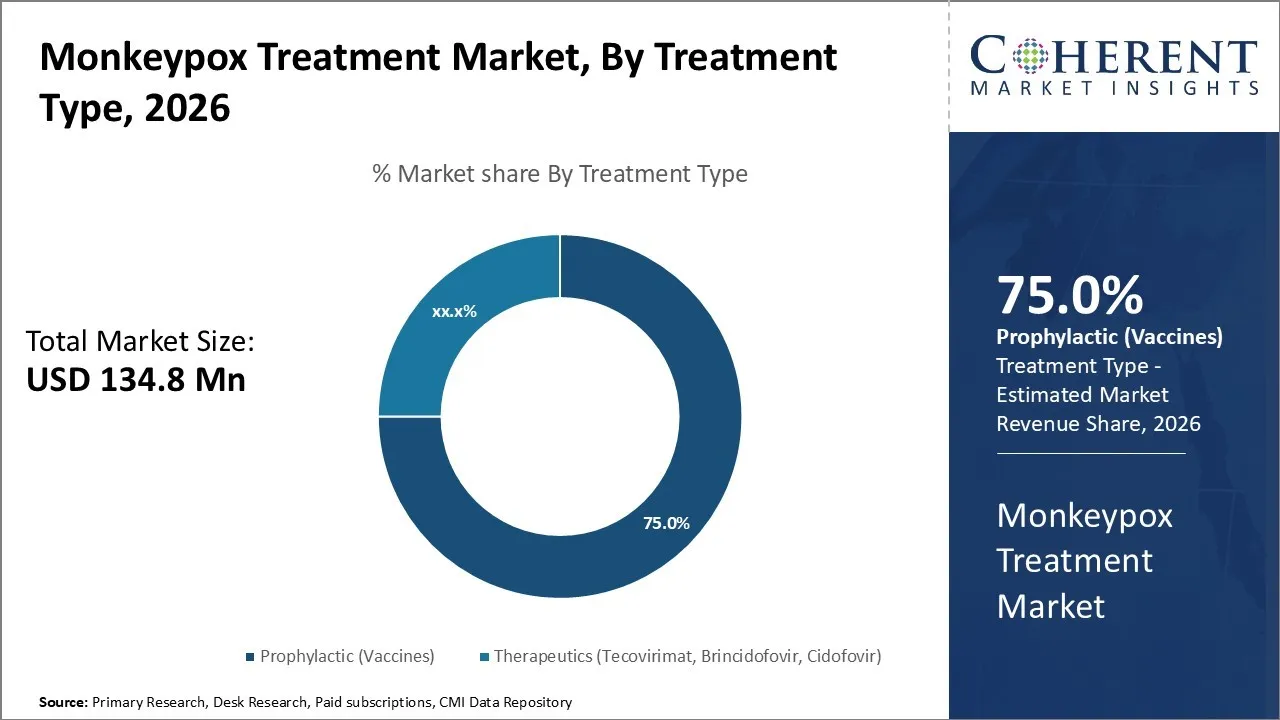
- Based on treatment type, the Prophylactic (Vaccines) segment is expected to hold 75% share of the market in 2026.
- Based on route of administration, the injectable segment is projected to account for 65% share of the market in 2026.
- Based on distribution channel, the hospital pharmacies segment is projected to account for 60% share of the market in 2026.
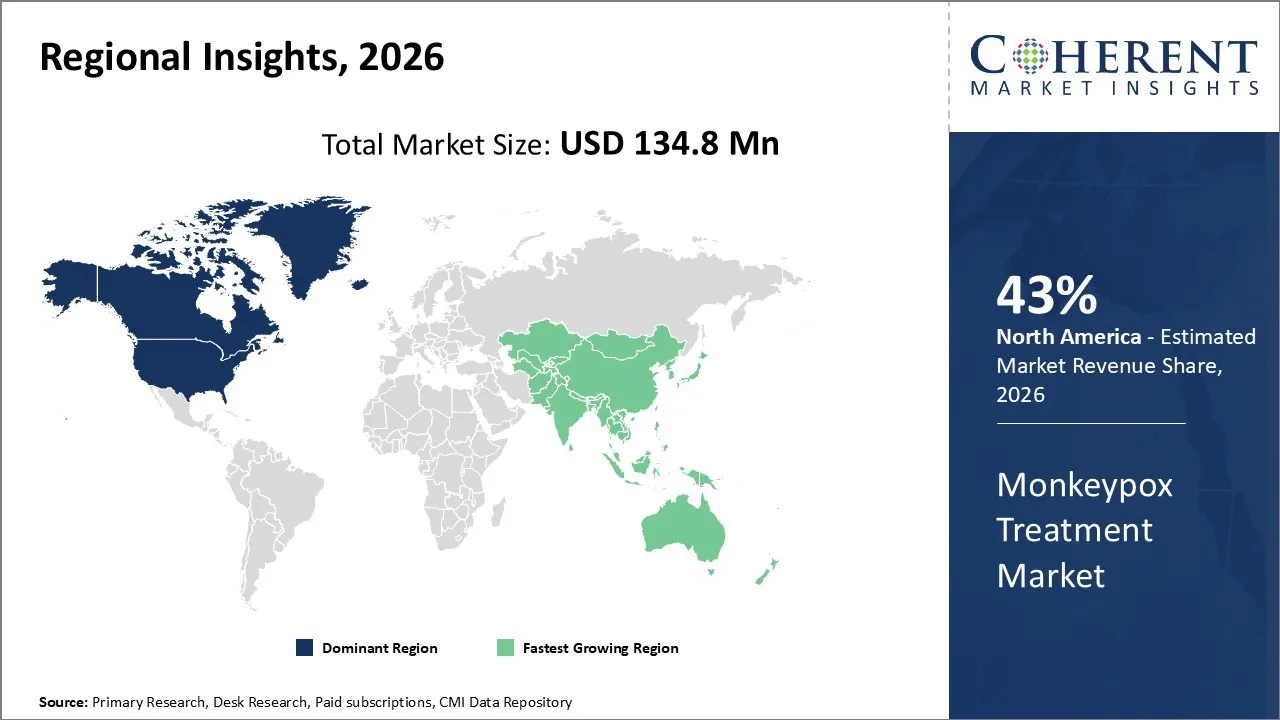
- Based on Region, North America is set to lead the monkeypox treatment market with 43% share in 2026. While, Asia Pacific is anticipated to have fastest growing region.
Market Overview
Two outbreaks of a disease resembling the pox in colonies of monkeys kept for research led to the discovery of monkeypox in 1958. The monkeypox virus is the cause of this rare viral disease. Monkeypox is a type of Zoonotic disease, which are transmitted from animals to humans. The virus that causes smallpox and monkeypox both belong to the same family of viruses. However, it is less severe as compared to smallpox. The symptoms of monkeypox are similar to smallpox symptoms, but are milder and generally non-fatal.
Current Events and their Impacts
Current Event | Description and its Impact |
Expansion of Monkeypox Vaccination Programs |
|
Regulatory Approvals and Launches of Antiviral Treatments |
|
Segmental Insights
- Current Industry Events of 2026
- Market Size Estimation
- Regional Breakdown
- Competitive Landscape
- Customer Intelligence
- Segmental Analysis
- Pricing Analysis
- Key Market Drivers, Challenges & Future Trends
- Customized Insights Section
Monkeypox Treatment Market Insights, By Treatment Type - Prophylactic (Vaccines) represent the largest share, because vaccines prevent infection before it occurs, reducing the number of cases and the severity of outbreaks
In terms of treatment type, the prophylactic (vaccines) segment is expected to lead the market with 75% share in 2026, this leadership can primarily be attributed to the global emphasis on preventive healthcare measures and the critical role vaccines play in curbing disease transmission. Vaccination campaigns have historically been central to controlling orthopoxvirus outbreaks, including smallpox, a close relative of monkeypox, demonstrating the proven effectiveness of prophylactic immunization strategies.
For instance, in December 2025, the U.S. Centers for Disease Control and Prevention (CDC) have emphasized the utilization of the Jynneos vaccine, a non-replicating smallpox and monkeypox vaccine approved by the FDA for prevention of monkeypox in high-risk populations. The installation of this vaccine has been instrumental in lowering new infection rates, particularly among healthcare workers as well as communities with a high exposure risk.
Monkeypox Treatment Market Insights, By Route of Administration - Injectable dominate the market share
In terms of route of administration, the injectable segment is expected to hold 65% share of the market in 2026. This dominance by the Injectable segment can primarily be attributed to the urgency and severity associated with monkeypox infections, which usually necessitate rapid therapeutic intervention achievable through parenteral administration. Injectable treatments, such as intravenous or intramuscular formulations, facilitate faster bioavailability as well as more controlled dosing compared to oral medications, enabling them preferred in clinical settings, especially for moderate to severe cases.
For instance, antiviral agents such as Tecovirimat (TPOXX), which has been authorized for treatment of orthopoxvirus infections including monkeypox, are usually administered via injection in hospital environments to ensure immediate plasma concentrations that can potentially suppress viral replication. The U.S. Centers for Disease Control and Prevention (CDC) as well as the World Health Organization (WHO) have highlighted the necessity of timely administration of injectable antivirals for outbreak control, showing the preference for this route in clinical protocols.
Monkeypox Treatment Market Insights, By Route of Administration - Hospital Pharmacies leads because they are the main source for distributing and administering antiviral drugs and vaccines
In terms of route of administration, the hospital pharmacies segment is projected to account for 60% share of the market in 2026. Owing to their pivotal role in the management and dispensation of critical medications, particularly for infectious diseases such as monkeypox, which often require immediate and specialized treatment within controlled healthcare environments. Hospital pharmacies are embedded within healthcare facilities where patients with confirmed or suspected monkeypox infections receive care under close medical supervision, making these pharmacies the primary source of supply for antiviral treatments, supportive care drugs, and essential medications to manage symptoms and complications associated with the infection.
Regional Insights
North America Monkeypox Treatment Market Analysis & Trends
North America is expected to dominate the Monkeypox Treatment market with 43% share in 2026. This is because the region has strong healthcare systems, active government programs, as well as high awareness of infectious diseases. The Centers for Disease Control and Prevention (CDC) in the United States has helped quickly identify and manage Monkeypox cases, increasing the need for effective treatments.
For instance, in 2025, the USA reported about 2,042 Monkeypox cases, far below 200,000. This low number and the seriousness of the disease mean that treatments like NV-387 qualify for Orphan Drug Designation, encouraging faster development and availability of therapies.
Asia Pacific Monkeypox Treatment Market Analysis & Trends
Asia Pacific is expected to exhibit the fastest growth, driven by multiple converging factors including the heightened disease incidence rates, escalating governmental focus on infectious disease management, as well as increased healthcare spending. Significant outbreaks reported in countries such as India, Thailand, and the Philippines have underscored the urgent need for scalable as well as accessible treatment alternatives, which in turn has galvanized local and regional efforts to strengthen healthcare delivery around Monkeypox.
For instance, in October 2025, collaborated to develop a new Monkeypox (mpox) vaccine. The vaccine utilized a live-attenuated virus as well as was developed through clinical research and manufacturing support. This collaboration supported the growth of vaccines in the Monkeypox Treatment market, especially in the Asia-Pacific region.
Monkeypox Treatment Market Outlook Country-Wise
The U.S. Monkeypox Treatment Market Trends
The U.S. contributes the highest share in the Monkeypox Treatment Market due to its advanced healthcare infrastructure, extensive research and development activities, as well as robust support by government authorities in managing infectious diseases. The U.S. Centers for Disease Control and Prevention (CDC) has been at the forefront of examining monkeypox outbreaks as well as facilitating access to therapeutics, which underscores the country’s leadership role in this segment.
According to recent announcements from the CDC, the U.S. government ramped up federal procurement of such treatments during the 2022-2023 monkeypox public health emergency, demonstrating both preparedness as well as the ability to instantly deploy treatment resources.
Japan Monkeypox Treatment Market Trends
Japan contributes the highest share in the Monkeypox Treatment Market owing to its well-established healthcare infrastructure, advanced pharmaceutical research capabilities, as well as a robust government-led public health response system. Japan’s healthcare system is recognized for its efficiency and extensive coverage, enabling rapid diagnosis, treatment, as well as containment of infectious diseases like Monkeypox.
For instance, in January 2025, SIGA Technologies announced that its antiviral drug TEPOXX (tecovirimat) was approved in Japan. TEPOXX can treat smallpox, Monkeypox (mpox), cowpox, and problems after smallpox vaccination in adults and children weighing at least 13 kg. It is the first antiviral approved by Japan’s Pharmaceuticals and Medical Devices Agency (PMDA) for treating orthopoxviruses.
Market Report Scope
Monkeypox Treatment Market Report Coverage
| Report Coverage | Details | ||
|---|---|---|---|
| Base Year: | 2025 | Market Size in 2026: | USD 134.8 Mn |
| Historical Data for: | 2020 To 2024 | Forecast Period: | 2026 To 2033 |
| Forecast Period 2026 to 2033 CAGR: | 18.5% | 2033 Value Projection: | USD 422.4 Mn |
| Geographies covered: |
| ||
| Segments covered: |
| ||
| Companies covered: | SIGA Technologies Inc., Bavarian Nordic, Sanofi SA., Emcure Pharma, Jinan Jinda Pharmaceutical Chemistry Co., Ltd. | ||
| Growth Drivers: |
| ||
| Restraints & Challenges: |
| ||
Market Dynamics
Monkeypox Treatment Market Driver
Increasing incidence of monkeypox outbreaks globally
The escalating global incidence of monkeypox outbreaks has emerged as a critical catalyst propelling the monkeypox treatment market forward, fundamentally reshaping pharmaceutical priorities and healthcare preparedness strategies worldwide. The outbreak patterns have demonstrated the virus's potential for sustained human-to-human transmission in non-endemic countries, particularly affecting vulnerable populations and creating urgent demand for effective therapeutic interventions.
Growing government initiatives and funding for infectious disease research
The escalating focus of worldwide by governments authorities on infectious disease research has played a pivotal role in propelling the development and availability of treatments for emerging and re-emerging pathogens, including Monkeypox. In response to recent outbreaks and the potential for wider spread, several governments have amplified their budgetary commitments to infectious disease control and research, recognizing the importance of preparedness as well as containment.
Monkeypox Treatment Market Opportunity
Development of novel targeted antiviral therapies
The development of novel targeted antiviral therapies presents a substantial as well as transformative opportunity in the Monkeypox treatment market, primarily due to the increasing incidence and geographic spread of the disease in recent years. Novel antivirals that target viral replication mechanisms or specific viral proteins can offer more effective treatment outcomes, reduce disease severity, and limit transmission.
Analyst Opinion (Expert Opinion)
The Monkeypox Treatment Market is gaining significant attention due to the rising incidence of monkeypox outbreaks globally. A major driver propelling the market is the high occurrence of zoonotic diseases, along with bolstering awareness as well as improved diagnostic capabilities.
This has led to more demand for effective antiviral therapies as well as supportive treatments specifically targeting monkeypox infections. Moreover, governments authorities and healthcare organizations are investing in research and stockpiling antiviral drugs, which is further surge market growth.
However, the market faces challenges such as limited availability of specifically approved monkeypox treatments as well as insufficient clinical data on the efficacy and safety of existing antivirals. These factors restrain the high use of particular treatment alternatives. Additionally, the stigma associated with contagious diseases can impede timely diagnosis as well as treatment, limiting market penetration.
Opportunities within the market are substantial, particularly with advancements in viral genomics as well as drug repurposing strategies. Companies targeting on developing broad-spectrum antivirals or vaccine adjunct therapies are well established to capitalize on these trends.
North America currently dominates the market, bolstered by well-developed healthcare infrastructure, support by governmental authorities, as well as utilization of novel therapies. Meanwhile, the Asia-Pacific region is emerging as the fastest-growing market, due to rising public health initiatives as well as rising awareness about zoonotic infections.
Speak to the analyst
Want personalized insights?
Take the findings above to one of our principal consultants, or have the report rebuilt around the segments, geographies and competitors you actually track.
Global Monkeypox Treatment Market: Key Developments
- In January 2026, JYNNEOS is a vaccine given in two doses to protect people from Monkeypox and smallpox. It helps the body build immunity so that if someone is exposed to the virus, they are less likely to get sick or have severe symptoms.
- In September 2025, new research will start in the Democratic Republic of the Congo (DRC) to study how well the LC16m8 Monkeypox (mpox) vaccine works in African populations. This is happening during a major outbreak of the virus, which is still a serious public health problem across Africa.
Market Segmentation
- By Treatment Type
- Prophylactic (Vaccines)
- Therapeutics (Tecovirimat, Brincidofovir, Cidofovir)
- By Route of Administration
- Oral
- Injectable
- By Distribution Channel
- Retail Pharmacies
- Hospital Pharmacies
- Online Pharmacies
- By Region
- North America
- U.S.
- Canada
- Latin America
- Brazil
- Argentina
- Mexico
- Rest of Latin America
- Europe
- Germany
- U.K.
- Spain
- France
- Italy
- Russia
- Rest of Europe
- Asia Pacific
- China
- India
- Japan
- Australia
- South Korea
- ASEAN
- Rest of Asia Pacific
- Middle East & Africa
- GCC Countries
- Israel
- Rest of Middle East & Africa
- North America
- Key Players
- SIGA Technologies Inc.
- Bavarian Nordic
- Sanofi SA.
- Emcure Pharma
- Jinan Jinda Pharmaceutical Chemistry Co., Ltd.
Sources
Primary Research Interviews
- Pharmaceutical Company Executives and R&D Directors
- Healthcare Providers and Infectious Disease Specialists
- Regulatory Affairs Professionals
- Public Health Officials and Epidemiologists
- Others
Databases
- WHO Global Health Observatory Database
- CDC National Notifiable Diseases Surveillance System
- FDA Orange Book Database
- ClinicalTrials.gov
- Others
Magazines
- Pharmaceutical Executive
- BioPharma Dive
- Drug Discovery & Development
- Infectious Disease News
- Others
Journals
- The Lancet Infectious Diseases
- Emerging Infectious Diseases
- Antiviral Research
- Others
Newspapers
- Financial Times
- The Wall Street Journal
- Reuters Health News
- Bloomberg Healthcare
- Others
Associations
- World Health Organization (WHO)
- Centers for Disease Control and Prevention (CDC)
- European Medicines Agency (EMA)
- Pharmaceutical Research and Manufacturers of America (PhRMA)
- Others
Public Domain Sources
- FDA Drug Approvals and Databases
- National Institutes of Health (NIH) Publications
- Government Health Department Reports
- WHO Technical Reports and Guidelines
- Others
Proprietary Elements
- CMI Data Analytics Tool
- Proprietary CMI Existing Repository of Information for the Last 8 Years
Get access to 250+ pages report
Every segment, forecast, competitor profile and data table behind the analysis above — available for instant download.
- ESOMAR Member
- ISO 9001:2015 Certified
- D-U-N-S Registered
- GDPR & CCPA Compliant
Missing comfort of reading report in your local language? Find your preferred language:
Transform your Strategy with Exclusive Trending Reports
Frequently Asked Questions
The global monkeypox treatment market size was valued at USD 134.8 million in 2026 and is expected to reach USD 422.4 million in 2033.
Major players operating in the market include SIGA Technologies Inc., Bavarian Nordic, Sanofi SA., Emcure Pharma, and Jinan Jinda Pharmaceutical Chemistry Co., Ltd.
Among treatment type, the prophylactic (Vaccines) segment estimated significant revenue in 2026.
Increase in the prevalence of monkeypox disease is expected to drive growth of the market.
The market is estimated to exhibit a CAGR of 18.5% till 2033.
Among region, North America is expected to witness significant growth over the forecast period.