

Global antiviral drugs market is estimated to be valued at USD 70.73 Bn in 2026 and is expected to reach USD 102.89 Bn by 2033, exhibiting a compound annual growth rate (CAGR) of 5.5% from 2026 to 2033.
Key Takeaways:
- By Drug Class, The DNA Polymerase Inhibitors Segment is projected to dominate the global antiviral drugs market with a 37.7% share in 2026.
- By Type, the branded drugs segment is expected to lead the global antiviral drugs market in 2026 with a 55.3% share.
- By Distribution Channel, Hospital pharmacies are anticipated to dominate the global antiviral drugs market in 2026, holding a 37.1% share.
- By Regional Insight: North America is projected to lead the global antiviral drugs market in 2026 with a 39.7% share.
Market Overview:
The global Antiviral Drugs Market is witnessing robust growth, driven by the increasing prevalence of viral infections and heightened awareness of early treatment options. DNA polymerase inhibitors lead the market due to their proven effectiveness, while branded drugs dominate owing to better accessibility and physician preference. Hospital pharmacies remain the key distribution channel, ensuring reliable access to critical care medications.
Current Events and its Impact on the antiviral drugs market
Current Event | Description and its impact |
Resurgence of Global Viral Outbreaks |
|
Advancements in Antiviral Drug Formulations |
|
Patent Expiry and Rise of Generics |
|
Pipeline Analysis: Antiviral Drugs Market
The antiviral drugs market is witnessing a robust pipeline of novel therapies aimed at addressing both existing and emerging viral threats. Key pharmaceutical companies are investing heavily in research and development to create next-generation antivirals with improved efficacy, broader spectrum, and lower resistance rates.
Prominent candidates in late-stage clinical trials target high-priority infections such as HIV, hepatitis B and C, respiratory syncytial virus (RSV), and cytomegalovirus. Additionally, efforts are underway to develop broad-spectrum antivirals capable of responding rapidly to pandemic threats like novel influenza strains and coronaviruses.
Advances in RNA interference (RNAi) technology, CRISPR-based antivirals, and immunomodulators are also shaping the future landscape. Strategic collaborations between biotech firms, governments, and global health organizations are accelerating the development timeline. With a growing focus on unmet clinical needs and drug resistance mitigation, the antiviral pipeline holds significant potential to transform treatment paradigms and expand market opportunities over the next decade.
- Current Industry Events of 2026
- Market Size Estimation
- Regional Breakdown
- Competitive Landscape
- Customer Intelligence
- Segmental Analysis
- Pricing Analysis
- Key Market Drivers, Challenges & Future Trends
- Customized Insights Section
Patent Landscape: Antiviral Drugs Market
The antiviral drugs market features a dynamic and competitive patent landscape, driven by continuous innovation and the urgent need to combat evolving viral infections. Leading pharmaceutical companies such as Gilead Sciences, Merck & Co., GlaxoSmithKline, and AbbVie dominate global patent filings, focusing on novel drug formulations, combination therapies, and targeted mechanisms of action.
A substantial number of patents are centred on nucleotide and nucleoside analogs, protease inhibitors, and polymerase inhibitors, which are pivotal in treating HIV, hepatitis, and influenza. Recent trends show increased filings in RNA-based antivirals and CRISPR-derived therapies, reflecting the market's shift toward precision medicine and pandemic preparedness.
Additionally, patent extensions and exclusivity rights for blockbuster antivirals like remdesivir and tenofovir highlight the strategic use of intellectual property to sustain market dominance. As generic manufacturers aim to enter post-patent expiration segments, the evolving IP landscape is set to influence pricing, innovation, and global accessibility of antiviral therapies.
Reimbursement Scenario: Antiviral Drugs Market
In 2025, reimbursement for antiviral drugs remains a pivotal factor shaping market access and affordability. In North America, comprehensive insurance coverage through Medicare, Medicaid, and private payers ensures broad access to both branded and generic antivirals, particularly for chronic conditions like HIV and hepatitis.
Value-based contracting and rebate mechanisms are increasingly used to manage costs while ensuring patient access to innovative therapies. Many public and private payers require step therapy or prior authorization, especially for high-cost, novel antivirals.
In Europe, national health systems and regional payers employ health technology assessments (HTAs) to evaluate cost-effectiveness and negotiate pricing. Drugs demonstrating significant clinical benefit, such as long-acting injectable antivirals or improved bioavailability formulations, often secure favourable reimbursement and tenders. However, budget constraints can delay reimbursement decisions, impacting launch and access in certain markets.
In emerging economies, including parts of Asia-Pacific and Latin America, government reimbursement schemes are gradually expanding to include critical antivirals under universal health coverage plans. Tiered pricing, donor-funded programs, and public–private partnerships play essential roles in supporting equitable access across socio-economic groups.
Prescribers’ Preference: Antiviral Drugs Market
In the antiviral drugs market, prescribers prioritize efficacy, safety profile, and patient adherence when selecting treatment options. Branded antiviral drugs remain the preferred choice among healthcare providers, especially in critical care and hospital settings, due to their proven clinical performance, consistent supply, and comprehensive patient support programs.
Physicians tend to favour antivirals with a broad spectrum of activity, fewer side effects, and simplified dosing regimens, which enhance treatment compliance particularly important for chronic conditions like HIV and hepatitis.
Prescribers also lean towards drugs with strong real-world evidence and those recommended in established clinical guidelines. For instance, long-acting formulations or fixed-dose combinations that reduce pill burden are increasingly favoured. However, in cost-sensitive settings or where insurance coverage is limited, generics are gaining acceptance, provided they meet regulatory quality standards. Ultimately, prescribers’ preferences are shaped by a balance of clinical outcomes, regulatory approval, and accessibility for diverse patient populations.
Antiviral Drugs Market Trends
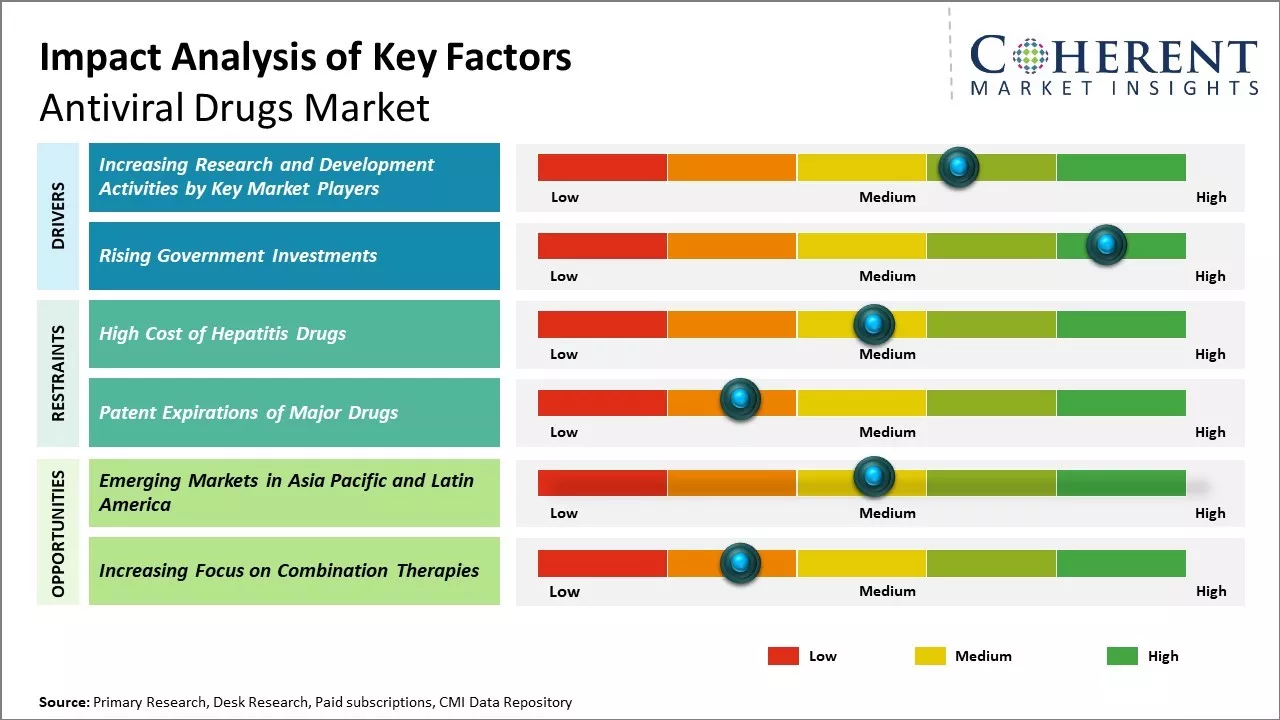
Increasing Research and Development Activities by Key Market Players
Increasing research and development activities by key market players is expected to drive the market growth over the forecast market. For instance, in March 2021, Pfizer, Inc., a pharmaceutical company, announced the initiation of Phase 1 study in healthy adults to evaluate the safety and tolerability of an investigational, novel oral antiviral therapeutic for SARS-CoV-2, the virus.
Rising Government Investments
Rising government investments in key companies to promote research and development for the treatment of viral infection is expected to offer a lucrative opportunity for the market players to develop novel therapeutics for the treatment of viral infection. For instance, in July 2020, Novavax (a biotechnology company) and Regeneron Pharmaceuticals, a biotechnology company, received US$ 2 billion funding from the U.S. federal government to manufacture drugs and vaccines.
Opportunities In the Antiviral Drugs Market
- Increasing Focus on Combination Therapies
Increasing focus on combination therapies is indeed a great opportunity for growth in the global antiviral drugs market. As researchers gain a deeper understanding of viral biology and mechanisms of drug resistance, combination therapies are seen as a more effective clinical strategy compared to monotherapies.
Instead of targeting a single viral protein or mechanism, combinations can act on multiple viral lifecycle stages or pathways simultaneously. This makes the development of resistance much more challenging for the virus.
Segmental Insights
Antiviral Drugs Market Insights, By Drug Class
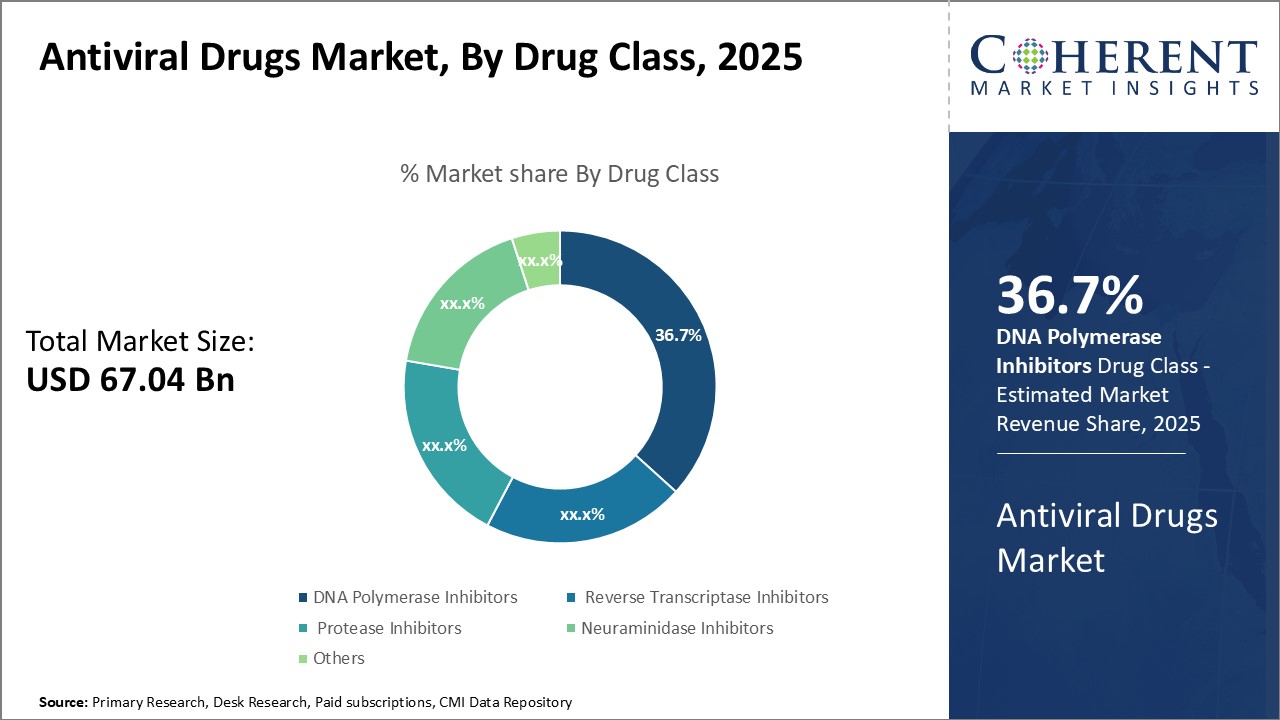
The DNA polymerase inhibitors segment is projected to dominate the global antiviral drugs market with a 37.7% share in 2026, driven by its broad-spectrum effectiveness against numerous viral infections.
These inhibitors obstruct the function of DNA polymerase—an enzyme critical for viral replication—making them especially effective against conditions such as herpes simplex virus and cytomegalovirus. Their strong clinical track record, well-documented efficacy, and broad application in both acute and chronic viral infections position this class as a vital cornerstone of antiviral treatment.
Meanwhile, other segments like reverse transcriptase and protease inhibitors remain essential, especially in managing HIV and hepatitis, contributing to a diverse and evolving therapeutic landscape.
Antiviral Drugs Market Insights, By Type
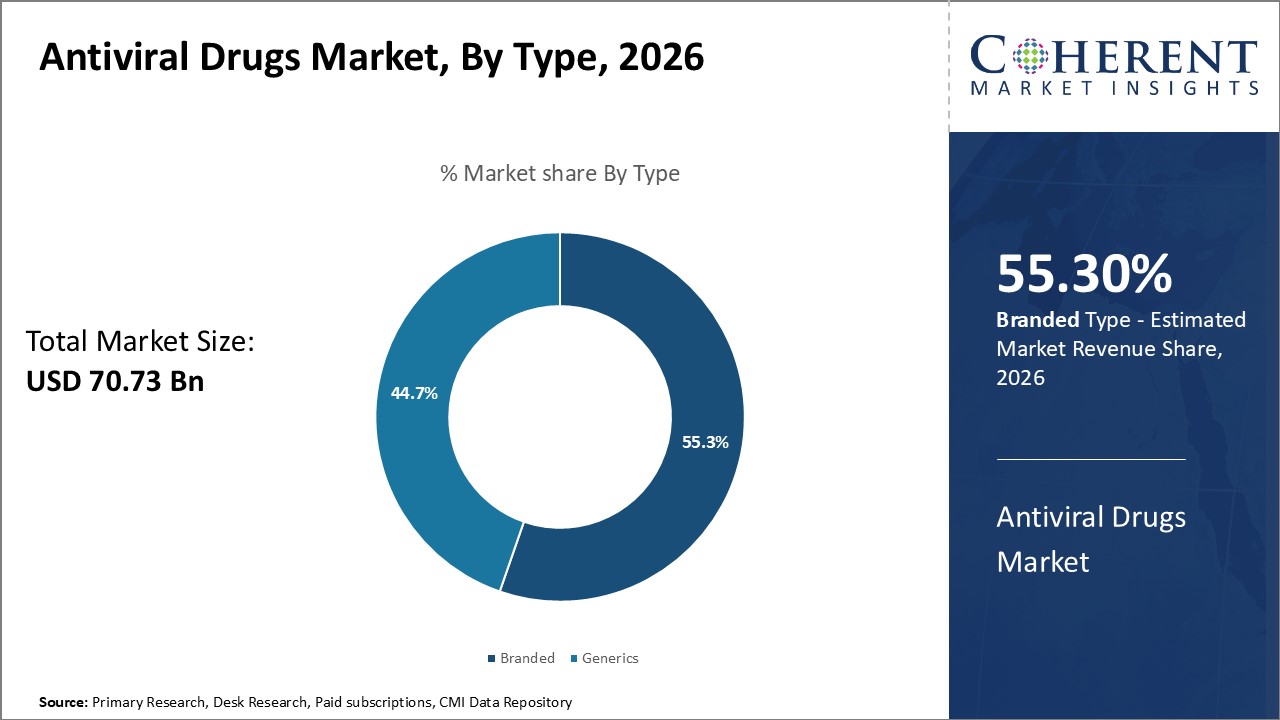
The branded drugs segment is expected to lead the global antiviral drugs market in 2026, commanding a 55.3% share. This dominance is attributed to factors such as widespread accessibility, expedited regulatory approvals, and strong physician and hospital endorsements. Branded antivirals typically benefit from substantial marketing efforts, patient awareness initiatives, and well-established distribution partnerships.
These advantages ensure rapid uptake in both hospital and outpatient settings. Although generic drugs offer cost-effective alternatives and are gaining popularity, branded antivirals continue to enjoy clinical preference, especially in critical care and first-line treatment scenarios where reliability and proven outcomes are prioritized.
Antiviral Drugs Market Insights, By Distribution Channel
Hospital pharmacies are anticipated to dominate the global antiviral drugs market in 2026, with a projected 37.1% share, due to their integral role in treating acute and life-threatening viral infections. These settings manage complex antiviral regimens, including intravenous treatments for hospitalized patients suffering from severe influenza, HIV complications, or hepatitis flare-ups.
Hospitals are often the first line of defence during outbreaks and pandemics, ensuring rapid and controlled access to antiviral drugs. Although retail and online pharmacies are expanding, particularly through telemedicine and home delivery models, the critical nature of hospital-based antiviral administration secures their lead in the overall distribution landscape.
Regional Insights
North America Antiviral Drugs Market Trends and Analysis
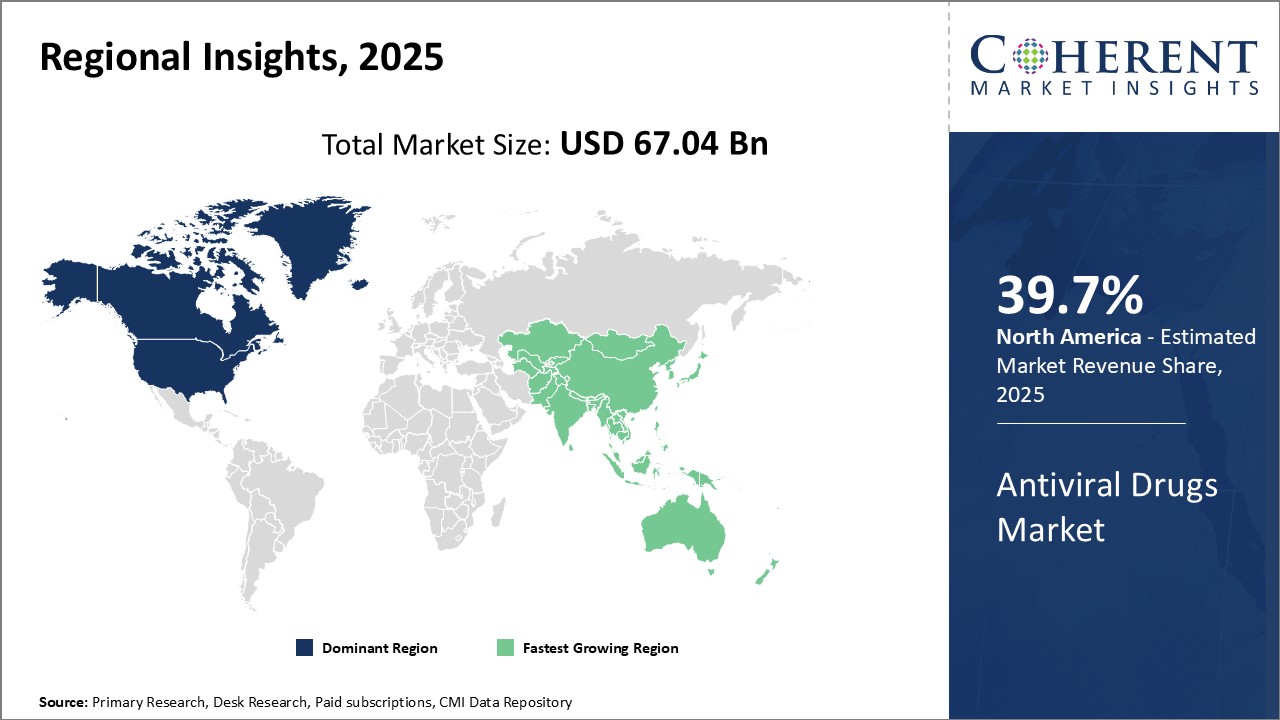
North America is projected to lead the global antiviral drugs market in 2026, accounting for a 39.7% share. This dominance is fuelled by the region’s advanced healthcare infrastructure, strong presence of pharmaceutical giants, and high incidence of chronic viral infections such as HIV and hepatitis.
Significant investment in R&D, coupled with a supportive regulatory environment through agencies like the FDA, enables rapid development and approval of cutting-edge antiviral therapies. Additionally, broad insurance coverage and strategic public health programs enhance patient access to both branded and generic antivirals, ensuring continued market leadership.
Europe Antiviral Drugs Market Trends and Analysis
Europe stands as a key contributor to the global antiviral drugs market, supported by increased public health initiatives and robust pharmaceutical innovation. Countries such as Germany, France, and the UK are actively investing in antiviral drug development and vaccination campaigns, particularly in response to emerging viral threats. The region’s strict regulatory standards and emphasis on healthcare access drive the adoption of high-quality antiviral therapies.
Furthermore, the rise of antimicrobial resistance and aging populations further accelerate demand for effective viral treatments, reinforcing Europe’s position as a mature and strategically important market.
Antiviral Drugs Market Dominating Countries:
United States and Canada
The United States dominates the North American antiviral drugs market, driven by advanced healthcare infrastructure, strong R&D capabilities, and the presence of major pharmaceutical players like Gilead Sciences, Merck, and Pfizer. The U.S. maintains a high prevalence of chronic viral infections such as HIV and hepatitis, ensuring consistent demand for both branded and generic antiviral therapies. Government initiatives like the “Ending the HIV Epidemic” plan, along with robust insurance coverage, facilitate widespread access to antiviral medications and continued innovation in the field.
Canada contributes significantly to regional growth, benefiting from a publicly funded healthcare system and rising awareness of infectious disease prevention. The country's strong regulatory framework and participation in global vaccine and antiviral development programs support market expansion. Canada also promotes early adoption of new therapies through streamlined approval processes and national health campaigns, reinforcing North America’s leadership in antiviral drug innovation and access.
Market Report Scope
Antiviral Drugs Market Report Coverage
| Report Coverage | Details | ||
|---|---|---|---|
| Base Year: | 2025 | Market Size in 2026: | USD 70.73 Bn |
| Historical Data for: | 2020 To 2024 | Forecast Period: | 2026 To 2033 |
| Forecast Period 2026 to 2033 CAGR: | 5.5% | 2033 Value Projection: | USD 102.89 Bn |
| Geographies covered: |
| ||
| Segments covered: |
| ||
| Companies covered: | AbbVie Inc., GSK plc, Dr. Reddy's Laboratories Ltd., F. Hoffmann-La Roche Ltd, Bristol-Myers Squibb Company, Cipla, Aurobindo Pharma, Gilead Sciences, Inc., Merck & Co., Inc., Zydus Group, Atea Pharmaceuticals, Johnson & Johnson Services, Inc., Sun Pharmaceutical Industries Ltd., Pfizer Inc., Torrent Pharmaceuticals Ltd., Arbutus Biopharma, Divi's Laboratories Limited, RedHill Biopharma Ltd., and ViiV Healthcare Pty Ltd. | ||
| Growth Drivers: |
| ||
| Restraints & Challenges: |
| ||
Analyst Viewpoint – Antiviral Drugs Market
- Analysts maintain a strong and optimistic outlook for the global antiviral drugs market, primarily driven by the increasing global burden of viral infections such as HIV, hepatitis, and influenza. With rising awareness of infectious disease management and advancements in virology, the demand for effective antiviral drugs is expected to remain robust across both developed and emerging markets.
- Experts highlight the growing significance of drug class diversification—particularly the dominance of DNA polymerase and reverse transcriptase inhibitors—as essential in addressing various viral strains. Moreover, innovations in drug delivery systems and fixed-dose combinations are improving patient adherence and clinical outcomes.
- Regionally, North America continues to lead due to advanced healthcare infrastructure and strong regulatory support, while Asia Pacific emerges as the fastest-growing region, driven by large patient populations, improving access to healthcare, and expanding pharmaceutical investments.
Antiviral Drugs Market: Key Development
- In April 2025: Smiths Detection launched a next‑generation dual‑mode handheld drug scanner. This AI-powered portable device identifies a wide range of synthetic opioids and chemical analogs, reducing false positives and enabling faster decision-making for law enforcement in the field.
- In March 2025: Vikan Detection introduced a mobile X‑ray system for vehicle and cargo inspection at border posts. Designed for real-time scanning, this mobile unit delivers high-resolution images to detect concealed narcotics at checkpoints.
- In January 2025: NUCTech Company Limited unveiled an advanced FTIR-based drug scanner. This non-contact FTIR device accurately identifies substances through packaging, offering rapid material analysis.
- In December 2024: Rapiscan Systems launched a multi-layer drug detection platform for festive airport terminals. The system integrates X-ray imaging, trace detection, and real-time facial recognition linked to passenger databases.
- In October 2024: Thermo Fisher Scientific piloted a Raman spectroscopy-based device with the U.S. Department of Homeland Security. Employing high-sensitivity Raman spectroscopy, the handheld scanner identifies trace fentanyl analogs—addressing critical overdose risks.
Market Segmentation
- Drug Class Insights (Revenue, USD Bn, 2021 - 2033)
- DNA Polymerase Inhibitors
- Reverse Transcriptase Inhibitors
- Protease Inhibitors
- Neuraminidase Inhibitors
- Others
- Type Insights (Revenue, USD Bn, 2021 - 2033)
- Branded
- Generics
- Application Insights (Revenue, USD Bn, 2021 - 2033)
- HIV
- Hepatitis
- Herpes
- Influenza
- Others
- Distribution Channel Insights (Revenue, USD Bn, 2021 - 2033)
- Hospital Pharmacies
- Retail Pharmacies
- Online Pharmacies
- Regional Insights (Revenue, USD Bn, 2021 - 2033)
- North America
- U.S.
- Canada
- Latin America
- Brazil
- Argentina
- Mexico
- Rest of Latin America
- Europe
- Germany
- U.K.
- Spain
- France
- Italy
- Russia
- Rest of Europe
- Asia Pacific
- China
- India
- Japan
- Australia
- South Korea
- ASEAN
- Rest of Asia Pacific
- Middle East
- GCC Countries
- Israel
- Rest of Middle East
- Africa
- South Africa
- North Africa
- Central Africa
- North America
- Key Players Insights
- AbbVie Inc.
- GSK plc
- Dr. Reddy's Laboratories Ltd.
- F. Hoffmann-La Roche Ltd
- Bristol-Myers Squibb Company
- Cipla
- Aurobindo Pharma
- Gilead Sciences, Inc.
- Merck & Co., Inc.
- Zydus Group
- Atea Pharmaceuticals
- Johnson & Johnson Services, Inc.
- Sun Pharmaceutical Industries Ltd.
- Pfizer Inc.
- Torrent Pharmaceuticals Ltd.
- Arbutus Biopharma
- Divi's Laboratories Limited
- RedHill Biopharma Ltd.
- ViiV Healthcare Pty Ltd.
Sources
The Stakeholders Consulted:
- Pharmaceutical manufacturers and antiviral drug formulators
- Healthcare professionals including infectious disease specialists and virologists
- Hospital procurement managers and pharmacy directors
- Regulatory affairs professionals and drug approval consultants
- Representatives from public health organizations and NGOs
- R&D scientists in pharmaceutical and biotech industries
- Distributors and suppliers of antiviral medications
- Clinical trial investigators and CROs specializing in antivirals
Databases Opened:
- U.S. Food and Drug Administration (FDA) – Drug Approvals and Clinical Trials Database
- European Medicines Agency (EMA) – Human Medicines Highlights
- World Health Organization (WHO) – Global Health Observatory & Essential Medicines Lists
- ClinicalTrials.gov – Database of Ongoing and Completed Antiviral Drug Trials
- Centers for Disease Control and Prevention (CDC) – Infectious Disease Surveillance Reports
Magazines & Trade Publications:
- PharmaVOICE
- Pharmaceutical Technology
- Drug Discovery & Development
- BioPharma Dive
- Healthcare Packaging
- Modern Healthcare – Pharma & Life Sciences
Scientific and Industry Journals:
- Antiviral Research
- The Lancet Infectious Diseases
- Journal of Antimicrobial Chemotherapy
- Journal of Medical Virology
- Nature Reviews Drug Discovery
- International Journal of Infectious Diseases
Newspapers & Media Outlets:
- The Wall Street Journal – Health & Pharmaceuticals
- Bloomberg – Biotech and Pharma News
- Reuters – Global Drug and Vaccine Developments
- The Economic Times – Healthcare & Pharma
- Business Standard – Life Sciences & Drug Policy
Associations and Regulatory Bodies:
- World Health Organization (WHO)
- U.S. Food and Drug Administration (FDA)
- European Medicines Agency (EMA)
- Indian Pharmacopoeia Commission (IPC)
- Centers for Disease Control and Prevention (CDC)
- International Society for Antiviral Research (ISAR)
Public Domain Sources:
- United Nations Programme on HIV/AIDS (UNAIDS) – Treatment and Prevention Statistics
- Global Burden of Disease Study – Institute for Health Metrics and Evaluation (IHME)
- World Bank – Healthcare Access and Pharmaceutical Spending Data
- OECD – Health Statistics and Pharmaceutical Expenditure Reports
- National Health Portals (e.g., NHS, NIH, MoHFW India)
Proprietary Research Elements:
- CMI Internal Market Sizing and Forecasting Models
- CMI Repository of Drug Pipeline Data (Antivirals-focused)
- CMI Expert Interviews (Pharma industry leaders, clinical researchers, and hospital pharmacists)
- CMI Survey Analysis on Prescription Trends, Reimbursement Patterns, and Patient Access
- CMI Analytical Dashboard – Real-time Tracking of Clinical Trials and Regulatory Approvals
Get access to 250+ pages report
Every segment, forecast, competitor profile and data table behind the analysis above — available for instant download.
- ESOMAR Member
- ISO 9001:2015 Certified
- D-U-N-S Registered
- GDPR & CCPA Compliant
Missing comfort of reading report in your local language? Find your preferred language:
Transform your Strategy with Exclusive Trending Reports
Frequently Asked Questions
The Antiviral Drugs Market size is estimated to be valued at USD 70.73 Bn in 2026, and is expected to reach USD 102.89 Bn by 2033.
The CAGR of the global Market is projected to be 5.5% from 2026 to 2033.
Increasing research and development activities by key market players and rising government investments are the major factors driving the growth of the antiviral drugs industry.
High cost of hepatitis drugs and patent expirations of major drugs are the major factors hampering the growth of the antiviral drugs industry.
In terms of Drug Class, DNA Polymerase Inhibitors is estimated to dominate the market revenue share in 2026.
AbbVie Inc., GSK plc, Dr. Reddy's Laboratories Ltd., F. Hoffmann-La Roche Ltd, Bristol-Myers Squibb Company, Cipla, Aurobindo Pharma, Gilead Sciences, Inc., Merck & Co., Inc., Zydus Group, Atea Pharmaceuticals, Johnson & Johnson Services, Inc., Sun Pharmaceutical Industries Ltd., Pfizer Inc., Torrent Pharmaceuticals Ltd., Arbutus Biopharma, Divi's Laboratories Limited, RedHill Biopharma Ltd., and ViiV Healthcare Pty Ltd. are the major players.
North America is expected to lead the global market.