

Vital Sign Monitoring Devices Market Size and Forecast — 2026-2033
Vital Sign Monitoring Devices Market is estimated to be valued at USD 8,594.2 Mn in 2026 and is expected to reach USD 16,535.6 Mn in 2033, exhibiting a compound annual growth rate (CAGR) of 9.8% from 2026 to 2033.
Analysts’ Views on Global Vital Sign Monitoring Devices Market:
Global vital sign monitoring devices market growth can be hindered by availability of low quality products. Rising prevalence of cardiovascular diseases such as hypertension, atrial fibrillation, and stroke is expected to drive the global vital sign monitoring devices market growth over the forecast period. For instance, according to the World Health Organization, in 2021, about 1.28 billion people of age 30-79 years have hypertension across the world, with two-thirds of this population living in low- and middle-income countries.
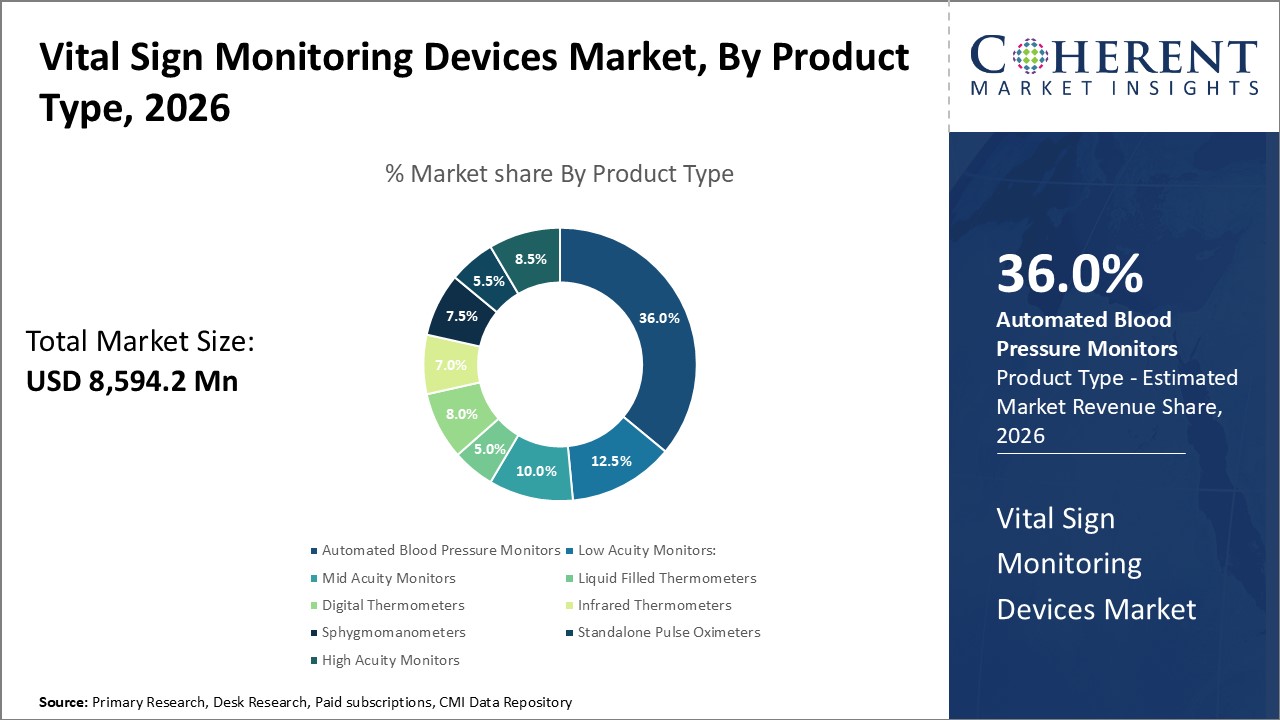
Figure 1. Global Vital Sign Monitoring Devices Market Share (%), By Product Type, 2026
Global Vital Sign Monitoring Devices Market – Drivers
Increasing Prevalence of Chronic Diseases
Increasing prevalence of chronic diseases such as Cardiovascular diseases (CVD), neurological disorders, and cancer is expected to drive the global vital sign monitoring devices market growth over the forecast period. For instance, in 2022, according to the World Health Organization, the major diseases that lead to the most deaths from non-communicable diseases (NCDs) are cardiovascular diseases, cancers, respiratory diseases, and diabetes, accounting for more than 80% of all premature NCD deaths.
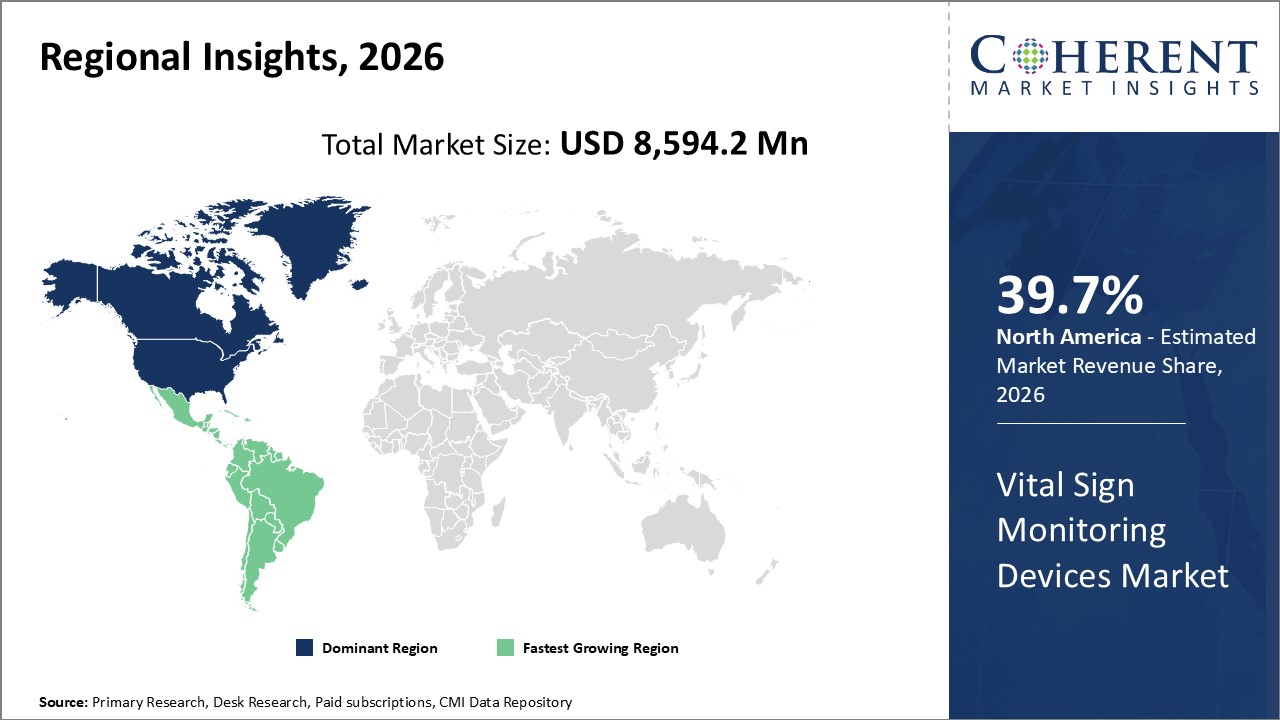
Figure 2. Global Vital Sign Monitoring Devices Market Value (US$ Million), By Region, 2026
Global Vital Sign Monitoring Devices Market- Regional Analysis
Among region, North America is estimated to hold a dominant position in the global vital sign monitoring devices market over the forecast period. North America holds 39.7 % of the market share, due to increasing prevalence of cardiovascular diseases in the U.S. region. For instance, in July 2026, according to Centers for Disease Control and Prevention (CDC), approximately 805,000 heart attack incidences arereported every year in the U.S., out of which, 605,000 people had heart attack for first time and the remaining 200,000 were those who already had a heart attack before.
In 2020, according to the Sharp Health News, around 103 million people in the U.S.
- Current Industry Events of 2026
- Market Size Estimation
- Regional Breakdown
- Competitive Landscape
- Customer Intelligence
- Segmental Analysis
- Pricing Analysis
- Key Market Drivers, Challenges & Future Trends
- Customized Insights Section
Vital Sign Monitoring Devices Market Report Coverage
| Report Coverage | Details | ||
|---|---|---|---|
| Base Year: | 2025 | Market Size in 2026: | USD 8,594.2 Mn |
| Historical Data for: | 2020 To 2024 | Forecast Period: | 2026 To 2033 |
| Forecast Period 2026 to 2033 CAGR: | 9.8% | 2033 Value Projection: | USD 16,535.6 Mn |
| Geographies covered: |
| ||
| Segments covered: |
| ||
| Companies covered: | CAS Medical Systems, Inc., Koninklijke Philips N.V., General Electric Co. (GE), Masimo Corporation, Mindray Medical International Limited, Medtronic, Nihon Kohden Corporation, Smiths Group plc., Dragerwerk AG & Co. KGaA, SunTech Medical, Inc., Welch Allyn, Inc., Spacelabs Healthcare, Inc., Contec Medical Systems Co., Ltd., Iradimed Corporation, and Xenoma. | ||
| Growth Drivers: |
| ||
| Restraints & Challenges: |
| ||
Global Vital Sign Monitoring Devices Market- Segmentation
Global vital sign monitoring devices market is segmented into product type, end user, and region.
Based on Product Type, the market is segmented into low acuity monitors, mid acuity monitors, high acuity monitors, liquid filled thermometers, digital thermometers, infrared thermometers, sphygmomanometers, automated blood pressure monitors, and standalone pulse oximeters. Out of which, the automated blood pressure monitors segment is expected to hold a dominant position in the global vital sign monitoring devices market during the forecast period, owing to increasing usage of blood pressure monitors .
Based on End User, the market is segmented into hospitals, clinics, ambulatory surgical center, and homecare settings. Out of which, the hospital segment is expected to dominate the market over the forecast period, owing to increasing number of partnership among the hospitals.
Among all segmentation, the product type segment has the highest potential due to increasing usage of automated blood pressure monitors over the forecast period. For instance, on May 3, 2022, Vivalink, a leading provider of digital healthcare solutions for virtual patient care and decentralized clinical trials, announced launch of the multi-vital blood pressure patch for remote patient monitoring for usage in commercial research and development. These patch offers electrocardiogram (ECG), heart rate, respiratory rate, and blood pressure monitoring for commercial research and development.
Global Vital Sign Monitoring Devices Market- Cross Sectional Analysis
In product type segment, automated blood pressure monitors held a dominant segment in North America region,as key players are focusing on inorganic strategies such as acquistion in order to expanding their presence, and are focused on enhancing market growth in U.S. For instance, in January 2022, ICU Medical, a company that connects patients and caregivers through safe, life saving, life enhancing IV therapy products, systems, and services, acquired Smiths Medical,. a company that has syringe and ambulatory infusion devices, vascular access, and vital care products. The addition of vital care products expanded the business range of ICU Medical with a robust reach.
Global Vital Sign Monitoring Devices Market- Key Developments
- In December 2021, Baxter, a company that provides products and therapies in hospitals and clinics, and patients care in their homes, acquired Hillrom, a medical technology leader
- In January 2021, Hillrom, acquired Bardy Diagnostics, an innovator in digital health and a leading provider of ambulatory cardiac monitoring technologies
- In February 2021, Koninklijke Philips, a company that improves people’s health and well-being through meaningful innovation, completed the acquisition of BioTelemetry, Inc., the leading remote medical technology company focused on the delivery of health information to improve quality of life and reduce cost of care. This resulted in the business expansion of patient care management solutions for the hospital and homes.
Global Vital Sign Monitoring Devices Market- Key Trends
Technological Advancments
Key market players are focusing on launching new portable vital sign monitoring devices to expand their product portfolio. For instance, in 2021, Analog Devices, Inc., a company is a modern digital economy, converting real-world phenomena into actionable insight, launched a wearable remote patient monitoring (RPM) device for measuring four vital sign with one MAX86178 triple-system vital sign analog front end (AFE).
Global Vital Sign Monitoring Devices Market: Restraint
Availability of Low Quality Products
Global vital sign monitoring devices market growth can be hindered by availability of not good quality products. The availability of substandard products at cheap cost acts as a hurdle for sales of low, mid, and high acuity monitors worldwide. For instance, according to the article published in april 2022, approximately 820 women die in pregnancy and childbirth every day worldwide, with 99% of these occurring in low-
resource settings. In order to these key players should provide good quality of products to overcome the restraint.
Global Vital Sign Monitoring Devices Market - Key Players
Major players operating in the global vital sign monitoring devices market include CAS Medical Systems, Inc., Koninklijke Philips N.V., General Electric Co. (GE), Masimo Corporation, Mindray Medical International Limited, Medtronic, Nihon Kohden Corporation, Smiths Group plc., Dragerwerk AG & Co. KGaA, SunTech Medical, Inc., Welch Allyn, Inc., Spacelabs Healthcare, Inc., Contec Medical Systems Co., Ltd., Iradimed Corporation, and Xenoma.
Sources
Primary Research Interviews
- Vital sign monitor manufacturers (Masimo, Philips, Mindray, GE HealthCare, Nihon Kohden, Welch Allyn/Hillrom)
- Hospital biomedical engineering directors
- Remote patient monitoring service operators
Databases
- U.S. FDA 510(k) database
Magazines
- MedTech Dive
- Healthcare IT News
Journals
- Journal of Clinical Monitoring and Computing
Newspapers
- Reuters Health
Associations
- AAMI
Public Domain Sources
- U.S. FDA
Proprietary Elements
- CMI Data Analytics Tool, Proprietary CMI Existing Repository of information for last 10 years.
* Definition: Vital sign monitoring involves measurement of heart rate, respiratory rate, temperature, and blood pressure, in order to assess physical functioning of the body. Vital sign monitoring devices are an integral part of patient monitoring. These devices are used in emergency rooms, operating rooms, intensive care units, and critical care settings.
Get access to 250+ pages report
Every segment, forecast, competitor profile and data table behind the analysis above — available for instant download.
- ESOMAR Member
- ISO 9001:2015 Certified
- D-U-N-S Registered
- GDPR & CCPA Compliant
Missing comfort of reading report in your local language? Find your preferred language:
Transform your Strategy with Exclusive Trending Reports
Frequently Asked Questions
The Vital Sign Monitoring Devices Market is estimated to be valued at USD 8,594.2 Mn in 2026, and is expected to reach USD 16,535.6 Mn by 2033.
The CAGR of the Vital Sign Monitoring Devices Market is projected to be 9.8% from 2026 to 2033.
Increasing prevalence of chronic diseases is expected to drive the market growth.
Automated Blood Pressure Monitors is the leading product type segment in the market growth.
Availability of low quality products is expected to hinder the market growth over the forecast period.
Major players operating in the market include CAS Medical Systems, Inc., Koninklijke Philips N.V., General Electric Co. (GE), Masimo Corporation, Mindray Medical International Limited, Medtronic, Nihon Kohden Corporation, Smiths Group plc., Dragerwerk AG & Co. KGaA, SunTech Medical, Inc., Welch Allyn, Inc., Spacelabs Healthcare, Inc., Contec Medical Systems Co., Ltd., Iradimed Corporation, and Xenoma.