

Disease Control and Prevention Vaccine Market Size Analysis - 2026 To 2033
The Disease Control and Prevention Vaccine Market is anticipated to grow at a CAGR of 12.4% with USD 114.9 Bn share in 2026 and is expected to reach USD 255.4 Bn in 2033. The Disease Control and Prevention Vaccine Market is driven by routine immunization, outbreak control, adult vaccination, and faster vaccine reformulation for emerging variants. For instance, in July 2025, WHO’s immunization coverage fact sheet, reported that global DTP3 coverage reached 85% in 2024, while 14.3 million children remained zero-dose, showing both large protected populations and unmet demand. In 2026, CDC reported 1,893 confirmed U.S. measles cases as of May 14, 2026, with 93% outbreak-associated, reinforcing the need for sustained MMR vaccination.
Key Takeaways
- Live-attenuated Vaccines is expected to account the largest share of 46.0% in 2026, because it mimics natural infection, creating strong, long-lasting immunity with only one or two doses, improving routine prevention efficiency. HHS’ Vaccine Types page, last reviewed in April 2026, lists live vaccines for MMR, rotavirus, chickenpox, smallpox, and yellow fever; CDC’s January 2026 update kept MMR and varicella in the all-children schedule.
- Monovalent vaccines will dominate with 67.0% in 2026, because targeting a single antigen or strain simplifies immune response, ensuring focused, robust protection and easier regulatory approval for specific disease prevention.
- Infectious diseases hold the dominant share of 78.0% in 2026 owing to vaccines prevent a wide range of contagious illnesses that cause high morbidity and mortality globally. According to WHO data published in July 2025, immunization prevented millions of deaths annually and DTP3 vaccine coverage reached 85% in 2024, protecting infants against diphtheria, tetanus, and pertussis classic infectious diseases. Measles vaccine coverage was 84% in 2024, underscoring routine demand for infectious disease vaccines worldwide. These broad vaccination programs and the continued monitoring of respiratory vaccines (including COVID‑19, flu, RSV) by the CDC in 2026 highlight the ongoing public health focus on infectious diseases compared with other indications.
- North America is expected to acquire the dominant share of 40.0% in 2026, due to advanced healthcare infrastructure, structured immunization governance with broad public/private delivery networks, and high vaccine coverage targets maintained by agencies like the CDC (as shown in the FY 2026 CDC Immunization Program report, published Apr–May 2026) that sustain high childhood and adult vaccination rates supported by coordinated procurement and policy frameworks.
Segmental Insights
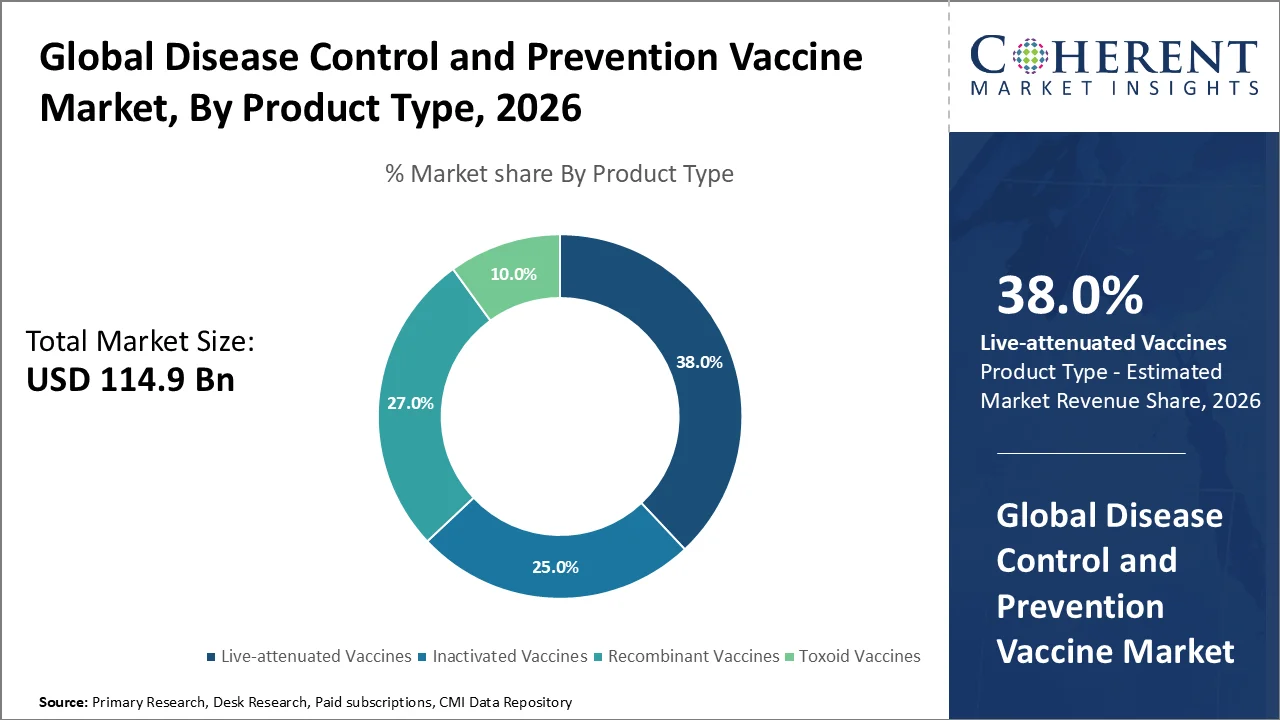
Why is Live-attenuated Vaccines Acquiring the Largest Market Share?
Live-attenuated Vaccines is projected to account for the largest share of disease control and prevention vaccine market in 2026, representing approximately 38.0% of the total volume. The Live-attenuated Vaccines segment remains dominant in the disease control and prevention vaccine market due to its ability to elicit strong, long-lasting immunity by mimicking a natural infection, often requiring only a single dose or fewer boosters than inactivated or subunit vaccines. This characteristic enhances compliance, reduces healthcare system burden, and ensures efficient population-wide protection against multiple infectious diseases. For instance, in April 2026, vaccines like Measles, Mumps, and Rubella (MMR), varicella, rotavirus, and yellow fever, listed on the U.S. Department of Health and Human Services’ vaccine types guide, demonstrate high efficacy with robust immunogenicity, which supports their widespread adoption in routine immunization programs. Live-attenuated vaccines also induce cell-mediated and humoral immune responses, providing broader protection compared with other vaccine types. Public health agencies globally prefer these vaccines in mass immunization campaigns due to their proven effectiveness in controlling outbreaks and cost-efficient administration, particularly in regions with established cold-chain infrastructure and strong healthcare delivery systems.
- Current Industry Events of 2026
- Market Size Estimation
- Regional Breakdown
- Competitive Landscape
- Customer Intelligence
- Segmental Analysis
- Pricing Analysis
- Key Market Drivers, Challenges & Future Trends
- Customized Insights Section
Monovalent Vaccines holds the Largest Market Share
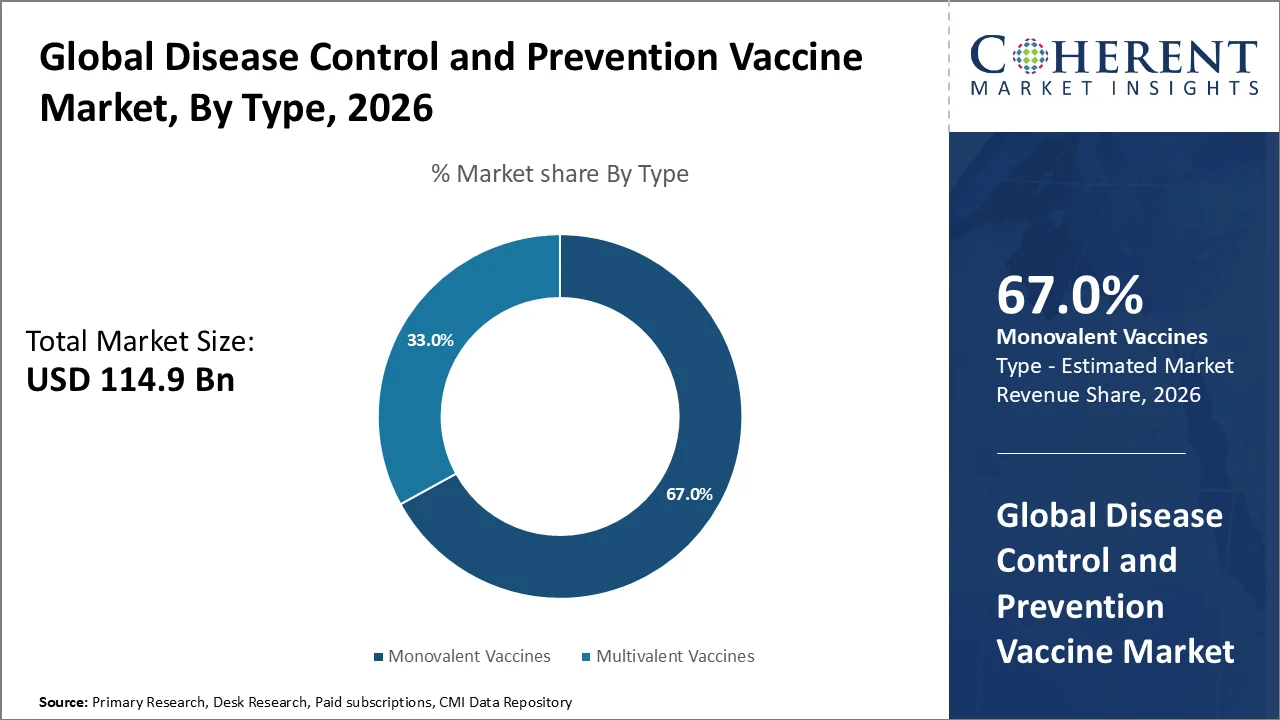
Monovalent vaccines dominate the market, accounting for a significant 67.0% share in 2026, because these vaccines focus on a single pathogen or strain, enabling precise immune targeting, simpler manufacturing, and clearer regulatory pathways, which enhance effectiveness and uptake in public health programs. Regulators often prefer monovalent formulations when circulating strains change, as they can be quickly matched to the target pathogen. For instance, the U.S. Food and Drug Administration’s (FDA) Vaccines and Related Biological Products Advisory Committee (VRBPAC) recommended a monovalent JN.1 lineage strain for the 2025‑2026 COVID‑19 vaccine formula to closely align vaccine composition with the dominant circulating SARS‑CoV‑2 variant (recommendation published May 22, 2025). This targeted approach supports higher vaccine effectiveness and public confidence, reinforcing demand for monovalent products in disease prevention strategies. Governments and health agencies worldwide adopt such tailored vaccines in immunization schedules to optimize protection and reduce disease burden.
Which Indication segment dominates the market?
Infectious Diseases account for the largest share of 78.0% in 2026, because vaccines are primarily used to prevent contagious diseases that spread rapidly, increase hospitalization pressure, and require routine public health protection. Demand remains strong as governments include vaccines for measles, influenza, pertussis, polio, hepatitis B, pneumococcal disease, meningococcal disease, HPV, and other infections in national immunization programs. For instance, the U.K. Health Security Agency/GOV.UK report, published on February 5, 2026, stated that routine childhood immunization in England protects against multiple infectious diseases and prevents at least 4,960 deaths and 228,447 hospitalizations annually. The report also highlighted that vaccines reduce transmission across the population, creating indirect protection beyond vaccinated individuals. This public health impact makes infectious disease prevention the core application area for vaccines, supporting continuous procurement, immunization campaigns, and product development across pediatric, adult, and outbreak-response programs.
Market Drivers
High Prevalence of Infectious Disease
High prevalence of infectious diseases significantly drives the disease control and prevention vaccine market growth by increasing demand for immunization programs and accelerating public health responses worldwide. For instance, in April 2026, according to the Global Hepatitis Report 2026 published by the World Health Organization, viral hepatitis B and C continue to affect millions globally despite being vaccine‑preventable, highlighting ongoing disease burden and need for vaccination efforts. WHO’s “Vaccines and Immunization” overview (May 2026) shows immunization prevents millions of deaths annually and remains a cornerstone in controlling outbreaks of diseases like measles, influenza, and polio, underscoring how persistent infectious threats bolster vaccine uptake and development.
Increasing Governmental Initiatives for Immunization Programs
Increasing governmental initiatives for immunization programs drive growth in the disease control and prevention vaccine market by strengthening vaccine delivery, boosting coverage, and closing immunity gaps through sustained public health action and policy support. For instance, the CDC’s “Routine Immunizations on Schedule for Everyone (RISE)” initiative, launched May 4, 2026, focuses on restoring routine vaccination rates after pandemic declines, supporting catch‑up and equitable coverage across U.S. populations. Also, global efforts under WHO’s World Immunization Week 2026, reported April 24, 2026, saw over 100 million childhood vaccine doses delivered, showcasing coordinated governmental and partner action to expand immunization reach and sustain demand for vaccines worldwide, reinforcing market momentum.
Rising Innovation in Next-Generation Vaccine Platforms and Precision Immunization Technologies is Transforming the Disease Control and Prevention Vaccine Market
Rising innovation in next-generation vaccine platforms and precision immunization technologies is transforming the disease control and prevention vaccine market by enabling faster, safer, and more targeted vaccines. Advances such as mRNA, viral vector, and nanoparticle-based vaccines allow rapid response to emerging infectious threats, while precision immunization approaches optimize dosage and scheduling for specific populations. Additionally, WHO’s 2026 Global Vaccine Research Update highlights the use of AI-driven antigen design and digital immunization tracking to increase vaccine coverage, streamline supply chains, and support personalized prevention strategies. Such innovations accelerate vaccine development, facilitate adaptive responses to evolving pathogens, and strengthen global immunization programs, ultimately expanding market demand and shaping the future landscape of disease prevention.
Moreover, increasing clinical trial has driven the disease control and prevention vaccine market growth over the forecast period. For instance, in February 2026, the Indian Council of Medical Research (ICMR) commenced Phase I human trials for an indigenous Kyasanur Forest Disease (KFD) vaccine to target this region‑specific tick-borne viral infection. The vaccine aims to provide effective, localized protection for populations in endemic areas of Karnataka and surrounding states, addressing persistent outbreaks and strengthening India’s capacity for preventive immunization against neglected zoonotic diseases.
Current Events and Their Impact on the Disease Control and Prevention Vaccine Market
Current Event | Description and its Impact |
Regulatory Updates on Vaccine Approvals |
|
Government Funding for Vaccine Development |
|
Expansion of National Immunization Programs |
|
Disease Control and Prevention Vaccine Market Trends
- Shift toward catch-up vaccination and zero-dose child targeting is becoming a major trend in the Disease Control and Prevention Vaccine Market, as governments and global health agencies are prioritizing children missed during routine immunization disruptions. In April 2026, WHO, UNICEF, and Gavi reported that the Big Catch-Up initiative delivered over 100 million vaccine doses to around 18.3 million children across 36 countries, including 12.3 million zero-dose children. This trend supports higher vaccine volumes, stronger public procurement, and wider use of measles, DTP, polio, and other routine disease-prevention vaccines.
- Growth of next-generation and indigenous vaccine platforms is transforming the market as countries focus on pandemic preparedness, regional disease control, and domestic vaccine capability. In February 2026, India’s ICMR announced that GLP-grade vaccine material had been manufactured and Phase I human clinical trials had started for an improved Kyasanur Forest Disease vaccine after CDSCO approval. This reflects rising investment in localized vaccine innovation for region-specific infectious diseases and supports future demand for inactivated, recombinant, and adjuvanted vaccine technologies.
- Expansion of global vaccine funding for 2026–2030 programs is a key market trend, as immunization alliances are linking vaccine procurement with health-system strengthening. Gavi’s Phase 6 strategy for 2026–2030 aims to help countries vaccinate more than 500 million children and adolescents and save 8–9 million lives, including around 1.5 million lives through HPV vaccination. This funding direction will increase demand for pediatric, adolescent, HPV, outbreak-response, and routine immunization vaccines across low- and middle-income countries.
Regional Insights
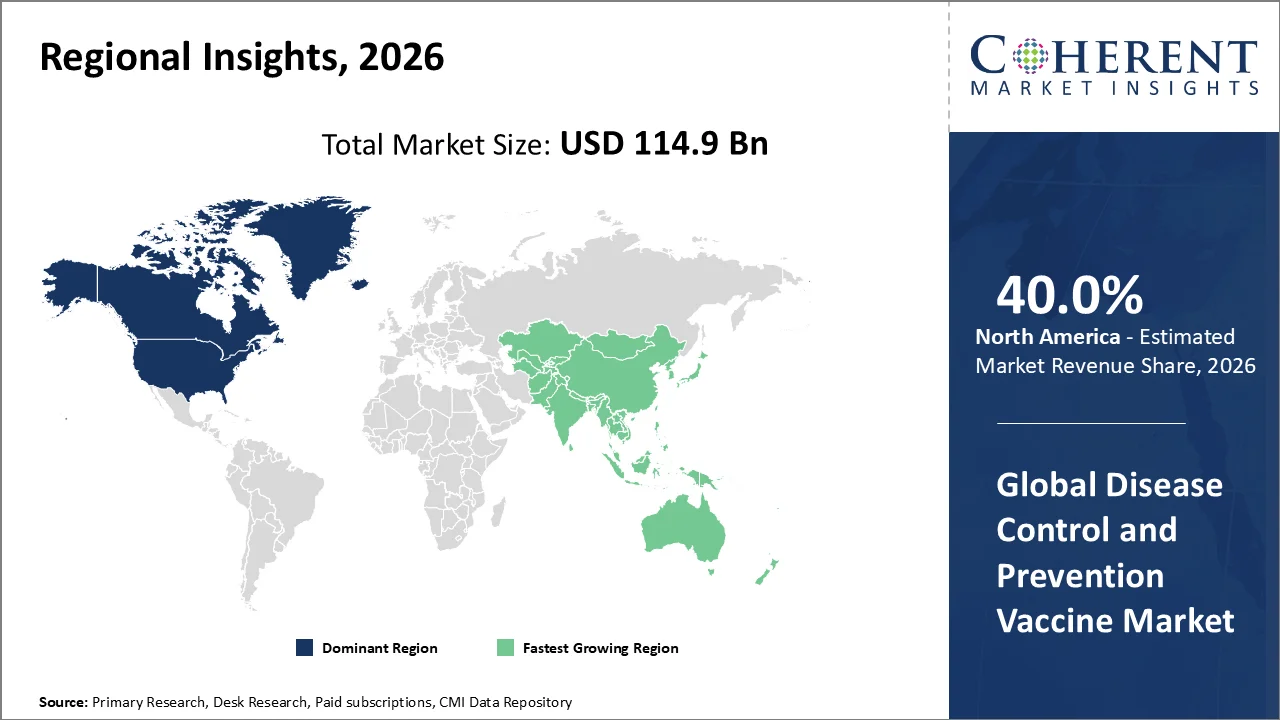
North America dominates owing to Strong Technological Infrastructure
North America account 40.0% market share in 2026, due to its robust public health infrastructure, high immunization coverage, advanced regulatory systems, and strong government support for vaccine deployment and surveillance. The U.S. and Canada maintain comprehensive immunization schedules monitored through ongoing data reporting and extensive coverage tracking by public agencies. For instance, in July 2025, WHO/UNICEF immunization coverage data up to 2024 shows sustained high routine vaccine uptake in the Region of the Americas, supporting disease prevention strategies at the population level. Moreover, in February 2026, the U.S. CDC’s Global Immunization Division published its mission highlighting intensified investment and scientific leadership to control vaccine‑preventable diseases worldwide, strengthening both domestic and international immunization efforts. These public health systems, backed by regulatory experience and surveillance networks, give North America a dominant position in controlling and preventing infectious diseases through vaccination.
Asia Pacific Disease Control and Prevention Vaccine Market Trends
The Asia-Pacific region is poised to be as the fastest-growing region through 2026-2033, due to expanding immunization programs, large population base, and strengthening public health infrastructure that increases vaccine access and coverage. WHO also reported that sustained political commitment and strategic plans like the Regional Vaccine Implementation Plan 2022‑2026 are increasing uptake and closing coverage gaps through catch‑up campaigns and routine services, further driving demand. High contribution to global vaccine manufacturing capacity and targeted campaigns to reach unvaccinated populations underpin market expansion across countries such as India, China, and Southeast Asian economies. These regional dynamics position Asia Pacific as a key growth engine in global vaccine demand and delivery.
Favorable reimbursement structure & Advanced regulatory and innovation ecosystem is Accelerating the Disease Control and Prevention Vaccine Market Demand in United States
The U.S. country is the dominant country in the North America disease control and prevention vaccine market. The U.S. dominates the North America Disease Control and Prevention Vaccine Market due to its large population base, mature immunization infrastructure, and strong government-backed vaccination programs. Large addressable population and strong routine immunization system has driven the market growth in the U.S. country. CDC guidelines recommend vaccination against 14 serious illnesses by age 24 months, supporting steady demand for pediatric vaccines. The U.S. population reached around 341.8 million in July 2025, creating a much larger vaccine demand base than Canada and Mexico.
Source: U.S. Census Bureau; CDC
China Disease Control and Prevention Vaccine Market Trends
China has become the biggest player in the Asia Pacific disease control and prevention vaccine market in 2026. China is the dominant country in the Asia Pacific disease control and prevention vaccine market due to several key factors. It has a large population, creating high domestic vaccine demand for routine immunization and outbreak response. Strong governmental support, through the National Health Commission and the CDC China, ensures robust immunization programs, widespread public awareness, and efficient vaccine distribution networks. China is also a major vaccine manufacturer, producing both traditional and novel vaccines (e.g., COVID-19, influenza, and polio vaccines), enabling self-sufficiency and export capacity. In addition, ongoing investments in R&D for next-generation vaccines and precision immunization strategies, as reported by the China CDC 2026 Annual Vaccine Report (published March 2026), support rapid development and deployment of vaccines, further consolidating its market dominance in the Asia Pacific region.
Source: Chinese Center for Disease Control and Prevention
Who are the Major Companies in Disease Control and Prevention Vaccine Market
Some of the major key players in Disease Control and Prevention Vaccine Market are Pfizer Inc., GlaxoSmithKline plc, Sanofi Pasteur, Merck & Co., Inc., AstraZeneca PLC, Johnson & Johnson, Moderna, Inc., BioNTech SE, Novavax, Inc., Sinovac Biotech Ltd., Serum Institute of India Pvt. Ltd., Bharat Biotech International Ltd., CSL Limited, Dynavax Technologies Corporation, Valneva SE Inovio Pharmaceuticals, Inc., Vaxart, Inc., Astellas Pharma Inc., Daiichi Sankyo Company, Limited and Panacea Biotec Ltd. among others
Key News
- In January 2026, the IAVI G004 Phase 1 clinical trial launched in South Africa to evaluate a promising HIV vaccine approach using sequential immunogens designed to elicit broadly neutralizing antibodies, marking a key early‑stage vaccine study. This early-stage trial marks a key step toward preventive HIV vaccines, focusing on safety and immunogenicity in healthy adult volunteers, and supports global efforts to develop long-lasting HIV protection.
- In May 2026, GeoVax Labs, a clinical-stage biotechnology company initiated Phase 3 clinical execution activities for its GEO‑MVA vaccine candidate targeting mpox and smallpox. The trial focuses on immunogenicity and safety across adult populations, following regulatory guidance aligned with the European Medicines Agency’s immunobridging framework. This milestone accelerates the development of single‑dose vaccines for outbreak-prone diseases and strengthens global preventive immunization strategies.
- In January 2026, Vaxcyte advanced its VAX‑31 pneumococcal conjugate vaccine program, enrolling participants in Phase 3 trials for both adult and infant indications. The study aims to expand strain coverage, evaluate safety, and enhance immune responses against pneumococcal disease. This development reflects growing global demand for next-generation vaccines that provide broader protection, especially in populations at high risk for invasive pneumococcal infections.
- In March 2026, Ukraine added the HPV vaccine to its national immunization schedule, providing single‑dose HPV vaccination for girls aged 12–13 for the first time, expanding preventive protection against cervical cancer.
- In February 2026, India’s Union Health Minister launched an indigenously manufactured Tetanus and Adult Diphtheria (Td) vaccine at the Central Research Institute in Kasauli. The vaccine will be supplied under the Universal Immunization Programme, expanding domestic preventive vaccine availability and supporting national immunization efforts to reduce morbidity and mortality associated with tetanus and diphtheria.
Market Report Scope
Disease Control and Prevention Vaccine Market Report Coverage
| Report Coverage | Details | ||
|---|---|---|---|
| Base Year: | 2025 | Market Size in 2026: | USD 114.9 Bn |
| Historical Data for: | 2020 To 2024 | Forecast Period: | 2026 To 2033 |
| Forecast Period 2026 to 2033 CAGR: | 12.4% | 2033 Value Projection: | USD 255.4 Bn |
| Geographies covered: |
| ||
| Segments covered: |
| ||
| Companies covered: | Pfizer Inc., GlaxoSmithKline plc, Sanofi Pasteur, Merck & Co., Inc., AstraZeneca PLC, Johnson & Johnson, Moderna, Inc., BioNTech SE, Novavax, Inc., Sinovac Biotech Ltd., Serum Institute of India Pvt. Ltd., Bharat Biotech International Ltd., CSL Limited, Dynavax Technologies Corporation, Valneva SE Inovio Pharmaceuticals, Inc., Vaxart, Inc., Astellas Pharma Inc., Daiichi Sankyo Company, Limited and Panacea Biotec Ltd. among others | ||
Analyst Opinion
- The Disease Control and Prevention Vaccine Market is increasingly driven by government-led immunization initiatives and R&D investments in next-generation vaccines. In 2026, the U.S. CDC reported expanded RSV vaccination recommendations for older adults, reflecting growing adoption of preventive vaccines across age groups and strengthening the market’s long-term growth trajectory.
- Infectious disease vaccines remain the primary revenue driver, supported by multivalent and combination vaccines. For instance, in April 2026, WHO and Gavi’s Big Catch-Up initiative delivered over 100 million vaccine doses to zero-dose children across 36 countries, highlighting the global push for routine immunization and outbreak prevention.
- Next-generation and mRNA vaccine platforms are shaping the competitive landscape. In February 2026, India’s ICMR initiated Phase I trials for an indigenous Kyasanur Forest Disease vaccine, showcasing regional innovation and reinforcing demand for localized disease-prevention vaccines.
- Public funding and regulatory support continue to accelerate market growth. Gavi’s 2026–2030 Phase 6 strategy aims to vaccinate 500 million children and adolescents, demonstrating long-term commitment to vaccine procurement and expanded immunization coverage in Asia, Africa, and Latin America.
- North America remains the dominant regional market, driven by high healthcare expenditure, advanced regulatory frameworks, and robust immunization coverage. CDC data published in February 2026 reported 93% measles outbreak-associated cases were in vaccinated populations, highlighting ongoing demand for combination and adult vaccines.
- Europe shows strong adoption of multivalent and recombinant vaccines, supported by EMA’s updated conditional marketing authorization pathways in 2026, allowing faster approval for combination vaccines and seasonal influenza reformulations.
- Asia Pacific is emerging as the fastest-growing regional market, fueled by large populations, rising government immunization initiatives, and domestic vaccine manufacturing. In 2026, China and India expanded funding for next-generation vaccine programs targeting influenza, RSV, and hepatitis, driving pipeline expansion and platform innovation.
- Late-stage and adult vaccination adoption is expanding globally. CDC’s adult immunization schedules, updated July 2025, are driving increased uptake of influenza, pneumococcal, shingles, vaccines in North America and Europe in 2026. This trend supports lifecycle immunization strategies beyond pediatrics.
Speak to the analyst
Want personalized insights?
Take the findings above to one of our principal consultants, or have the report rebuilt around the segments, geographies and competitors you actually track.
Market Segmentation
- By Product Type (Revenue, USD Bn, 2021-2033)
- Live-attenuated Vaccines
- Inactivated Vaccines
- Recombinant Vaccines
- Toxoid Vaccines
- By Type (Revenue, USD Bn, 2021-2033)
- Monovalent Vaccines
- Multivalent Vaccines
- By Route of Administration (Revenue, USD Bn, 2021-2033)
- Oral
- Injectable
- By Age Group (Revenue, USD Bn, 2021-2033)
- Pediatric Vaccines
- Adult Vaccines
- By Indication (Revenue, USD Bn, 2021-2033)
- Infectious Diseases
- Cancer
- Other Indications
- By Region (Revenue, USD Bn, 2021-2033)
- North America
- U.S.
- Canada
- Latin America
- Brazil
- Mexico
- Argentina
- Rest of Latin America
- Europe
- Germany
- U.K.
- France
- Italy
- Spain
- Russia
- Rest of Europe
- Asia Pacific
- China
- India
- Japan
- Australia
- South Korea
- ASEAN
- Rest of Asia Pacific
- Middle East
- GCC
- Israel
- Rest of Middle East
- Africa
- South Africa
- Central Africa
- North Africa
- North America
Sources
Primary Research Interviews
- Interviews with public health officials, immunization program managers, and hospital vaccine coordinators to understand vaccination adoption challenges, supply chain constraints, and impact of new vaccine technologies on disease prevention outcomes.
- Insights from vaccine manufacturers, biotech researchers, and R&D scientists on advancements in mRNA, recombinant, and multivalent vaccines, along with regulatory compliance and platform innovation.
- Discussions with market analysts, health economists, and consultants to evaluate market trends, competitive landscape, and vaccine deployment strategies across regions.
- Conversations with government policymakers, procurement officers, and public-sector decision-makers to assess funding priorities, program implementation challenges, and public awareness initiatives driving vaccine adoption.
Databases
- WHO Immunization Data Portal
- CDC Vaccines & Immunizations Database
- FDA Vaccines Licensed for Use in the U.S.
- ClinicalTrials.gov
- UNICEF Immunization Data
- Gavi Vaccine Support and Market Shaping Data
- WHO Global Health Observatory
- ECDC Vaccine Scheduler
- EMA European Public Assessment Reports
- PAHO Immunization Data
Magazines
- VaccinesWork by Gavi
- Nature Medicine
- STAT News
- The Scientist
- Scientific American Health Section
- Fierce Pharma Vaccine Section
- BioPharma Dive
- Pharmaceutical Technology
- Medical Xpress Immunology and Vaccine Section
- Health Affairs Forefront
Journals
- Vaccine
- Human Vaccines & Immunotherapeutics
- The Lancet Infectious Diseases
- New England Journal of Medicine
- Clinical Infectious Diseases
- Journal of Infectious Diseases
- npj Vaccines
- Frontiers in Immunology
- BMC Infectious Diseases
- Emerging Infectious Diseases
Newspapers
- The New York Times Health Section
- The Guardian Global Health Section
- Financial Times Health and Pharma Section
- The Wall Street Journal Health Section
- Reuters Health News
- Associated Press Health News
- The Washington Post Health Section
- The Hindu Health Section
- The Economic Times Healthcare Section
- Business Standard Healthcare Section
Associations
- Gavi, the Vaccine Alliance
- Coalition for Epidemic Preparedness Innovations
- International Vaccine Institute
- Developing Countries Vaccine Manufacturers Network
- Vaccines Europe
- Association of Immunization Managers
- American Public Health Association
- Biotechnology Innovation Organization
- International Federation of Pharmaceutical Manufacturers & Associations
- Immunization Action Coalition
Public Domain Sources
- WHO Immunization Coverage Reports
- CDC Morbidity and Mortality Weekly Report
- CDC Advisory Committee on Immunization Practices Recommendations
- FDA Vaccines and Related Biological Products Advisory Committee Documents
- U.S. HHS Vaccine and Immunization Reports
- NIH Vaccine Research Center Publications
- UNICEF Immunization Reports
- Gavi Annual Progress Reports
- EMA Vaccine Assessment Reports
- ECDC Vaccine-Preventable Disease Surveillance Reports
Proprietary Elements
- CMI Data Analytics Tool
- Proprietary CMI Existing Repository of information for last 10 years
Get access to 250+ pages report
Every segment, forecast, competitor profile and data table behind the analysis above — available for instant download.
- ESOMAR Member
- ISO 9001:2015 Certified
- D-U-N-S Registered
- GDPR & CCPA Compliant
Missing comfort of reading report in your local language? Find your preferred language:
Transform your Strategy with Exclusive Trending Reports
Frequently Asked Questions
The Disease Control and Prevention Vaccine Market is expected to reach USD 255.4 Bn in 2033.
Major players operating in the global Disease Control and Prevention Vaccine Market include Pfizer Inc., GlaxoSmithKline plc, Sanofi Pasteur, Merck & Co., Inc., AstraZeneca PLC, Johnson & Johnson, Moderna, Inc., BioNTech SE, Novavax, Inc., Sinovac Biotech Ltd., Serum Institute of India Pvt. Ltd., Bharat Biotech International Ltd., CSL Limited, Dynavax Technologies Corporation, Valneva SE Inovio Pharmaceuticals, Inc., Vaxart, Inc., Astellas Pharma Inc., Daiichi Sankyo Company, Limited and Panacea Biotec Ltd. among others.
Stringent regulatory approvals and competition from alternative therapies are the major factors hampering the growth of the disease control and prevention vaccine market.
High Prevalence of Infectious Disease and Increasing Governmental Initiatives for Immunization Programs are the major factors driving the growth of the global disease control and prevention vaccine market over the forecast period.
The Disease Control and Prevention Vaccine Market is anticipated to grow at a CAGR of 12.4% between 2026 and 2033.
Among regions, North America is expected to account for a largest market share in the global Disease Control and Prevention Vaccine Market over the forecast period.
Live-attenuated vaccines contain weakened pathogens that replicate minimally, inducing strong, long-lasting immunity. Inactivated vaccines use killed pathogens, eliciting immunity without replication, often requiring booster doses for durable protection.