

Endocrine Therapy Drugs (ETDs) Market Analysis & Forecast 2026-2033
The Endocrine Therapy Drugs (ETDs) market is projected to grow from about USD 35,300 Mn in 2026 to around USD 50,000 Mn by 2033, expanding at a CAGR of 5.1% owing to rising endocrine disorders and new treatments like GLP-1 therapies, biologics, and biosimilars are being developed.
Key Takeaways
- Based on Drug Type, the anti-diabetic drugs segment is projected to capture 47.2% share of the market in 2026, driven by insulin and GLP-1 therapies.
- Based on Application, the diabetes segment is expected to hold 52.8% share of the market in 2026, fueled by rising prevalence and advanced treatment adoption.
- Based on Distribution Channel, the hospital pharmacies segment is expected to lead the market with 53.4% share in 2026, supported by prescription-based therapies and specialized patient monitoring.
- Based on Region, north America is set to lead the Endocrine Therapy Drugs (ETDs) market with 39% share in 2026. While, Asia Pacific is anticipated to be the fastest growing region.
Market Overview
The market for endocrine therapy drugs is growing steadily because numerous individuals are getting diabetes, thyroid problems, osteoporosis, and growth hormone deficiencies. New GLP-1 receptor agonists, biologics, and biosimilars are changing treatment, and combining digital health with traditional medicine makes people more likely to stick with their treatment. Some of the biggest problems are high costs, regulatory issues, and long-term side effects.
Current Events and their Impacts on the Endocrine Therapy Drugs (ETDs) Market
Current Event | Description and its Impact |
AI and Digital Health Integration in Endocrine Care |
|
Regulatory Harmonization and Biosimilar Competition |
|
Which Endocrine Therapy Delivers the Greatest Survival Benefit?
Therapy Type | Recurrence Reduction | Median PFS | Key Limitation |
Tamoxifen (SERM) | ~40% | 5–7 years | Thromboembolism risk |
Aromatase Inhibitors (AI) | ~50% | 7–10 years | Bone density loss |
SERDs (Fulvestrant) | Effective in resistant cases | 6–8 months (advanced) | Injectable only |
Endocrine + CDK4/6 inhibitors | 30–40% risk reduction | 9–12 months (advanced) | Neutropenia, cost |
- Current Industry Events of 2026
- Market Size Estimation
- Regional Breakdown
- Competitive Landscape
- Customer Intelligence
- Segmental Analysis
- Pricing Analysis
- Key Market Drivers, Challenges & Future Trends
- Customized Insights Section
Segmental Insights
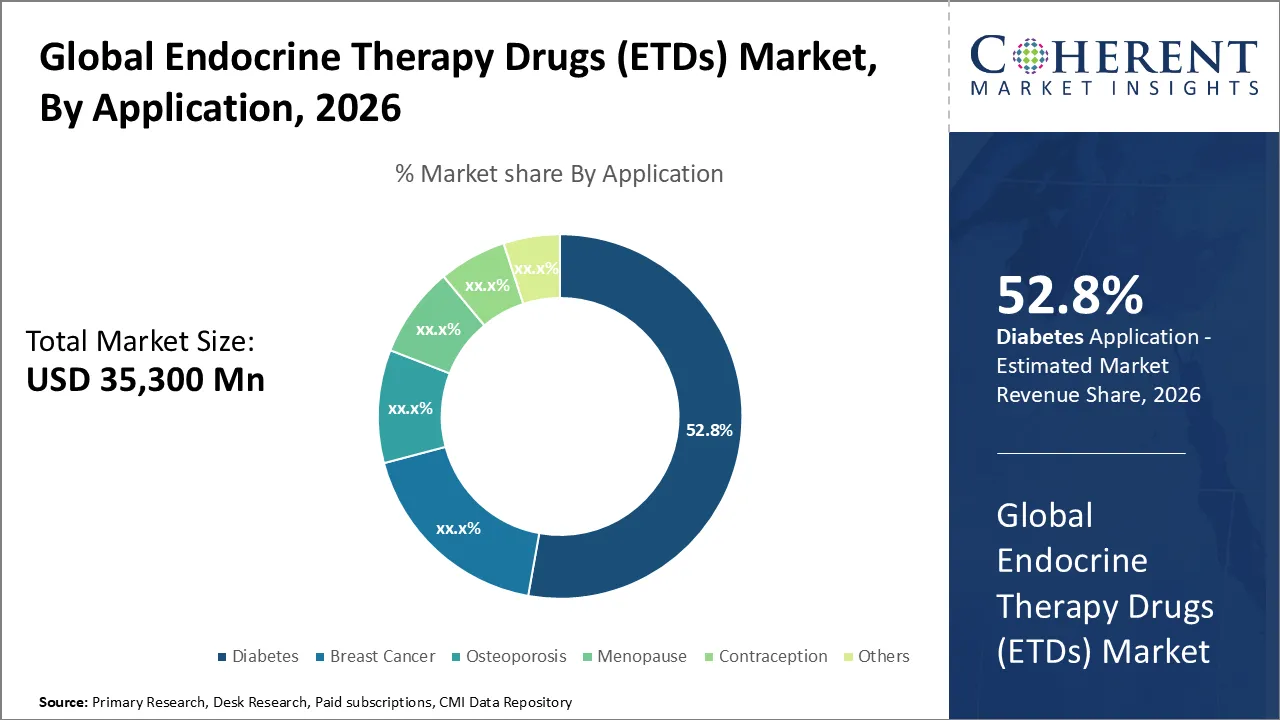
Is Diabetes Driving Endocrine Therapy Drug Market Growth Through Advanced Treatments?
In terms of application, the diabetes segment is expected to hold 52.8% share of the market in 2026, due to the fact that it is becoming more common around the world, people are growing more aware of it, and improved diagnostic rates. Advanced therapies, such as biologics and GLP-1 receptor agonists, keep demand high, making diabetes the main reason ETDs are growing.
Endocrine Therapy Drugs (ETDs) Market Insights, By Drug Type, Anti-diabetic drugs are driven by insulin and GLP-1 therapies
In terms of drug type, the anti-diabetic drugs segment is projected to capture 47.2% share of the market in 2026. The global diabetes epidemic, rising obesity rates, and changes in lifestyle is fueling the segment. Insulin therapies, oral antidiabetics, and GLP-1 receptor agonists are driving adoption, supported by ongoing innovation and strong clinical demand among different patient groups.
For instance, in January 2026, a study in JAMA Oncology found that SGLT2 inhibitors, which are often used to treat diabetes, may help men with prostate cancer that are getting endocrine therapy stay on their treatment longer. These drugs worked better when used with androgen deprivation therapy, which suggests that they may have benefits for cancer patients beyond controlling blood sugar. However, more research is needed to confirm this.
Are Hospital Pharmacies Driving Endocrine Therapy Drug Growth Through Prescriptions and Monitoring?
In terms of distribution channel, the hospital pharmacies segment is expected to lead the market with 53.4% share in 2026, because they handle complicated endocrine therapies. Insulin, biologics, and growth hormone treatments often need prescriptions, monitoring, and patient education that can only be performed in a hospital. Their dominance shows that people trust institutional healthcare systems and that endocrine drugs need to be handled in a certain way.
Regional Insights
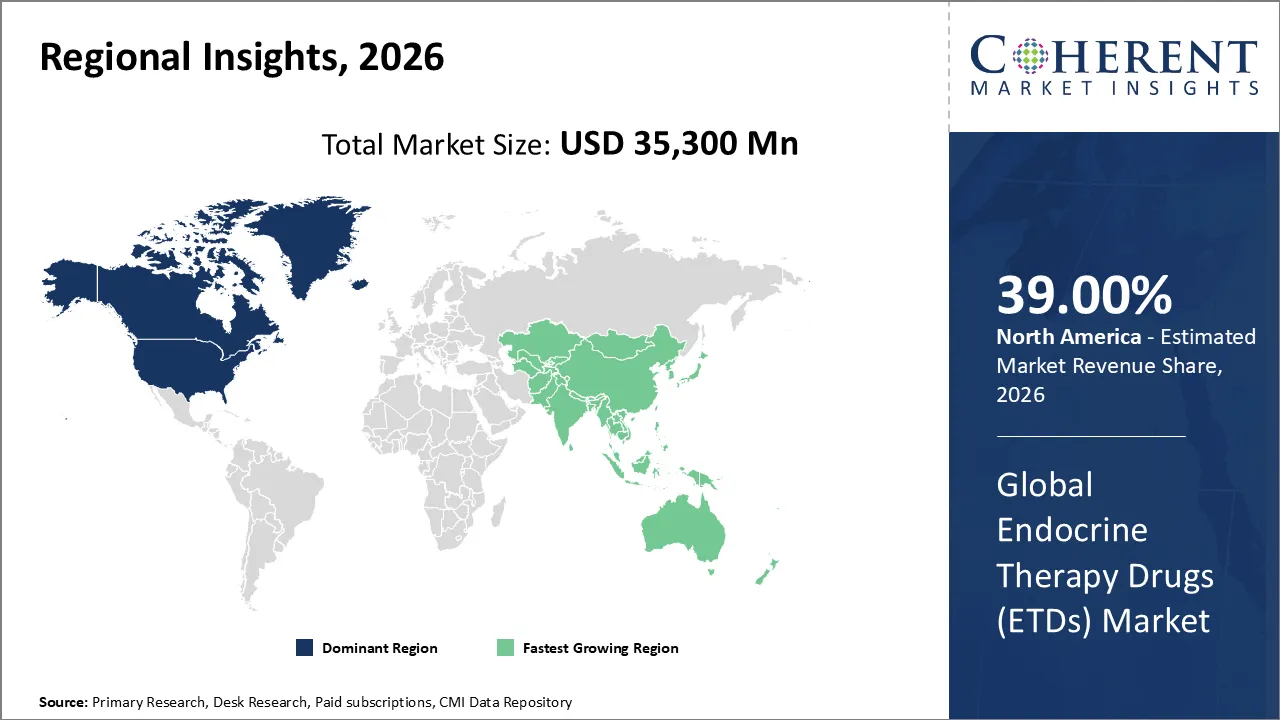
North America Endocrine Therapy Drugs (ETDs) Market Analysis & Trends
North America is expected to dominate the Endocrine Therapy Drugs (ETDs) market with 39% share in 2026, because diabetes and thyroid disorders are common, healthcare infrastructure is advanced, insurance coverage is strong, and new therapies are quickly adopted thanks to strong pharmaceutical R&D and regulatory frameworks. This ensures that patients have access to these therapies and that revenue continues to grow.
For instance, in February 2026, Roche stated that the FDA had approved a New Drug Application for giredestrant, an oral SERD, to be used with everolimus in people with ER-positive, HER2-negative, ESR1-mutated advanced breast cancer. The evERA trial showed that the risk of progression was 44% lower overall and 62% lower in ESR1-mutated patients. This was a big step forward in endocrine therapy.
Asia Pacific Endocrine Therapy Drugs (ETDs) Market Analysis & Trends
Asia Pacific is anticipated to be the fastest growing region, because diabetes and thyroid disorders are becoming increasingly prevalent, especially in India and China. This is due to the growth of healthcare infrastructure, government programs that encourage early screening, and more middle-class people becoming aware of these issues. These things make endocrine therapies popular, making the region the fastest-growing in the world.
Endocrine Therapy Drugs (ETDs) Market Outlook Country-Wise
The U.S. Endocrine Therapy Drugs (ETDs) Market Trends
The U.S. ETDs market is in high demand in 2026 due to there is a high prevalence of diabetes and thyroid disorders, the healthcare system is advanced, insurance coverage is excellent, and new treatments are being used quickly. Strong pharmaceutical research and development (R&D) and good regulatory frameworks help more people get access to drugs and keep the market growing.
For instance, in December 2025, Novartis declared that long-term data show that Kisqali (ribociclib) combined with endocrine therapy keeps 1 in 4 metastatic breast cancer patients’ progression-free beyond four years. The MONALEESA trials showed that the benefits last, and the NATALEE results in early breast cancer strengthened Kisqali's position as the best CDK4/6 inhibitor to use with endocrine therapy around the world.
China Endocrine Therapy Drugs (ETDs) Market Trends
In 2026, China's ETDs market is in high demand because there is a massive population of diabetes, more people with thyroid problems, and rapid urbanization, which causes lifestyle-related endocrine problems. Strong growth and widespread adoption across the country are driven by expanding healthcare infrastructure, government programs to help people with chronic diseases, and more people being able to get affordable treatments.
For instance, in December 2025, after progression on endocrine therapy, ENHERTU (trastuzumab deruxtecan) was approved by the China NMPA for HR-positive, HER2-low, or HER2-ultralow metastatic breast cancer. According to the results of DESTINY-Breast06, ENHERTU lowered the risk of progression by 38% compared to chemotherapy. It also had a median progression-free survival of 13.2 months, making it a new targeted option in addition to endocrine therapy.
Market Report Scope
Endocrine Therapy Drugs (ETDs) Market Report Coverage
| Report Coverage | Details | ||
|---|---|---|---|
| Base Year: | 2025 | Market Size in 2026: | USD 35,300 Mn |
| Historical Data for: | 2020 To 2024 | Forecast Period: | 2026 To 2033 |
| Forecast Period 2026 to 2033 CAGR: | 5.1 % | 2033 Value Projection: | USD 50,000 Mn |
| Geographies covered: |
| ||
| Segments covered: |
| ||
| Companies covered: | Novo Nordisk A/S, AstraZeneca, Generex Biotechnology, Orion Pharma AB, Sanofi, Teva Pharmaceutical Industries Ltd., F. Hoffmann-La Roche, Hisamitsu Pharmaceutical Co.,Inc., Bayer AG, Eli Lilly and Company, Abbott, Tonghua Dongbao Pharmaceutical Co., Ltd., Merck & Co., Inc., TherapeuticsMD, Inc., Pfizer Inc., Allergan, BioSante Pharmaceuticals, Amgen Inc., Noven Pharmaceuticals, Inc., and QuatRx Pharmaceuticals | ||
| Growth Drivers: |
| ||
| Restraints & Challenges: |
| ||
Endocrine Therapy Drugs (ETDs) Market Driver
Increasing prevalence of chronic diseases
The Endocrine Therapy Drugs (ETDs) market growth is quickly because a growing number of people are getting chronic diseases like diabetes, breast cancer, and other hormone-related conditions. Since these conditions often need treatment for a long time, the need for effective endocrine therapies keeps growing. As populations age, people become less active, and genetics contribute in higher disease prevalence, healthcare systems are relying on ETDs to manage patient outcomes, causing the market to grow steadily around the world.
Increasing product approvals and launches
The Endocrine Therapy Drugs (ETDs) market demand is rising when pharmaceutical companies get regulatory approvals and launch new products. Innovative therapies, better drug formulations, and more uses for drugs make more treatment options available to patients. At the same time, competitive strategies among market players make these options available more quickly. Each approval not only makes the therapeutic pipeline stronger, but it also makes doctors more likely to use it and patients more likely to trust it. This ever-changing environment keeps the ETDs market alive and well, with more chances for both established companies and new biotech companies to grow.
Endocrine Therapy Drugs (ETDs) Market Opportunity
Precision Medicine Approaches
Precision medicine is becoming a revolutionary way to treat rare endocrine disorders by customizing treatments based on genetic and molecular profiles. This individualized approach increases effectiveness and lowers side effects. The Endocrine Therapy Drugs (ETDs) Market forecast indicates that precision medicine will be a big driver of growth. Biotech companies will use genomic insights to make targeted endocrine therapies.
Analyst Opinion (Expert Opinion)
- Endocrine therapy drugs are expected to see steady growth in demand for treating diabetes, thyroid problems, and adrenal insufficiency. Hospital pharmacies are still the main way to get drugs, but statistics show that online and retail pharmacies are growing quickly, especially in Asia-Pacific, where rising obesity-related endocrine disorders and better healthcare infrastructure are driving adoption. North America still has the highest treatment penetration because of established clinical protocols and high diagnosis rates.
- Data shows that the use of endocrine therapy drugs is steadily rising, with lifestyle-related endocrine disorders like diabetes and thyroid dysfunction being major factors. Retail pharmacies are a major way for patients to get their medications, but hospital pharmacies are better at providing complex therapies. Pharmaceutical companies are investing into personalized formulations and targeted therapies. This shows a move toward precision medicine, which treats different groups of patients in different places.
Speak to the analyst
Want personalized insights?
Take the findings above to one of our principal consultants, or have the report rebuilt around the segments, geographies and competitors you actually track.
Market Segmentation
- By Drug Type
- Anti-diabetic Drugs
- Anti-osteoporosis Drugs
- Contraceptive Drugs
- Breast Cancer Drugs
- Others (Menopause Drugs, among others)
- By Application
- Diabetes
- Breast Cancer
- Osteoporosis
- Menopause
- Contraception
- Others (Gender Reassignment Surgery, Hypothyroidism, among others)
- By Distribution Channel
- Hospital Pharmacies
- Retail Pharmacies
- Online Pharmacies
- By Region
- North America
- U.S.
- Canada
- Latin America
- Brazil
- Argentina
- Mexico
- Rest of Latin America
- Europe
- Germany
- U.K.
- Spain
- France
- Italy
- Russia
- Rest of Europe
- Asia Pacific
- China
- India
- Japan
- Australia
- South Korea
- ASEAN
- Rest of Asia Pacific
- Middle East
- GCC Countries
- Israel
- Rest of Middle East
- Africa
- South Africa
- North Africa
- Central Africa
- North America
- Key Players
- Novo Nordisk A/S
- AstraZeneca
- Generex Biotechnology
- Orion Pharma AB
- Sanofi
- Teva Pharmaceutical Industries Ltd.
- Hoffmann-La Roche
- Hisamitsu Pharmaceutical Co.,Inc.
- Bayer AG
- Eli Lilly and Company
- Abbott
- Tonghua Dongbao Pharmaceutical Co., Ltd.
- Merck & Co., Inc.
- TherapeuticsMD, Inc.
- Pfizer Inc.
- Allergan
- BioSante Pharmaceuticals
- Amgen Inc.
- Noven Pharmaceuticals, Inc.
- QuatRx Pharmaceuticals
Sources
Primary Research Interviews
- Oncologists (Breast Cancer Specialists, Hormone Therapy Experts)
- Endocrinologists & Hormone Disorder Specialists
- Pharmaceutical Company Executives (Oncology & Endocrine Divisions)
- Clinical Trial Investigators (Hormone Therapy Drugs)
- Hospital Pharmacists & Specialty Drug Distributors
- Healthcare Policy Experts & Reimbursement Consultants
- Others
Databases
- Bloomberg Terminal
- Thomson Reuters Eikon
- IQVIA MIDAS Database
- Others
Magazines
- Fierce Pharma
- Pharmaceutical Executive Magazine
- Drug Discovery & Development Magazine
- Oncology Times
- Pharma Manufacturing Magazine
- Others
Journals
- Journal of Clinical Oncology
- The Lancet Oncology
- Endocrine Reviews
- Journal of Endocrinology
- Breast Cancer Research and Treatment
- Others
Newspapers
- Financial Times
- The Wall Street Journal
- Reuters Health News
- Bloomberg
- The New York Times – Health Section
- Others
Associations
- American Society of Clinical Oncology (ASCO)
- Endocrine Society
- European Society for Medical Oncology (ESMO)
- American Association for Cancer Research (AACR)
- International Society of Endocrinology (ISE)
- Others
Public Domain Sources
- U.S. Food and Drug Administration (FDA)
- European Medicines Agency (EMA)
- World Health Organization (WHO)
- National Cancer Institute (NCI)
- Centers for Disease Control and Prevention (CDC)
- ClinicalTrials.gov
- Others
Proprietary Elements
- CMI Data Analytics Tool
- Proprietary CMI Existing Repository of Information for the Last 8 Years
Get access to 250+ pages report
Every segment, forecast, competitor profile and data table behind the analysis above — available for instant download.
- ESOMAR Member
- ISO 9001:2015 Certified
- D-U-N-S Registered
- GDPR & CCPA Compliant
Missing comfort of reading report in your local language? Find your preferred language:
Transform your Strategy with Exclusive Trending Reports
Frequently Asked Questions
The global Endocrine Therapy Drugs (ETDs) Market size was valued at USD 35,300 Mn in 2026 and is expected to reach USD 50,000 Mn in 2033.
The global endocrine therapy drugs (ETDs) market size is estimated to be valued at USD 35,300 Mn in 2026 and is expected to exhibit a CAGR of 5.1% between 2026 and 2033.
Increasing prevalence of chronic diseases such as diabetes, breast cancer, etc. and increasing research and development activities for the development of novel endocrine therapy drugs (ETDs) are expected to drive the market growth over the forecast period.
Anti-diabetic Drugs segment is expected to hold the major market share in the market.
North America holds the largest market share in the market.
Major factors hampering growth of the market include side effects associated with the use of endocrine therapy drugs (ETDs).
Major players operating in the market include Novo Nordisk A/S, AstraZeneca, Generex Biotechnology, Orion Pharma AB, Sanofi, Teva Pharmaceutical Industries Ltd., F. Hoffmann-La Roche, Hisamitsu Pharmaceutical Co., Inc., Bayer AG, Eli Lilly and Company, Abbott, Tonghua Dongbao Pharmaceutical Co., Ltd., Merck & Co., Inc., TherapeuticsMD, Inc., Pfizer Inc., Allergan, BioSante Pharmaceuticals, Amgen Inc., Noven Pharmaceuticals, Inc., and QuatRx Pharmaceuticals.