

Anti-Osteoporosis And Fracture Healing Market Size and Forecast: 2026-2033
The Anti-Osteoporosis And Fracture Healing Market is anticipated to grow at a CAGR of 11.3% with USD 18.5 Bn in 2026 and is expected to reach USD 24.8 Bn in 2033. The Anti-Osteoporosis and Fracture Healing Market is driven by a rapidly aging global population, rising osteoporosis prevalence, and increasing fracture incidence. By 2050, about 1 in 6 people worldwide will be aged 65 or older, while the population aged 80 and above is projected to nearly triple.
Key Takeaways
- Bisphosphonates hold the largest market share of 34.8% in 2026 owing to the rising prevalence of osteoporosis & fracture burden. Osteoporosis affects approximately 200 million people worldwide, and leads to around 8.9 million fractures annually, equating to an osteoporotic fracture every 3 seconds globally.
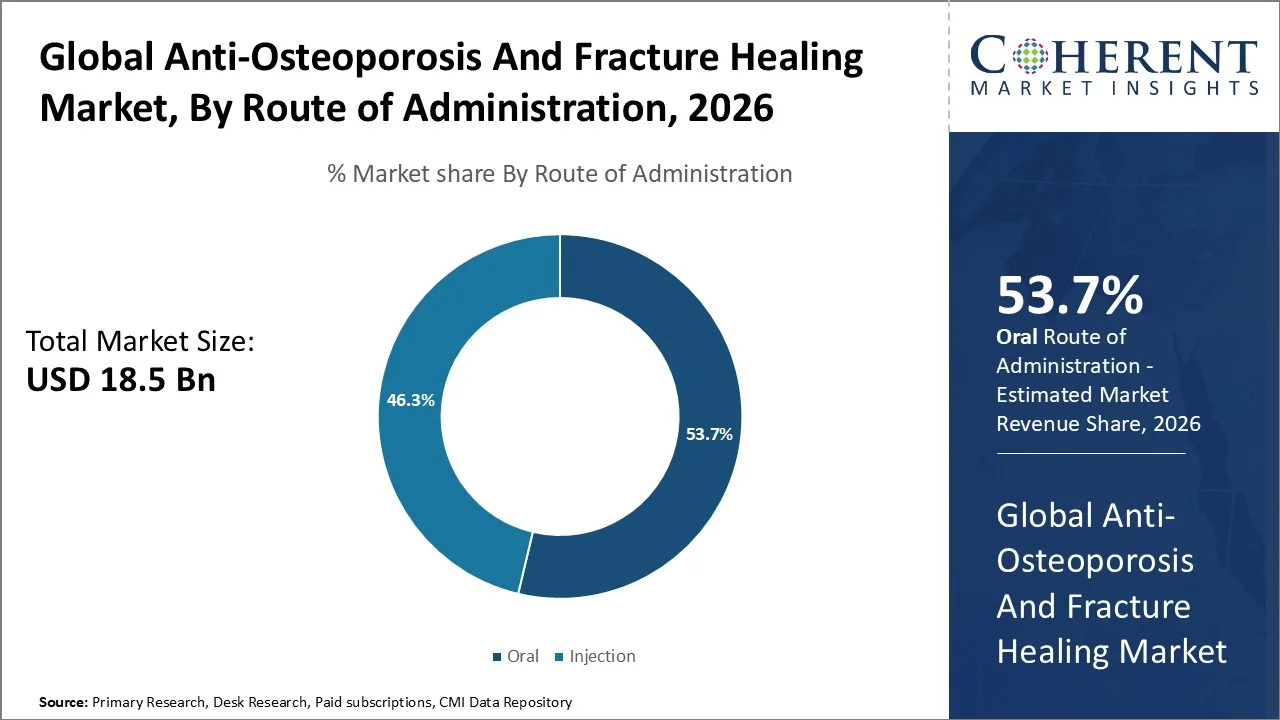
- Oral expected to hold largest market share of 53.7% in 2026 owing to its high patient preference for non-invasive treatment. Studies show that over 70% of patients prefer oral therapies over injectable options due to convenience and adherence advantages, particularly in chronic conditions like osteoporosis.
- Hospital Pharmacies acquired the prominent market share of 43.3% in 2026 owing to the role in acute and post-fracture care pathways.
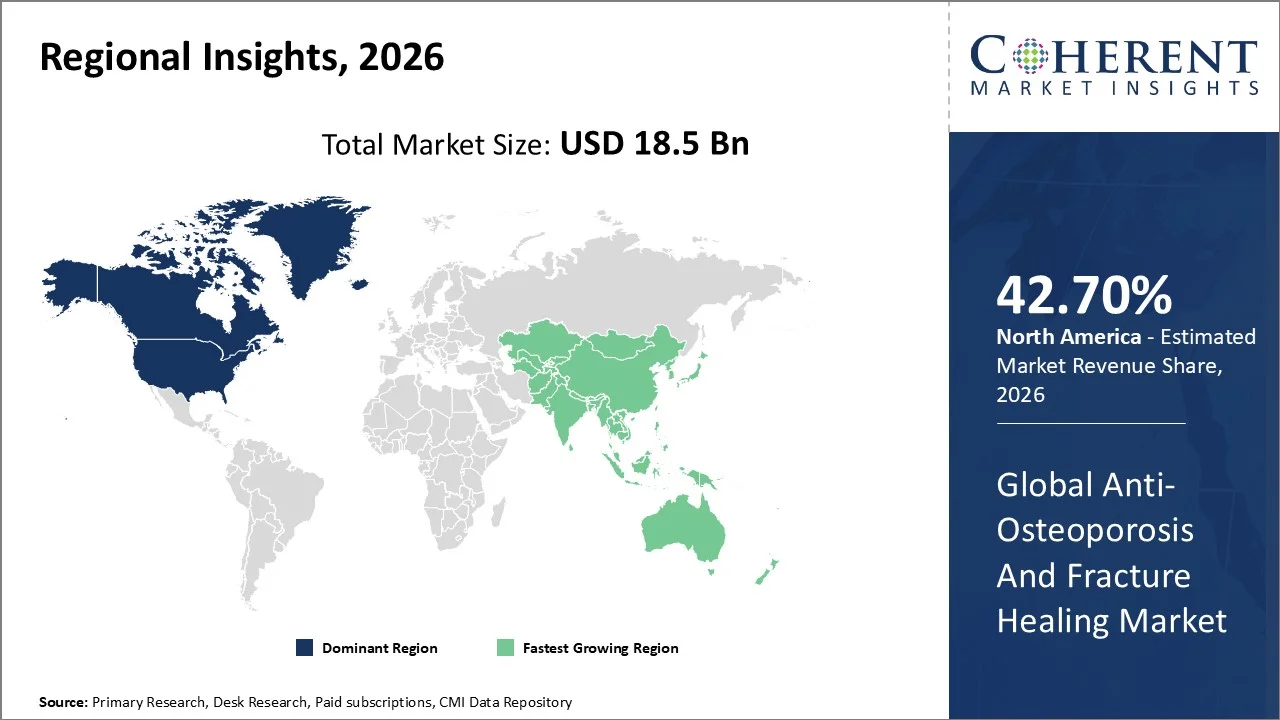
- By Region, North America is expected to acquire the dominant share of 42.70% in 2026 owing to the advanced healthcare infrastructure and access to care. In the United States alone, over 10 million people are estimated to have osteoporosis, with an additional 44 million at risk due to low bone density, driving high treatment uptake and medication demand.
Current Events and Their Impact on the Anti-Osteoporosis And Fracture Healing Market
Current Event | Description and its Impact |
U.S. FDA Fast-Track Approvals for Bone-Forming Therapies (2025–2026) |
|
China National Healthcare Security Administration (NHSA) Drug Price Negotiation Policy |
|
Segmental Insights
- Current Industry Events of 2026
- Market Size Estimation
- Regional Breakdown
- Competitive Landscape
- Customer Intelligence
- Segmental Analysis
- Pricing Analysis
- Key Market Drivers, Challenges & Future Trends
- Customized Insights Section
Oral holds the Largest Market Share
Oral expected to hold the largest market share of 53.7% in 2026 owing to its cost-effectiveness and wide generic availability. High preference for convenient and non-invasive therapies drives the oral segment in the anti-osteoporosis and fracture healing market. Patients choose oral medications because they can self-administer them easily with minimal clinical supervision.
This dominance is supported by a large disease burden, osteoporosis affects an estimated over 200 million people globally, leading to nearly 8.9 million fractures annually (about one every 3 seconds), significantly increasing long-term treatment demand. In addition, studies show that more than 60–70% of patients with chronic conditions prefer oral drug administration due to better adherence and convenience compared to injectable therapies.
Why is Bisphosphonates Acquiring the Largest Market Share?
Bisphosphonates hold the largest market share of 34.8% in 2026. Rising cases of osteoporosis and fragility fractures, especially in the aging population, drive the bisphosphonates segment in the anti-osteoporosis and fracture healing market. Improved screening and growing awareness of bone health encourage earlier diagnosis and increase treatment use. Physicians widely prefer bisphosphonates because they effectively reduce bone resorption and improve bone density. Their affordability, widespread availability in generic versions, and strong acceptance as first-line therapy further support their use in both prevention and post-fracture treatment management. In July 2025, Celltrion USA launched STOBOCLO and OSENVELT (denosumab-bmwo) in the U.S. as biosimilars of PROLIA and XGEVA. OSENVELT is now available as a 120 mg/1.7 mL injection and is used to prevent skeletal-related events in multiple myeloma and bone metastases, treat unresectable giant cell bone tumors, and manage bisphosphonate-refractory hypercalcemia of malignancy.
Which Distribution Channel segment dominates the market?
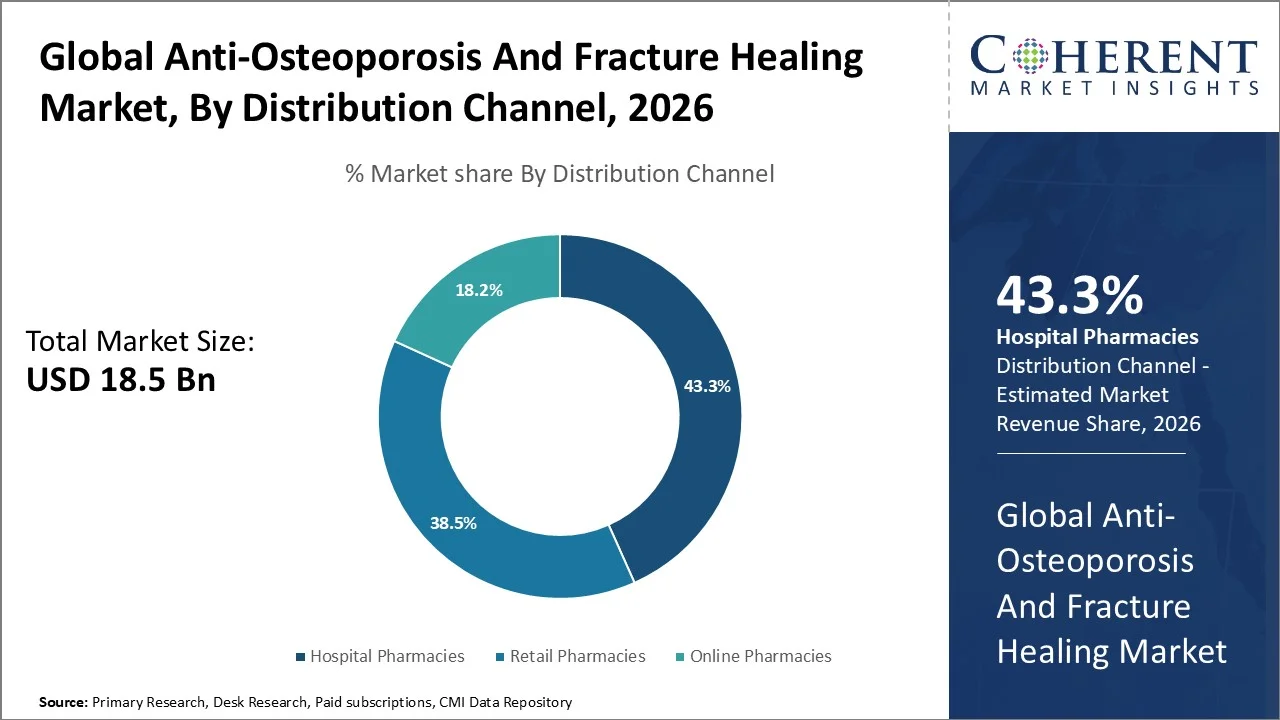
Hospital pharmacies acquired a prominent market share of 43.3% in 2026. High numbers of fracture-related hospital admissions and the need for immediate treatment initiation drive this segment in the anti-osteoporosis and fracture healing market. Hospitals deliver specialist care that enables accurate diagnosis and effective osteoporosis management.
This dominance is supported by clinical evidence showing that hip fractures account for the majority of osteoporosis-related hospitalizations globally, and most cases require inpatient surgical or acute care management. According to the International Osteoporosis Foundation, osteoporotic fractures occur every 3 seconds worldwide, with a large proportion managed initially in hospital settings due to severity and complication risk.
The availability of injectable and advanced therapies requiring clinical supervision further supports hospital pharmacy demand, especially for drugs such as denosumab and parenteral anabolic agents used in moderate-to-severe cases.
Regional Insights
North America dominates owing to High healthcare spending and reimbursement support
North America is expected to acquire the dominant share of 42.70% in 2026. A rapidly aging population and high prevalence of osteoporosis and fragility fractures drive the North America anti-osteoporosis and fracture healing market. In the United States alone, over 10 million people have osteoporosis and nearly 44 million have low bone mass, placing them at high fracture risk, according to the National Osteoporosis Foundation. Additionally, osteoporosis leads to approximately 2 million fractures annually in the U.S., including about 300,000 hip fractures, creating sustained treatment demand.
Advanced healthcare infrastructure enables early diagnosis and supports effective treatment adoption. Leading pharmaceutical and biotechnology companies actively promote continuous innovation in bone health therapies. High healthcare spending, over USD 4.5 trillion annually in the U.S. healthcare system—along with strong reimbursement coverage improves patient access to treatment.
Asia Pacific Anti-Osteoporosis And Fracture Healing Market Trends
An expanding elderly population along with a growing incidence of osteoporosis and fragility fractures fuels the Asia Pacific anti-osteoporosis and fracture healing market. This is supported by strong demographic pressure—Asia is home to over 60% of the world’s population aged 60 and above, and this group is projected to reach nearly 1.3 billion elderly people in Asia-Pacific by 2050, significantly increasing osteoporosis risk. According to the International Osteoporosis Foundation, Asia already accounts for over 50% of global osteoporotic fractures, with fracture numbers expected to rise sharply due to aging populations. Greater awareness of maintaining bone health and improved diagnostic access enable earlier identification and timely intervention. Ongoing development of healthcare infrastructure and supportive government programs enhance chronic disease care and stimulate market expansion. Wider access to low-cost generic medicines and increasing healthcare spending promote treatment uptake. In addition, rapid urban growth and lifestyle changes elevate the risk of osteoporosis across the region.
United States Anti-Osteoporosis And Fracture Healing Market Trends
A large aging population and a high incidence of osteoporosis-related fractures drive the United States anti-osteoporosis and fracture healing market. Advanced healthcare infrastructure enables early diagnosis through screening and supports timely treatment initiation. Physicians and healthcare providers actively adopt innovative therapies, while leading pharmaceutical companies expand treatment options. Favorable reimbursement policies and high healthcare expenditure improve patient access to care. Growing awareness of bone health and structured fracture management programs further strengthen and sustain market growth.
Japan Anti-Osteoporosis And Fracture Healing Market Trends
A highly aging population with increasing cases of osteoporosis and related fractures drives Japan’s anti-osteoporosis and fracture healing market. This is strongly supported by demographics, Japan has 29.3% of its population aged 65 and above (about 36.25 million people in 2024), making it the world’s most aged society, and this share is projected to approach 40% by 2060. As a result, osteoporosis prevalence is high, with studies estimating that over 12 million people in Japan are affected by osteoporosis, particularly among postmenopausal women and the elderly.
Fracture burden is also significant, with hip fracture incidence among Japanese elderly exceeding 150,000 cases annually, and rates continuing to rise with population aging. According to the International Osteoporosis Foundation, Japan is among the countries with the highest lifetime fracture risk due to its rapidly aging population structure.
Advanced healthcare infrastructure enables early diagnosis and supports effective long-term management of bone disorders. The government actively prioritizes elderly care and preventive healthcare, encouraging regular screening and treatment adoption. Healthcare providers adopt innovative therapies and expand fracture prevention programs, supporting market growth. High awareness of bone health and well-established hospital systems further enhance treatment uptake across the country.
Who are the Major Companies in Anti-Osteoporosis And Fracture Healing Industry
Some of the major key players in Anti-Osteoporosis And Fracture Healing Market are Radius Health Inc., Pfizer Inc., Amgen Inc., Novartis AG, GlaxoSmithKline Plc., Merck & Co., Inc., F. Hoffman-La Roche AG, Eli, Lilly and Company Limited, and PhytoHealth Corporation.
Key News
- In August 2025, Abbott Laboratories received regulatory approval in Thailand for the first denosumab biosimilar, improving access to advanced treatments for osteoporosis and cancer-related bone loss.
- In December 2025, the Foundation for the National Institutes of Health announced that the U.S. Food and Drug Administration had qualified changes in hip bone mineral density (BMD) as a surrogate endpoint for fracture risk in clinical trials of anti-osteoporosis drugs in postmenopausal women.
Market Report Scope
Anti-Osteoporosis And Fracture Healing Market Report Coverage
| Report Coverage | Details | ||
|---|---|---|---|
| Base Year: | 2025 | Market Size in 2026: | USD 18.5 Bn |
| Historical Data for: | 2020 To 2024 | Forecast Period: | 2026 To 2033 |
| Forecast Period 2026 to 2033 CAGR: | 11.3% | 2033 Value Projection: | USD 24.8 Bn |
| Geographies covered: |
| ||
| Segments covered: |
| ||
| Companies covered: | Radius Health Inc., Pfizer Inc., Amgen Inc., Novartis AG, GlaxoSmithKline Plc., Merck & Co., Inc., F. Hoffman-La Roche AG, Eli, Lilly and Company Limited, and PhytoHealth Corporation. | ||
Analyst Opinion
- The anti-osteoporosis and fracture healing market is fundamentally driven by an escalating clinical burden rather than discretionary demand. Osteoporosis affects an estimated 200 million women worldwide, and studies show that 1 in 3 women over 50 and 1 in 5 men will experience osteoporotic fractures in their lifetime, reinforcing the scale of unmet medical need rather than cyclical growth.
- Fragility fractures are already a major orthopedic burden, with more than 8.9 million fractures occurring annually worldwide due to osteoporosis. Hip fractures alone are projected to rise sharply in aging populations, and mortality within one year after a hip fracture can reach up to 20–24% in older adults, highlighting the severe clinical consequences driving urgent therapeutic intervention.
- Bisphosphonates and other anti-resorptive therapies remain central to treatment because they significantly reduce fracture risk, with clinical evidence showing up to 40–70% reduction in vertebral fractures in high-risk patients. For example, agents like alendronate are widely used as first-line therapy globally, demonstrating consistent real-world effectiveness in both primary prevention and post-fracture management.
- The market is also reinforced by hospital-based fracture care pathways, particularly Fracture Liaison Services (FLS), which studies show can reduce secondary fracture risk by up to 30% through systematic identification and treatment initiation.
Speak to the analyst
Want personalized insights?
Take the findings above to one of our principal consultants, or have the report rebuilt around the segments, geographies and competitors you actually track.
Market Segmentation
- By Drug Class (Revenue, USD Bn, 2026-2033)
- Bisphosphonates
- Alendronate
- Risedronate
- Ibandronate
- Zoledronic acid
- Hormone replacement therapy
- Estrogen
- Progestin
- Others
- Monoclonal Antibodies
- Denosumab
- Romosozumab
- Anabolic Agents
- Alendronate
- Teriparatide
- Others
- Bisphosphonates
- By Route of Administration (Revenue, USD Bn, 2026-2033)
- Oral
- Injection
- By Distribution Channel (Revenue, USD Bn, 2026-2033)
- Hospital Pharmacies
- Retail Pharmacies
- Online Pharmacies
- By Region (Revenue, USD Bn, 2026-2033)
- North America
- U.S.
- Canada
- Latin America
- Brazil
- Mexico
- Argentina
- Rest of Latin America
- Europe
- Germany
- U.K.
- France
- Italy
- Spain
- Russia
- Rest of Europe
- Asia Pacific
- China
- India
- Japan
- Australia
- South Korea
- ASEAN
- Rest of Asia Pacific
- Middle East
- GCC
- Israel
- Rest of Middle East
- Africa
- South Africa
- Central Africa
- North Africa
- North America
- Key Players
- Radius Health Inc.
- Pfizer Inc.
- Amgen Inc.
- Novartis AG
- GlaxoSmithKline Plc.
- Merck & Co., Inc.
- Hoffman-La Roche AG
- Eli, Lilly and Company Limited
- PhytoHealth Corporation
Sources
Primary Research Interviews
- Orthopedic surgeons and trauma specialists
- Endocrinologists and rheumatologists
- Hospital procurement managers
- Physiotherapists and rehabilitation experts
- Biomedical device manufacturers (R&D heads)
- Pharmacists in hospital and retail settings
- Academic researchers in bone metabolism
Databases
- PubMed / MEDLINE (NIH)
- ClinicalTrials.gov
- WHO Global Health Observatory (GHO)
- World Bank Health Data
- OECD Health Statistics
- FDA Medical Device Database
- EMA (European Medicines Agency) database
- India ICMR health research data
Magazines
- Medical Device & Diagnostic Industry (MD+DI)
- Orthopedics Today
- BioWorld
- Nature Medicine highlights
- Scientific American (Health section)
- The BMJ (magazine/news updates section)
Journals
- Journal of Bone and Mineral Research
- Osteoporosis International
- The Lancet Diabetes & Endocrinology
- Bone Reports
- Journal of Orthopaedic Research
- Acta Biomaterialia
- International Journal of Orthopaedic and Trauma Nursing
Newspapers
- The Hindu (Science & Health section)
- The Times of India (Health & Science updates)
- The Indian Express (Health coverage)
- The Guardian (Health section)
- The New York Times (Health & Science)
- Reuters Health News
Associations
- International Osteoporosis Foundation (IOF)
- American Academy of Orthopaedic Surgeons (AAOS)
- National Osteoporosis Foundation (NOF)
- Orthopaedic Research Society (ORS)
- International Society for Clinical Densitometry (ISCD)
- Indian Orthopaedic Association (IOA)
- Endocrine Society
Public Domain Sources
- WHO reports on musculoskeletal disorders
- Government health ministry publications (India, US, EU)
- CDC osteoporosis and fracture statistics
- NIH public research repositories
- World Bank disability and aging datasets
- United Nations health and aging population reports
- Open-access clinical research repositories
Proprietary Elements
- CMI Data Analytics Tool
- Proprietary CMI Existing Repository of information for last 10 years
Get access to 250+ pages report
Every segment, forecast, competitor profile and data table behind the analysis above — available for instant download.
- ESOMAR Member
- ISO 9001:2015 Certified
- D-U-N-S Registered
- GDPR & CCPA Compliant
Missing comfort of reading report in your local language? Find your preferred language:
Transform your Strategy with Exclusive Trending Reports
Frequently Asked Questions
The Anti-Osteoporosis And Fracture Healing Market is anticipated to grow at a CAGR of 11.3% with USD 18.5 Billion share in 2026 and is expected to reach USD 24.8 Billion in 2033.
It includes drugs and therapies that prevent bone loss, improve bone strength, and support healing after fractures.
The market is driven by rising osteoporosis cases, an aging global population, and increasing incidence of fragility fractures. Improved diagnosis through bone density screening also leads to earlier treatment initiation.
Commonly used drugs include bisphosphonates such as Alendronate and Risedronate, along with newer agents like denosumab and teriparatide for high-risk patients.
Postmenopausal women and elderly individuals are most affected. Studies show that a significant proportion of women over 50 experience osteoporosis-related fractures during their lifetime.
Osteoporotic fractures, especially hip fractures, are highly serious. They can lead to long recovery times, reduced mobility, and increased mortality risk in elderly patients within the first year after injury.