

Acute Invasive Aspergillosis Treatment Market Size and Share Analysis - 2026 To 2033
The acute invasive aspergillosis treatment market is anticipated to grow at a CAGR of 5.27% with USD 4.53 Bn in 2026 and is expected to reach USD 6.50 Bn in 2033. The aspergillosis treatment market is growing as more people have weak immune systems (approximately 6.6% of the population in the U.S. is immunocompromised), Aspergillus spores are spreading to more places due to rising temperatures, and governments are supporting the approval of new antifungal medicines. However, the market faces challenges such as increasing resistance to azole drugs, problems in the supply of active pharmaceutical ingredients (APIs), and the high cost of treatment. Because of these challenges, companies are developing new types of medicines and better ways to deliver them to patients.
Key Takeaways
- Antifungals segment is expected to account the largest share of 70.0% in 2026, rising incidence of invasive aspergillosis, increasing immunocompromised patients, and growing resistance to older azole drugs are driving demand for newer antifungals. It is estimated that globally over 250 000 cases of invasive aspergillosis and >3 million cases of chronic pulmonary aspergillosis are reported annually.
- Hospital pharmacies will dominate with 68.0% in 2026, Hospital pharmacies play a major role in treating aspergillosis because many patients with severe infections need to be admitted to the hospital for immediate care. Aspergillosis in patients with liver cirrhosis has a very high death rate, with earlier studies reporting mortality rates of more than 50%.
- North America is expected to acquire the dominant share of 33.00% in 2026, high number of immunocompromised patients, including cancer, transplant, and ICU patients who are at greater risk of invasive aspergillosis. Aspergillosis cases in the United States increased by about 5% every year between 2013 and 2023.
Segmental Insights
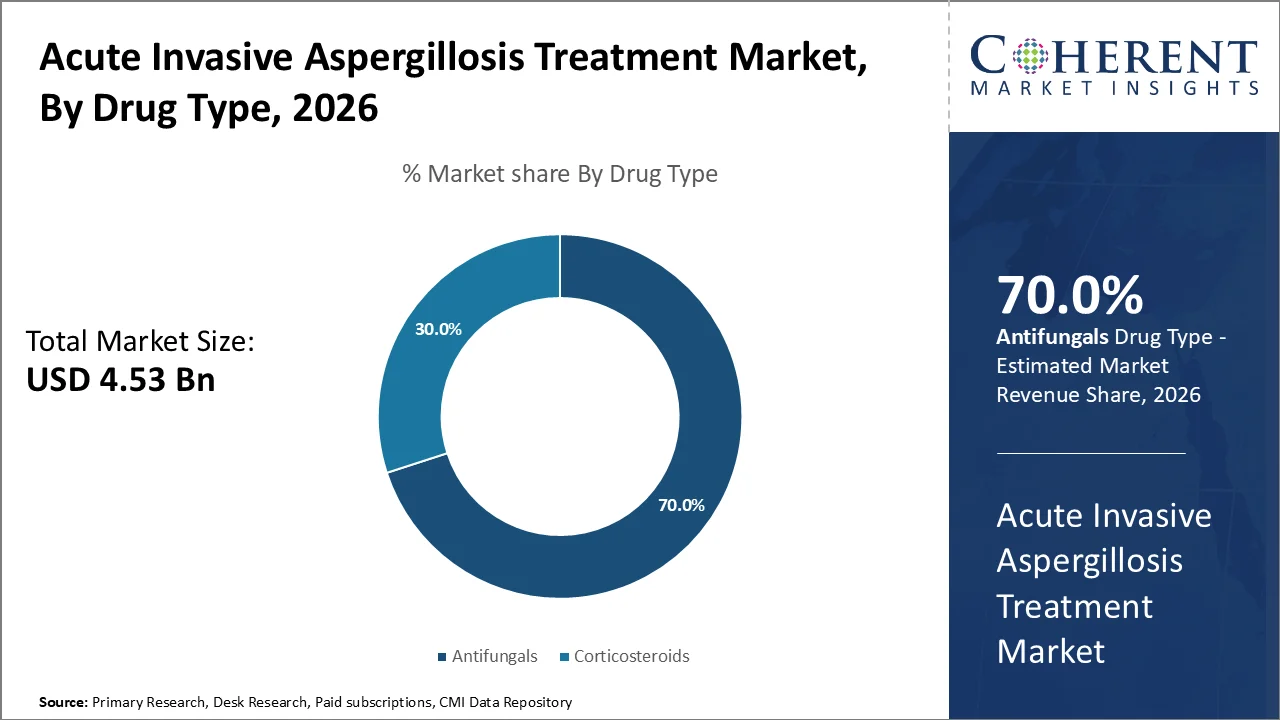
Why is Antifungals Segment Acquiring the Largest Market Share?
Antifungals is projected to account for the largest share of solutions in 2026, representing approximately 70.0% of the total volume. Primarily because they directly target the causative pathogen, Aspergillus fumigatus and its related species, making them the cornerstone of first-line and salvage therapy.
The Infectious Diseases Society of America (IDSA) has consistently recommended voriconazole as the primary treatment for invasive aspergillosis since its landmark 2008 guidelines, later updated in 2016, positioning antifungal therapy as the definitive standard of care.
Voriconazole has made better survival rates than amphotericin B in curing invasive aspergillosis. In one clinical study, 71% of patients treated with voriconazole were alive after 84 days, compared to 58% of patients treated with amphotericin B.
This institutional endorsement by a globally recognized non-profit medical organization has cemented antifungal agents' clinical dominance as well as driven high adoption across hospitals, transplant centers, oncology departments, etc.
- Current Industry Events of 2026
- Market Size Estimation
- Regional Breakdown
- Competitive Landscape
- Customer Intelligence
- Segmental Analysis
- Pricing Analysis
- Key Market Drivers, Challenges & Future Trends
- Customized Insights Section
Hospital Pharmacies Segment holds the Largest Market Share
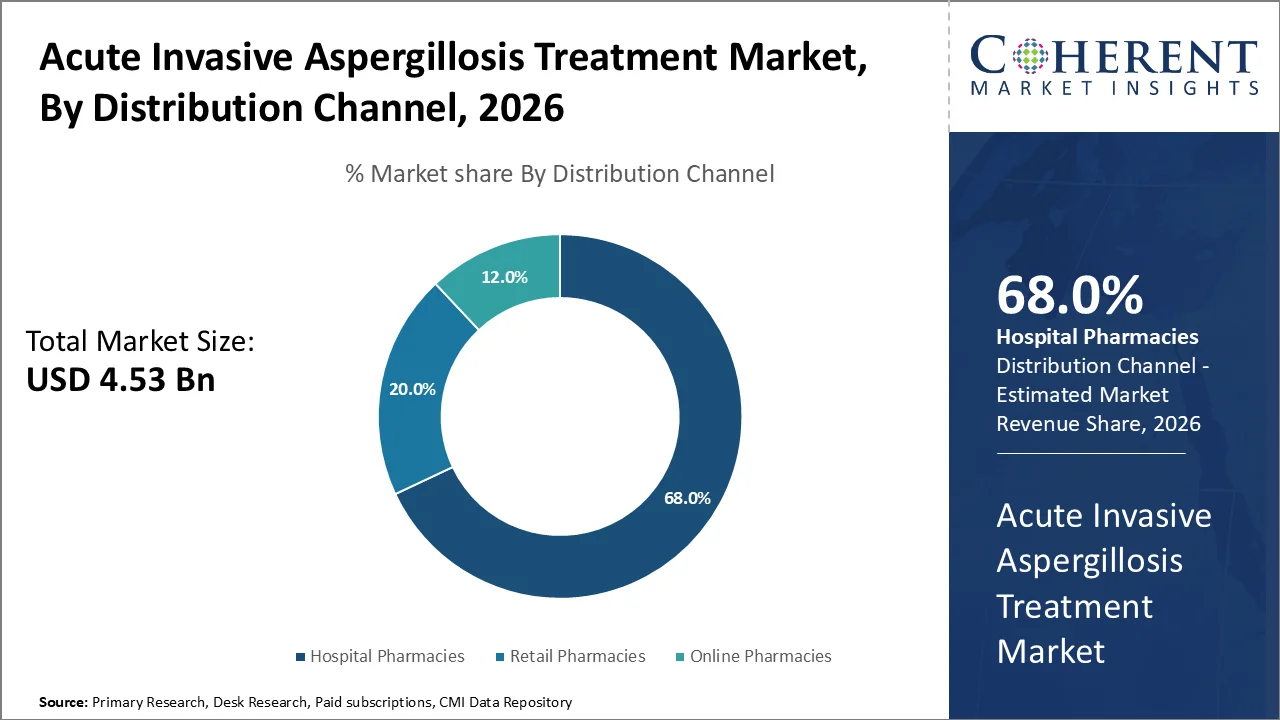
Based on distribution channel, hospital pharmacies dominates the market, accounting for a significant 68.0% share in 2026. Hospital pharmacies play a major role as most patients with influenza-associated pulmonary aspergillosis (IAPA) and COVID-19-associated pulmonary aspergillosis (CAPA) are kept in intensive care units (ICUs). These critically ill patients need fast access to antifungal medicines with hospital care.
One study found that about 6.9% of ICU patients had developed invasive pulmonary aspergillosis, with around 70% of these patients did not have the usual high-risk conditions. This surged the need for hospital pharmacies to keep antifungal drugs instantly available for timely treatment.
The Infectious Diseases Society of America (IDSA), in its clinical practice guidelines for the diagnosis as well as management of aspergillosis, explicitly recommends voriconazole as the primary treatment for invasive aspergillosis, and the drug's administration, whether intravenous or oral, requires careful plasma level monitoring to avoid toxicity and ensure therapeutic efficacy.
This pharmacokinetic complexity makes hospital pharmacies the most appropriate and safest point of dispensation, as clinical pharmacists within these settings can collaborate directly with infectious disease specialists and transplant teams to individualize dosing regimens.
Market Drivers
Advanced Diagnostic Technologies is transforming the Acute Invasive Aspergillosis Treatment Industry
One of the most significant technological changes impacting the AIA treatment market is the advancement of rapid and precise diagnostic tools. Traditional culture-based methods suffered from poor sensitivity as well as delayed results, usually leading to treatment initiation too late in disease progression. Molecular diagnostics including next-generation sequencing (NGS) as well as polymerase chain reaction (PCR)-based platforms have dramatically altered early identification of Aspergillus species.
The European Aspergillus PCR Initiative (EAPCRI) has standardized PCR methodologies, enabling laboratories globally to adopt validated protocols for detecting Aspergillus DNA in serum, bronchoalveolar lavage, as well as whole blood samples. These technologies allow clinicians to differentiate between Aspergillus fumigatus, A. flavus, and A. terreus at the genomic level, which is important because A. terreus carries inherent resistance to amphotericin B.
Next-Generation Antifungal Drug Development: A major breakthrough in Acute Invasive Aspergillosis Treatment
The antifungal drug pipeline has experienced transformative innovation in recent years, addressing critical gaps including drug resistance, toxicity profiles, bioavailability limitations, etc.
Olorofim (F2G Ltd.), a first-in-class dihydroorotate dehydrogenase (DHODH) inhibitor, represents a revolutionary mechanism of action completely distinct from existing antifungals. It shows potent activity against azole-resistant Aspergillus fumigatus strains, which have become highly serious clinical challenge. Olorofim has received Breakthrough Therapy Designation from the U.S. FDA and is showing strong clinical trial results for patients with limited treatment options. This product launch is considerably impacting the market by catering to the unmet need of refractory as well as azole-resistant AIA cases.
Current Events and Their Impact on the Acute Invasive Aspergillosis Treatment Market
Current Event | Description and its Impact |
WHO releases its first reports on fungal diagnostics and antifungal medicines (2025) |
|
Growing regulatory focus on antifungal resistance under the One Health approach (2025–2026) |
|
Acute Invasive Aspergillosis Treatment Market Trends
- The global surge in hematological malignancies, HIV/AIDS cases, solid organ transplantations, as well as the escalating use of corticosteroids and immunosuppressive therapies have majorly expanded the at-risk patient pool. Around 192,070 people in the United States are expected to be diagnosed with blood cancers, including leukemia, lymphoma, and myeloma, in 2025.
- The market is experiencing a change from conventional amphotericin B-based regimens toward next-generation triazole antifungals, particularly voriconazole as well as isavuconazole, owing to their superior efficacy profiles, better tolerability, as well as favorable oral bioavailability. More than 80% of patients received oral isavuconazole treatment. After 6 weeks of treatment, about 58% of patients showed improvement. This rise to around 71% after 12 weeks, showing that isavuconazole can be an effective treatment for invasive fungal infections.
- The emergence of azole-resistant Aspergillus fumigatus strains linked to both clinical antifungal use as well as environmental exposure to fungicide-treated agricultural soils is a critical trend changing the treatment scenario.
- The parallel growth of advanced diagnostic tools including galactomannan assays, beta-D-glucan testing, lateral flow assays, as well as metagenomic next-generation sequencing (mNGS) is enabling earlier diagnosis and timely treatment initiation, which is directly improving patient outcomes and expanding treatment volumes.
Regional Insights
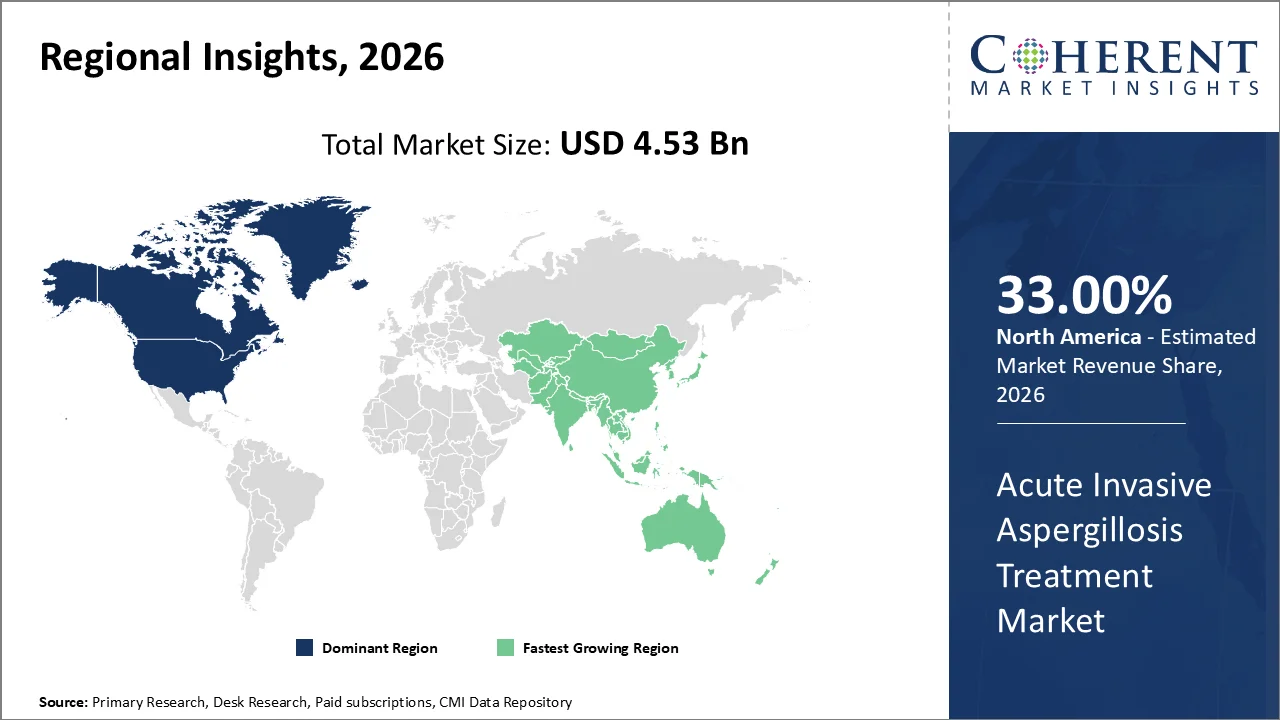
North America dominates owing to well-established healthcare infrastructure
North America account 33.00% market share in 2026, owing to its robust diagnostic capabilities, along with significantly higher rates of immunocompromised patient populations who are most susceptible to acute invasive aspergillosis. According to the CDC (2024), hospitalizations related to invasive aspergillosis in the United States surged by an average of 3% every year between 2000 and 2013. In 2014, nearly 15,000 aspergillosis-related hospitalizations were reported, making an estimated healthcare cost of USD 1.2 billion.
The United States, in particular, has shown consistently high burden of invasive fungal infections, with the Centers for Disease Control and Prevention (CDC) reporting that Aspergillus causes more infections in the United States, with invasive aspergillosis primarily affecting individuals with weakened immune systems, including those facing organ transplantation, hematopoietic stem cell transplantation, receiving corticosteroid therapies, etc.
Furthermore, the Infectious Diseases Society of America (IDSA) has published overall clinical practice guidelines for the diagnosis as well as management of aspergillosis, which have been widely adopted across North American healthcare institutions.
In July 2025, Camber Pharmaceuticals released 24 new products in the first half of 2025, including Posaconazole Injection, an azole antifungal medicine used for the prevention as well as treatment of serious fungal infections, including invasive aspergillosis. The injectable formulation is especially important for hospitalized as well as immunocompromised patients who require antifungal therapy.
Asia Pacific Acute Invasive Aspergillosis Treatment Market Trends
The Asia Pacific region is poised to be the fastest-growing region through 2026-2033, expanding at a CAGR of approximately 6.8%. Driven by a rapidly expanding immunocompromised patient population, as well as high awareness of fungal infections among healthcare providers.
An estimated 1.18 million people in China suffer from invasive aspergillosis. Overall, around 71 million people in China are affected by different fungal infections, showing the escalating need for better diagnosis as well as antifungal treatments.
The World Health Organization's 2022 fungal priority pathogens list, which formally placed Aspergillus fumigatus in the critical priority category, has shown health ministries across India, China, Japan, South Korea, and Australia to revisit their national antifungal treatment guidelines and procurement strategies.
Substantial Immunocompromised Patient Population is Accelerating the Acute Invasive Aspergillosis Treatment Market Demand in U.S.
The U.S. contributes the highest share in the acute invasive aspergillosis (AIA) treatment market in North America, owing to it’s a robust antifungal drug approval ecosystem governed by the U.S. Food and Drug Administration (FDA).
The United States carries one of the largest burdens of invasive aspergillosis globally, largely attributable to the high prevalence of hematologic malignancies, widespread use of immunosuppressive therapies, and the growing volume of solid organ and hematopoietic stem cell transplant (HSCT) procedures performed annually.
According to the Health Resources and Services Administration (HRSA), the U.S. conducts tens of thousands of organ transplants each year, each carrying significant risk of opportunistic fungal infections such as invasive aspergillosis. More than 100,000 people are waiting for life-saving organ transplants. These patients need donated organs to survive, but the shortage of available organs continues to increase waiting times and create challenges in providing timely treatment.
China Acute Invasive Aspergillosis Treatment Market Trends
China contributes the highest share in the Acute Invasive Aspergillosis Treatment market in APAC owing to its extraordinarily large immunocompromised patient population, and aggressive government-backed antifungal treatment initiatives. In China, fungemia (a fungal infection in the bloodstream) remains a serious health concern, especially among hospitalized and high-risk patients. After being diagnosed with fungemia, around 75.7% of patients received antifungal treatment.
China harbors one of the world's largest populations of hematological malignancy patients and solid organ transplant recipients, both of whom represent the primary high-risk demographic for acute invasive aspergillosis (IA).
According to the Chinese Society of Hematology, the country records millions of new hematological disorder cases annually, each carrying significant susceptibility to opportunistic fungal infections like Aspergillus. The widespread adoption of voriconazole and isavuconazole as first-line treatment agents across major tertiary hospitals in Beijing, Shanghai, and Guangzhou has significantly elevated treatment penetration.
Who are the Major Companies in Acute Invasive Aspergillosis Treatment Industry
Some of the major key players in acute invasive aspergillosis treatment market include, GlaxoSmithKline, Mylan Pharmaceuticals, Inc., Novartis AG, Abbott laboratories, Eli Lilly and Company, AstraZeneca Plc, Pfizer, Inc., Johnson & Johnson, Takeda Pharmaceutical Company Ltd., Astellas, and Basilea Pharmaceutica International Ltd.
Key News
- In June 2026, Shionogi and F2G announced positive results from a global Phase 3 clinical study of olorofim, a new oral antifungal medicine, for patients with invasive aspergillosis. The study compared olorofim with AmBisome (liposomal amphotericin B) in patients whose infections could not be treated effectively with azole antifungal medicines.
- In January 2025, Pulmocide Ltd., a biopharmaceutical company, announced that its CEO, Dan Burgess, would present a company update at the 43rd Annual J.P. Morgan Healthcare Conference in January 2025. The company is developing inhaled opelconazole, a new antifungal medicine designed to treat serious lung infections, including invasive pulmonary aspergillosis.
Market Report Scope
Acute Invasive Aspergillosis Treatment Market Report Coverage
| Report Coverage | Details | ||
|---|---|---|---|
| Base Year: | 2025 | Market Size in 2026: | USD 4.53 Bn |
| Historical Data for: | 2020 To 2024 | Forecast Period: | 2026 To 2033 |
| Forecast Period 2026 to 2033 CAGR: | 5.27% | 2033 Value Projection: | USD 6.50 Bn |
| Geographies covered: |
| ||
| Segments covered: |
| ||
| Companies covered: | GlaxoSmithKline, Mylan Pharmaceuticals, Inc., Novartis AG, Abbott laboratories, Eli Lilly and Company, AstraZeneca Plc, Pfizer, Inc., Johnson & Johnson, Takeda Pharmaceutical Company Ltd., Astellas, and Basilea Pharmaceutica International Ltd. | ||
| Growth Drivers: |
| ||
| Restraints & Challenges: |
| ||
Analyst Opinion
- The acute invasive aspergillosis treatment market is poised for significant transformation driven by rising immunocompromised patient populations globally, particularly those undergoing organ transplantation, chemotherapy, and corticosteroid therapies. In 2026, around 2.1 million new cancer cases and about 626,140 cancer deaths are expected in the United States.
- The escalating prevalence of HIV/AIDS and hematological malignancies continues to expand the at-risk patient demographic, creating sustained demand for advanced antifungal therapies. Around 40.8 million people worldwide were living with HIV at the end of 2024. This included about 1.4 million children aged 0–14 years.
- Voriconazole remains the cornerstone of first-line treatment; however, emerging resistance patterns and drug toxicity concerns are compelling healthcare providers to explore alternative therapeutic approaches.
- The development of novel antifungal agents, including next-generation triazoles and innovative combination therapies, represents a compelling opportunity for pharmaceutical manufacturers seeking competitive differentiation.
Speak to the analyst
Want personalized insights?
Take the findings above to one of our principal consultants, or have the report rebuilt around the segments, geographies and competitors you actually track.
Market Segmentation
- By Drug Type (Revenue, USD Bn, 2021-2033)
- Antifungal
- Voriconazole
- Capsofungin
- Itraconazole
- Isavuconazole
- Amphotericin B
- Others
- Corticosteroids
- Prednisolone
- Prednisone
- Methylprednisolone
- Antifungal
- By Distribution Channel (Revenue, USD Bn, 2021-2033)
- Hospital Pharmacies
- Online Pharmacies
- Retail Pharmacies
- By Region (Revenue, USD Bn, 2021-2033)
- North America
- U.S.
- Canada
- Latin America
- Brazil
- Mexico
- Argentina
- Rest of Latin America
- Europe
- Germany
- U.K.
- France
- Italy
- Spain
- Russia
- Rest of Europe
- Asia Pacific
- China
- India
- Japan
- Australia
- South Korea
- ASEAN
- Rest of Asia Pacific
- Middle East
- GCC
- Israel
- Rest of Middle East
- Africa
- South Africa
- Central Africa
- North Africa
- North America
Sources
Primary Research Interviews
- Infectious Disease Specialists
- Pulmonologists
- Clinical Microbiologists
- Hospital Pharmacists
- Others
Databases
- IQVIA Health Database
- Clarivate Analytics
- GlobalData Healthcare
- EvaluatePharma
- Others
Magazines
- Infectious Disease Advisor
- Pharmacy Times
- Clinical Infectious Diseases Today
- Modern Medicine Network
- Others
Journals
- Journal of Infectious Diseases
- Medical Mycology
- Antimicrobial Agents and Chemotherapy
- Clinical Infectious Diseases
- Others
Newspapers
- The Lancet News
- STAT News
- Reuters Health
- Fierce Pharma
- Others
Associations
- Infectious Diseases Society of America (IDSA)
- European Society of Clinical Microbiology and Infectious Diseases (ESCMID)
- American Society for Microbiology (ASM)
- Mycoses Study Group Education and Research Consortium (MSGERC)
- Others
Public Domain Sources
- U.S. Food and Drug Administration (FDA)
- World Health Organization (WHO)
- Centers for Disease Control and Prevention (CDC)
- ClinicalTrials.gov
- Others
Proprietary Elements
- CMI Data Analytics Tool
- Proprietary CMI Existing Repository of information for last 10 years
Get access to 250+ pages report
Every segment, forecast, competitor profile and data table behind the analysis above — available for instant download.
- ESOMAR Member
- ISO 9001:2015 Certified
- D-U-N-S Registered
- GDPR & CCPA Compliant
Missing comfort of reading report in your local language? Find your preferred language:
Transform your Strategy with Exclusive Trending Reports
Frequently Asked Questions
The acute invasive aspergillosis treatment market is expected to reach USD 6.50 Bn in 2033.
Major players operating in the global acute invasive aspergillosis treatment market include GlaxoSmithKline, Mylan Pharmaceuticals, Inc., Novartis AG, Abbott laboratories, Eli Lilly and Company, AstraZeneca Plc, Pfizer, Inc., Johnson & Johnson, Takeda Pharmaceutical Company Ltd., Astellas, and Basilea Pharmaceutica International Ltd.
Emergence of antifungal drug resistance (azole-resistant Aspergillus fumigatus) is the major factors that is expected to hamper growth of the market over the forecast period.
Rising prevalence of immunocompromised patient populations (transplant recipients, HIV/AIDS, cancer patients) is driving growth of the global acute invasive aspergillosis treatment market.
The acute invasive aspergillosis treatment market is anticipated to grow at a CAGR of 5.27% between 2026 and 2033.
Among regions, North America is expected to account for a largest market share in the global acute invasive aspergillosis treatment market over the forecast period.
The gold standard diagnostic tests for invasive aspergillosis are culture and histopathology. For a fungus to be “proven,” the provider relies on tests performed on a sample from a site that is not normally contaminated with fungi (i.e., sterile).