

Global Analgesics Market Size and Trends 2026-2033
Global analgesics market is estimated to be valued at USD 58.30 Bn in 2026 and is expected to reach USD 92.99 Bn by 2033, exhibiting a compound annual growth rate (CAGR) of 6.9% from 2026 to 2033.
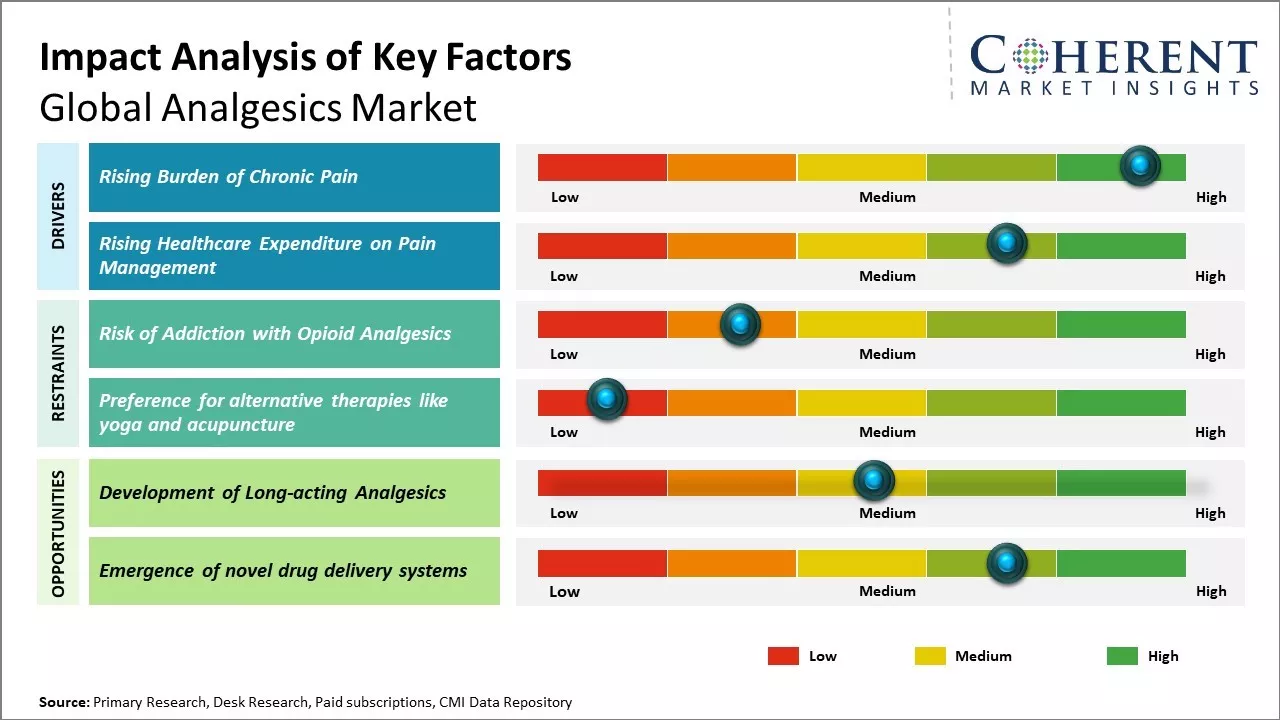
Key Takeaways
By Application Insights, The Musculoskeletal Segment is estimated to contribute to the highest market share of 41.5% in 2026.
By the Drug Type, The Opioid Segment is estimated to contribute to the highest market share of 58.6% in 2026.
By Route Of Administration, The Oral Section is estimated to contribute to of 52.5% market share in 2026.
By the regional insight, North America dominates the global painkiller market in 2026 with 41.7% market share.
Market overview:
Increasing preference for self -medication and lifestyle changes focused on convenience, rapid action that promotes painkillers will drive market demand. The primary forces that fuels market growth include the availability of drugs for over-the-counter (OTC) and the global expansion of increasing health awareness.
Current Events and its Impact on the Analgesics Market
Current Event | Description and its impact |
Surge in Lifestyle-Related Ailments and Stress-Induced Pain |
|
Rising Geriatric Population and Chronic Pain Incidence |
|
Regulatory Support and Government Health Initiatives |
|
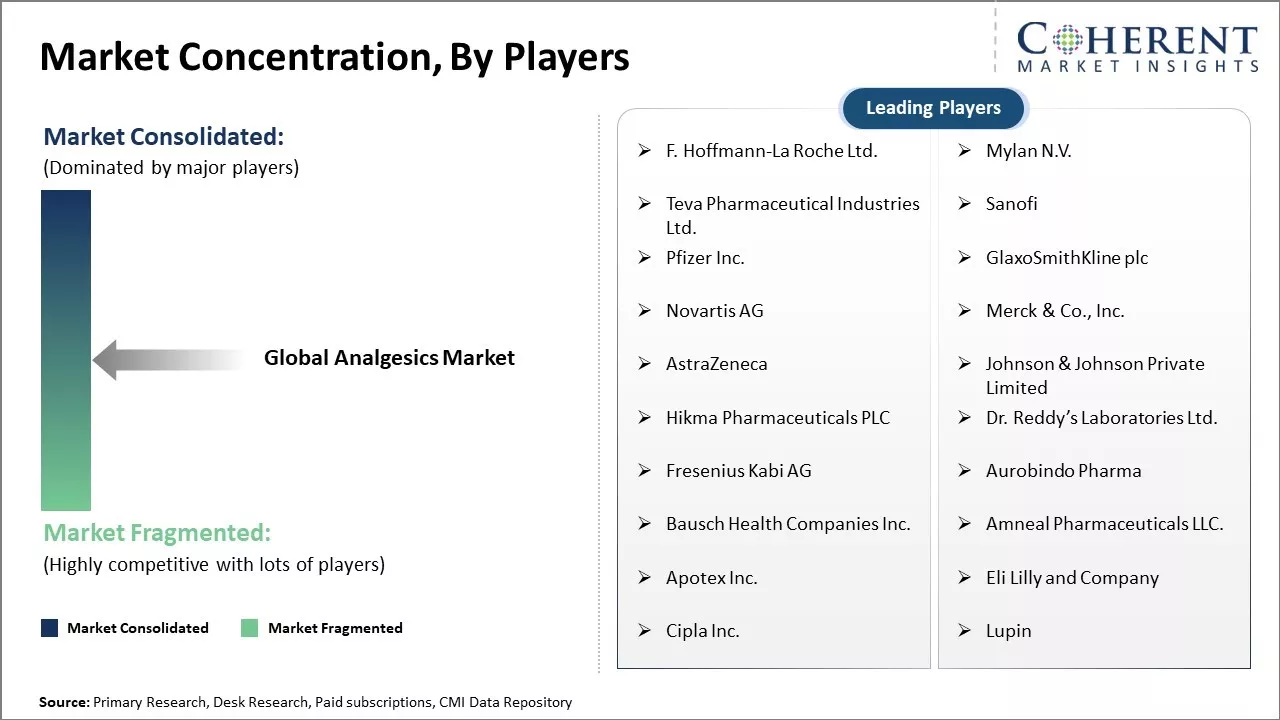
Market Concentration and Competitive Landscape
- Current Industry Events of 2026
- Market Size Estimation
- Regional Breakdown
- Competitive Landscape
- Customer Intelligence
- Segmental Analysis
- Pricing Analysis
- Key Market Drivers, Challenges & Future Trends
- Customized Insights Section
Market Dynamics
Analgesics Market Trends
- Rising Burden of Chronic Pain
The increasing incidence of chronic pain has a significant impact on both the quality of life and national health expenses for both individuals. Chronic pain, often associated with conditions such as arthritis, recovery after the series, back pain, diabetes, cancer and other non-infectious diseases, has become a broad concern.
As a result, the demand for effective pain management solutions - such as NSAIDs, opioids and other painkillers increase. In response, pharmaceutical companies intensify their R&D efforts, focusing on innovative yogas and advanced drug distribution methods to better handle pain for a long time and increase the results of the patient.
In November 2023, for example, the Himalaya Wellness Company started a comprehensive advertising campaign for the KOFT series, including Lozengs and Syrup, to increase the brand awareness in high cough season from October to December. The purpose of the campaign is to educate consumers on various factors that cause cough and provide an effective solution for relief.
Analgesics Market Opportunity
Development of Long-acting Analgesics
Long -acting painkillers represent an important development opportunity for the global painkiller. Traditional pain relief medicines often only offer relief of a short time and administered them several times daily, the burden of patients who require continuous pain management. Conversely, long -lasting yogas improved the patient's general quality and even more convenience, a few times a week or even more convenience. These extended periods can also reduce the drug frequency of dosage, which simplifies the treatment protocol and benefits both patients and health professionals.
As the global population continues, the demand for more durable and long -term pain management solutions increase. According to the Department of Economic and Social Affairs of the UN, a population of 65 years is expected and over exceeding 1.5 billion by 2050. This demographic is particularly weak for chronic pain conditions and requires continuous treatment. In addition, the World Health Organization estimates that about 19% of the global population suffers from chronic pain.
The long -term painkillers are well placed to meet this demand by providing sustained pain relief for a long period of time, and possibly reduced the need for frequent medical trips or hospitalization due to poorly controlled pain. For pharmaceutical companies, the development of these advanced funds provides a promising opportunity to offer innovative solutions that can redefine pain management by improving the patient's results and reducing stress in the health care system.
Segmental Insights
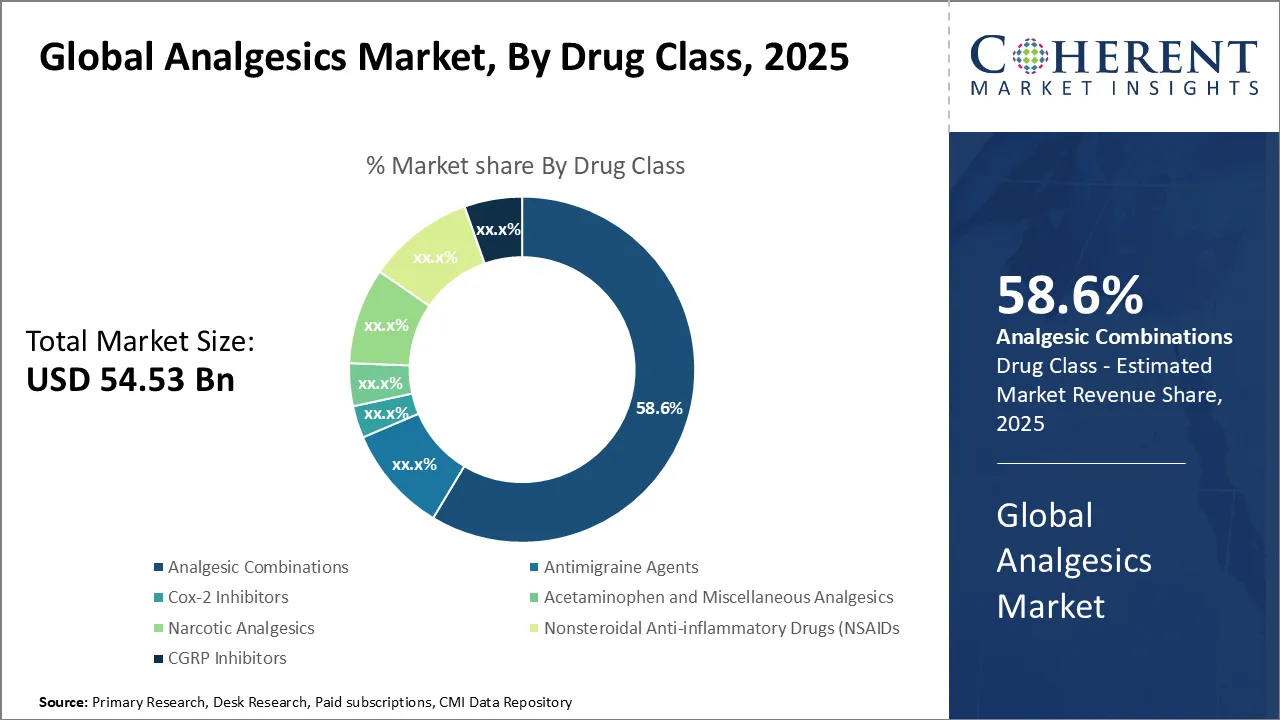
Global Analgesics Market Insights, By Drug Class
In terms of drug class, the Analgesic Combinations segment, which includes narcotic analgesic combinations, is poised to dominate the global analgesics market with a substantial revenue share by 2026. This segment’s prominence is driven by the synergistic action of combined drugs, which enhance pain relief efficacy while minimizing individual drug dosages—thereby reducing potential side effects. These combinations are widely preferred in the management of moderate to severe pain, especially post-operative and cancer-related pain, due to their balanced therapeutic effect and rapid onset of action.
Additionally, increasing adoption of prescription combination products that include opioids, acetaminophen, and NSAIDs supports greater convenience and compliance among patients, especially those with chronic conditions requiring multimodal pain management. The ongoing focus on abuse-deterrent formulations and fixed-dose combinations further boosts the clinical and commercial attractiveness of this segment.
With the growing prevalence of chronic pain, heightened patient awareness, and favorable prescribing trends among clinicians, the Analgesic Combinations segment is expected to retain its leading position through 2032.
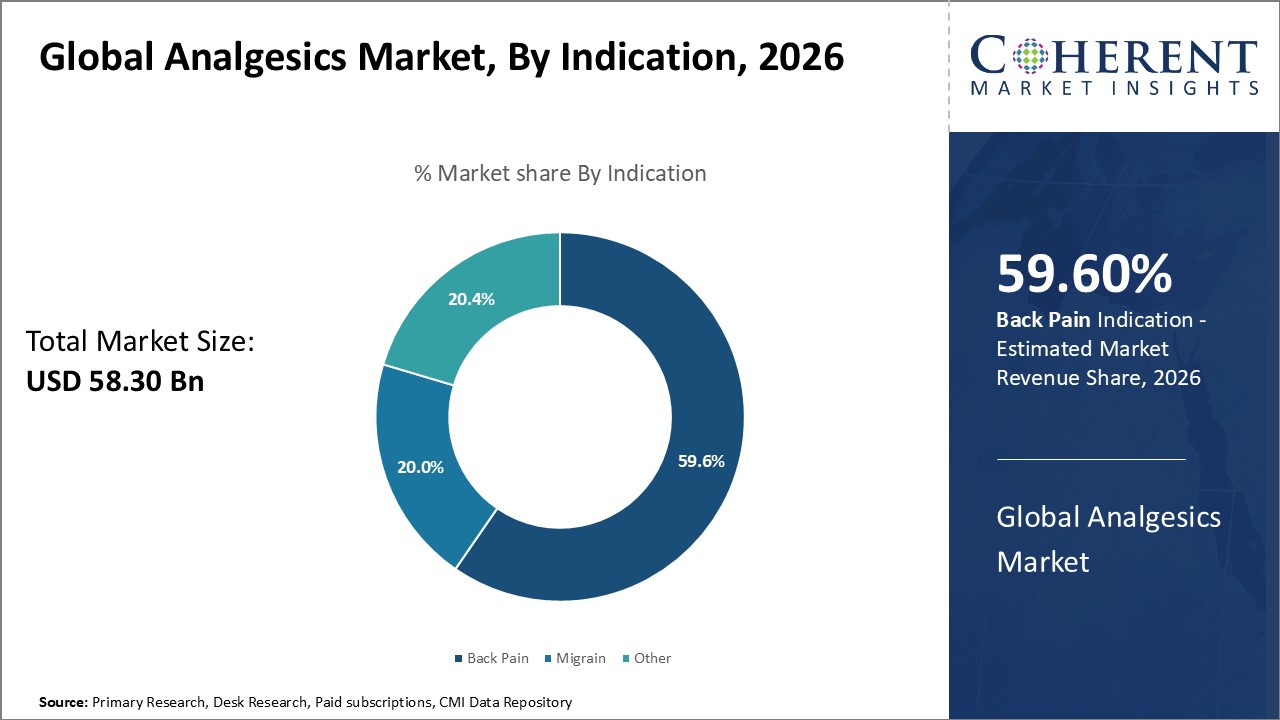
Global Analgesics Market Insights, By Indication
By indication, Back Pain is projected to emerge as the most lucrative segment, accounting for a significant share of the analgesics market by 2026. The high incidence of lower back pain worldwide—driven by sedentary lifestyles, aging populations, and occupational strain—is fueling demand for effective pain management solutions.
Analgesics, particularly NSAIDs and opioid combinations, are commonly used in both acute and chronic back pain cases due to their anti-inflammatory and analgesic properties. Moreover, increasing clinical focus on early pain intervention and multimodal treatment strategies that avoid surgical options is propelling the use of pharmaceuticals as a frontline approach.
The segment further benefits from growing adoption of telemedicine and digital pain management platforms that simplify diagnosis and prescription, expanding access to back pain medications in both urban and remote settings. These factors collectively support the sustained dominance of the back pain segment in the analgesics market.
Global Analgesics Market Insights, By Dosage Form
Among dosage forms, the Tablet segment is expected to lead the global analgesics market with the highest revenue contribution by 2026. This leadership is attributed to tablets’ ease of administration, portability, cost-effectiveness, and patient preference for non-invasive options.
Tablets offer consistent dosage delivery and extended shelf life, making them the preferred choice for both over-the-counter and prescription analgesics across indications like headaches, migraines, and musculoskeletal pain. Furthermore, advancements in tablet formulations—such as sustained-release and orally disintegrating tablets—enhance drug absorption and improve patient adherence, especially in long-term therapy.
The segment is also bolstered by the extensive availability of branded and generic products in retail and hospital pharmacies, making tablets the most accessible form of pain relief globally. With rising demand for convenient and effective analgesic solutions, the tablet segment is expected to maintain its dominant position through the forecast period.
Analgesics Market: Regional Insights
North America Analgesics Market Analysis and Trends
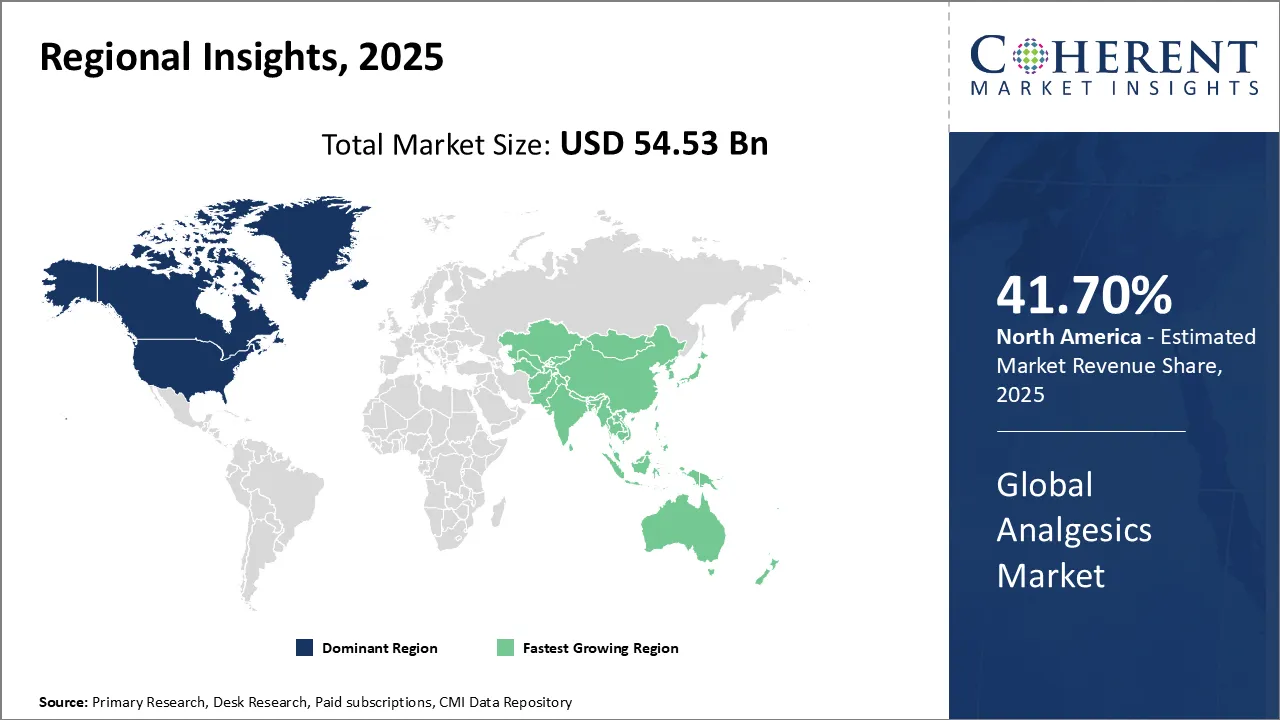
North America is expected to lead the global analgesics market in 2026, accounting for an estimated 41.7% of total market share. This dominance is driven by the presence of several major pharmaceutical companies and high per capita consumption of pain relief medications.
The United States alone contributes approximately 40.5% of the region’s revenue, supported by elevated healthcare spending and widespread access to both prescription and over-the-counter pain medications. American consumers also tend to favor prescription analgesics over alternative therapies. However, increasingly stringent regulations concerning opioid distribution may restrict future growth in certain segments.
Asia Pacific Analgesics Market Analysis and Trends
Asia Pacific stands out as the fastest-growing regional market, fueled by a rising middle-class population, expanding medical tourism, and improved healthcare infrastructure across emerging economies. Key markets such as China, India, and Japan are at the forefront of consumption, while other Southeast Asian countries are witnessing double-digit annual growth.
Urbanization, increased adoption of Western healthcare practices, and rising disposable incomes have encouraged a surge in self-medication trends among urban dwellers. To capitalize on this growth, both local and international pharmaceutical players are enhancing their manufacturing capacities and expanding distribution networks in the region.
Analgesics Market Dominating Countries:
United States Analgesics Market Analysis and Trends
The United States commands a leading position in the global analgesics market, driven by its advanced pharmaceutical infrastructure and high per capita healthcare spending. With a strong consumer preference for prescription medications, especially for managing chronic pain and post-operative conditions, demand for both opioid and non-opioid analgesics remains robust.
Widespread access to pain management therapies, along with continuous product innovation, supports the U.S. market’s dominance. However, regulatory restrictions around opioid prescribing is prompting a shift toward non-opioid alternatives, influencing product development and prescribing practices across the country.
Market Report Scope
Global Analgesics Market Report Coverage
| Report Coverage | Details | ||
|---|---|---|---|
| Base Year: | 2025 | Market Size in 2026: | USD 58.30 Bn |
| Historical Data for: | 2020 To 2024 | Forecast Period: | 2026 To 2033 |
| Forecast Period 2026 to 2033 CAGR: | 6.9% | 2033 Value Projection: | USD 92.99 Bn |
| Geographies covered: |
| ||
| Segments covered: |
| ||
| Companies covered: | F. Hoffmann-La Roche Ltd., Mylan N.V., Teva Pharmaceutical Industries Ltd., Sanofi, Pfizer Inc., GlaxoSmithKline plc, Novartis AG, Merck & Co., Inc., AstraZeneca, Johnson & Johnson Private Limited, Hikma Pharmaceuticals PLC, Dr. Reddy’s Laboratories Ltd., Fresenius Kabi AG, Aurobindo Pharma, Bausch Health Companies Inc., Amneal Pharmaceuticals LLC., Apotex Inc., Eli Lilly and Company, Cipla Inc., Lupin | ||
| Growth Drivers: |
| ||
| Restraints & Challenges: |
| ||
Analyst Viewpoint: Analgesics Market
- The global Analgesics market is mainly effective and quickly inspired by increasing consumer demand for helple solutions, especially in response to chronic pain, headache, arthritis and musculoskeletal states. The increasing incidence of such health problems, combined with the aging population, contributes significantly to the demand for painkillers. Over-the-counter (OTC) painkillers, such as non-steroidal anti-inflammatory medicines (NSAIDs), paracetamol and aspirin, especially in developed areas such as North America and Europe continue to lead the market due to their reach and strength.
- Self -medication gain speed, consumers have chosen quickly for relief from pain without prescription. In addition, increasing awareness of the availability of pain management and different types of product types (tablets, gels, creams and patches) expanded the market. The increase in consumer consumers against health, especially in areas such as North America and Europe, also accelerates the demand for herbal pains such as natural or biologically based painkillers, which are becoming increasingly popular.
- Large players in the market are focused on continuous product innovation to meet the various requirements for consumers. Companies invest tongues in developing pain rights yoges with further benefits, such as long -term effects, fast -related solutions or anti -inflammatory properties. Increasing demand for individual pain relief, especially in emerging markets, is pushing companies to introduce a wide range of separate consumer preferences and painkillers that meet their lifestyle.
Analgesics Market: Major Development
- In March 2025, the Pfizer announced the procurement of a large European painkiller to expand its portfolio in the OTC Healthcare segment. This will allow strategic procurement to enter the new markets and diversify product offerings.
- In January 2025, Honeywell launched an advanced A-controlled packaging system for painkillers, using machine learning to adapt production processes and reduce packaging waste. This innovative system integrates smart sensors to monitor the stock and automate inventory management, which improves the efficiency of the supply chain.
- In June 2024, Ricola, a global leader in Herbal Throat Lozengs, launched a new line of menthol -free painkiller Lozeng made of natural ingredients received from the Swiss herb garden. The packaging is completely recycled, which reflects Ricola's commitment to stability. This launch is in line with increasing consumer interest in natural, pure marked products and environmentally friendly solutions, the Ricola position to meet the demand for clean, plant-based painkillers.
Market Segmentation
- By Drug Class (Revenue, USD Bn, 2021 - 2033)
- Analgesic Combinations (Includes Narcotic Analgesic Combinations)
- Acetaminophen + Aspirin
- Acetaminophen + Aspirin + Caffeine
- Acetaminophen + Butalbital
- Acetaminophen + Butalbital + Caffeine
- Acetaminophen + Caffeine
- Acetaminophen +Caffeine + Isometheptene Mucate
- Acetaminophen + Caffeine + Magnesium Salicylate
- Acetaminophen + Diphenhydramine
- Aspirin + Butalbital + Caffeine
- Codeine + Acetaminophen
- Codeine + Acetaminophen + Butalbital + Caffeine
- Codeine + Aspirin + Butalbital + Caffeine
- Dihydrocodeine + Acetaminophen + Caffeine
- Hydrocodone + Acetaminophen
- Hydrocodone + Ibuprofen
- Ibuprofen + Diphenhydramine
- Naproxen + Diphenhydramine
- Oxycodone + Acetaminophen
- Tramadol + Acetaminophen
- Antimigraine Agents
- Almotriptan
- Dihydroergotamine Nasal
- Eletriptan
- Ergotamine
- Ergotamine + Caffeine
- Frovatriptan
- Naratriptan
- Rizatriptan
- Sumatriptan Injection
- Sumatriptan + Naproxen
- Zolmitriptan
- Cox-2 Inhibitors (Celecoxib)
- Acetaminophen and Miscellaneous Analgesics
- Acetaminophen
- Ziconotide
- Narcotic Analgesics
- Alfentanil
- Buprenorphine
- Butorphanol (Injection)
- Codeine
- Fentanyl
- Hydrocodone
- Hydromorphone
- Levorphanol
- Meperidine
- Methadone
- Morphine
- Nalbuphine
- Oxycodone
- Oxymorphone
- Tramadol
- Tapentadol
- Nonsteroidal Anti-inflammatory Drugs (NSAIDs)
- More COX-1 selective
- Flurbiprofen
- Ketorolac (nasal)
- Ketoprofen
- Tolmetin
- Relatively nonselective
- Ibuprofen
- Naproxen
- Less than 50-fold COX-2 selective
- Indomethacin
- Sulindac
- Piroxicam
- Mefenamic acid
- Meloxicam
- Diclofenac
- Celecoxib
- Etodolac
- Salicylates
- Aspirin
- Diflunisal
- Magnesium salicylate
- Salsalate
- CGRP inhibitors
- Erenumab
- Galcanezumab
- Fremanezumab
- Rimegepant
- Ubrogepant
- Atogepant
- Eptinezumab
- Zavegepant
- More COX-1 selective
- Analgesic Combinations (Includes Narcotic Analgesic Combinations)
- By Indication (Revenue, USD Bn, 2021 - 2033)
- Migraine
- Chronic Migraine
- Migraine Prevention
- Headache and Cluster Headaches
- Allergic Rhinitis
- Anxiety
- Back Pain
- Cold Symptoms
- Fever
- Hangover
- Influenza
- Insomnia
- Muscle Pain
- Osteoarthritis
- Pain
- Pain/Fever
- Period Pain
- Postoperative Pain
- Premenstrual Dysphoric Disorder
- Premenstrual Syndrome
- Rheumatoid Arthritis
- Sinusitis
- Ankylosing Spondylitis
- Chronic Pain
- Familial Adenomatous Polyposis
- High Blood Pressure
- Juvenile Rheumatoid Arthritis
- Spondylarthritis
- Chiari Malformation
- Eustachian Tube Dysfunction
- Neck Pain
- Plantar Fasciitis
- Sciatica
- Transverse Myelitis
- Cough
- Opioid Use Disorder
- Aseptic Necrosis
- Bartter Syndrome
- Bursitis
- Chronic Myofascial Pain
- Costochondritis
- Diffuse Idiopathic Skeletal Hyperostosis
- Dysautonomia
- Frozen Shoulder
- Gout, Acute
- Inflammatory Conditions
- NSAID-Induced Ulcer Prophylaxis
- Patent Ductus Arteriosus
- Polyarticular Juvenile Idiopathic Arthritis
- Polymyalgia Rheumatica
- Radiculopathy
- Spondylolisthesis
- Temporomandibular Joint Disorder
- Tendonitis
- Toothache
- Anesthetic Adjunct
- Breakthrough Pain
- Diabetic Peripheral Neuropathy
- Diarrhea
- Labor Pain
- Light Sedation
- Neonatal Abstinence Syndrome
- Opiate Dependence - Induction
- Opiate Dependence - Maintenance
- Opiate Withdrawal
- Sedation
- Angina
- Angina Pectoris Prophylaxis
- Antiphospholipid Syndrome
- Gas
- Heart Attack
- Indigestion
- Ischemic Stroke
- Ischemic Stroke, Prophylaxis
- Kawasaki Disease
- Lupus
- Myocardial Infarction, Prophylaxis
- Niacin Flush
- Prevention of Thromboembolism in Atrial Fibrillation
- Prosthetic Heart Valves - Thrombosis Prophylaxis
- Prosthetic Heart Valves, Mechanical Valves - Thrombosis Prophylaxis
- Revascularization Procedures, Prophylaxis
- Rheumatic Fever
- Thromboembolic Stroke Prophylaxis
- Transient Ischemic Attack
- Others
- Migraine
- By Dosage Form (Revenue, USD Bn, 2021 - 2033)
- Tablet
- Capsule
- Injectable
- Patches
- Roll On
- Spray
- Creams, Gels and Ointments
- Others (Suppository, Nasal etc.)
- By Drug Composition (Revenue, USD Bn, 2021 - 2033)
- Single
- Combination
- By Availability (Revenue, USD Bn, 2021 - 2033)
- OTC
- Rx
- By Type (Revenue, USD Bn, 2021 - 2033)
- Branded
- Generics
- By Gender (Revenue, USD Bn, 2021 - 2033)
- Male
- Female
- By Age Group (Revenue, USD Bn, 2021 - 2033)
- Pedatric/Infant
- Children
- Adult
- Geriatrics
- By Route of Administration (Revenue, USD Bn, 2021 - 2033)
- Oral/Enteral
- Parenteral
- Topical (Including Patches)
- Others (Rectal, etc.)
- By Distribution Channel (Revenue, USD Bn, 2021 - 2033)
- Hospital Pharmacies
- Retail Pharmacies
- Online Pharmacies
- By Region (Revenue, USD Bn, 2021 - 2033)
- North America
- U.S.
- Canada
- Latin America
- Brazil
- Argentina
- Mexico
- Rest of Latin America
- Europe
- Germany
- U.K.
- Spain
- France
- Italy
- Russia
- Rest of Europe
- Asia Pacific
- China
- India
- Japan
- Australia
- South Korea
- ASEAN
- Rest of Asia Pacific
- Middle East
- GCC Countries
- Israel
- Rest of Middle East
- Africa
- South Africa
- North Africa
- Central Africa
- North America
- Company Profiles
- F. Hoffmann-La Roche Ltd.
- Mylan N.V.
- Teva Pharmaceutical Industries Ltd.
- Sanofi
- Pfizer Inc.
- GlaxoSmithKline plc
- Novartis AG
- Merck & Co., Inc.
- AstraZeneca
- Johnson & Johnson Private Limited
- Hikma Pharmaceuticals PLC
- Reddy’s Laboratories Ltd.
- Fresenius Kabi AG
- Aurobindo Pharma
- Bausch Health Companies Inc.
- Amneal Pharmaceuticals LLC.
- Apotex Inc.
- Eli Lilly and Company
- Cipla Inc.
- Lupin
Sources
The Stakeholders Consulted
- Pharmaceutical manufacturers and suppliers of analgesic products
- Healthcare professionals, including doctors, pharmacists, and pain management specialists
- Distributors and retailers of over-the-counter analgesics
- Regulatory bodies and health agencies, including the FDA and EMA
- Research institutions specializing in pain management and pharmacology
- Healthcare providers and medical institutions
- End-users, including consumers and healthcare practitioners
Databases Opened
- World Health Organization (WHO) – Global Health Observatory Data
- U.S. Food and Drug Administration (FDA) – Drug Approvals and Databases
- European Medicines Agency (EMA) – Pharmaceutical Market Reports
Magazines & Trade Publications
- Pharmaceutical Technology Magazine
- Drug Development & Delivery
- The Journal of Pain
- Pain Medicine News
- Pharmaceutical Market Europe
- Pain Management Nursing Journal
Scientific and Industry Journals
- The Journal of Pain
- Pain Medicine
- The Lancet – Pain Management Section
- Journal of Pharmaceutical Sciences
- Journal of Clinical Pharmacology
- International Journal of Pain and Symptom Management
Newspapers & Media Outlets
- The Wall Street Journal – Health & Pharmaceutical Section
- Bloomberg – Healthcare & Pharmaceuticals News
- Reuters – Global Pharmaceuticals Market
- The New York Times – Health & Wellness
- The Economic Times – Healthcare Industry
- Business Standard – Pharmaceuticals & Pain Relief
Associations and Regulatory Bodies
- U.S. Food and Drug Administration (FDA)
- European Medicines Agency (EMA)
- World Health Organization (WHO) – Pain Management Guidelines
- American Pain Society (APS)
- International Association for the Study of Pain (IASP)
- U.S. Centers for Disease Control and Prevention (CDC) – Pain Management
- Medicines and Healthcare products Regulatory Agency (MHRA)
Public Domain Sources
- U.S. National Library of Medicine – MedlinePlus
- World Health Organization (WHO) – Pain and Palliative Care Resources
- Global Health Data Exchange (GHDx) – Pain Management Data
- International Pharmaceutical Federation (FIP) – Pharmaceutical Reports
- Centers for Disease Control and Prevention (CDC) – Opioid and Pain Management Reports
Proprietary Research Elements
- CMI Data Analytics Tool
- Proprietary Market Data Repository (covering the last 8 years)
- CMI Expert Interviews and Transcripts (focused on analgesics, pain management, and pharmaceuticals)
Get access to 250+ pages report
Every segment, forecast, competitor profile and data table behind the analysis above — available for instant download.
- ESOMAR Member
- ISO 9001:2015 Certified
- D-U-N-S Registered
- GDPR & CCPA Compliant
Missing comfort of reading report in your local language? Find your preferred language:
Transform your Strategy with Exclusive Trending Reports
Frequently Asked Questions
The Global Analgesics Market size is estimated to be valued at USD 58.30 Bn in 2026, and is expected to reach USD 92.99 Bn by 2033.
The CAGR of the Global Market is projected to be 6.9% from 2026 to 2033.
Rising burden of chronic pain and rising healthcare expenditure on pain management are the major factors driving the growth of global analgesics industry.
Risk of addiction with opioid analgesics and stringent regulations for drug approval are the major factors hampering the growth of global analgesics market.
In terms of drug type, opioid segment is estimated to dominate the market in 2026.
F. Hoffmann-La Roche Ltd., Mylan N.V., Teva Pharmaceutical Industries Ltd., Sanofi, Pfizer Inc., GlaxoSmithKline plc, Novartis AG, Merck & Co., Inc., AstraZeneca, Johnson & Johnson Private Limited, Hikma Pharmaceuticals PLC, Dr. Reddy’s Laboratories Ltd., Fresenius Kabi AG, Aurobindo Pharma, Bausch Health Companies Inc., Amneal Pharmaceuticals LLC., Apotex Inc., Eli Lilly and Company, Cipla Inc., Lupin are the major players.
North America is expected to lead the global analgesics industry.