

North America, Europe, and Australia Peanut Allergy Treatment Market Size – 2026 to 2033
The North America, Europe, and Australia Peanut Allergy Treatment Market is estimated to be valued at USD 1,345.8 Mn in 2026 and is expected to reach USD 1,876.4 Mn by 2033, exhibiting a compound annual growth rate (CAGR) of 12.3% from 2026 to 2033.
Key Takeaways
- By Drug Type, Epinephrine holds the largest market share of 38.8% in 2026 owing to the rising prevalence of peanut allergies.
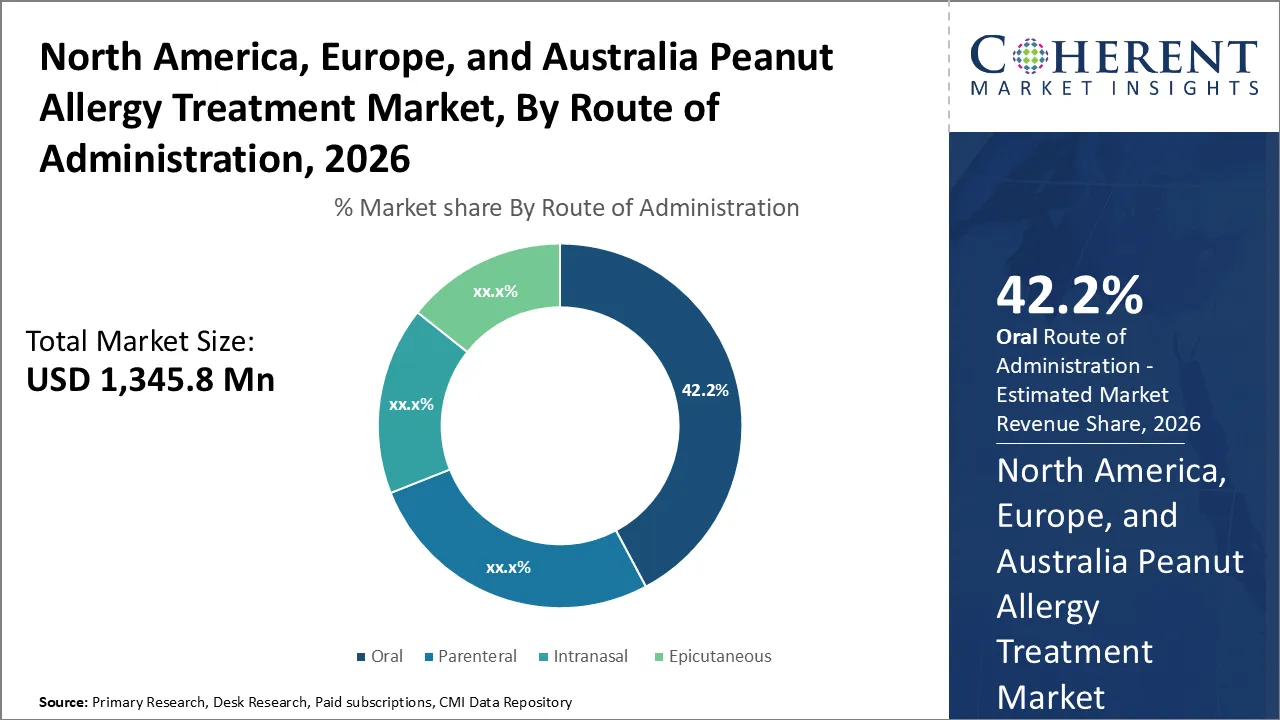
- By Route of Administration, Oral expected to hold largest market share of 42.2% in 2026 owing to the increasing adoption of oral immunotherapy.
- By Distribution Channel, Hospital Pharmacies acquired the prominent market share of 45.7% in 2026 owing to its high incidence of severe allergic reactions and anaphylaxis.
- By Region, North America dominates the overall market with an estimated share of 41.1% in 2026 owing to the advanced healthcare infrastructure.
Market Overview
Rising peanut allergy prevalence, increasing awareness, and improved diagnosis rates drive steady growth in the Peanut Allergy Treatment Market across North America, Europe, and Australia. Advanced healthcare infrastructure and specialized allergy clinics actively promote the adoption of treatments such as epinephrine auto-injectors and oral immunotherapy. Regulatory bodies approve new therapies while researchers continue to develop improved treatment options across these regions. In addition, supportive healthcare policies, a strong pharmaceutical industry presence, and increasing demand for effective long-term allergy management further strengthen the market landscape.
Current Events and their Impact on the North America, Europe, and Australia Peanut Allergy Treatment Market
Current Events | Description and its impact |
Regulatory and Policy Developments in North America
|
|
Technological Innovations in Allergy Treatment |
|
Regional Healthcare Infrastructure and Awareness Campaigns in Europe |
|
Segmental Insights
- Current Industry Events of 2026
- Market Size Estimation
- Regional Breakdown
- Competitive Landscape
- Customer Intelligence
- Segmental Analysis
- Pricing Analysis
- Key Market Drivers, Challenges & Future Trends
- Customized Insights Section
North America, Europe, and Australia Peanut Allergy Treatment Market Insights, By Route of Administration: Oral contributes the highest share of the market owing to its regulatory approvals of OIT products.
Oral expected to hold largest market share of 42.2% in 2026. Increasing interest in long-term allergy management is driving the adoption of oral therapies in the peanut allergy treatment market across North America, Europe, and Australia. Healthcare providers are actively implementing oral immunotherapy programs to help patients gradually develop tolerance to peanut allergens under medical supervision. Researchers are expanding clinical studies, while the growing number of specialized allergy clinics and supportive regulatory approvals encourage wider treatment use. Additionally, patients and parents are choosing non-invasive treatment options that can lower the risk of severe reactions and improve everyday quality of life. For instance, in September 2025, Novartis launched FDA approved Rhapsido (remibrutinib), the first oral Bruton’s tyrosine kinase inhibitor for adults with chronic spontaneous urticaria unresponsive to H1 antihistamines. The pill is taken twice daily without injections or lab monitoring.
North America, Europe, and Australia Peanut Allergy Treatment Market Insights, By Drug Type: Epinephrine contributes the highest share of the market owing to its government policies and public safety regulations.
Epinephrine holds the largest market share of 38.8% in 2026. Rising concerns about severe allergic reactions and the need for immediate emergency care are increasing the demand for epinephrine in the peanut allergy treatment market across North America, Europe, and Australia. Healthcare professionals strongly recommend epinephrine as the primary treatment for anaphylaxis, which drives consistent prescribing practices. Improved allergy diagnosis, school safety policies requiring emergency medications, and better availability of auto-injector devices further boost its adoption. Moreover, well-established healthcare systems and growing patient awareness about managing life-threatening reactions continue to strengthen the role of epinephrine in allergy care. For instance, in December 2025, Glenmark Pharmaceuticals Inc., USA, launched a 30 mg/30 mL (1 mg/mL) multiple-dose Epinephrine Injection USP in the United States, which is bioequivalent and therapeutically equivalent to BPI Labs’ Epinephrine Injection USP.
North America, Europe, and Australia Peanut Allergy Treatment Market Insights, By Distribution Channel: Hospital Pharmacies contribute the highest share of the market owing to its availability of specialized allergy treatments.
Hospital Pharmacies acquired the prominent market share of 45.7% in 2026. Rising demand for hospital pharmacies in the peanut allergy treatment market across North America, Europe, and Australia reflects the need to administer allergy therapies safely under supervision. Hospitals deliver immediate access to emergency medications like epinephrine and provide specialized treatments such as oral immunotherapy. Allergists collaborate within integrated care networks, while expanding hospital infrastructure and dedicated allergy clinics ensure patients receive proper monitoring and guidance. Additionally, hospital pharmacies manage insurance processes, provide patient education, and offer advanced therapies, establishing themselves as the preferred channel for effective peanut allergy management.
Regional Insights
North America Peanut Allergy Treatment Market Trends
North America dominates the overall market with an estimated share of 41.10% in 2026. The North America peanut allergy treatment market is advancing as healthcare providers adopt proactive, long-term management strategies. Providers increasingly implement oral immunotherapy alongside traditional emergency treatments like epinephrine. Advances in auto-injector design and the rollout of patient-friendly delivery systems are enhancing treatment accessibility and adherence. Awareness campaigns, expanding allergy clinics, and supportive regulatory frameworks actively promote early diagnosis and intervention. Additionally, ongoing research and development investments are driving innovation, making personalized and safer allergy management solutions more widely accessible throughout the region. For instance, in February 2025, Stallergenes Greer launched Palforzia in the US for children aged 1–3 with confirmed peanut allergy. It is the first FDA-approved oral immunotherapy to reduce allergic reactions, including anaphylaxis, in patients aged 1–17.
Europe Peanut Allergy Treatment Market Trends
The Europe peanut allergy treatment market is shifting toward comprehensive care as healthcare providers integrate emergency interventions with long-term management strategies. Providers are increasingly implementing oral immunotherapy and structured desensitization programs in specialized allergy clinics. Expanded patient education, awareness campaigns, and greater access to hospital pharmacies actively enhance treatment adherence and safety. Regulatory support for innovative therapies, along with ongoing clinical research, drives the development of advanced, patient-friendly treatments. Together, these trends promote early diagnosis, personalized care, and wider accessibility of peanut allergy management across Europe.
United States Peanut Allergy Treatment Market Trends
The United States peanut allergy treatment market is growing as healthcare providers actively combine emergency care with proactive management strategies. Physicians are increasingly implementing oral immunotherapy programs alongside epinephrine auto-injectors to minimize severe reactions. Advances in device design, patient-friendly delivery systems, and the expansion of allergy clinics are improving treatment accessibility and adherence. Public awareness campaigns and supportive healthcare policies actively promote early diagnosis and intervention. At the same time, ongoing research and development are driving innovative therapies, delivering safer, personalized, and more effective peanut allergy management across the country.
United Kingdom Peanut Allergy Treatment Market Trends
The United Kingdom peanut allergy treatment market is advancing as healthcare providers actively integrate emergency response with long-term management strategies. Clinicians are increasingly delivering oral immunotherapy and structured desensitization programs through specialized allergy centers. Expanding hospital pharmacy access, patient education programs, and awareness campaigns are enhancing treatment adherence and safety. Regulatory support for innovative therapies, along with ongoing clinical research, drives the development of advanced, patient-friendly treatments. Together, these initiatives promote early diagnosis, personalized care, and broader access to effective peanut allergy management throughout the UK.
North America, Europe, and Australia Peanut Allergy Treatment Market Trend
Shift Toward Proactive Allergy Management
Healthcare providers are increasingly moving beyond emergency response, emphasizing long-term management strategies such as oral immunotherapy and structured desensitization. This approach aims to reduce severe reactions, improve patient tolerance, and integrate regular monitoring through allergy clinics, specialized programs, and follow-up care, offering patients a more controlled and preventative approach to peanut allergy management.
Expansion of Specialized Allergy Clinics
The growth of dedicated allergy centers and hospital-based programs across these regions supports personalized treatment plans and supervised therapy administration. Clinics offer oral immunotherapy, allergy testing, and patient counseling under expert supervision, ensuring better adherence and safer outcomes. This expansion also enables research participation and access to innovative therapies.
North America, Europe, and Australia Peanut Allergy Treatment Market Opportunity
Expansion of Oral Immunotherapy Programs
The growing acceptance of oral immunotherapy creates opportunities for healthcare providers and pharmaceutical companies to introduce structured desensitization programs. Hospitals and specialized clinics can develop supervised treatment plans, while innovation in safer, easy-to-administer formulations can attract pediatric and adult patients seeking long-term allergy management solutions.
Market Report Scope
North America, Europe, and Australia Peanut Allergy Treatment Market Report Coverage
| Report Coverage | Details | ||
|---|---|---|---|
| Base Year: | 2025 | Market Size in 2026: | USD 1,345.8 Mn |
| Historical Data for: | 2020 To 2024 | Forecast Period: | 2026 To 2033 |
| Forecast Period 2026 to 2033 CAGR: | 12.3% | 2033 Value Projection: | USD 1,876.4 Mn |
| Geographies covered: |
| ||
| Segments covered: |
| ||
| Companies covered: | DBV Technologies, Aimmune Therapeutics, Inc., Prota Therapeutics Pty Ltd., COUR Pharmaceuticals, BlueWillow Biologics, HAL Allergy B.V., Allergy Therapeutics PLC., Novartis AG, Regeneron Pharmaceuticals, Inc., Vedanta Biosciences, Inc., Cambridge Allergy Ltd. (Camallergy), Angany Inc., Moonlight Therapeutics Inc., Allero Therapeutics B.V., Sanofi, Johnson & Johnson, Viatris Inc. (Mylan N.V.), Sun Pharmaceutical Industries Ltd., Bayer AG, Aurobindo Pharma Limited., Astellas Pharma Inc., Siolta Therapeutics, DESENTUM OY, ALK, Immunomic Therapeutics, Inc., and Stallergenes Greer Ltd. | ||
| Growth Drivers: |
| ||
| Restraints & Challenges: |
| ||
North America, Europe, and Australia Peanut Allergy Treatment Market News
- In January 2026, Poplar Therapeutics, formerly Phylaxis Bioscience, announced its launch along with $50 million in Series A funding led by SR One, Vida Ventures, and Platanus. The clinical-stage immunology company is developing a new class of anti-IgE therapy for food allergies and other atopic conditions.
Analyst Opinion (Expert Opinion)
- Across North America, Europe, and Australia, the peanut allergy treatment market is in a state of strategic transition, propelled by both clinical innovation and real‑world shifts in patient care. In North America, the entrenched position of immunotherapy — now adopted by over half of allergy clinics — reflects a deliberate movement away from mere avoidance toward substantive desensitization, supported by widespread FDA approvals and rising clinician preference for oral protocols over avoidance‑only strategies. This maturation of care has been reinforced by rising pediatric prevalence, with the U.S. seeing peanut allergy prevalence multiple times higher than in past decades, driving infrastructure investment in specialist clinics and digital monitoring integration.
- In Europe, adoption is stabilizing around standardized, physician‑led immunotherapy and structured treatment pathways, but momentum varies by country. The UK and Nordic regions are pushing consensus guidelines for therapies like Palforzia within national health systems, while parts of continental Europe still grapple with clinic capacity and equitable access. Ongoing clinical evidence — including emerging adult desensitization data — is shaping professional opinion and encouraging broader implementation beyond pediatric care.
- Australia presents a unique case where early intervention strategies and national programs aimed at building tolerance in infancy illustrate policy‑driven innovation in allergy care. Despite a smaller overall market footprint, local programs are pioneering structured oral immunotherapy models that could influence global best practices.
Speak to the analyst
Want personalized insights?
Take the findings above to one of our principal consultants, or have the report rebuilt around the segments, geographies and competitors you actually track.
Market Segmentation
- By Drug Type
- Epinephrine
- Antihistamine
- Loratadine
- Diphenhydramine
- Others
- Palforzia
- Pipeline Drugs
- Viaskin Peanut
- Ligelizumab
- CA002
- PRT120
- Dupilumab
- By Route of Administration
- Oral
- Parenteral
- Intranasal
- Epicutaneous
- By Distribution Channel
- Hospital Pharmacies
- Retail Pharmacies
- Online Pharmacies
- Regional Insights
- North America
- U.S.
- Canada
- Europe
- Germany
- U.K.
- Spain
- France
- Italy
- Russia
- Rest of Europe
- Australia
- North America
- Key Players Insights
- DBV Technologies
- Aimmune Therapeutics, Inc.
- Prota Therapeutics Pty Ltd.
- COUR Pharmaceuticals
- BlueWillow Biologics
- HAL Allergy B.V.
- Allergy Therapeutics PLC.
- Novartis AG
- Regeneron Pharmaceuticals, Inc.
- Vedanta Biosciences, Inc.
- Cambridge Allergy Ltd. (Camallergy)
- Angany Inc.
- Moonlight Therapeutics Inc.
- Allero Therapeutics B.V.
- Sanofi
- Johnson & Johnson
- Viatris Inc. (Mylan N.V.)
- Sun Pharmaceutical Industries Ltd.
- Bayer AG
- Aurobindo Pharma Limited.
- Astellas Pharma Inc.
- Siolta Therapeutics
- DESENTUM OY
- ALK
- Immunomic Therapeutics, Inc.
- Stallergenes Greer Ltd.
Sources
Primary Research interviews
- Allergists and immunologists in North America, Europe, and Australia
- Pediatricians and general practitioners treating peanut allergy patients
- Clinical trial investigators in allergy and immunology
- Hospital pharmacy managers and formulary committees
- Patient advocacy group representatives
Databases
- PubMed
- ClinicalTrials.gov
- WHO Global Health Observatory
- FDA Adverse Event Reporting System (FAERS)
- European Medicines Agency (EMA) database
- Therapeutic Goods Administration (TGA) Australia database
Magazines
- Allergy & Asthma Today
- Clinical Advisor
- MedPage Today
- New Scientist (health section)
Journals
- Journal of Allergy and Clinical Immunology
- Allergy: European Journal of Allergy and Clinical Immunology
- Pediatric Allergy and Immunology
- Annals of Allergy, Asthma & Immunology
- International Archives of Allergy and Immunology
Newspapers
- The New York Times (health section)
- The Guardian (health section)
- The Sydney Morning Herald (health coverage)
- The Washington Post (health section)
Associations
- American Academy of Allergy, Asthma & Immunology (AAAAI)
- European Academy of Allergy and Clinical Immunology (EAACI)
- Australasian Society of Clinical Immunology and Allergy (ASCIA)
- Food Allergy Research & Education (FARE)
Public Domain sources
- WHO reports on allergy prevalence
- Government health ministry reports (CDC, Health Canada, Australian Department of Health)
- National allergy registries and immunization databases
- Clinical practice guidelines published by public health agencies
Proprietary Elements
- CMI Data Analytics Tool
- Proprietary CMI Existing Repository of information for last 8 years
Get access to 250+ pages report
Every segment, forecast, competitor profile and data table behind the analysis above — available for instant download.
- ESOMAR Member
- ISO 9001:2015 Certified
- D-U-N-S Registered
- GDPR & CCPA Compliant
Missing comfort of reading report in your local language? Find your preferred language:
Transform your Strategy with Exclusive Trending Reports
Frequently Asked Questions
The North America, Europe, and Australia Peanut Allergy Treatment Market is estimated to be valued at USD 1,345.8 Mn in 2026 and is expected to reach USD 1,876.4 Mn by 2033.
Factor such as increasing prevalence of peanut allergy is expected to drive market growth over the forecast period.
Epinephrine segment is expected to hold a major market share during the forecast period.
The major factors hampering growth of the market include High cost of peanut allergy drug.
Major players operating in the market are DBV Technologies, Aimmune Therapeutics, Inc., Prota Therapeutics Pty Ltd., COUR Pharmaceuticals, BlueWillow Biologics, HAL Allergy B.V., Allergy Therapeutics PLC., Novartis AG, Regeneron Pharmaceuticals, Inc., Vedanta Biosciences, Inc., Cambridge Allergy Ltd. (Camallergy), Angany Inc., Moonlight Therapeutics Inc., Allero Therapeutics B.V., Sanofi, Johnson & Johnson, Viatris Inc. (Mylan N.V.), Sun Pharmaceutical Industries Ltd., Bayer AG, Aurobindo Pharma Limited., Astellas Pharma Inc., Siolta Therapeutics, DESENTUM OY, ALK, Immunomic Therapeutics, Inc., and Stallergenes Greer Ltd.