

Veterinary Medicine Market Size & Trends
Veterinary Medicine Market is estimated to be valued at USD 40.32 Bn in 2026 and is expected to reach USD 60.22 Bn in 2033, exhibiting a compound annual growth rate (CAGR) of 5.9% from 2026 to 2033.
Key Takeaways
- Based on Animal Type, the Companion segment is expected to dominate the global veterinary medicine market in 2026, accounting for 61.3% of the market share, due to a combination of rising pet ownership, increasing awareness of animal health, and the growing humanization of pets.
- Based on Product, the Vaccine segment is expected to be the lead the market with the largest share in 2026, due to their critical role in preventing disease outbreaks in both companion animals and livestock.
- Based Route of Administration, the Parental segment is projected to hold the highest share in the market in 2026, due to their fast-acting properties, high bioavailability, and versatility across different animal species.
- Based on Distribution Channel, the Veterinary Hospitals & Clinics us expected to account to substantial share of the market in 2026, due to their central role in providing healthcare services for both companion and farm animals.
- Based on Region, North America is expected to lead the market, holding a share of 39.7% in 2026. While, Asia Pacific is anticipated to be the fastest growing region the forecast period.
Market Overview
The global veterinary medicine market is growing steadily, driven by rising pet ownership, increasing livestock populations, and heightened awareness of zoonotic diseases. veterinary medicine market demand is fueled by both preventive and therapeutic needs across companion and food-producing animals.
Core segments like vaccines, antiparasitic, and antibiotics continue to dominate, while diagnostics and biologics show strong growth. Developed markets see higher spending on pet health, while emerging regions focus on livestock productivity and food safety.
Innovation in biotech, tele-veterinary care, and smart diagnostics is expanding market potential. Growing concerns over animal-to-human disease transmission are also driving government and private investments.
Despite regulatory and cost-related challenges, the veterinary medicine market demand is expected to remain strong due to continued R&D and evolving healthcare standards.
Current Events and their Impact on the Veterinary Medicine Market
Current Event | Description and its Impact |
African Swine Fever Global Proliferation |
|
Regulatory Landscape Transformation |
|
Advancements In Veterinary Medicine and Penetration of Pet Insurance
The veterinary medicine market is experiencing accelerated growth due to significant advancements in diagnostics, therapeutics, and preventive care. Innovations such as personalized veterinary drugs, advanced vaccines, regenerative medicine, and minimally invasive surgical techniques have enhanced animal healthcare outcomes and increased demand for high-quality treatment. Alongside this, the rising penetration of pet insurance is playing a pivotal role in market expansion.
Pet owners are now more willing to invest in advanced medical procedures, diagnostics, and long-term treatments, knowing that insurance will offset costs. This has especially been the case in developed markets like the U.S., U.K., and parts of Europe, where double-digit growth in insured pets is being recorded annually. As veterinary practices adopt cutting-edge medical technologies, and insurance plans become more comprehensive and accessible, both companion and livestock animal healthcare segments are witnessing strong and sustained growth.
- Current Industry Events of 2026
- Market Size Estimation
- Regional Breakdown
- Competitive Landscape
- Customer Intelligence
- Segmental Analysis
- Pricing Analysis
- Key Market Drivers, Challenges & Future Trends
- Customized Insights Section
Segmental Insights
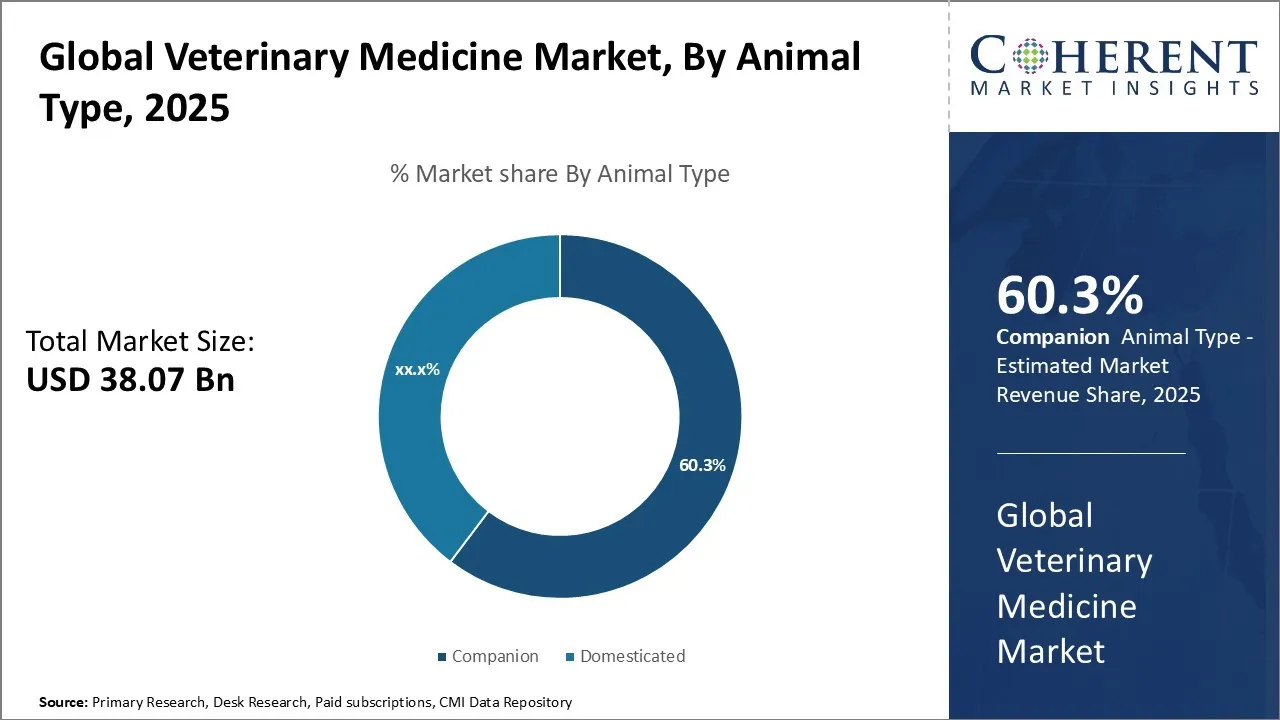
Veterinary Medicine Market Insights, By Animal Type: Companion Segment holds the dominant share owing to Rising Pet ownership
In terms of animal type, the companion segment is expected to hold 61.3% share in the global veterinary medicine market in 2026, due to a combination of rising pet ownership, increasing awareness of animal health, and the growing humanization of pets. In many regions, especially North America, Europe, and parts of Asia-Pacific, pets are now considered part of the family, leading to higher investments in their medical care. This includes preventive treatments, vaccinations, diagnostics, and management of chronic diseases. As disposable incomes rise and pet insurance becomes more accessible, owners are more willing to spend on advanced veterinary services and medications. Additionally, veterinary medicine tailored to pets, such as flavored oral drugs or targeted therapies are becoming more available. The increase in regular veterinary visits and the demand for long-term wellness solutions have made companion animals a major driver of veterinary medicine market growth globally.
For instance, in March 2025, The U.S. Food and Drug Administration’s Center for Veterinary Medicine has granted conditional approval for LOY‑002, a beef‑flavored daily pill developed by biotech startup Loyal, aimed at extending both lifespan and health span in dogs aged 10 years or older and weighing at least 14 lb. LOY‑002 works by mimicking the metabolic benefits of caloric restriction, delaying age‑related decline.
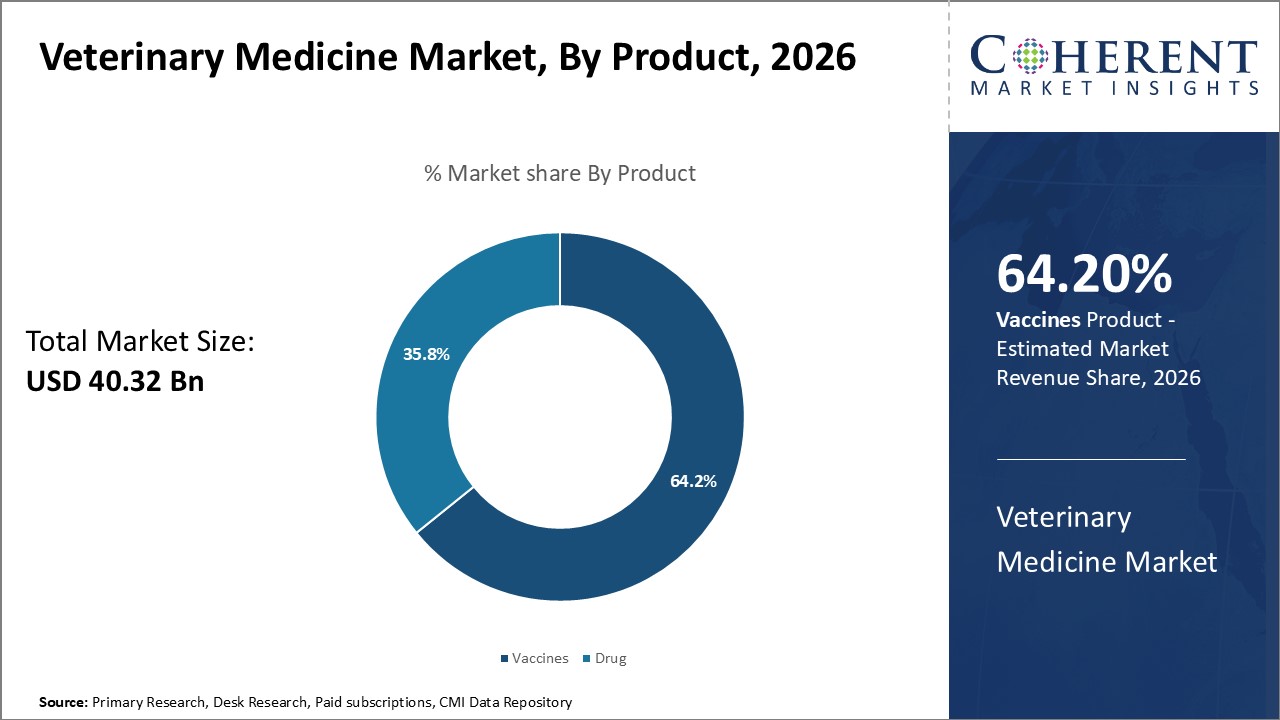
Veterinary Medicine Market Insights, By Product: Vaccine Acquires the largest share owing to the Need to Prevent Disease Outbreaks
In terms of product, the vaccine segment holds the highest market share in veterinary medicine market in 2026, due to their critical role in preventing disease outbreaks in both companion animals and livestock. As concerns over zoonotic diseases grow, vaccines offer an effective solution to protect not only animal populations but also human health. Government regulations and global standards increasingly require vaccination programs to control endemic conditions, maintain food safety, and ensure the export quality of meat and dairy products. In livestock farming, vaccines help reduce economic losses by minimizing disease-related mortality and productivity drops. Simultaneously, the rise in pet ownership, especially in developed regions, has increased awareness and spending on preventive care such as rabies and distemper vaccinations. Furthermore, the growing push to reduce antibiotic use in animals, driven by global efforts to combat antimicrobial resistance (AMR) is also encouraging the adoption of vaccines as a proactive health management strategy. These combined factors are fueling steady growth in veterinary medicine market demand for vaccines.
For instance, in July 2025, an extensive cattle vaccination campaign has been launched in Prayagraj (Allahabad) under the National Disease Control Programme to curb monsoon-related outbreaks like Foot and Mouth Disease (FMD). The district received 12.25 lakh vaccine doses, excluding calves under four months and pregnant cows over eight months.
Veterinary Medicine Market Insights, By Route of Administration: Parental Segment Dominates the overall market
In terms of route of administration, the parental segment secured the dominating share in the market in 2026, due to their fast-acting properties, high bioavailability, and versatility across different animal species. These formulations are particularly critical in emergency situations, such as severe infections, injuries, or post-surgical recovery where rapid therapeutic action is essential. Unlike oral medications, parenteral bypass the digestive system and deliver the drug directly into the bloodstream, ensuring faster and more reliable treatment outcomes. This is especially important for large animals like cattle and horses, where oral administration can be challenging or inconsistent.
Additionally, injectable forms are a cornerstone of mass vaccination programs in livestock and poultry, making them indispensable in preventive veterinary care. They also improve dosage accuracy, reduce the risk of antimicrobial resistance, and increase compliance factors that are crucial in effective disease management. Veterinary professionals often prefer parenteral administration in clinical settings where immediate results are required, or where animal cooperation with oral treatments is limited. These benefits collectively contribute to the rising Veterinary Medicine Market Demand for parenteral drug formulations.
For instance, in February 2025, Zoetis has announced an update to the U.S. prescribing label for Librela (bedinvetmab injection), its monthly injectable treatment designed to relieve osteoarthritis (OA) pain in dogs, following submission of a supplement to the FDA.
Veterinary Medicine Market Insights, By Distribution Channel: Veterinary Hospitals & Clinics Accounts the largest share
In term so distribution channel, the veterinary hospitals & clinics segment is expected to command for the greatest share of the market in 2026, due to their central role in providing healthcare services for both companion and farm animals. As the first point of contact for pet owners and livestock farmers, these facilities handle a high volume of consultations for routine checkups, disease diagnosis, vaccinations, and emergency treatments. This directly fuels the demand for a wide range of veterinary pharmaceuticals, vaccines, and medical supplies. Moreover, the increasing focus on preventive care, such as deworming, flea and tick control, and vaccination has made clinics essential for ongoing animal wellness programs. In-house pharmacies and the ability to prescribe and dispense medications on-site further boost medicine consumption. In rural and semi-urban regions, veterinary clinics also play a critical role in livestock health management, supporting herd productivity and food safety through disease surveillance and outbreak control. With rising pet ownership, growing awareness of animal health, and technological advancements in veterinary diagnostics, hospitals and clinics remain key contributors to the growing veterinary medicine market demand.
For instance, in March 2024, The World Veterinary Association (WVA) and animal welfare charity Brooke have unveiled the world’s first Essential Veterinary Medicines List (EVML) for food‑producing animals. Phase 1 covers nearly 300 core medicines and vaccines across 11 categories, including antimicrobials, hormone therapies, and vaccines for equids, ruminants, pigs, goats and sheep, with future phases targeting poultry, rabbits, aquaculture and bees.
Regional Insights
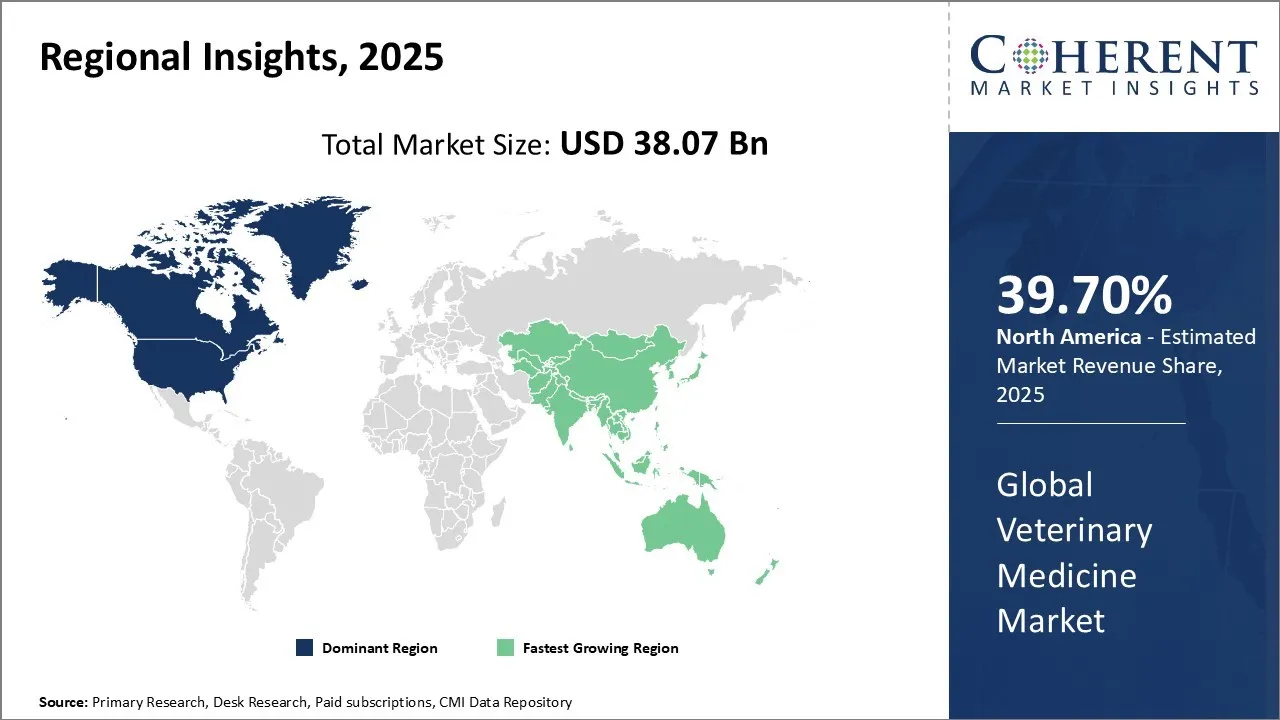
North America Veterinary Medicine Market Analysis & Trends
North America, holding a share of 39.70% in 2026, is expected to dominate the global veterinary medicines market, primarily driven by high pet ownership rates, advanced veterinary infrastructure, and a robust livestock industry. The U.S. and Canada have some of the highest pet adoption levels globally, with a growing emphasis on pet health and wellness. For instance, according to the World Population review, United States is the top country in the world for both dogs and cats. There are approximately 70 million domestic dogs and 74 million domestic cats in the United States. This has led to increased spending on veterinary services, including vaccines, diagnostics, and chronic care treatments. The region also benefits from a well-established network of animal hospitals, clinics, and diagnostic labs, supported by the availability of pet insurance, which encourages frequent veterinary visits.
For instance, in May 2026, Oklahoma State University has received a historic $250 million state appropriation to construct a cutting‑edge veterinary teaching hospital, the largest single investment in the university’s history. The 255,000‑sq‑ft facility will replace the outdated 145,000‑sq‑ft hospital and significantly expand capacity for training veterinarians, particularly in large‑animal care.
Asia Pacific Veterinary Medicine Market Analysis & Trends
Asia Pacific region is expected to exhibit the fastest growth on the global veterinary medicine market during the forecast period. The expansion is observed due to several key drivers. The region is home to some of the world’s largest livestock populations, particularly in countries like India, China, and Vietnam, where veterinary medicines are essential for maintaining animal health and productivity. For inatance, according to Foreign Agriculture Service, in 2026, India is projected to have the world's largest population of bovine cattle and Asian water buffalo, with 307.5 million. At the same time, rising urbanization and increasing disposable incomes are fueling a surge in pet ownership across major cities, leading to higher demand for vaccines, antibiotics, and wellness products for companion animals. Zoonotic diseases, which often originate in this region, have also prompted governments to invest in veterinary healthcare and preventive medicine as part of broader public health strategies.
Moreover, national initiatives promoting livestock development and disease eradication are contributing to growing awareness and usage of veterinary pharmaceuticals. The region’s veterinary infrastructure is also improving rapidly, with better access to clinics, diagnostic services, and mobile veterinary care, especially in rural areas.
For instance, in May 2026, FAO’s Emergency Centre for Transboundary Animal Diseases (ECTAD) Asia Pacific released key updates on animal health developments across the region. Bangladesh reported 17 new outbreaks of Lumpy Skin Disease in cattle. China confirmed one new human case of H5N6 avian influenza. Indonesia recorded two new cases of anthrax in livestock. Meanwhile, the Philippines intensified rabies vaccination efforts. These updates underscore the need for continued cross-border collaboration in disease monitoring and response.
Veterinary Medicine Market Outlook Country-Wise
The U.S. Veterinary Medicine Market Trends
The U.S. leads in veterinary medicine market demand due to high pet ownership, strong animal healthcare infrastructure, and strict welfare regulations. With nearly 70% of households owning pets, spending on companion animal health continues to rise. Advanced diagnostics, digital tools, and pet insurance are making quality veterinary care more accessible.
Additionally, the presence of global leaders like Zoetis, Merck Animal Health, and Elanco fuels innovation in veterinary drugs and vaccines. Combined with a pet-loving culture and significant R&D investment, the U.S. remains one of the most mature and innovation-driven markets in veterinary medicine.
For instance, Creature Comforts Animal Hospital, P.C., a women‑owned veterinary practice active in the Hudson Valley has been named to Newsweek’s America’s Best Animal Hospitals 2026 list, compiled in partnership with Plant‑A Insights Group. The recognition honors the top 500 U.S. animal hospitals, based on analysis of over 5 million customer ratings and reviews across eight categories including medical care, facility quality, emergency services, staff communication, and affordability.
China Veterinary Medicine Market Trends
China is a prominent country in the Veterinary Medicine Market due to rising livestock farming, increasing pet ownership, and government focus on animal health. The country faces frequent animal disease outbreaks, driving demand for veterinary vaccines, antibiotics, and biosecurity solutions. Urban pet adoption is also booming, fueling sales of companion animal medicines and preventive care. Government initiatives to improve food safety and modernize livestock production, along with local R&D efforts, are further strengthening China’s position in the global veterinary pharmaceutical landscape.
For instance, in January 2026, China’s customs authority has banned imports of livestock and related products from 16 countries, effective Jan 21, in response to outbreaks of sheep pox, goat pox and foot‑and‑mouth disease, the World Health Organization confirmed. The restrictions target sheep, goats, poultry and even‑toed ungulates, both processed and unprocessed items from nations across Africa (Ghana, Somalia, Nigeria, Tanzania, Egypt), Asia (Pakistan, Afghanistan, Nepal, Bangladesh, Palestine, Qatar, East Timor) and Europe (Germany, Bulgaria). The measures highlight China's stringent biosecurity posture in protecting its food supply chain.
Market Report Scope
Veterinary Medicine Market Report Coverage
| Report Coverage | Details | ||
|---|---|---|---|
| Base Year: | 2025 | Market Size in 2026: | USD 40.32 Bn |
| Historical Data for: | 2020 To 2024 | Forecast Period: | 2026 To 2033 |
| Forecast Period 2026 to 2033 CAGR: | 5.9% | 2033 Value Projection: | USD 60.22 Bn |
| Geographies covered: |
| ||
| Segments covered: |
| ||
| Companies covered: | Ceva, Zoetis, Elanco, Chanelle Pharma Group, and Boehringer Ingelheim International Gmbh, among others | ||
| Growth Drivers: |
| ||
| Restraints & Challenges: |
| ||
Global Veterinary Medicine Market Drivers
- Rise in burden of zoonotic diseases to drive market growth
The Veterinary Medicine Market is significantly influenced by the rising burden of zoonotic diseases, which pose growing risks to both animal and human health. Zoonoses diseases that can transmit from animals to humans which require swift diagnosis, prevention, and treatment at the veterinary level to avoid large-scale outbreaks and economic losses. This has led to increasing emphasis on veterinary medicine market research and investments in vaccines, diagnostics, and therapeutics tailored to contain and manage such diseases effectively.
A recent analysis under India’s Integrated Disease Surveillance Programme (IDSP) revealed that between 2018 and 2023, out of 6,948 recorded disease outbreaks, 583 (8.3%) were zoonotic in nature. These included Japanese encephalitis (29.5%), leptospirosis (18.7%), and scrub typhus (13.9%), highlighting the recurring nature of zoonotic spillovers. Regionally, Northeast India accounted for 35.8% of these cases, followed by the South at 31.7%, and the West at 15.4%.
These figures underscore the urgent need for expanded veterinary infrastructure and medicine usage to detect, treat, and prevent such outbreaks. The integration of veterinary services with public health policies, especially in high-risk regions, is becoming critical. Consequently, the rising threat of zoonoses is not only driving veterinary medicine market demand but also accelerating research and innovation to build more resilient veterinary healthcare systems.
- Rise in pet ownership to underpin market growth
The rise in pet ownership is a major factor underpinning the growth of the veterinary medicine market, as the expanding companion animal population directly fuels demand for veterinary diagnostics, therapeutics, vaccines, and preventive care. According to Forbes, pet ownership has surged globally, creating strong tailwinds for the market. In the United States alone, approximately 66% of households own a pet, with nearly 85 million dogs and 65 million cats. Similarly, the European Union collectively houses over 113 million dogs and 92 million cats, with nearly half of EU households reporting pet ownership. In China, the trend is even more pronounced with over 140 million pets, the number of animals in urban households has now surpassed that of toddlers. This rapid rise in pet companionship is not only reshaping consumer behavior but also increasing spending on veterinary services, pharmaceuticals, and wellness products. As owners seek higher-quality care and longer lifespans for their pets, the veterinary medicine market is experiencing sustained demand growth, particularly in urban and high-income regions globally.
Global Veterinary Medicine Market Opportunities
- Increase in focus on the veterinary healthcare
The veterinary healthcare landscape is undergoing rapid advancement as pet owners, veterinary institutions, and governments increasingly prioritize animal well-being. A growing awareness of animal health, combined with rising disposable income and emotional bonding with pets, has led to higher demand for advanced veterinary treatments and facilities. This shift is significantly shaping the Veterinary Medicine Market Forecast, pushing it toward specialized and technology-driven care.
For instance, in May 2025, BenQ Dialysis, a subsidiary of Qisda Corporation and Taiwan’s only domestic artificial kidney manufacturer, collaborated with Compasstion Veterinary Hospital to launch the island’s first-ever animal hemodialysis center. This state-of-the-art facility utilizes advanced Continuous Renal Replacement Therapy (CRRT) equipment designed specifically for pets. It enables critical care procedures such as hemodialysis, plasma exchange, and cytokine clearance, marking a major milestone in veterinary innovation.
Such developments highlight a growing commitment to delivering human-grade medical care to animals and underscore a broader trend toward advanced treatment modalities in veterinary medicine. As more countries adopt similar initiatives, the market is expected to expand with increasing investments in diagnostics, therapeutic equipment, and specialty veterinary services.
Global Veterinary Medicine Market Trends
- Favorable government initiatives is a recent trend
A recent and noteworthy trend in the Veterinary Medicine Market is the growing support through favorable government initiatives aimed at enhancing animal healthcare infrastructure and access to veterinary medicines. These initiatives are playing a critical role in strengthening livestock disease management, ensuring food security, and improving the overall well-being of both livestock and companion animals. For instance, in March 2025, the Union Cabinet of India, led by Prime Minister Narendra Modi, approved amendments to the ₹3,880 crore Livestock Health and Disease Control Programme (LHDCP) for the years 2024–25 and 2025–26. As part of this effort, a new initiative called Pashu Aushadhi was launched to ensure the availability of high-quality, affordable generic veterinary medicines for farmers, with an initial allocation of ₹75 crore. Such programs not only promote preventive animal healthcare but also stimulate demand for veterinary pharmaceuticals by making treatments more accessible and affordable, especially in rural and underserved areas. These government-backed interventions are expected to be a significant driver of Veterinary Medicine Market growth in the coming years.
Analyst Opinion (Expert Opinion)
The veterinary medicine market value is undergoing a structural transformation driven not by volume expansion, but by qualitative shifts in consumption patterns, regulatory environments, and diagnostic sophistication.
A key inflection point in the market has been the transition from livestock-focused revenues toward companion animal care. In the U.S., nearly 66% of households now own pets, representing over 85 million dogs and 65 million cats, according to Forbes. These are not merely emotional assets for households, they are now embedded in healthcare ecosystems. The increasing acceptance of pet insurance (which covers surgical procedures, chronic condition management, and even behavioral therapies) is changing the pricing power of veterinarians and pharmaceutical developers. In countries like the U.K. and Sweden, where pet insurance penetration exceeds 30%, the prescription volume for advanced therapies such as monoclonal antibodies and immunomodulators has grown exponentially.
In emerging economies, the livestock sector remains critical, but it is being reshaped by enforcement of antimicrobial stewardship regulations. For example, China's Ministry of Agriculture banned the use of colistin in animal feed several years ago, creating a ripple effect that forced producers to invest in vaccines and biotherapeutics. This regulatory push is accelerating the growth of recombinant vaccines and herbal-based parasiticides as viable alternatives, thus benefiting firms with R&D portfolios geared toward biologicals rather than conventional antibiotics.
Furthermore, the diagnostic layer of veterinary care is becoming increasingly indispensable. Over 60% of canine cancer cases in North America now involve some form of molecular or histopathological analysis. This demand is spilling over into in-clinic diagnostics, with point-of-care hematology and ELISA testing growing at double-digit rates in markets like Germany and South Korea. The implication here is clear: manufacturers that integrate diagnostics with therapeutics, either through bundling or via data analytics platforms are poised for stronger long-term retention with veterinary practices.
Apart from this, consolidation among veterinary hospitals, particularly in North America and Western Europe, is influencing formulary decisions. The rise of corporate veterinary chains such as VCA and CVS Group has centralized procurement, favoring suppliers with scalable logistics and continuous innovation pipelines. Smaller firms reliant on legacy drugs are increasingly squeezed out unless they offer differentiators such as lower withdrawal periods, species-specific approvals, or integrated aftercare solutions.
Speak to the analyst
Want personalized insights?
Take the findings above to one of our principal consultants, or have the report rebuilt around the segments, geographies and competitors you actually track.
Key Developments
- In May 2025, PBI‑Gordon Companies acquired TriviumVet, an Irish veterinary research and development firm, expanding its global animal health portfolio. TriviumVet’s flagship product, Felycin‑CA1 (sirolimus delayed‑release tablets for feline hypertrophic cardiomyopathy), alongside its promising pipeline, to PBI‑Gordon’s PRN Pharmacal division.
- In March 2025, Privo Technologies Inc. launched BeneVet Oncology, a new subsidiary dedicated to advancing companion animal health using innovative drug delivery platforms originally designed for humans. Based in Peabody, Massachusetts, BeneVet will focus initially on developing treatments for cutaneous and subcutaneous solid tumors in dogs and cats, including the PRV 131 intratumoral injectable and sustained‑release topical therapies aimed at improving precision and reducing side effects in veterinary oncology.
- In March 2025, Human Biopharmaceuticals Inc. announced its entry into the veterinary healthcare market with the launch of a dedicated subsidiary, Human Biopharmaceuticals Animal Health. This strategic expansion aims to leverage the company’s existing drug development capabilities for companion animals. The new division will focus on developing novel veterinary therapeutics and repositioning existing human drugs for animal health applications.
- In October 2024, Immertec, a Texas‑based immersive healthcare technology company, unveiled its new Animal Health Division to bring real‑time surgical training to the veterinary field. The division adapts Immertec’s existing human healthcare platform for veterinary hospitals, universities, and device manufacturers, enabling live‑streamed procedures and multi‑user collaboration across locations.
Market Segmentation
- Global Veterinary Medicine Market, By Animal Type (Revenue, USD Bn, 2021 - 2033)
- Domesticated
- Companion
- Global Veterinary Medicine Market, By Product (Revenue, USD Bn, 2021 - 2033)
- Drug
- Vaccines
- Global Veterinary Medicine Market, By Route of Administration (Revenue, USD Bn, 2021 - 2033)
- Oral
- Parental
- Others
- Global Veterinary Medicine Market, By Distribution Channel (Revenue, USD Bn, 2021 - 2033)
- Veterinary Hospitals & Clinics
- Retail Stores
- Online Pharmacies
- Global Veterinary Medicine Market, By Region (Revenue, USD Bn, 2021 - 2033)
- North America
- U.S.
- Canada
- Latin America
- Brazil
- Argentina
- Mexico
- Rest of Latin America
- Europe
- Germany
- U.K.
- Spain
- France
- Italy
- Russia
- Rest of Europe
- Asia Pacific
- China
- India
- Japan
- Australia
- South Korea
- ASEAN
- Rest of Asia Pacific
- Middle East
- GCC Countries
- Israel
- Rest of Middle East
- Africa
- South Africa
- North Africa
- Central Africa
- North America
- Veterinary Medicine Market Companies
- Ceva
- Zoetis
- Elanco
- Chanelle Pharma Group
- Boehringer Ingelheim International Gmbh
Sources
Primary Research Interviews from the following stakeholders
Stakeholders
- Interviews with veterinary drug manufacturers, animal health distributors, private veterinary practitioners, livestock farmers, pet store chains, veterinary hospital administrators, and regulators across major regional markets.
Specific Stakeholders
- Procurement heads at veterinary hospitals and clinic chains
- Senior livestock managers and veterinarians at integrated dairy and poultry farms
- Heads of R&D at animal pharmaceutical manufacturers
- Animal welfare and regulatory officers at national agencies
- Operations managers at pet retail chains and distributors
- Poultry and livestock feed technologists and animal nutrition experts
- Zoonotic disease researchers and veterinary epidemiologists in academic and research institutions
Databases
- World Organisation for Animal Health (WOAH) Statistics
- UN Comtrade Database
- Food and Agriculture Organization (FAO) Animal Health and Production Statistics
- U.S. Department of Agriculture (USDA) Animal and Plant Health Inspection Service
- Eurostat – Animal and Veterinary Reports
- India’s Department of Animal Husbandry and Dairying (DAHD)
- China Ministry of Agriculture and Rural Affairs (MARA) Statistics
- OECD Agricultural and Veterinary Data
- Global Trade Atlas (for animal pharmaceuticals and vaccines trade flows)
Magazines
- Veterinary Practice News
- Animal Pharm News
- The Cattle Site
- Poultry World
- Feed Strategy Magazine
- AgriBusiness Global
- Companion Animal Veterinarian
- Progressive Dairyman
- International Animal Health Journal
Journals
- Journal of Veterinary Pharmacology and Therapeutics
- Preventive Veterinary Medicine
- Research in Veterinary Science
- Journal of Animal Science
- Veterinary Record
- Animal Health Research Reviews
- Journal of Dairy Science
- Avian Pathology
- Frontiers in Veterinary Science
Newspapers
- The Wall Street Journal – Agriculture & Healthcare
- The Hindu Business Line – Livestock & Pharma
- Financial Times – Global Agribusiness and Animal Health
- The Economic Times – Animal Healthcare Industry
- The Guardian – Global Agriculture and Pet Health Coverage
- Nikkei Asia – Veterinary Drug Exports and Imports
- South China Morning Post – Agriculture & Veterinary Developments
Associations
- World Veterinary Association (WVA)
- International Federation for Animal Health (IFAH)
- Indian Veterinary Association (IVA)
- American Veterinary Medical Association (AVMA)
- European Medicines Agency – Veterinary Medicines Division
- Animal Health Institute (AHI)
- International Poultry Council (IPC)
- Federation of Indian Animal Protection Organisations (FIAPO)
- World Small Animal Veterinary Association (WSAVA)
Public Domain Sources
- Department of Animal Husbandry & Dairying – Government of India
- USDA Economic Research Service – Animal Health and Expenditure Data
- Ministry of Agriculture, Forestry and Fisheries (MAFF), Japan
- European Commission – DG SANTE Veterinary Medicine and Food Chain
- Reserve Bank of India – Reports on Agro and Veterinary Sectors
- NITI Aayog – Livestock and Veterinary Infrastructure Policy Reports
- China Animal Husbandry and Veterinary Bureau Publications
- UK DEFRA – Veterinary Medicines Directorate
- FAO's Animal Production and Health Division Reports
Proprietary Elements
- CMI Data Analytics Tool, and Proprietary CMI Existing Repository of information for last 8 years
Get access to 250+ pages report
Every segment, forecast, competitor profile and data table behind the analysis above — available for instant download.
- ESOMAR Member
- ISO 9001:2015 Certified
- D-U-N-S Registered
- GDPR & CCPA Compliant
Missing comfort of reading report in your local language? Find your preferred language:
Transform your Strategy with Exclusive Trending Reports
Frequently Asked Questions
The Veterinary Medicine Market is estimated to be valued at USD 40.32 Bn in 2026, and is expected to reach USD 60.22 Bn by 2033.
The CAGR of the Veterinary Medicine Market is projected to be 5.9% from 2026 to 2033.
Rising incidence of zoonotic diseases and increase in pet ownership or growing animal adoption around the world is fueling the market.
The companion segment is the leading animal type segment in the market.
Lack of veterinarians and stringent regulatory guidelines are major factors restraining market.
Major players operating in the market are Ceva, Zoetis, Elanco, Chanelle Pharma Group, and Boehringer Ingelheim International Gmbh, among others.
The future lies in precision medicine, telehealth, companion animal care, and advanced biologics for both pets and livestock.