

Veterinary Healthcare Market Size and Share Analysis - 2026 To 2033
The global veterinary healthcare market size is estimated to reach USD 46,700 Mn in 2026 and is projected to grow at a CAGR of 9.0% during the forecast period, surpassing USD 85,368 Mn by 2033. This growth is attributable to rising prevalence of zoonotic and chronic animal diseases, increasing pet ownership, and growing demand for advanced veterinary diagnostics, vaccines, and therapeutics.
Key Takeaways from the Veterinary Healthcare Market Report
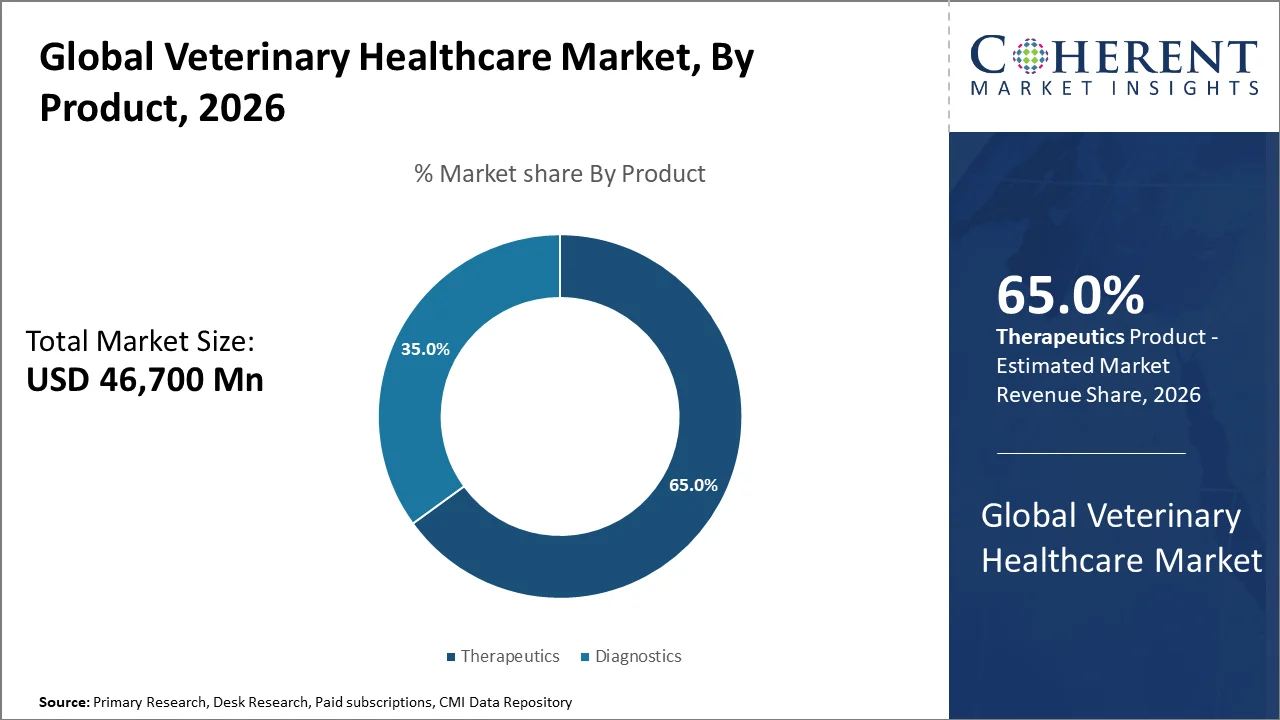
- Therapeutics segment is expected to lead the market with a share of 65% in 2026 due to rising demand for animal vaccines, parasiticides, anti-infectives, and other pharmaceutical treatments used for disease prevention and management across companion and livestock animals. For instance, infectious animal diseases are increasingly spreading into new regions and species, with around 47% of emerging animal diseases having zoonotic potential (WOAH), intensifying global disease-control efforts and fueling adoption of veterinary vaccines and therapeutic interventions.
- Dogs and cats segment is slated to account for the largest market share of 48.0% in 2026, owing to increasing adoption of dogs and cats, growing pet humanization trend, and high per-animal spending. For example, 4.2 Mn cats and dogs are adopted annually in the U.S., as per the World Animal Foundation.
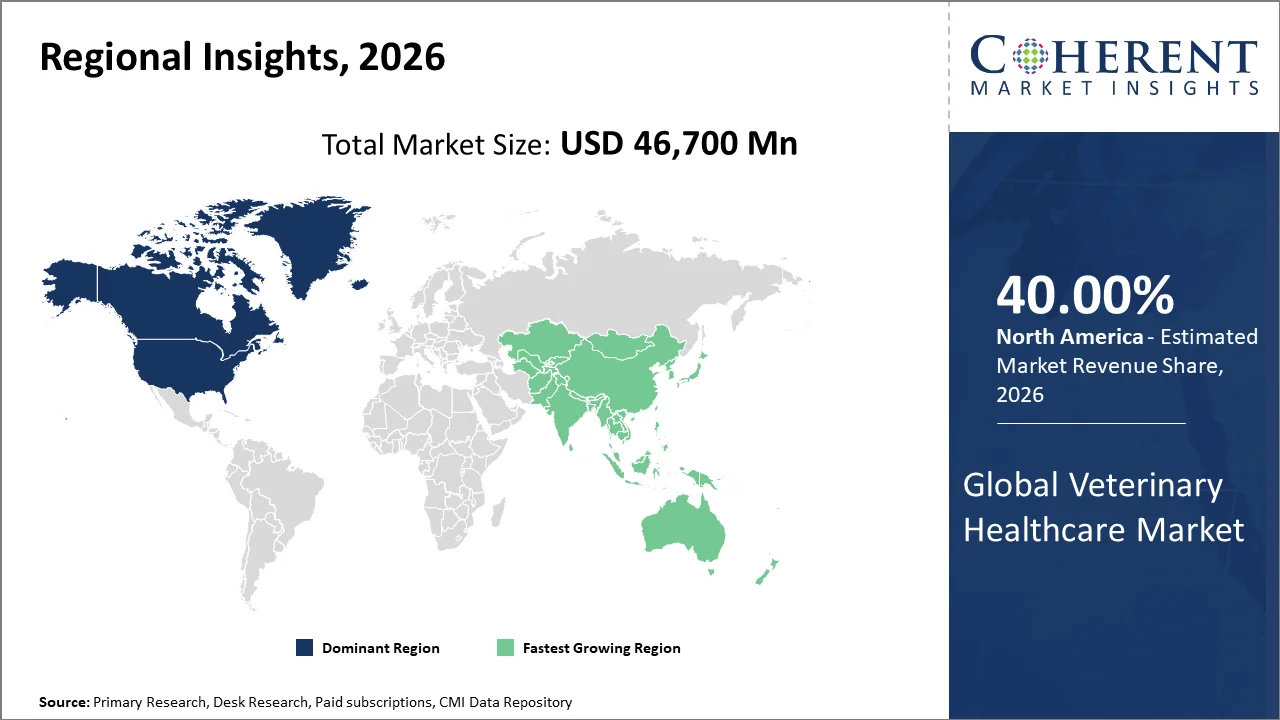
- North America is projected to retain its dominance over the global veterinary healthcare industry with a share of 40% in 2026 as a result of high pet healthcare spending, well-established veterinary infrastructure, increasing adoption of advanced diagnostics, and growing penetration of pet insurance. For instance, the number of insured pets in North America reached about 7.03 Mn by the end of 2024, showing rapid expansion in insurance coverage and improved affordability of veterinary care.
- Asia Pacific, holding a share of 23% in 2026, is anticipated to emerge as the fastest growing market of veterinary healthcare products during the forecast period, thanks to rapid expansion of livestock industry, rising pet ownership in nations like China, India, and Japan, and increasing veterinary infrastructure investment. For example, Asia accounts for around 70%+ of the global pig population, indicating very high livestock density, which increases disease transmission risk and consequently drives demand for veterinary healthcare products and services.
Veterinary Healthcare Market Overview
The global veterinary healthcare market is expected to register strong growth during the forecast period. This is due to rising pet ownership worldwide and increasing incidence of zoonotic diseases. In addition, advancements in veterinary diagnostics, therapeutics, and preventive care are supporting market expansion.
Government initiatives aimed at improving animal welfare and controlling the spread of infectious diseases are expected to boost sales of veterinary healthcare products. Supportive regulations, vaccination campaigns, disease surveillance programs, and animal welfare initiatives are strengthening veterinary healthcare infrastructure across the globe.
These efforts are improving access to veterinary services and encouraging the adoption of preventive healthcare measures among pet owners and livestock farmers. For instance, in January 2025, the Thane Municipal Corporation in Maharashtra, India, launched an anti-rabies vaccination campaign targeting thousands of stray dogs. Such initiatives are expected to support the growth of the veterinary healthcare market during the forecast period.
Growth in preventive healthcare and vaccination programs is set to create a plethora of opportunities for the veterinary healthcare market. Animal owners are increasingly adopting routine health checkups, vaccinations, parasite control, and wellness screenings. This shift toward preventive care is improving animal health outcomes while generating recurring demand for veterinary services.
Advancements in veterinary diagnostics and treatment technologies are also positively impacting veterinary healthcare market growth. Rapid adoption of molecular diagnostics, PCR testing, AI-assisted diagnostics, imaging technologies, and point-of-care testing devices is enabling faster and more accurate disease detection. These innovations are improving treatment outcomes and expanding access to advanced veterinary care.
Segmental Insights
Which Product Dominates the Global Veterinary Healthcare Market?
Therapeutics Segment to Account for Nearly Two-Third of Market Share in 2026
According to Coherent Market Insights’ latest veterinary healthcare market analysis, therapeutics segment is set to lead the market, capturing a share of 65.0% in 2026. This dominance is attributable to rising prevalence of infectious and chronic diseases among companion and livestock animals, increasing demand for preventive and curative treatments, and growing adoption of advanced veterinary pharmaceuticals.
A strong real-world illustration of why therapeutics dominate veterinary healthcare is the global rabies control effort. Rabies causes about 59,000 human deaths every year (WHO), and virtually all cases originate from infected dogs. To control it, countries rely on mass dog vaccination campaigns and post-bite treatment, which are both based on veterinary therapeutics.
Expanding pet ownership across the world and growing awareness regarding animal health and welfare are driving regular spending on vaccines, parasiticides, anti-infectives, and other therapeutic products. In addition, continuous innovation in drug formulations, along with increased availability of combination therapies and long-acting injectables, is also expected to boost growth of the target segment during the forecast period.
- Current Industry Events of 2026
- Market Size Estimation
- Regional Breakdown
- Competitive Landscape
- Customer Intelligence
- Segmental Analysis
- Pricing Analysis
- Key Market Drivers, Challenges & Future Trends
- Customized Insights Section
Which Animal Type Accounts for the Largest Veterinary Healthcare Market Share?
Dogs and Cats Segment Leads the Market Due to High Pet Ownership and Expenditure
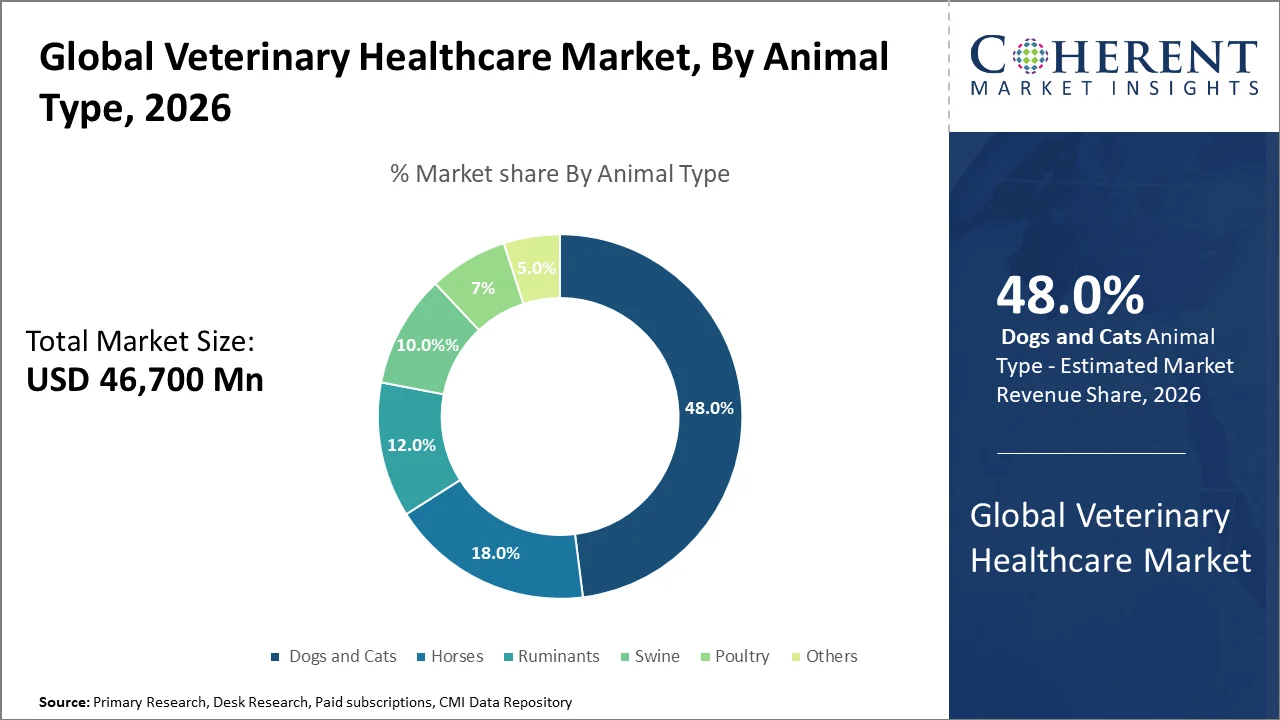
Based on animal type, dogs and cats segment is projected to lead the market, capturing a share of 48.0% in 2026. This is mostly due to their status as the most commonly adopted companion animals worldwide, higher spending on preventive and chronic care, greater access to advanced veterinary services, and increasing humanization of pets.
There is an increasing trend of adoption of cats and dogs in large numbers in developed countries like America and England. For instance, in America, 68% of the households that own pets have dogs while 46% have cats as their pets. They are the most commonly kept pets among all kinds of pets. The number of pets means an increased need for veterinary services, which means that dogs and cats are the biggest users of veterinary services.
Veterinary Healthcare Market Growth Drivers
Rising Pet Ownership and Pet Humanization
Rising pet ownership is a major factor driving the growth of the veterinary healthcare market. The population of companion animals continues to increase worldwide, especially in nations like the U.S., China, and the U.K., boosting demand for veterinary services, diagnostics, vaccines, medicines, and preventive healthcare.
According to the World Animal Foundation, approximately 5.8 million dogs and cats entered U.S. animal shelters in 2025. This shows the increasing adoption rate of companion animals. The rise in spending on pets' well-being and treatment is also a matter of concern as people are now regarding their pets as a part of their family. This trend is expected to create demand for advanced veterinary healthcare products and services during the forthcoming period.
Veterinary Healthcare Market Opportunities
Increasing Prevalence of Zoonotic and Infectious Diseases
The rising prevalence of zoonotic and infectious diseases is creating lucrative growth opportunities in the veterinary healthcare market. Increasing incidence of animal-borne diseases, including avian influenza, rabies, and other zoonotic infections, is driving demand for advanced veterinary diagnostics, vaccines, therapeutics, and disease surveillance solutions.
According to a study by the European Commission’s Joint Research Centre (JRC), approximately 9.3% of the global land surface is at high or very high risk of outbreaks of zoonotic diseases, including Ebola, Zika, and Crimean–Congo haemorrhagic fever. As a result, governments, livestock producers, and animal health organizations are increasing investments in disease monitoring, biosecurity measures, and preventive healthcare programs to reduce outbreak risks. This is set to fuel growth of animal healthcare market during the forthcoming period.
For instance, in March 2025, the United States reported its first outbreak of H7N9 avian influenza since 2017. Such outbreaks are expected to accelerate demand for veterinary vaccines, diagnostic tests, and other animal healthcare products, opening revenue streams for veterinary healthcare market players during the forecast period.
Veterinary Healthcare Market Trends
Shift Towards Point-of-Care Diagnostic Tools
Increasing adoption of point-of-care diagnostic tools for rapid disease detection is a key growth-shaping trend in the veterinary healthcare market. Veterinary clinics, hospitals, and livestock farms are increasingly using these diagnostic solutions to enable rapid and accurate disease detection as well as facilitate timely treatment decisions and improve animal health outcomes. Rising demand for efficient diagnostic technologies is expected to support the growth of the veterinary healthcare market during the forecast period.
For instance, in June 2025, Zoetis launched AI Masses for its Vetscan Imagyst platform, enabling veterinarians to perform AI-powered in-clinic screening of lymph node and skin masses and receive diagnostic results within minutes. The innovation highlights the growing demand for rapid point-of-care diagnostics in veterinary medicine.
Another market trend is the growing use of artificial intelligence (AI) and digital veterinary platforms. These advanced technologies are being used for disease diagnosis, patient monitoring, telemedicine, predictive analytics, and clinic management. Their ability to enhance operational efficiency, improve diagnostic accuracy, and streamline veterinary services is contributing to the expansion of the veterinary healthcare market.
For example, in April 2026, Boehringer Ingelheim and Eko Health launched Eko Vet+ | CANINEBEAT AI, an AI-powered tool that helps veterinarians detect and assess heart murmurs in dogs more accurately. The technology can support earlier diagnosis and treatment of heart diseases, highlighting the growing use of AI in veterinary healthcare.
Current Events and Their Impact on the Veterinary Healthcare Market
Current Event | Description and its Impact |
2026 Surge in Global Avian Influenza Outbreaks |
|
2026 Expansion of Global One Health Strategy and Veterinary Integration into Pandemic Preparedness Systems |
|
Regional Insights
North America Dominates the Global Veterinary Healthcare Industry
North America is expected to account for around 40.00% of the global veterinary healthcare market share in 2026. The region's dominance is attributable to rising pet ownership, increasing spending on veterinary care, growing adoption of pet insurance, and strong demand for advanced animal health products and services.
Rising humanization of pets, which is encouraging owners to spend more on preventive care, diagnostics, and treatments, is also boosting North America veterinary healthcare market.
The U.S. is home to some of the world's leading veterinary pharmaceutical companies that are continuously innovating to meet the evolving needs of pet owners, veterinarians, and livestock producers. For instance, in May 2026, Elanco launched Befrena (tirnovetmab), a new anti-IL-31 monoclonal antibody injection for the treatment of canine allergic dermatitis and canine atopic dermatitis. Such product innovations are expected to support the growth of the North American veterinary healthcare market.
Asia Pacific to Emerge as Central Hub for Industry Players
Asia Pacific is anticipated to emerge as a highly lucrative market for manufacturers of veterinary healthcare products, holding a global market share of 23% in 2026. This is mostly due to rising pet ownership, expanding livestock populations, increasing awareness of animal health, and improving access to veterinary services across nations like China, India, Japan, and Australia.
Rapid increase in companion animal ownership and pet care spending is providing stimulus for the growth of Asia Pacific veterinary healthcare market. According to the USDA Foreign Agricultural Service, China's pet population reached 124.1 million dogs and cats in 2024, including 71.5 million cats and 52.6 million dogs. Rising pet ownership and growing demand for premium healthcare, vaccines, diagnostics, and preventive treatments are creating strong growth opportunities for veterinary healthcare providers across the region.
Leading veterinary healthcare product manufacturers are expanding their footprint across emerging markets like India and China to capitalize on emerging opportunities. For instance, in January 2026, Boehringer Ingelheim India partnered with Alivira Animal Health Limited for the distribution and promotion of its companion animal products portfolio in India. The partnership aims to expand market reach and improve access to companion animal healthcare solutions across urban and rural regions of the country.
Veterinary Healthcare Market Outlook – Country-wise
U.S. Veterinary Healthcare Market Trends
The United States is expected to remain a leading market for veterinary healthcare solutions during the forecast period. This is attributable to high pet ownership, rising spending on animal health, and increasing adoption of advanced veterinary services. Growing demand for preventive care, diagnostics, vaccines, and pet insurance is also supporting market expansion.
China Veterinary Healthcare Market Forecast
The veterinary healthcare market in China is expected to grow rapidly during the assessment period. This can be attributed to increasing pet ownership, growing awareness of animal health, and rising expenditure on companion animal care. Rising demand for veterinary medicines, vaccines, diagnostics, and preventive healthcare services across urban areas is also boosting market growth in China.
Who are the Major Companies in the Veterinary Healthcare Market?
Some of the major players in veterinary healthcare market are Zoetis Inc., Virbac SA, Vetoquinol SA, Phibro Animal Health, Merck & Co. Inc., IDEXX Laboratories, Ceva SantE Animale, BioMerieux SA, Elanco Animal Health Incorporated, and Boehringer Ingelheim International GmbH, among others.
Key Strategies Adopted by Industry Players
Top veterinary healthcare companies are adopting various organic and inorganic strategies to boost their revenue as well as gain a competitive edge over the industry. These include new product launches and approvals, investments in R&D, partnerships, mergers, facility expansions, acquisitions, collaborations, and distribution agreements. For instance,
- In May 2026, Zoetis received approval from the UK's Veterinary Medicines Directorate (VMD) for Lenivia (izenivetmab injection). Lenivia is approved for the treatment of pain associated with osteoarthritis in dogs, helping improve their comfort and mobility.
- In September 2025, Virbac launched Vikaly in Europe. It (Vikaly) is the world's first medicated feed for cats, combining veterinary medicine with therapeutic nutrition.
- In June 2025, Boehringer Ingelheim launched a next-generation three-in-one poultry vaccine in India. The single-dose vaccine provides protection against Bursal disease, Newcastle disease, and Marek’s disease.
- In November 2024, Boehringer Ingelheim launched EURICAN L4, a vaccine designed to protect dogs against leptospirosis.
- In June 2024, Merck Animal Health received approval from the U.S. Department of Agriculture (USDA) for NOBIVAC NXT Canine Flu H3N2. The vaccine is designed to protect dogs against canine influenza caused by the H3N2 virus.
Market Report Scope
Veterinary Healthcare Market Report Coverage
| Report Coverage | Details | ||
|---|---|---|---|
| Base Year: | 2025 | Market Size in 2026: | USD 46,700 Mn |
| Historical Data for: | 2020 To 2024 | Forecast Period: | 2026 To 2033 |
| Forecast Period 2026 to 2033 CAGR: | 9.0% | 2033 Value Projection: | USD 85,368 Mn |
| Geographies covered: |
| ||
| Segments covered: |
| ||
| Companies covered: | Zoetis Inc., Virbac SA, Vetoquinol SA, Phibro Animal Health, Merck & Co. Inc., IDEXX Laboratories, Ceva SantE Animale, BioMérieux SA, Elanco Animal Health Incorporated, and Boehringer Ingelheim International GmbH, among others. | ||
| Growth Drivers: |
| ||
| Restraints & Challenges: |
| ||
Analyst Opinion (Expert Opinion)
- Rising pet ownership is the core veterinary healthcare demand driver. More households are adopting pets, especially dogs and cats, which directly increases spending on vaccinations, diagnostics, and routine veterinary visits, strengthening long-term veterinary healthcare market growth.
- The problem of zoonotic disease is causing improved veterinary systems. For example, rabies alone is responsible for roughly ~59,000 deaths per year, with the vast majority occurring due to dog bites.
- Shift toward preventive pet healthcare is accelerating veterinary healthcare spending. Pet owners are increasingly opting for early screening, wellness checkups, and preventive treatments rather than emergency care, improving treatment frequency and expanding recurring revenue for veterinary services.
- Veterinary diagnosis and therapies are advancing to raise care expectations. New technology and medications are increasing chances of recovery and successful results, thereby increasing use of premium veterinary services in both advanced and developing nations.
Speak to the analyst
Want personalized insights?
Take the findings above to one of our principal consultants, or have the report rebuilt around the segments, geographies and competitors you actually track.
Market Segmentation
- By Product ( Revenue, USD Mn, 2021 - 2033)
- Therapeutics
- Diagnostics
- By Animal Type ( Revenue, USD Mn, 2021 - 2033)
- Dogs and Cats
- Horses
- Ruminants
- Swine
- Poultry
- Other Animals
- By Region ( Revenue, USD Mn, 2021 - 2033)
- North America
- U.S.
- Canada
- Latin America
- Brazil
- Argentina
- Mexico
- Rest of Latin America
- Europe
- Germany
- U.K.
- Spain
- France
- Italy
- Russia
- Rest of Europe
- Asia Pacific
- China
- India
- Japan
- Australia
- South Korea
- ASEAN
- Rest of Asia Pacific
- Middle East
- GCC
- Israel
- Rest of Middle East
- Africa
- South Africa
- Central Africa
- North Africa
- North America
Sources
Primary Research interviews
- Veterinary doctors
- Veterinary hospital administrators
- Pet clinic owners
- Livestock health specialists
- Animal nutrition experts
- Pharmaceutical distributors in the veterinary healthcare ecosystem
Databases
- World Bank Data
- FAOSTAT (Food and Agriculture Organization)
- WHO Global Health Observatory
- CDC Animal Health Data
- PubMed Central
- OECD Health Statistics
- National veterinary regulatory databases
Magazines
- Veterinary Practice News
- Animal Health Magazine
- The Veterinary Times
- Pet Business Magazine
- Livestock & Poultry Magazine
Journals
- Journal of Veterinary Internal Medicine
- Veterinary Research
- Preventive Veterinary Medicine
- BMC Veterinary Research
- Journal of Animal Science
- Frontiers in Veterinary Science
Newspapers
- The Hindu
- The Indian Express
- The Times of India
- The Guardian (Health section)
- The New York Times (Science/Health coverage)
Associations
- World Veterinary Association (WVA)
- American Veterinary Medical Association (AVMA)
- European Veterinary Federation (FVE)
- Veterinary Council of India (VCI)
- World Organisation for Animal Health (WOAH)
Public Domain sources
- WHO reports
- FAO publications
- Government veterinary and livestock department reports
- National animal health mission documents
- UN data portals
- Open-access academic repositories
Proprietary Elements
- CMI Data Analytics Tool
- Proprietary CMI Existing Repository of information for last 8 years
Get access to 250+ pages report
Every segment, forecast, competitor profile and data table behind the analysis above — available for instant download.
- ESOMAR Member
- ISO 9001:2015 Certified
- D-U-N-S Registered
- GDPR & CCPA Compliant
Missing comfort of reading report in your local language? Find your preferred language:
Transform your Strategy with Exclusive Trending Reports
Frequently Asked Questions
The global veterinary healthcare market is estimated to be valued at USD 46,700 Mn in 2026.
The global veterinary healthcare market value is expected to reach USD 85,368 Mn by 2033.
The global veterinary healthcare market is poised to exhibit a CAGR of 9.0% from 2026 to 2033.
Major growth factors include increasing prevalence of zoonotic diseases and favorable initiatives by governments and animal welfare associations.
Therapeutics segment set to lead the market with a revenue share of 65% in 2026.
Some major companies in the Veterinary Healthcare Market include Zoetis Inc., Virbac SA, Vetoquinol SA, Phibro Animal Health, Merck & Co. Inc., IDEXX Laboratories, Ceva SantE Animale, BioMerieux SA, Elanco Animal Health Incorporated, and Boehringer Ingelheim International GmbH.
North America, with a 40% share in 2026, is set to lead the market during the forecast period.