

Infectious Disease Diagnostics Market Size and Trends: 2026 to 2033
Infectious Disease Diagnostics Market is estimated to be valued at USD 1,926.1 Mn in 2026 and is expected to reach USD 3,755.7 Mn in 2033, exhibiting a compound annual growth rate (CAGR) of 10.0% from 2026 to 2033.
Key Takeaways
- Based on Technology, the Polymerase Chain Reaction (PCR) segment is expected to account for 46.2% share in 2026, driven by its high sensitivity and specificity, rapid turnaround time, and widespread use in detecting respiratory infections and emerging infectious diseases.
- Based on Disease Indication, the Respiratory Infections segment is projected to account for 36% share in 2026, supported by high prevalence, recurrent outbreaks, and large-scale testing for influenza, tuberculosis, and other respiratory pathogens.
- Based on End User, the Hospitals segment is expected to dominate the market with 31% share in 2026, owing to high patient inflow, availability of advanced diagnostic infrastructure, and centralized infectious disease testing.
- Based on Region, North America is set to lead the global infectious disease diagnostics market with 38.2% share in 2026. While, Asia Pacific is anticipated to be the fastest growing region.
Market Overview
Infectious Diseases are caused by pathogens such as bacteria, virus, fungi or parasites. Infectious disease spreads from one person to other either through direct contact or indirectly through insect bites or through other vectors like food, soil, water, and air. Diagnosis means the identification of disease causing agents, by studying the symptoms exhibited by the afflicted individual. This plays a vital role in making decisions regarding treatment of infectious and other diseases.
Current Events and Its Impact on the Infectious Disease Diagnostics Market
Current Events | and its impact |
Emerging Infectious Disease Outbreaks and Surveillance |
|
AI Integration and Digital Health Transformation |
|
Advanced Diagnostics in the Infectious Disease Diagnostics Market
The market for infectious disease diagnostics in 2025 is being revolutionized by advanced diagnoses that leverage speed, accuracy, and connectivity as a result of escalating demands for healthcare worldwide. The increased incidence of infectious diseases and their early diagnosis have influenced advancements in diagnostic technology beyond traditional approaches for quicker decision-making and patient care.
In the infectious disease diagnostics market, some of the latest technology areas include molecular diagnostics (PCR and multiplex testing), rapid antigen/antibody assays, point of care testing systems, and digital health diagnostic tools. These technology areas enable the precise detection of microbes even at low levels and facilitate testing in early stages of infections like tuberculosis, HIV, influenza, dengue fever, and new viral infections.
With the growing focus on decentralized care, there has been an accelerated demand for point-of-care and rapid diagnostic tests in hospitals, diagnostic labs, and resource-limited regions. These tests offer reduced turnaround times, minimal requirements of infrastructure for centralized labs, and access to diagnostic services for underserved regions. Moreover, digital health platforms and laboratory information systems have further assisted in surveillance for diseases.
For instance, in November 2025, Co-Diagnostics, Inc. announced that it has started clinical performance evaluations for its Co-Dx™ PCR Flu A/B, COVID-19, RSV Test Kit on the Co-Dx PCR Pro™ platform, in preparation for a 510(k) submission to the U.S. FDA for point-of-care use.
- Current Industry Events of 2026
- Market Size Estimation
- Regional Breakdown
- Competitive Landscape
- Customer Intelligence
- Segmental Analysis
- Pricing Analysis
- Key Market Drivers, Challenges & Future Trends
- Customized Insights Section
Segmental Insights
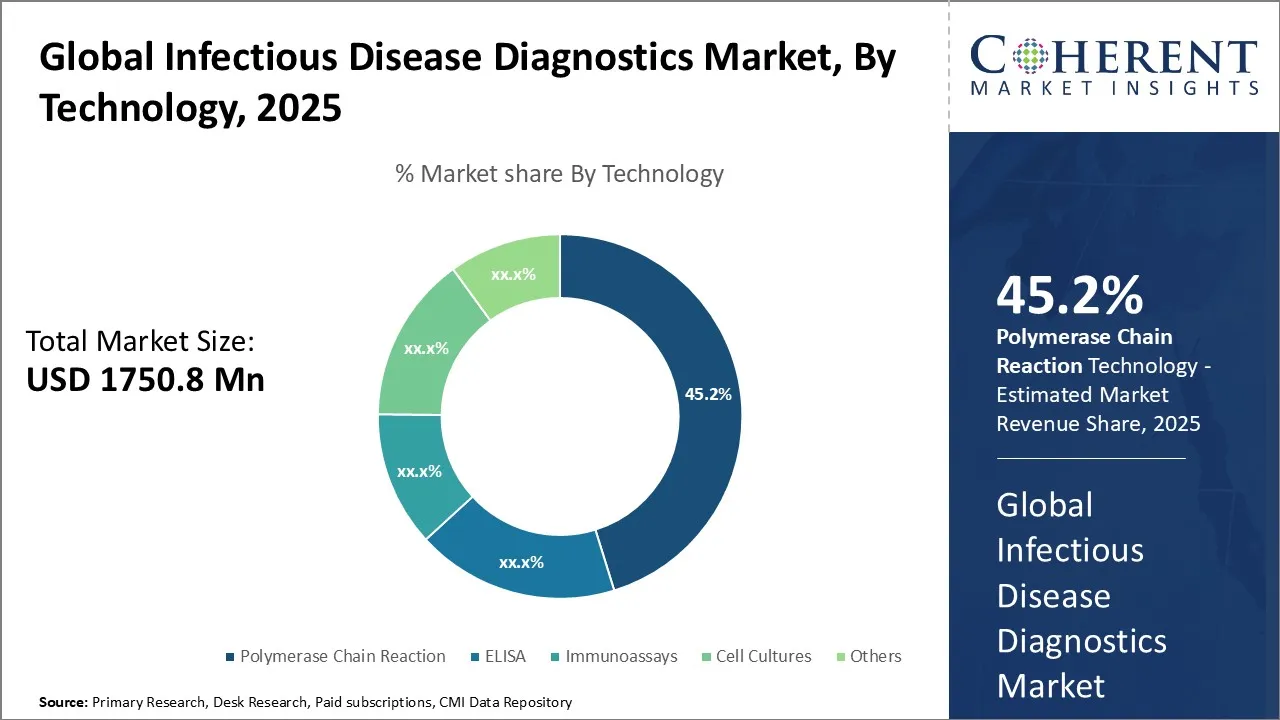
Infectious Disease Diagnostics Market Insights, By Technology - Polymerase Chain Reaction (PCR) Dominates Due To High Sensitivity, Speed, And Diagnostic Accuracy
By technology, the segment of the polymerase chain reaction (PCR) had a share of 46.2% in the market in 2026 due to its sensitivity, specificity, and ability to detect pathogens at very low concentrations. The technology has emerged as the gold standard for infectious disease diagnosis, with increasing demand in respiratory infections and emergent pathogens where early and precise detection becomes vital for the management and control of outbreaks.
PCR-based diagnostics thus allow the rapid amplification of genetic material, which enables clinicians to detect viral and bacterial infections even in the early stages of infection. That makes PCR essential for such illnesses as influenza, tuberculosis, and other respiratory infections. Compared to traditional diagnostic methods, however, PCR offers advantages in terms of speed and reliability, thus supporting timely clinical decisions and reducing the spread of disease.
For instance, in August 2025, Seegene Inc. introduced advanced multiplex PCR solutions integrated with automated analysis platforms, enhancing high-throughput infectious disease testing and reinforcing PCR’s central role in modern diagnostics.
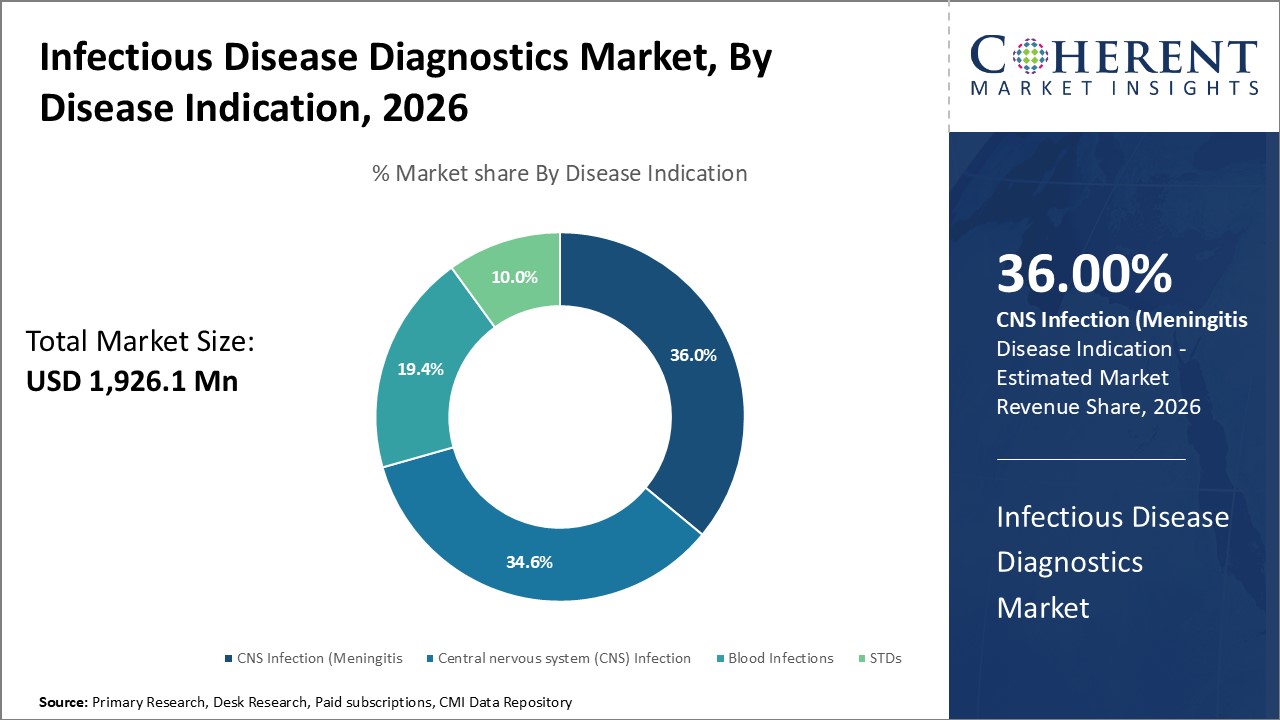
Infectious Disease Diagnostics Market Insights, By Disease Indication - Respiratory Infections Lead Driven by High Prevalence And Recurrent Outbreaks
In terms of disease indication, the respiratory infections segment accounts for 36% of the market share in 2026. The high prevalence of respiratory diseases and outbreaks make this market share feasible in 2026. Influenza, tuberculosis, bronchitis, and other viral and bacterial infections of the respiratory tract generate massive and constant need for diagnostic tests, thereby creating consistent market demand.
Respiratory infections commonly involve co-existing symptoms, and therefore, precise laboratory diagnosis is important in their control and treatment. Modern diagnostic tools, especially PCR and rapid antigens, provide accurate detection of the causative organisms, which helps the physician distinguish between viral and bacterial infections.
For instance, in April 2025, HealthTrackRx, in collaboration with public health authorities, announced the development of rapid PCR-based respiratory panels to support early detection and monitoring of emerging influenza strains.
Infectious Disease Diagnostics Market Insights, By End User - Hospitals Dominate Due To High Patient Volume And Advanced Infrastructure
In terms of end user, the hospitals segment contributes 31% of the market share in 2026, owing to high patient inflow, availability of advanced diagnostic infrastructure, and centralized infectious disease testing capabilities. Hospitals serve as primary points of care for patients with acute and severe infections, necessitating rapid and accurate diagnostic support for effective treatment decisions.
Hospital labs generally possess highly advanced molecular diagnostics platforms, automated analyzers, and trained staff, which enable hospitals to conduct various infectious disease tests effectively. Hospitals handle large numbers of test samples, especially during the outbreak of infectious diseases, making them the largest consumers of infectious disease test products.
For instance, in September 2025, HealthTrackRx announced the opening of a new advanced molecular diagnostics facility designed to expand infectious disease testing capacity and deliver next‑morning test results that support clinicians (including hospitals and healthcare providers) in making faster treatment decisions.
Regional Insights
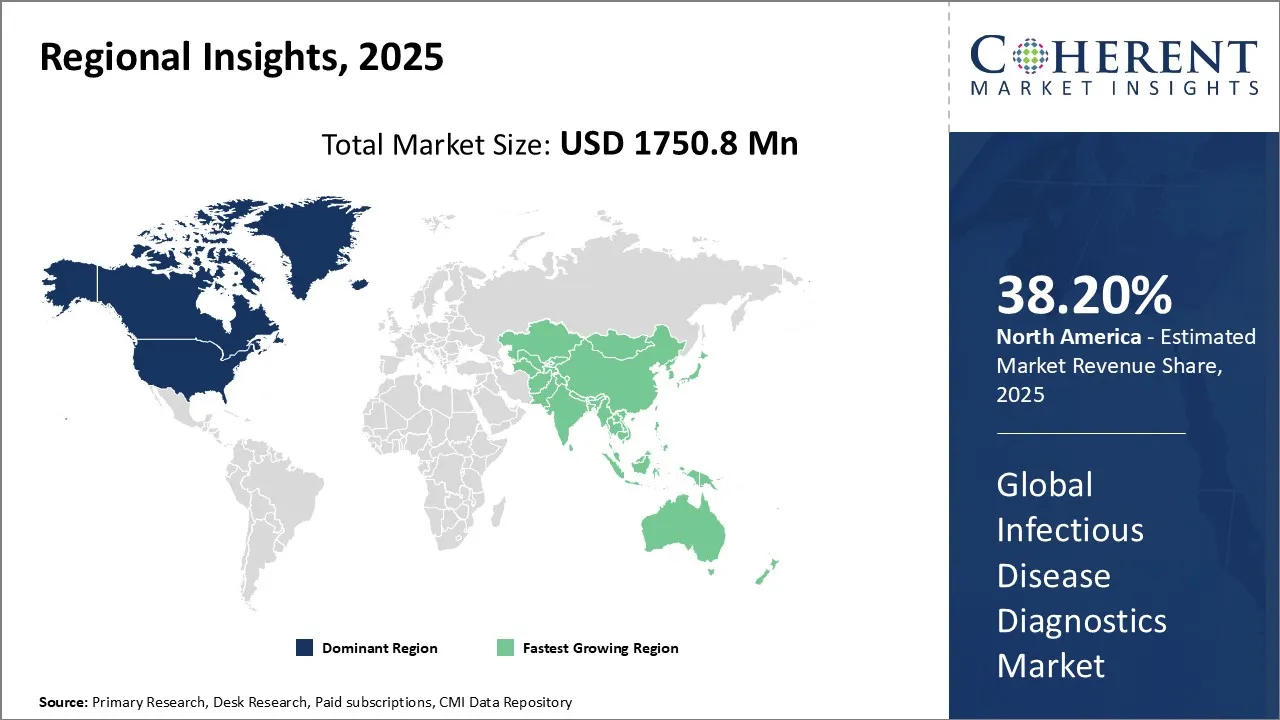
North America Infectious Disease Diagnostics Market Analysis & Trends
North America region is expected to witness the leading growth of the infectious disease diagnostics market with a market share of 38.2% in 2026 due to a higher proportion of healthcare expenditures, advanced infrastructure, and acceptance of molecular and rapid diagnostic technology. The U.S. has an established infrastructure of hospitals, diagnostics, and research facilities, making large-scale testing for infectious diseases and early detection and intervention possible. In addition, public health initiatives, government intervention, and planning for pandemics and infectious diseases have further promoted the use of PCR, immunoassays, and POCT technology.
For instance, in September 2026, HealthTrackRx opened a new state-of-the-art molecular diagnostics facility, expanding next-morning infectious disease testing capacity nationwide. The facility enhances diagnostic access for hospitals and healthcare providers, supporting rapid clinical decision-making and strengthening the region’s infectious disease preparedness.
Asia Pacific Infectious Disease Diagnostics Market Analysis & Trends
The Asia Pacific market is expected to be the fastest-growing market in the infectious disease diagnostics market. The factors contributing to the demand for advanced diagnostic methods in the Asia Pacific market include the high rate of population increase, increasing infectious disease cases, and increased investment in the healthcare industry in countries such as India, China, and Southeast Asia. The healthcare institutions and diagnostic centers in these countries are increasingly developing molecular diagnostic capacities and automated PCR solutions.
For instance, in January 2026, the World Health Organization (WHO) South-East Asia Region launched a multi-country initiative to strengthen pandemic preparedness and expand molecular and PCR-based diagnostic capabilities in hospitals and public health laboratories across several member countries. This initiative supports early detection, outbreak response, and regional health security.
Infectious Disease Diagnostics Market Outlook Country-Wise
U.S. Infectious Disease Diagnostics Market Trends
The U.S. infectious disease diagnostics market is witnessing rapid growth in 2026, driven by high healthcare expenditure, advances in hospital infrastructure, and deeper penetration of molecular and rapid diagnosis technologies. Increasing incidence of respiratory infections, seasonal influenza, and other infectious diseases has led to strategic investments by hospitals and diagnostic laboratories in high-throughput PCR, immunoassays, and point-of-care solutions. Regulatory support for modern diagnostics, public health campaigns on infectious disease testing, and funding for automation within diagnostic laboratories reinforce the infectious disease diagnostics market growth.
For instance, in April 2026, HealthTrackRx announced a rapid PCR test for Avian Influenza A (H5N1) developed in partnership with the U.S. Centers for Disease Control and Prevention (CDC) to support early detection and national outbreak preparedness. This test emphasizes rapid molecular diagnostics for emerging infectious disease threats.
China Infectious Disease Diagnostics Market Trends
The infectious disease diagnostics market is rapidly growing in China in 2026, buoyed by growing healthcare investments, urbanization, and rising demand for early detection of infectious diseases such as influenza, tuberculosis, and dengue. The expansion of molecular diagnostic capabilities at hospitals and diagnostic centers is leading to the deployment of automated PCR platforms and the adoption of point-of-care testing to enhance turnaround times and outbreak response.
For instance, in December 2026, Roche Diagnostics China released its first quantitative real‑time PCR system developed in China, called the LightCycler PRO System, manufactured at its facility in Suzhou.
Market Report Scope
Infectious Disease Diagnostics Market Report Coverage
| Report Coverage | Details | ||
|---|---|---|---|
| Base Year: | 2025 | Market Size in 2026: | USD 1,926.1 Mn |
| Historical Data for: | 2020 To 2024 | Forecast Period: | 2026 To 2033 |
| Forecast Period 2026 to 2033 CAGR: | 10.0% | 2033 Value Projection: | USD 3,755.7 Mn |
| Geographies covered: |
| ||
| Segments covered: |
| ||
| Companies covered: | Becton Dickinson & Company , Cepheid, Inc, Abbott Laboratories, BioMerieux SA, Hologic, Inc, Danaher Corporation, Thermo Fisher Scientific, Inc, Roche Diagnostics, DiaSorin S.p.A, Quidel Corporation, Bio-Rad Laboratories. | ||
| Growth Drivers: |
| ||
| Restraints & Challenges: |
| ||
Analyst Opinion (Expert Opinion)
- The infectious disease diagnostics market is undergoing a structural shift driven by advancements in molecular technologies and the decentralization of healthcare services. Such developments, including the use of polymerase chain reaction, multiplexing, and rapid antigen/antibody testing, are turning the diagnostic world around by allowing faster and accurate identification of the pathogen, not depending upon the single analysis method.
- Major hospitals and other diagnostic labs are increasingly adopting the use of comprehensive platforms that include fast diagnostics, as well as the management of data electronically. Partnerships that cut across the manufacture of diagnostic equipment, as well as public health departments, including the development of fast pCR panels for novel viral outbreaks, show alignment in the use of diagnostics that are responsive to the outbreak of pandemics. Localization of sophisticated molecular platforms in their regions of operation continues to improve diagnostics.
- Apart from this, in order to succeed from a business and medical perspective, there must exist quantifiable benefits with respect to enhanced diagnostic capabilities and their eventual effects on disease epidemics. Those firms which manage to effectively integrate innovation and the ability to perform scalable testing work within the competitive framework set by the infectious disease diagnostic market and determine its future trends and innovations.
Speak to the analyst
Want personalized insights?
Take the findings above to one of our principal consultants, or have the report rebuilt around the segments, geographies and competitors you actually track.
Infectious Disease Diagnostics Industry News
- In August 2025, Abbott announced significant manufacturing and R&D investments in the U.S., including expansion into molecular infectious disease testing technology (e.g., the Alinity n platform for nucleic acid testing of infectious pathogens like HIV, hepatitis, and respiratory disease agents.
- In December 2025, Roche released a new PCR‑based assay for diagnosing infectious causes of vaginitis that detects bacteria and yeast pathogens, improving diagnostic specificity for women’s health applications.
- In April 2025, BD announced that its BD Phoenix M50 automated microbiology solution and BDXpert informatics system received U.S. FDA 510(k) clearance, enhancing automated identification and antimicrobial susceptibility testing, which supports infectious disease diagnostics in clinical labs.
Market Segmentation
- Technology Insights (Revenue, USD Mn & KT, 2026 - 2033)
- ELISA
- Polymerase Chain Reaction
- Immunoassays
- Cell Cultures
- Others
- Disease Indication Insights (Revenue, USD Mn & KT, 2026 - 2033)
- Central nervous system (CNS) Infection
- Meningitis
- Brain Abscess
- Diarrheal Disease
- Shigellosis
- Cholera
- Enteric/Typhoid Fever
- Respiratory Infections
- Tuberculosis
- Influenza
- Bronchitis
- Blood Infections
- Malaria
- Dengue
- Infectious Mononucleosis
- Others
- STDs
- Chlamydia
- AIDS
- Syphilis
- Others
- End User Insights (Revenue, USD Mn & KT, 2026 - 2033)
- Hospitals
- Diagnostics centers
- Dermatology Clinics
- Others (Research Institutes, Specialty Centres, etc.)
- Regional Insights (Revenue, USD Mn & KT, 2026 - 2033)
- North America
- U.S.
- Canada
- Latin America
- Brazil
- Argentina
- Mexico
- Rest of Latin America
- Europe
- Germany
- U.K.
- Spain
- France
- Italy
- Russia
- Rest of Europe
- Asia Pacific
- China
- India
- Japan
- Australia
- South Korea
- ASEAN
- Rest of Asia Pacific
- Middle East & Africa
- GCC Countries
- Israel
- Rest of Middle East & Africa
- North America
- Key Players Insights (Revenue, USD Mn, 2021 - 2033)
- Becton Dickinson & Company
- Cepheid, Inc
- Abbott Laboratories
- BioMerieux SA
- Hologic, Inc
- Danaher Corporation
- Thermo Fisher Scientific, Inc
- Roche Diagnostics
DiaSorin S.p.A - Quidel Corporation
- Bio-Rad Laboratories
Sources
Primary Research Interviews from the following stakeholders
Stakeholders
- Interviews with hospital administrators, clinical laboratory directors, diagnostic equipment manufacturers, molecular diagnostics specialists, pharmaceutical R&D heads, and public health officials across major regional markets.
Specific stakeholders
- Clinical laboratory heads and microbiology directors at leading hospitals and diagnostic centers (e.g., Mayo Clinic, Cleveland Clinic, Apollo Hospitals)
- R&D and product development managers at molecular diagnostics and infectious disease testing companies (e.g., Abbott Laboratories, Roche Diagnostics, Thermo Fisher Scientific)
- Operations and production managers at diagnostic kit manufacturers and automation solution providers (e.g., Becton Dickinson, Cepheid, Bio-Rad Laboratories)
- Public health authorities and epidemiology leads collaborating with diagnostic firms (e.g., CDC, WHO regional offices)
- Procurement and quality assurance teams at healthcare networks and reference laboratories (e.g., Quest Diagnostics, Labcorp)
- Innovation and regulatory affairs officers at companies developing rapid and point-of-care testing solutions (e.g., Quidel Corporation, DiaSorin S.p.A)
- Hospital and diagnostic center IT leads managing integration of digital diagnostic platforms and lab information systems
Databases
- U.S. Centers for Disease Control and Prevention (CDC) Laboratory Data
- World Health Organization (WHO) Global Health Observatory
- U.S. Food and Drug Administration (FDA) Medical Device and Diagnostics Database
- China National Health Commission – Laboratory and Diagnostics Data
- European Centre for Disease Prevention and Control (ECDC) Laboratory Reports
- National Institutes of Health (NIH) Research Data
- Public Health England (PHE) Laboratory Statistics
- Health Canada – Diagnostics and Infectious Disease Data
Magazines
- Clinical Laboratory News
- The Scientist – Diagnostics Section
- Medical Laboratory Observer
- GenomeWeb – Diagnostics & Molecular Testing
- Lab Manager – Infectious Disease Focus
- Medical Device & Diagnostic Industry (MD+DI)
- Lab Asia
- European Hospital – Laboratory Diagnostics Section
- Infection Control Today
Journals
- Journal of Clinical Microbiology
- Diagnostic Microbiology and Infectious Disease
- Journal of Molecular Diagnostics
- Clinical Chemistry
- International Journal of Infectious Diseases
- Emerging Infectious Diseases (CDC)
- PLOS ONE – Infectious Disease Research Section
- Nature Microbiology – Diagnostic Innovations
Newspapers
- The Wall Street Journal – Health & Life Sciences
- The New York Times – Health & Science
- The Economic Times – Healthcare & Diagnostics
- Financial Times – Medical Technology & Diagnostics
- Nikkei Asia – Healthcare & Biotech
- The Guardian – Global Health and Diagnostics
- South China Morning Post – Medical Devices & Laboratory Sector
- The Hindu Business Line – Healthcare and Medical Technology
Associations
- American Clinical Laboratory Association (ACLA)
- Association of Public Health Laboratories (APHL)
- European Federation of Clinical Chemistry and Laboratory Medicine (EFLM)
- Infectious Diseases Society of America (IDSA)
- International Society for Infectious Diseases (ISID)
- Asia Pacific Association of Medical Laboratories (APAML)
- American Society for Microbiology (ASM)
- British Infection Association (BIA)
Public Domain Sources
- Centers for Disease Control and Prevention (CDC) – Laboratory and Epidemiology Reports
- U.S. Food and Drug Administration (FDA) – Diagnostics and Device Approvals
- World Health Organization (WHO) – Infectious Disease Surveillance Reports
- European Centre for Disease Prevention and Control (ECDC) – Laboratory and Outbreak Data
- China National Health Commission – Diagnostics Guidelines and Reports
- Public Health England – Laboratory Testing and Disease Reports
- Indian Council of Medical Research (ICMR) – Infectious Disease Surveillance
- Health Canada – Laboratory and Diagnostics Reports
- United Nations – Global Health and Infectious Disease Publications
Proprietary Elements
- CMI Data Analytics Tool
- Proprietary CMI Existing Repository of information for last 8 years
*Definition: Infectious diseases are disorders caused by organisms — such as bacteria, viruses, fungi or parasites. Infectious diseases are diagnosed by detection of a bacterium, virus, fungus, protozoan, or helminth in a patient with a compatible clinical illness. Many organisms live in and on our bodies. They're normally harmless or even helpful. But under certain conditions, some organisms may cause disease. Some infectious diseases can be passed from person to person.
Get access to 250+ pages report
Every segment, forecast, competitor profile and data table behind the analysis above — available for instant download.
- ESOMAR Member
- ISO 9001:2015 Certified
- D-U-N-S Registered
- GDPR & CCPA Compliant
Missing comfort of reading report in your local language? Find your preferred language:
Transform your Strategy with Exclusive Trending Reports
Frequently Asked Questions
The Infectious Disease Diagnostics Market is estimated to be valued at USD 1,926.1 Mn in 2026, and is expected to reach USD 3,755.7 Mn by 2033.
The CAGR of the Infectious Disease Diagnostics Market is projected to be 10.0% from 2026 to 2033.
Increasing prevalence of infectious diseases and availability of various diagnostic tests is one of the major factors that is expected to the market
Among disease indications, STDs segment held dominant position in the market.
High price of molecular-based test kits is one of the major factors that is expected to hamper growth of the market over the forecast period 2026-2033
Major players operating in the market include Becton Dickinson & Company, Cepheid, Inc., Abbott Laboratories, BioMerieux SA, Hologic, Inc., Danaher Corporation, Thermo Fisher Scientific, Inc., Roche Diagnostics, DiaSorin S.p.A., Quidel Corporation, and Bio-Rad Laboratories, Inc.