

Point Of Care Diagnostics Market Size and Trends
Global point of care diagnostics market is estimated to be valued at USD 5.13 Bn in 2026 and is expected to reach USD 8.02 Bn by 2033, exhibiting a compound annual growth rate (CAGR) of 6.6% from 2026 to 2033.
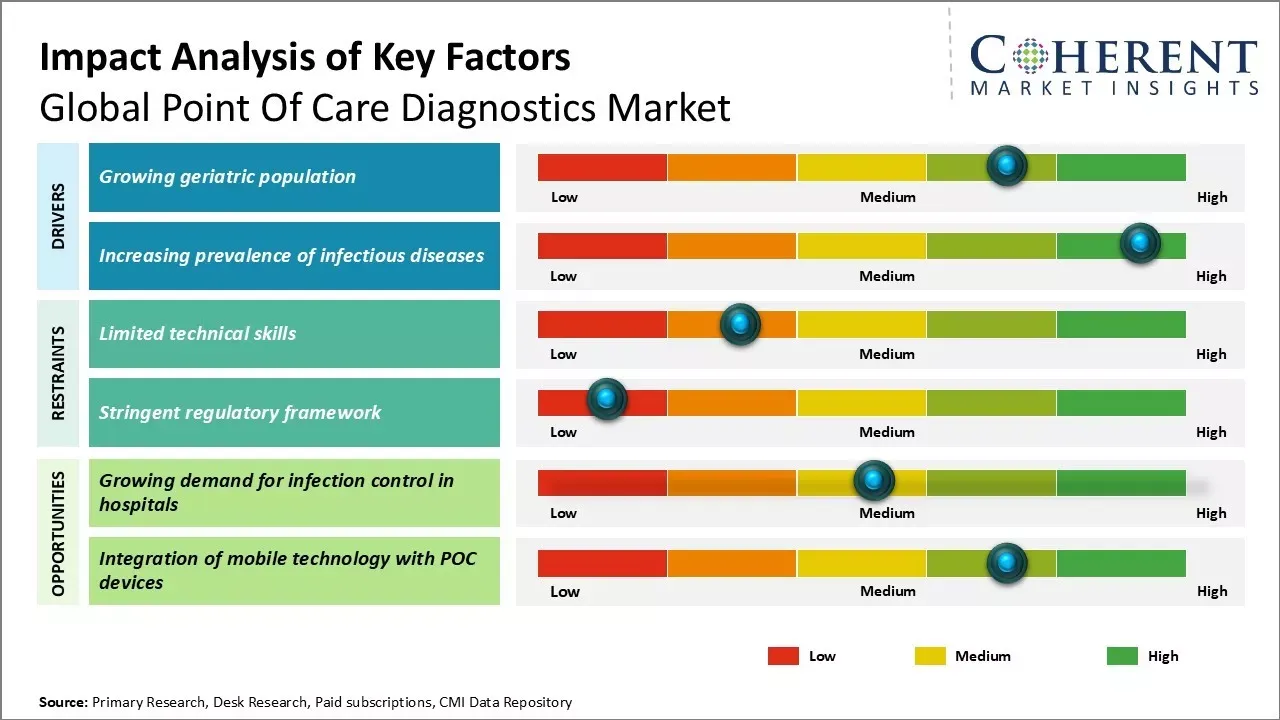
Key Takeaways
- Based on Technology, the Lateral Flow segment is projected to account for 41.5% share of the market in 2026, due to its portability, rapid results, and widespread use in infectious disease and home testing.
- Based on Application, the Infectious disease testing segment is expected to hold the largest share in 2026, driven by global demand for rapid outbreak detection and decentralized healthcare solutions.
- Based on End User, the Hospital segment is expected to lead the market with the 42.5% share in 2026, due to expanding outpatient and emergency services, decentralized care models, and demand for rapid clinical decision-making.
- Based on Region, North America is set to lead the global point of are diagnostics market with 42.6% share in 2026. While, Asia Pacific is expected to be the fastest growing region.
Market Overview
The Point of Care Diagnostics Market is witnessing strong momentum due to rising demand for fast, decentralized testing solutions. Growing prevalence of infectious and chronic diseases, coupled with technological innovations and increased adoption in home and remote care settings, are driving point of care diagnostics market demand across global healthcare systems.
Current Events and their Impacts on the Point of Care Diagnostics Market
Current Events | Description and its Impact |
Regulatory and compliance transformation |
|
Antimicrobial resistance crisis and diagnostic gaps |
|
Role of Artificial Intelligence (AI) in Point of Care Diagnostics Market
Artificial Intelligence is transforming Point of Care Diagnostics by enabling faster, more accurate, and accessible testing. AI algorithms integrated into portable devices can analyze complex data instantly, aiding in early detection of diseases like infections, cancer, and diabetes. These tools reduce reliance on centralized labs and skilled personnel, making diagnostics more efficient in rural, emergency, and home-care settings.
For instance, in October 2025, BD (Becton, Dickinson and Company) introduced new AI-enabled solutions aimed at enhancing connectivity across healthcare settings. These innovations support point-of-care diagnostics by integrating smart technologies that streamline data sharing, improve diagnostic accuracy, and enable faster clinical decision-making.
- Current Industry Events of 2026
- Market Size Estimation
- Regional Breakdown
- Competitive Landscape
- Customer Intelligence
- Segmental Analysis
- Pricing Analysis
- Key Market Drivers, Challenges & Future Trends
- Customized Insights Section
Segmental Insights
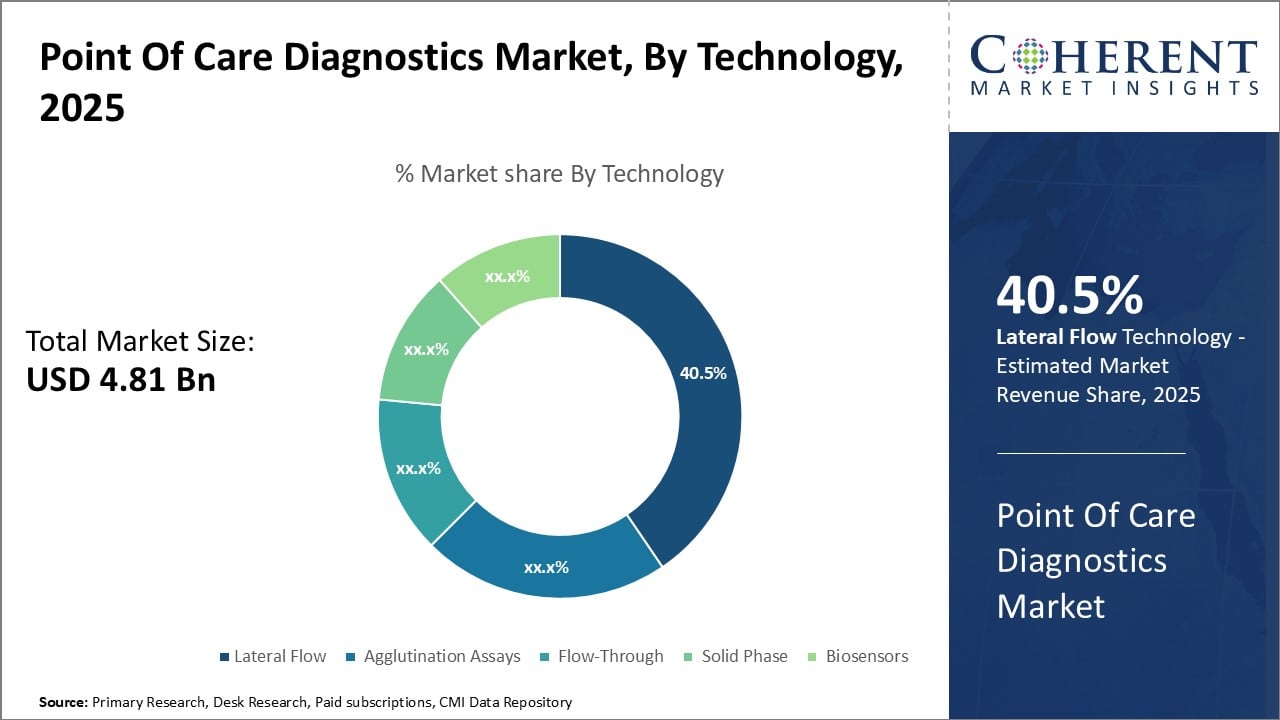
Point of Care Diagnostics Market Insights, By Technology: Lateral Flow Technology Dominates Due To Its Portability, Rapid Results, And Widespread Use in Infectious Disease and Home Testing
In terms of technology, lateral flow segment is estimated to contribute the highest market share of 41.5% in 2026, owing to its easy portability and ability to provide quick results. Lateral flow assays are extremely popular for point-of-care testing as these simply require an analyte sample to be added to a sample pad, from where it migrates along the test strip via capillary action. Interaction with colored particles generates a visible signal within minutes, allowing for rapid diagnosis without the need for complex instrumentation. This makes lateral flow highly convenient for applications such as home pregnancy tests and blood glucose monitoring. Its user-friendly design has boosted uptake in non-clinical settings as well as resource-limited areas. Lateral flow technology witness huge demand from the infectious disease testing segment since it enables swift analysis of samples in field conditions or at the point-of-care.
For instance, in July 2025, Volition unveiled a groundbreaking lateral flow test for point-of-care quantification of nucleosomes, marking a major advancement in diagnostic technology. This innovative test enables rapid, on-site detection of nucleosome biomarkers, which are linked to various diseases including cancer. Designed for ease of use and speed, it supports decentralized healthcare and enhances early disease diagnosis.
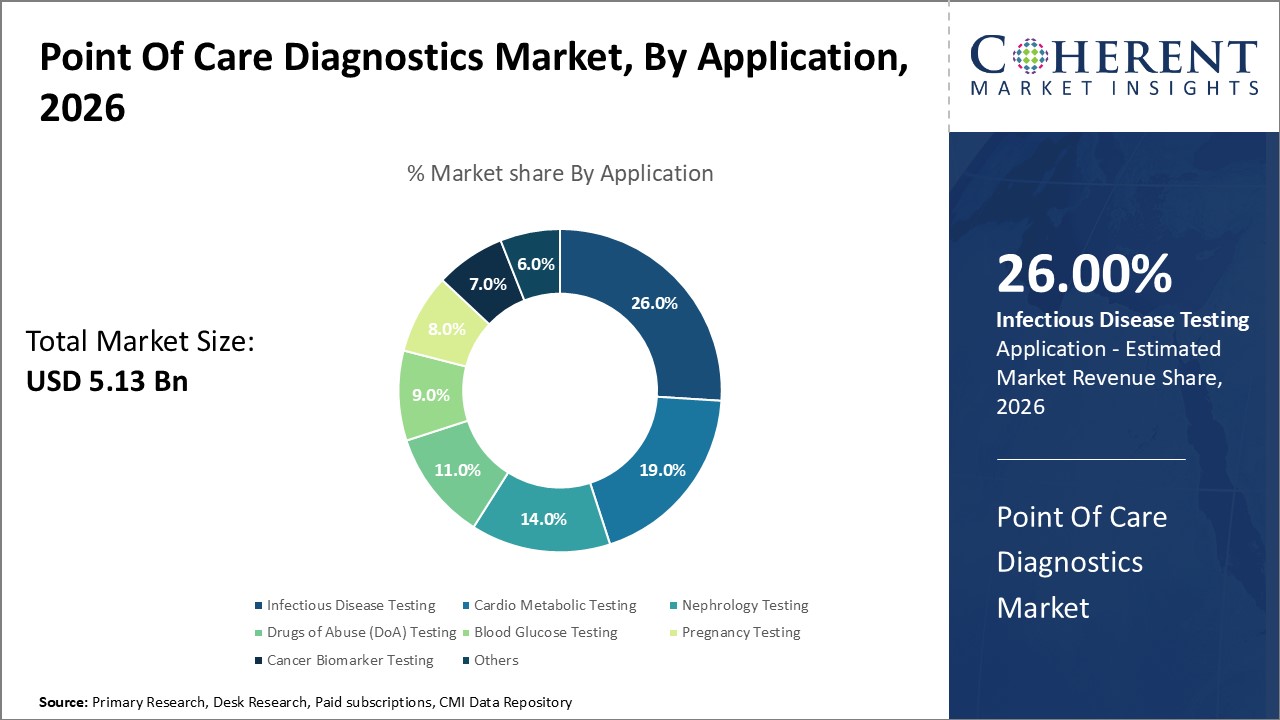
Point of Care Diagnostics Market Insights, By Application: Infectious Disease Testing Lead Is Driven by Global Demand for Rapid Outbreak Detection and Decentralized Healthcare Solutions
In terms of application, the infectious disease testing segment is estimated to contribute the highest market share in 2026. The global focus on controlling outbreaks such as influenza, HIV, and malaria has driven demand for rapid and accurate diagnostics. Point-of-care solutions enable early detection and timely intervention, especially in resource-limited settings. Governments and healthcare providers are increasingly investing in decentralized testing infrastructure, making infectious disease testing a cornerstone of public health strategies.
For instance, in January 2024, QIAGEN launched its new QIAstat-Dx syndromic testing panels in India, aimed at delivering rapid and accurate diagnosis of infectious diseases. These point-of-care tests offer multiplex detection of pathogens within approximately one hour, supporting timely clinical decisions. The initiative enhances diagnostic capabilities across hospitals and labs, especially in resource-limited and high-demand healthcare settings.
Point of Care Diagnostics Market Insights, By End User: Hospitals Lead Due To Expanding Outpatient and Emergency Services, Decentralized Care Models, And Demand for Rapid Clinical Decision-Making
In terms of end user, hospitals segment is estimated to contribute the highest market share of 42.5% in 2026, owing to rising hospital-based outpatient and emergency care facilities. There has been notable shift towards ambulatory and decentralized healthcare models to relieve burden on tertiary care centers. This has led to higher installation of diagnostic labs, drive-through testing units, and clinical access points within hospital premises. On-site availability of near-patient testing aids fast clinical decision-making and streamlines treatment pathways especially for infectious emergencies, obstetrics & critical care cases. It also plays a key role in antimicrobial stewardship approaches by facilitating rapid pathogen identification. This drives hospitals to incorporate more POC diagnostic technologies for improved outreach as well as quality and efficiency of services.
For instance, in June 2025, Philips launched the Flash 5100 POC, a next-generation point-of-care ultrasound system designed for hospital use. Featuring advanced imaging capabilities and AI-driven tools, it enables rapid diagnostics at the bedside. The system supports emergency, critical care, and outpatient settings, enhancing clinical efficiency and decision-making in fast-paced healthcare environments.
Regional Insights
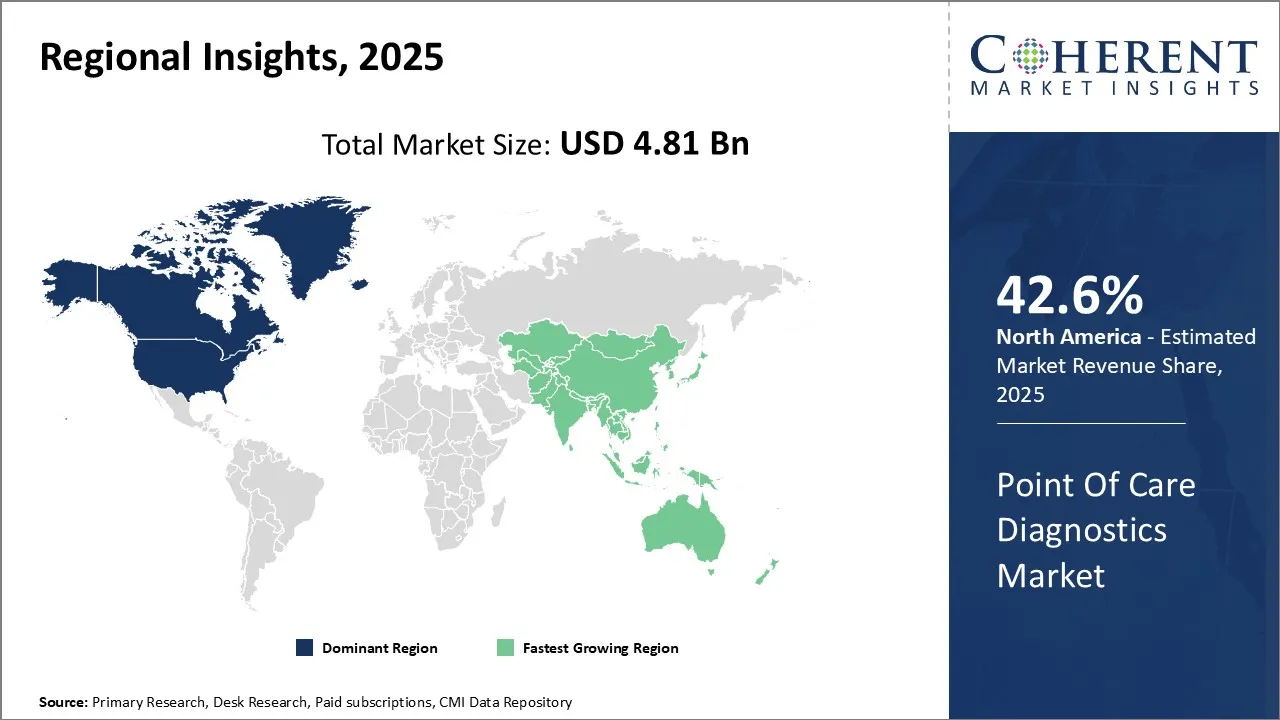
North America Point of Care Diagnostics Market Analysis & Trends
North America dominates the global point of care diagnostics market with an estimated market share of 42.6% in 2026. With the presence of major players like Abbott, BD, Roche and several startups, the U.S. accounts for over 45.5% of the entire market. The region enjoys various advantages such as an expanding geriatric population prone to chronic diseases, widespread adoption of decentralized healthcare models, and favorable reimbursement policies promoting home-based testing. North America has a highly developed pharmaceutical industry contributing to continued innovation in technologies and products. Due to supportive regulatory environment under the U.S. FDA, medical devices and diagnostic kits face faster clearance pathway, ensuring companies recover R&D investments swiftly.
For instance, in July 2026, Phase Scientific launched the FebriDx test in the U.S., expanding its Indicaid respiratory portfolio with a novel point-of-care diagnostic tool. FebriDx rapidly differentiates between bacterial and viral respiratory infections using a simple fingerstick blood sample, delivering results in about 10 minutes. This innovation supports faster clinical decisions in outpatient and urgent care settings.
Asia Pacific Point of Care Diagnostics Market Analysis & Trends
Asia Pacific has emerged as the fastest growing market for point of care testing diagnostics. Countries like China, India, Japan and South Korea are industrializing healthcare at an unprecedented rate. Favorable policies around medical tourism and public-private investments have accelerated infrastructure growth. China has invested for strengthening primary care delivery outside major hospitals. This emphasis on community-level testing coupled with rising affluence has boosted demand. Regional frontrunners like Sansure Biotech from China are expanding globally through acquisitions and partnerships. These offer low-cost alternatives to Western competitors. Growing prevalence of non-communicable diseases can also drive the market growth. Due to its massive population and government momentum around universal health coverage, Asia Pacific is primed to overtake other regions in the long run.
For instance, India’s Technology Development Board (TDB) is backing Primary HealthTech, a startup from IIT Guwahati, to advance its AI-powered Mobilab blood testing device. Designed for point-of-care use, Mobilab offers rapid, portable diagnostics, especially for rural and underserved areas. The innovation aims to enhance early disease detection and bridge healthcare access gaps across India.
Point of Care Diagnostics Market Outlook Country-Wise
The U.S. Point of Care Diagnostics Market Trends
The U.S. Point of Care Diagnostics market is growing due to rising infectious disease cases, demand for faster testing, and increased healthcare accessibility. Technological advancements, government and private funding, and a shift toward decentralized care are driving adoption. Portable diagnostic tools enable rapid results in hospitals, clinics, and home settings, improving early detection and treatment outcomes.
For instance, in February 2026, Avitia's launch of an AI-powered platform for rapid cancer testing is designed specifically for point-of-care use. The platform enables fast, accurate cancer diagnostics outside traditional lab settings, supporting early detection and clinical decision-making in outpatient, emergency, and resource-limited environments. This aligns with the growing trend of decentralized healthcare solutions.
India Point of Care Diagnostics Market Trends
India’s Point of Care Diagnostics market is growing due to rising chronic and infectious diseases, expanding rural healthcare access, and demand for rapid testing. Government initiatives, private investments, and technological innovations like AI-powered portable devices are driving adoption. These tools enable faster diagnosis and treatment, especially in underserved and semi-urban regions.
For instance, in April 2026, Hipro Biotechnology Co., Ltd., in collaboration with Affimedix, launched its SimplyRead™ IVD reagents and AUTO POCT-Lab Analyzers in India. The event in Mumbai marked Hipro’s entry into the Indian point-of-care diagnostics market, aiming to enhance rapid testing capabilities and expand access to decentralized healthcare solutions across the country.
Market Report Scope
Point of Care Diagnostics Market Report Coverage
| Report Coverage | Details | ||
|---|---|---|---|
| Base Year: | 2025 | Market Size in 2026: | USD 5.13 Bn |
| Historical Data for: | 2020 To 2024 | Forecast Period: | 2026 To 2033 |
| Forecast Period 2026 to 2033 CAGR: | 6.6% | 2033 Value Projection: | USD 8.02 Bn |
| Geographies covered: |
| ||
| Segments covered: |
| ||
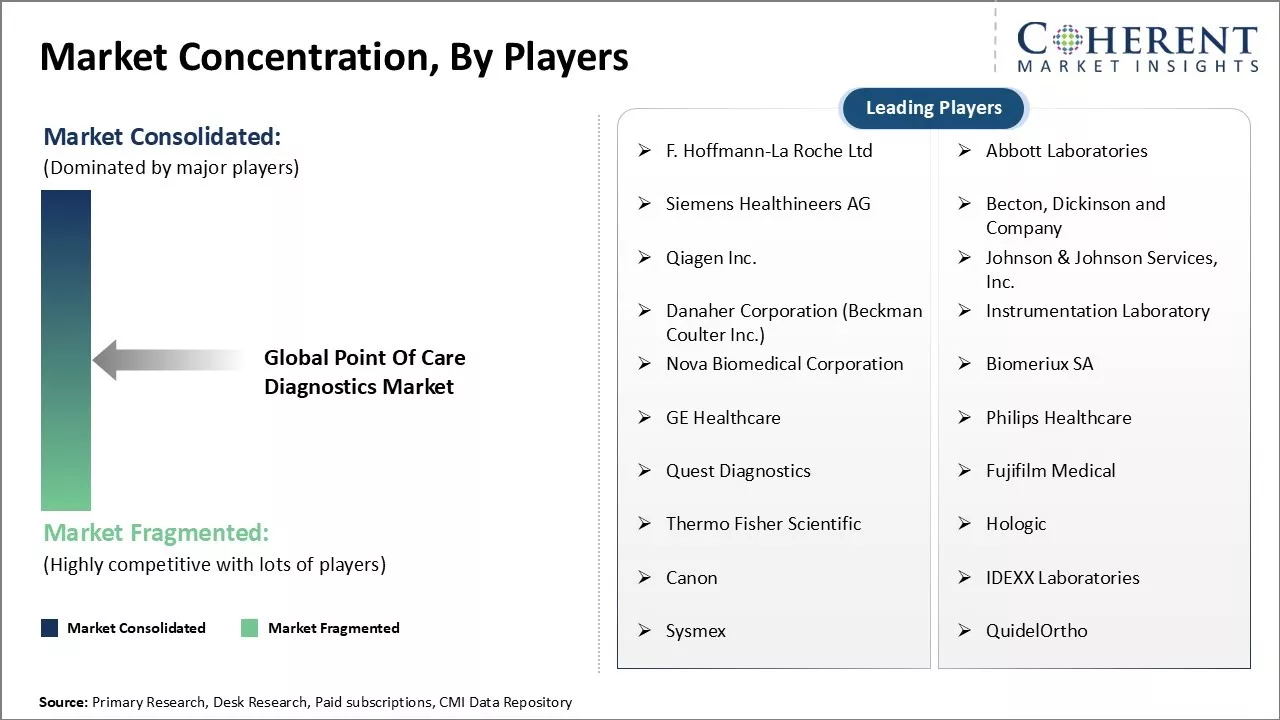
| Companies covered: | F. Hoffmann-La Roche Ltd, Abbott Laboratories, Siemens Healthineers AG, Becton, Dickinson and Company, Qiagen Inc., Johnson & Johnson Services, Inc., Danaher Corporation (Beckman Coulter Inc.), Instrumentation Laboratory, Nova Biomedical Corporation, Biomeriux SA, GE Healthcare, Philips Healthcare, Quest Diagnostics, Fujifilm Medical, Thermo Fisher Scientific, Hologic, Canon, IDEXX Laboratories, Sysmex, QuidelOrtho | ||
| Growth Drivers: |
| ||
| Restraints & Challenges: |
| ||
Point of Care Diagnostics Market Driver
Growing geriatric population
The growing geriatric population is a key driver of the expanding Point of Care Diagnostics Market size. As aging individuals are more prone to chronic conditions such as diabetes, cardiovascular diseases, and respiratory disorders, there is a rising need for rapid, accessible diagnostic solutions. Point-of-care devices enable timely detection and monitoring of these conditions, reducing hospital visits and improving patient outcomes. Elderly patients benefit from the convenience and speed of near-patient testing, especially in home care and long-term care settings. This demographic shift is significantly influencing healthcare delivery models, fueling demand and contributing to the overall growth of the Point of Care Diagnostics Market size.
Market Concentration and Competitive Landscape
Increasing prevalence of infectious diseases
The increasing prevalence of infectious diseases such as tuberculosis, and influenza is significantly boosting the point of care diagnostics market share. These diseases demand rapid, accurate, and accessible testing to enable timely treatment and containment. Point-of-care diagnostic tools provide immediate results at or near the site of patient care, reducing the burden on centralized laboratories. Their portability and ease of use make them ideal for outbreak response, especially in remote or resource-limited settings. As global health systems prioritize early detection and real-time monitoring, the demand for point-of-care solutions continues to rise, driving substantial growth in market share.
Point of Care Diagnostics Market Opportunities
Growing demand for infection control in hospitals
The global Point of Care Diagnostics Market is witnessing significant opportunities, driven by rising demand for infection control and prevention in healthcare facilities. Rapid, near-patient testing enables timely diagnosis and treatment of hospital-acquired infections (HAIs), reducing clinical and economic burdens. Adoption of POC tests helps monitor antibiotic resistance and supports prompt treatment, curbing antimicrobial resistance. Decentralized testing lowers transmission risks and facility costs, while digital integration enhances infection surveillance. These advancements are fueling increased uptake of POC technologies, with the point of care diagnostics market forecast indicating continued growth as hospitals prioritize efficient infection management and real-time diagnostic capabilities
Analyst Opinion (Expert Opinion)
The Point-of-Care (POC) Diagnostics market is shifting from simple lateral-flow assays toward compact molecular platforms that deliver lab-quality results in minutes. This transition is reshaping competition—where cartridge-based molecular systems such as Abbott’s ID NOW and Cepheid’s GeneXpert dominate high-value clinical settings, while low-cost rapid tests compete on scale and distribution. The expansion of CLIA-waived testing sites, particularly pharmacies and primary care clinics, has increased accessibility but also intensified reimbursement and regulatory challenges.
The market now rewards vendors that can prove clinical and operational impact—reduced hospital stays, faster therapeutic decisions, or antimicrobial stewardship—rather than mere analytical accuracy. Connectivity has become a critical differentiator; health systems increasingly demand EHR integration, remote quality control, and secure data interoperability. Manufacturers lacking robust digital capabilities risk procurement exclusion.
Emerging markets present strong opportunities for rugged, battery-operated, and affordable molecular solutions, provided supply-chain and regulatory localization are addressed. Overall, commercial success in this sector depends on strategic clarity: high-margin molecular portfolios for clinical environments, differentiated reimbursement strategies, and rigorous evidence generation. The market is consolidating, and sustainable growth will favor companies that link diagnostic accuracy with measurable patient and system outcomes rather than pure test throughput.
Speak to the analyst
Want personalized insights?
Take the findings above to one of our principal consultants, or have the report rebuilt around the segments, geographies and competitors you actually track.
Point Of Care Diagnostics Industry News
- In September 2025, Molbio Diagnostics and UE LifeSciences partnered to expand access to iBreastExam across 50 countries, promoting early breast cancer detection through portable, non-invasive screening. iBreastExam is a point-of-care device that enables quick, radiation-free breast health assessments, especially in low-resource settings, aligning with global efforts to improve decentralized diagnostic access.
- In January 2025, bioMérieux’s acquisition of SpinChip Diagnostics centers on a novel immunoassay platform designed for near-patient testing. The compact benchtop analyzer delivers lab-quality results from whole blood samples in under 10 minutes, making it ideal for emergency and acute care settings. This strengthens bioMérieux’s presence in the point-of-care diagnostics market
- On February 2024, A supplement in BMC Infectious Diseases on point-of-care testing for sexually transmitted infections (STIs) was launched on 29 February 2024. The supplement featured findings from the PRoSPeRo project, which was the largest field evaluation of STI diagnostics, coordinated by HRP and WHO, across 15 countries and 30 sites, involving over 17,000 participants.
- In October 2023, QIAGEN obtained CE certification for its IVD kit and automated testing platform, NeuMoDx, significantly boosting the company’s revenue and market share.
- In May 2023, Danaher Corporation launched the Dxl 9000 Access Immunoassay Analyzer, capable of performing up to 215 tests per hour, thereby expanding its point-of-care diagnostics portfolio.
- In May 2023 BD received 510(k) clearance for its BD Kiestra Methicillin-resistant Staphylococcus aureus (MRSA) imaging application, which leverages AI software to expedite test results by automating the traditionally time-consuming process of analyzing bacterial growth on petri dishes
Market Segmentation
- By Technology Insights (Revenue, USD Bn, 2026 - 2033)
- Lateral Flow
- Agglutination Assays
- Flow-Through
- Solid Phase
- Biosensors
- By Application Insights (Revenue, USD Bn, 2026 - 2033)
- Cardio Metabolic Testing
- Infectious Disease Testing
- Nephrology Testing
- Drugs of Abuse (DoA) Testing
- Blood Glucose Testing
- Pregnancy Testing
- Cancer Biomarker Testing
- Others
- By End User Insights (Revenue, USD Bn, 2026 - 2033)
- Hospitals
- Diagnostic Laboratories
- Home-Care Settings
- Others
- By Regional Insights (Revenue, USD Bn, 2026 - 2033)
- North America
- U.S.
- Canada
- Latin America
- Brazil
- Argentina
- Mexico
- Rest of Latin America
- Europe
- Germany
- U.K.
- Spain
- France
- Italy
- Russia
- Rest of Europe
- Asia Pacific
- China
- India
- Japan
- Australia
- South Korea
- ASEAN
- Rest of Asia Pacific
- Middle East
- GCC Countries
- Israel
- Rest of Middle East
- Africa
- South Africa
- North Africa
- Central Africa
- Key Players Insights (Revenue, USD Bn, 2021 - 2033)
- F. Hoffmann-La Roche Ltd
- Abbott Laboratories
- Siemens Healthineers AG
- Becton, Dickinson and Company
- Qiagen Inc.
- Johnson & Johnson Services, Inc.
- Danaher Corporation (Beckman Coulter Inc.)
- Instrumentation Laboratory
- Nova Biomedical Corporation
- Biomeriux SA
- GE Healthcare
- Philips Healthcare
- Quest Diagnostics
- Fujifilm Medical
- Thermo Fisher Scientific
- Hologic
- Canon
- IDEXX Laboratories
- Sysmex
- QuidelOrtho
Sources
Primary Research Interviews from the following stakeholders
Stakeholders
- Interviews with point-of-care test manufacturers, diagnostic device distributors, clinical laboratory managers, hospital procurement officers, emergency care physicians, and healthcare policymakers across key global regions.
Specific stakeholders
- Medical directors and diagnostic heads at multispecialty hospitals and diagnostic chains (e.g., Apollo Hospitals, Mayo Clinic, Cleveland Clinic, Fortis Healthcare)
- Laboratory managers and pathologists at regional testing centers and standalone labs
- Point-of-care coordinators and nurse supervisors in emergency, ICU, and outpatient settings
- Procurement and supply chain managers at public and private hospitals
- Healthcare administrators and telemedicine platform operators integrating rapid diagnostics
- Product development managers at diagnostic OEMs and consumable suppliers (e.g., cartridges, reagents, biosensors)
- Public health officials and infectious disease control specialists involved in community diagnostics initiatives
Databases
- World Health Organization (WHO) Global Health Observatory
- World Bank Health Nutrition and Population Statistics
- UN Comtrade Database
- U.S. Food and Drug Administration (FDA) Device Registration and Listing Database
- Centers for Medicare & Medicaid Services (CMS) – Clinical Laboratory Fee Schedule
- European Centre for Disease Prevention and Control (ECDC) Data Repository
- National Center for Biotechnology Information (NCBI)
- Indian Council of Medical Research (ICMR) – Diagnostic Device Approvals
- Ministry of Health, Labour and Welfare (Japan) – Medical Device Statistics
- China National Medical Products Administration (NMPA)
- Directorate General of Commercial Intelligence and Statistics (DGCIS), India
Magazines
- Medical Device and Diagnostic Industry (MD+DI)
- Clinical Laboratory International
- MedTech Insight
- Diagnostics World News
- LabMedica International
- Healthcare Global
- Technology Networks – Diagnostics Section
- Medical Design & Outsourcing
- Asian Hospital & Healthcare Management
Journals
- Journal of Clinical Microbiology
- Clinical Chemistry
- Diagnostics (MDPI)
- Point of Care: The Journal of Near-Patient Testing & Technology
- British Journal of Biomedical Science
- Frontiers in Laboratory Medicine
- Journal of Medical Devices (ASME)
- BMC Infectious Diseases
- The Lancet Digital Health
Newspapers
- The Wall Street Journal – Health & Science
- The Economic Times – Healthcare & Diagnostics
- The Hindu Business Line – Life Sciences & MedTech
- Financial Times – Healthcare Innovations
- Nikkei Asia – Medical Devices & Biotechnology
- South China Morning Post – Health & Science
- Business Standard – Healthcare and Pharma Section
Associations
- International Federation of Clinical Chemistry and Laboratory Medicine (IFCC)
- World Health Organization (WHO) – Essential Diagnostics List (EDL) Initiative
- Clinical and Laboratory Standards Institute (CLSI)
- Association for Diagnostics & Laboratory Medicine (ADLM, formerly AACC)
- European Federation of Clinical Chemistry and Laboratory Medicine (EFLM)
- Advanced Medical Technology Association (AdvaMed)
- Asian Harmonization Working Party (AHWP)
- Indian Medical Device Industry Association (AiMeD)
Public Domain Sources
- World Health Organization (WHO) – Diagnostics & Laboratory Strengthening Reports
- U.S. Centers for Disease Control and Prevention (CDC)
- National Institutes of Health (NIH), U.S.
- European Commission – Health Technology and Diagnostics Reports
- Ministry of Health and Family Welfare (MoHFW), India
- Ministry of Health, Labour and Welfare (Japan)
- Department of Health and Social Care (UK)
- National Health Authority (India) – Digital Health Mission Data
- Reserve Bank of India (RBI) – Healthcare Equipment Import Data
- EU Medical Device Coordination Group (MDCG) Guidance Documents
Proprietary Elements
- CMI Data Analytics Tool
- Proprietary CMI Existing Repository of information for last 8 years
Definition: Global point of care diagnostics market refers to medical diagnostic testing done at or near the site of patient care. This allows for rapid diagnosis and treatment decisions during the patient visit. Products in this market include blood glucose monitoring kits, pregnancy and fertility tests, influenza tests, drug-of-abuse tests, and HIV testing kits. The goal is to deliver faster results compared to standard lab tests, enabling timely clinical actions and improved health outcomes.
Get access to 250+ pages report
Every segment, forecast, competitor profile and data table behind the analysis above — available for instant download.
- ESOMAR Member
- ISO 9001:2015 Certified
- D-U-N-S Registered
- GDPR & CCPA Compliant
Missing comfort of reading report in your local language? Find your preferred language:
Transform your Strategy with Exclusive Trending Reports
Frequently Asked Questions
The Point of Care Diagnostics Market is estimated to be valued at USD 5.13 Bn in 2026, and is expected to reach USD 8.02 Bn by 2033.
The CAGR of the Point Of Care Diagnostics Market is projected to be 6.6% from 2026 to 2033.
Growing geriatric population and increasing prevalence of infectious diseases are the major factors driving the growth of global point of care diagnostics market.
Limited technical skills and stringent regulatory framework are the major factors hampering the growth of global point of care diagnostics market.
In terms of technology, lateral flow segment is estimated to dominate the market in 2026.
F. Hoffmann-La Roche Ltd, Abbott Laboratories, Siemens Healthineers AG, Becton, Dickinson and Company, Qiagen Inc., Johnson & Johnson Services, Inc., Danaher Corporation (Beckman Coulter Inc.), Instrumentation Laboratory, Nova Biomedical Corporation, Biomeriux SA, GE Healthcare, Philips Healthcare, Quest Diagnostics, Fujifilm Medical, Thermo Fisher Scientific, Hologic, Canon, IDEXX Laboratories, Sysmex, QuidelOrtho are the major players.
North America is expected to lead the global point of care diagnostics market.