

Global Addiction Treatment Market Size and Share Analysis – (2026-2033)
Global addiction treatment market is estimated to be valued at USD 10.66 Bn in 2026 and is expected to reach USD 16.03 Bn by 2033, exhibiting a compound annual growth rate (CAGR) of 6.0% from 2026 to 2033.
Key Takeaways
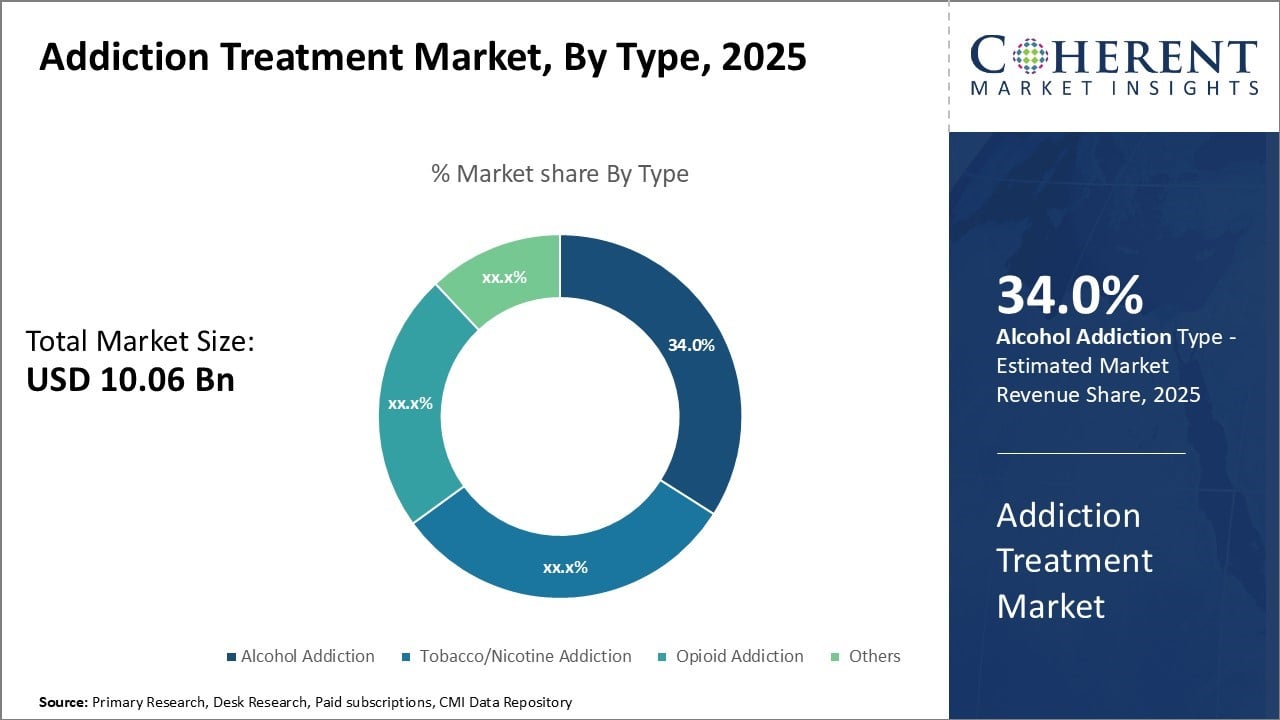
- Based on Type, Alcohol Addiction Segment is estimated to hold 35% of the market share in 2026. This is due to widespread social acceptance of drinking.
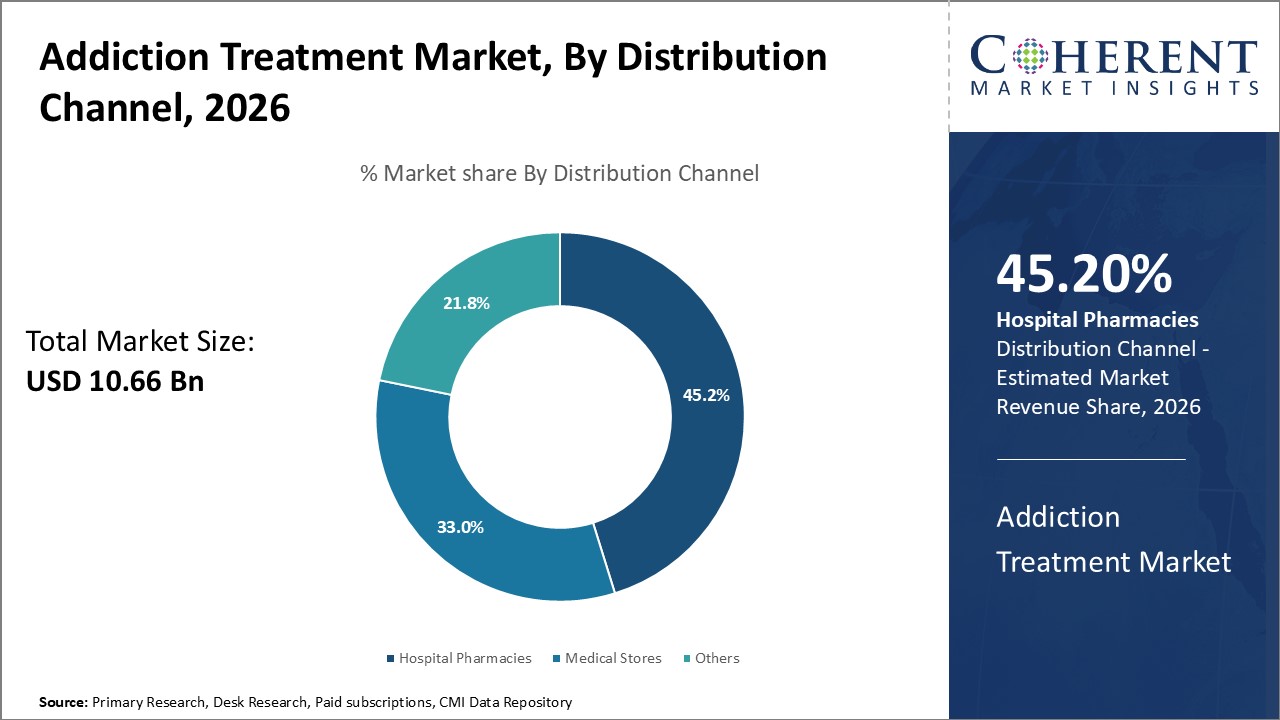
- By Distribution Channel, Hospital Pharmacies Segment is estimated to hold 45.2% of the market share in 2026. This is due to their advantageous position for facilitating access to care.
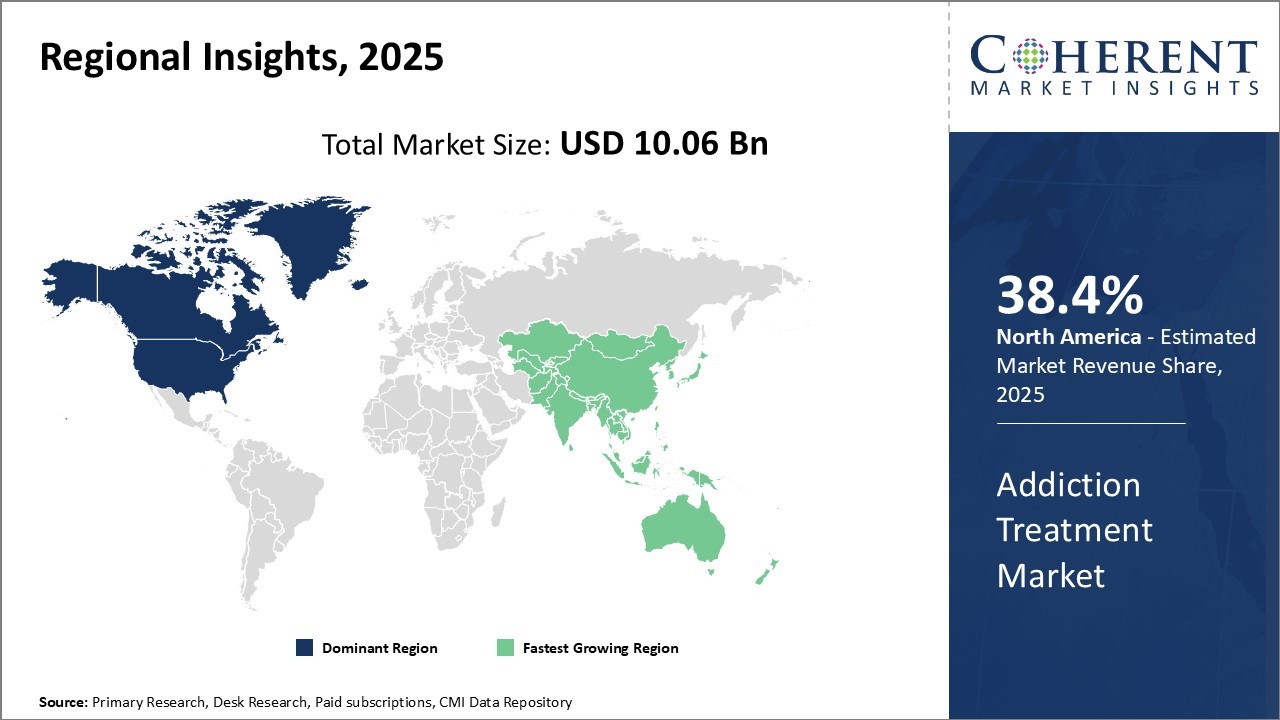
- North America is the dominant region in the global addiction treatment market and is estimated to hold 38.4% of the market share in 2026. This is due to factors like increased awareness among people and robust healthcare infrastructure in the U.S. and Canada.
Market Overview
The global addiction treatment market is witnessing positive growth trends driven by increasing substance abuse and rising healthcare spending. There is growing prevalence of drug and alcohol addiction among young adults due to rising social acceptance and stress. Moreover, rehabilitation and prevention programs have improved significantly over last few years due to better treatment options and increased health insurance coverage for substance abuse programs. Key players are also focusing on the development of advanced digital therapeutics and targeted drug delivery systems to expand access and improve treatment outcomes. However, social stigma continues to be a major challenge which prevents many from seeking formal care.
Current Events and Its Impact on Addiction Treatment Market
Current Events | Description and its impact |
Integration of Digital Therapeutics in the Treatment of Substance Use Disorder (SUD) |
|
Growth of Long-Acting Injectable Therapies |
|
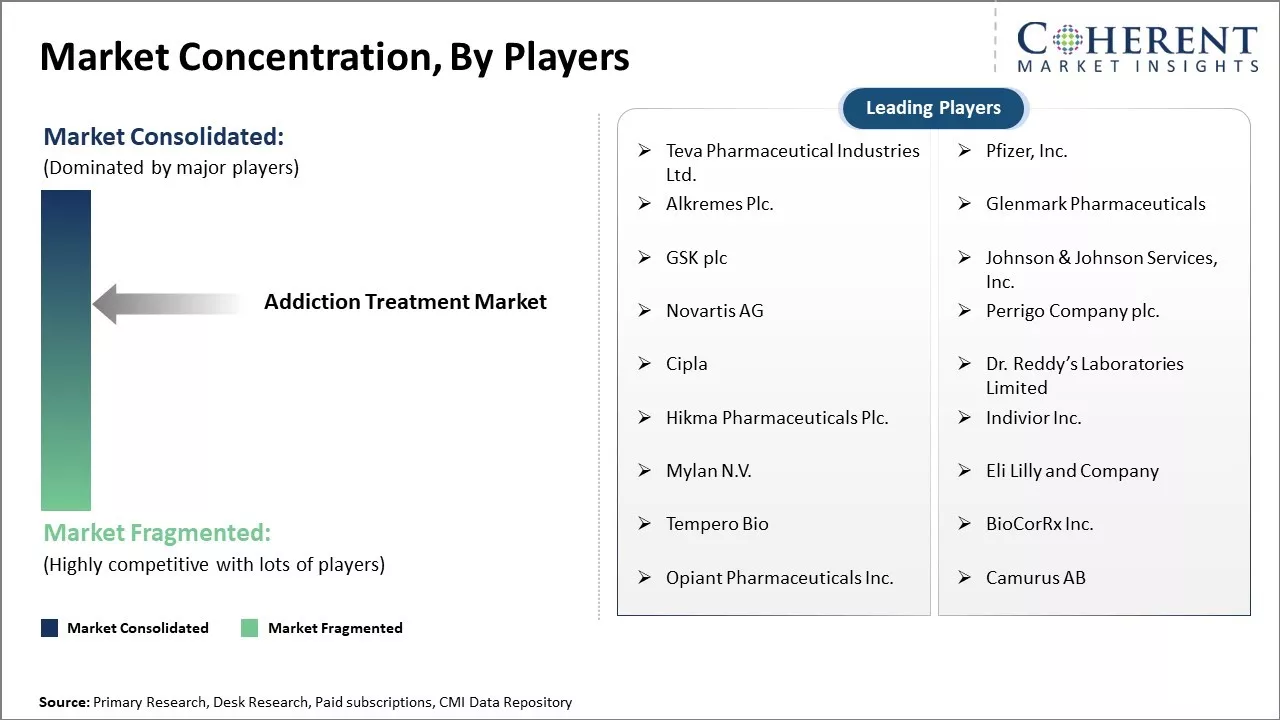
Market Concentration and Competitive Landscape
- Current Industry Events of 2026
- Market Size Estimation
- Regional Breakdown
- Competitive Landscape
- Customer Intelligence
- Segmental Analysis
- Pricing Analysis
- Key Market Drivers, Challenges & Future Trends
- Customized Insights Section
Segmental Insights
Addiction Treatment Market Insights, By Type
In terms of type, the alcohol addiction sub-segment is estimated to hold 35% of the market share in 2026, due to widespread social acceptance of drinking. Alcohol is deeply ingrained in social settings from business functions to casual get-togethers with friends and family. The moderate consumption of alcohol is seen as acceptable and even encouraged in many cultures.
This normalization of drinking behavior makes it easy for those with a genetic predisposition or tendency toward addiction to slip into patterns of excessive or unhealthy alcohol use. The connection between social lives and alcohol makes it difficult for those struggling with addiction to avoid temptation or remove themselves from enabling environments. Treatment is needed to provide alternatives to drinking as a means of socialization and stress relief.
Rehabilitation programs address the psychological and biological components of addiction while also teaching coping strategies for saying no to peer pressure. Support groups after treatment help those in recovery maintain abstinence even when confronted with social drinking scenarios. The normalization of casual drinking in many communities drives the ongoing need for specialized alcohol addiction treatment services.
Addiction Treatment Market Insights, By Distribution Channel
In terms of distribution channel, the hospital pharmacies sub-segment is estimated to hold 45.2% of the market share in 2026, due to their advantageous position for facilitating access to care. Addictive substances disrupt normal brain functioning and impair judgment, meaning those struggling with abuse or dependence issues face barriers to independently seeking help.
Hospital emergency rooms frequently encounter patients experiencing overdose, withdrawal complications or other medical emergencies resulting from substance use disorders. As an entry point into the healthcare system during crisis scenarios, hospitals can directly connect at-risk individuals to on-site treatment services right away.
Pharmacies located within hospital facilities are well-equipped to dispense specialty medications used in medical detoxification or maintenance programs. They can also counsel patients on proper medication adherence and side effect management. With treatment beginning immediately versus scheduling an appointment elsewhere, more lives are saved from the risk of relapse or subsequent overdose. The convenience of co-located treatment boosts hospital pharmacies' role in supplying life-saving interventions during critical windows of opportunity.
Regional Insights
North America Addiction Treatment Market Analysis and Trends
North America is the dominant region in the global addiction treatment market and is estimated to hold 38.4% of the market share in 2026. This can be attributed to factors like increased awareness among people and robust healthcare infrastructure in the U.S. and Canada. The region is seen to be pioneering evidence-based treatment programs that have helped drive clinical outcomes. It also has the highest number of rehabilitation and treatment facilities offering inpatient as well as outpatient services.
The U.S. in particular accounts for the major share of the addiction treatment market in North America. This is due to a supportive regulatory environment promoting the growth of facilities and service providers. Large healthcare expenditures along with rising acceptance of treatment have ensured widespread insurance coverage helping people access necessary care. Key market players have also established their presence in the region through product innovation and partnerships to meet the growing needs.
Asia Pacific Addiction Treatment Market Analysis and Trends
Asia Pacific region has shown promising signs of emerging as the fastest expanding market for addiction treatment. This growth can be accredited to growing substance abuse prevalence paired with rising healthcare expenditures of populous nations like China and India. While awareness is still evolving, initiatives by both public and private institutions are helping more individuals acknowledge issues and seek help.
Countries across Asia Pacific are gradually improving their treatment infrastructure and policies to deal with the problem. This presents opportunities for facilities and solutions providers to enter new markets and cater to the largely untapped demand. The availability of low-cost, effective treatment options is also attracting medical tourism and boosting imports within the region.
Addiction Treatment Market Outlook Country-Wise
United States Addiction Treatment Market Analysis and Trend
The U.S. has the largest addiction treatment market share globally, thanks to its overall high incidence of substance use disorders, well-developed healthcare system, and robust government programs such as the National Institutes of Health (NIH) HEAL Initiative. The nation also has the largest adoption rates of medication-assisted treatment (MAT) therapy such as buprenorphine, naltrexone, and methadone. In addition, the nation is ahead in the research and conduct of clinical trials of new therapies, including digital therapy and psychedelic-assisted therapy.
Canada Addiction Treatment Market Analysis and Trend
Canada is becoming a pioneer in harm reduction and alternative addiction treatment, such as legal supervised consumption facilities and increasing acceptance of psychedelic-facilitated therapy. Health Canada's forward-thinking regulatory system supports further research on psilocybin, ketamine, and ibogaine for addiction disorders. Businesses such as Awakn Life Sciences and MAPS Canada are leading the charge and clinical development, setting Canada as an example of comprehensive and science-informed addiction treatment.
United Kingdom Addiction Treatment Market Analysis and Trend
The UK treatment market for addiction is funded by the National Health Service (NHS), which provides broad access to detox, counseling, and pharmacotherapy. The 10-year drug strategy by the government invests billions in rehabilitation, prevention, and treatment services. Biotech companies based in the UK are engaged in investigating psychedelic therapies for alcohol and behavioral addictions, contributing further to the treatment palette of the country.
Australia Addiction Treatment Market Analysis and Trend
Australia has increased spending on alcohol and drug treatment services substantially, with particular focus on regional and Indigenous communities. It is supportive of experimental treatment trials, such as those into MDMA and psilocybin for addiction. The reclassification of psychedelics as allowable drugs for medical use by the Therapeutic Goods Administration (TGA) in 2023 places Australia ahead of the pack as an innovative market for new addiction treatments.
Germany Addiction Treatment Market Analysis and Trend
Germany is a prime market in Europe for the treatment of addiction, providing high-end insurance-covered rehabilitation and opioid substitution therapies. It also facilitates clinical investigation into new pharmacotherapies and neurostimulation strategies. Its organized public-private healthcare system allows for both accessibility and scalability of new treatment modalities.
Market Report Scope
Addiction Treatment Market Report Coverage
| Report Coverage | Details | ||
|---|---|---|---|
| Base Year: | 2025 | Market Size in 2026: | USD 10.66 Bn |
| Historical Data for: | 2020 To 2024 | Forecast Period: | 2026 To 2033 |
| Forecast Period 2026 to 2033 CAGR: | 6.0% | 2033 Value Projection: | USD 16.03 Bn |
| Geographies covered: |
| ||
| Segments covered: |
| ||
| Companies covered: | Teva Pharmaceutical Industries Ltd., Pfizer, Inc., Alkremes Plc., Glenmark Pharmaceuticals, GSK plc, Johnson & Johnson Services, Inc., Novartis AG, Perrigo Company plc., Cipla, Dr. Reddy’s Laboratories Limited, Hikma Pharmaceuticals Plc., Indivior Inc., Mylan N.V., Eli Lilly and Company, Tempero Bio, BioCorRx Inc., Opiant Pharmaceuticals Inc., and Camurus AB | ||
| Growth Drivers: |
| ||
| Restraints & Challenges: |
| ||
Addiction Treatment Market Driver
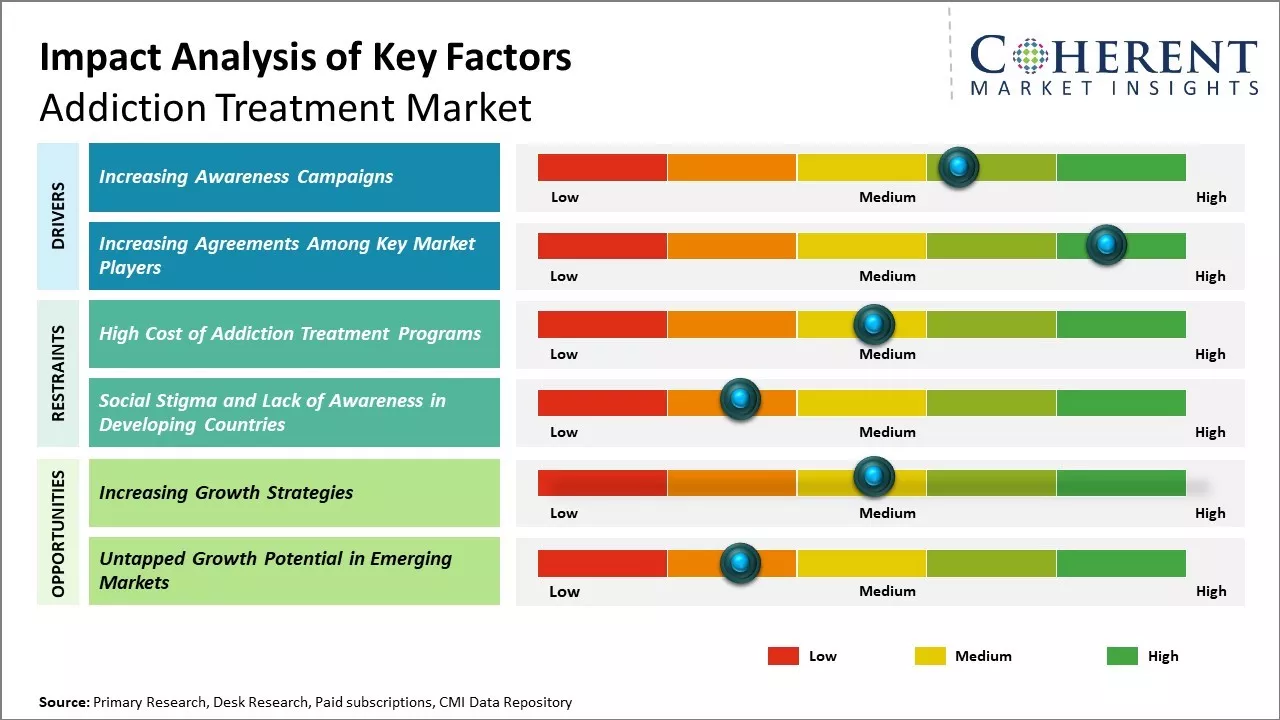
- Increasing Awareness Campaigns
Increasing awareness campaigns is expected to drive the market growth. For instance, In August 2024, the California Department of Public Health launched the “Facts Fight Fentanyl” campaign to educate residents on the dangers of fentanyl and how to prevent opioid overdose. The initiative utilizes a mix of media, including social media, billboards, radio, TV, and public transit ads to raise awareness about naloxone and overdose prevention strategies.
- Increasing Agreements Among Key Market Players
Increasing agreements among key players in addiction treatment foster collaborations for drug development, rehabilitation services, and telehealth expansion. These partnerships enhance accessibility, reduce costs, and improve patient outcomes. Such strategic alliances strengthen industry competitiveness and directly boost addiction treatment market demand, ensuring sustainable growth and wider adoption of treatment solutions.
Addiction Treatment Market Opportunity
Increasing Growth Strategies
Increasing growth strategies in the addiction treatment sector emphasize expanding rehabilitation centers, integrating telehealth, and adopting medication-assisted therapies. Partnerships with insurers, government initiatives, and awareness campaigns drive accessibility and affordability. These approaches strengthen patient outcomes and revenue streams, supporting a positive addiction treatment market forecast with sustained global expansion.
Addiction Treatment Industry News
- In May 2024, Lifespan Health System, announced that they had launched a new addiction treatment program that seeks to offer same-day help. The program is called Addiction Care Today, and it hopes to offer walk-in and same-day appointments for people seeking to begin treatment for substance use disorders.
- In February 2024, Union Council of Ministers, announced that they had launched 41 addiction treatment facilities in Delhi for drug addicts. The facilities will provide free treatment, counselling and free medicines to people struggling with substance addiction problems.
Key Takeaways from Analyst
- The addiction treatment market is experiencing steady growth driven by the rising prevalence of substance abuse disorders worldwide. Furthermore, growing acceptance and legalization of marijuana is expected to fuel the need for addiction care services. The market is also benefiting from favorable regulations around insurance coverage for addiction disorders in various countries.
- The stigma associated with addiction continues to act as a restraint for people seeking help. Lack of awareness about available treatment options also prevents many from getting the necessary care. Additionally, high costs associated with inpatient and residential treatment programs limits their access for some. This provides an opportunity for more affordable outpatient and telehealth-based services to expand.
- North America dominates the addiction treatment landscape currently due to regulatory tailwinds and early adoption of advanced therapies. However, the Asia Pacific region is emerging as one of the fastest growing regional markets due to rising substance abuse in developing economies and their focus on building treatment infrastructure.
Market Segmentation
- By Type (Revenue, USD Bn, 2021 - 2033)
- Alcohol Addiction
- Tobacco/Nicotine Addiction
- Opioid Addiction
- Others
- By Drug Type (Revenue, USD Bn, 2021 - 2033)
- Opioids
- Buprenorphine
- Methadone
- Naltrexone
- Nicotine Replacement Therapies
- Nicotine Gums
- Nicotine Patches
- Nicotine Lozenges
- Nicotine Spray
- Non-Nicotine Medication
- Varenicline
- Bupropion
- By Distribution Channel (Revenue, USD Bn, 2021 - 2033)
- Hospital Pharmacies
- Medical Stores
- Others
- By Region (Revenue, USD Bn, 2021 - 2033)
- North America
- U.S.
- Canada
- Latin America
- Brazil
- Argentina
- Mexico
- Rest of Latin America
- Europe
- Germany
- U.K.
- Spain
- France
- Italy
- Russia
- Rest of Europe
- Asia Pacific
- China
- India
- Japan
- Australia
- South Korea
- ASEAN
- Rest of Asia Pacific
- Middle East
- GCC Countries
- Israel
- Rest of Middle East
- Africa
- South Africa
- North Africa
- Central Africa
- Company Profiles
- Teva Pharmaceutical Industries Ltd.
- Pfizer, Inc.
- Alkremes Plc.
- Glenmark Pharmaceuticals
- GSK plc
- Johnson & Johnson Services, Inc.
- Novartis AG
- Perrigo Company plc.
- Cipla
- Reddy’s Laboratories Limited
- Hikma Pharmaceuticals Plc.
- Indivior Inc.
- Mylan N.V.
- Eli Lilly and Company
- Tempero Bio
- BioCorRx Inc.
- Opiant Pharmaceuticals Inc.
Sources
Primary Research Interviews
- Healthcare Technology Executives
- Addiction Treatment Specialists and Therapists
- Digital Health Platform Providers
- Telehealth Service Administrators
- Others
Databases
- Healthcare Information and Management Systems Society (HIMSS) Database
- Substance Abuse and Mental Health Services Administration (SAMHSA) Database
- Global Health Observatory (GHO) Database
- National Institute on Drug Abuse (NIDA) Database
- Others
Magazines
- Digital Health Magazine
- Behavioral Healthcare Executive
- Healthcare IT News
- Addiction Professional Magazine
- Others
Journals
- Journal of Medical Internet Research
- Telemedicine and e Health
- Journal of Substance Abuse Treatment
- Others
Newspapers
- Healthcare Finance News
- Modern Healthcare
- Fierce Healthcare
- Health Data Management
- MedCity News
- Others
Associations
- American Telemedicine Association (ATA)
- National Association for Addiction Professionals (NAADAC)
- Association for Addiction Professionals
- Digital Medicine Society (DiMe)
- Others
Public Domain Sources
- World Health Organization (WHO) Reports
- U.S. Department of Health and Human Services Publications
- Centers for Disease Control and Prevention (CDC) Data
- National Institutes of Health (NIH) Publications
- Others
Proprietary Elements
- CMI Data Analytics Tool
- Proprietary CMI Existing Repository of information for last 8 years
Get access to 250+ pages report
Every segment, forecast, competitor profile and data table behind the analysis above — available for instant download.
- ESOMAR Member
- ISO 9001:2015 Certified
- D-U-N-S Registered
- GDPR & CCPA Compliant
Missing comfort of reading report in your local language? Find your preferred language:
Transform your Strategy with Exclusive Trending Reports
Frequently Asked Questions
The Addiction Treatment Market size is estimated to be valued at USD 10.66 Bn in 2026, and is expected to reach USD 16.03 Bn by 2033.
The CAGR of the global Market is projected to be 6.0% from 2026 to 2033.
Addiction treatment is integrated with mental health through dual-diagnosis programs that address co-occurring disorders like depression or anxiety alongside substance use, ensuring more comprehensive and effective care.
Yes, wearable devices are increasingly used in addiction recovery to monitor physiological indicators like heart rate, stress, and sleep, supporting relapse prevention through real-time biofeedback and behavioral tracking.
Patient feedback is used in addiction care to personalize treatment plans, assess therapy effectiveness, and improve program quality by incorporating real-time experiences into care adjustments.
Increasing awareness campaigns and increasing agreements among key market players are the major factor driving the growth of the addiction treatment industry.
High cost of addiction treatment programs and social stigma and lack of awareness in developing countries are the major factors hampering the growth of the global market.