

Global Buprenorphine Market Size and Forecast – 2026-2033
The Global Buprenorphine Market is estimated to be valued at USD 2,780.6 Mn in 2026 and is expected to reach USD 4,316.9 Mn by 2033, exhibiting a compound annual growth rate (CAGR) of 9.1% from 2026 to 2033. This steady growth reflects increasing adoption of buprenorphine in opioid dependency treatments and expanding healthcare infrastructure worldwide, driving market expansion over the forecast period.
Key Takeaways of the Global Buprenorphine Market
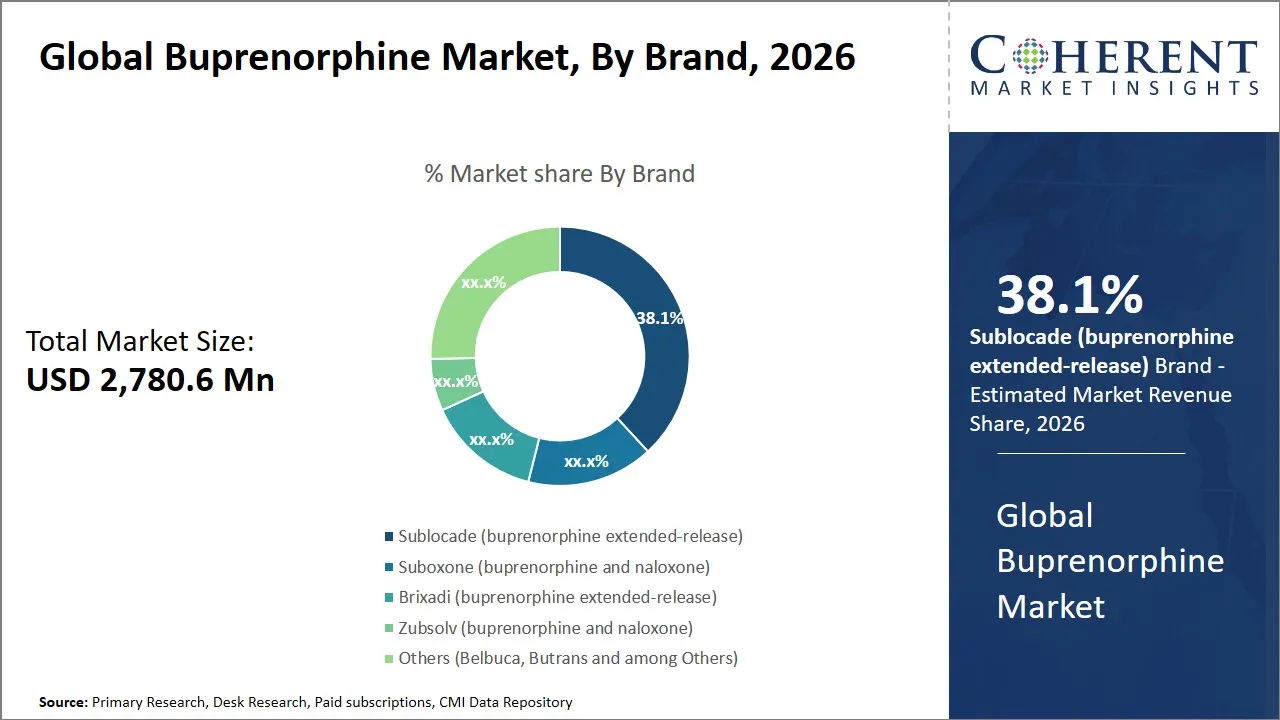
- Sublocade (buprenorphine extended‐release) segment is expected to lead the buprenorphine market, capturing 38.1% share in 2026.
- Branded segment is estimated to represent 68.9% of the buprenorphine market share in 2026.
- Injectable segment is projected to dominate with 41.1% of the global buprenorphine market share in 2026.
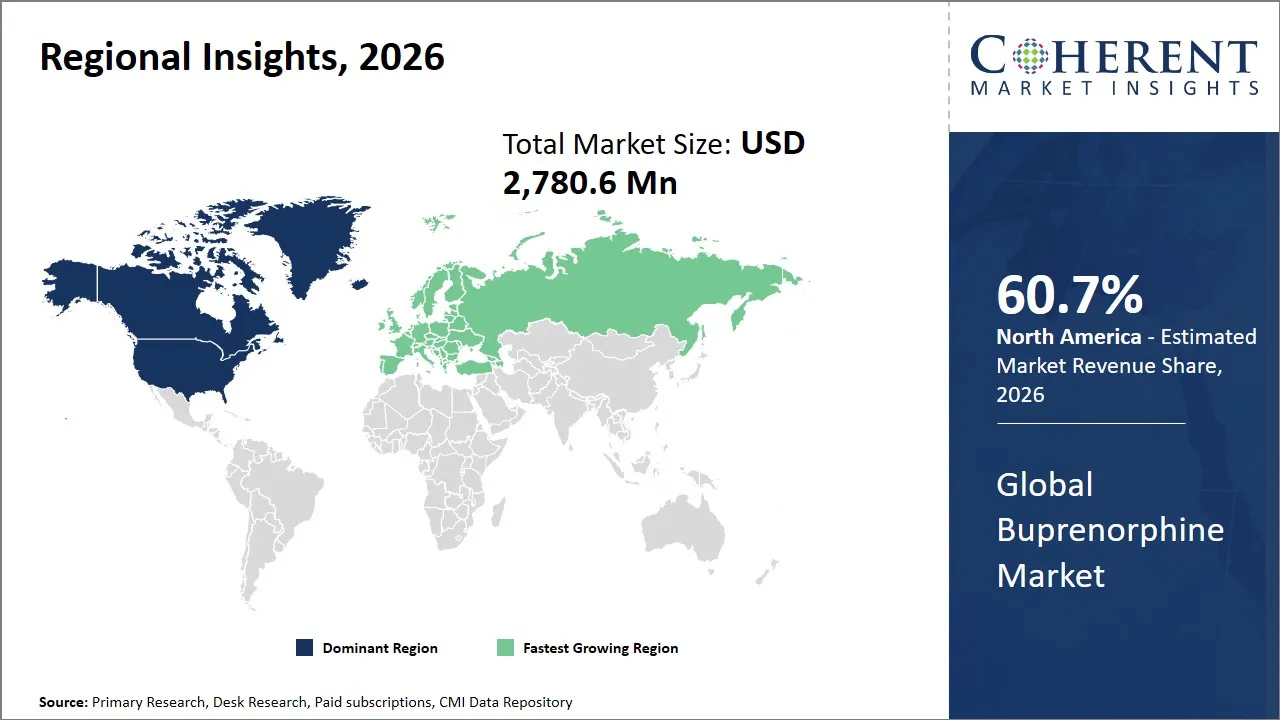
- North America is expected to lead the market, holding a share of 60.7% in 2026. Europe is anticipated to be the fastest-growing region, with 28.9% share in 2026.
Market Overview
- The global buprenorphine market is anchored by sustained demand from opioid use disorder treatment, as health systems continue to expand medication assisted therapy to address unmet patient needs.
- Rising opioid use disorder burden and persistent treatment gap continue to sustain the demand for buprenorphine-based therapy, with CDC reporting that in 2022, 3.7% of U.S. adults needed Opioid Use Disorder (OUD) treatment but only 25.1% received medications for Opioid Use Disorder (OUD).
- Permanent telemedicine support is improving access to buprenorphine initiation and follow-up care, after Drug Enforcement Administration (DEA) and Department of Health and Human Services (HHS) finalized the buprenorphine telemedicine rule in January 2026.
- Underserved and rural markets remain a major expansion opportunity because provider access is still uneven, with research showing buprenorphine providers remain geographically clustered rather than evenly distributed.
Currents Events and their Impact
Current Events | Description and its Impact |
Expansion of telehealth-based opioid treatment services |
|
Growing shift toward long-acting buprenorphine formulations |
|
Segmental Insights
- Current Industry Events of 2026
- Market Size Estimation
- Regional Breakdown
- Competitive Landscape
- Customer Intelligence
- Segmental Analysis
- Pricing Analysis
- Key Market Drivers, Challenges & Future Trends
- Customized Insights Section
Why Does the Sublocade (buprenorphine extended‐release) Segment Dominate the Global Buprenorphine Market in 2026?
The Sublocade (buprenorphine extended‐release) segment is expected to hold the largest market share of 38.1% in 2026, due to its advanced pharmacological profile and substantial benefits in treating opioid use disorder (OUD). Because of the slow release of buprenorphine over more than a month, the extended-release formulation of Sublocade offers a persistent release of plasma drug. This reduces the uneven plasma drug levels that are typical of the daily dosing.
This slower-acting process aids in stabilizing therapeutic levels and this greatly minimizes the withdrawal symptoms and cravings, which are major problems of OUD patients. In addition, the monthly injection increases compliance with treatment regimens, which is one of the key conditions of the success of long-term opioid dependency management.
For instance, in November 2018, Indivior announced Health Canada’s approval of Sublocade for patients with moderate to severe opioid use disorder. This was a major international expansion milestone for the branded long-acting buprenorphine product and supported its position beyond the U.S. buprenorphine market.
(Source- Indivior)
Why Does the Branded Segment Dominate the Global Buprenorphine Market in 2026?
The branded segment is expected to hold 68.9% of the market share in 2026, owing to patent protections, perceived quality, and enhanced physician confidence. Healthcare providers and patients tend to consider branded buprenorphine products as a more high-quality source since they are supported by a multitude of clinical trials, high quality control and full safety data. This is the perception that causes more physician confidence in prescribing branded medications, particularly in combating the intricate cases of opioid dependence, in which treatment efficacy and patient safety are the most important considerations.
Branded formulations with patent protection also enable the pharmaceutical firms to invest a lot in research and development, which makes the introduction of new drug delivery systems, like extended-release injectable formulations or a combination with naloxone. The cycle of innovations supports the clinical appeal of branded products, as pharmaceutical businesses can insist on high-pricing and demand loyalty on their part among the treatment centers.
For instance, in September 2023, Brixadi, the U.S. brand of Camurus’ long-acting buprenorphine product marketed by Braeburn, continued its rollout momentum after its U.S. launch, with Camurus later reporting that it had surpassed prior launches in the segment and gained meaningful share in long-acting buprenorphine. That is another clear sign that branded formulations are leading the higher-value side of the market.
(Sources- Camurus)
The Injectable Segment Dominates the Global Buprenorphine Market
The injectable segment is expected to hold the largest market share of 41.1% in 2026, due to enhanced compliance, reduced diversion risks, and improving clinical outcomes. The injectable method provides a controlled-release system that enables continuous release of medication within a long period of time, usually one month, independent of the self-administering of the drug on a daily basis. This time-release profile is very effective with regard to patient compliance, because chances of missed doses which is a major relapse factor and treatment failure are reduced.
The use of injectables also mitigates the issues of diversion and abuse risk of sublingual or buccal administration which is more prone to abuse or accidental exposure. As the medication is injected under the supervision of healthcare workers, the injectable formulations will provide the drug with the appropriate dosage and minimize the risk of selling the medication on the black market or misuse. These reasons have rendered injectables to be a choice in structured treatment programs between clinicians and patients.
Telehealth Expansion in the Global Buprenorphine Market
- The introduction of telehealth has turned into a growth driver that matters within the international market of buprenorphine due to its ability to reduce one of the greatest obstacles of opioid use disorder treatment: access to qualified prescribers. This was emphasized after DEA and HHS launched permanent telemedicine regulations on the access of buprenorphine in January 2026, providing providers with a structure to work around remote prescribing on a long-term basis instead of a workaround provisioned by the temporary pandemic settings. Market-wise, that facilitates wider treatment initiation, enhances continuation of care and makes buprenorphine more accessible to patients with distance, stigma and clinic-capacity obstacles.
- The possibility is particularly apparent in underserved communities, where physical access to drug treaties has not been even. Recent data indicates that telemedicine can bring patients to scale of treatment: a 2025 study published found that 1,515 of 1,698 callers with opioid use disorder who were connected to treatment were started on buprenorphine or methadone with buprenorphine started most frequently by telemedicine. Simultaneously, the access gaps have not been eliminated yet, with rural communities still experiencing a lack of buprenorphine providers and lack of pharmacy fulfillment, implying that telehealth is assisting the market to grow, but it is not eliminating all of the structural constraints on its own.
Regional Insights
North America Buprenorphine Market Analysis and Trends
The North America region is projected to lead the market with a 60.7% share in 2026, driven by a well-established healthcare infrastructure, strong government initiatives to combat opioid addiction, and a mature pharmaceutical industry ecosystem. The American government has enacted far-reaching policies to advance opioid use disorder treatment, such as increased access to medication-assisted treatment (MAT) programs, which involve the usage of buprenorphine.
Strong reimbursement systems and favorable regulatory channels also complement penetration in the market. Major industry players like the Indivior PLC and the AbbVie Inc. are very important as they offer new formulations and increased access to treatment. Sustained demand is supported by the existence of a large number of addiction treatment facilities and the extremely high rate of opioid dependence. Also, buprenorphine products can be imported and exported through trade policies, which augment supply.
For instance, in February, 2025, the U.S. FDA approved label changes for Indivior’s Sublocade, allowing a rapid initiation protocol that reduced time to treatment from one week to one hour after a single transmucosal dose. This is a strong regional instance because it reflects how the North American market is moving toward faster initiation, better adherence, and wider use of extended-release buprenorphine therapies.
(Source- Indivior)
Europe Buprenorphine Market Analysis and Trends
The Europe region is expected to exhibit the fastest growth in the buprenorphine market, contributing 28.9% share in 2026, owing to the growing awareness of opioid dependence treatment, expanding access to medication assisted therapy, and the presence of structured public healthcare systems across many countries. The use of buprenorphine is still significant because it is effective, has a low safety rate and can also be used in both maintenance therapy and as a long-lasting recovery support. Community care, increasing access to treatment outpatient programs and the increased inclusion of addiction treatment into mainstream healthcare services are also contributing to demand.
For instance, in May 2025, Camurus launched Buvidal weekly and monthly in Portugal, expanding access to prolonged-release buprenorphine in the country. Earlier in January 2025, Buvidal was launched in Switzerland, while Camurus also reported patient uptake in Luxembourg following prior pricing and reimbursement approvals, marking a broader 2025 European expansion for the brand.
(Sources- Camurus)
Global Buprenorphine Market Outlook for Key Countries
How is the U.S. Helping in the Growth of the Buprenorphine Market?
The buprenorphine market in the U.S. is the epicenter of buprenorphine use that is widely supported by the government through the Substance Abuse and Mental Health Services Administration (SAMHSA) that issues waivers to permit more healthcare providers to prescribe buprenorphine. The pharmaceutical market in the U.S. is very competitive and Indivior PLC is top at the extended-release forms, with AbbVie growing the generic drug after acquiring the generic business of Allergan.
These organizations pay much attention to R&D to provide better delivery systems, which are more likely to increase patient compliance. Patients are helped with a wide network of addiction care providers and high insurance reimbursements.
How is India Helping in the Growth of the Buprenorphine Market?
The buprenorphine market in India is also in a dynamic state as more people are becoming aware of the incidences of opioid use disorders and the efforts of the government to enhance the services of managing addiction. The regulatory bottlenecks are slowly being overcome and more extensively Medication-Assisted Treatment (MAT) including buprenorphine is used. In addition to that, the international generics manufacturers are collaborating with Indian companies to increase the manufacturing capacity. The integration of buprenorphine into the public health efforts is conducive to the expansion of the market in the long-run in case of increased patient awareness.
Key Drivers for the Growth of the Germany Buprenorphine Market
Germany is the market leader in Europe with a highly regulated pharmaceutical landscape as well as well-established healthcare reimbursement schemes that support buprenorphine. Progressive policies favor the country in the sense that they make opioid substitution therapies a normative treatment with health insurance cover. Other major industry actors like Mundipharma GmbH and Laboratorios LICONSA maintain consistent supply by providing high quality branded products and generic products. Having research institutions also facilitates drug formulation and treatment procedures. Germany as a trading bloc in the European Union also boosts the availability of products in the adjacent markets.
China Buprenorphine Market Trends
The market of buprenorphine in China has been on its way to growing due to the rising considerations of mental health and addiction therapy in the national health agendas by the government. New regulatory frameworks enable more affordable access to buprenorphine products in urban areas and pilot programs to implement treatment in the rural areas.
Chinese drug producers such as CSPC Pharmaceutical Group and Jiangsu Hengrui Medicine are also investing in their production and distribution capacity. Cooperation with foreign companies will contribute to the implementation of new recipes and compatibility with the international requirements. Public health campaigns led by the government enhance patient acceptance making China a major growth market in Asia Pacific.
Reimbursement Trends and Payer Access in the Global Buprenorphine Market
- Reimbursement is also currently among the largest demand influencers on the worldwide market of buprenorphine since the extent of coverage, the prior authorization regulations, and the dose limitations directly influence the treatment initiation and adherence. Medicaid remains the most significant payer channel in the U.S. to offer treatment to opioid use disorder but according to MACPAC in 2025, prior authorization and daily dosage limits on oral buprenorphine still delay or limit access to treatment in most programs. Simultaneously, the long-acting preparations have the potential to enhance compliance, although they may receive even stricter reimbursement examination due to the increased cost of administration and initial expenditure in comparison to oral preparations.
- Payers-wise, the market perspective becomes better when the reimbursement policy is based not on the utilization control, but maintains the access preservation. Recent state policies like the February 2026 amendment to coverage and reimbursement of medication assisted treatment in D.C. are heading in that direction and telehealth and integrated care payment models are also assisting in reducing treatment friction in some U.S. programs. Elsewhere, public health systems continue to lead in the uptake of buprenorphine, but coverage is still uneven across the whole world, and WHO reported in 2025 that less than one in 10 individuals with drug use disorders receive treatment. In Europe, buprenorphine already serves approximately 35 percent of the opioid agonist clients, demonstrating that when the pathways to public coverage are operational, the adoption of buprenorphine can increase in a meaningful way.
Market Players, Key Developments, and Competitive Intelligence
Key Developments
- On February 26, 2026, Indivior highlighted that its full-year 2026 guidance includes Sublocade with a net revenue of USD 905 million to USD 945 million, showing that long-acting injectable buprenorphine remains the main commercial growth driver in the category. This matters because it confirms continued demand concentration in branded extended-release formats rather than only legacy sublingual products.
- On February 12, 2026, Camurus reported strong royalty growth from BRIXADI and stated that the product had reached more than 30% share of the U.S. long-acting injectable buprenorphine segment by the end of 2025. That is a direct competitive signal that the injectable buprenorphine segment is becoming a tighter two-player race, with pricing access and formulation convenience now central to market share gains.
- On January 29, 2026, SAMHSA announced that DEA and HHS issued the final telemedicine rule for buprenorphine access, making permanent the buprenorphine-related telemedicine flexibilities that had previously been extended through 2025. This is one of the biggest access-side developments in the market because it reduces treatment friction and supports volume growth through virtual OUD care models.
Top Strategies Followed by Global Buprenorphine Market Players
Player Type | Strategic Focus | Examples |
Established Market Leaders | Established players lead the buprenorphine market by investing in improved formulations and delivery systems that enhance adherence and treatment outcomes. They also use partnerships and wider geographic expansion to strengthen market reach, especially in regions where opioid dependence treatment access is still developing. | Indivior strengthened its position in February 2025 when the U.S. FDA approved label changes for Sublocade, allowing faster treatment initiation and supporting broader use of long- acting buprenorphine therapy. |
Mid-Level Players | Mid-level players compete by offering more affordable buprenorphine products while using partnerships to improve technology access, manufacturing strength, and regional distribution. They usually focus on selected markets or patient segments instead of competing head-on with the largest companies. | In January 2025, ZIM Laboratories and Neuraxpharm received European marketing authorization for buprenorphine sublingual film, showing how mid-sized companies can use collaboration and formulation innovation to expand market presence cost-effectively. |
Small-Scale Players | Small-scale players stay relevant by focusing on niche innovation, such as new delivery systems and patient-friendly formulations, instead of competing on scale. They also rely on targeted collaborations with research bodies or regional partners to build visibility and enter specific markets faster. | In July 2025, Akyso Therapeutics announced NIH funding to develop a buprenorphine implant, showing how a smaller company can use innovation-led, partnership-backed development to target unmet needs in opioid use disorder treatment. |
Market Report Scope
Buprenorphine Market Report Coverage
| Report Coverage | Details | ||
|---|---|---|---|
| Base Year: | 2025 | Market Size in 2026: | USD 2,780.6 Mn |
| Historical Data for: | 2020 To 2024 | Forecast Period: | 2026 To 2033 |
| Forecast Period 2026 to 2033 CAGR: | 9.1% | 2033 Value Projection: | USD 4,316.9 Mn |
| Geographies covered: |
| ||
| Segments covered: |
| ||
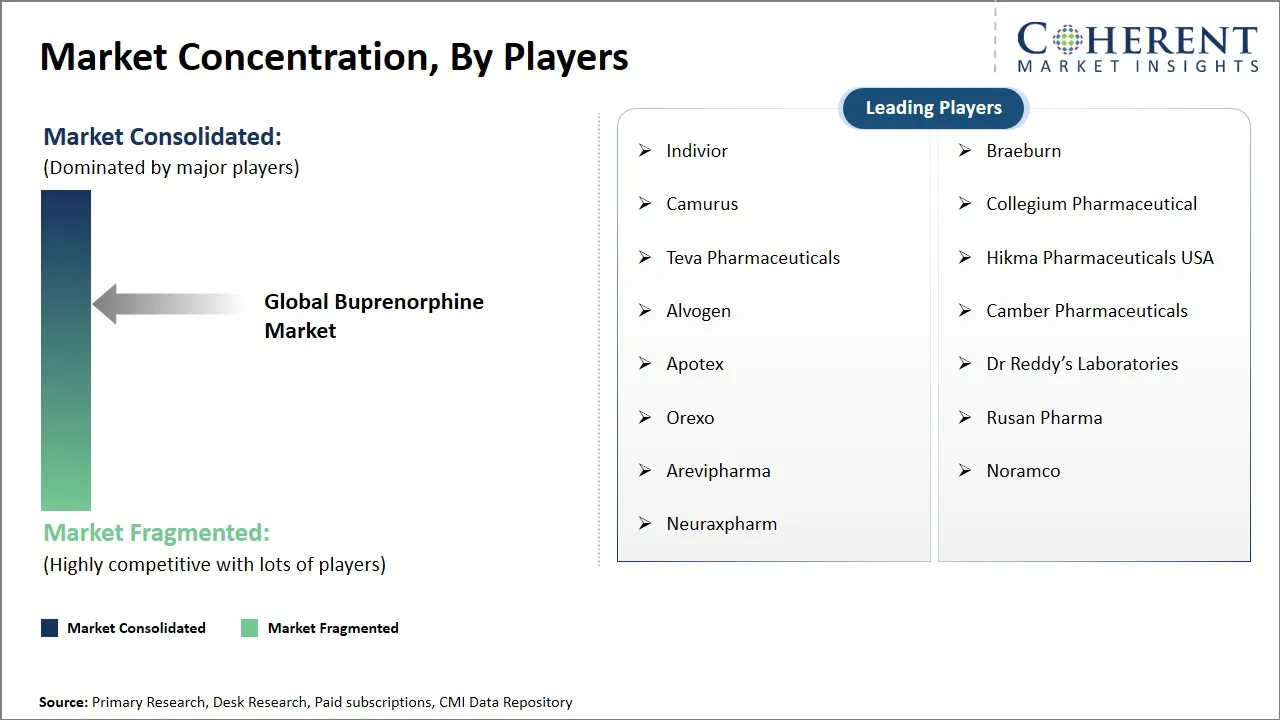
| Companies covered: | Indivior, Braeburn, Camurus, Collegium Pharmaceutical, Teva Pharmaceuticals, Hikma Pharmaceuticals USA, Alvogen, Camber Pharmaceuticals, Apotex, Dr Reddy’s Laboratories, Orexo, Rusan Pharma, Arevipharma, Noramco, and Neuraxpharm | ||
| Growth Drivers: |
| ||
| Restraints & Challenges: |
| ||
Global Buprenorphine Market Dynamics
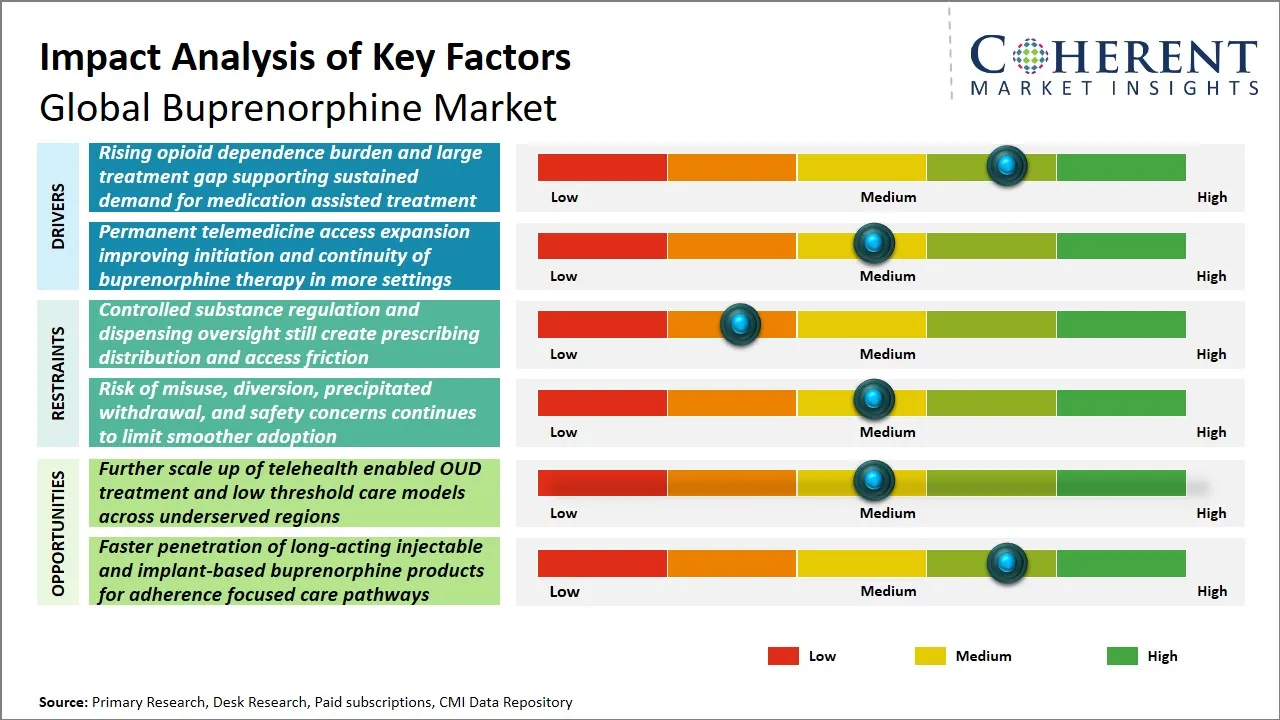
Global Buprenorphine Market Driver - Rising Opioid Dependence Burden and Large Treatment Gap Supporting Sustained Demand For Medication Assisted Treatment
The rising rates of opioid dependence across the world have been placing a significant strain on healthcare systems presenting an urgent need to develop effective therapeutic interventions to curb the crisis like buprenorphine. Although there is an increasing awareness, this treatment gap continues with the lack of access, stigmatization, and lack of access to specialized care forcing many people to be untreated or poorly treated.
The pharmacological characteristics of buprenorphine, including the reduction of the withdrawal symptoms and cravings with the less risk of misuse than other opioids, precondition its status as a key component of medication-assisted treatment (MAT) programs. The focus on increasing access to MAT remains on the rise as healthcare providers are trying to mediate the multi-faceted issues related to opioid use disorder, such as high relapse rates and comorbidity.
For instance, in the U.S., opioid use disorder remains high while treatment access is still limited, supporting the demand for buprenorphine. Centers for Disease Control and Prevention (CDC) reported that in 2022, that 3.7% of U.S. adults needed Opioid Use Disorder (OUD) treatment, and 25.1% of them received medications for OUD; similarly, NIH reported that in 2021 only about 1 in 5 adults with OUD received medications to treat it.
(Sources- Centers for Disease Control and Prevention (CDC))
Global Buprenorphine Market Opportunity - Expansion of Telehealth-Enabled OUD Treatment and Low-Threshold Care Models in Underserved Regions
The acquisition of the additional scale of the telehealth-enabled treatment of opioid use disorder (OUD) and the introduction of low-threshold care models is a major market expansion prospect in the international buprenorphine sector, especially in underserved and rural areas. The current opioid crisis has highlighted the necessity of accessible and patient-centered treatment options, and telehealth platforms have become a highly important approach to addressing geographical and social disparities in care.
As a first-line treatment of OUD, buprenorphine is also suitable as a remote management option because of its safety and lack of regulations in most jurisdictions. Telemedicine integration expands access because healthcare providers are able to perform an assessment and prescribe medicine along with checking medication adherence without having to physically visit the patient, alleviating certain concerns of stigma, transportation challenges, and inadequate healthcare infrastructure.
For instance, on December 31, 2025, the Drug Enforcement Administration (DEA) announced a fourth temporary extension of telemedicine flexibilities through December 31, 2026, allowing remote prescribing of buprenorphine without a prior in-person visit under specified conditions. Drug Enforcement Administration (DEA) said this helps ensure continuity of care, particularly for patients in rural and underserved areas, making it a strong access-expansion development for buprenorphine treatment.
Analyst Opinion (Expert Opinion)
- The global buprenorphine market is growing due to the independent fact that the opioid use disorder is still under-treated, and more effective and convenient treatment is still a growing demand. Wider use of long-acting formulations, increased policy support, and increased access to treatment with the help of telemedicine support growth. The recent product and label advances like the SUBLOCADE and BRIXADI also indicate that the market is moving towards more adherence-based treatment models however reimbursement restrictions, regulatory complexity and provider shortages continue to be major problems.
- Conferences and the policy initiatives which enhance clinical awareness and increase the delivery of treatment are also reinforcing market momentum. Knowledge-sharing activities like the Annual Conference of ASAM and BUPE meetings persist in promoting the exchange of knowledge regarding the addiction treatment field, and the recent rule on telemedicine of January 2026 and the new federal programs support make the future of buprenorphine access more optimistic. Simultaneously, the market is becoming more diverse globally with the new approvals and launches in Europe, which point to the market growth outside of the U.S.
Speak to the analyst
Want personalized insights?
Take the findings above to one of our principal consultants, or have the report rebuilt around the segments, geographies and competitors you actually track.
Market Segmentation
- Brand Insights (Revenue, USD Mn, 2021 - 2033)
- Sublocade (buprenorphine extended‐release)
- Suboxone (buprenorphine and naloxone)
- Brixadi (buprenorphine extended‐release)
- Zubsolv (buprenorphine and naloxone)
- Others (Belbuca, Butrans and among others)
- Type Insights (Revenue, USD Mn, 2021 - 2033)
- Branded
- Generics
- Route of Administration Insights (Revenue, USD Mn, 2021 - 2033)
- Injectable
- Intravenous
- Intramuscular
- Subcutaneous
- Sublingual
- Buccal
- Transdermal
- Others
- Injectable
- Dosage Form Insights (Revenue, USD Mn, 2021 - 2033)
- Injectable Solutions
- Patches
- Films
- Others (Tablets, etc.)
- Indication Insights (Revenue, USD Mn, 2021 - 2033)
- Opioid Use Disorder (OUD)
- Pain Management
- Acute Pain
- Chronic Pain
- Formulation Type Insights (Revenue, USD Mn, 2021 - 2033)
- Single Drug Formulation
- Fixed Dose Combination
- Age Group Insights (Revenue, USD Mn, 2021 - 2033)
- Adults
- Pediatric
- Distribution Channel Insights (Revenue, USD Mn, 2021 - 2033)
- Hospital Pharmacies
- Retail Pharmacies
- Online Pharmacies
- Regional Insights (Revenue, USD Mn, 2021 - 2033)
- North America
- U.S.
- Canada
- Latin America
- Brazil
- Argentina
- Mexico
- Rest of Latin America
- Europe
- Germany
- U.K.
- Spain
- France
- Italy
- Russia
- Rest of Europe
- Asia Pacific
- China
- India
- Japan
- Australia
- South Korea
- ASEAN
- Rest of Asia Pacific
- Middle East
- GCC Countries
- Israel
- Rest of Middle East
- Africa
- South Africa
- North Africa
- Central Africa
- North America
- Key Players Insights
- Indivior
- Braeburn
- Camurus
- Collegium Pharmaceutical
- Teva Pharmaceuticals
- Hikma Pharmaceuticals USA
- Alvogen
- Camber Pharmaceuticals
- Apotex
- Dr Reddy’s Laboratories
- Orexo
- Rusan Pharma
- Arevipharma
- Noramco
- Neuraxpharm
Sources
Primary Research Interviews
Industry Stakeholders list
- Addiction medicine specialists
- Psychiatrists treating opioid use disorder
- Hospital emergency physicians initiating buprenorphine
- Clinical pharmacists in addiction care
- Payer and reimbursement decision makers
- Public health and harm reduction programme leaders
End-users list
- Patients on buprenorphine maintenance therapy
- Patients using long-acting injectable buprenorphine
- Pregnant women receiving medication assisted treatment
- Rural telehealth OUD patients
- Community pharmacy buprenorphine users
- Patients transitioning from fentanyl or heroin to buprenorphine
Government and International Databases
- S. Food and Drug Administration
- Substance Abuse and Mental Health Services Administration
- Drug Enforcement Administration
- Centers for Disease Control and Prevention
- World Health Organization
- United Nations Office on Drugs and Crime
Trade Publications
- STAT News
- Psychiatric Times
- Pharmacy Times
- Medscape
- Managed Healthcare Executive
- Pharmaceutical Executive
Academic Journals
- The New England Journal of Medicine
- JAMA
- JAMA Network Open
- The Lancet
- Journal of Addiction Medicine
- The American Journal of Managed Care
Reputable Newspapers
- Associated Press
- Financial Times
- The Guardian
- The Washington Post
- The Wall Street Journal
Industry Associations
- American Society of Addiction Medicine
- American Association for the Treatment of Opioid Dependence
- International Society of Addiction Medicine
- American Psychiatric Association
- Providers Clinical Support System
- College on Problems of Drug Dependence
Public Domain Resources
- NCBI Bookshelf
- gov
- NIH RePORTER
- MedlinePlus
Proprietary Elements
- CMI Data Analytics Tool: Proprietary analytics tool to analyze real-time market trends, consumer behavior, and technology adoption in market
- Proprietary CMI Existing Repository of Information for Last 8 Years
Get access to 250+ pages report
Every segment, forecast, competitor profile and data table behind the analysis above — available for instant download.
- ESOMAR Member
- ISO 9001:2015 Certified
- D-U-N-S Registered
- GDPR & CCPA Compliant
Missing comfort of reading report in your local language? Find your preferred language:
Transform your Strategy with Exclusive Trending Reports
Frequently Asked Questions
The Buprenorphine Market is estimated to be valued at USD 8.38 Bn in 2026, and is expected to reach USD 22.43 Bn by 2033.
The CAGR of the Buprenorphine Market is projected to be 15.1% from 2026 to 2033.
Rising opioid dependence burden and large treatment gap supporting sustained demand for medication assisted treatment and permanent telemedicine access expansion improving initiation and continuity of buprenorphine therapy in more settings are the major factors driving the growth of the global buprenorphine market.
Controlled substance regulation and dispensing oversight still create prescribing distribution and access friction and risk of misuse, diversion, precipitated withdrawal, and safety concerns continues to limit smoother adoption are the major factors hampering the growth of global buprenorphine market.
Because they improve adherence, reduce frequent dosing burden, and are increasingly taking share in treatment settings. Camurus reported in February 2026 that BRIXADI had reached over 30% share of the U.S. long-acting injectable buprenorphine segment by year-end 2025, while Indivior highlighted a faster one-hour initiation pathway for SUBLOCADE after its 2025 FDA label update.
It is still led by the U.S., but international expansion is clearly underway. In January 2025, Neuraxpharm and ZIM Laboratories announced European marketing authorization for buprenorphine sublingual film, while Camurus has continued to expand Buvidal access across Europe and other regions.
In terms of brand, Sublocade (buprenorphine extended‐release) is estimated to dominate the market revenue share in 2026.