

Eisenmenger Syndrome Treatment Market Size and Share Analysis - 2026 To 2033
The Eisenmenger syndrome treatment market is estimated to be valued at USD 1.80 Bn in 2026 and is expected to grow at a CAGR of 9.4% during the forecast period, reaching USD 3.37 Bn by 2033. This can be attributed to rising prevalence of congenital heart diseases leading to Eisenmenger syndrome and increasing adoption of targeted pulmonary arterial hypertension (PAH) therapies. According to the World Heart Federation, an estimated 16 million people were living with coronary heart disease (CHD), up from 11.8 million three decades ago.
Key Takeaways from the Eisenmenger Syndrome Treatment Market Report
- Endothelin Receptor Antagonists (ERAs) are expected to account for the largest market revenue share of 41% in 2026 due to their effectiveness in improving symptoms and slowing disease progression in Eisenmenger syndrome. For example, in the BREATHE-5 trial, bosentan (an ERA) increased the 6-minute walk distance by 53.1 meters as well as significantly reduced pulmonary arterial pressure in patients with Eisenmenger syndrome.
- Hospital pharmacies are slated to lead the market with a share of 54% in 2026 as most PAH-targeted therapies are prescribed and dispensed through specialized hospitals and congenital heart disease centers.
- North America is projected to dominate the global eisenmenger syndrome industry with a share of 42% in 2026, owing to high diagnosis rates, established congenital heart disease programs and rising adoption of PAH-targeted therapies. For instance, the 2025 ACC/AHA guideline recommends treatment at specialized ACHD centers and supports PAH-targeted therapies for Eisenmenger syndrome.
- Asia Pacific, recording a CAGR of 10.8%, is poised to emerge as the fastest-growing market for eisenmenger syndrome treatments due to improving diagnosis of congenital heart diseases, expanding access to specialized cardiac care, rising awareness of rare diseases, and growing adoption of targeted pulmonary arterial hypertension (PAH) therapies.
Eisenmenger Syndrome Treatment Market Overview
The global eisenmenger syndrome treatment market is poised to exhibit strong growth during the forecast period. This is mostly due to increasing of congenital heart diseases that can progress to Eisenmenger syndrome, growing awareness supporting earlier diagnosis and treatment, and rising popularity of targeted pulmonary arterial hypertension (PAH) therapies.
Eisenmenger syndrome is a severe complication of untreated congenital heart defects that initially cause abnormal blood flow from the left side of the heart to the right side (left-to-right shunt). Over time, increased blood flow and pressure in the pulmonary arteries cause progressive pulmonary vascular remodeling, leading to pulmonary hypertension and increased pulmonary vascular resistance. The condition is commonly associated with congenital heart defects such as ventricular septal defect (VSD), atrial septal defect (ASD), patent ductus arteriosus (PDA), and atrioventricular canal defect (AV canal defect).
With the rise in pulmonary vascular resistance, the reversal of shunt from right to left occurs, leading to mixing of oxygenated and deoxygenated blood and thus resulting in low oxygen levels in the blood stream (cyanosis). Such changes that occur in the vessels are called pulmonary vascular obstructive disease, which is a type of secondary PAH.
Treatment depends on disease severity and patient condition, with management focused on improving symptoms, preventing complications, and reducing disease progression. Current treatment approaches include PAH-targeted therapies such as endothelin receptor antagonists, phosphodiesterase-5 inhibitors, and prostacyclin pathway therapies, along with supportive care when required.
Segmental Insights
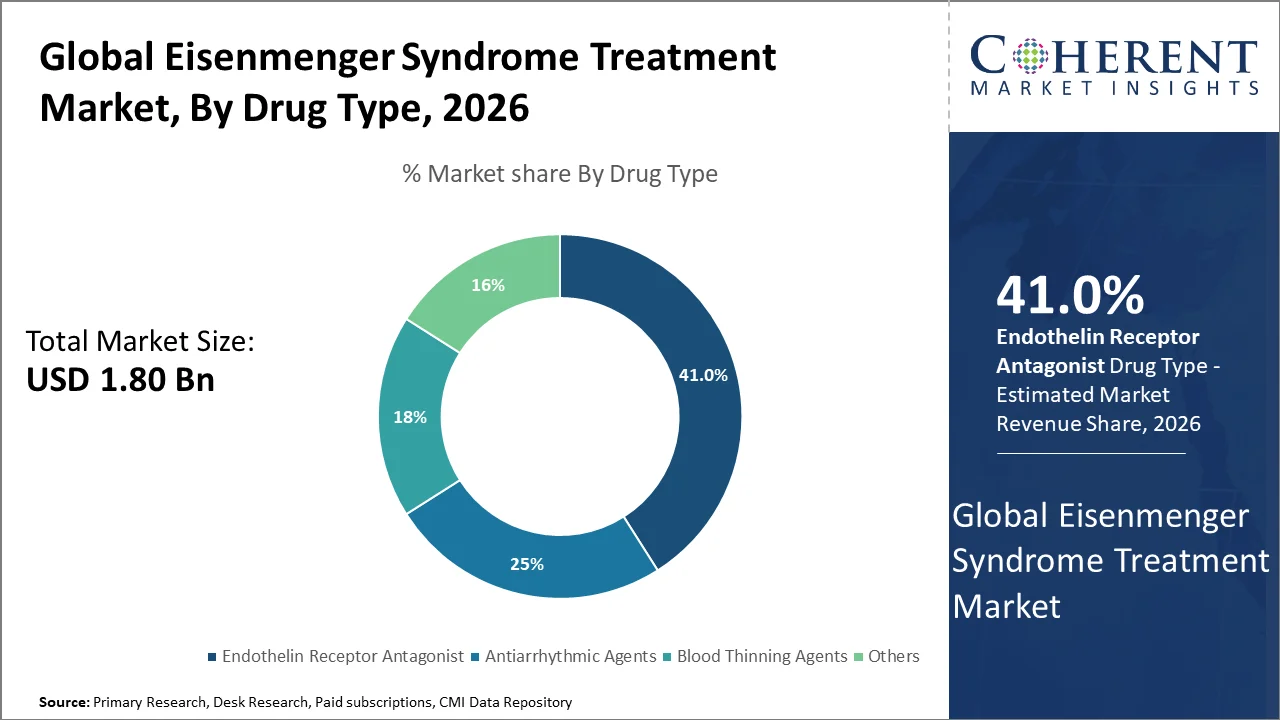
Which Drug Type Dominates the Global Eisenmenger Syndrome Treatment Market?
Endothelin Receptor Antagonists Lead with Over Two-Fifth of Market Share
According to Coherent Market Insights' latest Eisenmenger syndrome treatment market insights, endothelin receptor antagonists (ERAs) are set to lead the market with a share of 41% in 2026. This dominance can be attributed to their proven effectiveness in improving exercise capacity, reducing pulmonary vascular resistance as well as alleviating symptoms and slowing disease progression in patients with Eisenmenger syndrome. Their widespread use as first-line targeted therapy and increasing clinical adoption are also contributing to segment growth.
Companies are increasingly expanding their ERA portfolios to capitalize on emerging opportunities. For example, in March 2024, the U.S. FDA approved OPSYNVI (macitentan 10 mg + tadalafil 40 mg), the first once-daily single-tablet combination therapy for pulmonary arterial hypertension (PAH). Macitentan is an endothelin receptor antagonist (ERA), and the approval is expected to strengthen the adoption of ERA-based therapies in PAH while supporting broader use of macitentan in clinical practice.
- Current Industry Events of 2026
- Market Size Estimation
- Regional Breakdown
- Competitive Landscape
- Customer Intelligence
- Segmental Analysis
- Pricing Analysis
- Key Market Drivers, Challenges & Future Trends
- Customized Insights Section
Which Distribution Channel Accounts for the Largest Market Share?
Hospital Pharmacies Hold More Than Half of the Market Share
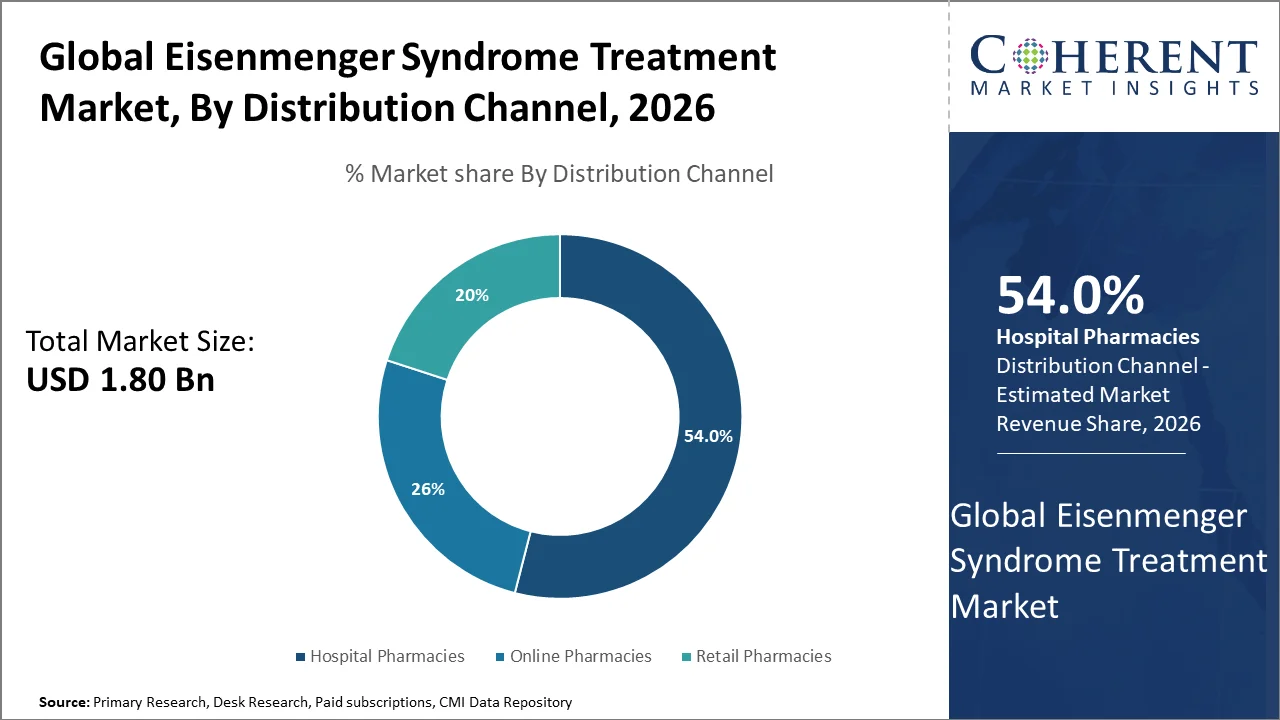
By distribution channel, hospital pharmacies are projected to lead the market, capturing a share of 54% in 2026. This is because patients with Eisenmenger syndrome require specialized diagnosis, continuous monitoring, and prescription-based PAH-targeted therapies, which are primarily administered and dispensed through hospital settings. In addition, the availability of multidisciplinary care teams and reimbursement support at hospitals is also expected to boost segment growth during the forecast period.
Eisenmenger Syndrome Treatment Market Growth Drivers
Increasing Prevalence of Congenital Heart Disease (CHD)
Rising prevalence of congenital heart disease (CHD) is a major factor driving growth of the Eisenmenger syndrome treatment market. There is a significant increase in the number of individuals born with congenital heart defects, expanding the population at risk of developing Eisenmenger syndrome. This risk is particularly higher among patients with untreated or late-diagnosed large left-to-right shunt defects that progress to pulmonary hypertension.
For example, a global systematic review and meta-analysis estimated that approximately 1.35 million newborns are affected by CHD annually worldwide. This growing burden of CHD is increasing the need for advanced treatments and long-term management options for Eisenmenger syndrome.
Eisenmenger Syndrome Treatment Market Opportunities
Rising Adoption of Targeted Pulmonary Arterial Hypertension Therapies
Increasing adoption of targeted PAH therapies is expected to create growth opportunities for the Eisenmenger Syndrome Treatment Market. The use of endothelin receptor antagonists, phosphodiesterase-5 (PDE-5) inhibitors, and prostacyclin-based therapies is improving symptom management, functional capacity, and quality of life among patients, driving demand for specialized treatment options.
Eisenmenger Syndrome Treatment Market Trends
Growing Interest in Personalized Combination Therapy
Shift toward personalized combination therapy is emerging as a key trend in the Eisenmenger syndrome treatment market. Physicians are increasingly adopting individualized treatment approaches, including the use of multiple PAH-targeted therapies when appropriate, to improve exercise capacity, quality of life, and long-term clinical outcomes in Eisenmenger syndrome patients.
Current Events and Their Impact on the Eisenmenger Syndrome Treatment Market
Current Event | Description and its Impact |
WHO Expands Newborn Screening for Birth Defects (2026) |
|
Updated U.S. Guidelines for Adult Congenital Heart Disease |
|
Regional Insights
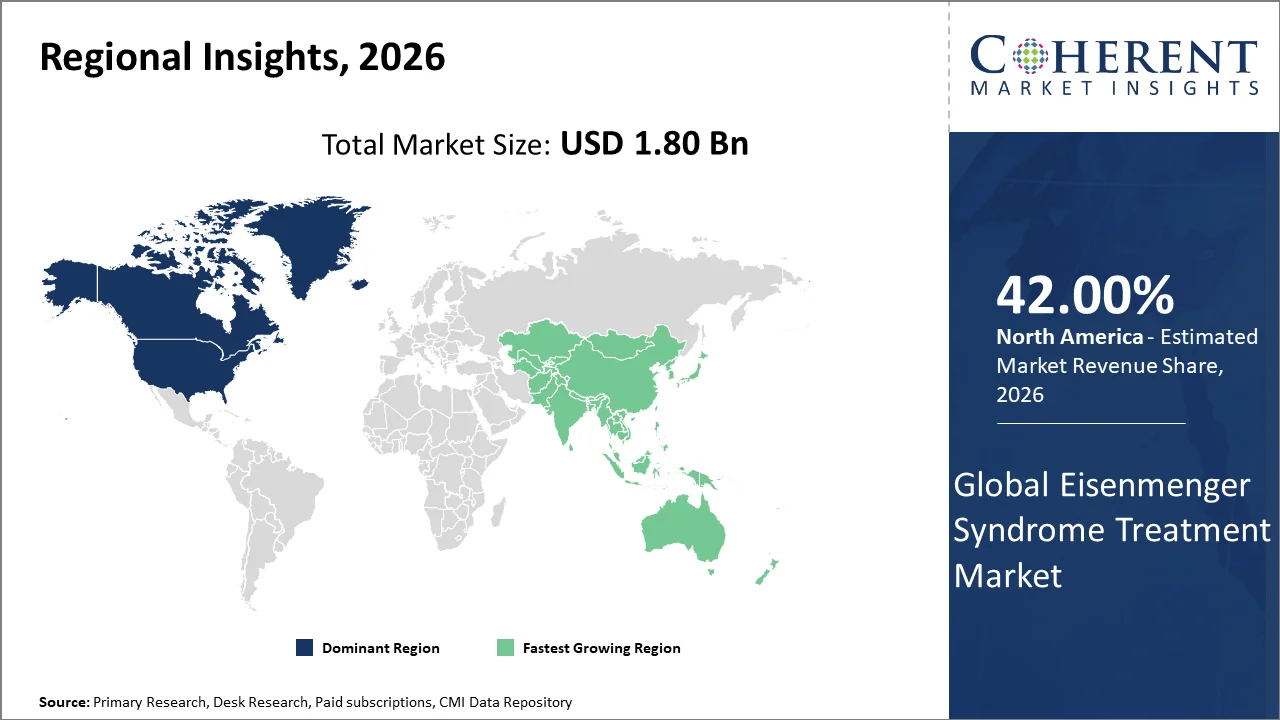
North America Continues to Retain its Market Dominance
North America is expected to dominate the global eisenmenger syndrome treatment market, accounting for a share of 42% in 2026. This is attributed to rising number of patients with congenital heart defects, increasing availability of advanced cardiac care centers, growing adoption of pulmonary arterial hypertension (PAH)-targeted therapies, and improved diagnosis of rare cardiovascular conditions. In the United States, a heart attack occurs approximately every 40 seconds, affecting about 805,000 people annually.
The growing burden of congenital heart defects is a major factor driving demand for Eisenmenger syndrome treatment in North America. According to the U.S. CDC, congenital heart defects affect nearly 1% of births in the United States, with around 40,000 babies born with a heart defect every year. As improved medical care allows more patients with congenital heart conditions to survive into adulthood, the need for long-term monitoring and advanced treatments for complications such as Eisenmenger syndrome is increasing.
Asia Pacific to Become Central Hub for Eisenmenger Syndrome Treatment Providers
Asia Pacific Eisenmenger Syndrome Treatment Market is anticipated to grow at a CAGR of 10.8% during the forecast period. This robust growth is mostly due to rising prevalence of congenital heart diseases, improving access to cardiac diagnostics, expansion of specialized heart care facilities, and increasing adoption of targeted therapies for pulmonary hypertension.
Increasing number of people living with congenital heart defects is creating a strong need for Eisenmenger syndrome treatment across Asia Pacific. According to the World Health Organization (WHO), congenital disorders affect around 6% of births worldwide, with heart defects among the most common severe congenital conditions. Rising survival rates of children with congenital heart defects are expected to increase the adult congenital heart disease population requiring lifelong treatment and follow-up care.
Eisenmenger Syndrome Treatment Market Outlook – Country-wise
U.S. Eisenmenger Syndrome Treatment Market Trends
The United States is expected to remain a leading market for eisenmenger syndrome treatment during the forecast period. This is mainly due to presence of advanced pulmonary hypertension treatment centers, increasing adoption of targeted pulmonary arterial hypertension (PAH) therapies, and strong availability of specialized cardiac care for congenital heart disease patients. In addition, growing clinical research activities, improved diagnosis of rare cardiovascular disorders, and favorable reimbursement coverage for advanced therapies are supporting market expansion in the country.
China Eisenmenger Syndrome Treatment Market Forecast
The eisenmenger syndrome treatment market in China is expected to grow rapidly during the assessment period. This can be attributed to rising awareness of congenital heart diseases, improving access to specialized cardiovascular healthcare services, and increasing government investments in rare disease diagnosis and treatment infrastructure. Furthermore, the growing adoption of PAH-specific therapies, expansion of tertiary hospitals, and increasing collaboration between domestic healthcare providers and global pharmaceutical companies are expected to drive market growth in the country.
Who are the Major Companies in the Eisenmenger Syndrome Treatment Market?
Some of the major players in Eisenmenger Syndrome Treatment Market are Abbott Laboratories, AstraZeneca plc, Eli Lilly and Company, GlaxoSmithKline, Johnson & Johnson Services, Inc., Mylan Pharmaceuticals, Inc., Novartis AG, Pfizer, Inc., and Takeda Pharmaceutical Company Ltd.
Key Strategies Adopted by Industry Players
Leading manufacturers of eisenmenger syndrome treatment drugs are adopting various organic and inorganic strategies to boost their revenue as well as gain a competitive edge in the industry. These include new product launches and approvals, increasing investments in R&D, clinical trials, collaborations, partnerships, mergers and acquisitions, and distribution agreements.
- In February 2026, GlaxoSmithKline plc acquired 35Pharma Inc. to expand its pulmonary hypertension treatment pipeline. The acquisition added HS235, an investigational therapy targeting pulmonary hypertension and related vascular diseases.
- In March 2024, Merck & Co., Inc. received U.S. FDA approval for WINREVAIR (sotatercept-csrk) for treating adults with pulmonary arterial hypertension (PAH). The approval introduced a new therapy option for patients with pulmonary vascular diseases linked to conditions such as Eisenmenger syndrome.
- In August 2024, Merck & Co., Inc. received European Commission approval for WINREVAIR™ in combination with other PAH therapies. The approval expanded access to advanced combination treatment approaches for pulmonary hypertension patients.
Market Report Scope
Eisenmenger Syndrome Treatment Market Report Coverage
| Report Coverage | Details | ||
|---|---|---|---|
| Base Year: | 2025 | Market Size in 2026: | USD 1.80 Bn |
| Historical Data for: | 2020 To 2024 | Forecast Period: | 2026 To 2033 |
| Forecast Period 2026 to 2033 CAGR: | 9.4% | 2033 Value Projection: | USD 3.37 Bn |
| Geographies covered: |
| ||
| Segments covered: |
| ||
| Companies covered: | Actelion Pharmaceuticals Ltd., Gilead Sciences, Inc., Pfizer, Inc., Teva Pharmaceutical Industries Ltd., AstraZeneca plc., Novartis AG, Merck & Co., Inc., GlaxoSmithKline plc., Mylan N.V., and Bayer AG. | ||
| Growth Drivers: |
| ||
| Restraints & Challenges: |
| ||
Analyst Opinion (Expert Opinion)
- The market is driven by the need for lifelong care rather than high patient numbers. Since Eisenmenger syndrome has no cure, most patients require continuous medicines and regular monitoring, creating steady demand for treatment.
- Pulmonary arterial hypertension (PAH) drugs remain the main treatment option. Better access to endothelin receptor antagonists, PDE-5 inhibitors, and prostacyclin therapies is helping improve symptoms and quality of life, supporting market growth.
- Congenital heart disease affects nearly 1 in every 100 live births worldwide, and Eisenmenger syndrome develops in some untreated complex cases. Early diagnosis and timely treatment of congenital heart disease can reduce new Eisenmenger cases while increasing demand for specialized care.
- Growing awareness and updated clinical guidelines are helping more patients receive earlier diagnosis and referral to specialized centers. This is improving treatment access and supporting demand for advanced eisenmenger syndrome therapies.
Speak to the analyst
Want personalized insights?
Take the findings above to one of our principal consultants, or have the report rebuilt around the segments, geographies and competitors you actually track.
Market Segmentation
- By Drug Type Insights ( Revenue, USD Bn, 2021 - 2033)
- Antiarrhythmic Agents
- Blood Thinning Agents
- Endothelin Receptor Antagonist
- Others
- By Distribution Channel Insights ( Revenue, USD Bn, 2021 - 2033)
- Hospital Pharmacies
- Online Pharmacies
- Retail Pharmacies
- By Region Insights ( Revenue, USD Bn, 2021 - 2033)
- North America
- U.S.
- Canada
- Latin America
- Brazil
- Argentina
- Mexico
- Rest of Latin America
- Europe
- Germany
- U.K.
- Spain
- France
- Italy
- Russia
- Rest of Europe
- Asia Pacific
- China
- India
- Japan
- Australia
- South Korea
- ASEAN
- Rest of Asia Pacific
- Middle East
- GCC Countries
- Israel
- Rest of Middle East
- Africa
- South Africa
- North Africa
- Central Africa
- North America
Sources
Primary Research interviews
- Cardiologists
- Pulmonologists
- Pediatric Cardiologists
- Hospital Pharmacy Managers
- Clinical Research Experts
- Healthcare Professionals
Databases
- PubMed
- MEDLINE
- Embase
- ClinicalTrials.gov
- Europe PMC
- Cochrane Library
Magazines
- Cardiology Today
- Pulmonary Hypertension News
- Managed Healthcare Executive
- Pharmaceutical Executive
Journals
- European Heart Journal
- Circulation
- Journal of the American College of Cardiology (JACC)
- Chest
- American Journal of Respiratory and Critical Care Medicine
- BMJ Heart
Newspapers
- The New York Times
- The Wall Street Journal
- Financial Times
- The Guardian
Associations
- World Health Organization (WHO)
- American Heart Association (AHA)
- European Society of Cardiology (ESC)
- Pulmonary Hypertension Association (PHA)
- American College of Cardiology (ACC)
- National Organization for Rare Disorders (NORD)
- European Reference Network for Rare and Low Prevalence Complex Diseases of the Heart (ERN GUARD-Heart)
Public Domain sources
- World Health Organization (WHO)
- U.S. Food and Drug Administration (FDA)
- European Medicines Agency (EMA)
- U.S. National Institutes of Health (NIH)
- National Center for Biotechnology Information (NCBI)
- Centers for Disease Control and Prevention (CDC)
- ClinicalTrials.gov
- Eurostat
Proprietary Elements
- CMI Data Analytics Tool
- Proprietary CMI Existing Repository of information for last 10 years
Get access to 250+ pages report
Every segment, forecast, competitor profile and data table behind the analysis above — available for instant download.
- ESOMAR Member
- ISO 9001:2015 Certified
- D-U-N-S Registered
- GDPR & CCPA Compliant
Missing comfort of reading report in your local language? Find your preferred language:
Transform your Strategy with Exclusive Trending Reports
Frequently Asked Questions
The global market is estimated to be valued at USD 1.80 Bn in 2026.
The global Eisenmenger Syndrome Treatment Market value is expected to reach USD 3.37 Bn by 2033.
The global market is poised to exhibit a CAGR of 9.4% from 2026 to 2033.
Major growth factors include increasing prevalence of congenital heart diseases, rising awareness and early diagnosis of Eisenmenger syndrome, growing adoption of pulmonary arterial hypertension (PAH)-targeted therapies, advancements in combination treatment approaches, and improvements in specialized cardiac care infrastructure.
Endothelin Receptor Antagonists are set to lead the market with a share of 41% in 2026
Some major companies in the Eisenmenger Syndrome Treatment Market include Actelion Pharmaceuticals Ltd., Gilead Sciences, Inc., Pfizer, Inc., Teva Pharmaceutical Industries Ltd., AstraZeneca plc., Novartis AG, Merck & Co., Inc., GlaxoSmithKline plc., Mylan N.V., and Bayer AG.
North America is expected to lead the market during the forecast period, capturing a share of 42% in 2026.