

Rare Disease Drugs Market Size and Share Analysis- Growth Trends and Forecasts (2026-2033)
The Rare Disease Drugs Market size is anticipated to grow at a CAGR of 10.6% with USD 256.7 Bn in 2026 and is expected to reach USD 520.3 Bn in 2033. The growth of the market is being driven by rising prevalence of genetic, metabolic, and rare hematologic disorders, alongside expanding hospital admissions for specialized therapies and increasing use of orphan drugs. Advanced approaches like gene-targeted therapies, enzyme replacement therapies, precision biologics, and IV-administered small molecules are improving patient outcomes, treatment adherence, as well as safety. The rare diseases affect more than 300 million people worldwide, thereby highlighting the critical demand for innovative, safe, and hospital-delivered therapeutics.
Key Takeaways
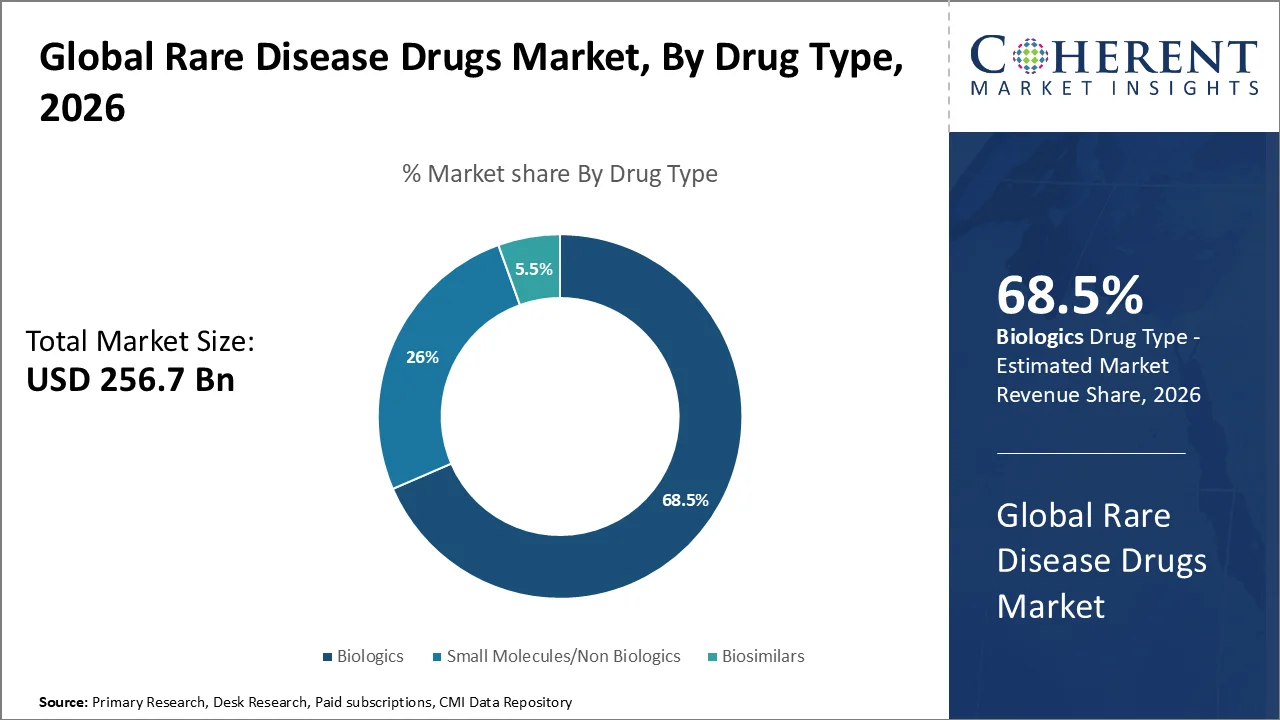
- Biologics segment is expected to account for the largest share of 68.5% in 2026. The segment’s growth is owing to its extensive use in treating complex rare diseases, precision-targeted therapies, and gene or enzyme replacement interventions. According to the U.S. National Center for Advancing Translational Sciences, over half of the FDA-approved orphan drugs are biologics, thereby highlighting their prominent role in the rare disease treatment.
- The rare cancers segment is expected to hold 35.2% market share by 2026. The growth is attributable to the rising diagnosis rates, increasing specialized oncology centers, and the continuous demand for hospital-based therapies including intravenous infusions, immunotherapies, and targeted small-molecule combinations. In 2022, there were an estimated 20 million new cancer cases and 9.7 million deaths. The estimated number of people who were alive within 5 years following a cancer diagnosis was 53.5 million, aligning with the segment’s expanding treatment demand.
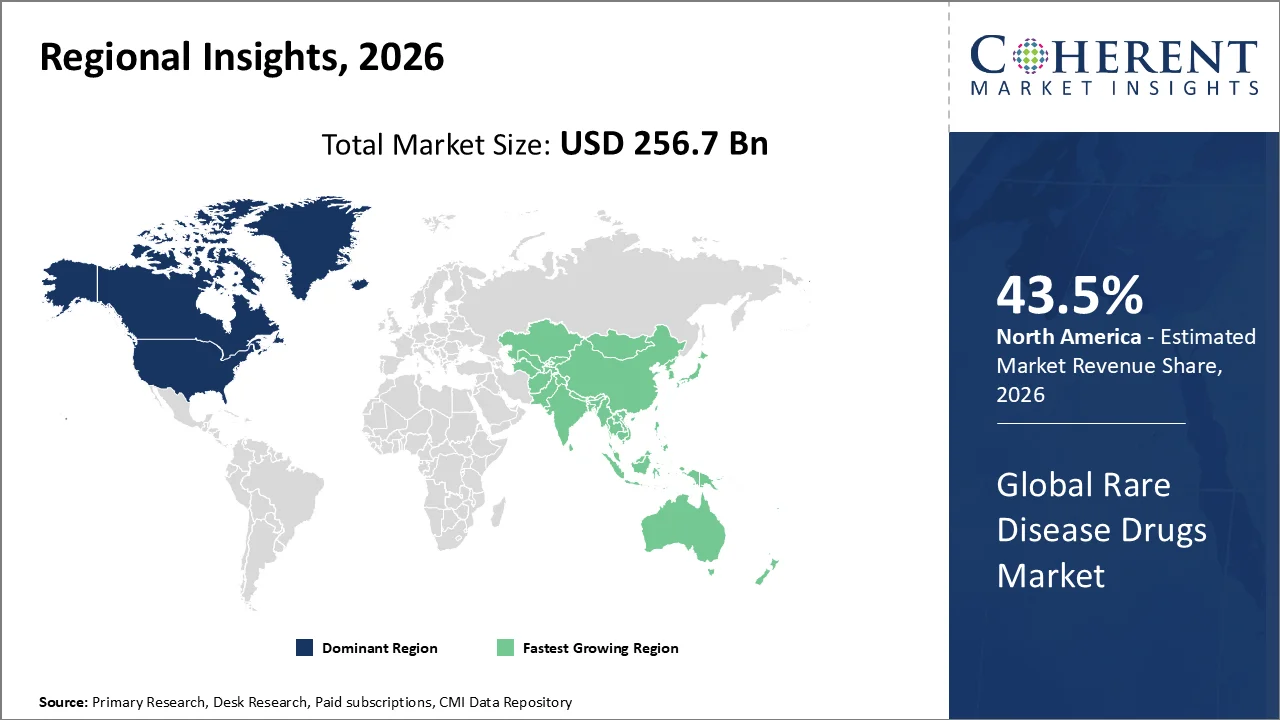
- North America is expected to acquire the dominant share of 43.5% in 2026. The region’s growth is owing to the advanced healthcare infrastructure, established orphan drug incentives, high adoption of specialized biologics, and robust patient registries for rare disease management. Estimates suggest that about 9% of the Canadian population (3 million people) are affected by a rare disease.
Rising Hospitalization and Chronic Care Needs is Transforming the Rare Disease Drugs Industry in the US
In the United States, rare diseases collectively affect more than 30 million people, with about half of that population being children. This underscores a substantial chronic care and hospitalization burden that drives demand for specialized therapies.
According to FDA’s Office of Orphan Products Development, incentives under the Orphan Drug Act have led to over 550 unique drug and biologic approvals for rare disease indications since the law’s enactment, highlighting regulatory momentum in advancing treatments.
To address these unmet needs, the U.S. FDA continues to prioritize rare disease drug development through incentives like orphan drug designation and by advancing regulatory science.
In March 2026, the U.S. Food and Drug Administration approved Avlayah (tividenofusp alfa-eknm) to treat neurologic manifestations of Hunter syndrome in children. The weekly IV infusion reduces cerebrospinal heparan sulfate and offers the first targeted therapy for this rare disorder, with breakthrough, orphan, as well as accelerated designations.
Precision Gene and Genetic Therapies: A Key Advancement in Rare Disease Drugs
Precision gene and genetic therapies are transforming the Rare Disease Drugs Market. This is driven by strong regulatory support and clinical breakthroughs. In 2026, the U.S. FDA approved more than four novel rare disease therapies like first-in-class treatments for Hunter syndrome, cerebral folate transport deficiency, and Menkes disease, thereby expanding options for ultra-rare conditions.
In April 2026, the U.S. Food and Drug Administration approved Otarmeni (lunsotogene parvec-cwha), the first dual AAV vector-based gene therapy, for severe-to-profound OTOF gene-associated hearing loss. The one-time biologic-device treatment restores otoferlin, improving auditory signaling, with orphan, RMAT, and accelerated designations.
On the regulatory front, the FDA in June 2026 proposed guidance to speed gene and cell therapy development by allowing reliance on existing scientific knowledge, thereby potentially shortening approval timelines for future rare disease therapies.
- Current Industry Events of 2026
- Market Size Estimation
- Regional Breakdown
- Competitive Landscape
- Customer Intelligence
- Segmental Analysis
- Pricing Analysis
- Key Market Drivers, Challenges & Future Trends
- Customized Insights Section
Current Events and Their Impact on the Rare Disease Drugs Market
Current Event | Description and its Impact |
FDA Draft Framework for Accelerating Individualized Therapies (2026) |
|
EU Revision of Pharmaceutical Legislation Including Rare Disease Medicines (2026)
|
|
Segmental Insights
Why the Biologics Segment Is Acquiring the Highest Share in the Rare Disease Drugs Market
By drug type, biologics segment is projected to account for the largest Rare Disease Drugs Market share of 68.5% in 2026. The segment’s growth is owing to the superior efficacy of biologics in targeting specific genetic and molecular mechanisms underlying rare diseases, as well as favorable regulatory incentives such as orphan drug and RMAT designations.
In 2024, the U.S. FDA approved 50 novel drugs which included 16 biologics thereby reflecting the growing emphasis on biologic therapies for rare conditions. The prescription trends indicate increasing uptake of gene and cell therapies, particularly in pediatric populations with limited treatment options.
In March 2026, the U.S. Food and Drug Administration approved the Kresladi (marnetegragene autotemcel), the first gene therapy for severe Leukocyte Adhesion Deficiency Type I in pediatric patients without HLA-matched donors. This autologous stem cell-based biologic therapy restores immune function and carries orphan, RMAT, rare pediatric disease, and fast track designations,
Rare Cancers holds the Largest Market Share
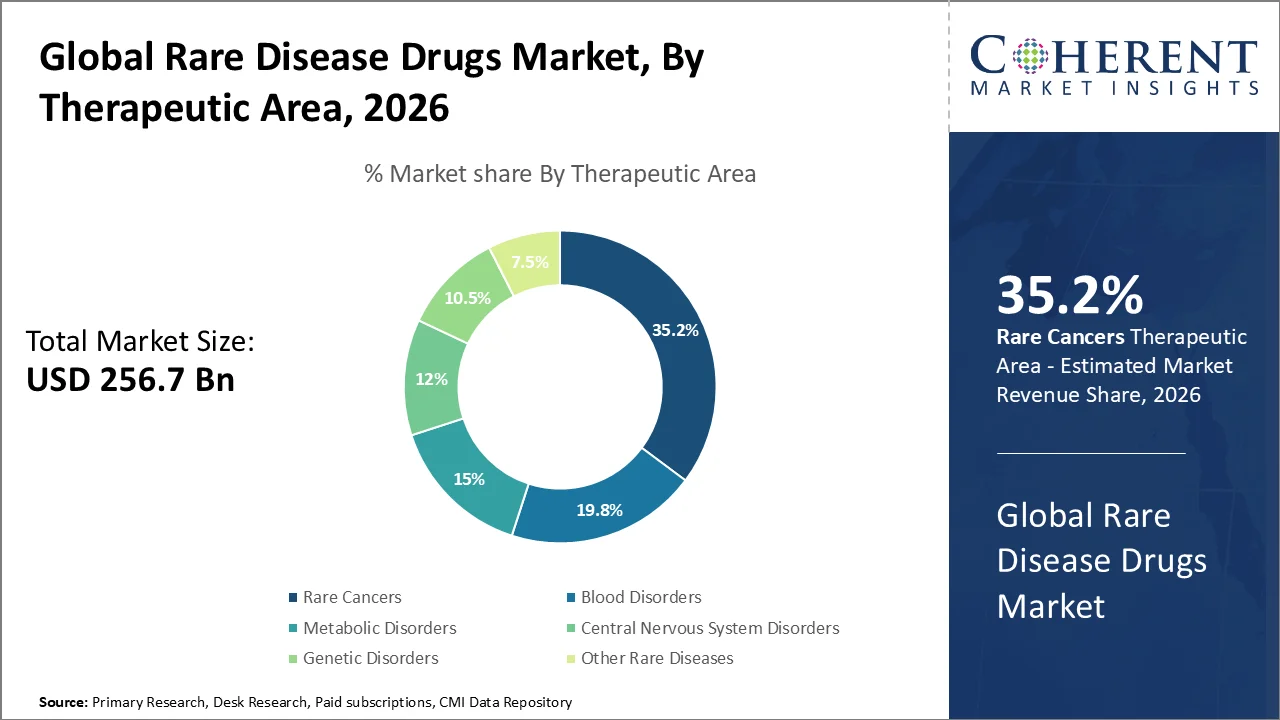
Based on therapeutic area, the rare cancers segment is poised to dominate the market and accounts for a considerable 35.2% share in 2026. The segment’s growth is owing to the rising global incidence of uncommon malignancies and targeted regulatory incentives.
According to the National Cancer Institute (NCI), rare cancers collectively represent over 27% of all diagnosed cancer cases and contribute to 25% of annual cancer-related deaths, underscoring the significant unmet medical need.
In May 2026, the U.S. Food and Drug Administration approved AbbVie’s Decnupaz (pivekimab sunirine‑pvzy) to treat blastic plasmacytoid dendritic cell neoplasm (BPDCN), a rare, aggressive blood cancer. It targets CD123 on cancer cells and showed remission in previously untreated and relapsed patients.
Rare Disease Drugs Market Trends
- Growing clinical demand is driving the market for rare disease drugs. Increasing prevalence of rare genetic, metabolic, and orphan conditions is boosting the adoption of targeted biologics, enzyme replacement therapies, and gene therapies across hospitals, specialty clinics, and infusion centers. The National Organization for Rare Disorders (NORD) notes that nearly 1 in 10 Americans are affected by a rare disease, thereby underlining continuous treatment needs.
- The expansion of home infusion and specialty pharmacy services is strengthening the patient access. Medicare and private insurers are expanding the coverage for at-home administration of IV biologics and gene therapies, thereby minimizing hospital visits and supporting the adherence to the long-term therapy regimens.
- Advancements in genomics, companion diagnostics, and precision medicine are strengthening the adoption of personalized therapies. Targeted biologics as well as enzyme replacement therapies enable patient-specific dosing, thereby improving outcomes and propelling R&D investment in orphan drugs for previously unmet needs.
- The growth in patient registries and digital health integration is enabling safer therapy management. EHR-linked registry platforms and FHIR APIs allow tracking of adherence, therapy outcomes, and adverse events. In the U.S., the ONC reports that 90% of non-federal acute care hospitals used APIs for patient access in 2022, thereby facilitating advanced rare disease management.
- Heightened regulatory focus on safety, efficacy, and real-world evidence is encouraging innovation. The FDA-backed rare disease registries and structured RWE collection support the development of advanced formulations, improved delivery devices, as well as patient-specific dosing strategies, thereby aligning with stricter standards for orphan drug approvals.
Regional Insights
North America Rare Disease Drugs Market Leadership Driven by Strong Regulatory Support and Faster Orphan Drug Approvals
North America is set to account for the leading position in the Rare Disease Drugs Market. The region occupies a substantial 43.5% share in 2026. The growth is mainly driven by the strong FDA orphan drug support, faster review pathways, advanced clinical trial infrastructure, high healthcare spending, and the presence of leading rare disease drug developers.
In September 2025, the FDA introduced the Rare Disease Evidence Principles (RDEP) to provide clearer evidence pathways for drugs targeting very small rare disease populations. This improves predictability for sponsors and supports for faster development decisions.
In March 2026, the U.S. Food and Drug Administration approved Wellcovorin (leucovorin calcium) tablets for the treatment of cerebral folate transport deficiency (CFD-FOLR1) in adults and pediatric patients. The biologic therapy provides the first treatment option for this rare genetic condition, thereby addressing severe neurological complications.
Asia Pacific Rare Disease Drugs Market Trends
The Asia Pacific region is poised to be as the fastest-growing region through 2026-2033. The region’s growth is owing to the rising healthcare investments and expanding access to diagnostics and treatment facilities.
Statistically, over 258 million individuals in the Asia Pacific region are estimated to live with rare diseases, highlighting substantial treatment demand, particularly in densely populated countries.
The National Policy for Rare Diseases (March 2023) in India supports diagnosis and treatment through 13 designated Centres of Excellence, offering subsidies of up to ₹50 lakh per patient. For FY 2025
In February 2026, Sarepta Therapeutics, a leader in precision genetic medicine for rare diseases, launched the biologic gene therapy ELEVIDYS (delandistrogene moxeparvovec) commercially in Japan. The therapy is indicated for children aged 3 to under 8 with Duchenne muscular dystrophy carrying deletions in exon 8 and/or 9 of the DMD gene, following NHI reimbursement approval.
Supportive Regulatory Frameworks and Increased Drug Approvals Accelerates Rare Disease Drugs Adoption in United States
The United States Rare Disease Drugs Market has seen robust growth. The growth is owing to the supportive regulatory frameworks, increased orphan drug approvals, and rising investment in innovative therapies. According to the FDA, the rare diseases affect fewer than 200,000 individuals in the U.S., thereby creating high unmet medical needs.
In April 2026, Ascendis Pharma received orphan drug exclusivity from the U.S. FDA for YUVIWEL (navepegritide) and launched it commercially in the United States. This biologic therapy is the first once-weekly treatment to increase linear growth in children aged 2 years and older with achondroplasia and open epiphyses.
China Rare Disease Drugs Market Trends
China’s Rare Disease Drugs Market is rapidly evolving with stronger regulatory prioritization, faster access pathways, and wider reimbursement support for therapies targeting small patient populations.
Official research tracking FDA orphan-drug approvals found that 201 rare disease drugs, representing 29.0% of globally approved orphan drugs, had also been approved by China’s NMPA, indicating improving domestic availability.
In December 2025, Sanofi received approval from China’s NMPA for two rare disease therapies. It includes Qfitlia (fitusiran) for hemophilia and Cablivi (caplacizumab) for acquired thrombotic thrombocytopenic purpura. These approvals expand the access to innovative treatments for rare hematologic disorders in China.
Who are the Major Companies in Rare Disease Drugs Industry
Some of the major key players in Rare Disease Drugs industry are Novartis AG, Hoffmann-La Roche Ltd., Celgene Corporation, Bristol-Myers Squibb Company, Shire plc, Pfizer, Inc., Sanofi S.A., Bayer, Alexion Pharmaceuticals, Inc., and Biogen, Inc.
Key News
- In January 2026, Mendra, a newly launched biopharmaceutical company, entered the rare disease sector with an AI-driven strategy focusing on asset acquisition, development efficiency, and clinical-commercial integration. The company secured USD 82 million in Series A financing to build a portfolio of therapies for rare diseases with high unmet needs.
- In January 2026, Sentynl Therapeutics, part of the Zydus Group, received FDA approval for ZYCUBO (copper histidinate). This biologic therapy is the first and only treatment for pediatric patients with Menkes disease, a rare and fatal genetic disorder in the United States.
Market Report Scope
Rare Disease Drugs Market Report Coverage
| Report Coverage | Details | ||
|---|---|---|---|
| Base Year: | 2025 | Market Size in 2026: | USD 256.7 Bn |
| Historical Data for: | 2020 To 2024 | Forecast Period: | 2026 To 2033 |
| Forecast Period 2026 to 2033 CAGR: | 10.6% | 2033 Value Projection: | USD 520.3 Bn |
| Geographies covered: |
| ||
| Segments covered: |
| ||
| Companies covered: | Novartis AG, Hoffmann-La Roche Ltd., Celgene Corporation, Bristol-Myers Squibb Company, Shire plc, Pfizer, Inc., Sanofi S.A., Bayer, Alexion Pharmaceuticals, Inc., and Biogen, Inc. | ||
| Growth Drivers: |
| ||
| Restraints & Challenges: |
| ||
Analyst Opinion
- Rare Disease Drugs are driven by growing clinical need. Globally, more than 300 to 400 million people live with one of 10,000+ rare diseases, highlighting a persistent demand for specialized therapeutics. This means the market growth is driven by unmet medical needs rather than short-term trends.
- Hospital and specialty care usage is one of the major drivers. The rare disease patients often require complex therapies like biologics, enzyme replacement therapies, and gene therapies. The NIH/NCATS data indicate that healthcare costs for rare disease patients are around three to five times higher than for people without rare diseases, thereby reflecting higher treatment intensity, specialist visits, hospital care, and long-term disease management needs.
- Advanced therapies are gaining adoption as regulatory support for orphan drugs continues to strengthen. In 2024, the FDA’s CDER approved 50 novel drugs like 26 therapies with orphan drug designation for rare diseases thereby showing that more than half of novel approvals were aligned with rare disease treatment needs. This supports the wider adoption of targeted biologics, gene therapies, as well as specialized orphan drugs.
Speak to the analyst
Want personalized insights?
Take the findings above to one of our principal consultants, or have the report rebuilt around the segments, geographies and competitors you actually track.
Market Segmentation
- By Drug Type (Revenue, USD Bn, 2021-2033)
- Biologics
- Small Molecules/Non-Biologics
- Biosimilars
- By Therapeutic Area (Revenue, USD Bn, 2021-2033)
- Rare Cancers
- Blood Disorders
- Metabolic Disorders
- Central Nervous System Disorders
- Genetic Disorders
- Other Rare Diseases
- By Region (Revenue, USD Bn, 2021-2033)
- North America
- U.S.
- Canada
- Latin America
- Brazil
- Mexico
- Argentina
- Rest of Latin America
- Europe
- Germany
- U.K.
- France
- Italy
- Spain
- Russia
- Rest of Europe
- Asia Pacific
- China
- India
- Japan
- Australia
- South Korea
- ASEAN
- Rest of Asia Pacific
- Middle East
- GCC
- Israel
- Rest of Middle East
- Africa
- South Africa
- Central Africa
- North Africa
- North America
Sources
Primary Research Interviews
- Rare Disease Drug Manufacturers
- Orphan Drug Developers
- Biotechnology and Pharmaceutical Companies
- Clinical Research Organizations
- Genetic Testing and Diagnostic Companies
- Hospital Specialists and Key Opinion Leaders
- Rare Disease Patient Advocacy Groups
- Specialty Pharmacy Providers
- Healthcare Payers and Reimbursement Experts
- Others
Databases
- IQVIA MIDAS
- Evaluate Pharma
- Bloomberg Terminal
- Thomson Reuters Eikon
- ClinicalTrials.gov
- Orphanet Database
- Others
Magazines
- Pharmaceutical Executive
- Fierce Pharma
- BioPharma Dive
- Pharmaceutical Technology
- PharmaTimes
- Genetic Engineering & Biotechnology News
- Others
Journals
- Orphanet Journal of Rare Diseases
- Nature Reviews Drug Discovery
- Genetics in Medicine
- Molecular Genetics and Metabolism
- The Lancet
- Human Gene Therapy
- Journal of Rare Diseases Research & Treatment
- Others
Newspapers
- Financial Times
- The Wall Street Journal
- Reuters
- Bloomberg News
- The New York Times
- Others
Associations
- National Organization for Rare Disorders
- EURORDIS Rare Diseases Europe
- International Rare Diseases Research Consortium
- Global Genes
- EveryLife Foundation for Rare Diseases
- Rare Disease Company Coalition
- Others
Public Domain Sources
- U.S. Food and Drug Administration, Office of Orphan Products Development
- European Medicines Agency, Committee for Orphan Medicinal Products
- National Institutes of Health, Genetic and Rare Diseases Information Center
- National Center for Advancing Translational Sciences
- ClinicalTrials.gov
- Orphanet
- World Health Organization
- European Clinical Trials Register
- PubMed
- Others
Proprietary Elements
- CMI Data Analytics Tool
- Proprietary CMI Existing Repository of Information for the Last 10 Years
Get access to 250+ pages report
Every segment, forecast, competitor profile and data table behind the analysis above — available for instant download.
- ESOMAR Member
- ISO 9001:2015 Certified
- D-U-N-S Registered
- GDPR & CCPA Compliant
Missing comfort of reading report in your local language? Find your preferred language:
Transform your Strategy with Exclusive Trending Reports
Frequently Asked Questions
The Rare Disease Drugs Market is expected to reach USD 256.7 Bn USD 520.3 Bn in 2033.
Major players operating in the global Rare Disease Drugs Market include Novartis AG, Hoffmann-La Roche Ltd., Celgene Corporation, Bristol-Myers Squibb Company, Shire plc, Pfizer, Inc., Sanofi S.A., Bayer, Alexion Pharmaceuticals, Inc., and Biogen, Inc.
The extremely limited target patient populations, profound diagnostic delays, exorbitant Research and Development (R&D) costs, and complex global reimbursement or pricing negotiations are the key factors hampering growth of the market.
The targeted regulatory incentives, breakthroughs in precision biology, and favorable commercial economics is boosting demand for Rare Disease Drugs.
The Rare Disease Drugs Market is anticipated to grow at a CAGR of 10.6% between 2026 and 2033.
Among regions, North America is expected to account for a largest market share in the global Rare Disease Drugs Market over the forecast period.
The gene therapies and biologics can range from USD 200,000 to over USD 1 million per patient annually, reflecting the high R&D and manufacturing complexity.