

Premature Ejaculation Treatment Market Size and Share Analysis: (2026 - 2033)
The Premature Ejaculation Treatment Market is anticipated to grow at a CAGR of 8.9% with USD 3.2 Bn in 2026 and is expected to reach USD 5.7 Bn in 2033. The clinical landscape of premature ejaculation (PE) continues to evolve with updated expert guidance and research. For instance, in March 2026, Progrès en Urologie published current international recommendations emphasizing patient assessment, psychological impact, and first‑line use of lidocaine/prilocaine topical sprays or on‑demand dapoxetine, combined with sex therapy as best practice. Additionally, in March 2026, at the European Association of Urology Annual Congress, research presented on a smartphone app intervention highlighted digital behavioural therapy as an emerging supportive treatment for PE management. Such developments reflect integration of evidence‑based pharmacologic and digital therapeutic advances accepted by clinical authorities.
Source: Science Direct; EAU
Key Takeaways:
- Selective Serotonin Reuptake Inhibitors (SSRIs) is expected to account the largest share of 42.0% in 2026, because they effectively delay ejaculation by increasing synaptic serotonin levels, improving ejaculatory control, satisfaction, and patient‑reported outcomes compared to placebo, as supported by clinical evidence. A bibliometric analysis published in Journal of Pharmacology and Pharmacotherapeutics (online first July 21, 2025, issue June 2026) highlights extensive research focus on SSRIs in PE management, reinforcing their central role in treatment protocols.
- Oral will dominate with 60.0% in 2026, because clinical trials consistently show that oral Selective Serotonin Reuptake Inhibitors (SSRIs) significantly prolong intravaginal ejaculatory latency time (IELT) and improve patient‑reported control over ejaculation, making systemic treatment widely adopted. For instance, in December 2025, a randomized clinical trial published in BMC Urology found on‑demand and daily oral Selective Serotonin Reuptake Inhibitors (SSRIs) regimens (e.g., dapoxetine) markedly improved IELT compared with alternatives.
- Hospitals hold the dominant share of 40.0% in 2026 because they provide specialist diagnosis, multidisciplinary care, and access to evidence‑based treatments, integrating sexual health services within broader clinical settings. For instance, in February 11, 2026, the World Health Organization’s consolidated operational handbook on sexually transmitted infections emphasizes the role of clinical service delivery platforms including hospital and primary‑care clinics in effective sexual health management, ensuring accurate diagnosis and supervised treatment.
- North America is expected to acquire the dominant share of 37.5% in 2026, because its robust clinical infrastructure, widespread sexual health screening, and strong pharmaceutical regulatory environment support diagnosis and treatment of sexual dysfunctions, including premature ejaculation. For instance, in April 2026, the U.S. CDC’s FY 2026 Congressional Justification reports >26 million sexually transmitted infections annually in the U.S., highlighting high sexual health service utilization and clinician engagement that also drives PE treatment uptake and care pathways.
Segmental Insights
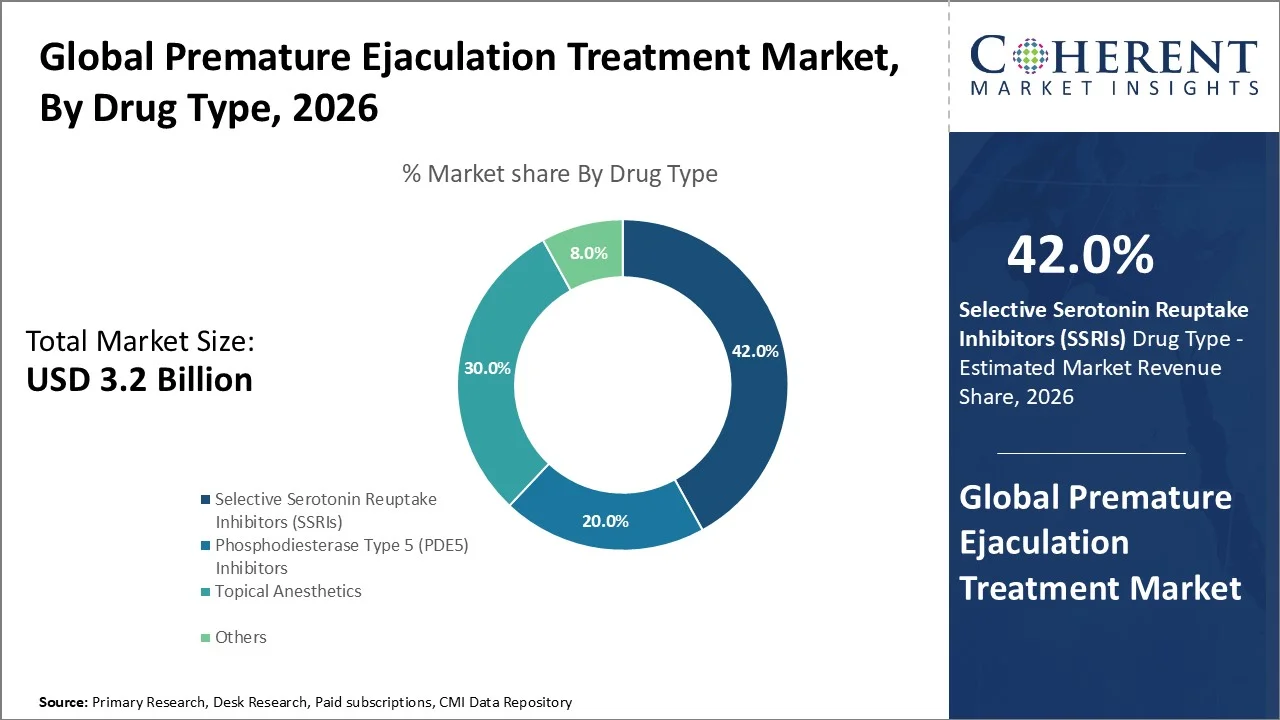
Why is Selective Serotonin Reuptake Inhibitors (SSRIs) Acquiring the Largest Market Share?
Selective Serotonin Reuptake Inhibitors (SSRIs) is projected to account for the largest share of cognitive systems spending in 2026, representing approximately 42.0% of the total volume. Selective Serotonin Reuptake Inhibitors dominate because they have the strongest clinical evidence for efficacy in delaying ejaculation and improving ejaculatory control, which drives physician preference and prescription rates. A bibliometric analysis published in Journal of Pharmacology and Pharmacotherapeutics (online first July 21, 2025; issue June 2026) highlights sustained research and scholarly focus on SSRIs in PE management, reflecting their central role in treatment protocols. Furthermore, a randomized clinical trial published December 1, 2025 demonstrated significant improvements in intravaginal ejaculatory latency time (IELT) with SSRI regimens like dapoxetine compared to other treatments, supporting their clinical utility. This robust and evolving research base reinforces SSRIs as the preferred pharmacological option in clinical practice and market utilization.
- Current Industry Events of 2026
- Market Size Estimation
- Regional Breakdown
- Competitive Landscape
- Customer Intelligence
- Segmental Analysis
- Pricing Analysis
- Key Market Drivers, Challenges & Future Trends
- Customized Insights Section
Oral holds the Largest Market Share
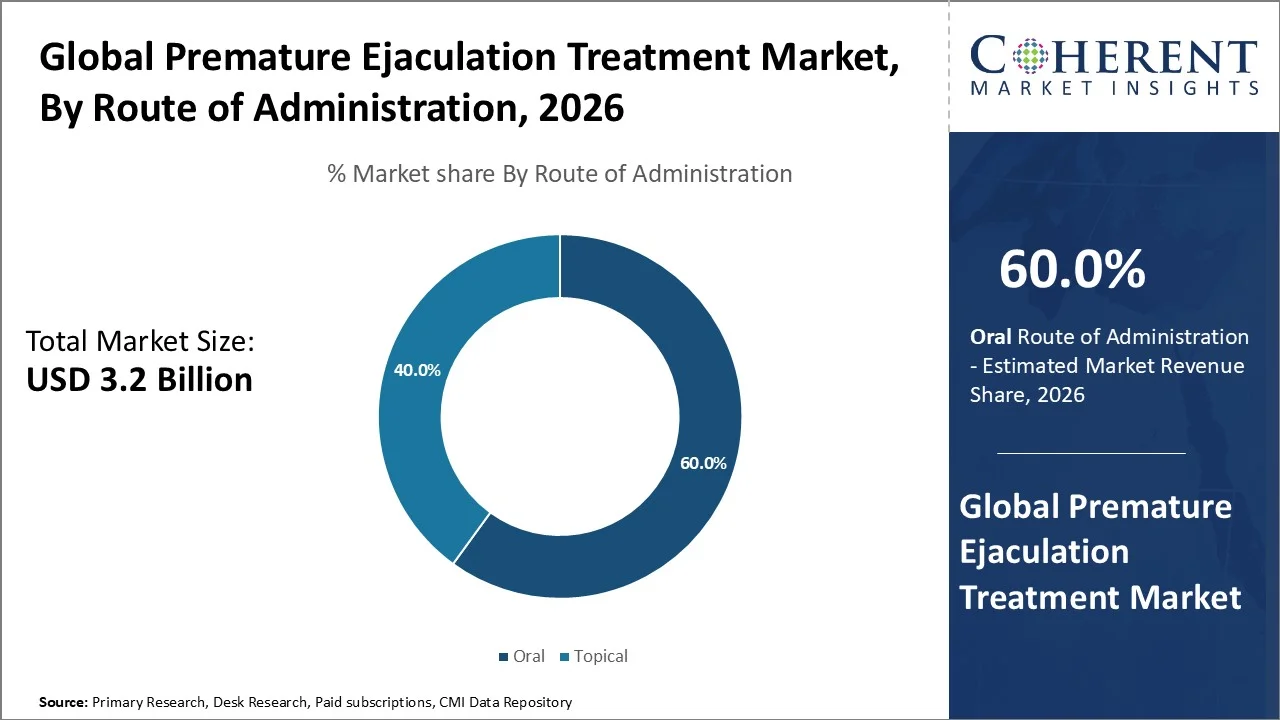
Based on route of administration, oral dominate the market, accounting for a significant 60.0% share in 2026. The oral route dominates the premature ejaculation treatment market because oral pharmacological agents especially SSRIs like dapoxetine are the most clinically studied and widely accepted interventions for PE, offering systemic modulation of ejaculatory control. Dapoxetine, the first **oral “on‑demand” SSRI originally approved for PE, is rapidly absorbed and taken ~1–3 hours before activity, significantly prolonging intravaginal ejaculatory latency time (IELT) versus placebo in large randomized controlled trials involving ~4,800 men (improved stopwatch‑measured IELT in phase III studies reported in multicentre publications). Oral SSRIs like paroxetine, sertraline and citalopram have also shown significant IELT increases compared with placebo, demonstrating broad evidence for oral systemic treatments over behavioral or topical routes. These oral options are preferred due to ease of administration, well‑documented efficacy and physician prescribing patterns.
Additionally, oral medications such as selective serotonin reuptake inhibitors (SSRIs) including dapoxetine (commonly used on demand) and off‑label SSRIs like paroxetine or sertraline are widely prescribed because they can be taken without needing specialized application techniques, fit easily into daily or pre‑sex routines, and have established safety profiles from multiple clinical studies. Although dapoxetine is not yet approved by the US FDA as of May 19, 2023 (per Medscape) and in the US many drugs are used off‑label for PE, it remains a preferred choice where approved due to rapid absorption and ease of dosing.
Which Distribution Channel segment dominates the market?
Hospitals account for the largest share of 40.0% in 2026 because it provides comprehensive, clinician‑led assessment and management of premature ejaculation (PE), integrating urology, sexual medicine, and behavioral therapy with access to advanced diagnostics and prescription pharmaceuticals. Hospitals also facilitate multidisciplinary care pathways, ensuring accurate diagnosis, patient education, and monitored use of both oral SSRIs and topical treatments. In February 2026, the World Health Organization’s consolidated operational handbook on sexually transmitted infections and associated sexual dysfunctions emphasized the central role of hospital and clinical service delivery platforms in effective sexual health care and treatment continuity. (who.int, published 11 February 2026) This structured clinical environment increases patient trust and drives higher PE treatment uptake through hospital pharmacies and specialist referral networks.
A World Health Organization consolidated operational handbook on sexually transmitted infections published 11 February 2026 underscores the importance of integrating sexual health and related dysfunction services, including diagnosis and treatment, within hospital and clinical platforms to ensure high‑quality care. Additionally, the U.S. CDC FY 2026 Congressional Justification published 3 April 2026 highlights substantial federal investment in sexual health services infrastructure, supporting robust clinical service networks where hospitals often lead in delivering care and therapeutic interventions for sexual health conditions.
Market Drivers
Increasing Awareness of Sexual Health
Rising awareness of sexual health has driven the premature ejaculation treatment market growth over the forecast period. Increasing awareness of sexual health including conditions like premature ejaculation (PE), one of the most common male sexual dysfunctions affecting up to ~38% of men according to clinical practice guidelines updated in 2025 reduces stigma and encourages men to seek professional help, boosting demand for diagnosis and treatment options. Enhanced public knowledge, promoted through campaigns such as Sexual Health Awareness initiatives and broader sexual health education, helps normalize conversations around sexual well‑being and encourages earlier intervention, thereby driving growth in the premature ejaculation treatment market.
For instance, in August 2025, The Birds and Bees Talk – a large sexual health literacy campaign by Durex reached over 4 million young people and 2,000+ schools in India, improving STI awareness by ~20 % among participants through school‑based education and dialogue. Additionally, in 2026, UNESCO reported its flagship programme Our rights, Our lives, Our future reached tens of millions of learners and expanded digital and school‑based sexuality education, with ~85 % of countries having supportive sexuality education policies (not quality across all elements).
Growing Prevalence of Premature Ejaculation
Rising prevalence of premature ejaculation has driven the global premature ejaculation treatment market growth over the forecast period. The high and variable prevalence of premature ejaculation (PE) significantly fuels demand for treatments. A systematic review published on 06 August 2025 in The Journal of Sexual Medicine analysing 79 studies from 33 countries reported mean overall PE prevalence at ~14.2 % (with certain subtypes showing up to ~43.9 %) among adult men, reflecting common sexual dysfunction cases worldwide. Additionally, studies indicate lifetime complaint‑based prevalence above 20 % across adult populations (Frontiers in Psychiatry, published 05 January 2026), underscoring widespread occurrence and psychological impact of PE. Such high prevalence increases diagnosis rates and treatment seeking, thereby expanding the market for clinical and pharmacological interventions for premature ejaculation.
Innovation in Drug Formulations and Advanced Delivery Technologies is Transforming the Premature Ejaculation Treatment Market
Innovation in drug formulations and delivery technologies is expanding treatment options and improving patient adherence in the premature ejaculation (PE) treatment market. Newly developed rapid‑onset oral SSRIs and site‑specific topical agents enhance intravaginal ejaculatory latency time with fewer side effects, encouraging clinician adoption and patient uptake. A peer‑reviewed study published in BMC Urology (December 2025) showed that optimized oral SRIs and advanced topical sprays significantly improved outcomes versus traditional therapies, supporting broader clinical use. Additionally, USFDA guidance updated March 2026 emphasizes streamlined pathways for evaluating novel sexual health therapeutics, boosting R&D investment. Hospitals remain the dominant distribution channel because they integrate specialist diagnosis, multidisciplinary sexual health services, and monitored treatment regimens critical for complex cases and combination therapies. For instance, in February 2026, the World Health Organization’s operational handbook highlights clinical service platforms, including hospital and sexual health clinics, as central to effective management of sexual dysfunctions, reinforcing hospital leadership in therapy distribution.
Current Events and Their Impact on the Premature Ejaculation Treatment Market
Current Event | Description and its Impact |
USFDA Modernizing Regulatory Framework for Sexual Health Therapies |
|
CDC Expands Sexual Health Funding to Include Dysfunction Screening (FY 2026) |
|
European Medicines Agency (EMA) Promotes Adaptive Clinical Trials for Sexual Health Drugs |
|
Premature Ejaculation Treatment Market Trends
Adoption of Digital Therapeutics and Telehealth for Sexual Dysfunction
Digital health platforms and telemedicine services are increasingly used for the remote management of premature ejaculation (PE). In March 2026, research presented at the European Association of Urology Annual Congress showed that smartphone app‑based behavioral therapy significantly improved ejaculatory control outcomes, highlighting the trend toward technology‑enabled treatment and patient engagement outside traditional clinic settings.
Source: European Association of Urology (EAU26); European Medicine Journal
Enhanced Drug Formulations and Delivery Systems
Pharmaceutical innovation is focusing on rapid‑onset oral SSRIs and site‑specific topical sprays to improve efficacy and reduce side effects. A randomized clinical trial published December 2025 in BMC Urology demonstrated that optimized oral formulations (e.g., dapoxetine regimens) significantly increased intravaginal ejaculatory latency time compared with older therapies, representing a key formulation advancement in the PE treatment landscape.
Regulatory Support for Innovative Sexual Health Therapeutics
In March 2026, the U.S. Food and Drug Administration (USFDA) issued updated guidance easing evaluation pathways for novel sexual health drugs, including PE therapies, by clarifying requirements for advanced formulations and adaptive trials. This regulatory shift encourages industry innovation and reduces time to market for next‑generation treatments.
Integration of Precision Medicine and Biomarker Research
Emerging research is exploring biomarkers for ejaculatory control and serotonergic response, enabling more personalized treatment plans. A Frontiers in Endocrinology review published April 2026 highlights ongoing investigations into genetic, hormonal, and neurotransmitter markers that can tailor therapy selection and improve outcomes for PE patients.
Regional Insights
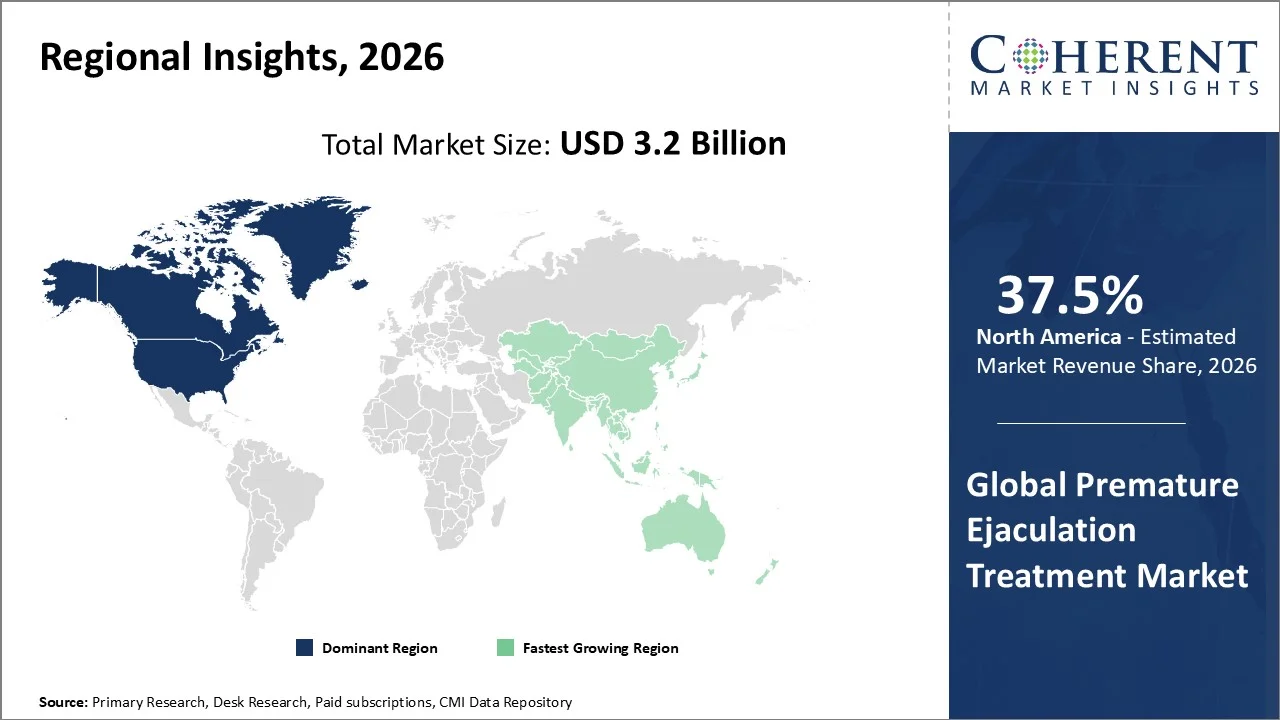
North America dominates owing to Advanced Healthcare Facilities
North America account 37.5% market share in 2026, due to a high prevalence of the condition, advanced healthcare infrastructure, and broad access to treatment options. Epidemiological data indicate that 20–30 % of adult men in the U.S. report premature ejaculation, making PE one of the most common male sexual dysfunctions, which drives treatment demand. North America’s high healthcare expenditure and awareness about sexual health encourage men to seek medical help and access therapies, including oral SSRIs and topical treatments. The region also benefits from strong pharmaceutical R&D and major industry players headquartered in the U.S. and Canada, facilitating innovation and product availability. Additionally, telemedicine and online pharmacy expansion in 2026 enhances treatment accessibility and patient discretion, further sustaining regional market leadership.
Additionally, a comprehensive systematic review published on 05 October 2025 found average PE prevalence around 14.2 % worldwide across 79 studies, with the condition commonly observed in adult male populations, highlighting substantial unmet needs that clinicians and patients seek to address. Additionally, premature ejaculation affects roughly 30 % of men aged 18–59 in U.S. clinical epidemiology data (StatPearls report update 2026), reinforcing high regional demand for treatment options. North America’s advanced healthcare infrastructure, widespread sexual health awareness, and extensive research output including recent U.S. and Canadian-based clinical studies on ejaculatory dysfunction published in Sexual Medicine in April 2026 further support strong uptake of diagnosis and therapies, fueling market growth.
Asia Pacific Premature Ejaculation Treatment Market Trends
The Asia-Pacific region is poised to be as the fastest-growing region through 2026-2033, owing to key manufacturers are expanding access to pharmacological treatments for premature ejaculation through strategic approvals and product launches, aligning with growing demand and regulatory progression. For example, Guangdong Tainkang Pharmaceutical’s dapoxetine hydrochloride tablets (Durative) received drug registration approval in Indonesia in March 2026 from the Indonesian FDA, enabling localized availability of this oral SSRI‑based PE treatment, and marking one of the first domestic PE drug approvals in that market. Menarini Group’s Priligy (dapoxetine) already a leading SSRI option for PE continues distribution in several Asia‑Pacific territories, underpinning the pharmaceutical segment’s depth of offerings. Additionally, ongoing Asia‑Pacific clinical development, such as the dapoxetine flexible‑dose study updated on 28 January 2026, underscores investment in localized evidence for efficacy and tolerability. These authentic regulatory approvals and continued R&D support the region’s rapid uptake of established and emerging PE treatments.
High healthcare expenditure and Broad Access to Advanced Care is Accelerating the Premature Ejaculation Treatment Market Demand in United States
The U.S. remains dominant in the North America premature ejaculation treatment market due to several key factors. First, the U.S. healthcare system is one of the largest globally, with total national health expenditures reaching approximately USD 5.3 trillion in 2024, accounting for about 18 % of U.S. GDP one of the highest shares worldwide which supports broad access to diagnosis and care. This high level of spending enables advanced clinics, extensive specialist networks, and strong sexual health awareness, prompting more men to seek professional help for PE compared with other North American countries. Additionally, substantial pharmaceutical R&D activity and clinical development are underway: for example, the oral on‑demand candidate KH‑001 is in Phase 2 trials targeting lifelong premature ejaculation, illustrating ongoing innovation aimed at addressing unmet needs. Finally, widespread use of off‑label SSRIs and topical anesthetics as standard PE therapies in clinical practice in the U.S. further fuels market demand and treatment uptake.
China Premature Ejaculation Treatment Market Trends
China’s dominance in the Asia‑Pacific premature ejaculation treatment market is supported by high clinical engagement and documented prevalence, alongside growing physician emphasis on evidence‑based PE care. A nationwide survey of 1,000 Chinese physicians published on 26 March 2026 showed oral dapoxetine was the preferred first‑line therapy (used by 59.7 % of clinicians) along with psychotherapy in PE management, reflecting strong clinical uptake of approved treatments in China. Additionally, China’s large male population with significant PE complaints has long been established in research; earlier regional data showed ~25.8 % PE prevalence in one population sample, underscoring substantial demand for treatment. Together, strong clinical practice focus, patient burden, and established real‑world treatment evidence in China drive its regional leadership in the market.
Source: Lifescience.net; Science Direct
Who are the Major Companies in Premature Ejaculation Treatment Market
Some of the major key players in Premature Ejaculation Treatment Market are Regent Pacific Group Limited, Menarini Group, Furiex Pharmaceuticals, Inc., Absorption Pharmaceuticals, LLC, Ampio Pharmaceuticals, Inc., Aytu BioScience, NeuroHealing Pharmaceuticals Inc., and Dong-A Pharmaceutical Co., Ltd. Others
Key News
- In January 2026, Morari Medical, a pioneering sexual health and wellness company launched the MOR Patch, an FDA‑cleared adhesive perineal stimulation device priced around $299 designed to deliver mild electrical pulses to the perineum to help delay ejaculation and support sexual health. Although FDA clearance reflects safety (not full efficacy claims), the device is commercially available and represents a novel non‑pharmacological PE option integrating wearable tech and data tracking.
- In February 2026, Kadence Bio publicly updated its Phase 2a trial evaluating KH‑001 ODT, an on‑demand orally disintegrating tablet designed to improve intravaginal ejaculatory latency time (IELT) and patient‑reported outcomes in men with lifelong PE; this represents one of the most advanced PE‑specific drug candidates in 2026.
- On March 11, 2026, Delvin Formulations Pvt Ltd introduced EJ 60 Tablet, a 60 mg dapoxetine SSRI indicated to increase intravaginal ejaculatory latency time and improve control over ejaculation. The product, entering markets like India, reflects growing PE therapy availability with established pharmacology.
Market Report Scope
Premature Ejaculation Treatment Market Report Coverage
| Report Coverage | Details | ||
|---|---|---|---|
| Base Year: | 2025 | Market Size in 2026: | USD 3.2 Bn |
| Historical Data for: | 2020 To 2024 | Forecast Period: | 2026 To 2033 |
| Forecast Period 2026 to 2033 CAGR: | 8.9% | 2033 Value Projection: | USD 5.7 Bn |
| Geographies covered: |
| ||
| Segments covered: |
| ||
| Companies covered: | Regent Pacific Group Limited, Menarini Group, Furiex Pharmaceuticals, Inc., Absorption Pharmaceuticals, LLC, Ampio Pharmaceuticals, Inc., Aytu BioScience, NeuroHealing Pharmaceuticals Inc., and Dong-A Pharmaceutical Co., Ltd. | ||
Analyst Opinion
- Growing prevalence and rising awareness are key adoption drivers in the Premature Ejaculation Treatment Market. Increasing recognition of sexual health issues is reducing stigma and encouraging treatment seeking. For instance, the Journal of Sexual Medicine published a systematic review in October 2025 reporting global PE prevalence averaging ~14.2% and significantly higher in certain subpopulations, underscoring a substantial target patient base actively seeking clinical support. This growth reflects broader health campaigns and clinical engagement that emphasize evidence‑based diagnosis and treatment.
- Oral pharmacological therapies continue to lead due to convenience, physician preference, and strong clinical evidence. Oral agents like dapoxetine and other SSRIs are widely prescribed because of established efficacy in prolonging intravaginal ejaculatory latency time (IELT) and ease of administration. Clinical literature updated in January 2026 highlights that oral SSRIs significantly improve IELT versus placebo across multiple randomized controlled trials, reinforcing their prescription dominance and patient adherence.
- North America holds a dominant regional market position, aided by advanced healthcare frameworks, sexual health education, and strong uptake of treatment services. U.S.–based clinical epidemiology summaries updated in 2026 show PE complaints affecting up to nearly 30% of adult males, prompting greater screening and specialist referrals. Coupled with high healthcare expenditure and early access to therapies, this drives consistent demand for both oral and combined intervention strategies.
- Asia‑Pacific is emerging as the fastest‑growing regional market, supported by increasing healthcare access and expanding sexual wellness dialogues. Asia Pacific is driven by improving medical infrastructure, telemedicine adoption, and culturally tailored awareness programs that reduce treatment hesitancy and expand patient participation.
Speak to the analyst
Want personalized insights?
Take the findings above to one of our principal consultants, or have the report rebuilt around the segments, geographies and competitors you actually track.
Market Segmentation
- By Drug Type (Revenue, USD Bn, 2021-2033)
- Selective Serotonin Reuptake Inhibitors (SSRIs)
- Dapoxetine
- Others
- Phosphodiesterase Type 5 (PDE5) Inhibitors
- Zertane
- Others
- Topical Anesthetics
- Others
- Selective Serotonin Reuptake Inhibitors (SSRIs)
- By Route of Administration (Revenue, USD Bn, 2021-2033)
- Oral
- Topical
- By Dosage Form (Revenue, USD Bn, 2021-2033)
- Pills
- Spray
- Others
- By Distribution Channel (Revenue, USD Bn, 2021-2033)
- Hospitals
- Online Pharmacies
- Retail Pharmacies
- By Region (Revenue, USD Bn, 2021-2033)
- North America
- U.S.
- Canada
- Latin America
- Brazil
- Mexico
- Argentina
- Rest of Latin America
- Europe
- Germany
- U.K.
- France
- Italy
- Spain
- Russia
- Rest of Europe
- Asia Pacific
- China
- India
- Japan
- Australia
- South Korea
- ASEAN
- Rest of Asia Pacific
- Middle East
- GCC
- Israel
- Rest of Middle East
- Africa
- South Africa
- Central Africa
- North Africa
- North America
- Competitive Landscape
- Regent Pacific Group Limited
- Menarini Group
- Furiex Pharmaceuticals, Inc.
- Absorption Pharmaceuticals, LLC
- Ampio Pharmaceuticals, Inc.
- Aytu BioScience,
- NeuroHealing Pharmaceuticals Inc.
- Dong-A Pharmaceutical Co., Ltd.
Sources
Primary Research Interviews
- Interviews with urologists, sexual health specialists, and andrologists to understand patient behavior, treatment adoption challenges, preference for pharmacological versus non-pharmacological therapies, and barriers in accessing PE treatments.
- Insights from pharmaceutical companies, clinical trial managers, and R&D teams on latest drug innovations, ongoing clinical trials (e.g., KH‑001, dapoxetine formulations), formulation development, and regulatory considerations in launching PE therapies.
- Discussions with market analysts, healthcare consultants, and sexual wellness advisors to evaluate emerging trends, competitive landscape, regional treatment adoption, pricing strategies, and patient awareness campaigns influencing the PE treatment market.
- Conversations with healthcare decision-makers, hospital administrators, and telehealth platform managers to assess investment priorities, integration of PE treatments into clinical practice, telemedicine adoption, and patient data privacy and compliance concerns.
Databases
- U.S. National Library of Medicine (PubMed)
- ClinicalTrials.gov
- FDA Drugs@FDA Database
- WHO Global Health Observatory
- National Center for Biotechnology Information (NCBI)
Magazines
- Men’s Health (Medical & Sexual Health Section)
- Journal of Sexual Medicine Magazine
- Urology Times (Clinical News Section)
- Harvard Health Publishing
- Sexual Health Review
Journals
- Journal of Sexual Medicine (Elsevier)
- Andrology (Wiley)
- International Journal of Impotence Research
- BJU International
- Sexual Medicine Reviews
Newspapers
- The New York Times (Health & Science Section)
- The Wall Street Journal (Health Section)
- USA Today (Health Section)
- The Guardian (Health & Science Section)
- Financial Times (Healthcare & Pharma Section)
Associations
- International Society for Sexual Medicine (ISSM)
- American Urological Association (AUA)
- Sexual Medicine Society of North America (SMSNA)
- International Society for the Study of Women’s Sexual Health (ISSWSH)
- European Society for Sexual Medicine (ESSM)
Public Domain Sources
- FDA press releases and regulatory updates for PE therapies
- ClinicalTrials.gov
- NIH Research Portfolio Online Reporting Tools (RePORT)
- WHO Sexual and Reproductive Health Reports
- Company annual reports, investor presentations, and press releases from pharmaceutical firms developing PE treatments (e.g., Delvin Formulations, Kadence Bio)
Proprietary Elements
- CMI Data Analytics Tool
- Proprietary CMI Existing Repository of information for last 10 years
Get access to 250+ pages report
Every segment, forecast, competitor profile and data table behind the analysis above — available for instant download.
- ESOMAR Member
- ISO 9001:2015 Certified
- D-U-N-S Registered
- GDPR & CCPA Compliant
Missing comfort of reading report in your local language? Find your preferred language:
Transform your Strategy with Exclusive Trending Reports
Frequently Asked Questions
The Premature Ejaculation Treatment Market is expected to reach USD 5.7 Bn in 2033.
Major players operating in the global Premature Ejaculation Treatment Market include Regent Pacific Group Limited, Menarini Group, Furiex Pharmaceuticals, Inc., Absorption Pharmaceuticals, LLC, Ampio Pharmaceuticals, Inc., Aytu BioScience, NeuroHealing Pharmaceuticals Inc., and Dong-A Pharmaceutical Co., Ltd.
Social stigma, low awareness, side effects and patient compliance issues are the major factors hampering the growth of the premature ejaculation treatment market.
Increasing awareness of sexual health and growing prevalence of premature ejaculation are the key factors driving the growth of the premature ejaculation treatment market.
The Premature Ejaculation Treatment Market is anticipated to grow at a CAGR of 8.9% between 2026 and 2033.
Among regions, North America is expected to account for a largest market share in the global Premature Ejaculation Treatment Market over the forecast period.