

Osteoarthritis Drugs Market Size and Trends: 2026-2033
The Osteoarthritis Drugs Market is estimated to be valued at USD 8.45 Bn in 2026 and is expected to reach USD 17.75 Bn by 2033, growing at a compound annual growth rate (CAGR) of 11.2% from 2026 to 2033.
Key Takeaways
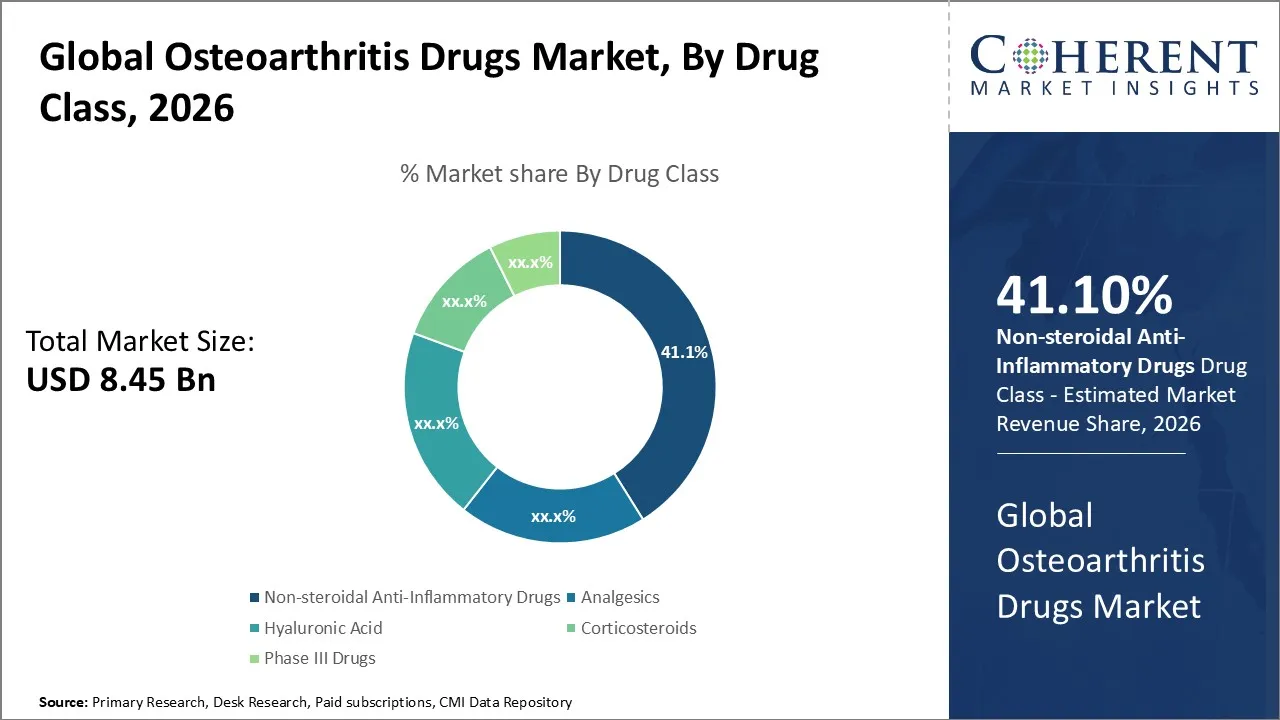
- Based on Drug Class, the Non-steroidal Anti-Inflammatory Drugs segment is expected to lead the market with 41.10 % share in 2026, due to broad clinical use, OTC availability, and physician preference.
- Based on Route of Administration, the Oral segment is expected to lead the market with 48.60 % share in 2026, driven by convenience and patient compliance.
- Based on Disease Type, the Knee Osteoarthritis segment is expected to lead the market with 46.40 % share in 2026, due to its high global prevalence and the strong clinical focus on symptom management at this joint.
- Based on Distribution Channel, the Retail Pharmacies segment is expected to lead the market with 41.70 % share in 2026, due to easy OTC access.
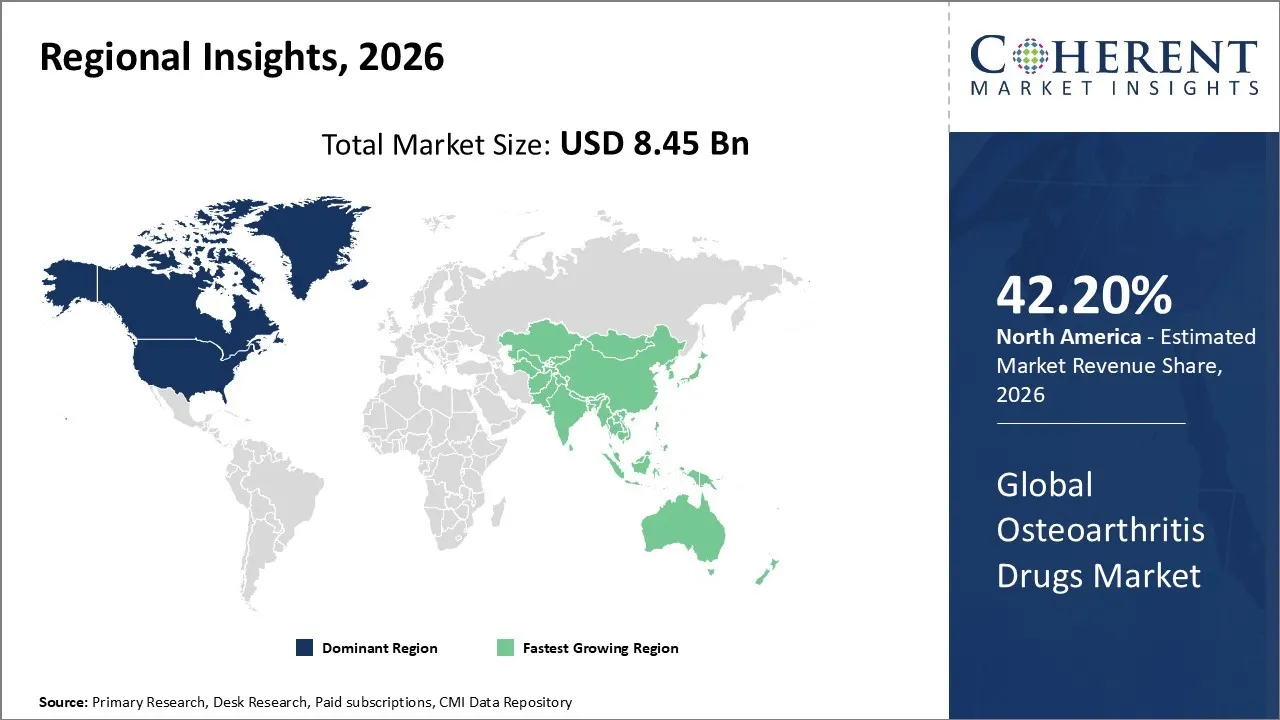
- Based on Region, North America is set to lead the market with 42.20 % share in 2026. While, Asia Pacific is anticipated to be the fastest growing region.
Market Overview
The osteoarthritis drugs market is advancing significantly with the rising applications in pain management and personalized medicine. Moreover, expanding biopharmaceutical research and tightening regulatory standards are expected to propel market growth over the forecast period.
Osteoarthritis involves the progressive degeneration of joint tissues, particularly the articular cartilage. Osteoarthritis drug therapy is a commonly used medical intervention in clinical diagnostics, primary healthcare, and orthopedic specialty industries. These drugs are used for symptom control as well as the potential slowing of disease progression, which helps in better management of chronic pain and movement.
The osteoarthritis drug market industry is entering a major growth phase supported by several advancing treatment factors and the use of advanced delivery systems, along with strong demand for specific drug research in different sectors, including pharmaceuticals, retail pharmacies, and regenerative medicine.
Current Events and Its Impacts on the Osteoarthritis Drugs Market
Current Event | Description and the Impact |
Technological and R&D Developments |
|
Market Dynamics and Competitive Landscape |
|
Societal and Environmental Considerations |
|
Segmental Insights
- Current Industry Events of 2026
- Market Size Estimation
- Regional Breakdown
- Competitive Landscape
- Customer Intelligence
- Segmental Analysis
- Pricing Analysis
- Key Market Drivers, Challenges & Future Trends
- Customized Insights Section
Osteoarthritis Drugs Market Insights, By Drug Class – Non-steroidal Anti-Inflammatory Drugs Leads Due to its Broad Clinical Use
In terms of drug class, the non-steroidal anti-inflammatory drugs segment contributes the highest share of 41.10% in 2026 of the market. The growth is because these medications serve as the primary clinical response for reducing joint pain and swelling. Most treatment protocols prioritize this class because it offers a reliable balance of efficacy and affordability for the average patient. The high volume of both over the counter and prescription options ensures that these drugs are accessible to a global population. In addition, the lack of approved curative therapies means that the market remains heavily dependent on these anti-inflammatory agents to manage chronic symptoms. Consequently, this segment continues to capture the largest portion of revenue within the drug class category.
Osteoarthritis Drugs Market Insights, By Route of Administration – Oral Leads Due to Convenience and Patient Compliance
In terms of route of administration, the oral segment contributes the highest share of 48.60% in 2026 of the market. The growth is due to the ease of use and high patient preference for tablets and capsules. This method of delivery is the most practical for long-term chronic care because it does away with the need for professional medical assistance during administration. Patients are more likely to stick to their prescribed treatment plans when the process is as simple as taking a daily pill. Additionally, the manufacturing costs for oral formulations are generally lower than those for sterile injectable liquids. This cost efficiency combined with high consumer demand makes the oral route the most commercially significant delivery method in the industry.
Osteoarthritis Drugs Market Insights, By Disease Type – Knee Osteoarthritis Leads Due to High Global Prevalence
In terms of disease type, the knee osteoarthritis segment contributes the highest share of 46.40% in 2026 of the market. This growth is because the knee is the joint most frequently reported as the site of chronic pain and disability. A rise in global body mass index levels has placed increased mechanical pressure on the lower extremities, leading to a higher incidence of joint wear and tear. Aging populations also contribute to this trend as the cartilage in the knee naturally degrades over several decades of use. Because limited mobility in the legs has a profound impact on a person's quality of life, there is a substantial financial investment in treatments for this area. This high prevalence ensures that knee-related therapies remain the top revenue generator.
For instance, in September 2024, RION has launched a Phase 1b study to evaluate the efficacy and safety of its exclusive exosome regenerative therapeutic, Purified Exosome Product™, for managing knee osteoarthritis (Knee OA).
Regional Insights
North America Osteoarthritis Drugs Market Analysis & Trends
North America has remained the dominant region with 42.20% in 2026 of the global Osteoarthritis Drugs Market over the past decade. The growth is due to a sophisticated healthcare infrastructure and high patient awareness. The region’s dominance is largely supported by a significant aging population and a high prevalence of obesity, both of which are major risk factors for joint degeneration. Pharmaceutical companies in this region are aggressively transitioning from traditional pain management toward the development of disease-modifying osteoarthritis drugs that aim to preserve joint structure. Furthermore, favorable reimbursement policies and extensive government funding for musculoskeletal research facilitate the rapid adoption of expensive next-generation biologics and long-acting injectables. The strategic partnerships between major biotech firms and healthcare providers also ensure that new treatments like gene therapies and basic visocupplements reach the market in an easy and effective manner. Consequently, the North American market continues to set the standard for clinical innovation and high-value therapeutic options.
For instance, in July 2025, Genascence Corporation announced that GNSC-001 has received the Regenerative Medicine Advanced Therapy (RMAT) designation from the U.S. Food and Drug Administration (FDA). This therapy is a potential first-in-class gene treatment that blocks interleukin 1 (IL-1) and is aimed at treating knee osteoarthritis (OA).
Asia Pacific Osteoarthritis Drugs Market Analysis & Trends
The Asia Pacific region is identified as the fastest growing market for osteoarthritis drugs, propelled by a rapidly expanding geriatric population and improving medical accessibility. The countries like China and India are seeing a surge in demand as rising disposable income allows a larger portion of the population to afford specialized joint care. This growth is also speeded up by government initiatives that promote local pharmaceutical manufacturing and the production of affordable biosimilars to reduce dependency on imports. There is a notable trend toward the use of minimally invasive parenteral therapies like platelet-rich plasma and hyaluronic acid injections, which are becoming standard options in emerging healthcare systems.
In addition, the proliferation of digital health platforms and hospital-based specialty clinics is streamlining the diagnosis and long-term management of chronic joint conditions. As regional manufacturers align with international quality standards and invest in local research and development, the Asia-Pacific market is positioned for unprecedented expansion throughout the coming years.
For instance, in September 2022, Alkem Laboratories, in partnership with Stempeutics, has introduced StemOne, the first off-the-shelf cell therapy product made in India, designed to treat Knee Osteoarthritis (OA). This marks the first allogeneic cell therapy product approved for commercial use in India for Knee Osteoarthritis.
Osteoarthritis Drugs Market Outlook Country-Wise
The US Osteoarthritis Drugs Market Trends
The US remains the leading market for osteoarthritis therapeutics, characterized by a strong emphasis on clinical innovation and premium treatment options. While nonsteroidal anti-inflammatory drugs still maintain a strong presence, the market is quickly pivoting toward disease-modifying osteoarthritis drugs that aim to slow joint degeneration rather than just mask pain. The research and development efforts are currently focused on long-lasting injectables and specialized biologics that use artificial intelligence for drug discovery. The high obesity rates as well as an active elderly population continue to fuel the demand for these advanced noninvasive alternatives to surgery. In addition, the supportive reimbursement policies in the US healthcare system support the use of these expensive, innovative therapies.
For instance, in March 2022, Hanmi Pharmaceutical announced that it has begun marketing SynoJoynt, an injection treatment for osteoarthritis, in collaboration with Arthrex, a global medical device firm, in the US.
China Osteoarthritis Drugs Market Trends
The osteoarthritis drug market in China is undergoing a rapid transformation driven by an aging population and increasing urbanization. The trends show a major shift from basic pain relievers toward more cutting-edge viscosupplementation and localized injections. The government initiatives aimed at extending healthcare cyberage are improving patient access to these chronic disease treatments in both urban and rural regions. The domestic pharmaceutical firms are also making major strides in regenerative medicine, recently achieving landmark approvals for stem cell therapies at competitive price points. This focus on local manufacturing and innovation is positioning China as a global leader in affordable, next-generation joint therapies.
For instance, in July 2024, LG Chem has announced that its single-injection treatment for osteoarthritis, Synovian, has been launched in the Chinese market by its partner, Yifan Pharmaceutical.
Market Report Scope
Osteoarthritis Drugs Market Report Coverage
| Report Coverage | Details | ||
|---|---|---|---|
| Base Year: | 2025 | Market Size in 2026: | USD 8.45 Bn |
| Historical Data for: | 2020 To 2024 | Forecast Period: | 2026 To 2033 |
| Forecast Period 2026 to 2033 CAGR: | 11.2% | 2033 Value Projection: | USD 17.75 Bn |
| Geographies covered: |
| ||
| Segments covered: |
| ||
| Companies covered: | Pfizer, Inc., Abbott, Eli Lilly and Company, ABIOGEN PHARMA S.p.A, Horizon Therapeutics plc, Ferring B.V., Merck Sharp & Dohme Corp., Medivir, Bioventus, Sanofi, Regeneron, GlaxoSmithKline Plc., Johnson & Johnson Private Limited, Bayer AG, Novartis AG, Ferring B.V., Pacira Pharmaceuticals, Inc, Zimmer Biomet, OrthogenRx, Inc. and PHARMED LTD. | ||
| Growth Drivers: |
| ||
| Restraints & Challenges: |
| ||
Osteoarthritis Drugs Market Drivers
Increasing burden of osteoarthritis
The rising prevalence of osteoarthritis acts as a key driver of the drugs market, mainly due to a global shift toward aging populations. As people live longer, the gradual wear and tear of joint cartilage becomes more common, creating the need for a steady supply of pain-relieving and anti-inflammatory treatments. This demographic transition ensures a steady expansion of the patient base requiring long-term pharmaceutical care.
Furthermore, the widespread increase in obesity rates contributes to the disease’s reach by placing excessive mechanical strain on weight-bearing joints. This psychological stress combined with metabolic factors is causing the condition to appear earlier in life, thereby increasing the duration of required medical interventions. Consequently, the pharmaceutical industry is intensifying its focus on developing advanced therapies and biologics to meet the rising demand for more effective, durable pain relief and joint preservation.
Increasing incidences of rheumatoid arthritis
Osteoarthritis is caused by injury, obesity, and several other factors. It results in severe joint pain and stiffness in the affected areas. Symptoms of osteoarthritis include swelling in the joints, numbness in the legs and arms, and a decreased range of motion. The increasing prevalence of rheumatoid arthritis is anticipated to drive market growth. For instance, on April 2, 2022, the Journal of Physiological Anthropology published a report highlighting the high prevalence of rheumatoid arthritis and its risk factors among Tibetan highlanders residing in Tsarang, located in the Mustang district of Nepal.
The increasing prevalence of obesity, particularly associated with a sedentary lifestyle, is expected to boost the growth of the osteoarthritis drugs market over the forecast period. Obesity places additional pressure on the knees and hips, which can accelerate the breakdown of cushioning joints. For instance, on May 17, 2022, the Centers for Disease Control and Prevention reported the following obesity prevalence rates in the U.S. for the year 2020: 39.8% among adults aged 20 to 39 years, 44.3% among adults aged 40 to 59 years, and 41.5% among adults aged 60 and older.
Analyst Opinion (Expert Opinion)
- The Osteoarthritis Drugs Market is witnessing sustained growth driven by demographic trends and evolving treatment preferences. Osteoarthritis affects millions globally, remaining a leading cause of chronic joint pain and functional disability, particularly among older adults. This high prevalence fuels consistent demand for pharmacological interventions focused on symptom relief and quality-of-life improvement.
- Non-steroidal anti-inflammatory drugs (NSAIDs) dominate prescriptions due to their cost-effectiveness and widespread clinical use. Injectable therapies, including hyaluronic acid-based viscosupplements, are gaining traction for their targeted joint relief and prolonged efficacy. Emerging disease-modifying osteoarthritis drugs (DMOADs) and biologics are gradually reshaping the therapeutic landscape, reflecting innovation and a shift toward long-term disease management.
- Distribution channels are evolving, with traditional retail and hospital pharmacies maintaining primary roles while online pharmacies capture growing patient preference for convenience. Prescription drugs account for the majority of revenue, reflecting the clinical oversight required for moderate to severe cases. Knee osteoarthritis remains the most treated indication, representing a significant portion of the market. Regional dynamics show North America leading due to mature healthcare infrastructure, while Asia-Pacific exhibits rapid growth driven by aging populations and expanding healthcare access.
- Innovations such as extended-release formulations, combination therapies, and targeted joint injections are improving patient adherence and outcomes. Challenges include long-term safety concerns with certain drug classes and the unmet need for truly disease-modifying therapies. Overall, the market demonstrates a blend of traditional drug dominance and emerging innovations, supported by demographic and therapeutic trends.
Speak to the analyst
Want personalized insights?
Take the findings above to one of our principal consultants, or have the report rebuilt around the segments, geographies and competitors you actually track.
Osteoarthritis Drugs Industry News
- In February 2026, 4Moving Biotech (4MB) has announced the closing of a €12 million financing round for its development of a first-in-class disease-modifying osteoarthritis drug (DMOAD) aimed at treating knee osteoarthritis.
- In January 2026, Biosplice Therapeutics, Inc. announced that it has sent the FDA its New Drug Application (NDA) for approval of a new therapy that is meant to treat osteoarthritis in the knee. Lorecivivint is the company's drug candidate. It is a small-molecule suspension that is injected into the knee joint once or twice a year.
- In December 2025, Cipla has released the Ciplostem, an allogeneic mesenchymal stromal cell therapy designed specifically for treating Knee Osteoarthritis (Knee OA). This therapy has been approved by the Drug Controller General of India (DCGI).
- In May 2025, 4Moving Biotech (4MB) announced that Health Canada has granted permission to initiate the Phase 2a INFLAM MOTION "Proof-of-Concept" study for 4P004 in individuals with knee osteoarthritis.
Market Segmentation
- Drug Class Insights (Revenue, USD Bn, 2026 - 2033)
- Analgesics
- Non-steroidal Anti-Inflammatory Drugs
- Corticosteroids
- Hyaluronic Acid
- Phase III Drugs
- Route of Administration Insights (Revenue, USD Bn, 2026 - 2033)
- Oral
- Parenteral
- Topical
- Disease Type Insights (Revenue, USD Bn, 2026 - 2033)
- Ankle Osteoarthritis
- Hip Osteoarthritis
- Knee Osteoarthritis
- Shoulder Osteoarthritis
- Others (Spinal Osteoarthritis and Cervical Osteoarthritis)
- Distribution Channel Insights (Revenue, USD Bn, 2026 - 2033)
- Hospital Pharmacies
- Retail Pharmacies
- Online Pharmacies
- Regional Insights (Revenue, USD Bn, 2026 - 2033)
- North America
- U.S.
- Canada
- Latin America
- Brazil
- Argentina
- Mexico
- Rest of Latin America
- Europe
- Germany
- U.K.
- France
- Italy
- Russia
- Rest of Europe
- Asia Pacific
- China
- India
- Japan
- Australia
- South Korea
- ASEAN
- Rest of Asia Pacific
- Middle East
- GCC Countries
- Israel
- Rest of Middle East
- Africa
- North Africa
- Central Africa
- South Africa
- Key Players Insights
- Pfizer, Inc.
- Abbott
- Eli Lilly and Company
- ABIOGEN PHARMA S.p.A
- Horizon Therapeutics plc
- Ferring B.V.
- Merck Sharp & Dohme Corp.
- Medivir
- Bioventus
- Sanofi
- Regeneron
- GlaxoSmithKline Plc.
- Johnson & Johnson Private Limited
- Bayer AG
- Novartis AG
- Ferring B.V.
- Pacira Pharmaceuticals, Inc
- Zimmer Biomet
- OrthogenRx, Inc.
- PHARMED LTD
Sources
Primary Research Interviews
- Primary Research Interviews
- Orthopedic Surgeons (KOLs)
- Rheumatologists & Pain Specialists
- Hospital Pharmacy Directors
- Clinical Research Organizations (CROs)
- Pharmaceutical Manufacturers (NSAIDs, Biologics, Injectables)
- Others
Databases
- Bloomberg Terminal
- Thomson Reuters Eikon
- IQVIA
- Others
Magazines
- PharmaTimes
- Pharmaceutical Executive
- BioWorld
- Drug Discovery & Development
- Others
Journals
- Osteoarthritis and Cartilage
- Annals of the Rheumatic Diseases
- Arthritis & Rheumatology
- The Journal of Rheumatology
- Others
Newspapers
- Financial Times
- The Wall Street Journal
- Reuters
- Bloomberg News
- Others
Associations
- American College of Rheumatology
- Osteoarthritis Research Society International
- Arthritis Foundation
- European League Against Rheumatism (EULAR)
- Others
Public Domain Sources
- U.S. Food and Drug Administration (FDA)
- Centers for Disease Control and Prevention (CDC)
- World Health Organization (WHO)
- National Institutes of Health (NIH)
- European Medicines Agency (EMA)
- Others
Proprietary Elements
- CMI Data Analytics Tool
- Proprietary CMI Existing Repository of Information for the Last 8 Years
Definition: The Osteoarthritis Drugs Market represents the global pharmaceutical sector dedicated to the discovery, production, and sale of medicinal treatments for degenerative joint disease. This market focuses on providing therapeutic solutions for patients experiencing chronic pain, inflammation, and reduced mobility caused by the progressive breakdown of articular cartilage. It includes a diverse range of medications like oral analgesics, topical anti-inflammatory creams, and injectable corticosteroids or hyaluronic acid. The market growth is mainly fueled by an aging global demographic and a rising prevalence of obesity, which increases the incidence of joint-related conditions. While traditional therapies prioritize symptom management, the modern market is increasingly characterized by research into disease-modifying agents and regenerative biologics that aim to preserve or repair joint structure.
Get access to 250+ pages report
Every segment, forecast, competitor profile and data table behind the analysis above — available for instant download.
- ESOMAR Member
- ISO 9001:2015 Certified
- D-U-N-S Registered
- GDPR & CCPA Compliant
Missing comfort of reading report in your local language? Find your preferred language:
Transform your Strategy with Exclusive Trending Reports
Frequently Asked Questions
The Osteoarthritis Drugs Market is estimated to be valued at USD 8.45 Bn in 2026, and is expected to reach USD 17.75 Bn by 2033.
The CAGR of the Osteoarthritis Drugs Market is projected to be 11.2% from 2026 to 2033.
Increasing number of drug approvals from regulatory bodies and growing prevalence of rheum arthritic are the major factors driving the growth of the Osteoarthritis Drugs Market.
The high cost and limited reimbursement of advanced therapies and stringent regulatory scrutiny of new drugs are the major factors hampering the growth of the Osteoarthritis Drugs Market.
In terms of drug class, the non-steroidal anti-inflammatory drugs segment is estimated to dominate the market revenue share in 2026.
Pfizer, Inc., Abbott, Eli Lilly and Company, ABIOGEN PHARMA S.p.A, Horizon Therapeutics plc, Ferring B.V., Merck Sharp & Dohme Corp., Medivir, Bioventus, Sanofi, Regeneron, GlaxoSmithKline Plc., Johnson & Johnson Private Limited, Bayer AG, Novartis AG, Ferring B.V., Pacira Pharmaceuticals, Inc, Zimmer Biomet, OrthogenRx, Inc. and PHARMED LTD. are the major players.
North America is expected to lead the Osteoarthritis Drugs Market in 2026.